‘The Otherworld Around Us’ by David Halpin

Deadbutdreaming is delighted to welcome back David Halpin as a guest author. David is an Irish folklorist and author, who writes extensively about the faerie phenomenon from a Fortean perspective, and has produced a large corpus of work, much of which can be found on his excellent Facebook blog Circle Stories. The following triumvirate of articles originally appeared there, and are an investigation in to ‘the Otherworld around us’, looking at how the faeries interact with humanity via the landscape, the air, and through consciousness. Thanks to David for giving permission to republish these insightful articles.

The Otherworld Around Us

Mounds and Ancient Places

Something I have written about previously is the observation that we might interpret the concept of fairy mounds in both archaic and contemporary ways. For example, we once thought fairies emerged from a hole in the earth. Then, as we became more technological we considered the possibility that they might come from a hole in the sky or another dimension. Today, there is a further school of thought which posits that fairies come from the depths of our collective consciousness. Of course, no matter which of these explanations, if any, we might prefer, we still have to account for the consequences of the interaction.

One immediate reason for this is the description of fairy mounds as being both places of the dead and also places of living contact. Claude Lecouteux reminds us that this is an overlooked aspect of the mounds: ancestors, spirits, and the beings we call fairies are affecting forces that impact upon us. From an ancestral healing perspective, by participating in this interaction we also impact upon our own future paths. Within Asian folk-magic, and even formal Tibetan Buddhism, rim-né are the effects of spiritual forces upon the living. This can often result in unexpected physical and psychological interference following a visit to an ancient place. Indigenous Oceanic peoples also take this consideration seriously when visiting ancestral sites and memory in a way that, perhaps, Irish people have to recover again. Obviously, when we interpret these sites through the discipline of archaeology and history we may not have an opportunity to acknowledge the reality of metaphysical considerations, never mind incorporating protection rites from a folk-magic perspective.

This is nothing revelatory: after all, the person we get to fix our cooker is not usually the person we ask to cook a meal with it, as Gordon White once observed! Returning to Lecouteux again, he reminds us that old Norwegian Christian laws (Kristenret) condemned pagans for “believing in land spirits, whether found in groves or mounds or waterfalls.” He goes on to say that this distinction is important because it shows that there was not one particular high pantheon being worshiped, but instead localised “numinous forces” which were more important to the ordinary person and their life. There were also two very interesting expressions used to describe this type of interaction; “to believe in the hills” and “to believe in the mounds”. Writing in Ireland’s Immortals: A History of the Gods of Irish Myth, author Mark Williams tells us that in the 8th century Hymn of Fíacc we are told that the Irish used to worship the síde; they did not believe in the godhead of the true trinity. Whether this means they worshipped the beings emerging from the mounds, or the sites themselves, Williams writes, “Thus the original author of the Hymn may have meant that the pagan Irish used to venerate the mounds.” This is interesting when compared to those previous Norwegian expressions.  

Writing about the mounds of The Boyne Valley, Williams also notes that, “Overall, it looks highly plausible, though at present unprovable, that there was a late-Iron Age cult focused on supernatural beings-whether gods, deified ancestors, or the spirits of the dead-associated with the mounds of the Boyne necropolis, and perhaps others as well.” Obviously, many of these sites are much older than Iron Age veneration and go back 5000 years in some cases. These places are still everywhere around Ireland even though so many have also been destroyed. With travel being so limited at the time, we can speculate that this probably means that we had countless local spirits and methods of veneration. Further testament to this might be how even today in societies where such beings and magic practices exist, this is the chaotic localised animism which seems to spontaneously and naturally occur.

An example of this is the Ulchi shamanistic tradition of passing down particular spells, prayers, and magical techniques through families, but there is also the room for new ways of interacting with the spirit-beings and forces, depending upon the practitioner. In this context, entering the supernatural realm from the same place does not mean that the traveller needs to follow the same direction or path once inside. I find it interesting that some see these places as having been communal and open to everyone, whereas throughout the world it seems more evidential that these were sites only open to the few. In this interpretation they are initiatory places, perhaps, and in order to meet with the ‘gods’ a neophyte or priest/priestess needed specific preparation: ceremony and secrets being important in this context. 

Our Irish traditions also warn us continually of how dangerous it is to interact with the beings of the mounds. Inside these places a type of sensory deprivation may have meant that the art that surrounded a person (and, perhaps, entheogenic consumption) aided the transition to the Otherworld. It’s interesting to note some of the similar symbols found in caves said to be used for shamanistic-type journeying and those found at ancient Irish sites. Understanding these sites in this context as entrances to the Otherworld as opposed to farming calendars or tombs surely seems to be a valid argument. 

The 5000 year old Orkney site, Maeshowe, for example, is now believed to have been a place where the Otherworld could be accessed aided by ritualised construction techniques. J van der Reijden of  the University of Highlands and Islands Archaeology Institute, describes the oppositional nature of the side-chambers within the mound as being where the membrane between the human world and spirit world is breached. Similar claims have been made regarding monuments having consciousness-changing purposes such as the Heb Sed festival of ancient Egypt. This was a way for the king  to renew his land and commune with the gods and goddesses dwelling in the spirit world. By entering the carefully built structures. the king was seen to have left the human world and travelled to the Otherworld. Again, when we consider that many of these places have alignments to equinoxes and solstices we might consider this further evidence for a non-farming purpose.

The stone circles of Gobekli Tepe predate farming by thousands of years and also had a ritual use involving stars, vibration and feasting. Giulio Magli, an archaeoastronomer at The Polytechnic University of Milan proposes that Gobekli Tepe was built to acknowledge Sirius, and possibly the moon. Vincenzo Orofino of the Universita del Salento has demonstrated that Gobekli Tepe also contains an alignment to the cross-quarter between the summer solstice and the autumn equinox. In other words, at the astronomical point we know in Ireland, at least today, as Lughnasadh. Again, a pre-farming alignment.

Sensory deprivation was also a hugely important aspect of the Eleusinian mysteries of ancient Greece, where initiates were brought into subterranean temples and caves where they would, following the drinking of a psychedelic brew, discover the meaning of life and death and know that consciousness could never die.  

Although we might want to believe that the effort it took to build these ancient sites and monuments was for communal purposes, let us remember that this wasn’t the case with the Great Pyramid or the temples of Central and South America. We now know through genetic evidence that this most likely wasn’t the case in Ireland, either. Newgrange contained the remains of a dynastic elite who practiced incest much like other hierarchical ruling systems of ancient cultures. The oldest names of Newgrange are Síd in Broga and Brug Mac Ind Óc. These names mean ‘Mansion  of the mound of the Otherworld’ and ‘Mansion of the Young Son’. Both seem to have more in common with a description of rebirth or elevated consciousness than farming.

The Air and Sky

Although many fairy encounters contain incidences of travelling through the air, and from fairy mound to fairy mound, the occasions where the fairies soar into outer space are few and far between. This is an often overlooked, and even misrepresented factor when trying to match fairy abductions to UFO encounters. However, the common links between soul-flight, shamanic journeying, fairy abductions, and, indeed, UFOs, are still tantalising. Writing in their paper, ‘Small Gods, Small Demons: Remnants of an Archaic Fairy Cult in Central and South-Eastern Europe’, Professor Éva Pócs, explains, “The typical fairy communication known from folklore accounts usually takes place in a characteristic space-time structure that is also a form typical of possession by the dead as it appears in this region.” This is an important consideration as a distortion of space-time is often reported by those who have such experiences. In fact, the trooping fairies sighted by many here in Ireland sounds quite similar, with a flow of airborne lights moving from ancient monument and site to another turning up frequently in our folklore

In this example from Co. Wicklow we have a very definite description of airborne fairy travel: “At this Rath in Krishuna it is said the fairies gather on certain nights. They ride on the wings of the wind and retreat at cockcrow to the rath of Mullaghmast in Kildare. The people of this neighbourhood are said to keep a black cock in order to defeat the more evil minded of the fairies and to preserve them from harm.”

This fairy wind seems to have the power to carry a person over the threshold between the fairy Otherworld and our own world. Sometimes people describe being transported in strange carriages and even upon brooms. These are lifted in the air and carried faster than seems possible. The destination, again, is dream-like, often, it seems, deliberately so, as if to mask another reality just below the surface, as in this example from Co. Longford: “Some time ago men were putting up hay in a field in Cam. A fairy wind came and took away the hay. A man threw his hat after it. He said it was lucky to do that – that the fairy wind wouldn’t do any harm, but when the wind settled there was a boy gone with it. One night when the boy’s father was going by Pat Cunningham’s fort, he heard fairy music, he went into the fort and found the boy.”

Robert Kirk, the 17th-century Scottish fairy folklorist, also wrote about such “secret paths” which a person might stumble onto and be then led to seeing the fair folk and maybe being captured for a while. Kirk interestingly describes the movement of fairies as “swimming in the air near the earth” which almost sounds like a travelling river of energetic consciousness, or a separate reality.

In his book, Spirit Paths: An exploration of Otherworldly Routes, Paul Devereaux tells us of an 18th-century witness to the fairy parade. They describe ‘the fairies’ as “…leaping and frisking in the air, making a path in the air.” John Keel, the American journalist and writer who studied strange phenomenon speculated that all otherworldly beings emanated from what he termed the ‘super-spectrum’.  This was the range of the electromagnetic spectrum not usually discernible through ordinary human senses. Keel noticed that many accounts of UFOs, fairies, and demonic beings emerging into our reality were often accompanied by reports of them changing colours before settling on their physical form. This would sometimes take the form of coloured lights in the sky or the beings seeming to fly out from the rainbow itself. As Keel writes in his fascinating work, The Eighth Tower: “When men of ancient Greece and Rome saw what we now term UFOs, they noted that the objects changed colours, conforming to the known colour spectrum. So the word specter was born.”

Asian shamanistic techniques also use a type of rainbow-path to ascend into the upper worlds in order to contact both ancestor spirits and other forms of consciousness. In this account from 1671, from ‘The Troll Labour’ in Thomas Keightley’s, The Fairy Mythology, Illustrative of the Romance and Superstition of Various Countries (1850), a woman describes how a fairy asks for her help in delivering a baby and transports the woman upon the wind: “When she returned, she told me, that when she went with the man out at the gate, it seemed to her as if she was carried for a time along in the wind, and so she came to a room, on one side of which was a little dark chamber, in which his wife lay in bed in great agony. My wife went up to her, and, after a little while, aided her till she brought forth the child after the same manner as other human beings. The man then offered her food, and when she refused it, he thanked her, and accompanied her out, and then she was carried along, in the same way in the wind, and after a while came again to the gate, just at ten o’clock.”

When taken to the Fairy or Spirit Otherworld a person may be chosen to become a healer or communicator between the human and spirit world. One particular way this is achieved is by having magic stones or objects placed inside the persons body. In terms of parallels between medicine men/ women and the Irish bean feasa, this was deemed to bestow an ability to heal the sick, see future events and deal with ancestral spirits. Near Dromkeel stone circle in 1992 a local farmer, John McManus, described how he was taken from his home by four small figures. He awoke in a circular ‘room’ where he was given an electric shock and something was put inside him. He then found himself back in his house where the floor was covered in mud and stones.

Three years later McManus had another experience where he felt compelled to walk to his window and watch lights appearing to drift across the nearby mountains. He felt as if he had been drawn to witness in order to participate. This is a well documented aspect of fairy lore. In many cases it takes the form of fairies playing a hurling match which they cannot begin until a human interacts with them in some way. Staying with McManus, this example of an object being placed inside a person is reported in all indigenous cultures when recounting experiences with fairy-type beings. Sometimes the experience takes the form of a person feeling as if they are being cut into pieces only to be put together again. In other examples the object placed in the body becomes the instigator of new healing knowledge or psychopomp abilities. There is no requirement to deny the physicality of what has taken place except in contemporary Western culture.

Writing in Aboriginal Men of High Degree, A.P. Elkin describes an Australian Aboriginal account of a medicine man taken by ‘spirits’ into the sky world where an operation is performed on him by having quartz crystals inserted into his side. He could henceforth visit the sky and establish communication with the sky spirits and even be summoned by them. The Aboriginal tribes of The Southern Murray region reflect the same beliefs as other Australian indigenous people which they say have been passed down in oral form for over 60,000 years – Aboriginal cave art depicting these encounters with the sky-serpent spirits have been dated to at least 40,000 BCE.

Returning to Ireland, this account recorded in 1926 is interesting, “I was learning to speak Irish at the time. A gang of us would be sent over beyond Lough Gara every week to be taught by the master there. Some of us would go on bicycles and would often cycle home in the dark. We were nervous when we’d cycle by the lake as we would often see three lights skimming across the water. Sometimes the lights would appear in the trees at the lake edge and other times they would submerge beneath the water. Our parents put the lights down to the work of God. ‘Don’t worry about them, they’re only lost souls trying to get into heaven. They’re no harm.’”

The only frame of reference at the time was religion and lost souls, which in most cases was short-hand for fairies. This account from Wentzs’s The Fairy Faith in Celtic Countries describes another airborne fairy encounter with multiple possible interpretations: “As they approached Listowel the doctor writes that he witnessed what he thought was the light of a house about a half mile ahead of him. On approach, though, the light began to behave in a very mysterious manner, “Moving up and down, to and fro, diminishing to a spark, then expanding into a yellow, luminous flame.” As they rode on, the doctor and his companion then saw two further lights behaving in a similarly bizarre fashion. The doctor tells us that the lights were six feet high and four feet wide and within each one was, “…a radiant being having human form.” The two lights then glided towards each other until they touched and the beings inside were able to walk between each light as if it was one individual orb.

Many Irish fairy encounters not only describe the fairies moving through the air but an entire fairy mound itself, which is seen to light up and spin, and at other times a parade of lights are seen to emanate from it and take off across the sky. This aspect has been documented at the rath situated near Keadeen, Co. Wicklow. In this example the lights also seem to foretell of a death: “One night about three years ago the Hartnetts who lived in Gardenfield were going to the fair in Drom and they saw a bright light shining over near Mrs. Dowling’s house. They said to themselves that it was very early Mrs. Dowling was up. Mrs. Dowling saw the same light that night moving up around Harnett’s house then it came down and it went into the fort and disappeared. That happened before Mr. Harnett’s death.”

Consciousness

The idea of a connected consciousness from which fairies emerge is but one possible explanation for their origin posited by some thinkers. Within this Otherworld lie infinite possibilities on the one hand, and, an already mapped out fate for all on the other. This factor often draws comparisons to some of the seeming contradictions which quantum mechanics displays. For example, a talent which demonstrates this type of prophecy was that of a seventh child being able to read the stars. In this case it is the foretelling of destiny which was likely consulted but perhaps there is a deeper purpose here in relation to more complex questions such as auspicious dates and conjunctions. These are tentative speculations but we do have folkloric evidence of this purpose in the Irish archives.

However, if fate is mapped out and there is nothing we can do about it, then why are fairies also associated with magic and interventions which might help someone avoid their fate? Also, not everyone can transmute these experiences and encounters into healing, art or writing, and there are many sad tales of people being driven mad or else considered deluded and who often ended up ostracised, shunned and even committed to mental asylums following an Otherworldly experience . Indeed, there are also many cases where the person begins to question their own sanity and they try to avoid the visions and communications. It can seem difficult to fathom why fairies might put a person in contact with such overwhelming consciousness overloads if these are the results. This leaves us with the enigma of fairy intervention (and purpose) to explain: why would the beings of the Otherworld pass on the wisdom in the first place if they know what it will do?

If, as some speculate, fairies are the emissaries of a higher consciousness that we are connected to, do we put their actions down to a deeper wisdom of our subconscious which seems to be triggering us to evolve at certain moments almost like the monolith appearing in the film 2001? However, it is the apparent agency and individuality of fairies which contradicts this way of thinking. Another consideration here is that within Irish fairy lore, for example, fairies often appear in the form of communal fears or concerns such as the association with the dangers of childbirth at a time when infant mortality and that of pregnant women was very high. There is an interesting reversal here, though, in that it is usually the human midwife who helps the supernatural being as opposed to the other way around. Another example of fairies being outside the limitations of human consciousness and time itself is how Irish tales of the Banshee often contain odd details such as the Banshee referring to generations of a family who have not been born yet, as if she is seeing events in the future. Again, does this mean that fate is always changeable or that there are fractal-like outcomes such as the many worlds hypothesis that fairies simply want to to shunt us between? If so, why?

Of course, as human beings, when not imprisoned within our tiny sliver of reception of the electromagnetic spectrum (From where all of our sensory input emerges) we are further restricted by the information our culture confers upon us even in the most subtle, yet restricting ways, such as tradition, rites and nativism. As Claude Lecouteux writes in his book, Demons and Spirits of the Land, “…the syncretic nature of these creatures has conferred upon them specificity so strong it conceals their origin.” So much for ever understanding fairy origins, or even purpose, in that case! The one constant in every explanation and interpretation is us, the experiencers.

So why are we so reluctant to venture inwards when contemplating fairies instead of creating vast and complicated supernatural spaces to accommodate their mysterious and contradictory nature? Or, are these non-physical and physical terrains the same? The ontological consequences of such questions are not detrimental to either human agency nor that of fairies, themselves. Instead we might consider this a symbiotic existence: the consciousness of whatever fairies are using the physicality of human beings to broach occasionally into our own existence and range of the electromagnetic spectrum. Huxley’s ‘Mind at large’ concept is a perfect example. This would also explain the odd encounters where fairies seem to need human beings to observe them before they can perform a specific task. Although many times this ‘task’ is a game or seemingly bizarre feat, perhaps this too is a matter of us simply being unable to process what is actually occurring and is instead broken down into base, recognisable actions.  

The manifestation of an independent consciousness through another also echoes the idea’s of Dr Jeffrey Kripal when he speculated that: “But if we live in a different world where everything is somehow embedded in consciousness, and we’re highly evolved transmitters or receivers of this broader cosmic life, then suddenly the universe is a marvellous place, and we live in a naturally ecstatic, evolving conscious cosmos that is waking up to itself.”  

This triumvirate has looked at some of the explanations and questions around fairies and the Otherworld. I just wanted to draw attention to the different ideas and opinions which emerge as we go deeper down the rabbit hole. In this way we can then approach more contemporary sightings and experiences with further insight. As I explained on a recent podcast, perhaps we should consider that we have arrived at a more sophisticated understanding now, in some ways. At one point we believed that fairies came from beneath the earth, then after the 1950s we began to contemplate the idea of them coming from a hole in space or another dimension. Today, we can at least entertain the idea that perhaps they emerge from a deeper part of consciousness itself, neither physical nor immaterial, and perhaps dare us to attempt to grasp such concepts in order to bring us forward into a higher understanding of ourselves.

Image and text © David Halpin.

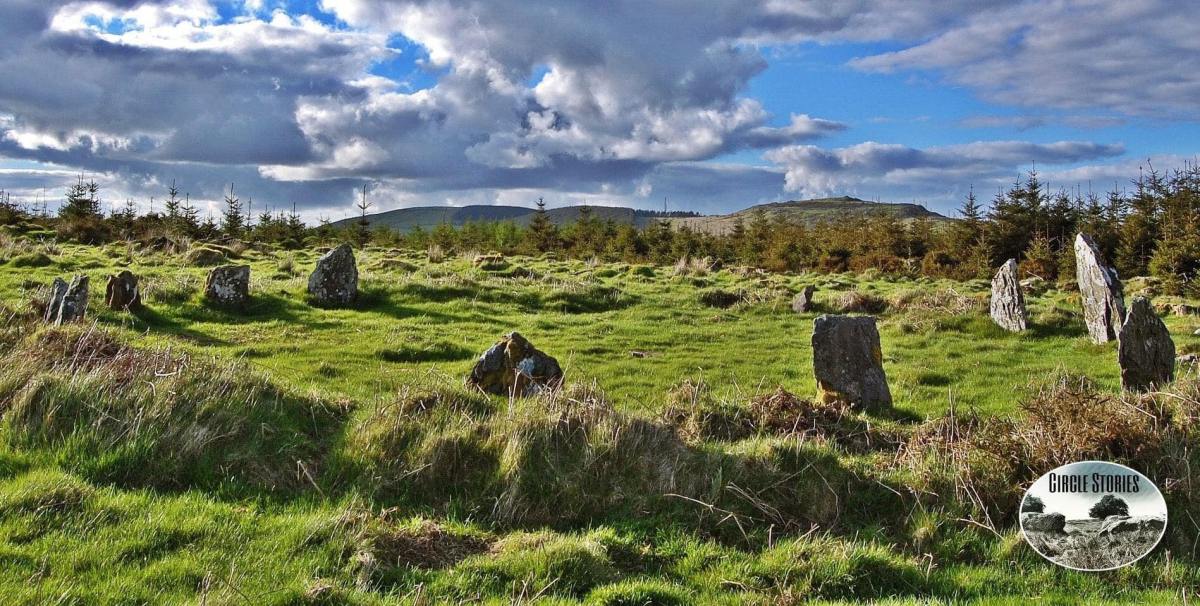
Cover image is Boleycarrigeen stone circle, Co. Wicklow, Ireland.

***

Dead but Dreaming the novel is available now.
An Investigation into Irish Faerie-Lore by David Halpin

I’m delighted to welcome my friend and colleague David Halpin as a guest author at deadbutdreaming for an investigation into Irish faerie-lore. David writes extensively about Irish folklore and mythology, always producing insightful and thought-provoking articles based on meticulous research. These three pieces have been taken from his excellent Circle Stories Facebook page, which has become a go-to source for a perceptive understanding of Irish folkloric and mythological traditions. Each article is illustrated with David’s own distinctive photography of Irish sacred sites, some of which are included in this piece. Thanks to David for permission to republish these articles and photos here.

Ancestors, Fairies And The Soul In The Stars

One of the most puzzling omissions when it comes to Irish archaeology is the naming and observation of the ancient Irish shaman. Although there are some different views about who exactly the ancient Irish people were, what we can say for certain is they all came from cultures which allocated a position of the ultimate importance to this tribal role.

And yet… the evidence is there, it’s just that the interpretation is half-seen due to the world view of those who made the early pronouncements about ancient Irish beliefs and veneration. For example, many of the 5,000 year old ‘tombs’ contain ashes and body parts but they also contain art, offerings and reusable passageways and entrances. Looking at the shaman’s role in antiquity we can notice that the preservation of ancestral shrines were not places of mourning. They were places of continual communication and ritual. This task was performed by the shaman.

As the world view of ancient people began to change from the Palaeolithic into the Mesolithic and onto the first farming groups the type of veneration also began to include ancestors. The sun, moon and star cycles were continually observed but now people saw the shaman as someone who might bring back information and healing from the members of the tribe who had passed on. There is no definitive time-frame here; cultures ‘progressed’ in different stages and as the assimilation of various peoples and traditions occurred so too did their practices and beliefs.

One thing is consistent, though, and that is the shamanistic function which took place at ancient sites. This is what is missing from the Irish record. While archaeologists talk about graves and shrines they ignore the living traditions and rituals which these places were used for. Obviously our own view of death has filtered our perception of how ancient people might have behaved. Add in the fact that most early Irish archaeologists grew up with an Abrahamic view of religion and you can see why they might have been both reluctant to and unable to take into account the nuances and complexities of a spirituality that challenged their own.

Perhaps one factor which exemplifies this, and also might shed light on the multifaceted Irish concept of fairies, is the concept of the multiple-soul. This belief recurs in indigenous societies from Austronesia to Europe and is probably one you have heard of at some point before as well. Most likely it was the view shared by ancient Irish people as well. Simply put, this belief understands that the soul is divided into various parts. One part might stay within the body and remain on earth after death, whereas another part might travel in dreams or be the summation of the deeds of a person’s life.

Another part of the soul might remain outside of the body and follow it around, sometimes offering advice. It can get quite complex as the Egyptian example demonstrates with the various souls representing the personality, the cumulative deeds, the shadow, the breath and, indeed, the spiritual essence of a person.

The practice of soul-retrieval is another indigenous ritual common to cultures all around the world from Siberia to Africa and from Australia to North America. Often there is a reincarnation or soul transmigration aspect to this as well which we know was part of the Celtic cosmology. Why the multiple-soul is interesting in relation to fairies is because there has always been a contradiction between the fairies being of the Otherworld as well as being the dead themselves. However, when we view fairies from the perspective of those who believed the soul was multifaceted then these contradictions make sense.

The fairies, ancestors, goddesses and gods might dwell in the constellations but they would also be here, on earth, as the ancestral dead.

49348845_808371796178165_2496718373824495616_o
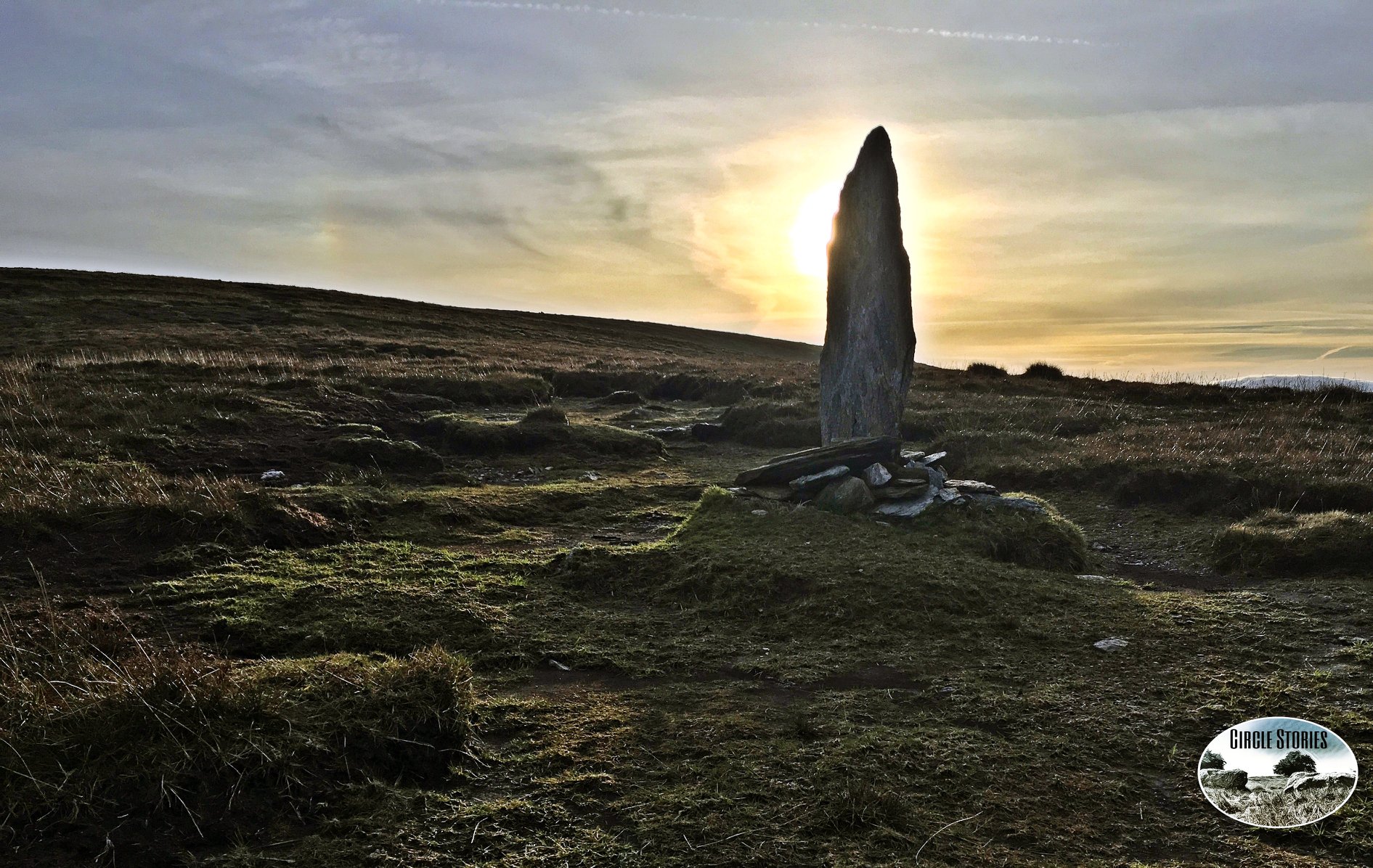
Photo: Standing stone on Tonelagee, Co. Wicklow. © David Halpin

Fairy Paths, Ley-Lines and Mass Paths

Fairy roads or fairy paths are often confused with Ley-Lines and Mass Paths. It is true that over time many have fused with one another through customs and folklore. However, it is also worth separating the more ancient ‘spirit and fairy roads’ from the later walkways from the 17th century and beyond. Also connected with church paths here in Ireland are natural rock formations called ‘mass rocks’ where funerals and masses were held during times of Catholic persecution.

But, back to fairy roads and Ley-Lines. What are the differences between these two often confused concepts? To put it simply, Ley-Lines, as envisioned by Alfred Watkins, author of The Old Straight Track, were tracks connecting ancient landmarks such as standing stones, raths and other prominent natural topographic features. Watkins himself did not see any association with spirit paths or supernatural energies but over time, as his ideas were taken up by other researchers, these attributes were incorporated.

Fairy roads or fairy paths are a different matter. These are said to be routes or invisible paths upon which fairies, the souls of the dead and other less-observed energetic forces travel. It is considered extremely bad luck to build a house on these pathways as well as removing any feature which is considered a marker for the good people on these routes. We have all heard of how farmers will not remove a hawthorn tree from their field without suffering the wrath of these enigmatic spirits, for example.

You can also read many accounts of roads being rerouted in order to avoid certain places or sites considered to be home to elves or fairies. It is worth noting that this is by no means a solely Irish consideration. Across the entire world, from Iceland to Australia, from Costa Rica to Siberia these sacred pathways are acknowledged and in many cases preserved. In the instances where a site has been destroyed or a fairy tree removed there are often reports of extreme bad luck then becoming associated with a particular spot on the road where the landmark once stood.

Because there is such an overlap between fairies and the dead it can be difficult to separate more recent folklore from the remnants of probable oral traditions and beliefs spanning much longer time periods. However, comparative mythology shows that many of the same types of spirits and supernatural forms were associated with ancient sites all around the world. Often their behaviour can be observed to have some similar traits although the motivation for this can only be guessed at.

Certainly, fairies are known to move from stone circles and raths when we reach particular points in the year such as Samhain, Bealtaine or during the zenith of certain constellation or star rises. It would be a nice project to try to determine just how encounters and sightings rise and fall before and during these yearly points. Another factor to consider is that individual hawthorn trees, stone circles and sacred sites often also have their own guardian gods, goddesses and spirits as well being markers and byways for nightly and seasonal parades.

Raths in particular are considered both sacred places in themselves as well as being portals and entrances to the Otherworld. There are many recorded sightings of fairy activity at raths in the various Irish folklore archives including this one from Merginstown, Co. Wicklow. This example from Duchas.ie contains all of the typical motifs of the fairy road: the rath from which they emerge, the fact that other raths are visually linked to the site, and the conclusion that building on a fairy path is a very bad idea! There are also legends that raths can be connected through tunnels in many cases. Some stories describe a treasure buried beneath a mound but there is usually a guardian spirit to appease before it can be reached. Often times the treasure turns out to be an appreciation of being allowed to leave alive!

“There are a number of raths or lisses to be found in Merginstown. These Raths go by the name of Moates. Some of them are formed by a deep round pit oftentimes surrounded by the remains of an old ditch or hedge. It is said that these raths are inhabited by the fairies and no one ever molests them. It is also said that one can see a lot of other raths from the one by which they would be standing. There is said to be a great many large flat stones buried in these raths but what was put under them is not rightly known. I have heard it said that at one time the fairies had a path from one rath to another, and that if anything was put on this path it would be pitched aside by the fairies when they would be passing that night. There is generally a couple of bushes to be found growing near these raths. These bushes are called Lone Bushes. If anyone cuts down one of these bushes a curse will fall on them I have heard of a man who cut down a Lone Bush and within a month’s time three or four cattle had died on him. The following is a story which I have heard in connection with the fairies.

There was once a man who lived near a fairies path. The man wished to build a cowhouse and as there was no room in the farmyard he had to build it in a field nearby. Now this was the field through which the fairies had their path. One morning he was coming in with an armful of hay and found to his amazement that the back wall had been knocked down. It was the fairies who had knocked it down because it was built on their path He built it up again that day but it was knocked down again next morning. He then decided on putting a door in the back wall. This he did and ever since the wall was never knocked down. It is believed that the fairies pass through this house at night on their way from rath to rath.”
Original Link

In this example from Co. Kildare a man finds that taking stones from a rath is just as bad as trying to destroy it. And from Carlow we have a description of ongoing encounters with the ‘little red men’ and a local rath. As an aside, those readers who follow this page will again notice the prevalence of red fairies in this area. In this case they are renowned for stealing cows which might interest UFO researchers but in many other incidents they will take a human for a day or two.

A good example of this type of incident is this account from nearby Kiltegan where a man describes the rath lighting up before he is taken away by small men playing music. And, finally, this encounter is listed as a ghost story which demonstrates the ongoing link between fairies and the dead. In this case the man has built his house on a fairy path and now has to put up with his doors being opened and the sound of people moving through his home every night. 

There are further associations between fairy paths and the original form and philosophy of Feng Shui, which may surprise people, but I will keep that for another post. I would recommend the book Spirit Roads: An Exploration of Otherworldly Routes by Paul Devereux for those who would like to delve more deeply into this subject.

47343900_788153094866702_6594245456291692544_o
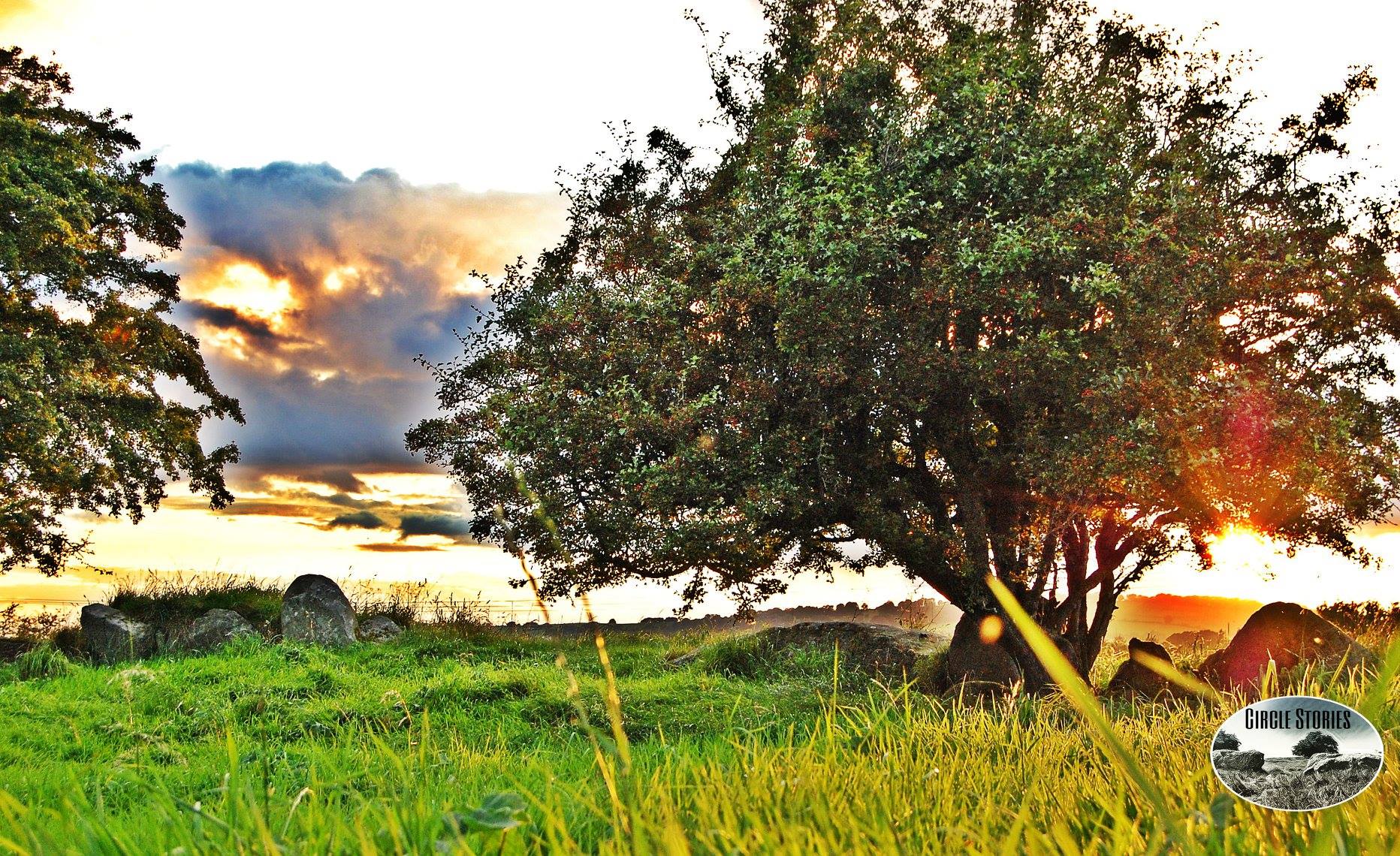
Photo: A summer evening and the fairy tree at Castleruddery stone circle. © David Halpin

Who are the Fairies?

Yes, I know. This is a question for which you will receive many answers but let’s take a quick look at some of the popular explanations which have been given down through the years and also some of the less well known theories about the good people.

The first thing many are surprised by is that Irish fairies being the banished Tuatha Dé Danann is not as clear-cut as some accounts would have us believe. In fact, in Irish mythology it is implied that the Sí were already here before the Tuatha were said to have retreated into the mounds and fairy forts. This would mean that the fairies were separate from the later Gods of Irish lore. The potential twist here is interesting, though. The Tuatha Dé were said to have arrived in supernatural circumstances themselves, emerging from clouds of mist, so perhaps this could be explained as them arriving from a fairy realm in the first place.

As mentioned in a previous post, there is also a story from the west of Ireland that fairies arrived from a western spiritual realm by travelling on the ragwort plant, also known as ‘fairy-horse’. The fairies, then, might be a memory, or an imagining, of the first Irish by the later settlers. When these people arrived and found complex monuments, stone circles and dolmens how could they not be impressed? And to find them no longer used and seemingly abandoned may have led to the belief that they were the homes and entrance-way’s to an ‘otherworld’.

Fairies are continually linked to nature spirits and supernatural beings connected to particular aspects of landscapes. This is not specific to Ireland, of course. All around the world areas considered sacred or magical are said to be the homes of spirits. From New Zealand to North Africa, from Tibet to Peru, natural features and elaborately constructed and aligned monuments are considered the abode of elementals and supernatural deities. However, this does not mean that they are tied to one place, outside of our own understanding. As Claude Lecouteux writes in his book, Demons and Spirits of the Land, “…the syncretic nature of these creatures has conferred upon them specificity so strong it conceals their origin.” (p.133).

After Christianity came to Ireland, the fairies developed a more sinful origin in newer folklore and a spiritual context influenced by a monotheistic point of view. The ambiguity of their actions meant that the good people always occupied a type of neutral space between something that could benefit and something that could harm, but now those outcomes were more simply defined as good and evil. The sidhe, depending on who you asked, might be agents of either side. This notion stemmed from a variety of beliefs which even today makes for interesting conversation.

I suppose the most simple way to put it is that fairies were seen as existing in a type of ‘not quite evil enough for hell, not quite good enough for heaven’ state. Some Christian stories even explained them as fallen angels who had rebelled against god but then regretted their actions.

These stories seem to contain the subtext of an attempt to subjugate pagan gods and spirits into a Christian interpretation of the universe. In his landmark compilation, The Fairy Faith in Celtic Countries, W. Y. Evans Wentz, tried to examine fairies from new anthropological perspectives as well as collecting first-hand accounts of encounters with the good people. One of the most complex areas Wentz questioned was whether or not fairies, ancestors and the dead were the same. Did a person who died become a fairy? Were there specific actions or circumstances that made it so? Or, was it a trick by the good folk and they took the form of dead loved ones in order to influence?

Alas, this area is both thorny and controversial. There are indeed arguments for a crossover at times but in my view, at least, this is linked strongly to the perspective of the person or culture at the time. This trickster capacity will raise its head again in the post but for now this quote from the writer, Morgan Daimler, sums it up quite well, “If one could imagine it as a Venn diagram we would see fairies as one circle, the human dead as another, and the area where the two circles overlapped would represent those who fall into both groups-how small or large that is no one can say for certain.” (p. 41).

Another argument Wentz makes in his book might seem odd to us today, namely that fairies are not to be confused with pygmies. Many people are unaware of the popularity of this explanation but it was an argument prominent enough for Wentz to feel the need to refute it. The 19th-century historian, David MacRitchie, believed the Tuatha De referred to an early Inuit pygmy race who first inhabited Ireland and Northern Europe. His thesis was that this was the basis of the cultural memory of small people.

Today, this idea has become popular again among certain researchers who have drawn parallels to the Twa tribes of Africa and the similarity to the word Tuatha, as well as accounts of dark-skinned Picts in Scotland and Orkney. However, MacRitchie did not believe the pygmy race came from Africa, but from Northern Eurasia. These ideas are not accepted by most scholars, it has to be said.

Although some entrance-ways into mounds and cairns are indeed small, there are also many other sites where the opposite is the case. MacRitchie’s explanation also fails to account for the huge amount of encounters with taller fairies, sometimes known as the gentry. Again, this is a much more complex issue than this short post will be able to cover.

Finally, the explanation for fairies which many contemporary scholars and writers seem to favour is one that fits perfectly with the contradictory nature of these beings. In this view, fairies take on the cultural forms most prevalent to those they appear to. So, the angelic and demonic forms fit the myths and lore of ancient times, for example. Are they aspects of our collective unconscious or even psychological manifestations leading us further into timelessness and non-material aspects of ourselves?

In this view, as we move through the centuries, art, religion and writing begin to influence how these beings are perceived. As we became more and more embedded in technology and urbanization, fairies became aliens and inter-dimensional travellers. Now, if you are unfamiliar with this topic the comparison might seem odd but, in fact, there are many places where striking similarities emerge. Fairies and aliens both kidnapping for midwife purposes is one, changelings replacing human children and spinning bright lights resulting in missing time are others. The writers Jacques Vallée and Terence McKenna have written extensively about this subject, and it’s a topic that receives ongoing attention at deadbutdreaming.

So, as you can see, the concept of who the good people are seems to become more complex as time moves on. But is this really the case? Perhaps fairies have always stayed the same and it is us who change and grow, allowing us to comprehend a little bit more of the whole picture with each new generation. Then again, maybe we will never discover what fairies really are and this is the way it is supposed to be; to hold mystery close to our hearts and to continue to imagine and believe in something other than ourselves.

38686081_704773243204688_8848183940352049152_o
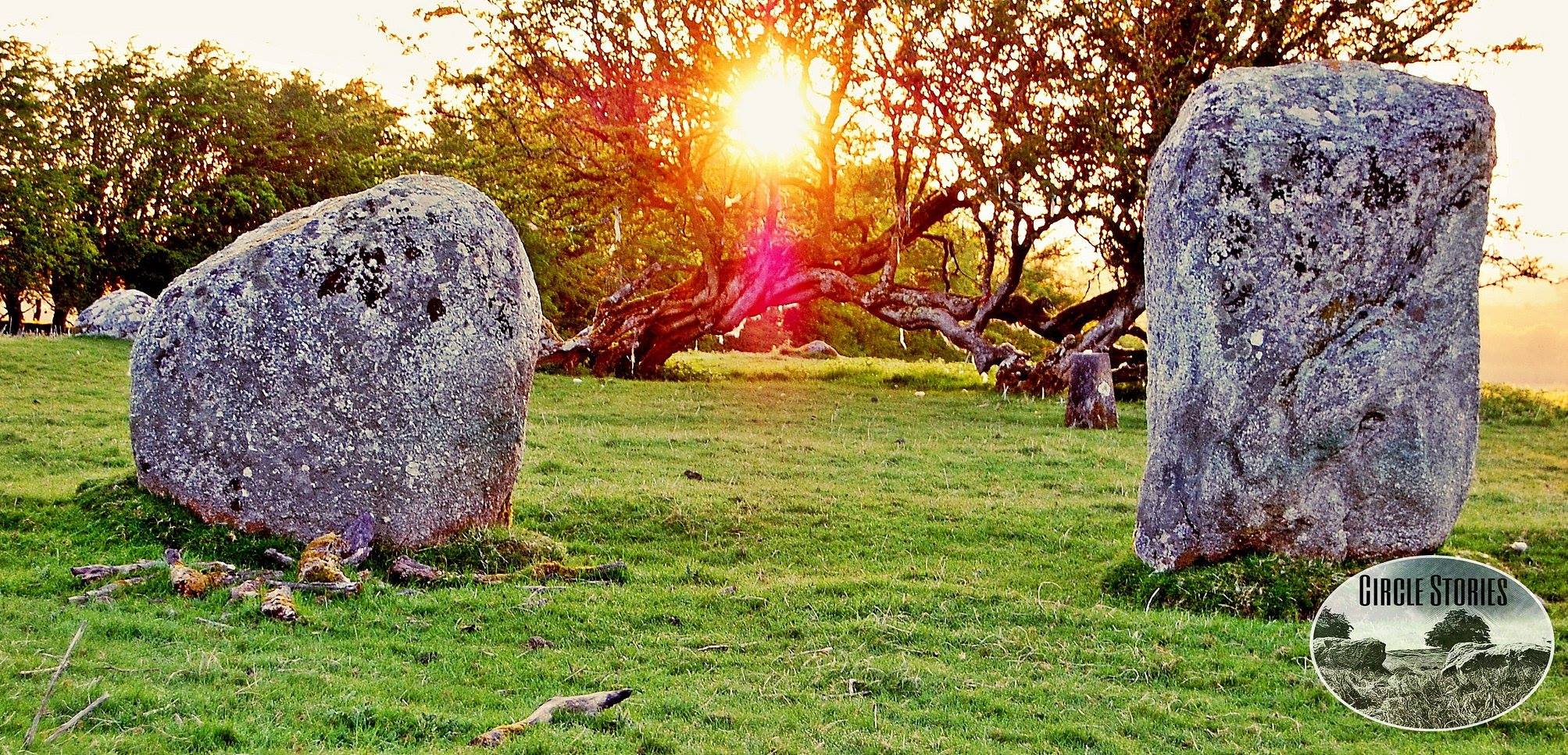
Photo: The sun sets behind the fairy tree at Athgreany and between two of the ancient stones. © David Halpin

***

A free e-book containing a year’s-worth of Circle Stories can be found here: A Year of Circle Stories: Folklore, Sacred Sites, Mythology and Local History of Ireland’s Ancient East.

David also curates The Occult Book Review, with an associated YouTube channel.

The Miracle of the Sun, 1917: Ancient Angels at Fatima? The Possible Common Origins of Star Gods by David Halpin

My colleague David Halpin has produced another corking article on the fabulous Ancient Origins website. It’s about the mass vision of angels at Fatima in Portugal in 1917. It’s an historical event that has received much attention from luminaries such as Jacques Vallée, David Icke,  Jim Marrs, Joaquim Fernandes and Graham Hancock, but in this article David puts an innovative slant on things, as you will see.

In early spring 1916 three local shepherd children, Lúcia Santos and her cousins Jacinta and Francisco Marto reported that they were visited by an angel on several occasions. These visits later became known as and attributed to the Roman Catholic title – Our Lady of Fatima, or the Virgin Mary. As word of this spread, thousands of people flocked to the area to visit the children and the location of the event. It was said the visitor had promised a miracle for October 13 the following year.

During the Miracle of the Sun event on October 13, 1917, over 80,000 people witnessed an event at Fatima where a bright disc-like object spun through the sky and swooped over the crowds below. The disc radiated colored lights and is said to have emitted heat before returning to the clouds.

Here is the article: The Miracle of the Sun

Are Stone Circles Ancient Pregnancy Calendars? by David Halpin

Here’s something a little off-faerie kilter, but actually intimately connected to them. My colleague in all things esoteric, David Halpin, has just published some of his recent research into prehistoric stone circles on the Ancient Origins website. His intriguing hypothesis is that, amongst other uses, the stone circles acted as pregnancy calendars for the communities that used them.

Stone circles were almost certainly used for a variety of purposes, both metaphysical and practical. In a previous post, Going Round in Circles: The Faerie Dance, I suggest that they were partly utilised for shamanic dance rituals, designed to alter the state of consciousness of participants. We cannot find a direct archaeological route into prehistoric ritual dance, but the Neolithic and Bronze Age stone circles of Western Europe are highly suggestive of monuments built for a ritual that involved circular movement. In the mind-bending 1977 TV series Children of the Stones (the sort of crazy 1970s children’s television that will leave you dropping your jaw if you’ve never seen it… you can give it a try here: Children of the Stones, full series), a secret sect uses the energy of the

cots3
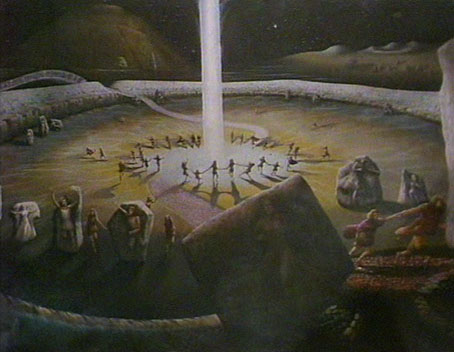
The Avebury circle dance from the TV series Children of the Stones (1977)

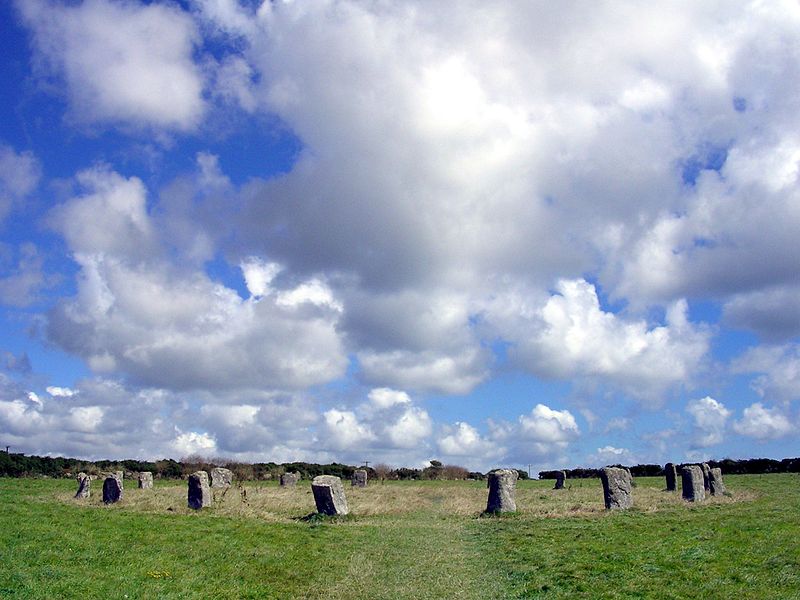
Neolithic stone circle at Avebury to create power for their own nefarious purposes. The painting shown here hangs on the wall of the sect’s leader, and is constantly referred to visually in the series. It shows the stone circle in its prehistoric heyday, a beam of light being generated from the centre by the whirling circular dancing of people. This might be a case of fiction getting close to the truth, with the idea that frenetic circular dancing was a technique to unlock an energy, whatever that energy might be. Folklore certainly embeds the notion that dancing is intimately associated with stone circles. Many stone circles come complete with a legend that the stones are petrified dancers, a pagan theme christianised by stating that the dancers were punished for dancing on the Sabbath. The Merry Maidens stone circle near St Buryan in Cornwall is a good example, where the story tells us that the nineteen stones are young girls turned to stone for non-observance of the Sabbath. In this case there are even two outlier stones, that take the part of pipers in the story. These petrification stories can be multiplied many times at other stone circles, especially in Britain. It’s not too much of an interpretative stretch to suggest that these folktales represent a mythic memory of one of their original purposes – circular sacred spaces for circle dancing. For whilst the stone circles would have been used for various purposes (including David’s pregnancy calendar), their shape suggests rituals that saw the circle as sacred – a representation of wholeness and infinity that would have found manifestation in physical activity in and around them. A place to dance to music and singing may have been one of the main reasons for their construction. And in shamanic cultures such dancing was just another method (either alongside or instead of ingesting psychoactive plants) to alter states of consciousness so as to be able to interact with the otherworld of spirit. One neat theory is that the faeries are one and the same as our psychedelic prehistoric ancestors. Their intense circular dances have embedded themselves into certain parts of the landscape through the latent emotional energy they generated, to be tapped into by sensitive or stoned individuals in touch with the Collective Unconscious of humanity. The common folkloric motif of people finding themselves trapped within the circles is nothing less than a shamanic experience of travelling to a dimension of reality separated from our own only by a malleable membrane. The sense of unreality and time distortions that usually occur to the protagonists in these stories are very suggestive of an altered state of consciousness. They interact with otherworldly beings, they hear supernal music, and they become caught up in this world completely, to the extent that their perception of the passage of time is altered radically.

Anyway — here is David’s excellent article, linked below…

Even today, giving birth can be one of the most dangerous moments in a woman’s life. In ancient times it would have been even more so. Matriarchal societies would have tried to ensure the safest environment possible for expectant women. By placing individual marker stones or stakes within a permanent calendar circle of immovable stones aligned to yearly points, a due date could be predicted and prepared for. But how could this knowledge have been forgotten?

The full article can be found on the Ancient Origins website here: Are Stone Circles Ancient Pregnancy Calendars? by David Halpin

800px-The_Merry_Maidens_Penwith
The Merry Maidens stone circle near St Buryans, Cornwall, c.2000 BCE