Lineaments

She was like me in lineaments — her eyes
Her hair, her features, all, to the very tone
Even of her voice, they said were like to mine;
But soften’d all, and temper’d into beauty;
She had the same lone thoughts and wanderings,
The quest of hidden knowledge, and a mind
To comprehend the universe: nor these
Alone, but with them gentler powers than mine,
Pity, and smiles, and tears — which I had not;
And tenderness — but that I had for her;
Humility — and that I never had.
Her faults were mine — her virtues were her own —
I loved her, and destroy’d her!

Lord Byron, Manfred, Act II, Scene II.

***

It is the hardest thing to watch your child die. The doctor had instructed me to ensure that in her final days she was able to look out upon God’s bounty (the doctor, despite the usual leanings of his profession, was first and foremost a Baptist), and so I had set up a bed in the upstairs study with the large sash window, where Medora could look out across fields and hills to the distant canopy of the orchard. The orchard. I wish I had never known of its existence; or that it had always remained as nothing but a distant, detached arboreal view. I would always sit with my back to the window when abiding with Medora. I could not bear the sight of it — its loathsome September opulence infecting the air, and coaxing disaster from my memory. 

In the final days Medora began coughing up more blood. I did not want to wash the handkerchiefs — they were to be saved so that I would have a part of her when she was gone. Instead, I ripped up some of my linen shirts for the purpose. Each tear felt like the cleaving of a life-force; existence coming apart at the seams. But for her I always smiled and hid my tears. And mostly she slept, sedated by the doctor’s potions, which allowed me to leave her for periods and cry my tears and rue what I had done; the destruction I had brought upon her, and upon another.

One gloom-filled dusk, close to the end, I returned from the well, brought a pitcher to her bedside, and found her more lucid than she had been for days. She even had the equanimity to hide one of the bloodied linen cloths beneath the pillows. I sat with her and listened to her babble for a while, stroking her hair and attempting to be present. After a lull she settled down, eased herself back in to the pillow and brought her blue-eyed gaze to mine.

‘Tell me about mama,’ she said, her voice suddenly older, manoeuvring the air between us.

‘Mama?’

‘You never talk of her. Why was she called Astarte?’

‘This might not be the time my sweet,’ I said, trying to suppress the shake in my voice.

‘Please papa… pleeease.’

I kissed her forehead and pulled the blanket up to her chin. Soon her eyelids flickered close and her breathing began to sink in to the rhythm of sleep. 

‘Please papa,’ she murmured, as her head lolled.

I got up gently, lit a candle, placed it in the holder and put it on the table next to the bed. The room transformed from dusk grey to softened arylide yellow. I sat back on the bed and assured myself she was asleep. Why should she not know? The words would live only in her dream world, but I needed to tell myself what had happened, what I had done, and what had been wrought. I had occulted it, but now it needed to be revealed. Be it so.

*

I found the orchard one midsummer day as the Earth turned and became a darker green. And yet I always remember the arboreal presence as cornflower blue — a cyan haze in the sweetened air transformed the grove in to a sacred space, its colour marking it out as separate from its surroundings. It was strange that I had not discovered the orchard before. I thought I knew the land hereabouts; its folds and combes were the setting of my youth, and it should have been visible from the much-travelled track to my house. From there, it could be discerned, but only as a distant tenebrous blur, partly obscured by treeless hills. Perhaps an enchantment kept me from its confines until the fatal days came, or maybe it was never really there, at least not as it should have been.

I always felt the presence of something in the orchard; some mind, or minds, inhabiting the trees and watching me. It attracted and repelled me in equal measures, but I never saw anything apart from fleeting movements amidst the gnarled branches and shadows slithering up and down the twisted trunks. The summer heat usually made me feel the pull of sleep as I sat beneath the cover of the largest tree in the orchard, but I never succumbed to it completely, and would manage to haul myself from slumber for fear of being left vulnerable. Vulnerable to what I knew not, but the undisclosed existence in that space became more tangible and minacious when drowsiness brought on its unreal vistas and sounds, so I always managed to remain awake and aware within its bounds.

And then, one day, she found me there. The lineaments of our blood drew her to me I suppose. I watched her glide through the grass, hitching up her long chiffon dress and being sure to touch each tree she passed. She never wore a bonnet, and this day her hair had been let down, so that it shimmered gold in the dappled sunlight. I made a token effort to conceal myself in the longer grass under my tree, but I wanted her to find me, and she did. She sat down beside me as if in a huff, just as she had always done, and began to talk away as if both of us being in that strange and formerly unknown refuge was the most natural thing in the world. But it was not natural — there had been a passing of something, and we were changed by the place. It had cast its spell.

As the days passed we became closer. We began to talk about things we had never talked about before. Like me, she had the quest of hidden knowledge, and in that place we speculated on universal unknowns and ghosts of ages past. My lone thoughts became spoken words for the first time; her ruminations found a willing host, where none had previously been. I spoke of lights in the sky and angels, she told of the fair folk hidden in mysterious otherworlds. Our secret chatter made its mark there — the orchard heard us and soaked up our confidences in to its occult memory. And closer still we became. But she recognised the limits more than I. Her love was different than mine. Her tenderness was refined by our blood, mine was explicit. 

One day she did not come, and I became irritable and despondent at her absence under the tree. My thoughts seemed purposeless and they drifted, without her to unlock their code. It was the hottest day of summer and I began to succumb to a sultry daze. The undisclosed presence of the orchard bristled over me, but I could not stave it off with wakefulness, and within minutes I slept, allowing my subdued mind to be opened up to the company of another. 

*

I had a dream, which was not all a dream. The tree became animate, not of its own accord but from that which lived within it. Skulking from out of the bark, whilst retaining its gnarly aspect, came a creature who lured me in to a slithering embrace, filling my mind with his memories and scenting the air with the moss of years. His was an existence dictated by the seasons and his responsibility for fertility, and midsummer was his enchanted time. This allowed him to offer me what I wanted more than anything. I wanted her, despite the proscription. He held on to me in his lascivious way and took me somewhere with stars in the sky and bathed in the smell of fermentation. I was made promises, but the result of those promises would have a price to pay. He instilled in me a sense of dread but the transaction was made. I accepted it thinking the pact might mean a quietus for me, but for her I was willing to take the Apple-Tree Man’s nebulous offer. Then a change came over the spirit of my dream, and voices from the deep abyss revealed a marvel and a secret — be it so.

*

The secret end of the dream was only dimly remembered, but the contract with my strange being was instilled within me and I was fated to use it to parlay what was implicate into something real. Despite the lingering disquiet about my reverie I knew it was in some way a true vision, and the dread of the vanished shadow became dispelled in the face of me gaining her… gaining her completely.

The next day she came again. I held her and she shied away. But then she saw the single apple hanging at head height from the tree. Absinthe green it was — unnatural in both its midsummer ripeness and its colour, but alluring beyond measure. We glanced at each other, I plucked it from the tree, and we both ate it in turns. Then a summer storm glistened over the orchard and we fell together, and remained together in our recondite love.

*

‘She died when you came in to the world my sweet,’ I whispered. But Medora was gone — her mind resided elsewhere. However, for a few glimmering moments her essence accompanied my trembling body to the window, where we stared out towards the orchard in the last remnants of twilight. The bare landscape stretched away. The orchard was gone, and so were they. I had loved them and destroyed them.

***

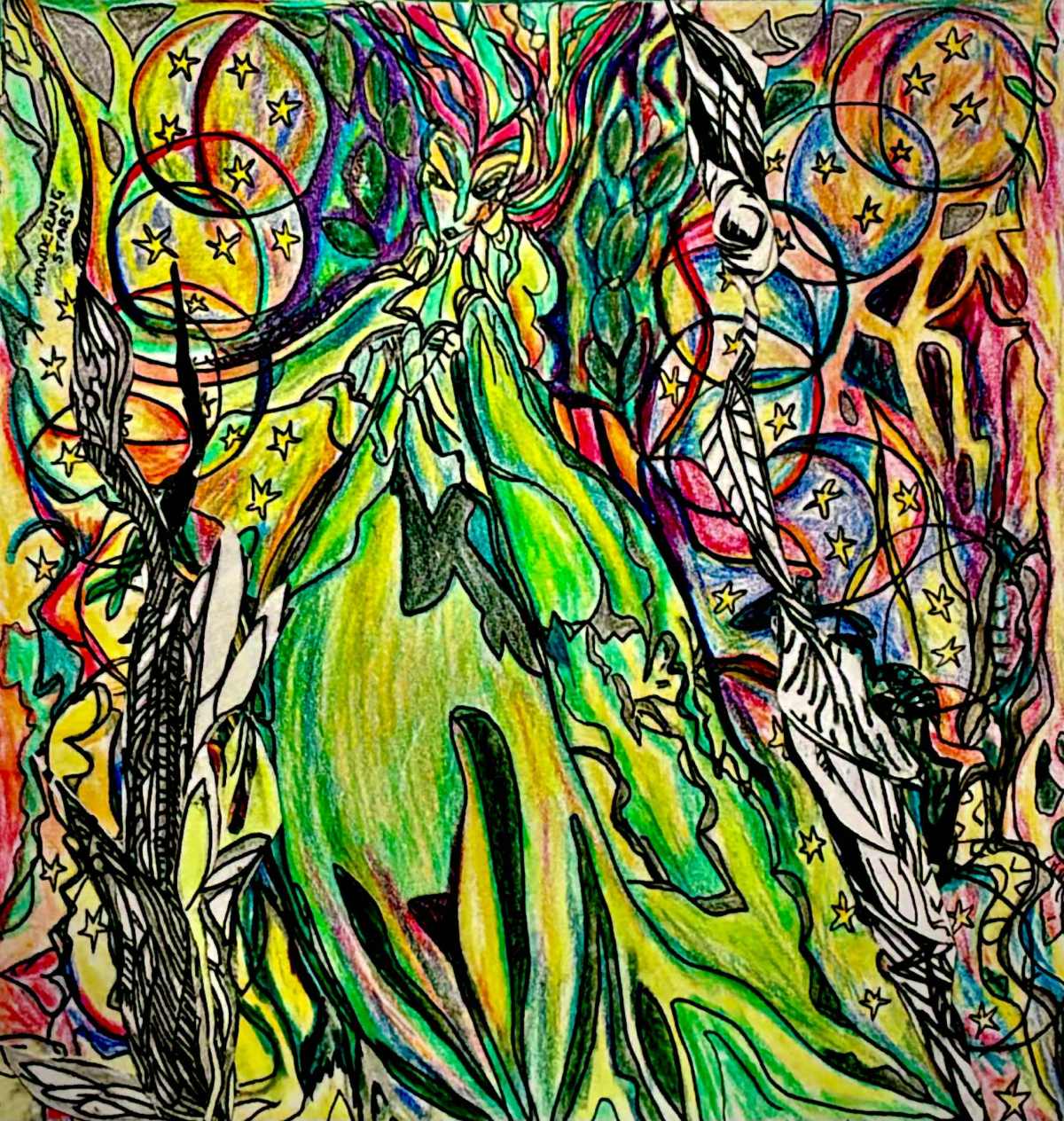
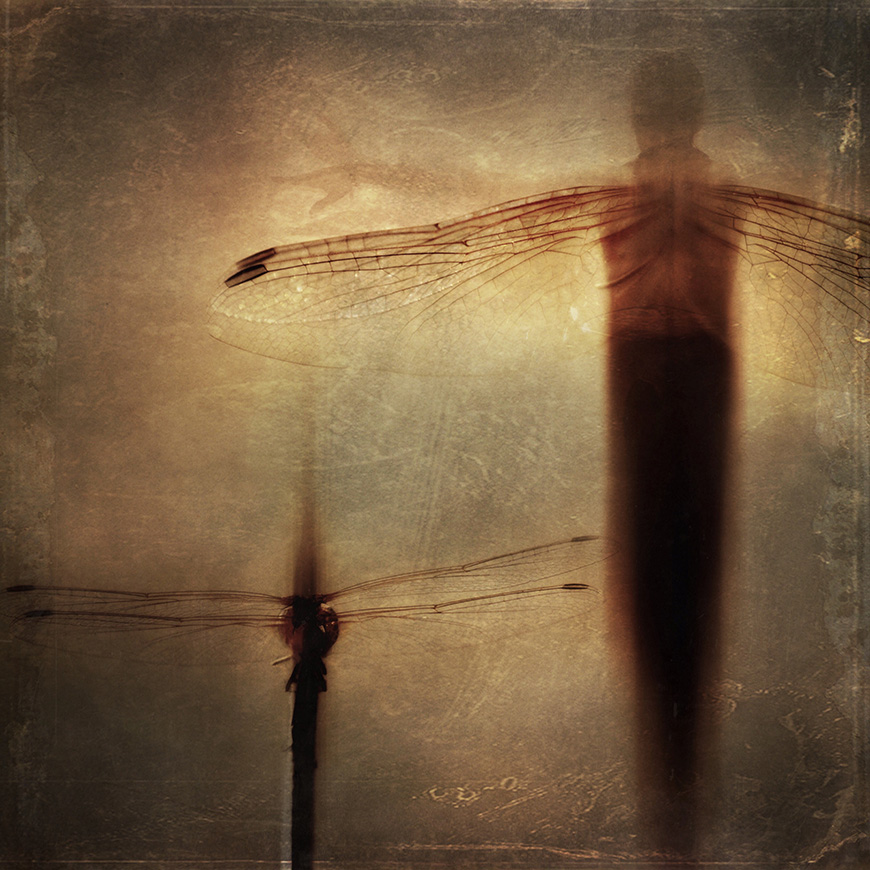
The cover image is ‘Wandering Stars’ by Victoria Darcy.

*

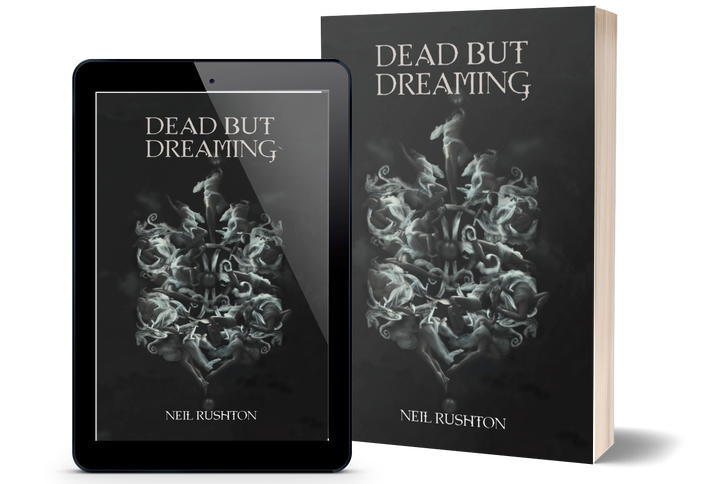
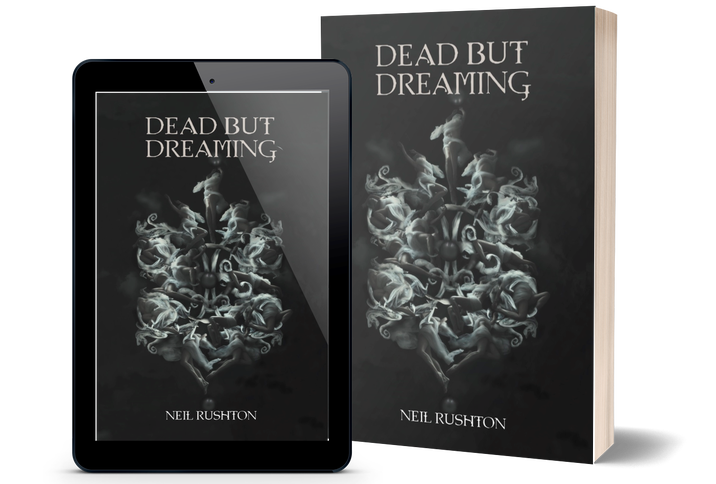
Dead but Dreaming the novel is available now…

***

Arboreal

My new short story about a tree, the nature spirits who inhabit it and death.

Arboreal

Before I died I spent most of my days with the oak tree. It was in a park by a river, which I could walk to most days when my illness allowed. Obviously, the seasons modulated the experience. In winter I huddled at the trunk until freezing rain drove me away, in spring I still huddled but warmed myself at the sight of crocuses and bluebells emerging beneath the boughs and leafing branches, in summer I luxuriated in the dappled heat while pretending to read a book, and in autumn… in autumn my mind always turned towards death amidst the mouldering leaves.

After a couple of years I’d got to know the tree. It was old and seemed to tell me things I couldn’t know. It whispered them through its bark, infiltrating me as I sat with my back to the trunk. I began to talk to it and to see the shapes of its being in the gnarled trunk — faces and bodies; humanoid in quality, but arboreal in nature. Pareidolia I supposed, but they changed with the shifting light and sometimes when I stood up too quickly they would morph before my eyes until the head-rush subsided. It was a kind tree, of that I was sure. It stood removed from its compatriots and its apparent loneliness touched me. I was lonely, and ill, whereas its solitary disposition seemed to give it strength and vitality. I would always sense it attempting to pass this on to me, and when I left after spending time with it I would be stronger and less afraid of what was coming. I began to love the oak tree, as I had never loved anyone or anything before. I told it so, and it returned the love in a deep patterned resonance that I have only truly understood since my passing.

One warm late-August day, I put on a summer dress and took my walk to the park. Some boys on bikes stopped to mock me — my heavy limp and awkward gait were always exaggerated when I wore a dress — and I reached the park agitated and shaking. My tree comforted me but I was disorientated and teary. I asked the tree to help me, to take me away from all brutality and wretchedness, to show me something meaningful and beautiful. It answered with a lulling as the heat of the day melded me to the trunk and sleep came quickly and decisively, and a dream turned the past into the present. 

I am facing the oak, hands aloft as if in a prayer to a god. And the oak is alive with a thousand beings pulsating through its trunk, running up and down it like a stream of vitality. They speak to me somehow, though the words are more like a breath in the wind:

‘We are here. You are in a dream that is not all a dream.’

I move to the trunk and hug it. They swarm over me and and change my ideas; they go through and through me, like wine through water, and alter the colour of my mind.

‘Who are you?’

‘We are this tree. We are its life. We care for it and it cares for us. We have watched you and waited. Now you are with us. You are important to us. We have come to love you. We feed from your own love. Others do not love us as you do. We will suffer when you leave us. But this is as it should be. We must suffer to free our pain.’

‘How? Why?’

But there is no answer. I feel myself meld into the trunk and hold my arms out to mimic the branches of the tree, as lifeforms immeasurably different to me probe my memories and bring them to the fore. The pain, regret, joy, grief, dullness, hope, betrayal, realisation… all manifested in a singular moment. I am overwhelmed and fall to the ground. One of the beings comes to me and sidles up. His mossy hand touches my face and wipes away the tears. And voices from the deep abyss reveal a marvel and a secret. Be it so.

I awoke and the present became the past. I walked home and ruminated for days on the dream. My tree was alive, in ways I had never imagined, and had spoken to me via its intermediaries through my dream consciousness. The arboreals had tried to talk to me but I was not able to understand the cosmic import of the message. However, I did know it was a message of death. A transcendence was imminent. I accepted this, even though at the time it scared me to the core. 

The last time I visited the park was a grey November day, with drizzling rain marking the onset of another dismal winter. Since my dream I had often attempted to fall asleep at the tree to reproduce the numinous experience, but was always unable to do so. The arboreals were close to me though, making contact in subtle, subdued ways. They used bird song, wind, the rustle of the oak leaves and even the distant voices of humans to speak to me, and in the ever-changing contours of the gnarled bark I could see what they might be, as if they wanted to show themselves again but were unable. On that final November day I touched my face to the wet trunk and breathed in the benign mustiness. It was the tree’s smell and theirs. I began to cry. I watched the tears drop to the ground and dissolve into the ground with the rain, feeding the oak’s roots and leaving a part of me with the very essence of its being underground, where all its secrets were kept. I knew this was an ending. I took off my necklace with a small Apophyllite crystal that my mother had given me as a child and buried it in the soil at the base of the oak. Then I kissed the tree, turned and walked away, never once looking back. I still sobbed, and in an echo of stillness I heard the sobs returned to me from the tree as if in apology and in consolation.

*

The park-keeper had become aware of the girl a few years previous, watching from his lodge-house at the entrance to the park. She always sat with the old oak tree, in a secluded part of the park, but out of respect he had never disturbed her or talked to her once, not even to say hello. Before she came the tree was ailing, and he suspected it was near the end of its life. But after she came it rallied — the canopy freshened and its tired limbs seemed invigorated. He’d always held the oak in reverence and was delighted to witness its new spurt of life. He was a practical man, but he became sure that she had brought some magic to bear. 

But she came no more since the previous November. He watched for her but she was gone. And from that time the tree, once again, began to fail. Its autumn leaves were riddled with fungi, the bark became cankerous and bled sap. Some boughs weakened and fell during the winter storms. When spring came it was evidently dead. Its gaunt boughs and leafless branches contrasted with the teeming greenery that had transformed the rest of the park. By summer it had been deemed a safety risk, and in November it was felled on the very day the park-keeper had last seen the girl the year before. He kept some of the wood and carved it into faerie-like characters, which he installed outside the lodge-house, to the delight of children visiting the park.

On Christmas Eve the park-keeper walked down to the oak stump at dusk as he always had since it was felled. Glistening in the reflected light from the lodge-house lantern he found a crystal necklace on the stump. Something moved in the air beside him — a whispered breeze, a voice without words. It was a presence that was there but not there… dead but dreaming. Be it so.

***

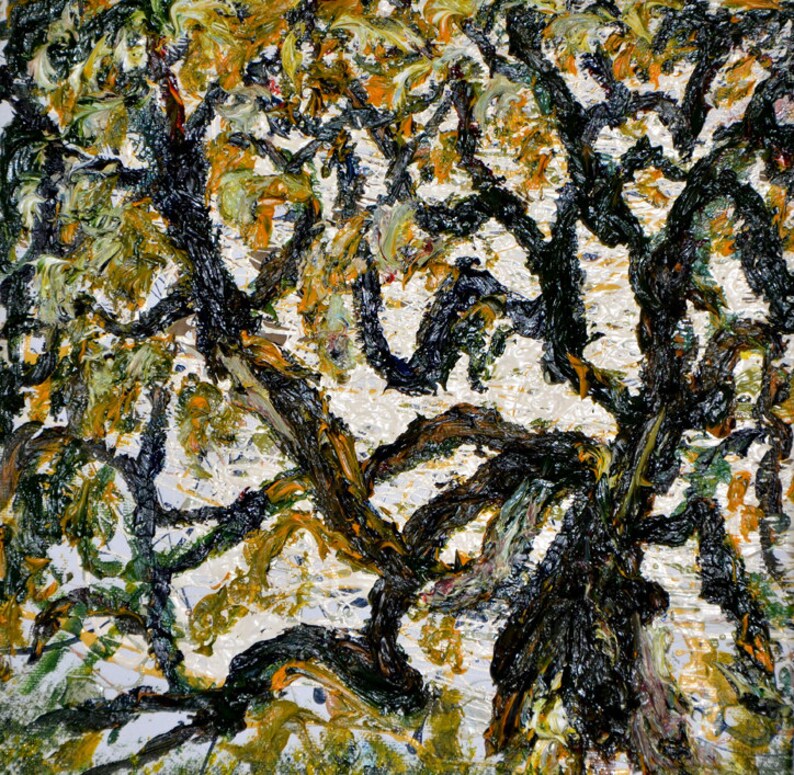
The cover image is ‘The Mighty Oak Tree’ by noshiahmad.

***

Dead but Dreaming the novel is available now…

The Connection between Faeries and Prehistoric Sites

The Faeries and Prehistoric Sites in Folklore and Modern Testimonies

There is a deep connection between the faeries and prehistoric sites throughout Britain, Ireland and Western Europe. This connection is recorded in the folkloric record and in modern testimonies, suggesting a metaphysical linkage that may provide a deeper understanding of the faerie phenomenon. The oldest recorded story of human interaction with the faeries at a prehistoric site comes from the 12th-century chronicler William of Newburgh. In his Historia rerum Anglicarum, William chronicles the historical timeline of events during the reigns of Stephen and Henry II, but included in the chronicle are numerous marvels; stories from local folkloric traditions, including the famous tale of The Green Children, and also discursive tangents in to subject matter such as revenants – revived corpses, sometimes described as medieval vampires. One story related by William appears to have been with him since his childhood, and involves a faerie encounter at the late-Neolithic/early-Bronze Age burial mound called Willy Howe in the East Riding of Yorkshire:

In the Yorkshire province, not too far from the place of my birth [Bridlington], a miraculous thing occurred, which I have been familiar with since my childhood. There is a village some miles away from the North Sea, near which famous waters, which are generally known as Gipsey, gush out of the ground in a number of springs… One day a rustic of the village just mentioned, went to visit one of his friends in a neighbouring village, the road to which lay near a tumulus, a road, therefore, which we may easily suppose people would not then willingly choose to pass at night. However, the love of beer, which was then even more powerful than at the present day, kept the rustic visitor until a late hour at night, and when at length he started on his way home he was all the happier for his entertainment. As he approached the tumulus he was astonished to hear merry sounds issuing from it, which betokened that it was occupied by a party who were feasting. Wondering who could have come to that lonely spot to enjoy themselves at such an hour, he approached nearer to the mound, and then, for the first time, he saw a door open in its side. Our rustic friend, who was well mounted, rode boldly up to this door, looked through it, and beheld, inside, a spacious building, brilliantly illuminated, and a large company of men and women seated at a magnificent entertainment. As he stood there staring at the door, one of the cup-bearers, seeing him, approached and offered him the cup to drink. Now it must be remarked that, according to the doctrines of faerie lore (for these were faeries), when a mere mortal approached their assemblies accidentally, the faerie-folk always offered some of the liquor they were drinking, and if it were taken, the consumer immediately lost all power of returning home, and was carried away into faerieland. But the rustic of East Yorkshire was too wise for that, for he poured the contents on the ground, and, grasping firmly the cup, started off at full gallop. The faerie feasters rushed from the tumulus, and gave chase; but the horse of the fugitive was a good and swift one, and almost by miracle he reached his village in safety, and secured his valuable prize. In the end this goblet of unknown material, unusual colour, and unfamiliar shape, was bestowed on King Henry I, and later delivered to David, King of Scotland. It was later returned to King Henry II and has remained in the royal treasury.

Willy Howe was evidently still attracting folkloric resonance in to the 20th century, when the reverend William Smith, in his 1923 publication The Ancient Springs and Streams of the East Riding of Yorkshire, recounted a tale from the indeterminate past where a man was befriended by a female faerie on the mound and promised a guinea each day if he would meet her there. He was sworn to secrecy about the contract, but eventually told some friends, after which there were no more guineas and he was punished (although Smith gives no details as to what the punishment was) by the faerie occupants (a common folklore motif).

While the Willy Howe story recorded by William of Newburgh may be the earliest correlation of the faeries to prehistoric burial mounds, there are many more examples, which while not collected until the 18th and 19th centuries, had evidently been collating through the oral tradition for many centuries. In his 1976 publication Folklore of Prehistoric Sites in Britain, the archaeologist Leslie Grinsell catalogues a considerable number of folkloric faerie encounters at prehistoric sites, most of them Bronze Age burial mounds (barrows). He even produces a distribution map, which demonstrates clusters of stories in Scotland, the Midlands and the North-West and South-West of England.

Much of the folklore recorded by Grinsell is associated with faerie music being heard at the burial mounds, usually including an allegorical lesson being learnt or a gift being given to the person who heard the tunes. For instance, a man who built his house on Mingulay Dun, in Barra, Outer Hebrides, had to move away after being persistently kept awake by the sound of faerie pipes and refrains, but stayed long enough to learn some of the tunes. Bincombe and Whitcombe in Dorset both have Music Barrows, where the sound of faerie fiddles and flutes may be heard at midday – fitting in to the common motif of experiencing the faeries being temporally constrained to a certain time of day. There are also many cautionary tales associated with faeries and barrows, such as the cup taken by a man who encountered a faerie feast on the barrow called Fairy Hill at Orrisdale on the Isle of Man: “A fairy offered the passer-by a drink from a silver cup, but he threw out the contents and the faeries disappeared, leaving the cup in his hand. He sought advice from his priest who persuaded him to present the cup to Kirk Malew Church for use at communion. It was later noticed that whenever the cup was used there, those who drank from it went mad afterwards, and so the use of the cup was abandoned.” But the faeries also have a benevolent role to play in stories surrounding their presence at prehistoric burial mounds. At Pixies’ Mound, Stogursey, Somerset, a ploughman on his way to work noticed a broken peel (a wooden shovel for baking cakes) on the barrow. He mended it and replaced it where he found it. When he returned from work the peel was gone, and in its place was a freshly baked cake, interpreted as a reward from the faeries for repairing their implement.

Grinsell records over sixty folkloric stories of this type in Britain, a number that could be multiplied several times if a modern assessment based on new research were to be carried out (Janet Bord’s 2004 book The Traveller’s Guide to Fairy Sites is the most up to date assessment, which takes the number of sites to about a hundred). The allegorical, motif-ridden overlays of all the folkloric examples should not distract from the very real correlation to an idea of the faeries and their relation to prehistoric sites – the historic tradition evidently made a connection between supernatural entities and ancient burial mounds. The deep association in many traditions of the faeries and the dead (the ancestors) may be one reason for this, and will be discussed below.

In Ireland the association is made explicit; the faeries (aes sídhe) are ‘the people of the mounds’, although many of the legends attached to these sites are more mythologically derived compared to British folklore. Prehistoric burial mounds such as Sidhe Finnachaidh, Sidh-ar-Femhin and Brí Léith are sites utilised within the Mythological Cycle of Irish stories and poetry, which link faerie royalty with prehistoric burial mounds. So, while the Irish stories contain more grand narratives than the British folklore, the point remains that there is an intimate link between the mounds and the faeries in folkloric/mythological narratives throughout Britain and Ireland.

However, Jeremy Harte makes the valid point that faerie hills are not always burial mounds and that perhaps the folkloric prerogative was to house the faeries under any prominent hill or mound for the purposes of a narrative rather than any close correlation between prehistoric burial locations and the faeries. Indeed, two of the most famous faerie hills are natural and not burial mounds. These are Doon Hill at Aberfoyle, where the Rev. Robert Kirk consorted with the faeries and met his death in the late 17th century, and the Faerie Hill of Sithean Moor on Iona, which has a long association with the faeries, and was also the location of the mysterious death of a young occultist by the name of Marie Fornario in 1929. But it remains true that most ‘mounds’ in the folkloric record are Neolithic or Bronze Age barrows, which suggests an intimate link between these sites and the faeries, and also a deep recognition of this among the people who were perpetuating the stories in the historic period.

While burial mounds seem to be the most popular faerie haunts in the folklore, there are also many records of faerie interactions at other prehistoric sites. Stone circles most commonly have the attached folkloric motif of being people petrified into stone for some misdemeanour (most often dancing on the Sabbath), but sometimes there are faerie correlations. Fingal’s Cauldron Seat is a small Neolithic stone circle on Machrie Moor, Isle of Arran, which, in the folklore, the Irish giant Finn set up to hold his cauldron. One of the stones has a perforated hole, of which the 19th-century historian John McArthur notes: “… was probably associated with some old superstition or religious ceremony, now forgotten. The hole is sufficiently large to admit the two fingers, and runs perpendicularly through the side of the column… The perforated column was believed to contain a fairy or brownie, who could only be propitiated by the pouring of milk through the hole bored in the side of the stone.” And at the Rollright stone circle in Oxfordshire there is a persistent folkloric story that the faeries emerge from a hole in a rock in the former quarry close to the King Stone to dance around the stones during full moons. It is interesting that in both these cases it is a hole in the stone that leads down to a faerie space, insinuating that (as with the burial mounds) the faeries are usually to be found underground.

Mitchell’s Fold stone circle in Shropshire is associated with an interesting piece of folklore that has the attributes of ancient oral tradition, even though it only first appears in the record during the 19th century. Leslie Grinsell summarises the legend in his booklet Mitchell’s Fold Stone Circle and its Folklore (1980): a local famine was alleviated by a faerie (in some versions faeries), who was able to generate a white cow that gave copious amounts of milk. One night a malicious witch named Mitchell milked the cow through a sieve and the displeased faeries turned her to stone and built the circle around her to prevent her from ever escaping. The folktale is even commemorated in a 19th-century pillar carving in the local church of Middleton-in-Chirbury. This particular legend certainly has the hallmarks of a magical tradition being filtered through later folklore, and may retain a folk-memory of the stone circle being used by its Neolithic builders as an interventional container for whatever negative energies they perceived in the landscape – more of which below.

There are other prehistoric stone circles, which have either been designated as faerie rings, such as Hjaltadans (Shetland), or which have specific stones known as the faerie stone, as at Hordron Edge (Derbyshire), although it is difficult to know how far these designations go back beyond the 19th century. Likewise, in Brittany there appears to be a deep connection between faerie folklore and megalithic sites, which are frequently designated as stones of the corrigans or fée (the usual Breton terms for faeries). Dee Dee Chainey discusses the collections of some of these tales by the 19th-century folklorist Paul Sébillot:

One story was collected by Sébillot in 1881 from a local gardener about a megalith sited between Saint-Didier and Marpiré (Ille-et-Vilaine), and it is shown to have strange origins: ‘The faeries took the biggest stones of the country and carried them in their aprons; then they piled them one on top of the others to build their houses.’ Another dolmen, near the wood of Rocher in Pleudihen, was similarly made by the faeries by carrying rocks in their aprons according to the local people.’ It’s interesting to note that, in contrast to the megaliths as homes for the faeries, a ‘white-haired farmer’ spoke of a menhir (peulvan) called la Pierre Fritte, saying that the fairies erected such things for those souls who had done good in their life, and whose ashes could remain ‘safe from the malice and destruction of time’ where ‘they came at night to talk with the dead.’

Three decades after Sébillot’s collection of stories the American anthropologist WY Evans Wentz also recorded the faerie beliefs of the Bretons in his 1911 publication The Fairy-Faith in Celtic Countries. Many of the stories he collected centred around the extensive landscape of Neolithic stone rows, dolmens and menhirs near the village of Carnac in southern Brittany. One description of the faeries’ activities was given to him by Marie Ezanno (then 60 years old) of Carnac village:

‘The corrigans are little dwarfs who formerly, by moonlight, used to dance in a circle on the prairies [the land containing the megalithic structures]. They sang a song the couplet of which was not understood, but only the refrain, translated in Breton: “Di Lun (Monday), Di Merh (Tuesday), Di Merhier (Wednesday).” ‘They whistled in order to assemble. Where they danced mushrooms grew; and it was necessary to maintain silence so as not to interrupt them in their dance. They were often very brutal towards a man who fell under their power, and if they had a grudge against him they would make him submit to the greatest tortures. The peasants believed strongly in the corrigans, because they thus saw them and heard them. The corrigans dressed in very coarse white linen cloth. They were mischievous spirits (espirits follets), who lived under dolmens.’

Evans-Wentz discovered that the Breton belief in faeries very much correlated them with the dead, much more so than in the other Celtic countries from which he collected testimonies. Carnac was the nexus of this, evidently due to the extensive range of prehistoric megaliths, which, while not properly understood in their archaeological context, were understood to be abodes of the ancestral dead. For the people of southern Brittany at the end of the 19th century and beginning of the 20th century, the faeries and the dead were one and the same thing.

These folkloric examples demonstrate an innate understanding in traditional communities that the faeries were often to be found inhabiting prehistoric ritual sites. Most frequently they were underneath the mounds and stones, suggesting they were part of an Otherworld marginally disconnected from consensus reality. But the stories are often overlain with allegorical storytelling and motifs, which has allowed them to become somewhat subsumed in to a whimsical past, with limited relevance to any understanding of the metaphysical reality of the connection. However, encounters with faeries at prehistoric sites are not limited to the folklore. Modern experiences are numerous, and usually take the form of straightforward testimonies, without any formulated diegesis. My own experience at West Kennet Long Barrow, Wiltshire in 1996 is described in a previous post: Some Personal Reflections on Interfacing with the Faeries. This is a somewhat similar experience to that described by Jo Hickey-Hall on her Modern Fairy Sightings podcast at the La Pouquelaye de Faldouet Neolithic passage tomb (dolmen) on Jersey. The fascinating aspect of this experience is that it was reprised by another woman at the same site. The faerie entity appeared as a small, gnome-like creature (described as playful and mischievous) that appeared briefly at the dolmen before flickering out of existence. Whilst there was no apparent message or deep interaction from the experience, both Jo and the woman suggest the encounter allowed a turning point in their lives, and that the interface was important in their understanding of the possibilities of the existence of incarnate entities. Unlike the folkloric stories, there is no storytelling overlay – it is simply an experience of a faerie-type entity at a prehistoric site.

There are also several experience reports at prehistoric sites in the Fairy Investigation Society’s census, compiled by Simon Young between 2014-17. The following is worth reproducing in full, as it captures the ethereal quality of many sightings, and the effect on the participants. It happened at the Boskednan Nine Maidens stone circle in Cornwall in the early 2000s, and is report #22 in the census:

My husband and I were having a hike in the area, near Morvah. We had parked the car and walked to the Men-an-Tol, then down to the Men Scryfa which is a standing stone dating from the early medieval period. We were going back to the track to head up to the Nine Maidens stone circle, when we saw a man running down the hill. When I say run, think of those dreams when the land flies beneath you with each step; he was moving like this over the heathy ground. He stopped and looked at us, and my husband waved. He grinned and waved back, then continued to run at this incredible pace in an easterly direction until he was out of sight. He was the same sort of height and build as a slim human, with shoulder-length hair which was the colour of haematite. It was a metallic dark grey. He wore olive green trousers and a long sleeved top, but the cut was very unusual, not like anything that would be commonly bought in a shop. It had a hand-made look to it, with an odd style. I felt a bit spooked by this appearance, and husband and I chatted about how strange he had looked whilst we reached the top of the hill and the Nine Maidens. As we reached the site, the weather began to change; from being a clear sunny day, a strong wind blew up from the west and brought with it a fair deal of cloud and fog. There was a purple/grey hue to this. We explored the circle for a few minutes, and joked about having gone through a portal. As soon as we stepped out of the circle, the wind died down, the clouds cleared, and it was a bright sunny day again. Whilst we walked back towards the car, we were talking about the strange events, and joked that we hoped the car was still there, and that seven years had not passed!

Prehistoric Faeries: Landscape, the Ancestors and Altered States of Consciousness

There is evidently a link between the faeries and prehistoric sites in Britain, Ireland and Europe. In many ways this is a direct correlation between the faeries and death in the form of the ancestors. Most (perhaps all) prehistoric sites were created as memorials for the dead. The burial mounds are the most obvious examples (even though they would have been used for other ritual purposes apart from burial), but megalithic stone circles and rows and individual standing stones were also, in part, memorials for the ancestors. The relationship between these sites and the faerie phenomenon is important, and is based on a blurring of the difference between the faeries and the dead. Evans-Wentz explicitly states that, in the Celtic countries where he collected his information, they were often understood to be one and the same thing: “The animistic character of the Celtic Legend of the Dead is apparent; and the striking likenesses constantly appearing in our evidence between the ordinary apparitional faeries and the ghosts of the dead show that there is often no essential and sometimes no distinguishable difference between these two orders of beings, nor between the world of the dead and faerieland.”

It is perhaps then not surprising that much faerie folklore and modern faerie encounters have gathered around these sites. The folklore that portrays the faeries as inhabiting the land of the dead shows them as representatives of the past and what is gone. In the same way as a memory of someone dead can be conjured up in consciousness before disappearing into the subconscious, so the faeries are able to make appearances in our collective stories (based on experiences) that attempt to understand death and its connection with life. Their somewhat wacky behaviour perhaps exemplifies our fear of the unknown — they live in an undiscovered country, and have their own customs and rules. But it’s a place that can be accessed and brought into our comprehension of reality — physically and metaphysically — so as to come to terms with death, both our own and of others.

Our prehistoric ancestors were evidently intent on marking certain parts of the landscape with megalithic and other structures for a variety of ritualistic reasons, but primarily to interface with the transcendent world of the dead. If the folklore of these sites is resonant with the faerie phenomenon, then perhaps it is a folk-memory of what the prehistoric builders of the sites were attempting to capture. It is possible that the faeries (in all their forms) are remnants of an indigenous belief-system, which have continued to manifest through time, appearing to us not only in folklore, but as a metaphysical component of reality. The prehistoric sites are like lightning rods – retaining a non-material energy of consciousness within their structures that may allow us to tap in to the same experiences as those who built them. This is not the same as the old anthropological model suggested by Evans-Wentz et al., that hypothesised the faeries are the memories of prehistoric ancestors. Rather, it is the idea that the faeries are part of a collective human consciousness, first realised thousands of years ago, and still prevalent, especially at nodal points such as burial mounds or megalithic structures.

This might be taken further by suggesting that faerie entities (whether representatives of the dead or not) exist in their own standalone non-physical reality, and are able to interact with our own physical reality when certain conditions are met. Much of the folkloric record about faerie encounters, as well as modern testimonies, infer that the participant(s) is engaged in the experience during an altered state of consciousness. This consciousness state can be induced by a variety of means, and can vary from slight tweaks in everyday perception through to dramatic changes brought about by psychedelic states. Faerie folklore often includes coded language to suggest that there is an alteration in the reality field, which allows the faeries to interface with human consciousness; likewise in modern testimonies. If this is true in historic folklore and modern encounters, then it is likely to be true for our prehistoric ancestors who were constructing the sites where so many faerie interactions have been recorded.

The shamanic cultures of the Neolithic and Bronze Age were certainly adopting various strategies to alter their state of consciousness for ritual purposes, and while there is no direct archaeological evidence for psychotropic plant/mushroom use in prehistoric Britain and Ireland, a recent study from Es Càrritx, in Menorca, using UHPLC-HRMS to examine hair strands from the Bronze Age detected the alkaloids ephedrine, atropine and scopolamine, confirming the use of psychotropic plants at this time. It is likely that British and Irish contemporaries of these Mediterranean peoples were also making use of various psychotropic plants and mushrooms, which were widely available at this time. But whatever technique was used by prehistoric people to alter their states of consciousness, the state itself is probably an important element of why they spent so much time and effort constructing megalithic structures and barrows in specific landscapes. Whilst these sites were built in reverence to the dead ancestors, it can be suggested that they were also located at nodal points – almost like landscape acupuncture – to induce encounters with representatives of the Otherworld, whether these were the dead, faeries or other forms of intelligent entities, which were not ordinarily part of physical reality. If this were the case, then perhaps the energy of these prehistoric sites resonates through time, and if we are in the appropriate state of consciousness, we too can tap into the same perceptive field, which may manifest as encounters with faerie-type entities. This in turn may alter and inform our understanding of reality and of death, much as it may have done for our prehistoric ancestors.

***

The cover image is from the television series Children of the Stones (first aired on ITV in 1977). Artist not identified.

The interaction between archaeology and folklore is only touched upon in this article, but Tina Paphitis has written a thoughtful essay titled ‘Folklore and Public Archaeology in the UK’, which investigates the interaction (and lack of interaction).

Dead but Dreaming the novel is available now.
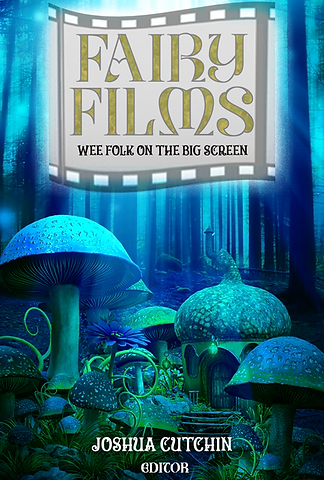
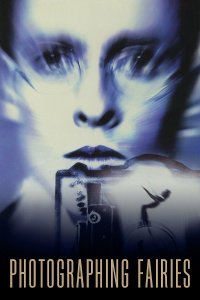
I also have an essay in the new publication Fairy Films: Wee Folk on the Big Screen (ed. Joshua Cutchin), which is a deep-dive into the 1997 film Photographing Fairies.

***
The Faeries and Death

“Many poets, and all mystic and occult writers, in all ages and countries, have declared that behind the visible are chains on chains of conscious beings, who are not of heaven but of the earth, who have no inherent form, but change according to their whim, or the mind that sees them. You cannot lift your hand without influencing and being influenced by hordes. The visible world is merely their skin. In dreams we go amongst them, and play with them, and combat with them. They are, perhaps, human souls in the crucible — these creatures of whim.” WB Yeats, Irish Fairy and Folk Tales (1918)

11172645_800In the 1997 film Photographing Fairies, the faeries were portrayed as small, amorphous humanoids, only rendered visible after the consumption of a white-petalled flower, which brings about the altered state of consciousness necessary to interact with them. The whole film is concerned with death, at many levels, and the faeries’ role is clearly as arbiters between the material world and transcendence. In the words of Arthur Conan Doyle (who makes an appearance in the film), they are ‘the handmaidens of the eternal.’ The relationship between faeries and death in folklore and history is rather more nebulous, but the film was drawing on an authentic tradition that connects the faeries with death and/or the land of the dead in a variety of ways. In fact, many of the folktales and anecdotes involving faeries invoke some kind of transcendence from consensual reality (such as the dilation or expansion of the concept of time in faerieland), even if death is not an explicit part of the story. It would seem as if the faeries are with us but not with us at the same time; much like the dead.

The Folklore Roots of the Faeries and Death

One rooted tradition is that the faeries are the Pagan dead (or perhaps post-Purgatory Christians not good enough for heaven but too good for hell), living in a world of limbo, which occasionally coincides with ours. A story that captures this idea well, was collected by the folklorist William Bottrell in Cornwall in the early 1870s. In The Fairy Dwelling on Selena Moor, we find Mr Noy, a farmer in the district of Buryan, becoming lost and bewildered on the moors at night, a common motif in faerie folklore, and which may be an embedded code in the story for the protagonist entering the altered state of consciousness necessary for interacting with a supernatural reality. Noy is missing for three days, before being found by a search-party, sleeping in a ruined ‘bowjie’ (a Cornish term for cow-shed) on Selena Moor with his horse and dogs tied up nearby. Incredulous at the passage of time — he was convinced he had spent no more than a few hours sleeping — he tells the story of what happened to him after becoming disorientated on the moor. After finding himself in an unknown stretch of woodland he heard music and saw lights some way ahead in a clearing…

“His dogs slunk back, and the horse wasn’t willing to go on, so he tied him to a tree, took his course through an orchard towards the lights, and came to a meadow where he saw hundreds of people, some seated at tables eating and drinking with great enjoyment apparently, and others dancing reels to the music of a tambourine, played by a damsel dressed in white, who stood on a heaping-stock just beside the house door, which was only a few paces from him. The revelers, farther off, were all very smartly decked out, but they seemed to him, at least most of them, to be a set of undersized mortals; yet the forms and tables, with the drinking-vessels on them, were all in proportion to the little people. The dancers moved so fast that he couldn’t count the number of those that footed jigs and reels together, it almost made his head giddy only to look at their quick and intricate whirling movements.”

The ‘damsel’ turns out to be Grace Hutchens, an old-flame, who had died three years before, after getting lost herself on the moor. Removing Noy from the faerie revels, Grace warns him: “Embrace me not, nor touch flower nor fruit; for eating a tempting plum in this enchanted orchard was my undoing… People believed, and so it seemed, that I was found on the moor dead; it was also supposed that I must have dropped there in a trance, as I was subject to it. What was buried for me, however, was only a changeling, or sham body, never mine I should think, for it seems to me that I feel much the same still as when I lived to be your sweetheart.”

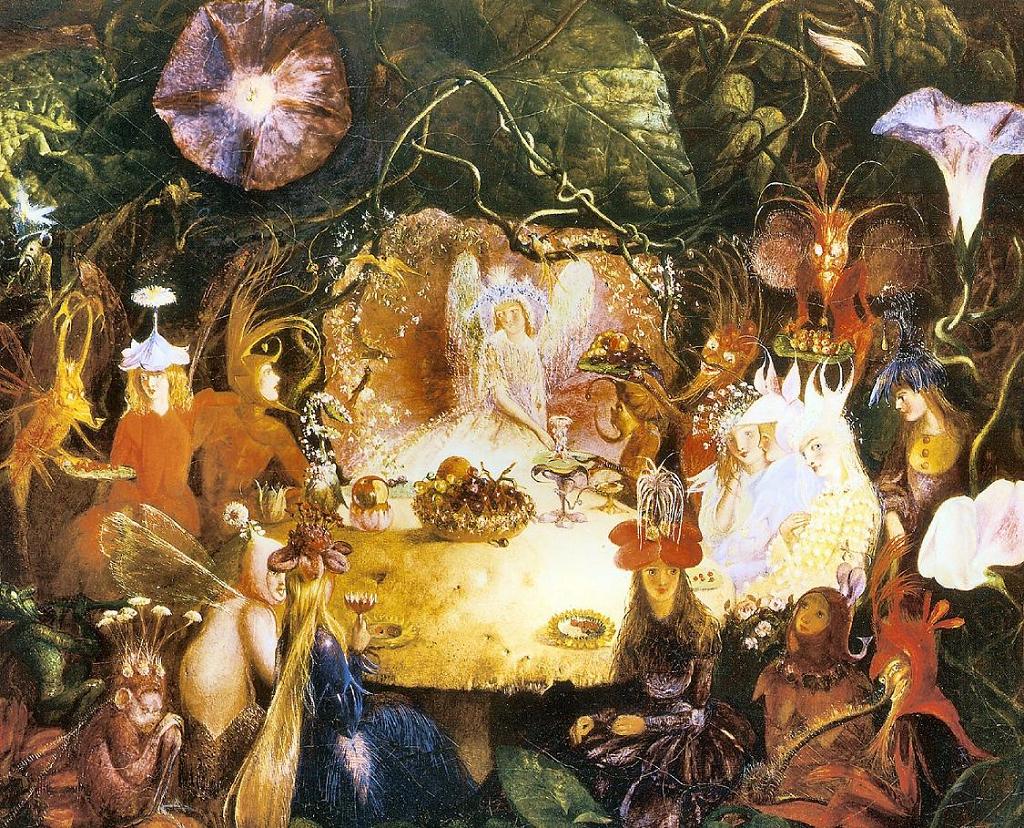
john_anster_fitzgerald_gallery_7_large_26a
John Anster FitzGerald – ‘A Faerie Banquet’ (1859)

She continues to tell Noy about her existence with the faeries (sometimes termed sprites in the story), who had trapped her in their reality after she’d eaten a plum (another common motif for capturing mortals in faerieland). Grace’s intriguing descriptions certainly confirm them to be inhabiting a land of the dead: “Their mode of life seemed somewhat unnatural to her, for all among them is mere illusion or acting and sham. They have no hearts, she believed, and but little sense or feeling; what serves them, in a way, as such, is merely the remembrance of whatever pleased them when they lived as mortals — maybe thousands of years ago… ‘For you must remember they are not of our religion, but star-worshippers. They don’t always live together like Christians and turtle-doves; considering their long existence such constancy would be tiresome for them.'”

As the faeries call Grace back to supply them with more cider, she informs Noy that when he dies he will be able to join her again. But he decides to try the old trick of turning his coat inside out and throwing it towards the assembled faeries, which indeed, disperses them into the ether, along with Grace, before the farmer feels a blow to his head and falls asleep. The story adds further testimony from Noy that many of the faeries he saw, “bore a sort of family-likeness to people he knew, and he had no doubt but some of them were changelings of recent date, and others their forefathers who died in days of yore, when they were not good enough to be admitted into heaven, nor so wicked as to be doomed to the worst of all places. Over a while, it is supposed they cease to exist as living beings, for which reason fewer of them are now beheld than were seen in old times.”

20562779_10213281284496452_1903615043_n
Ylenia Viola – ‘The Ruin’

The Fairy Dwelling on Selena Moor is one of those folktales with lots of oddly specific delineated features, which suggests that the story Bottrell collected was an amalgamation of a real incident (with Mr Noy operating in a non-usual state of consciousness), and current folk beliefs into the ontology of the faeries in the later 19th century. This ontology was that the faeries were dead people, perhaps sometimes dating back to a pre-Christian epoch, and that faerieland was a transcendent land of the dead, which, under special circumstances, could be penetrated by the living.

The Celtic Legend of the Dead and the Faeries

This idea was encountered many times by WY Evans-Wentz as he travelled through the Celtic countries of Britain, Ireland and Brittany between 1907-11, collecting the faerie traditions that he would publish as The Fairy-Faith in Celtic Countries. The belief that the faeries were intimately connected to the dead seemed to be especially prevalent in Ireland and Brittany, where time and again Evans-Wentz was given the view that they were one and the same, summed up by an unnamed Dublin engineer talking about the folk traditions in his home county: “The old people in County Armagh seriously believe that the faeries are the spirits of the dead; and they say that if you have many friends deceased you have many friendly faeries, or if you have many enemies deceased you have many faeries looking out to do you harm.”

Bridget O’Conner from Cloontipruckilish, Co. Clare, used the old tactic of placing her testimony in the past in the face of the folklorist outsider, but again associates the faeries with the dead:

“Old Peggy Gillin, dead these thirty years, who lived a mile beyond Grange, used to cure people with a secret herb shown to her by her brother, dead of a faerie-stroke. He was drowned and taken by the faeries, in the big drowning here during the herring season. She would pull the herb herself and prepare it by mixing spring water with it. Peggy could always talk with her dead relatives and friends, and continually with her brother, and she would tell everybody that they were with the faeries.”

full_faem_05
Ylenia Viola – ‘A.I.R. I’

In Brittany, the faeries were known as fées or corrigans, and usually seem to have been understood as ancestral spirits, often appearing to warn of, or to predict, death. Evans-Wentz found many folktales about the fées and the dead in and around the village of Carnac, where there are extensive remains of prehistoric megalithic stone rows and burial chambers. M. Goulven Le Scour was a source of many traditions, although once again, her testimonies were usually drawn from the past:

“My grandmother, Marie Le Bras, had related to me that one evening an old fée arrived in my village, Kerouledic (Finistère), and asked for hospitality. It was about the year 1830. The fée was received; and before going to bed she predicted that the little daughter whom the mother was dressing in night-clothes would be found dead in the cradle the next day. This prediction was only laughed at; but in the morning the little one was dead in her cradle, her eyes raised toward Heaven, The fée, who had slept in the stable, was gone.”

There are many more testimonies along these lines in all the regions visited by Evans-Wentz. They are often confused and ambiguous, and some of his interviewees deny any connection between the faeries and the dead. But there is an underlying consistency in the belief, allowing Evans-Wentz to sum up: “The animistic character of the Celtic Legend of the Dead is apparent; and the striking likenesses constantly appearing in our evidence between the ordinary apparitional fairies and the ghosts of the dead show that there is often no essential and sometimes no distinguishable difference between these two orders of beings, nor between the world of the dead and faerieland.”

Burial Mounds and Faerie Hills

The contiguous relationship between the faeries and death also find form in the physical environment. Burial mounds, most often dating from the Bronze Age, exist in great numbers throughout Western Europe, and in Britain and Ireland they can be prominent features in the landscape. They have also become bound up with faerie folklore, often being seen as the underground dwelling abodes of the faeries. In Ireland the association is made explicit; the faeries (aes sídhe) are ‘the people of the mounds’. Jeremy Harte makes the valid point that faerie hills are not always burial mounds and that perhaps the folkloric prerogative was to house the faeries under any prominent hill or mound for the purposes of a narrative rather than any close correlation between prehistoric burial locations and the faeries. Indeed, two of the most famous faerie hills are natural and not burial mounds. These are Doon Hill at Aberfoyle, where the Rev. Robert Kirk consorted with the faeries and met his death in the late 17th century, and the Faerie Hill of Sithean Moor on Iona, which has a long association with the faeries, and was also the location of the mysterious death of a young occultist by the name of Marie Fornario in 1929.

olaus-magnus-on-fairies-and-the-maids-of-the-woods-j46gyg
A 16th-century faerie mound – Olaus Magnus

But throughout Britain, and especially in Ireland there is a direct correlation between prehistoric burial mounds and faerie folklore, usually with the mounds having an appropriate name appended. Leslie Grinsell even produced a distribution map of these sites in his 1976 book Folklore of Prehistoric Sites in Britain, with the largest concentration in Scotland. There is no such map yet produced for Ireland, but the number is likely to be in the hundreds. The folklore frequently consists of the burial mounds becoming open to mortals at certain times, whereupon the faeries can be seen and interacted with, usually feasting and making music. A common motif includes people who steal faerie objects from within the mound, the earliest example being recorded by William of Newburgh in the late 12th century, where the mortal finding himself in the midst of a banquet in a faerie mound known as Willy Howe (Humberside), steals a silver cup, then makes off with it after throwing the contents out to disperse the faeries. According to Newburgh the cup ended up being presented to Henry II. Other stories present the mound-dwelling faeries as helpful to humanity. Grinsell recounts several examples of this motif, including one from The Pixies’ Mound at Stogursey, Somerset, where a ploughman on his way to the fields noticed a small broken peel (wooden shovel for baking cakes) on the mound. He mended it, put it back on the mound, and then when he returned home in the evening found a freshly baked cake in its place.

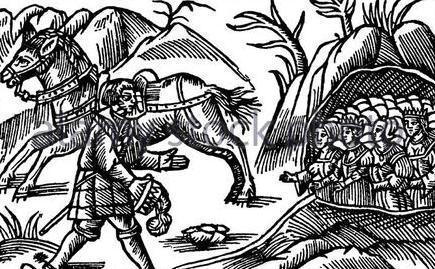
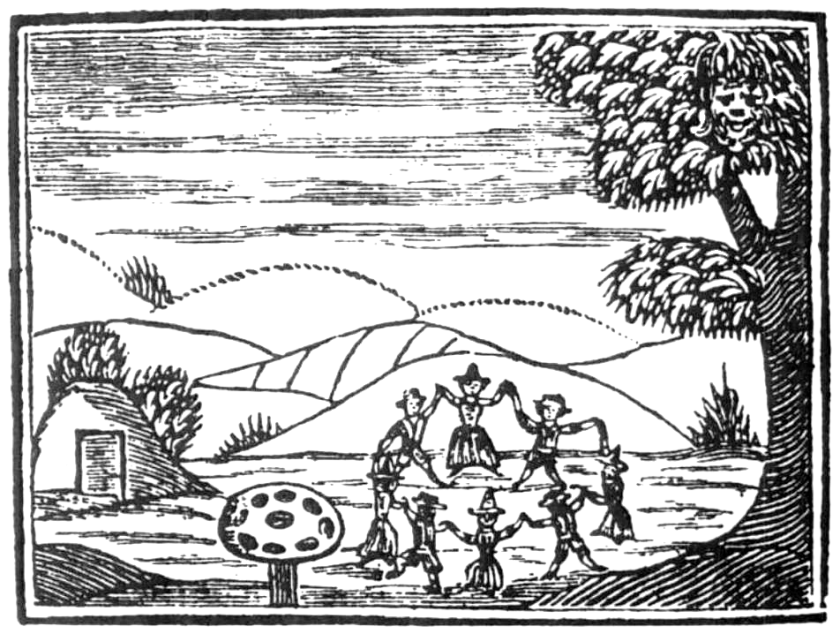
fairies_dancing_in_a_ring_woodcut
17th-century English woodcut with dancing faeries outside burial mound with door

This apparent close connection between faerie folklore and burial mounds may represent further evidence that the faeries are indeed the dead, and that the stories told about them are to all intents a filtered down form of ancestor worship, with offerings and rituals denuded of their original meaning and rendered into a symbolic folkloric language. This is almost certainly only part of the story when it comes to faerie beliefs, but the folklore does present a consistent theme of the faeries and the dead being intimates, tied together in the collective memory as inseparable concepts, however far distilled, for the purposes of narrative storytelling.

Faerie Funerals

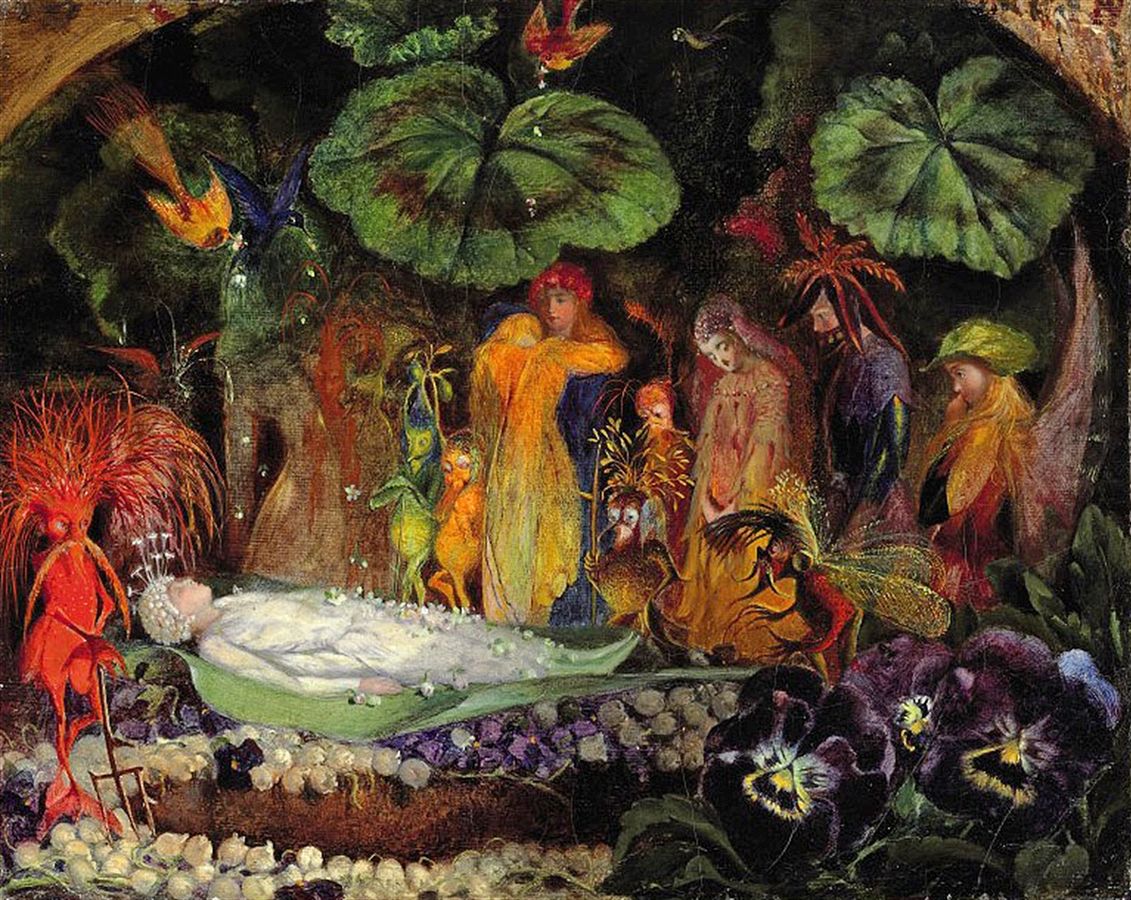
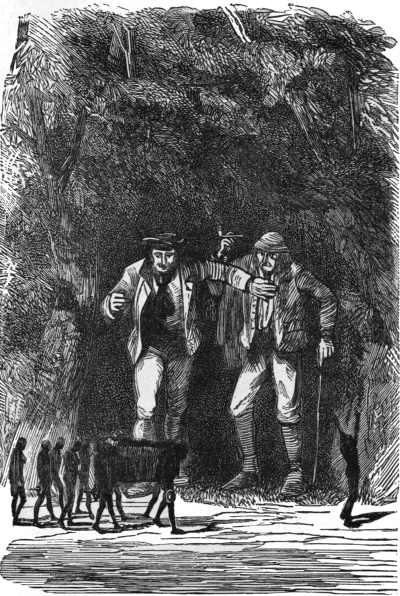
But faeries die too. Those living in the faerieland on Selena Moor were not immortal according to Grace Hutchens’ testimony, and there is a relatively common folklore motif of faerie funerals/burials (Aarne Thompson Index F268.1), which might muddy the waters of the theory that the faeries are the dead. William Blake, a firm believer in the world of faerie, famously claimed to have observed a faerie funeral where he saw “a procession of creatures the size and colour of green and grey grasshoppers, bearing a body laid out on a rose-leaf, which they buried with songs and then disappeared.”

Fitzgerald,_Death_of_the_fairy
John Anster Fitzgerald – ‘A Faerie Funeral’ (1864)

A particularly interesting example was collected in Cornwall by Robert Hunt in 1865, and published in Popular Romances of the West of England. It tells the story of Richard, a fisherman returning home with his catch past Lelant Church, when he heard the bells tolling with a ‘muffled sound’. He peered into a window and saw the dimly illuminated scene of a faerie funeral:

“Richard beheld the bier borne between six — whether men or women he could not tell — but he saw that the face of the corpse was that of a beautiful female, smaller than the smallest child’s doll. It was, Richard said, ‘as if it were a dead seraph,’ — so very lovely did it appear to him. The body was covered with white flowers, and its hair, like gold threads, was tangled amongst the blossoms. The body was placed within the altar; and then a large team of faeries, with picks and spades, began to dig a little hole close by the sacramental table.”

Often the faerie funerals turn out to be predictors of the death of those observing them. A typical example was collected by the folklorist James Bowker and published in Goblin Tales of Lancashire in 1883. In the story Adam and Robin are walking past Langton church on a moonlit night when they hear the bells peal twenty-six times; the age of Robin. As they approach the avenue of trees leading to the church they see a small, dark figure step out of the churchyard “chanting some mysterious words in a low musical voice as he walked.” They ducked back into the trees…

” … and standing together against the trunk of a large tree, they gazed at the miniature being stepping so lightly over the road, mottled by the stray moonbeams. i097It was a dainty little object; but although neither Adam nor Robin could comprehend the burden of the song it sang, the unmistakable croon of grief with which each stave ended told the listeners that the faerie was singing a requiem. The men kept perfectly silent, and in a little while the figure paused and turned round, as though in expectation, continuing, however, its mournful notes. By-and-by the voices of other singers were distinguished, and as they grew louder the faerie standing in the roadway ceased to render the verse, and sang only the refrain, and a few minutes afterwards Adam and Robin saw a marvellous cavalcade pass through the gateway. A number of figures, closely resembling the one to which their attention had first been drawn, walked two by two, and behind them others with their caps in their hands, bore a little black coffin, the lid of which was drawn down so as to leave a portion of the contents uncovered. Behind these again others, walking in pairs, completed the procession. All were singing in inexpressibly mournful tones, pausing at regular intervals to allow the voice of the one in advance to be heard, as it chanted the refrain of the song, and when the last couple had passed into the avenue, the gates closed as noiselessly as they had opened. As the bearers of the burden marched past the two watchers, Adam bent down, and, by the help of a stray gleam of moonlight, saw that there was a little corpse in the coffin. ‘Robin, mi lad,’ said he, in a trembling voice and with a scared look, ‘it’s the picture o’ thee as they have in the coffin!'”
Robin is, quite reasonably, freaked out by this turn of events and reaches out to touch the lead faerie. The procession immediately vanishes, and the two men run back home ashen-faced. Sure enough, one month later, Robin falls from a hay-rick and is fatally wounded.

full_faem_06-2
Ylenia Viola – ‘A.I.R. II’

This strange projection of a mortal human into the faerie world as a portent of death once again links the folklore to the psychogenesis that created it. These are not simply fireside stories; they are embedded with meaning. In all of the cases discussed, this meaning is our culture’s attempt to understand what death is and who might be around to help us, be with us, or warn us, when death is close or upon us. The folklore is sending us messages that seem to infer that there are metaphysical entities who are more familiar with the land of the dead than we are and that death is simply an alternative form of consciousness, available to everyone given the right circumstances, and perhaps not something to be afraid of.

Breaching the Consciousness Gap — The Faeries as Arbiters of Death

The folklore that portrays the faeries as inhabiting the land of the dead shows them as representatives of the past and what is gone. In the same way as a memory of someone dead can be conjured up in consciousness before disappearing into the subconscious, so the faeries are able to make appearances in our collective stories that attempt to understand death and its connection with life. Their somewhat wacky behaviour perhaps exemplifies our fear of the unknown — they live in an undiscovered country, and have their own customs and rules. But it’s a place that can be accessed and brought into our comprehension of reality — physically and metaphysically — so as to come to terms with death, both our own and of others.

Accessing the transcendent world of the dead, without dying, and making contact with the faeries, seems dependent on an altered state of consciousness. Many of the previous posts on this site have investigated this in some detail as an essential key to comprehending the faerie phenomenon (here‘s an example). And the folklore we’ve been investigating in this article is usually dependent on the protagonist(s) going through an endogenous transformation of their conscious state through a variety of means, which are coded and embedded in the stories to signpost the listener/reader that something supra-natural is about to happen, such as Mr Noy’s exhausted confusion, or Adam and Robin’s fear. Modern renditions of the faeries as arbiters of death, such as Photographing Fairies, are more at liberty to constitute precise causes of the altered state, in this case, the ingestion of a psychoactive flower. But the consistent feature is that the faeries exist in some liminal zone that bridges the gap between material reality and consciousness and that ultimately once the gap has been fully breached we find ourselves in a transcendent form of consciousness beyond time and space; usually known as Death.

full_faem_27
Ylenia Viola – ‘Between Dream and Reality’

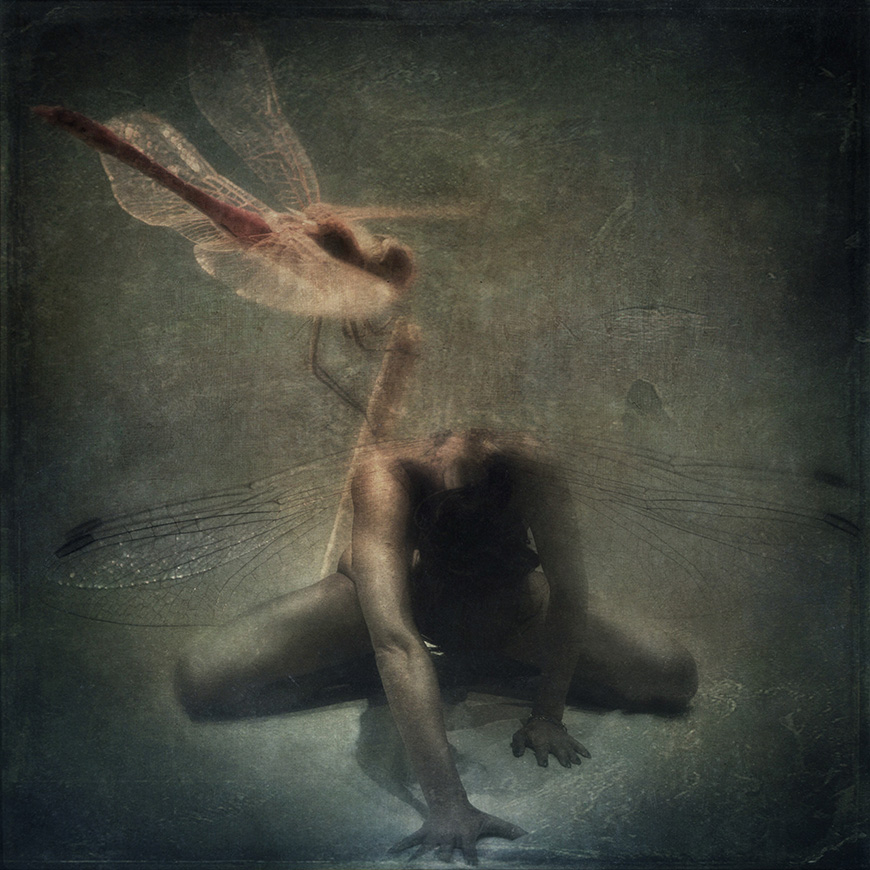
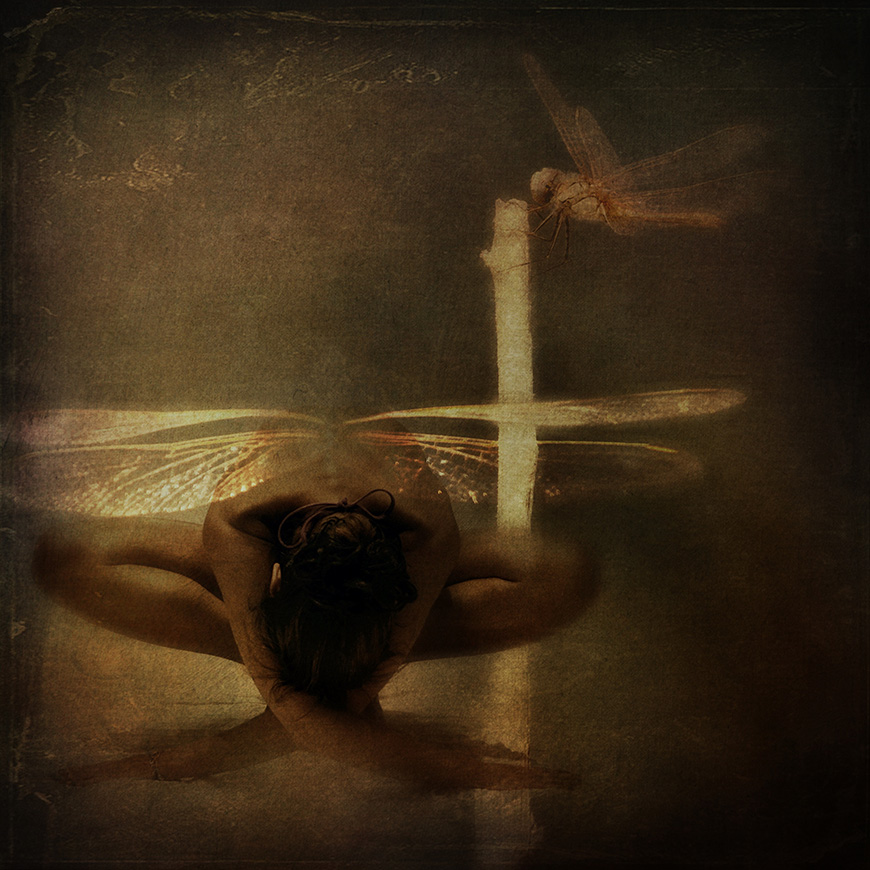
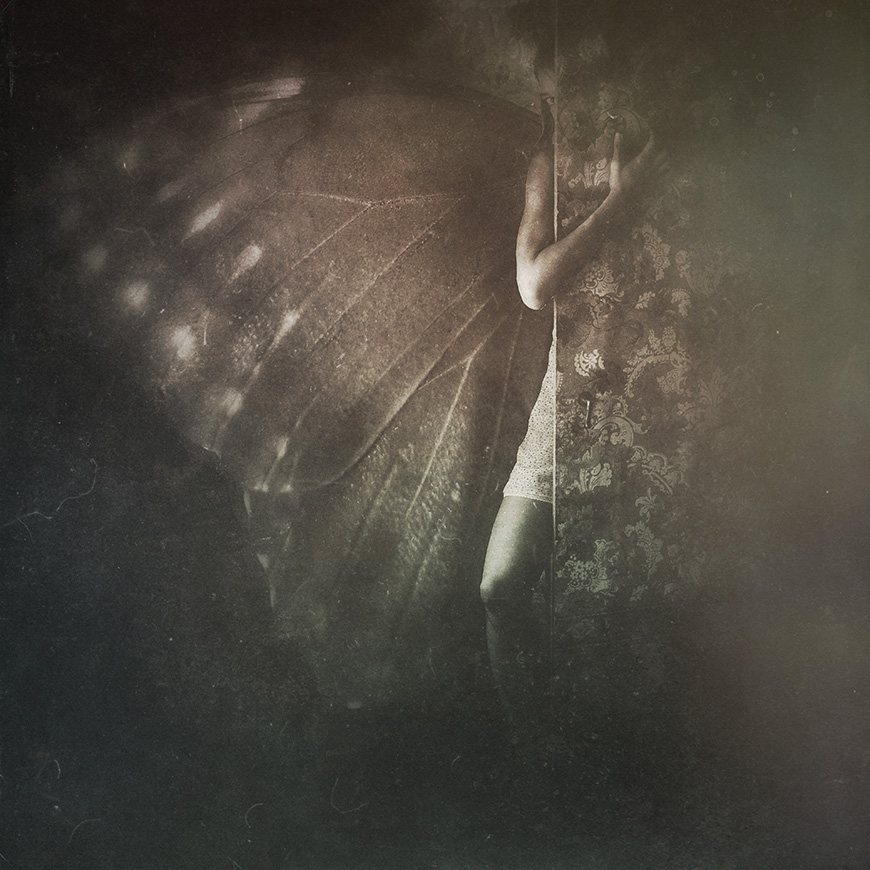
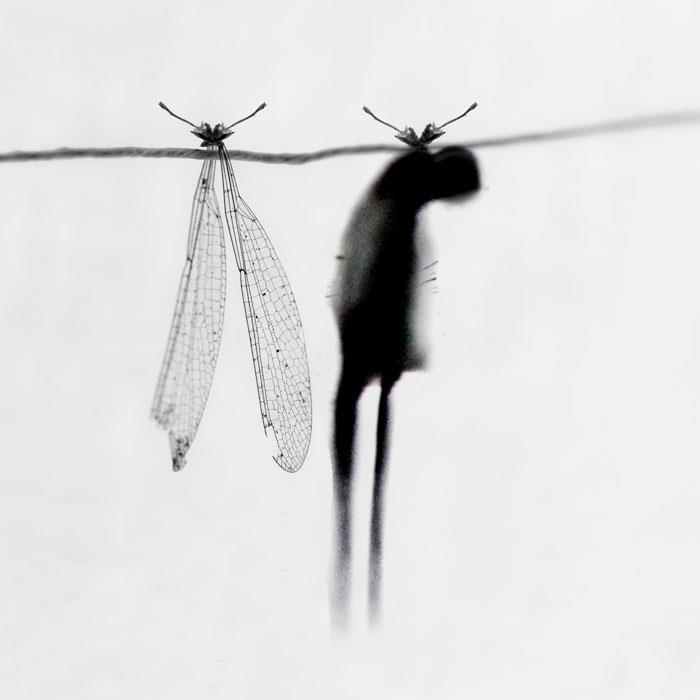
Thanks to Ylenia Viola for permission to use her transcendent artwork in this article. The cover image is A.I.R. from her ‘Enchanted Metamorphosis’ gallery. Ylenia’s artwork can be found at her website: Fairytalesneverdie

The Suicide of a Faerie

Here’s another short excerpt from the tale I’m writing about a folklorist’s visit to a psychiatric hospital in England during the summer of 1970. It is the next scene with my Chilean exile Fernanda, following on from Fernanda, Faeries and Ravens

I was alone again. Albe, Moore and Scrope had disappeared up-country somewhere leaving me in my quarters with nothing but the sound of the ticking clock, marking out the minutes and hours; creating time to reflect on the deficiencies of my life to date. What was I doing here? I’d swapped the intolerable isolation of my university research for the unendurable confinement of this lunatic asylum. As the days had dripped by, I recognised the old symptoms re-emerging: dulled vision, stomach cramps, endemic procrastination, and a growing fear of going outside and interacting with people. I was even beginning to suspect that the hospital orderlies had all been infected with the insanity that they dealt with on a daily basis. It was usually the timbre of their voices; the merest hint of derangement that spoke of exposure to madness over a prolonged period. It was worse in the male staff. They all seemed to exhibit a disquieting emptiness in their tone, as if they were reading from a script, like bad actors. Maybe it was because they were suspicious of me. Maybe they wondered what I was doing here as well, and were acting accordingly. I went over each conversation with them since I’d been here, further instilling the the shaky paranoia that had made itself at home with me. This was not good. I had to break out from this cycle of thought before I went to meet Fernanda, otherwise I might have one of my flip-outs. Christ, they might even put me on a ward if that happened.

I pulled myself up to the desk and poised my fingers over the Olympia that Moore had loaned me, to put my notes in order. I knew I wasn’t going to manage to do anything, but the act of intention distracted me from incessantly thinking the worst of everything. I rolled the sheet of paper up and locked it in position. I stared at it for a few moments, then typed: My sister… I’m so sorry. Please come back… . My breathing shallowed and the usual tears welled up. I yanked out the paper, screwed it up and flung it over the room. One thing was for sure, she wasn’t coming back.

***

I made my way out to the vegetable gardens in the late afternoon. The sun was shining for once, but the wind took the heat out of it. In my head I went over some of the faerie motifs from the Aarne-Thompson index, agitated, and wondering if Fernanda would come up with anything beyond her neurotic imaginings about nature spirits. I stopped for a moment behind the laundry building, closed my eyes and pictured her. My hands shook a little. I steadied my breathing and walked on.

She was sitting on the tree stump where she fed the ravens, eyes closed, head bowed, her hands clasped together as if in prayer. I coughed before I reached her, so as to not startle her. She waited until I was a few feet away and slowly raised her head. She kept her eyes closed for a moment, then opened them; black and watery.

‘Hola,’ she said, continuing to stare ahead.

‘Hey Fernanda. Nice day… bit windy.’

God, what did I sound like? Why did I always make personal contact so uncomfortable? She didn’t seem to notice, but when she turned to look at me the curve of her lips suggested that she was reading my awkwardness perfectly.

‘It’s not a good day my friend. There is some bad news.’

I tensed up, shoulders and stomach. She observed me for a few seconds, and her words began to echo inside my head somehow. At that moment I was quite sure she was putting them there herself, negating the need to say anything else by reinforcing what she had already said by direct, wordless communication.

‘Telepatía,’ she whispered, standing up, close to me, her black eyes still pooled with tears. ‘I know you don’t believe, but it’s true anyway.’

‘I’m not quite sure what to believe Fernanda. Why is there bad news?’

‘There has been a suicide.’

‘Really? In the hospital?’

‘No, here. In the cobertizo.’

She motioned to the tool shed on the edge of the gardens. My pulse quickened. 

‘A faerie has ended her life there… she did it for you.’

I stared at her, looking for something that would abbreviate her words in her face. There was nothing there.

‘Fernanda, please don’t play games with me. I can’t deal with this sort of thing right now.’

She moved closer to me and stroked back some hair that had fallen over my eyes. 

‘We know you’ve been thinking about ending your life my friend. We know how sad you’ve been. She did it so you do not have to. It was a selfless act. Las Hadas have no ego. This one soaked up your sorrow and and ended her existence so that you can continue. She knew your life must carry on, but there had to be a sacrifice. The sacrifice was her life.’

A head-rush dulled my vision for a moment. My hands were shaking so much I put them behind my back instinctively. 

‘Fernanda, I… I… .’

‘You must come and see. It is tragic but it is beautiful. You must come and see… come.’

She reached round, took my hand from behind me and led me, unresisting to the shed.

***

We walked back slowly to the main building of the hospital hand in hand. We didn’t speak, but I could hear her lilting voice in my head, sometimes in English, sometimes in Spanish: it’s ok… you’ll be ok. It was meant to be… mantener la calma. In between her words I tried desperately to rationalise what I’d just seen. But every attempt failed. What I’d seen was not rational, it was absurdly irrational, but as real as the neo-gothic walls of the hospital in front of us. I was going to have to overhaul my understanding of the nuts and bolts of this world. It had just been forced upon me. There was no choice. The only choice was acceptance.

She left me at the door with a kiss on the cheek but no words. I wondered why it was she who was going back to the ward instead of me. If I told Dr Dawkins what I’d just experienced, he’d probably commit me on the spot.

In my head I heard Fernanda’s voice again: she is dead but dreaming. Soñando

‘My sister or the faerie?’ I said out loud. There was no response. I walked, unseeing, back to my quarters.

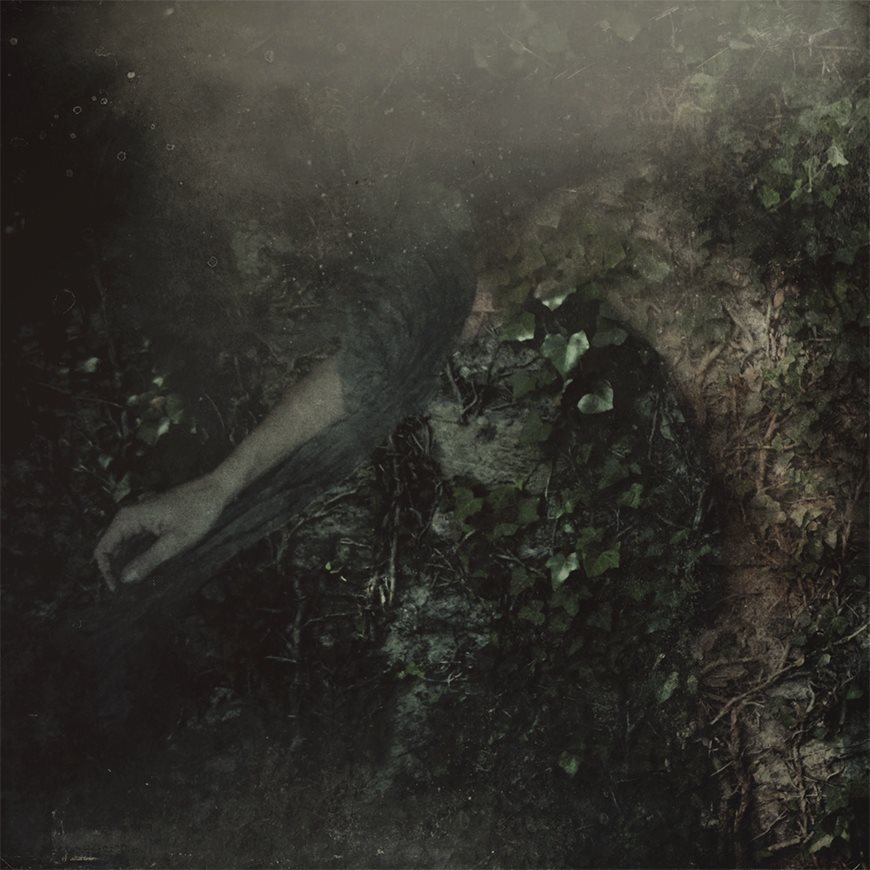
Image © Mirjam Appelhof

The Dutch artist Mirjam Appelhof’s wonderful artwork can be found on her website: The Photo-Art of Mirjam Appelhof.

The Space-Time Continuum in Faerieland

Time moves differently in faerieland. Once they’ve got you to step through the veil to their world, you’re no longer constrained by the usual passage of time. You are, in effect, outside of time. Folklore is very consistent in its portrayal of this phenomenon, where characters setting foot into faerieland are transported into a distinct, separate reality, with its own laws of physics and its own space-time continuum. Why would this be? And what does it mean?

9781445508399_p0_v1_s192x300In the 1891 publication The Science of Fairy Tales, the folklorist Edwin Hartland devoted three chapters to ponder over The Supernatural Lapse of Time in Fairyland. He makes it clear that this motif is deeply embedded in worldwide folklore and mythology from a wide variety of chronological periods. He suggests that the consistency of the story elements involving the strange relative movement of time in faerieland, must stem from a common mythological theme, although he usually stops short of discussing this theme in favour of telling the actual stories. Within these supernatural lapse of time tales there are essentially three ways that time can behave in contradistinction to normal reality: 1. Time stops in the outside world, whilst in faerieland many years can pass with the human participant living a life of enjoyment or suffering with the faeries. The protagonist usually breaks a taboo of some sort and finds themselves back in the real world, where no time has passed. These stories are in the small minority. More often the time dilation moves the other way. 2. This can be quite a drastic shift, so that a character spending days or weeks in faerieland comes back to consensus reality to find decades or even centuries have passed, or, 3. that a few minutes caroling with the faeries turns out to be any length of time up to a year and a day, once they return to the world they came from. Here are examples of each type of time warp, taken from Hartland’s investigations.
1. Shepherds in Wales were commonly transported into faerieland, usually after joining the faeries in a circle dance (see Going Round in Circles for the faerie dance). One 19th-century tale has the lonely shepherd doing just that on a hillside, after which he finds himself in a glittering palace with pleasure gardens, inhabited by the faeries. He lives there for years, even taking the chance to get involved in some romantic attachments with the beguiling black-eyed female faeries. But despite being warned off the fountain, which is filled with gold and silver fish, in the middle of the main garden, he can’t resist overturning the prohibition, and one day, inevitably, he plunges his hands into the water for a drink. Pronto he finds himself back on the cold Welsh hillside with his sheep, during which no time at all seems to have passed.

As mentioned, this sort of time relativity in folklore is the exception to the rule; it usually works the other way round as in 2 and 3 below. Such a story type might represent an adventure experienced whilst in an altered state of consciousness, turned into a folktale that attempts to convey this unusual state of consciousness through conventional ideas about faerieland. The altered state might represent a waking hallucinogenic state or a dream, both of which can allow seemingly long passages of subjective time to take place in seconds or minutes in the real world. This faerie-tale

TNG_Poll_Inner_Light
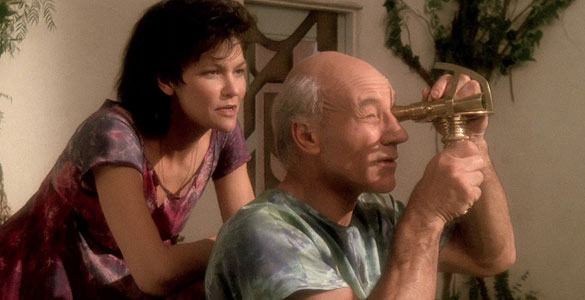
Captain Picard as Kamin, in a mind-bending altered state of consciousness

concept was skilfully updated in the Star Trek: The Next Generation episode ‘The Inner Light’, when Captain Picard is rendered unconscious by an alien probe, and then – in his mind – experiences an entire lifetime on the planet Kataan, before finally being brought round on the bridge of the USS Enterprise 25 minutes after being knocked out (end clip from The Inner Light). The insinuation is that what happened in Picard’s mind was as real as his life as captain of the Enterprise, and that his consciousness had had a direct effect on material reality. But this is not the usual way time works in faerie-tales…

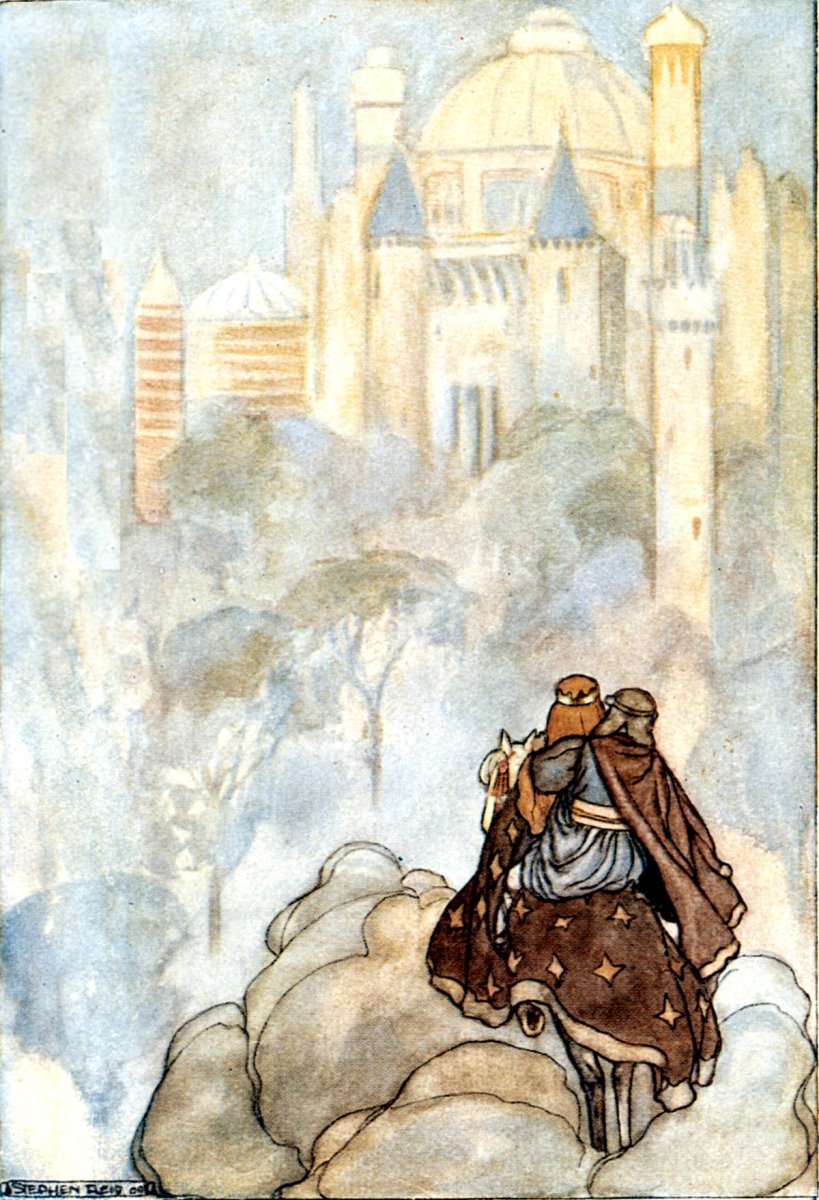
2. Hartland records an 18th-century version of the Irish story of Oisín as typical of the second type of time-lapse folktales, recorded throughout Europe and Asia. Oisín is a poet of the Fianna, and falls asleep under an ash tree. He awakes to find Niamh, Queen of Tír na nÓg, the land of perpetual youth, summoning him to join her in her realm as her husband. Loved up, off he goes with her, and finds himself living in a paradise of perpetual summer, where all good things abound, and where time and death hold no sway. But soon he breaks a taboo of standing on a broad flat stone, from where he is able to view the Ireland he left behind. It has changed for the worse, and he begs Niamh to give him leave to return. She reluctantly agrees, but asks that he return after only one day with the mortals. She supplies him with a black horse, which he is not to dismount, and ‘gifted him with wisdom and knowledge far surpassing that of men.’ Once back in Ireland he realises that decades have passed and that he is no longer recognised or known of. Inevitably, he dismounts his horse and immediately his youth is gone and he becomes an enfeebled old man with nothing but his immortal wisdom. There is no returning to the faerieland of the Tír na nÓg. In other variations of the story, the hero turns to dust as soon as his feet touch the ground of consensus reality.

faerietime7
‘Oisín and Niamh travelling to Tír na nÓg’ by Stephen Reid (1910)

These folktales seem to suggest that faerieland is the world of the dead, immune from the passage of time, and that return to the world of the living is not possible as the mortal body has aged and decayed in line with the physical laws of this world. In the Japanese tale of Urashima Taro, the hero, when returning home, is even given a casket by his faerie bride, in which his years are locked. When he opens it, his time is up.

These stories articulate a belief in an otherworld that is never heaven, but is apparently ruled over by a race of immortals who can exert control over the consciousness of an individual, who may believe themselves to still be in human form, but are actually already dead and existing in non-material form. It is ultimately the place where the faeries come from; a place untouched by the passage of time and physical death. It could even represent the collective consciousness of humanity made into an understandable form in the stories, immortal in nature and containing all wisdom and knowledge, as suggested in the Oisín tale.

0a79d232f774dc8714724b2de0cba5efThis might be explained by seeing folktales of this type as representing a surviving pagan belief system of the afterlife. This afterlife did not follow the strictures of Christianity or other world religions, and provided an alternative view of what happens to consciousness after death. It is a view that was (in the West) superseded by Christian theology, but that may be surfacing in these folktales as remnants of the previous system of belief (a belief system that remained partially intact but operated underground for fear of religious persecution). The presence of faeries in this otherworld, and their ability to materialise in standard reality, suggests that they were an essential element in pagan ideas about consciousness and that they had a role to play when it came to death. In this theory the characters in the story play the part of messengers, telling us about the true nature of a timeless reality that is distinct and separate from consensus reality, and showing us that human consciousness disassociates from the physical body to exist in a parallel reality such as Tir na n’Og, where the faeries are in charge. This message is encoded in the stories.
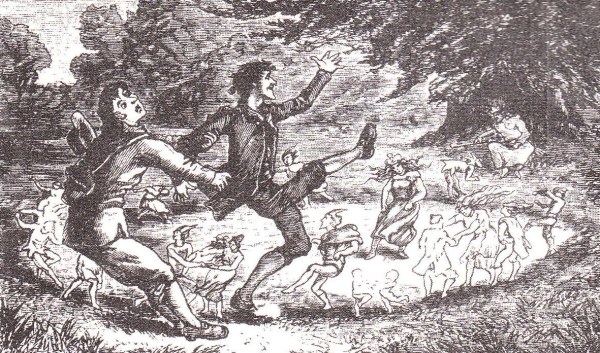
The third type of time lapse usually has a less dramatic effect on the protagonist, as they return from an apparently short time in faerieland to a world advanced by either months, or more often by the magical time-span of a year and a day.

3. Hartland records a number of these types of tales from Britain. One was collected in the Scottish Highlands by the folklorist JF Campbell in the 1860s, and includes many of the typical elements. The story involves two men returning home from the town of Lairg, where one of them has just registered the birth of his child in the session books. They sit down to rest at the foot of the hill of Durcha, when music and merriment is heard from within a cavern in the hill. The new father can’t resist investigating and disappears into the hill. On returning home alone, his friend is accused of murder. But a ‘wise man’ suggests he should be able to clear his name by returning to the cavern a year and a day later. He does so, and when he sees a shadow in the cave entrance he grabs it, momentarily revealing his friend dancing in a circle with the music-making faeries. He pulls him out of the circle and the faeries are gone. ‘Could you not have let me finish my reel’ the former captive says, thinking he had only just started dancing with the faeries. He won’t believe that a year and a day have passed until he returns home to find his wife with their year-old child in her arms.

For a similar Welsh story see my previous post: Going Round in Circles: The Faerie Dance

IMG_0001-31Stories of this type rarely say much about the faeries doing the abducting, only that they seemed capable of drawing the participant out of their own world and into an alternative reality with a different space-time continuum. The year and a day motif is important and is a common time-frame appearing in medieval romances as the amount of time protagonists were given to succeed in quests. In The Golden Bough, Sir James George Frazer highlights the ancient global concept of the Divine King, who was to be ritually murdered after a period of time in charge, which was often a year and a day. The time period was also used in common law to substantiate the legal situation of unwed couples, and it was (in theory) the amount of time a person living under feudal serfdom needed to be absent from his lord’s manor to gain his freedom. Interestingly, a year and a day is also used in Wiccan and other neo-pagan traditions for the time of learning required before being initiated into the first degree. This may all suggest that the folktales of this type have the year and a day motif embedded within them as a message, conveying the idea that it is a magical time-frame. It was a symbolic time-marker for life quests, ruling over others, decisions being made, learning a tradition, securing a marriage, or gaining freedom as one year tips over into another. It was evidently deeply ingrained in both esoteric tradition and everyday life from an early date, rooted in the cycles of the natural world.
As is the case with this tale from the Highlands, these stories usually include a ‘wise man’ who knows that a year and a day is the time needed to free the abductee from the clasps of the faeries. This sounds like the cunning man recorded in Early Modern witch trials, amongst other sources, a type of magical practitioner steeped in esoteric  Cunning_Folk_and_Familiar_Spiritsknowledge, who operated within the constraints of Christianity, but who was evidently practising pagan sorcery. Emma Wilby in her 2005 book Cunning Folk and Familiar Spirits convincingly puts these people (men and women) within an ancient shamanic visionary tradition, which had as its main remit an understanding of otherworldly spirits, including the faeries. Once again, we can see the folktale embedding these motifs into the stories, below the radar of religious censorship, so as to tell people the truth gleaned from gnostic shamanic beliefs that were evidently alive and well in pre-industrial societies. The repackaged 19th-century folktales were recording these traditions in coded language, perhaps not understood properly by their listeners, but hiding knowledge of metaphysical realities in plain sight, in the form of a good yarn.

The metaphysical realities these stories attempt to convey have formed a specific mythology that attempts to tell us about otherworlds beyond our own. These otherworlds may differ depending on the story but they are all, essentially, talking about transcendence beyond the physical world. And with transcendence the space-time continuum works in a different way, without the constraints of a world of matter, or with a linear time-flow. The inhabitants of this transcendent otherworld are the faeries, who seem to be able to make occasional appearances in our world, but whose own world is one of consciousness, whether a dream, an altered state, the collective human consciousness… or death. The message is that consciousness has no real need of a dimension of time, and that once freed from the physical world, consciousness is able to transfer to an alternative non-physical universe; a universe that used to be called faerieland. It is a pre-religious mythology pointing at a deeper reality, surviving in encoded form in these types of faerie-tales.

Fractal Time

My Sister and her Faeries

My little sister, I lost her when she was just a child. One day we were together the next she was gone, suddenly and definitively. Her physical memory has become blurred into an arbitrary, flickering collection of blue-eyed glances, soft tones, touches and laughter. But underneath the dulled remembrance rests the sense and perception of an overwhelming loss; at least a loss that has overwhelmed me. She usually comes to me in dreams, but not always.

d1ea03a403c7608683859988a3f6c6caa43a6bdc

There is a place at the end of an overgrown garden, down a bank and through some alders to a small, dirty brook. I presume it’s still there. We used to spend endless summer days in that gloomy refuge; reading, talking, ruminating, napping. Our secret chatter should have made its mark there. But everything else rests only with me, in my memory. Her memory is gone; it has become something other than memory.

She was always seeing faeries there. When she was a little girl she’d play games with them but when she was a bigger girl she just talked with them. I was only allowed peripheral glimpses of them amidst the leaves and their voices were never more than the drone of the brook made fleetingly real during drifts into and out of sleep. But I believed in her belief. She’d always start with the invocation: We must not look at faerie men; we must not eat their fruits, who knows upon what soil they fed their hungry, thirsty roots. And then she would laugh and skip down to her special places within the overhanging trees where she would begin her communions.

She was twelve the last time we went there. It was damp and the brook smelled. She came back from one of her spots amidst the trees, pale and tearful. The faeries had sung her a Requiem and promised her that she would be able to come back to me as a blackbird for a short while. But only for a short while, then she would have to disappear completely from the world. She cried as we made our way through the garden. There were no words, just tears. I cannot think further on what happened after this. It is not something I have learned to contemplate without despair.

It was a month or so after her death that I finally allowed myself to visit her grave in the churchyard. The thought of her lifeless, decomposing corpse only a few feet away from me became too much and I retreated to a bench by the church porch. I sobbed, clutching the bench beneath me. Through the tear-mist I saw a female blackbird skip from the branch of a yew tree above me to within a pace of my foot, chirping vigorously. She cocked her head and looked at me with one dark eye.

“I love you,” I whispered.

She briefly preened her wing, cocked her head again and then darted away to a high branch.

“I love you,” I said again. I rested my head and closed my wet eyes, knowing that she was dead but dreaming, and would always be so.

Fairy-Flight