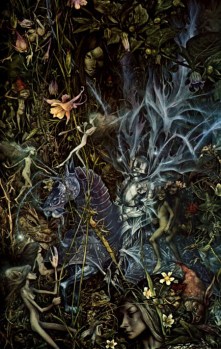
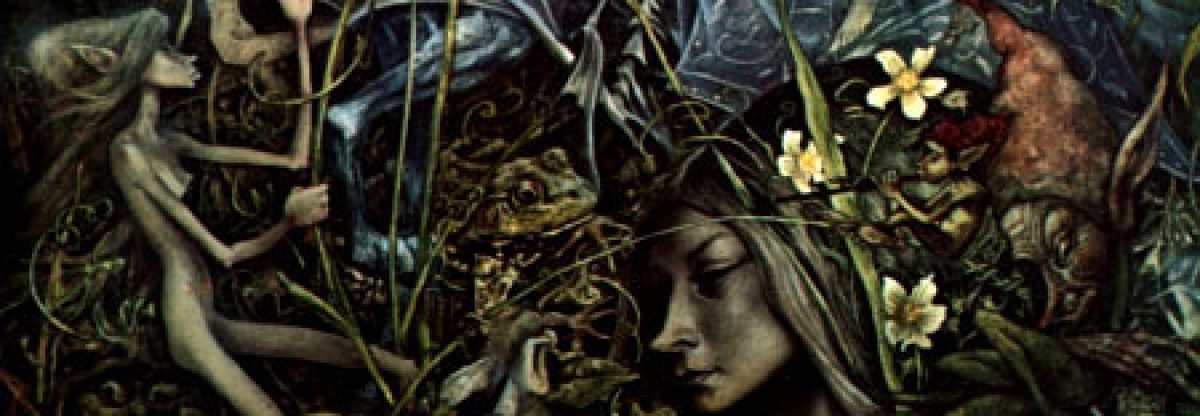
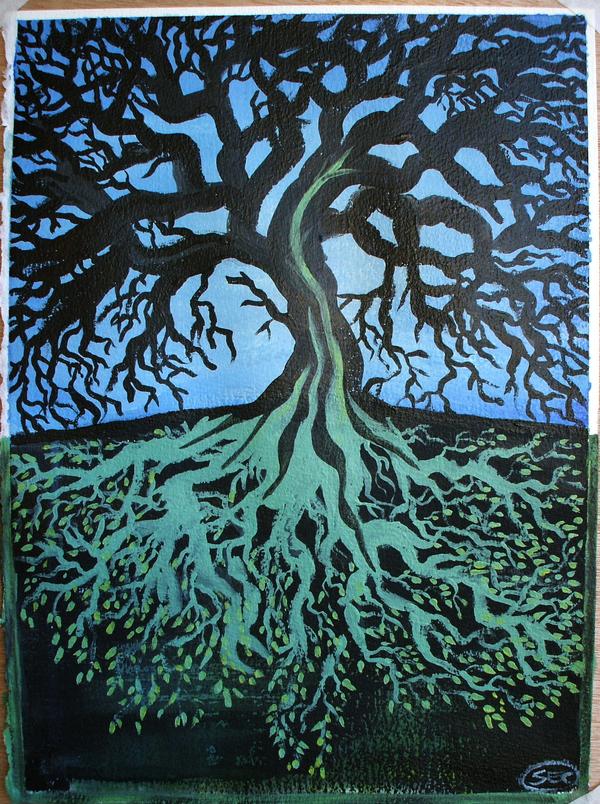
‘Faerie Folks
Are in old oaks.’ Traditional proverb
In 1452, thirty-four French villagers were questioned by an ecclesiastical commission about a ‘faerie tree’ (arbor fatalism, gallide des fees) in Domrémy, as part of the process of overturning Joan of Arc’s conviction at the hands of the English/Burgundian Gestapo twenty years earlier. In the face of her inquisitors, Joan herself had offset her own belief in the faeries by apportioning it to her godmother, who had apparently seen the faeries gathering at the tree. And, even though the villagers were under no threat from the commission (quite the opposite in fact), none of the thirty-four interviewees would admit to a belief of the faeries, or that they had ever seen them at the tree. Instead, they informed the commissioners that “they had heard that in the old days faeries were said to have been seen there.” As the villagers would have been well aware of the Inquisition’s requirement for questioning of anyone who confessed to a belief in faeries, this was probably understandable. But the fact that there was a ‘faerie tree’ to begin with, suggests that there was an ingrained belief in the faeries and their penchant for gathering at a certain tree, amongst the rural 15th-century French peasantry in Domrémy.
Thomas the Rhymer and his Eildon Tree
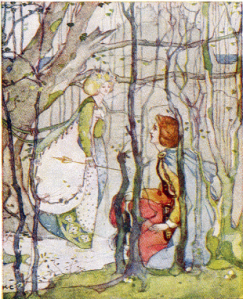
An intimate association between faeries and trees is found even further back in the literary tradition, in the ballad of ‘Thomas the Rhymer.’ Thomas appears to have been a 13th-century visionary and poet from the Scottish Borders, and his adventures with the faeries, and most especially the faerie queen, can be found in several medieval sources as well as being updated through the 18th and 19th centuries, notably by Sir Walter Scott. In the ballad, the interface between consensus reality and the faerie realm is ‘the Eildon Tree’, a hawthorn where Thomas meets the faeries and is transported into their world. There is much arboreal imagery in the ballad, which makes it clear that the faeries are woodland entities: “At the beginning of each summer, when the milk-white hawthorn is in bloom, anointing the air with its sweet odour, and miles and miles of golden whin adorn the glens and hill-slopes, the faeries come forth in grand procession, headed by the Faerie Queen.”
Scott’s setting of the ballad creates a woodland world, itself a place of magic where the otherworldly faeries are able to slip into reality to coax Thomas to join them from beneath the Eildon Tree:
‘Come with us, mortal, come! a welcome to
Through the moonlit shades of the forest glades,
Where the Faeries meet in their dim retreat,
Come with us, mortal, come!
There the shy dreams creep from the darkness deep
To flutter with noiseless wing,
And the bright-eyed stars ‘mid the branching bars
Of the oak and the elm-tree swing.
Where the merry Fays through the wildwood ways
Dance by the firefly’s light,
Thou shalt read the runes of the silver tunes
That ring through the dewy night.’
Dryads
Further back still, in Ancient Greece, Dryads (Δρυάδες) and Hamadryads (Ἁμαδρυάδες), often given the general term of Nymphs (νύμφη), were female tree spirits, that were 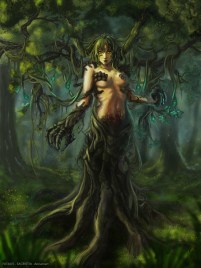 usually recognised as being one with the tree, protecting it with their vitality and receiving symbiotic protection and life in return. Pausanias, in his 2nd-century Description of Greece, although distancing himself from the
 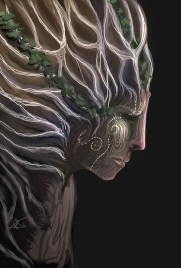 belief, says: “Those Dryads who in days of old, according to the story of the poets, grew out of trees and especially out of oaks.” Some Hamadryads life spans were directly related to the trees, and although usually temperate and kind in nature, they would deal retribution on any person destroying or damaging their trees and habitats, often with the help of the gods. They frequently also had to appeal to the gods (and sometimes humans) to protect them from satyrs, who would rampage around woodlands, drunk and on the lookout for the alluring arboreal dryads. Many of the Dryads are named in the legends, and it is clear that the Greeks apportioned different characters to different trees. The poet Pherenikos described the Dryads as Nymphs and apportioned their roles to individual trees:
Aigeiros was the nymph of the black poplar (Populus nigra);
Ampelos the nymph of the vine–including the wild grape (Vitis silvestris), bryony (Bryonia creticus), black bryony (Tamus communis) and the wrack (Fucus volubilis);
Balanis the nymph of oak-trees–such as the holm oak (Quercus ilex) and prickly-cupped oak (Quercus aegilops);
Karya the nymph of the nut tree–both the hazel (Corylus avellana) and the walnut (Juglans regia), and perhaps also the sweet chestnut (Castanea vesca);
Kraneia the nymph of the cornelian cherry-tree (Cornus mas);
Morea the nymph of the mulberry tree (Morus nigra) or else the wild olive;
Ptelea the nymph of the European elm tree (Ulmus glabra);
and Syke the nymph of the fig tree (Ficus cardiac).
It is clear the ancient Greeks regarded these named and categorised tree-entities as metaphysical representatives of an otherworld, who would only interact with humanity during certain conditions. In this they are faeries in all but name – seen through the cultural lens of classical Greek civilisation.
The Hawthorn as a Faerie Tree
These historic associations between trees and the faeries are suggestive of a deep folk tradition and belief that tied the two together. It is a connection that remains intact to the present day, where folklore informs a modern belief in the importance of certain trees – most especially solitary trees – as arbiters between this world and an ultra-dimensional
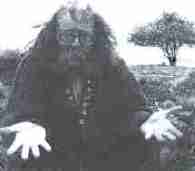
faerieland. This is nicely illustrated by the exploits of the Irish folklorist and storyteller Eddie Lenihan, as captured in the 2000 documentary by John Walker, The Fairy Faith. Eddie was instrumental in persuading Co. Clare council to re-route part of the Newmarket-on-Fergus bypass road at Latoon, in order to avoid the destruction of a faerie hawthorn tree, or sceach, which was initially due for uprooting as part of the road construction. A media campaign garnered the support of local people, and even The New York Times was motivated to write a piece about the plight of the tree. Eddie appealed to the intrinsic folkloric beliefs attached to the hawthorn, suggesting that the centuries-old idea that this particular tree was a focal point for the gathering of supernatural beings should be respected, and not simply ignored for the sake of materialistic expediency. He won – the tree remains to this day, albeit marooned between the highway and the slip road.
There is a very deeply ingrained belief and understanding in Irish culture as to the importance of these solitary hawthorns, which have gathered folk traditions about them, often in relation to the faeries. They go by various names – Wishing Trees, May Bushes, Rag Trees or Faerie Trees – and are frequently found in association with holy wells or
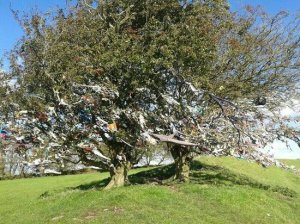
prehistoric forts (raths). They are also regularly festooned with ribbons, rags and trinkets, sometimes known as clooties, which are demonstrative of a continued folk belief in the spiritual ambience eminating from the trees. The clooties were traditionally tied to the trees as an offering to the nature spirits that inhabited it (sometimes Christianised to the spiritual presence of a saint or saints), in the hope that with their decomposition, ailments or bad luck would disappear with them. This tradition continues, and now incorporates a range of beliefs as to what the clotties are supposed to do. They may be tied to the trees as simple offerings with prayers, as wish-fulfillers, or as a recognition that the tree contains a metaphysical consciousness. These be-ribboned hawthorns can be found all over Ireland, perhaps most famously on the western banks of the Iron-Age hillfort that tops the Hill of Tara (Cnoc na Teamhrach) in Co. Meath, where there are two trees, permanently covered with offerings ranging from tiny ribbons to pink surfboards.
This tradition can be found throughout Ireland but also in Britain, where many solitary trees attached to a prehistoric site or next to a holy well, will have its branches decorated with offerings. At the approach to the Neolithic long barrow burial chamber at West
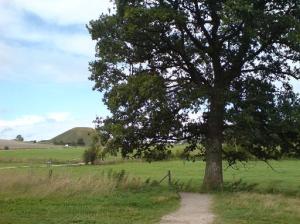
Kennet in Wiltshire there is a tree known as The Guardian Oak. One tradition states that if a ribbon or piece of cloth with personal value is tied to its branches, the faeries will inform you whether it is advisable to continue along the path to the long barrow. If the answer is no, then all is not lost, as you can take a slight diversion to the nearby Swallowhead Spring nestling between field banks, where a hawthorn and oak hang over the spring that feeds the River Kennet, and is covered in clooties left by people who recognise the charged atmosphere of the place.
A Filmic Faerie Oak
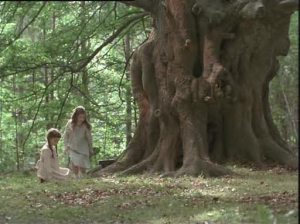
The association of faeries with trees is vividly brought to life in the 1997 film Photographing Fairies, where we are presented with a mighty oak acting as a tree where the faeries are to be found. In this case the faeries are small luminescent beings who seem to have a symbiotic relationship with the oak. They can only be seen in and around the tree (always with the aid of a psychoactive flower), which acts as the interface between consensus reality and the world of the faeries. Interestingly, it also acts as a hub for death in the film, with the faeries operating as arbiters between life and death. This plugs into the folkloric concept that faeries are intimately connected to the world of the dead, able to cross over between material reality and a metaphysical reality, where there is nothing but consciousness. It also acts as a shrine for the two little girls, Clara and Anna, after the death of their mother (who falls from the tree in an altered state of consciousness whilst communing with the faeries), linking into the idea discussed above, that faerie trees can be receptors of offerings, mediated by the supernatural entities that reside there.
Nature Spirits and Elementals
Whilst the faeries in the film are not necessarily portrayed as nature spirits, their reliance on the oak tree is implicit throughout, bringing them into line with the concept that what underlies the folktale perception of the faeries is a deeper metaphysical authenticity. In a series of lectures between 1908 and 1924, the Austrian spiritual philosopher Rudolf Steiner outlined his concept of these nature spirits (sometimes calling them elementals) and their fundamental role in ensuring the propagation of the 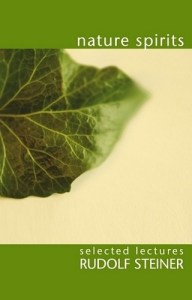 natural world, most especially in relation to trees. Steiner took clairvoyance as a given reality, and his descriptions of the inter-penetrating of the physical world with the spiritual world is compelling, and points towards a deeper, cosmic understanding of the nuts and bolts of how the world really works. He terms consensus reality as the sense world, and the spiritual realm as the supersensible world. For Steiner, the supersensible world exists as a field of energy devoid of matter, but which constantly interacts with the physical sense world. What exists in the supersensible world is in effect a fifth dimension of reality upon which our own four dimensions rely, and which is essential to the well-being of all life, but can only be perceived by clairvoyance. It is this special faculty that allows people to recognise how the worlds of matter and spirit intertwine.
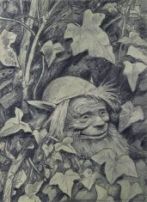
Steiner saw the supersensible as indispensable to the material world in the same way as consciousness is the necessary animating force to the physical bodies of humans. And he saw consciousness as the key to crossing the boundary between our world of the five senses and that of the nature spirits. He insists that ‘thought forms’ are the only way we are able to perceive the elementals and to understand what they are doing in nature, which he likens to unseen electricity bringing life to dormant machinery. To do this, a person must transform their usually passive thought forms into something more dynamic:
‘If someone really succeeds in entering the world with his clairvoyant soul, it seems as though his thoughts were not things over which he has any command; they are living beings… You thrust your consciousness into a place, it seems, where you do not find thoughts that are like those in the physical world, but where they are living beings.’ Perception of the Elemental World (1913).
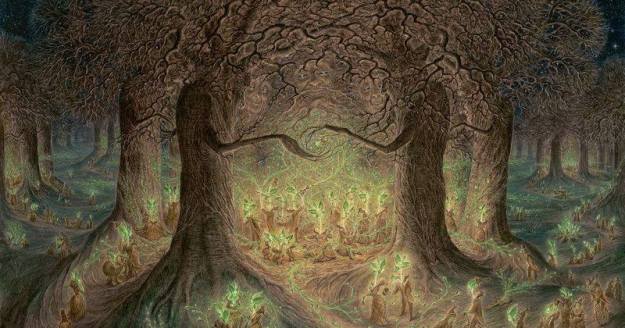
The elementals in the supersensible world exist as a range of beings, from devas, which are responsible for entire autonomous landscapes, through to the smaller nature spirits charged with the growth of trees and vegetation. Steiner divides these into four main types corresponding to earth (gnomic), water (undines), air (sylphs) and heat/light (salamanders). Steiner describes the chthonic nature spirits responsible for the health of trees, which:
‘… send down their roots into the ground. Anyone who can observe what they really send down and can perceive the roots with spiritual vision (for this he must have) sees how the root is everywhere surrounded by the activities of elemental nature spirits. And these elemental spirits, which an old clairvoyant perception designated as gnomes and which we may call the root spirits, can be studied with Imagination and Inspiration, just as human life and animal life can be studied in the physical world. We can look into the soul nature of these elemental spirits, into this world of the spirits of the roots.’ Elemental Spirits and the Plant World (1923).
Morphogenetic Fields
Steiner’s language and ideas are informed by his involvement with the Theosophist movement, and may grate with a 21st-century reader. But his metaphysics finds common ground with the compelling recent theory of Morphogenetic Fields propounded by the biochemist Rupert Sheldrake. This is a theory of formative causation in nature:
‘Over the course of fifteen years of research on plant development, I came to the conclusion that for understanding the development of plants, their morphogenesis, genes and gene products are not enough. Morphogenesis also depends on organising fields. The same arguments apply to the development of animals. Since the 1920s many developmental biologists have proposed that biological organisation depends on fields, variously called biological fields, or developmental fields, or positional fields, or morphogenetic fields.’ Rupert Sheldrake’s Morphic Fields.
 Sheldrake’s description of this organising principle behind the natural world is issued in the language of biochemistry, but in effect, what he postulates is the same as Steiner’s vision of nature spirits in action. There are invisible forces that are essential in ordering life on earth, something that conventional science accepts in the case of gravitational waves or magnetism, but has a hard time with when it comes to life itself. Steiner’s thesis is that the nature spirits are anthropogenic representations of these morphogenetic fields, imposed upon them through the thought forms of the observer, who perceives them clairvoyantly. Call them what you will, but they exist, and are essential in maintaining reproductive life; they are a form of consciousness responsible for the creation and sustenance of matter. They are the memory of nature.
The Wood Wide Web
With great serendipity, Rupert’s son, Merlin Sheldrake, a scientist specialising in mycorrhizal fungi, has recently put forward the theory that trees and plants are able to communicate through their root systems, mirroring the concept that a form of consciousness is operating to ensure the natural vitality of plant life. This has been nattily titled the Wood Wide Web:
‘For centuries, fungi were widely held to be harmful to plants, parasites that cause disease and dysfunction. More recently, it has become understood that certain kinds of common fungi exist in subtle symbiosis with plants and trees, bringing about not infection but connection. These fungi send out gossamer-fine fungal tubes called hyphae, which infiltrate the soil and weave into the tips of plant and tree roots at a cellular level. Roots and fungi combine to form what is called a mycorrhiza… In this way, individual plants and trees are joined to one another by an underground hyphal network: a dazzlingly complex and collaborative structure that has become known as the Wood Wide Web.’
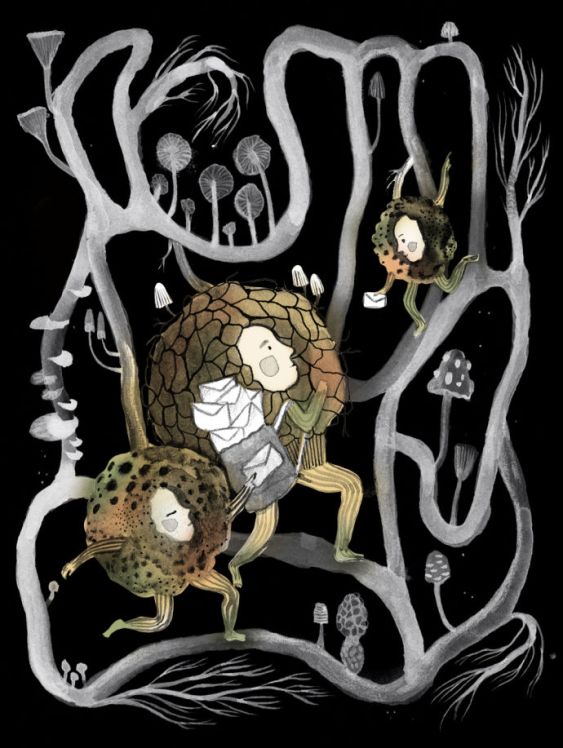
Whilst the ‘messaging system’ is physically conveyed through the fungal hyphal network, the actual messages must be generated by a form of consciousness. Could this consciousness be one and the same as Steiner’s nature spirits and Rupert Sheldrake’s morphogenetic fields? As discussed in a previous blog post, Altered States of Consciousness and the Faeries, certain fungi such as Psilocybin and Amanita Muscaria can allow a direct route into what Steiner would call clairvoyance, potentially opening up a psychedelic state of consciousness that is able to see and interact with the faeries, in whatever form they might take. These mushrooms are part of Sheldrake’s fungal wood wide web, and may be acting as routers; allowing us to collaborate with the fundamental natural consciousness that is being manifested. This manifestation could be partly responsible for what we have come to think of as faeries, nature spirits or elementals, allowing for the cultural coding that will generate what we see and experience.
This faerie experience seems to be especially and intrinsically linked to trees and vegetation in the natural world, whether we are looking at Steiner’s elementals, Sheldrake’s morphogenetic fields, classical dryads or the faeries of folklore. They have an intimate relationship with trees, and we recognise this even if we don’t properly understand it. But at a metaphysical level maybe we do recognise the relationship, and the clustering of faerie traditions and beliefs around trees is an expression of this. Trees are one of the primary life-forces on the planet – for sound ecological reasons, perhaps we need to respect them, live with them and love them as much as the faeries seem to.
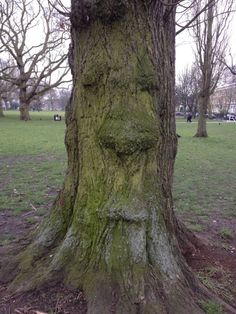
For a breakdown of faerie tree folklore by species, there is a good overview here.
For an Irish perspective, here is Ali Isaac’s excellent article: The Curious Phenomenon of the Irish Fairy Tree
 Trevor-Roper and other historians, it was only the attitudes of these cultural elites that could be discerned from the documentation. The actual recorded beliefs of the accused witches were simply ‘disturbances of a psychotic nature’, ‘fantasies of mountain peasants’, and ‘mental rubbish of peasant credulity and feminine hysteria.’ In other words, any suggestion that the phenomenon the accused witches were recorded as describing might have elements of truth to it was baloney. But Wilby, following the lead of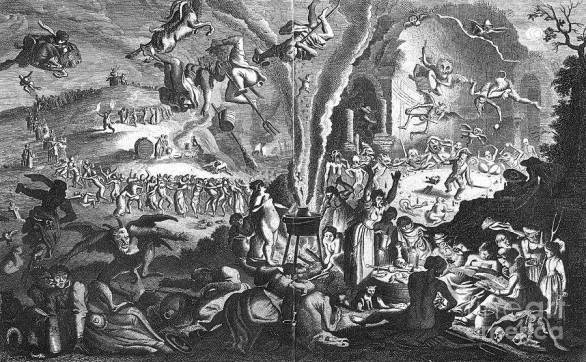
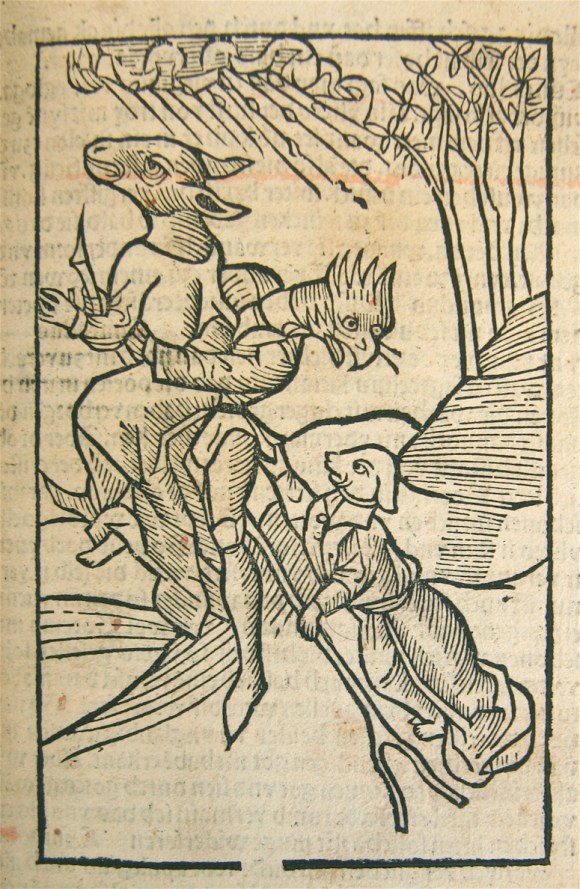
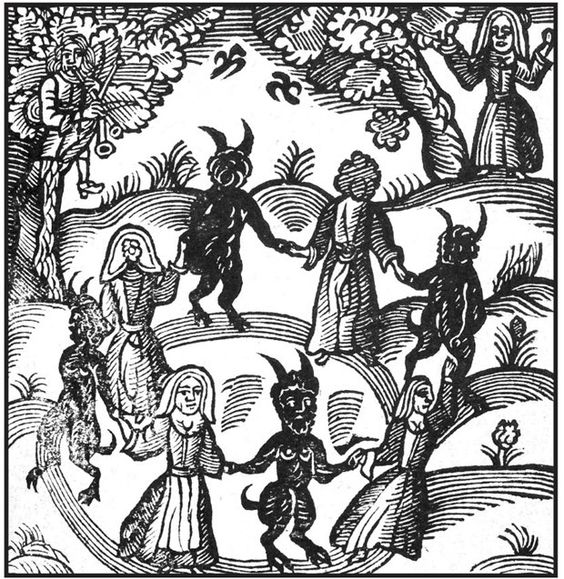
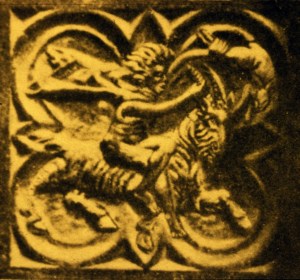 animals that could fit the bill as familiars, they could be mice, cats, dogs, birds, insects, horses, bears, foxes, frogs, even hedgehogs, though the most popular were goats – witches riding astride goats were commonly portrayed in medieval and Early Modern illustrations, and even in architectural reliefs, such as at Lyons Cathedral, where a witch is shown riding a goat and holding a hare (shown above).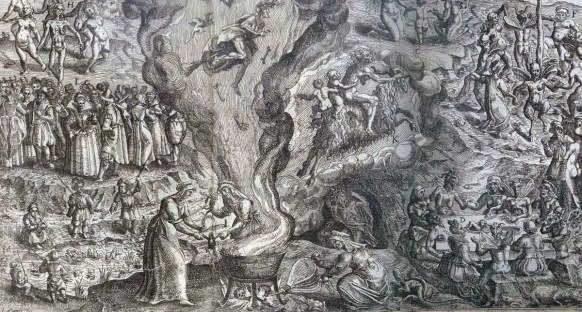
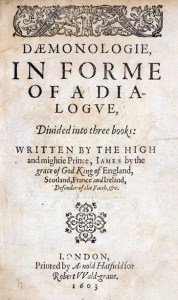 by the late 16th century this was being rectified, and even King James VI of Scotland (later James I of a united kingdom with England) himself felt compelled to write
  Isobel and her fellow accused witches also confessed to combining the use of faerie familiars with zoomorphism to attain their goals, which were sometimes beneficent, and sometimes maleficent. Whatever the objectives of these Scottish witches, their testimonies confirm their belief that in order to interact with a faerie otherworld they were reliant on the aid of familiars, or on their ability to turn themselves into animals. Isobel Gowdie again:
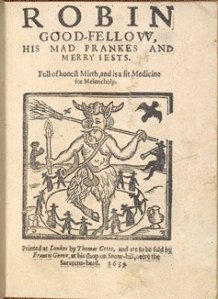 A decade later, and under more intimidatory cross-examination, the Northumberland witch Anne Armstrong claimed that she was commanded to sing whilst her companion witches: ‘danced in several shapes, first of a hare, then of their own, then in a cat, sometimes a mouse, and several other shapes.’
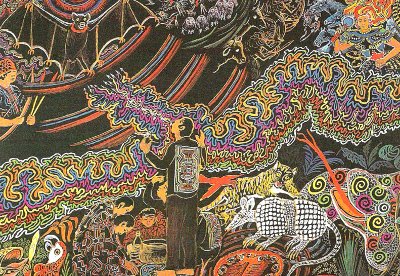
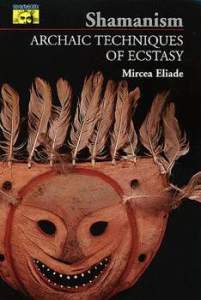 What is described as happening to the people involved in witchcraft in these periods, bears many of the hallmarks of shamanistic practice. Shamanism is not an organised religion, it is rather a technique for direct contact with a metaphysical, spiritual reality through the arbitration of individuals able to reach that reality by altering their states of consciousness. This contact with a spiritual, non-physical realm was/is usually conducted to bring back information from that realm, that is deemed useful, such as healing,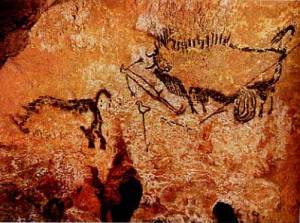
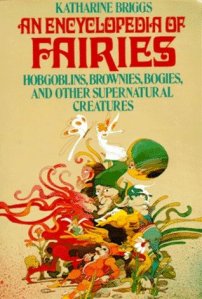 wrote extensively about the folklore of the faeries, including
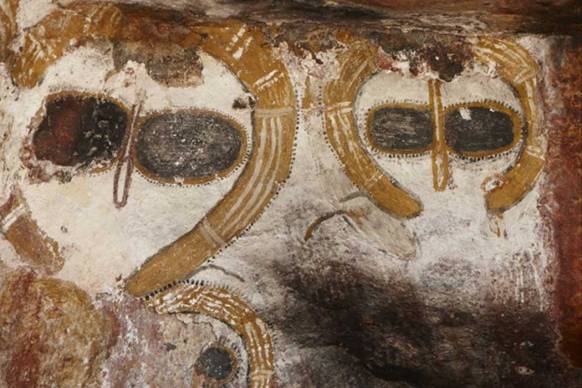
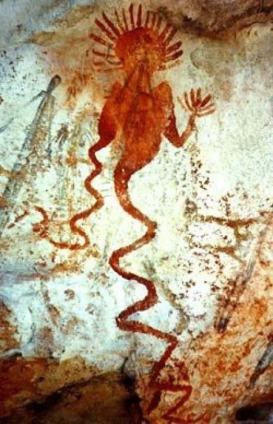
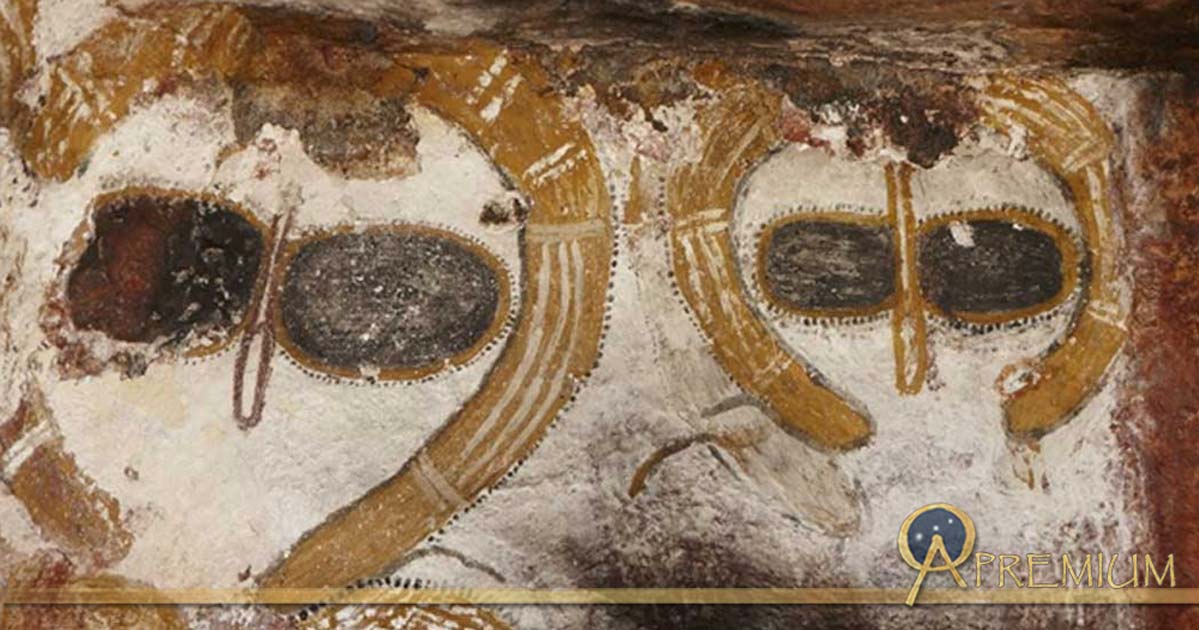
 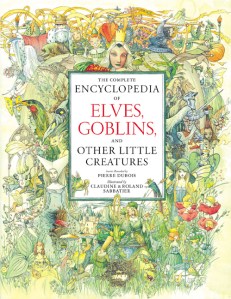 Dubois (1992). Dubois has a very playful style of writing that matches the subject matter perfectly, and he covers an extraordinary range of faerie types from around the world, co-ordinated into sections that describe each entity alongside an illustrative story. The description usually includes the ‘behaviour’ of the faerie in question. Typical of Dubois’ tone is this entry for the behaviour of The Mimi, supernatural entities of the aboriginal Australians…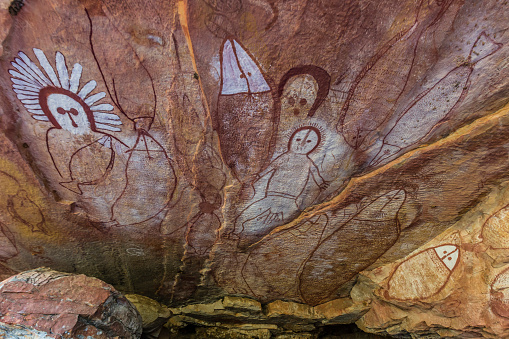
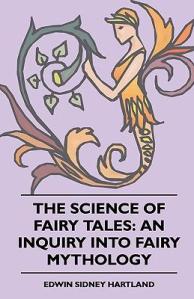 (1848-1927) whose
  he collected stories and anecdotes about the faeries from the rural populations. His language can occasionally seem archaic and quaint, but there is no doubt that he imbued himself in the Celtic communities that he spent time with during his years of travels amongst them. He had the time, that a modern anthropologist/folklorist could only dream of, to visit these communities and spend time with them, soaking up their stories and anecdotes, which revealed so much about the deeply ingrained belief in the faeries and the way these entities interacted with consensual reality. In doing so, he gained a great admiration for the rural people he came across, who would tell it like it was.
 concept further in his book
  until 2014) is Marjorie Johnson’s
  Perhaps that should be Victorian re-invention. The best overview of what happened to the faeries in popular consciousness during the 19th century is Carole Silver’s
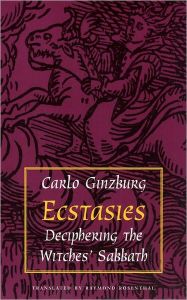
  witches’ sabbath in the medieval and Early Modern periods, Ginzburg recognises the essential role the faeries play in accounts of the sabbath. His use of historical sources to recreate what was really going on at the sabbaths is deeply impressive, and he has single-handedly overturned previous cultural historical theses, that the sabbath was simply an imaginary construct of the ecclesiastic and secular elites to close down on perceived heretics and maintain control over subversive groups. The sabbaths were real, and Ginzburg goes into detail as to how and why the faeries were included in these sacred rituals, facilitating ‘ecstasies’ and accompanying the witches on their metaphysical journeys. This eventually brings us to Ginzburg’s main hypothesis, that the sabbath was a survival of Eurasian prehistoric shamanism. The ‘ecstasies’ were brought about through group altered states of consciousness that enabled the witches to partake in a metaphysical reality for magical purposes… they were travelling to the otherworld, accompanied by their faerie familiars, just as Eurasian shamans had done. Ginzburg convincingly argues the case for continuity from prehistoric shaman to medieval/Early Modern witch.
 In her compelling 2005 book
  shamanistic tradition. In his 2005 book
  Magonia
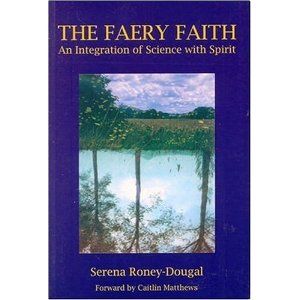 Serena Roney-Dougal takes this theme of the faeries as external agents of interference in human culture and runs with it in her 2002 book
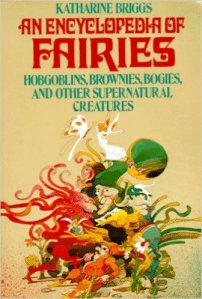
 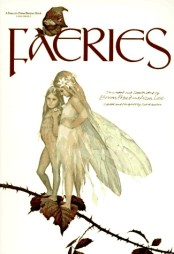 and Alan Lee. This is a playful, illustrative romp through faerie-lore, based on the descriptions given by Katherine Briggs in her Encyclopedia of Fairies. Froud and Lee capture the essence of folkloric faeries in their intense and atmospheric images of faeries from Britain and Ireland, always with the prescribed conviction that they are acting on ‘inside information’. There are no gossamer-winged faeries here… they’re real and vital, and the consistent republications of the volume prove the popularity of their vision. Take a look at any website about the faeries, and you’ll find some of their illustrations there. It probably ranks as the bestselling faerie book ever.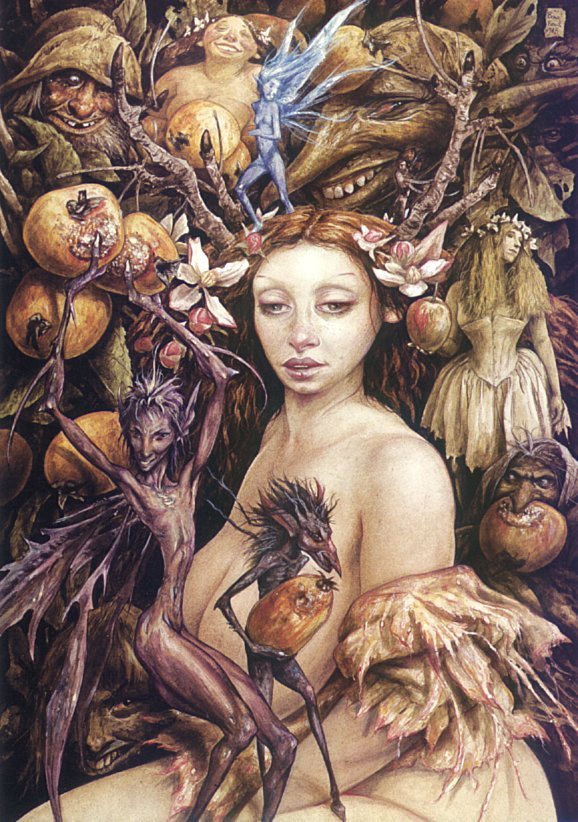

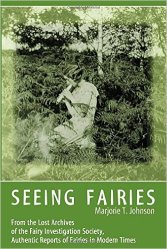 Inspired by the Theosophist movement, Marjorie Johnson (acting on behalf of the
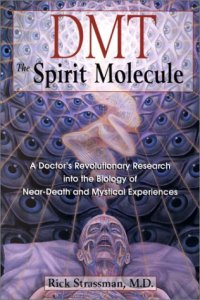 underwent profound alterations of consciousness. This involved immediate cessation of normal consciousness and transportation to a different realm of reality with divergent physical properties, and inhabited by a range of creatures described as elves, faeries, lizards, reptiles, insects, aliens, clowns (yes, clowns) and various therianthropic entities. One woman even describes a pulsating entity that she described as ‘Tinkerbell-like’. The experiences, especially at higher doses, represented to the participants a parallel reality that was ‘super real’, not an hallucination, not a dream, but a substantial built reality with full sensory interaction + telepathy. Strassman published the results as DMT: The Spirit Molecule, and there is a lucid
  what are incredible records of accessing very different realities. There is no question of any of the volunteers physically leaving the hospital bed during their experiences, but for all of them (without exception) the DMT-world was every bit as real as the one their minds left behind. After the injections participants frequently talked about ‘blasting through’ or ‘breaking through a barrier’ after which they found themselves in a realm with its own laws of physical space and movement, and its own inhabitants. Here is an abbreviated version of one of the volunteer’s description of his experience; 50 year old Jeremiah. After hurtling through a void he found himself: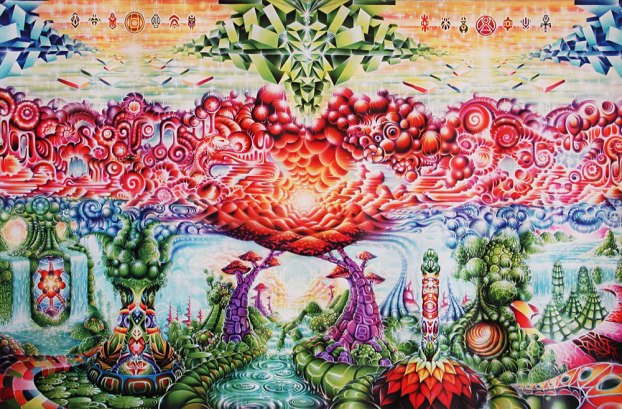
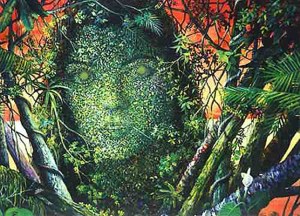 similarities to certain faerie motifs (discussed in more detail here:
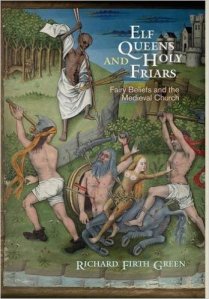 Richard Firth Green, in his 2016 book Elf Queens and Holy Friars, digs deep into the medieval vernacular belief in faeries, mostly by utilising the surviving texts of mystery plays, to demonstrate that there was a widespread acceptance of the faeries as a supernatural race of beings who interacted with humans on a regular basis. He makes the convincing argument that this was a popular cultural reaction to the ecclesiastical conception of faeries as minor-demons. But other medieval commentators and chroniclers were not so quick to dispatch the faeries to the work of the Devil. In the 12th and 13th centuries, English luminaries such as William of Newburgh, Walter Map and Ralph de Coggeshall wrote extensively about the faeries, without portraying them as demons. William and Ralph both recounted the story of The Green Children (see my take on this here:
  he rural people evidently had a deep belief and understanding of how the faeries operated, but when asked to recount their anecdotes, they would tend to disassociate themselves from this conviction by placing the stories in an indefinite period in the recent past. The faultless folklorist, Katherine Briggs gives an example of this from late 19th-century Somerset, which also includes an explanation for why the faeries may have made themselves scarce from everyday interaction with humans. The story is a common folklore motif (F388 in the Aarne-Thompson Index) of the departure of the faeries, told in c.1900 but recounting something that happened a few generations previously:
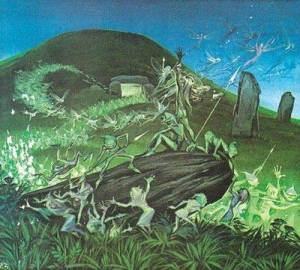 Apart from suggesting that the faeries were unable to co-exist with Christianity, this story demonstrates nicely an explicit reason why the faeries have disappeared from a locality, leaving us with an impression that they are real, but that at some point in the past they have removed themselves from everyday intercommunication with humans. This idea extends into the later 20th century, as the Isle of Man folklorist Margaret Killip describes: “The true believers, if they may be called that, for they are never consciously so, require no audience, and in fact possess knowledge they may never tell to anyone. They are far more likely to keep it hidden, but if inadvertently they let slip a hint of familiarity with a supernatural dimension, the person listening experiences a strange sensation, as if a glimpse had been given of a country heard of but hitherto unrealised.”
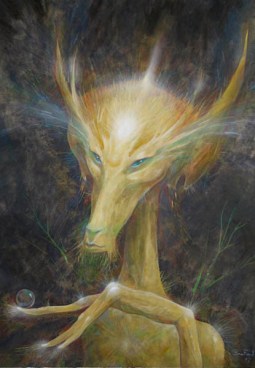 The rational response is that Frank was indeed asleep and dreaming, but he reiterates that this was definitely not the case; he was lucid and the adrenaline was coursing through him. This might suggest he experienced the faerie in an altered state of consciousness, perhaps as the result of a natural surge of N,N-Dimethyltryptamine, a compound released regularly (probably) through the pineal gland in the brain, but which, under certain circumstances, can flood the brain, causing reality to be observed in a remodelled fashion (I investigate this concept in more detail here: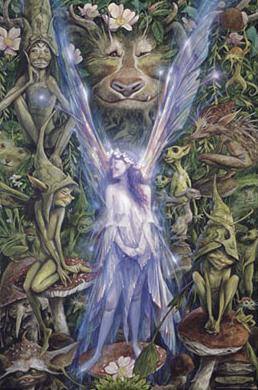
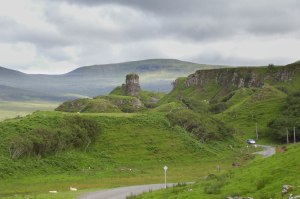
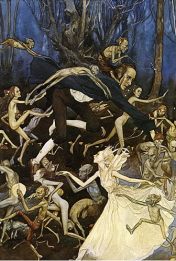 an a very small figure of a woman came out with a bowlful and offered it to her, but the thirsty woman, ignorant of fairy customs and the penalty attending their infringement, declined the kind offer of refreshment, and immediately found herself a prisoner in the hillock. She was led to an apartment containing a chest full of meal and a great bag of wool, and was told by the fairy that when she had eaten all the meal and spun all the wool she would be free to return to her home. The prisoner at once set herself to eating and spinning assiduously, but without apparent result, and despairing of completing the task consulted an old man of very sad countenance who had long been a captive in the hillock. He willingly gave her his advice, which was to wet her left eye with saliva each morning before she settled down to her task. She followed this advice, and gradually the wool and the meal were exhausted. Then the fairy granted her freedom, but in doing so cursed the old man, and said that she had it in her power to keep him in the hillock for ever.”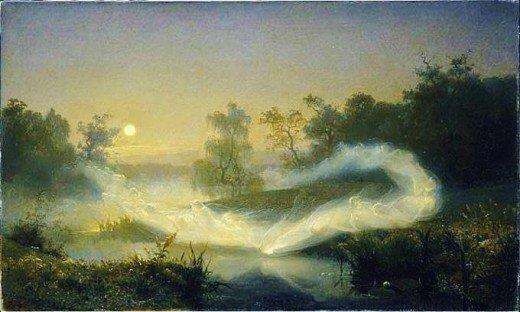
 deadbutdreaming