‘Does a photon exist prior to it’s detection? No, it does not exist until it is detected, according to the current understanding of quantum physics. Up to that point, there is only the photon wave function. Ironically, as soon as it is detected, it no longer exists. It vanishes at the moment it appears! For that reason, I prefer to think of the photon as an event, not as a thing.’
Richard Muller, Prof Physics, UC Berkeley, from Now, The Physics of Time.
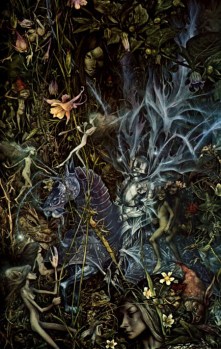
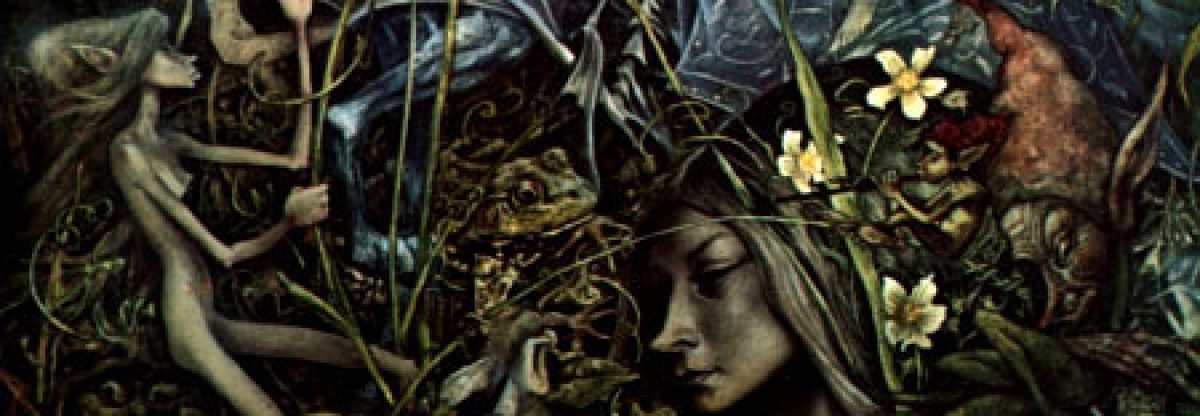
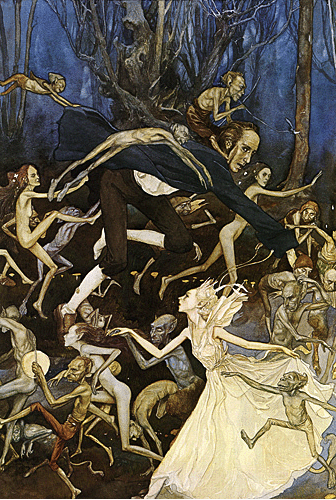
The tale of the Re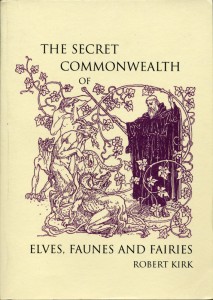 v. Robert Kirk and his Secret Commonwealth, is very peculiar. When read carefully, the text of his 1691 manuscript describing the faeries of Aberfoyle, Scotland gives many clues as to the reality of what he calls the Subterraneans, and how people were able to perceive them and interact with them. Much of the discussion in his text centres around people with the ‘second sight’, An Dà Shealladh in Gaelic, and their ability to sense the faerie world, which was apparently occupying the same space as consensus reality, but would only interact with it under special circumstances. We’ll take a look at this aspect of faerieland later on, focusing on the connection between matter and consciousness and where the faeries fit in. But first, who was Robert Kirk, why was he writing about supernatural races on earth at the end of the 17th century, and what happened to him?
Robert Kirk was the church minister at Aberfoyle in the southern Highlands of Scotland from 1685 to his death at age 48 in 1692. He was also (apparently) the seventh son of a seventh son – a sure sign that he should be carrying the requisite clairvoyance in his genetic makeup. A year after penning The Secret Commonwealth, his body was found on the Faerie Knowe at Aberfoyle, a hill he frequented often in life to consort with the faeries whose customs he describes in the book. His will is dated a day before his death, and the folklorist immediately became the subject of folklore, as rumour spread that he’d been abducted by the faeries for giving away too many of their secrets in his book. The plot
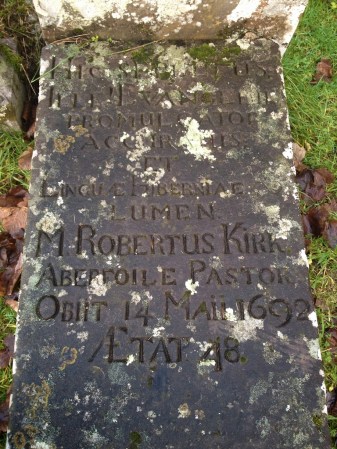
thickens when we discover that not only does his grave not contain his body, but that there is a tradition of him appearing in ghostly form to a friend at the christening of his (Kirk’s) posthumous child, with a wheeze to escape faerieland, where he was apparently being held captive. The stunned friend failed to throw a dirk (an iron knife) over the spectral Kirk as pre-planned, dooming the reverend to remain with the faeries, who had taken him into the Faerie Knowe and left a stock or doubleman as his fake body. But the mysterious circumstances of Kirk’s demise pale next to what he had been writing about in The Secret Commonwealth. In his manuscript (not published until 1815) he lays out who the faeries were and who could see them, crystallising what would appear to be a coherent (and matter of fact) belief in the faeries in this part of the Scottish Highlands in the 17th century. The work certainly gives the impression of an educated man (Kirk was the first to translate the Bible into Gaelic) simply describing a supernatural race of beings, much in the way as he might have described a foreign civilisation. And they were quite evidently mad, bad and dangerous to know.
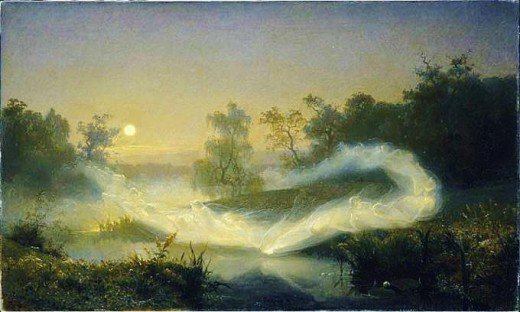
Intriguingly, Kirk is less interested in telling folktales than in giving an overview of what these creatures are and how they live. In this, his manuscript is unique and unusual. He calls them Subterraneans, and tells us that they are halfway between humans and angels. Here’s a summary of Kirk’s treatise on the Secret Commonwealth…
- They have ‘light and fluid bodies’ much as a condensed cloud or ‘congealed air’, which are mostly visible at dusk. They can appear and vanish at will, and their ‘chameleon-like bodies swim in the air near the earth with bag and baggage.’ Their ‘spongeous bodies’ are pure like air and they feed by sucking out the essence of human food, leaving the material remnant behind.
- They live in the earth, either in small hillocks or in subterranean caves. Their dwellings are large and beautiful, but usually invisible to human eyes. These houses are lit by lamps that burn continuously without the need for fuel.
- Their civilisation once lived above ground before humans inhabited the land, and Kirk notes that ‘the furrows still visible on very high hills’ were the work of the faeries.
- At each quarter of the year, they travel to a new place, as they are nomadic and unable to stay in one place for too long. It is usually at these times that they are encountered by humans who ‘have terrifying encounters with them.’
- They are divided into tribes and like humans, they have children, marriages and burials. But Kirk suggests that they may only do this to mock our own customs. Likewise, their language and dress mimic the local people. They have an aristocracy but no religion.
- Their philosophy is that nothing dies or disappears, but that ‘everything goes in a circle’ and is refreshed and renewed in a cyclical evolution.
- They will happily steal human children, wet-nurses and midwives for their own ends and are prone to the ‘irregularities of envy, spite, hypocrisy, lying and dissimulation.’
- Their weaponry consists of flint arrows and they are afraid of iron.
- Kirk also suggests that the faeries can be ‘double-men’ or ‘co-walkers’ for humans – that is, each human has a double amongst the Subterraneans, who will ‘haunt them as a shadow’, whether they know about it or not.
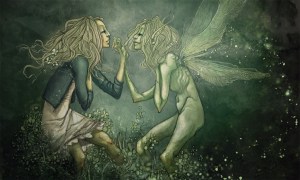
Kirk’s treatise goes a long way to depict the faeries, who appear in less descriptive form in countless folktales through the centuries. The impression given is of an intelligent race of beings who do not usually manifest as material beings, but who can interact with humans through various means. The constant theme is that they inhabit our space and time but engage with the material world in a different way to us. They are immaterial. And as far as we know, there is only one immaterial thing in the universe that we can be certain of: consciousness. So is this where the faeries are residing? Kirk’s discussion about the second sight (An Dà Shealladh) is highly suggestive that this is where they are to be found.
Second sight appeared to be a relatively common phenomenon amongst the Scottish Highlanders in Kirk’s time. It is frequently associated with visions of the future, but Kirk concentrates on their ability to interact with the faeries. The seer with second sight is ‘put in a rapture, transport, and sort of death, as divested of his body and all its senses.’ This might correlate with a dream or an altered state of consciousness, where reality is observed and participated in without the usual constraints of the laws of physics. The second sight is a type of shamanistic vision that is dependent on a change in consciousness. Once the change is made, the faeries become real to the observer. But where are they coming from?
Richard Muller’s quote at the top of this post is an important clue to getting behind the faerie phenomenon that Kirk describes with such attention to detail. In the quantum world, the wave function of a photon does not exist until it is observed, when it becomes a particle. But then it vanishes. Muller makes the simple but mind-bending point that this makes the photon an event, not a thing. This is also how consciousness works – it is not a thing, it is a series of events with no material residue. It exists alongside what we think of as material reality, but it never stays there, it is non-local and transient. Kirk’s faeries behave like a photon in a wave function, or a thought in consciousness – they live there waiting to be observed and detected by someone who is able to plug deeper than usual into their own, or the collective, consciousness – those with the second sight, or those in an altered state of consciousness. This would explain the similarities of the faeries to their human counterparts at any time in history (their dress, language etc.), and may also suggest that the faeries have (at least sometimes) transformed into high-tech aliens in recent times (see Shamans, Faeries, Aliens and DMT).
So was Kirk describing a phenomenon conjured up through the consciousness of both himself and the Highland seers from who he received his information? Maybe, although that simplifies things. By describing the customs of the Subterraneans he was depicting events, not things. These events couldn’t be pinned down as material phenomena and recorded in any rational or scientific procedure; they were the product of people who were able to alter their state of consciousness to the point of perceiving realities not usually perceptible. These realities did, and do not, consist of material things, but they were, and are, as real as immaterial events… just as in consciousness or the sub-atomic world. If I were really pushing the boat out, I might even suggest that ultimately, the faeries exist in the quantum world, unseen and implicate, and only turn up in our world when someone with the requisite skills (second sight) observes them there. They are a fundamental part of our reality but normally hidden: a secret commonwealth. I wonder what the Rev. Robert Kirk would think about that?
For a trailer to the 2009 film Kirk, see Kirk trailer (2009)
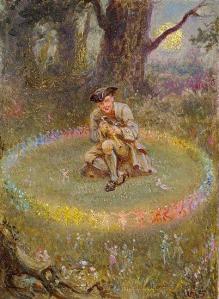
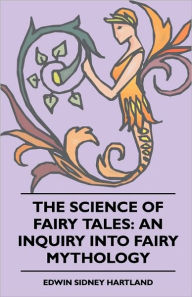 In the 1891 publication The Science of Fairy Tales, the folklorist Edwin Hartland devoted three chapters to ponder over The Supernatural Lapse of Time in Fairyland. He makes it clear that this motif is deeply embedded in worldwide folklore and mythology from a wide variety of chronological periods. He suggests that the consistency of the story elements involving the strange relative movement of time in faerieland, must stem from a common mythological theme, although he usually stops short of discussing this theme in favour of telling the actual stories. Within these supernatural lapse of time tales there are essentially three ways that time can behave in contradistinction to normal reality: 1. Time stops in the outside world, whilst in faerieland many years can pass with the human participant living a life of enjoyment or suffering with the faeries. The protagonist usually breaks a taboo of some sort and finds themselves back in the real world, where no time has passed. These stories are in the small minority. More often the time dilation moves the other way. 2. This can be quite a drastic shift, so that a character spending days or weeks in faerieland comes back to consensus reality to find decades or even centuries have passed, or, 3. that a few minutes caroling with the faeries turns out to be any length of time up to a year and a day, once they return to the world they came from. Here are examples of each type of time warp, taken from Hartland’s investigations.
 This might be explained by seeing folktales of this type as representing a surviving pagan belief system of the afterlife. This afterlife did not follow the strictures of Christianity or other world religions, and provided an alternative view of what happens to consciousness after death. It is a view that was (in the West) superseded by Christian theology, but that may be surfacing in these folktales as remnants of the previous system of belief (a belief system that remained partially intact but operated underground for fear of religious persecution). The presence of faeries in this otherworld, and their ability to materialise in standard reality, suggests that they were an essential element in pagan ideas about consciousness and that they had a role to play when it came to death. In this theory the characters in the story play the part of messengers, telling us about the true nature of a timeless reality that is distinct and separate from consensus reality, and showing us that human consciousness disassociates from the physical body to exist in a parallel reality such as Tir na n’Og, where the faeries are in charge. This message is encoded in the stories.
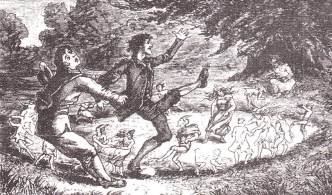 Stories of this type rarely say much about the faeries doing the abducting, only that they seemed capable of drawing the participant out of their own world and into an alternative reality with a different space-time continuum. The year and a day motif is important and is a common time-frame appearing in medieval romances as the amount of time protagonists were given to succeed in quests. In The Golden Bough, Sir James George Frazer highlights the ancient global concept of the Divine King, who was to be ritually murdered after a period of time in charge, which was often a year and a day. The time period was also used in common law to substantiate the legal situation of unwed couples, and it was (in theory) the amount of time a person living under feudal serfdom needed to be absent from his lord’s manor to gain his freedom. Interestingly, a year and a day is also used in Wiccan and other neo-pagan traditions for the time of learning required before being initiated into the first degree. This may all suggest that the folktales of this type have the year and a day motif embedded within them as a message, conveying the idea that it is a magical time-frame. It was a symbolic time-marker for life quests, ruling over others, decisions being made, learning a tradition, securing a marriage, or gaining freedom as one year tips over into another. It was evidently deeply ingrained in both esoteric tradition and everyday life from an early date, rooted in the cycles of the natural world.
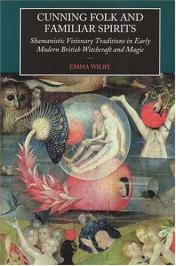 knowledge, who operated within the constraints of Christianity, but who was evidently practising pagan sorcery. Emma Wilby in her 2005 book
 At the end of the excellent documentary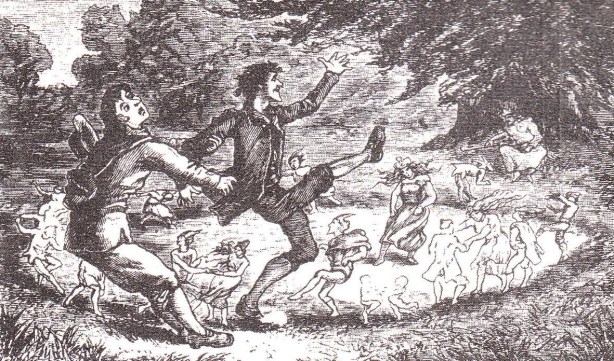
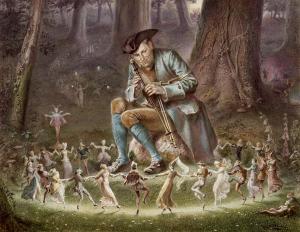
 Another Welsh story tells of a shepherd playing his flute on a hillside:
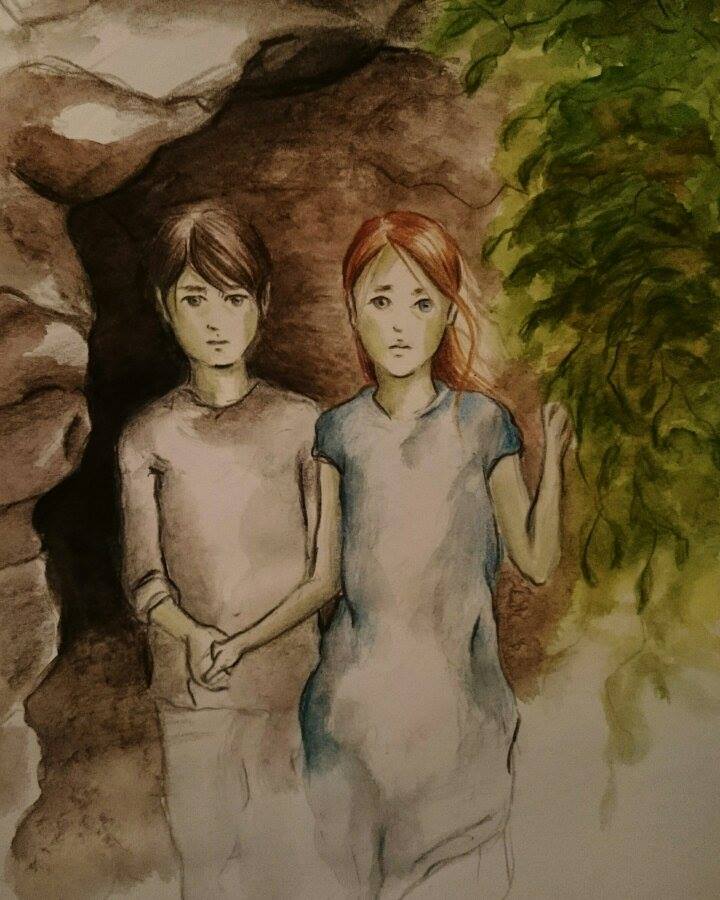
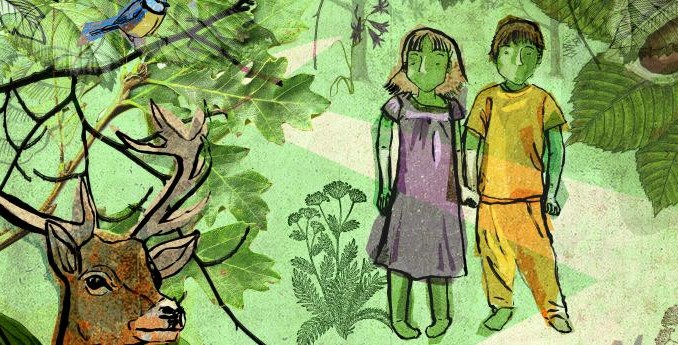
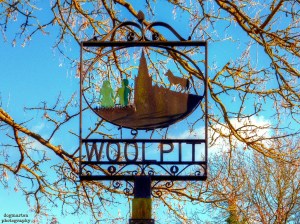 Prosaic Explanations In a concerted effort to dispel any supernatural elements from the story, Paul Harris (in a 1998 article for Fortean Times) put forward the theory that the children were Flemish orphans, displaced from their community after Henry II’s co-ordinated persecution of the Flemish population in Eastern England, culminating in a military offensive in 1173. Left to their own devices, they lived in the woods before wandering into caves (Harris suggests the Neolithic Grimes Graves in Norfolk), following tunnels and emerging near Woolpit, green through malnutrition and speaking a foreign language that the locals couldn’t understand. But as with many materialistic-reductionist explanations of strange stories, it is soon found to be baloney. Grimes Graves is 40km from Woolpit, there are no known tunnels extending beyond the locality and even if there were, they do not extend to the clay geology of northern Suffolk. Flemish immigration to Suffolk had been happening since the 11th century and so the linguistic argument also breaks down – the villagers would have been well-acquainted with the Flemish language, even if it were a dialect or (even more so) an Anglicised version of Flemish. And an educated aristocrat like Sir Richard de Calne would definitely have recognised their speech. Despite being cited as the most likely interpretation in several retellings of the story, it’s actually a non-starter.
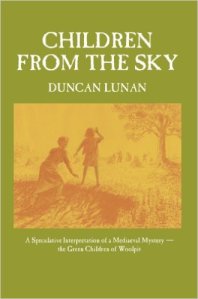 Out-there Explanations In his 2012 book Children from the Sky, Duncan Lunan presents a highly unorthodox theory of alien intervention in 12th-century England. Lunan goes into considerably more historical detail than any other writer on the subject, and his close reading of the historical sources teases out the context of the story and the characters involved. Of particular importance is his interpretation of the original texts, pointing out the usages of language by the two medieval chroniclers, and how the original Latin has been skewed by later translators and story summaries. But the historical detective work soon gives way to a ‘speculative interpretation’ that suggests the Knights Templar (he identifies Sir Richard de Calne as a Templar) were in contact with an alien civilization, who were abducting humans to populate a colony world – a world where it was always twilight due to a synchronous orbit, and where genetically modified algae turned the inhabitants green. The green children were part of this colony and were accidentally transported to Earth due to a matter transmitter malfunction. Sound wackadoo? You bet. But the sci-fi angle taken by Lunan is a lot of fun and allows for some free-thinking speculation on the oddities of a story that refuses to fit in with a reductionist interpretation. A mind-bogglingly melodramatic National Geographic documentary has Lunan dashing around the Suffolk countryside in a Morris Minor in pursuit of the alien connection. You might want to take a look here: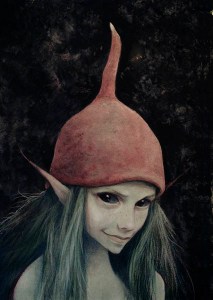
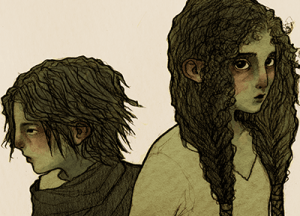 But instead of using real foreigners, such as Flemish immigrants, the story is made timeless and archetypal by turning the children into faeries. Their otherworldy status makes the tale bigger and more fundamental – it becomes a tool for teaching us about ourselves. The story embeds certain faerie motifs, such as their green colour. The most common colour of the faeries was green (usually their clothing, but also sometimes their food and their skin), and people hearing the tale in the Middle Ages (and beyond) would have automatically understood and accepted that they were associated with an otherworld, most usually represented as faerieland.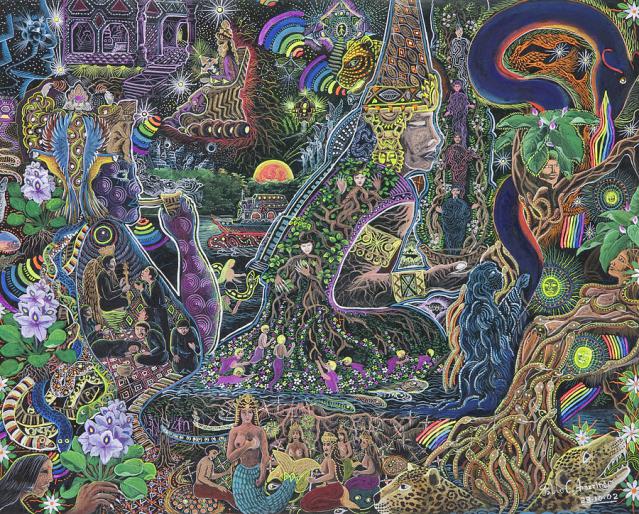
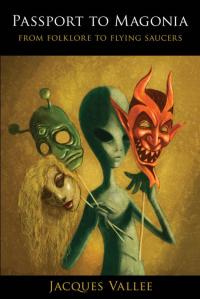 His hypothesis is that there is a commonality to the experiences reported in alien abduction scenarios, and the reports of interactions with faeries in folklore. He suggests the aliens and the faeries are essentially the same phenomenon, tuned through the cultural receptors of the time and then interpreted accordingly. He makes special reference to the regular motifs in faerie-tales of the abduction, by various means, of humans by faeries. There’s a lot of data here – it’s the commonest motif in faerie folklore. For a variety of reasons humans are taken to faerieland in the stories, either as midwives or nurses for faerie children, as servants to the faeries, for sex, as punishment or reward, or just because the faeries feel like it. They were also keen on abducting babies, and replacing them with changelings; wizened old faerie creatures who would usually die before the end of the story if a ruse to return the human baby wasn’t discovered. These motifs, of course, coincide with many aspects of the monumentally strange phenomenon of alien abductions, reports of which have grown at an exponential rate since the early 1950s. Vallee uses a range of evidence to tie-up faerie abductions from folklore and alien abductions from modern reports, and goes as far to state: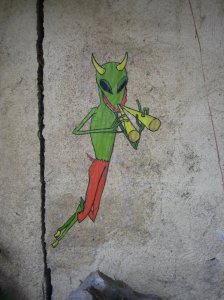
 deadbutdreaming