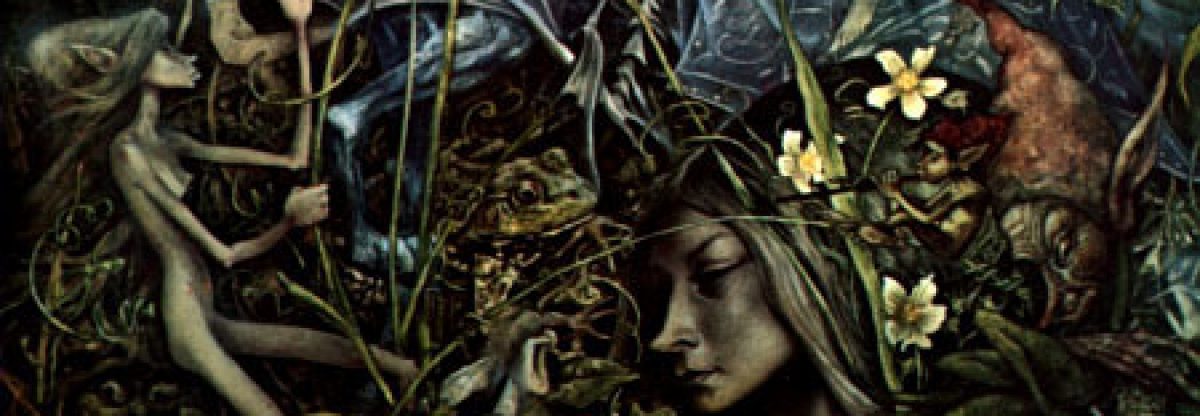
“We see that the threshold that sharply divides the sense world from the supersensible world must be respected absolutely… one has to understand how to conduct oneself in both worlds; one may not carry over into one world the method of observation that is right for the other.” Rudolf Steiner, Perception of the Elemental World (1913).
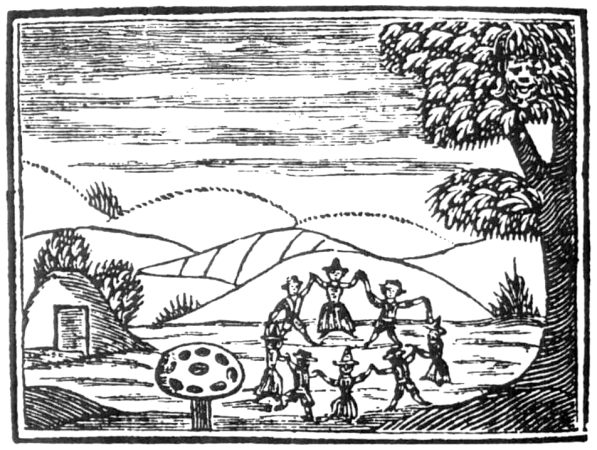
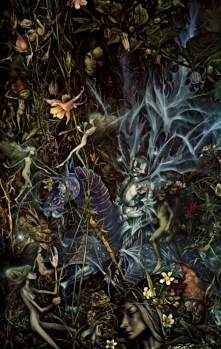
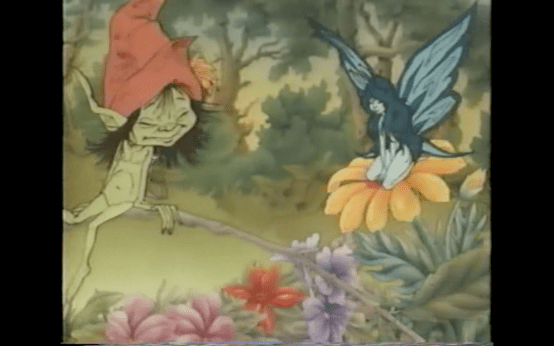
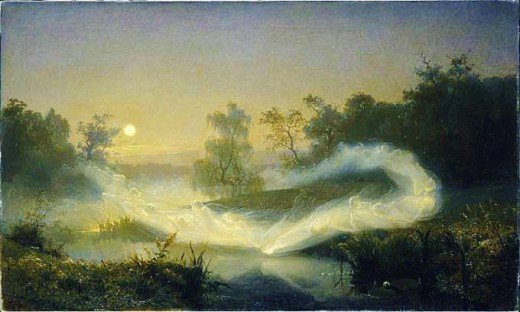
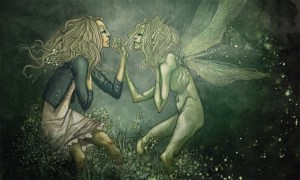
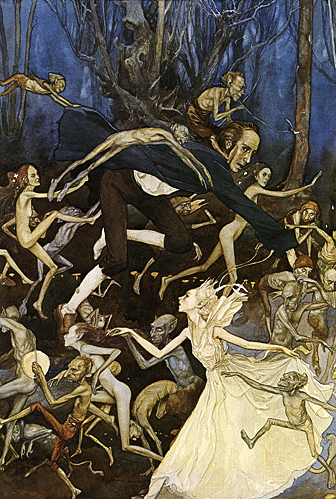
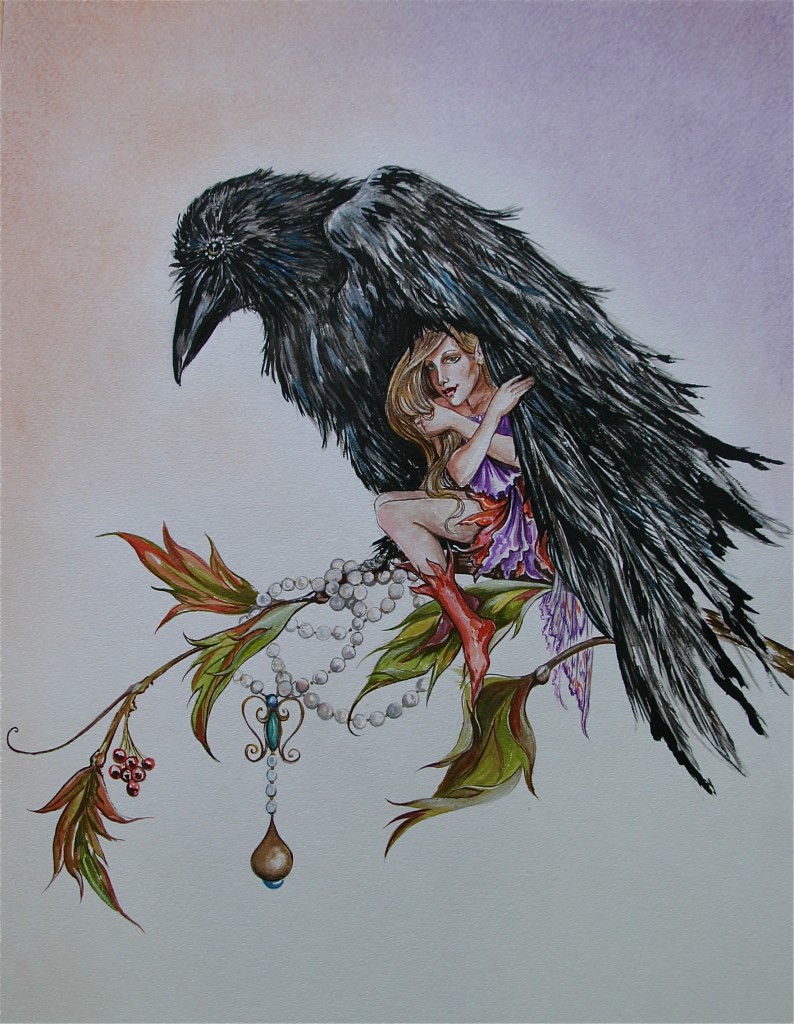
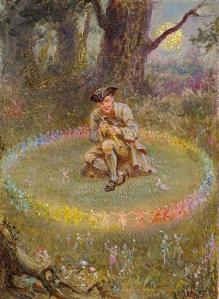
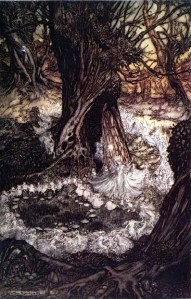
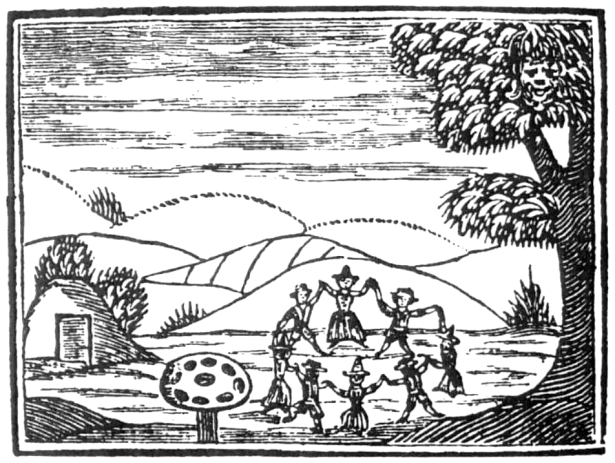
The faeries can seem quite insane. In folklore they frequently kidnap people, abduct children, mesmerise night wanderers by drawing them into dancing circles, blind those who can see them, and generally adhere to a different set of morals to humans. In psychiatric terms, the faeries might be seen as suffering from a mass psychosis. But there is much more to their reality than their representation in folklore, which is usually burdened with the need to tell a story. In fact, it might be suggested that what underlies the folktale perception of the faeries is a deeper metaphysical authenticity. This is their existence as nature spirits.
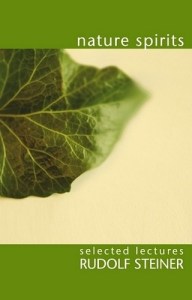 In a series of lectures between 1908 and 1924, the Austrian spiritual philosopher Rudolf Steiner outlined his concept of these nature spirits (sometimes calling them elementals) and their fundamental role in ensuring the propagation of the natural world. Steiner took clairvoyance as a given reality, and his language is sometimes difficult and obtuse, but his descriptions of the inter-penetrating of the physical world with the spiritual world is compelling, and points towards a deeper, cosmic understanding of the nuts and bolts of how the world really works. He terms consensus reality as the sense world, and the spiritual realm as the supersensible world. For Steiner, the supersensible world exists as a field of energy devoid of matter, but which constantly interacts with the physical sense world. What exists in the supersensible world is in effect a fifth dimension of reality upon which our own four dimensions rely, and which is essential to the well-being of all life, but can only be perceived by clairvoyance. It is this special faculty that allows people to recognise how the worlds of matter and spirit intertwine.
Steiner saw the supersensible as indispensable to the material world in the same way as consciousness is the necessary animating force to the physical bodies of humans. And he saw consciousness as the key to crossing the boundary between our world of the five senses and that of the nature spirits. He insists that ‘thought forms’ are the only way we are able to perceive the elementals and to understand what they are doing in nature, which he likens to unseen electricity bringing life to dormant machinery. To do this, a person must transform their usually passive thought forms into something more dynamic. In normal consciousness thoughts:
“… allow themselves to be connected and separated, to be formed and then dismissed. This life of thought must develop in the elemental world a step further. There a person is not in a position to deal with thoughts that are passive. If someone really succeeds in entering the world with his clairvoyant soul, it seems as though his thoughts were not things over which he has any command; they are living beings… You thrust your consciousness into a place, it seems, where you do not find thoughts that are like those in the physical world, but where they are living beings.” Rudolf Steiner, Perception of the Elemental World (1913).
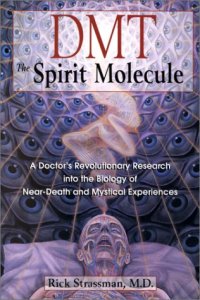
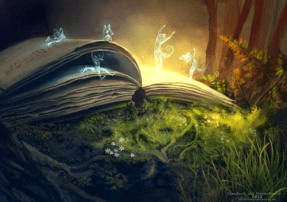 This sounds much like a meditative state. It is certainly an altered state of consciousness, where thought forms take over from the five senses. Steiner insists that this is the only way to enter into the metaphysical world of the nature spirits. It’s a concept explored in more detail in my previous post, which links perception of faeries to shamanic trance and states induced by psychedelic substances: Shamans, Faeries, Aliens and DMT. But Steiner goes on to describe the specific elemental animating forces at work in the natural world when perceived clairvoyantly.
The elementals in the supersensible world exist as a range of beings, from devas, which are responsible for entire autonomous landscapes, through to the smaller nature spirits charged with the growth of vegetation. Steiner divides these into four main types corresponding to earth, water, air and heat/light. The gnomes are the earth spirits,
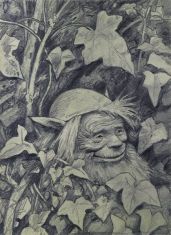
manipulating the plant genes from seed and root in the ground. Steiner describes them as pure intellect, simply knowing what is needed for the propagation of each genus, and wholly devoted to the process of new life and regeneration. Their modern representation as painted suburban statues is a mutation of their real form as chthonic entities, constantly working and moving the primal forces of metamorphosis in the earth.
Above ground the watery Undines look after the chemistry of growth, existing as amorphous beings in every drop of moisture, and clinging to leaf and bark to nurture
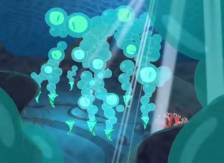
the vegetation in its proper form. Steiner asks us to look at a drop of water on a leaf and to put our thoughts into it completely, to the exclusion of all else. It moves, is absorbed, and reflects light, until its chemical compounds are integrated into the physical body of the plant. Within it are the Undines, visible if you are able to think them into existence.
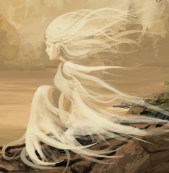
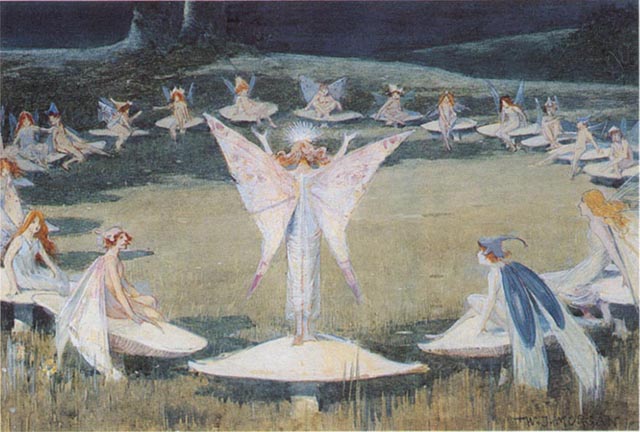
The Sylphs are the nature spirits of the air, most familiar as aerial faeries, accompanying the pollinating insects and ensuring the transmission of life from male to female. They exist purely as agents of transference, without intellect or intent, but with an absolute commitment to bringing the life-force of nature from one place to the other by way of the air.
Finally, the Salamanders are the metaphysical components of light and heat. It might be suggested that their supernatural status has been compromised by modern quantum physics, which has made them into sub-atomic photons, which will only exist when they are observed by a conscious observer. They are the simplest of the nature spirits, corresponding to the photon as the most reduced life-force upon which all else is dependent.
Heady stuff? Well maybe, but Steiner’s metaphysics finds common ground with the compelling theory of Morphogenetic Fields propounded by the biochemist Rupert Sheldrake. This is a theory of formative causation in nature:
“Over the course of fifteen years of research on plant development, I came to the conclusion that for understanding the development of plants, their morphogenesis, genes and gene products are not enough. Morphogenesis also depends on organising fields. The same arguments apply to the development of animals. Since the 1920s many developmental biologists have proposed that biological organisation depends on fields, variously called biological fields, or developmental fields, or positional fields, or morphogenetic fields.” Rupert Sheldrake’s Morphic Fields.
Sheldrake’s description of this organising principle behind the natural world is issued in the language of biochemistry, but in effect, what he postulates is the same as Stein er’s vision of nature spirits in action. There are invisible forces that are essential in ordering life on earth, something that conventional science accepts in the case of gravitational waves or magnetism, but has a hard time with when it comes to life itself. Steiner’s thesis is that the nature spirits are anthropogenic representations of these morphogenetic fields, imposed upon them through the thought forms of the observer, who perceives them clairvoyantly. Call them what you will, but they exist, and are essential in maintaining reproductive life; they are a form of consciousness responsible for the creation and sustenance of matter. They are the memory of nature.
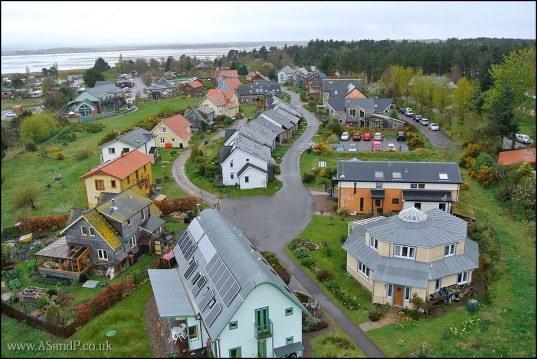
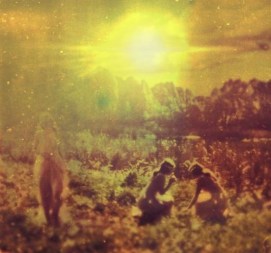
As a concrete example of the nature spirits (or morphogenetic fields) in action, we might take the example of the Findhorn Community in Scotland. This remarkable experiment was started in 1962 by an ex-RAF Squadron Leader, Peter Caddy, his wife Eileen and a colleague Dorothy MacClean. Due to straightened circumstances they moved to Findhorn near the Moray Firth, a barren, sandy piece of land, in a caravan, and attempted to begin cultivation. Although unknown to her at this point, Dorothy (who was a committed Presbyterian Christian) evidently had psychic clairvoyant abilities, and was soon communicating with the elementals, including the devas responsible for
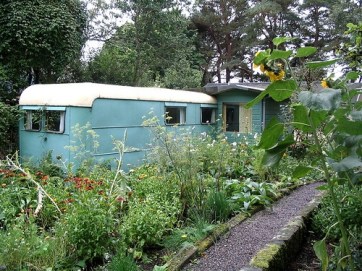
entire species of plants within the landscape. She passed on her communications to the Caddys, instructions and advice from the nature spirits, and within a year the dunes were transformed into lush vitality. Findhorn became famous for 40-pound cabbages, and within two harvests they had created a sustainable smallholding, even selling surplus produce in the local neighbourhood. Dorothy described the supernatural beings as energy forms, working behind the seen material state of the vegetation. She described the devas as holding:
“… the archetypal pattern and plan for all forms around us, and they direct the energy needed for materialising them. While the devas might be considered the ‘architects’ of plant forms, the nature spirits or elementals, such as gnomes or faeries, may be seen as the ‘craftsmen’, using the blueprint of energy channeled to them by the devas.”
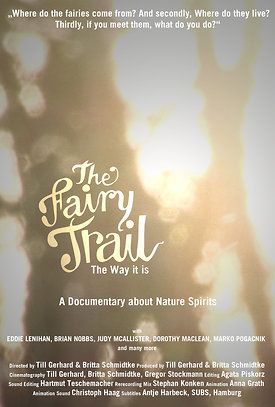
Findhorn continued to flourish, and today exists as the Findhorn Foundation, a spiritual community that still relies on the precept of working with the nature spirits to ensure a sustainable organic environment in harmony with the fields of energy that have made it such a special place. It features in the 2013 documentary film The Fairy Trail: A Documentary about Nature Spirits by Till Gerhard and Britta Schmidtke, where Dorothy MacClean talks about the early days of the community, and how she was able to plug into the elemental world to the mutual benefit of humans and nature spirits.
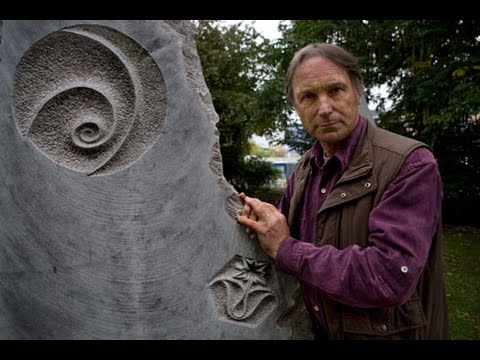
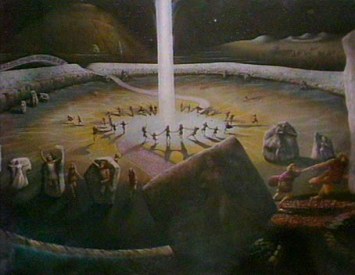
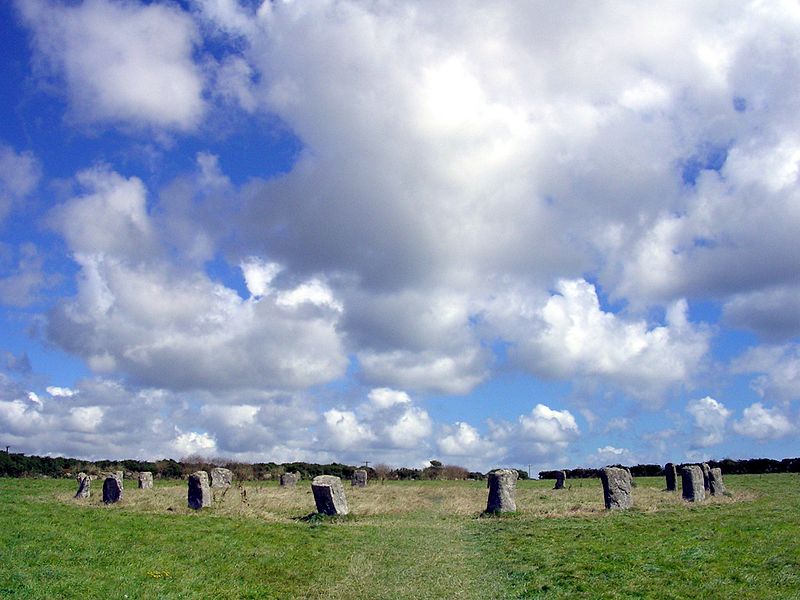
Also featured in this documentary is Marko Pogačnik, a Slovenian artist and ‘earth healer’, who travels the world to connect with the nature spirits, in order to communicate with them and heal damaged landscapes. His overview of how he works with the intelligence in nature is best found in his 1996 publication Nature Spirits and Elemental Beings, where he describes tuning into the morphogenetic fields 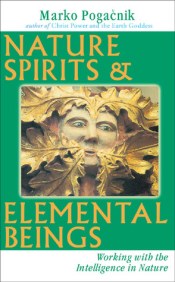 surrounding landscapes and individual components within them. One of the ways he heals these landscapes is through what he calls lithopuncture, art installations of standing stones, meant to act upon the earth in the same way as acupuncture works on the human (or animal) body. This links us clearly to prehistoric morphological designs, such as stone circles and rows. Marko suggests that our prehistoric ancestors were full-time collaborators with the nature spirits, and were using their own lithopuncture partly to induce harmony and regulation to their surrounding environments. Post-industrial ignorance of the invisible intelligence in nature has created a disconnection with natural landscapes, much to the detriment of all life and the earth’s biosphere itself:
“Rational scientific paradigm has, during the last two centuries, imposed upon humanity a pattern of ignorance towards those beings and dimensions of life that do not know physical appearance and yet are inevitable for life processes to run and to evolve. My effort as an artist and a human being is to get intimate experience of those invisible dimensions and beings, and share the experience and knowledge about the invisible worlds of Earth and Universe with my fellow human beings to change that extremely dangerous pattern that ignores the sources of life itself.” Marko Pogačnik’s website.
So where does this leave us with the faeries? In some ways much of their representation in folklore is at odds with this discussion of them as nature spirits and elementals. Their folkloric mischievous immorality does not seem to correspond with the perception of them as energy fields feeding the vital life-force of nature. But this misses the point somewhat. The faeries of folklore and the nature spirits do fit in to a single phenomenon of supernatural beings that need to be observed, understood and propitiated by humans. If we don’t, an imbalance is created in nature; the energy of the elementals will die, or the faeries will cause us problems. They are two sides of the same coin. They are also usually invisible, ultra-dimensional beings only perceptible when the human brain re-tunes itself to an altered state of consciousness. Rudolf Steiner suggested that it is thought itself that makes them manifest, and that clairvoyance is the method for allowing our consciousness to cross the barrier between the sense world and the supersensible world. The faeries and the nature spirits live in the collective consciousness of humanity, only interacting with the material world when we fully accept them for what they really are.
***
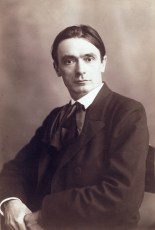
NB: Rudolf Steiner was prescient on many levels. When the proto-Nazi National Socialist German Workers Party gained strength in Germany after the First World War, he warned about the potential disastrous effects on Europe if they ever got into power. Hitler attacked Steiner on many fronts, including his unorthodox views, and accused him of being a tool of the Jews, while other nationalists in Germany called for a ‘war against Steiner’. In 1922 a group of National Socialists invaded a lecture he was delivering in Munich, in an attempt to physically attack him on stage, but Steiner gave them the slip through a rear entrance. He continued his warnings about their agenda until his death in 1924.

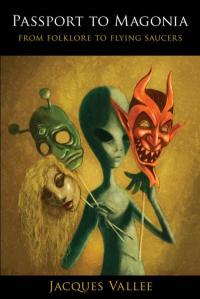 His hypothesis is that there is a commonality to the experiences reported in alien abduction scenarios, and the reports of interactions with faeries in folklore. He suggests the aliens and the faeries are essentially the same phenomena, tuned through the cultural receptors of the time and then interpreted accordingly. He makes special reference to the regular motifs in faerie-tales of the abduction, by various means, of humans by faeries. There’s a lot of data here – it’s the commonest motif in faerie folklore. For a variety of reasons humans are taken to faerieland in the stories, either as…

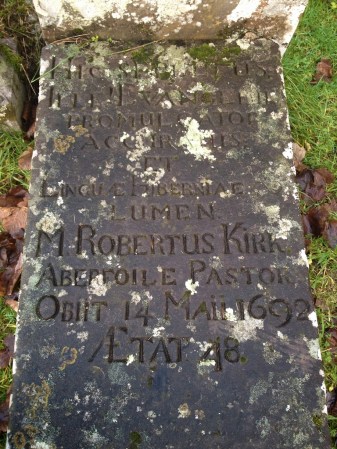
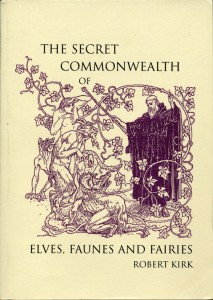 v. Robert Kirk and his
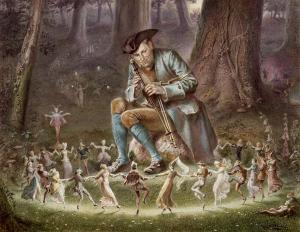
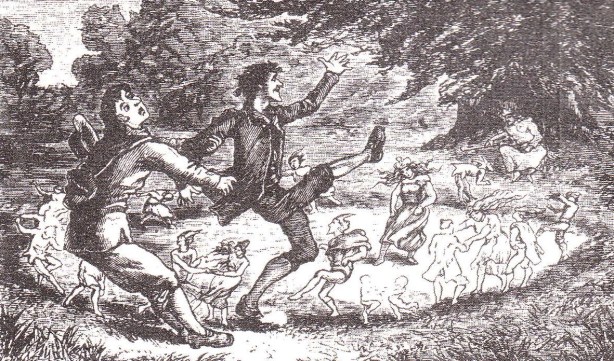
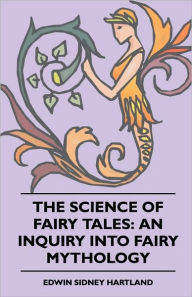 In the 1891 publication The Science of Fairy Tales, the folklorist Edwin Hartland devoted three chapters to ponder over The Supernatural Lapse of Time in Fairyland. He makes it clear that this motif is deeply embedded in worldwide folklore and mythology from a wide variety of chronological periods. He suggests that the consistency of the story elements involving the strange relative movement of time in faerieland, must stem from a common mythological theme, although he usually stops short of discussing this theme in favour of telling the actual stories. Within these supernatural lapse of time tales there are essentially three ways that time can behave in contradistinction to normal reality: 1. Time stops in the outside world, whilst in faerieland many years can pass with the human participant living a life of enjoyment or suffering with the faeries. The protagonist usually breaks a taboo of some sort and finds themselves back in the real world, where no time has passed. These stories are in the small minority. More often the time dilation moves the other way. 2. This can be quite a drastic shift, so that a character spending days or weeks in faerieland comes back to consensus reality to find decades or even centuries have passed, or, 3. that a few minutes caroling with the faeries turns out to be any length of time up to a year and a day, once they return to the world they came from. Here are examples of each type of time warp, taken from Hartland’s investigations.
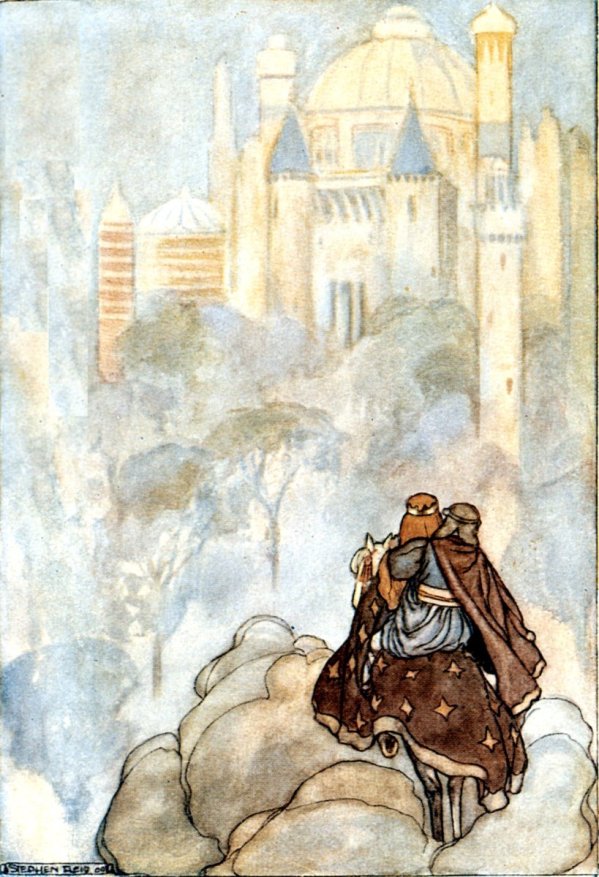
 This might be explained by seeing folktales of this type as representing a surviving pagan belief system of the afterlife. This afterlife did not follow the strictures of Christianity or other world religions, and provided an alternative view of what happens to consciousness after death. It is a view that was (in the West) superseded by Christian theology, but that may be surfacing in these folktales as remnants of the previous system of belief (a belief system that remained partially intact but operated underground for fear of religious persecution). The presence of faeries in this otherworld, and their ability to materialise in standard reality, suggests that they were an essential element in pagan ideas about consciousness and that they had a role to play when it came to death. In this theory the characters in the story play the part of messengers, telling us about the true nature of a timeless reality that is distinct and separate from consensus reality, and showing us that human consciousness disassociates from the physical body to exist in a parallel reality such as Tir na n’Og, where the faeries are in charge. This message is encoded in the stories.
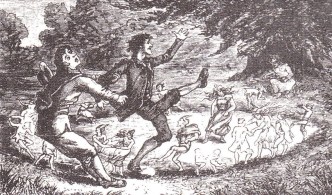 Stories of this type rarely say much about the faeries doing the abducting, only that they seemed capable of drawing the participant out of their own world and into an alternative reality with a different space-time continuum. The year and a day motif is important and is a common time-frame appearing in medieval romances as the amount of time protagonists were given to succeed in quests. In The Golden Bough, Sir James George Frazer highlights the ancient global concept of the Divine King, who was to be ritually murdered after a period of time in charge, which was often a year and a day. The time period was also used in common law to substantiate the legal situation of unwed couples, and it was (in theory) the amount of time a person living under feudal serfdom needed to be absent from his lord’s manor to gain his freedom. Interestingly, a year and a day is also used in Wiccan and other neo-pagan traditions for the time of learning required before being initiated into the first degree. This may all suggest that the folktales of this type have the year and a day motif embedded within them as a message, conveying the idea that it is a magical time-frame. It was a symbolic time-marker for life quests, ruling over others, decisions being made, learning a tradition, securing a marriage, or gaining freedom as one year tips over into another. It was evidently deeply ingrained in both esoteric tradition and everyday life from an early date, rooted in the cycles of the natural world.
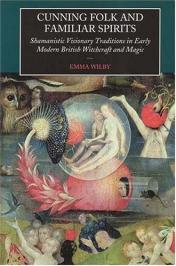 knowledge, who operated within the constraints of Christianity, but who was evidently practising pagan sorcery. Emma Wilby in her 2005 book

 At the end of the excellent documentary
 Another Welsh story tells of a shepherd playing his flute on a hillside:
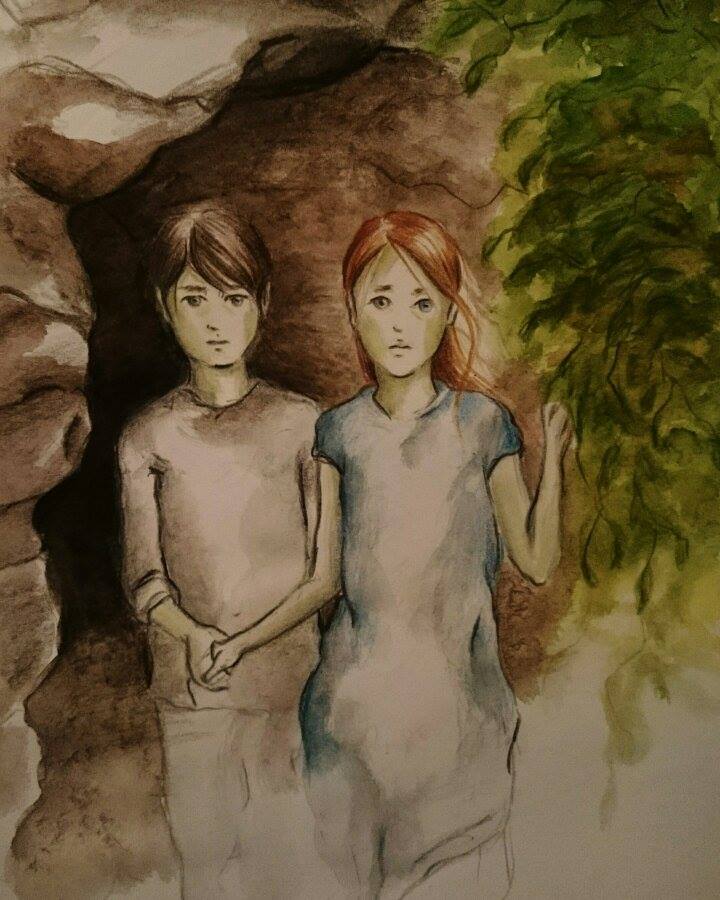
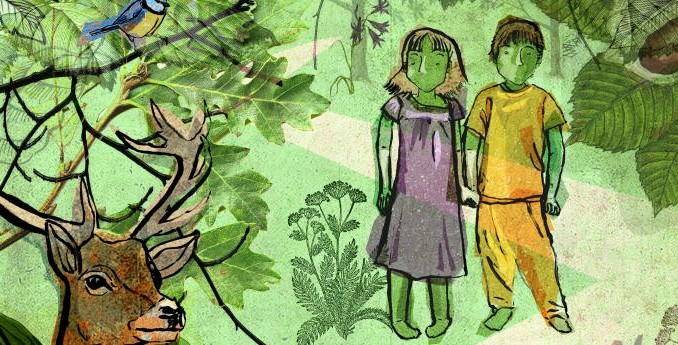
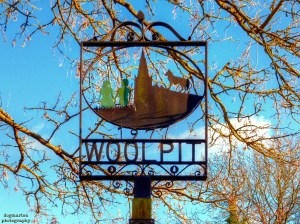 Prosaic Explanations In a concerted effort to dispel any supernatural elements from the story, Paul Harris (in a 1998 article for Fortean Times) put forward the theory that the children were Flemish orphans, displaced from their community after Henry II’s co-ordinated persecution of the Flemish population in Eastern England, culminating in a military offensive in 1173. Left to their own devices, they lived in the woods before wandering into caves (Harris suggests the Neolithic Grimes Graves in Norfolk), following tunnels and emerging near Woolpit, green through malnutrition and speaking a foreign language that the locals couldn’t understand. But as with many materialistic-reductionist explanations of strange stories, it is soon found to be baloney. Grimes Graves is 40km from Woolpit, there are no known tunnels extending beyond the locality and even if there were, they do not extend to the clay geology of northern Suffolk. Flemish immigration to Suffolk had been happening since the 11th century and so the linguistic argument also breaks down – the villagers would have been well-acquainted with the Flemish language, even if it were a dialect or (even more so) an Anglicised version of Flemish. And an educated aristocrat like Sir Richard de Calne would definitely have recognised their speech. Despite being cited as the most likely interpretation in several retellings of the story, it’s actually a non-starter.
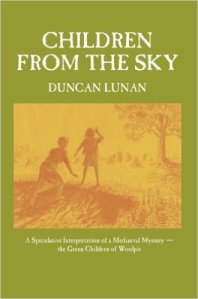 Out-there Explanations In his 2012 book Children from the Sky, Duncan Lunan presents a highly unorthodox theory of alien intervention in 12th-century England. Lunan goes into considerably more historical detail than any other writer on the subject, and his close reading of the historical sources teases out the context of the story and the characters involved. Of particular importance is his interpretation of the original texts, pointing out the usages of language by the two medieval chroniclers, and how the original Latin has been skewed by later translators and story summaries. But the historical detective work soon gives way to a ‘speculative interpretation’ that suggests the Knights Templar (he identifies Sir Richard de Calne as a Templar) were in contact with an alien civilization, who were abducting humans to populate a colony world – a world where it was always twilight due to a synchronous orbit, and where genetically modified algae turned the inhabitants green. The green children were part of this colony and were accidentally transported to Earth due to a matter transmitter malfunction. Sound wackadoo? You bet. But the sci-fi angle taken by Lunan is a lot of fun and allows for some free-thinking speculation on the oddities of a story that refuses to fit in with a reductionist interpretation. A mind-bogglingly melodramatic National Geographic documentary has Lunan dashing around the Suffolk countryside in a Morris Minor in pursuit of the alien connection. You might want to take a look here:
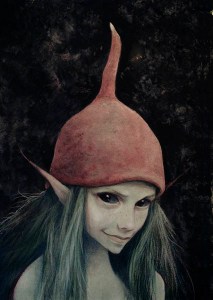
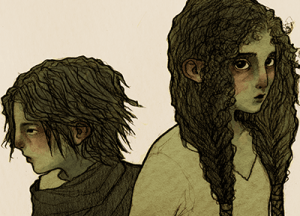 But instead of using real foreigners, such as Flemish immigrants, the story is made timeless and archetypal by turning the children into faeries. Their otherworldy status makes the tale bigger and more fundamental – it becomes a tool for teaching us about ourselves. The story embeds certain faerie motifs, such as their green colour. The most common colour of the faeries was green (usually their clothing, but also sometimes their food and their skin), and people hearing the tale in the Middle Ages (and beyond) would have automatically understood and accepted that they were associated with an otherworld, most usually represented as faerieland.
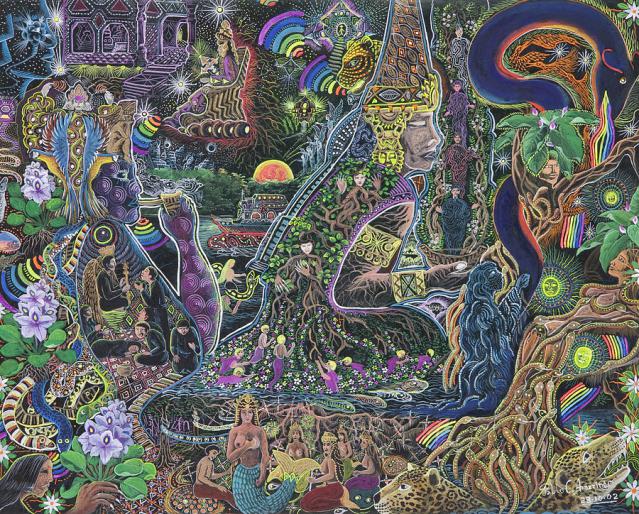
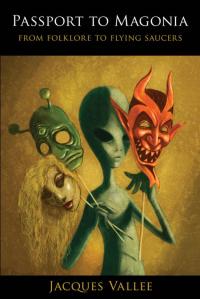 His hypothesis is that there is a commonality to the experiences reported in alien abduction scenarios, and the reports of interactions with faeries in folklore. He suggests the aliens and the faeries are essentially the same phenomenon, tuned through the cultural receptors of the time and then interpreted accordingly. He makes special reference to the regular motifs in faerie-tales of the abduction, by various means, of humans by faeries. There’s a lot of data here – it’s the commonest motif in faerie folklore. For a variety of reasons humans are taken to faerieland in the stories, either as midwives or nurses for faerie children, as servants to the faeries, for sex, as punishment or reward, or just because the faeries feel like it. They were also keen on abducting babies, and replacing them with changelings; wizened old faerie creatures who would usually die before the end of the story if a ruse to return the human baby wasn’t discovered. These motifs, of course, coincide with many aspects of the monumentally strange phenomenon of alien abductions, reports of which have grown at an exponential rate since the early 1950s. Vallee uses a range of evidence to tie-up faerie abductions from folklore and alien abductions from modern reports, and goes as far to state: