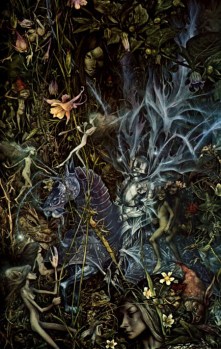
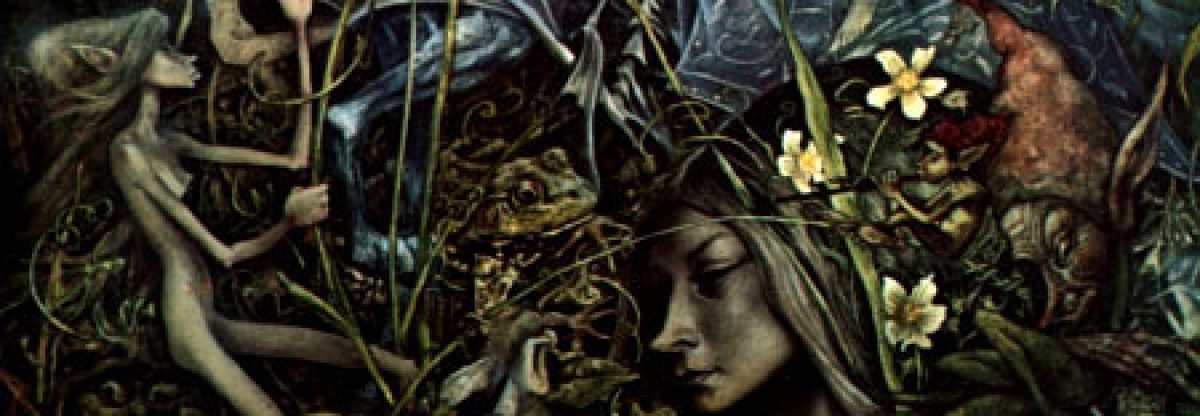
Faeries are difficult to portray through the medium of film and documentary. They are too amorphous and difficult to pin down – a bit like in real life. They’re happier living in the consciousness of humans than being captured on celluloid. But some have tried, and so whilst not pretending to be an exhaustive list of filmic faeries, I thought I’d put together a list of some of my favourites, both dramatic and documentary. I hope you might find something new here, with all links embedded…
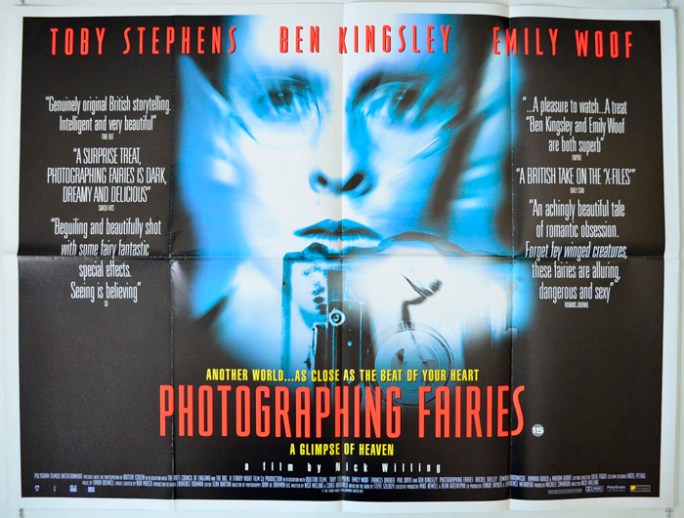
Photographing Fairies is a 1997 film directed by Nick Willing, based on the book by Steve Szilagyi. It’s also absolutely bloody marvellous. The plot (without spoilers) revolves around a photographer, Charles Castle (played by Toby Stephens) who is beset by grief and guilt after his new wife is killed in an Alpine accident just before the First World War. Hardened against any type of religion or spirituality, he returns from the trenches to his photography business in London. When a woman turns up at his studio with a photo of her daughter with a faerie, he becomes obsessed to find out the truth behind it, taking him on a journey right down the rabbit hole.
The main plot device rests on the faeries becoming manifest during altered states of consciousness, brought about by the consumption of a small white flower. This alters the perception of time and allows interaction with the faeries, who exist as luminous humanoids. The scene when Castle first takes one of the flowers is a cinematographic treat; unsettling, trippy, beautiful and moving all at the same time. He never manages to photograph the faeries, but he does come to the realisation that they are arbiters between the material world and transcendence from this world. In the words of Arthur Conan Doyle (who makes an appearance in the film) they are the handmaidens of the eternal.
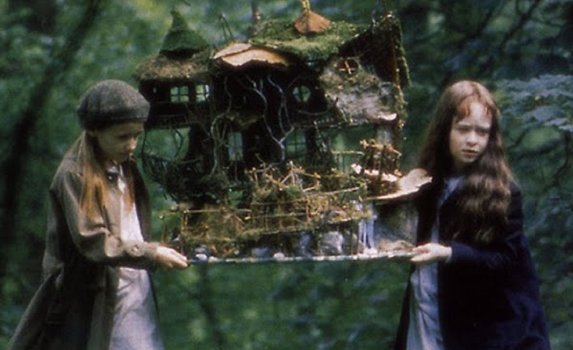
Also made in 1997, but less dark and hallucinogenic, is Fairytale: a true story, directed by Charles Sturridge. It’s loosely based on the story of the Cottingley faeries, and is viewed from the perspective of the two little girls, Elsie and Polly, who discover and photograph the faeries living in the backwoods of their Yorkshire home during the First World War. The premise is that you have to believe in the faeries to see them, and that this is much more likely to happen if you’re a child. It’s pretty sentimental, but the faerie scenes are well executed, and there is a stellar cast, including Harvey Keitel as Houdini (yes, that Houdini) and Peter O’Toole as Arthur Conan Doyle. The final scene when the whole tribe of winged faeries turn up at the girls’ house (initially seen from the faeries’ perspective) is joyous and magical.
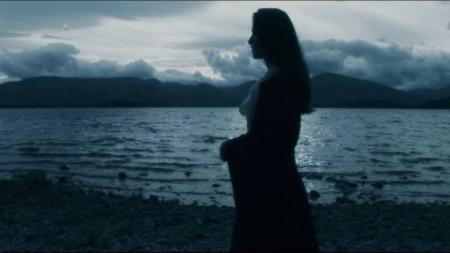
A different approach is taken in Kirk, a 2009 film by the (then) teenage director Michael Ferns. It won the Best Independent Feature Film at the Manchester Festival of Fantastic Films and is reviewed in depth by MJ Simpson here. It’s set in the Scottish Highlands in the late 17th century, and tells the story of the Reverend Robert Kirk, who wrote The Secret Commonwealth of Elves, Fauns and Fairies (see The Secret Commonwealth for my take on the story). It takes a reductionist view of the story, where Kirk’s belief in faeries is wholly instigated by the parish femme fatale, Mary, who lures the married vicar with sweet talk of the faerie folk, much to the chagrin of his wife Abigail. Kirk’s acceptance of the faeries is made to seem delusional, but there is enough ambiguity to keep us wondering about what’s really going on, heightened by the subdued lighting and colour, which lends an ethereal tone to each scene. The faeries themselves never show up, but there are luminous dream sequences where Mary takes the part of the alluring faerie queen, intent on ravishing Kirk. If you know the story, you’ll know it ends badly, and if you have half a heart you’ll be wiping away a tear after a beautifully told tale with sensitive acting and a dynamic screenplay.
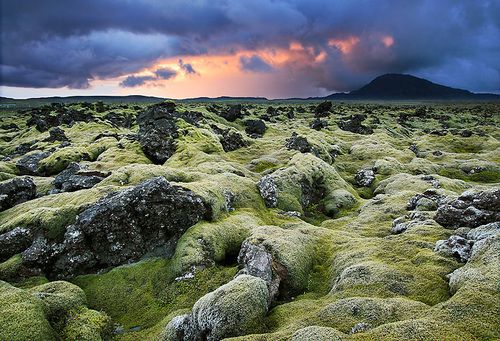
Bringing us up to the 21st century are two documentaries that investigate the belief in faeries in Iceland. Huldufólk 102 (Hidden People) is a 2006 film, atmospherically underscored by indigenous musical luminaries Sigur Rós, Amina and Múm. One of the talking heads, historian Magnus Skarphedinsson, sets the tone right from the start when he states: ‘There is no doubt in my mind that there are two nations living in this country; the Icelandic nation and the invisible nation.’ This concept is maintained throughout the documentary, which films Icelanders from a range of backgrounds talking about the hidden folk and how they are an intrinsic part of Icelandic culture. It’s an excellent insight into how modern belief in the faeries pervades the society, and affects everyday life, from where to build roads (always avoiding the rock homes of the Huldufólk) through to the faeries incorporation into Christianity. Star of the show is the grizzled and wizened farmer þórleifur Hjalfason, who tells a story about the hidden folk burnishing and sharpening his knife – a common faerie-helper motif in folklore, made real at his remote Icelandic farm.
A bit more out there is the 2002 documentary Elves, Ghosts, Sea Monsters & ETs In Iceland – Investigation Into The Invisible World, which spreads a wide net over Icelanders’ belief in otherworldy beings in their landscape, mostly through the eyes of clairvoyants, who use their psychic abilities to shed light on the faeries and their customs. It’s a beautifully evocative piece of film-making, that brings out the mesmerising strangeness of the Icelandic environment, and presents a modern faerie belief that is deeply embedded and alive in the culture.
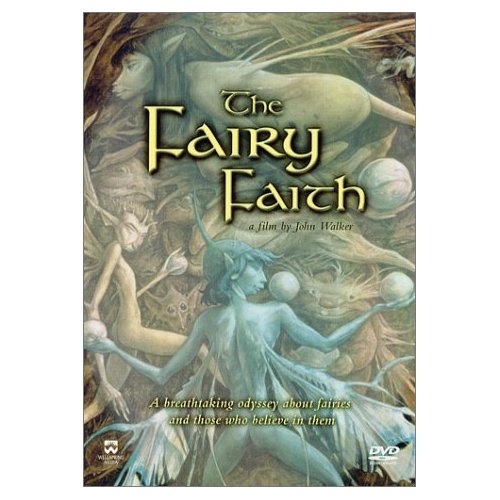
John Walker’s 2000 documentary The Fairy Faith takes a trip around the UK, Ireland and Cape Breton Island, Canada, to interview people who have had experiences with faeries. The photography is sumptuous and Walker uses Celtic music to draw us into a world where things are not quite as they seem. His narration is sensitive to the beliefs of the people interviewed and we are left with the impression that the faeries are just an inter-dimensional breath away. Highlights include Brian Froud talking about his fantastic faerie artwork, and Eddie Lenihan, the magnificently whiskered Irish storyteller, who tells it like it is (his website can be found here).
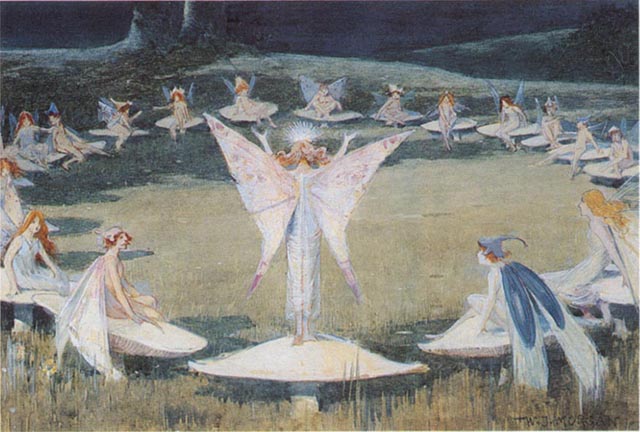
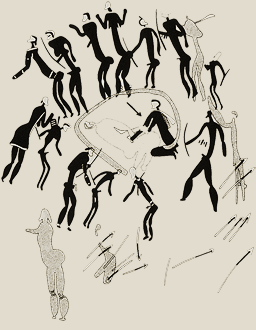
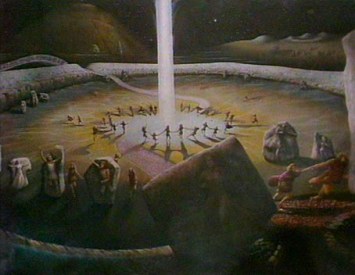
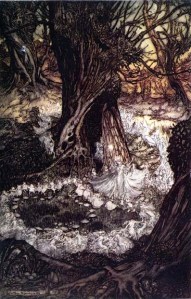
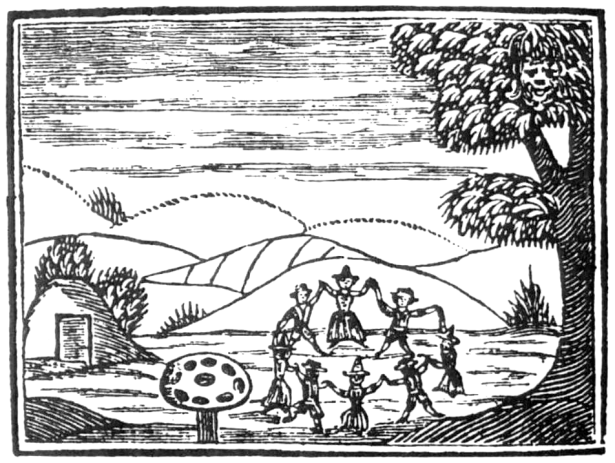
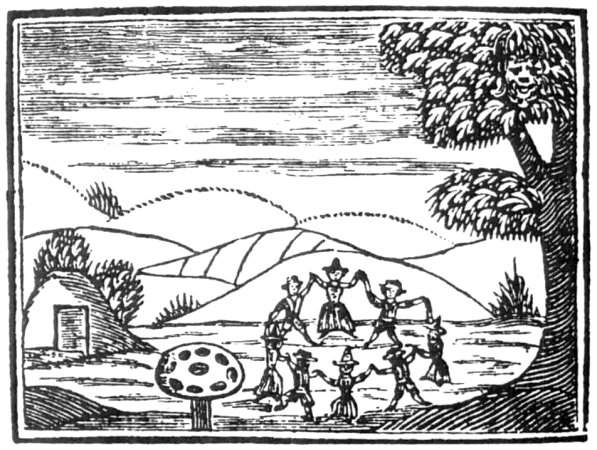
When Walker reaches Cape Breton Island in Nova Scotia, he goes with Marie-Rose and her daughter April, to a forest river to hear about their faerie encounter several years previously. It’s quite clear that they are authentic, and genuinely recalling the experience as best they can. The encounter consisted mostly of hearing music and singing — Marie-Rose was evidently afraid of the phenomenon and dragged her children away from the river and into the car to get away. As they drove away, April watched out the back window as a group of small faeries were: “jumping around in a circle, holding hands. They were singing… and dancing in a circle. They sort of mixed right in with the background, and I don’t know whether they were see-through or what.” For my take on the faerie circle dance see Going Round in Circles: The Faerie Dance.
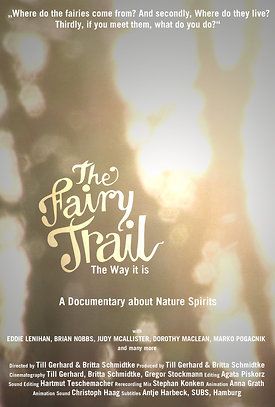
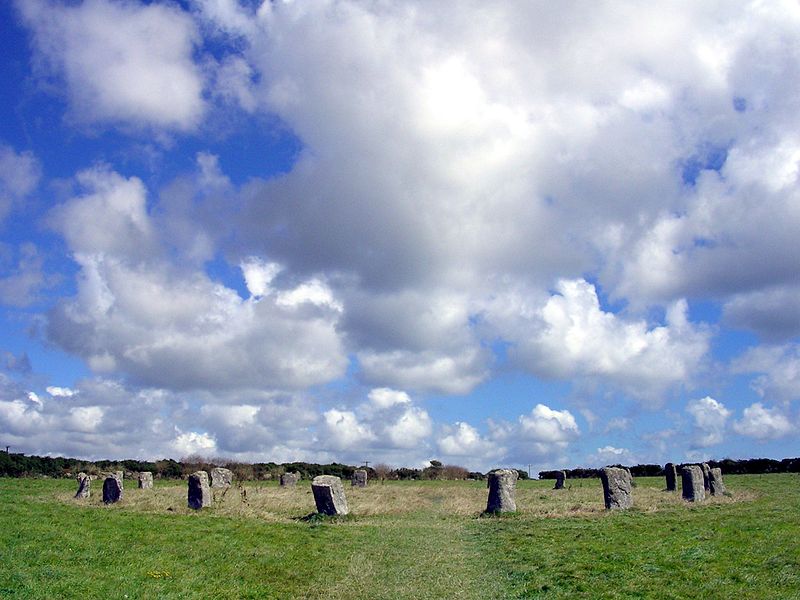
The Fairy Trail: A Documentary about Nature Spirits is a 2013 film by Till Gerhard and Britta Schmidtke. It takes a decidedly hippy turn, and looks at the faerie phenomenon from a Steineresque angle, with the emphasis on the faeries as nature spirits, interacting with people and the environment. Eddie Lenihan pops up again, but much time is spent at the Findhorn community in Scotland, where the relationship between the people and the nature spirits is an essential concomitant to the success of this unique place. There are several interviews with Dorothy MacClean, one of the original founders of the community in the early 1960s, whose matter of fact descriptions of working with the faeries is fascinating and convincing. The other interviewees are mystics, clairvoyants, environmentalists and witchy sorts, who help us get to the deeper meaning of our connection to the natural world, and the non-material elementals who are always there helping out, for those with the ability to sense them. Marko Pogacnik has a particularly interesting take on working with nature spirits, which includes earth acupuncture based on the hypothesis that this is what our prehistoric ancestors were doing with some of their stone monuments.
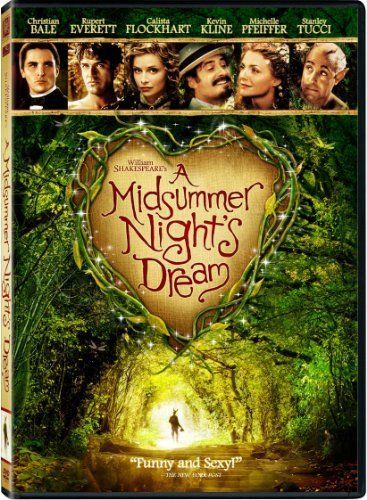
Shakespeare’s A Midsummer Night’s Dream faeries are given a full-on luvvy treatment in Michael Hoffman’s big-budget version from 1999. It’s lavish and true to script, but you get the impression that it was all just a jolly so the stars could spend some time in Tuscany. Here’s an excerpt from the New York Times review:
Michael Hoffman’s fussy production of “A Midsummer Night’s Dream” is just such a parade of incongruities, with performances ranging from the sublime to the you-know-what. Hoffman has transported the play’s humans and fairies to Tuscany, where they switch partners under the influence of trickery from Stanley Tucci’s mischievous Puck.
But there’s no magic potion to banish the film’s awkwardness or make it more than a string of intermittent acting highlights. Puck’s “Lord, what fools these mortals be!” looks like an understatement under the circumstances.
There are some other film versions, notably from 1935 and 1996, but perhaps the wackiest version is from 1968, where participants seem to have got into the spirit of the times by partaking of certain psychoactive substances before filming. It’s wild… and Judi Dench appears naked and painted green. If you dare, you can watch it here.
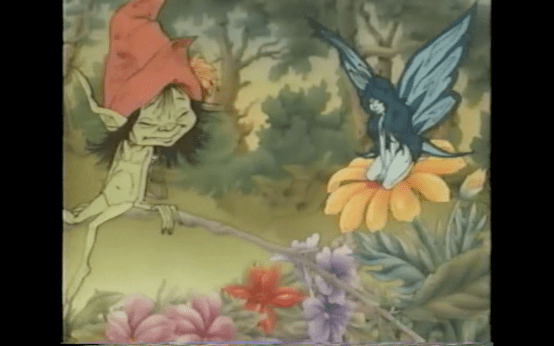
And finally… There may be plenty of cartoon faeries on film, but I’m skipping Tinkerbell and her Disney friends (and definitely passing over Barbie: A Fairy Secret… apparently, Ken gets kidnapped) in favour of this corker from 1981. Faeries tells the story of a medieval mortal (named after the Irish folk hero Oisín) abducted to faerieland in order to help the good faeries see off the goblins, bogeys and hags, who have been causing trouble in the otherworld. The faeries are based on the illustrations of Brian Froud and Alan Lee from their classic book of the same name, and much attention to detail is paid to genuine faerie lore and folklore motifs, such as the hollow hills and the faeries’ circle dance. It’s made for children, but made by adults who have allowed psychedelic mushrooms to be part of their lives. It’s a must view.
***
Addenda February 2017… The Faeries of Blackheath Woods I came across this short faerie film recently. It gives us an alarming visual description of faerie vindictiveness… one of their common folkloric traits.
For the films I’ve missed, you might want to take a look at the list of faerie films on the Fairy Investigation Society’s website here.
Elficología en España also has a You Tube site with some top faerie videos – check it out here.
 In the 1891 publication The Science of Fairy Tales, the folklorist Edwin Hartland devoted three chapters to ponder over The Supernatural Lapse of Time in Fairyland. He makes it clear that this motif is deeply embedded in worldwide folklore and mythology from a wide variety of chronological periods. He suggests that the consistency of the story elements involving the strange relative movement of time in faerieland, must stem from a common mythological theme, although he usually stops short of discussing this theme in favour of telling the actual stories. Within these supernatural lapse of time tales there are essentially three ways that time can behave in contradistinction to normal reality: 1. Time stops in the outside world, whilst in faerieland many years can pass with the human participant living a life of enjoyment or suffering with the faeries. The protagonist usually breaks a taboo of some sort and finds themselves back in the real world, where no time has passed. These stories are in the small minority. More often the time dilation moves the other way. 2. This can be quite a drastic shift, so that a character spending days or weeks in faerieland comes back to consensus reality to find decades or even centuries have passed, or, 3. that a few minutes caroling with the faeries turns out to be any length of time up to a year and a day, once they return to the world they came from. Here are examples of each type of time warp, taken from Hartland’s investigations.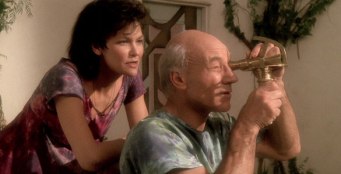
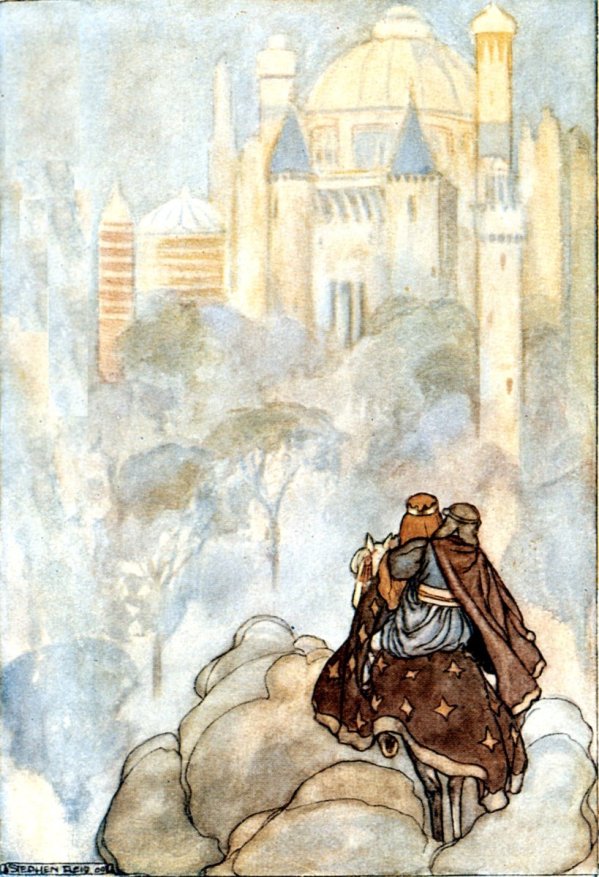
 This might be explained by seeing folktales of this type as representing a surviving pagan belief system of the afterlife. This afterlife did not follow the strictures of Christianity or other world religions, and provided an alternative view of what happens to consciousness after death. It is a view that was (in the West) superseded by Christian theology, but that may be surfacing in these folktales as remnants of the previous system of belief (a belief system that remained partially intact but operated underground for fear of religious persecution). The presence of faeries in this otherworld, and their ability to materialise in standard reality, suggests that they were an essential element in pagan ideas about consciousness and that they had a role to play when it came to death. In this theory the characters in the story play the part of messengers, telling us about the true nature of a timeless reality that is distinct and separate from consensus reality, and showing us that human consciousness disassociates from the physical body to exist in a parallel reality such as Tir na n’Og, where the faeries are in charge. This message is encoded in the stories.
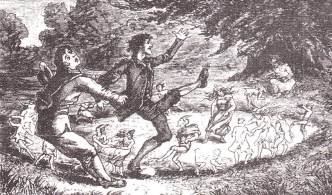 Stories of this type rarely say much about the faeries doing the abducting, only that they seemed capable of drawing the participant out of their own world and into an alternative reality with a different space-time continuum. The year and a day motif is important and is a common time-frame appearing in medieval romances as the amount of time protagonists were given to succeed in quests. In The Golden Bough, Sir James George Frazer highlights the ancient global concept of the Divine King, who was to be ritually murdered after a period of time in charge, which was often a year and a day. The time period was also used in common law to substantiate the legal situation of unwed couples, and it was (in theory) the amount of time a person living under feudal serfdom needed to be absent from his lord’s manor to gain his freedom. Interestingly, a year and a day is also used in Wiccan and other neo-pagan traditions for the time of learning required before being initiated into the first degree. This may all suggest that the folktales of this type have the year and a day motif embedded within them as a message, conveying the idea that it is a magical time-frame. It was a symbolic time-marker for life quests, ruling over others, decisions being made, learning a tradition, securing a marriage, or gaining freedom as one year tips over into another. It was evidently deeply ingrained in both esoteric tradition and everyday life from an early date, rooted in the cycles of the natural world.
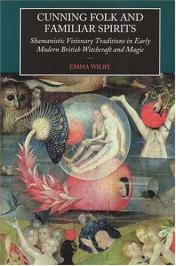 knowledge, who operated within the constraints of Christianity, but who was evidently practising pagan sorcery. Emma Wilby in her 2005 book
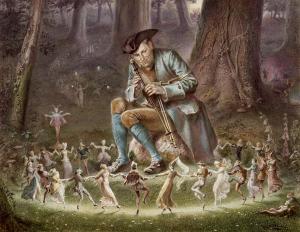 At the end of the excellent documentary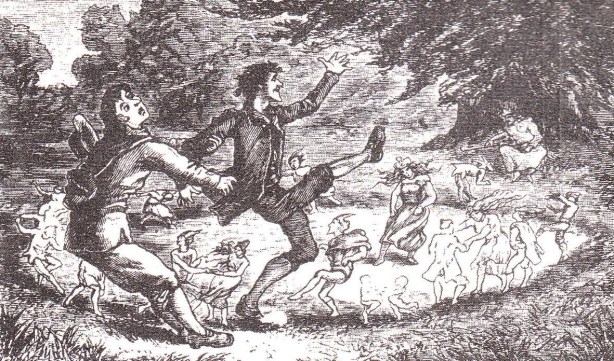
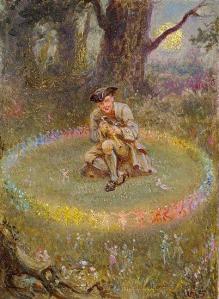 Another Welsh story tells of a shepherd playing his flute on a hillside: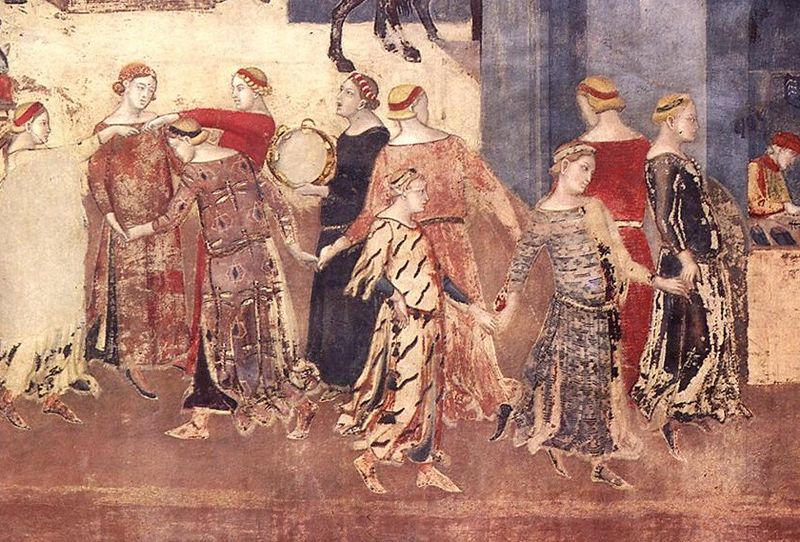
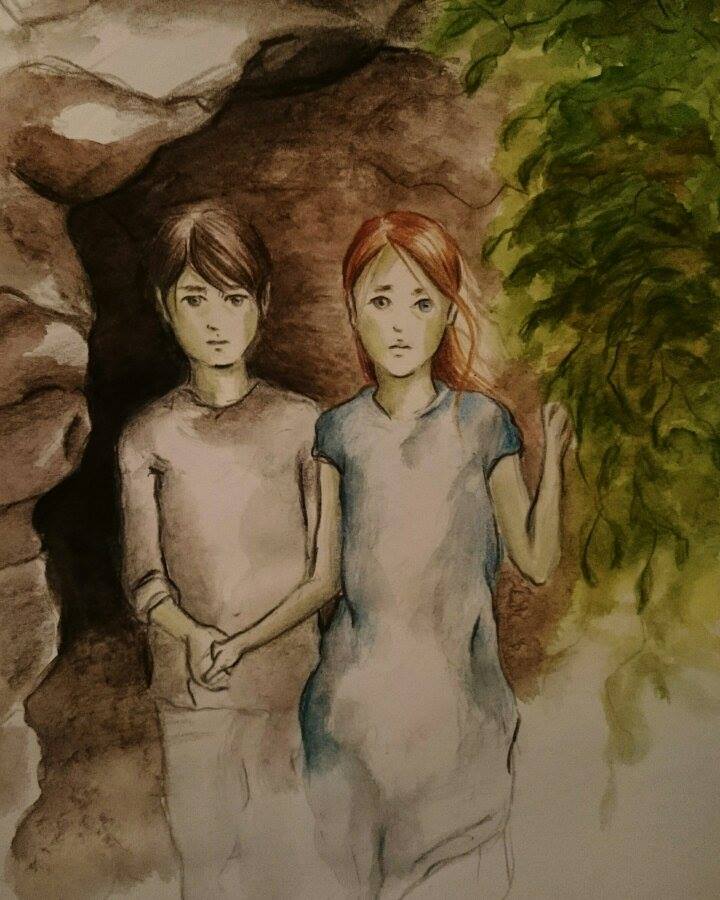
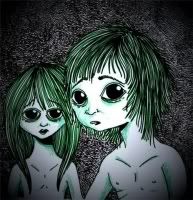
 Prosaic Explanations In a concerted effort to dispel any supernatural elements from the story, Paul Harris (in a 1998 article for Fortean Times) put forward the theory that the children were Flemish orphans, displaced from their community after Henry II’s co-ordinated persecution of the Flemish population in Eastern England, culminating in a military offensive in 1173. Left to their own devices, they lived in the woods before wandering into caves (Harris suggests the Neolithic Grimes Graves in Norfolk), following tunnels and emerging near Woolpit, green through malnutrition and speaking a foreign language that the locals couldn’t understand. But as with many materialistic-reductionist explanations of strange stories, it is soon found to be baloney. Grimes Graves is 40km from Woolpit, there are no known tunnels extending beyond the locality and even if there were, they do not extend to the clay geology of northern Suffolk. Flemish immigration to Suffolk had been happening since the 11th century and so the linguistic argument also breaks down – the villagers would have been well-acquainted with the Flemish language, even if it were a dialect or (even more so) an Anglicised version of Flemish. And an educated aristocrat like Sir Richard de Calne would definitely have recognised their speech. Despite being cited as the most likely interpretation in several retellings of the story, it’s actually a non-starter.
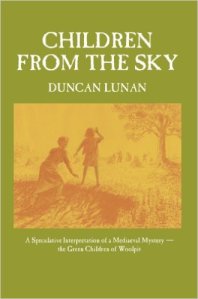 Out-there Explanations In his 2012 book Children from the Sky, Duncan Lunan presents a highly unorthodox theory of alien intervention in 12th-century England. Lunan goes into considerably more historical detail than any other writer on the subject, and his close reading of the historical sources teases out the context of the story and the characters involved. Of particular importance is his interpretation of the original texts, pointing out the usages of language by the two medieval chroniclers, and how the original Latin has been skewed by later translators and story summaries. But the historical detective work soon gives way to a ‘speculative interpretation’ that suggests the Knights Templar (he identifies Sir Richard de Calne as a Templar) were in contact with an alien civilization, who were abducting humans to populate a colony world – a world where it was always twilight due to a synchronous orbit, and where genetically modified algae turned the inhabitants green. The green children were part of this colony and were accidentally transported to Earth due to a matter transmitter malfunction. Sound wackadoo? You bet. But the sci-fi angle taken by Lunan is a lot of fun and allows for some free-thinking speculation on the oddities of a story that refuses to fit in with a reductionist interpretation. A mind-bogglingly melodramatic National Geographic documentary has Lunan dashing around the Suffolk countryside in a Morris Minor in pursuit of the alien connection. You might want to take a look here:
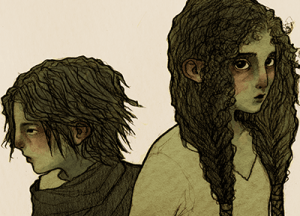 But instead of using real foreigners, such as Flemish immigrants, the story is made timeless and archetypal by turning the children into faeries. Their otherworldy status makes the tale bigger and more fundamental – it becomes a tool for teaching us about ourselves. The story embeds certain faerie motifs, such as their green colour. The most common colour of the faeries was green (usually their clothing, but also sometimes their food and their skin), and people hearing the tale in the Middle Ages (and beyond) would have automatically understood and accepted that they were associated with an otherworld, most usually represented as faerieland.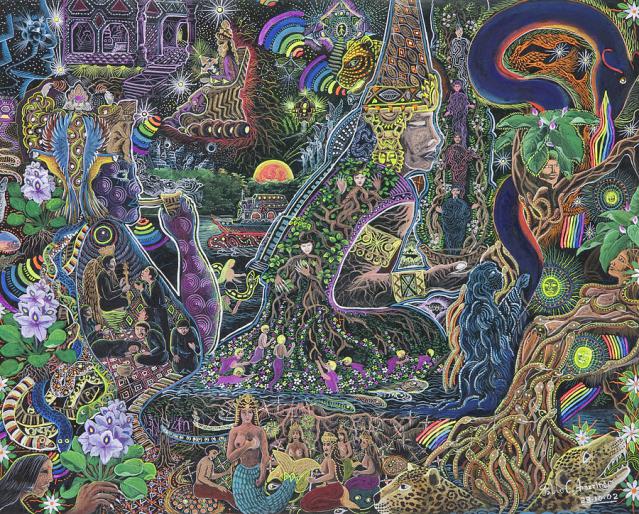
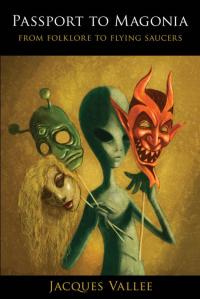 His hypothesis is that there is a commonality to the experiences reported in alien abduction scenarios, and the reports of interactions with faeries in folklore. He suggests the aliens and the faeries are essentially the same phenomenon, tuned through the cultural receptors of the time and then interpreted accordingly. He makes special reference to the regular motifs in faerie-tales of the abduction, by various means, of humans by faeries. There’s a lot of data here – it’s the commonest motif in faerie folklore. For a variety of reasons humans are taken to faerieland in the stories, either as midwives or nurses for faerie children, as servants to the faeries, for sex, as punishment or reward, or just because the faeries feel like it. They were also keen on abducting babies, and replacing them with changelings; wizened old faerie creatures who would usually die before the end of the story if a ruse to return the human baby wasn’t discovered. These motifs, of course, coincide with many aspects of the monumentally strange phenomenon of alien abductions, reports of which have grown at an exponential rate since the early 1950s. Vallee uses a range of evidence to tie-up faerie abductions from folklore and alien abductions from modern reports, and goes as far to state: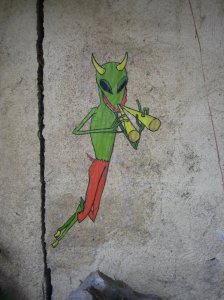
 deadbutdreaming