The Entoptic Model: Bridging Ancient Art and Consciousness

A version of this article appeared previously on Ancient Origins. While slightly peripheral to the faerie phenomenon, it does seem that the study of prehistoric rock art may provide some evidence that our ancient ancestors were interacting with faerie-type entities, and were doing so by altering their states of consciousness.

Throughout the world, prehistoric and pre-industrial shamanic cultures have rendered painted imagery onto rock faces; often in deep cave systems but also in above-ground shelters. This ‘rock art’ ranges in date from Palaeolithic designs in Europe, Australia and Asia through to the near-contemporary images of the San culture in southern Africa and the designs of indigenous cultures of North America and the Amazon basin. Until the mid-20th century the consensus anthropological view was that the rock art — while probably having magical meaning to the people who painted it — represented scenes from the natural environment, such as people, animals and landscapes. But as a greater anthropological understanding of indigenous shamanism developed, most especially through the work of Mircea Eliade and his 1951 publication Shamanism: Archaic Techniques of Ecstasy, a new awareness evolved that the rock art produced by indigenous cultures might be the artistic result of shamanic processes, preeminently those brought about by inducing altered states of consciousness. This was mainstreamed in 1988 by the anthropologists David Lewis-Williams and Thomas Dowson in their paper for Current Anthropology: ‘The Signs of all Times: Entoptic Phenomena in Upper Palaeolithic Rock Art’, where they advance a neuropsychological model for analysing the motifs of parietal art of this period, proposing that the geometric images are in fact artistic representations of universal optical patterns, intrinsic to the human visual system, once perceived by our shamanic ancestors during altered states of consciousness. The most important element of this model is the entoptic imagery displayed in the rock art and how it matches closely the geometric patterns seen by people in modern clinical conditions who have altered their state of consciousness.    

The Entoptic Model

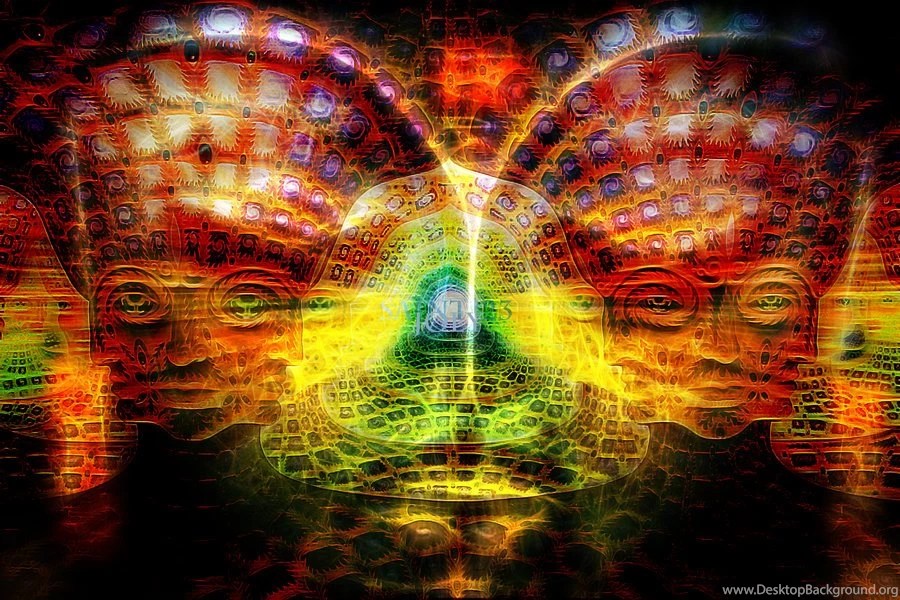
The word ‘entoptic’ derives from the Greek ἐντός ‘within’ and ὀπτικός ‘visual’. Entoptics usually consist of geometric patterns seen as overlays in the visual horizon. These patterns may be an array of dots, parallel lines, labyrinths, zig-zags, waving lines, etc. Sometimes they appear detached from the visual surroundings while at other times more integrated. Entoptics are usually experienced during altered states of consciousness, which may be achieved through a variety of means. The best evidence for the consistency of visual entoptics comes from clinical trials (from the 1950s onward), which analysed subjective narratives of people administered a variety of psychedelic substances. Many of these narratives described the geometric entoptics as antecedents to deeper experiences, as if they were a geometric gateway to the main substance of the experience. The entoptics were, in effect, neuropsychological codes for signalling change in the state of consciousness. 

Lewis-Williams and Dowson’s model took sketches made by people experiencing consciousness modification via psychedelic drugs in clinical trials and applied the imagery to the rock art produced by indigenous tribal communities in modern day South Africa, the Amazon and by the Native American Shoshonean Coso culture of the California Great Basin. The geometric images demonstrated extensive similarities. The rock art contained many of the geometric motifs recorded by modern trial results. These entoptics appeared to be some universal code, experienced and recorded by both modern-day psychonauts and people in indigenous communities experiencing altered states of consciousness through a variety of methods. Because the San and Coso indigenous peoples are verifiable shamanistic cultures, able to describe the meaning of the rock art of their immediate ancestors from personal viewpoints, Lewis-Williams and Dowson took their descriptions of entoptics at face value. Whether through the consumption of psychedelic compounds or dancing in a ring for hours (the San’s primary way of entering an altered state of consciousness), people in these cultures were entering a divergent reality and sometimes they recorded this reality in rock art. A lot of this was composed of entoptic imagery. 

An intensive study of this rock art by Lewis-Williams and Dowson suggested that comparisons might be made to Palaeolithic parietal art in Europe. In their 1988 paper they compared rock art (primarily in caves) from Upper Palaeolithic Europe to the San and Coso examples, as well as against the data from modern clinical trials where entoptics were reported. Using a large dataset, they found a tight correlation between the styles of entoptic designs in their African and American examples and those from the caves of Europe dating between 20 and 30,000 BCE. The rock art contained all six of the coded entoptic patterns, as designated from the clinical studies. While not universal in Palaeolithic parietal art, entoptic designs do form part of a majority of the imagery. This allowed Lewis Williams and Dowson to profile their neuropsychological model as an interdisciplinary explanation for entoptics, whether recorded as experiential reports from a modern clinical trial or in Palaeolithic rock art. With the oral testimonies and relatively recent rock art from the San and Coso cultures, both of which are shamanic and use various techniques to alter states of consciousness, the dataset allowed a testable model, which might help bridge a gap of tens of thousands of years.

Lewis-Williams and Dowson assumed four main elements to their model: 1. Entoptic phenomena occur universally in altered states of consciousness; 2. The people producing rock art used one or more techniques for altering states of consciousness; 3. A quantity of Upper Palaeolithic rock art represents the entoptic phenomena experienced during altered states of consciousness; 4. The visual content during an altered state of consciousness may vary with the cultural context but the basic features of the experience, such as entoptics, are a universal and have been repeated through time. 

This model does sit well with the evidence presented by Lewis-Williams and Dowson. But introducing the known phenomenon of entoptic visuals in an attempt to explain the previously indecipherable geometric painted patterns from distant prehistory represents a radical reinterpretation of the rock art data. It appeared as if there were a genuine link between shamanic cultures separated by tens of thousands of years and altered states of consciousness, which might be experienced by anyone, at any time, if conditions are met. But as with any model that challenges the mainstream orthodoxy it has been challenged.

The Kickback to the Entoptic Model

Using ethnographic techniques to attempt building a new model to breach the gap between Palaeolithic culture and ours was always going to cause controversy. Two of the academics who have criticised the Lewis-Williams/Dowson model are Paul Bahn (archaeologist) and Patricia Helvenston (psychologist). Their main contention is that we cannot know what sort of shamanism was practiced in the Palaeolithic period and that projecting ethnographic data back tens of thousands of years is invalid. They also contend that there is no evidence of psychotropic plants in the European Upper Palaeolithic, and that therefore there was no recognisable substance that could be used as a means for altering consciousness states, as would be necessary to adhere to Lewis-Williams and Dowson’s model. Their former point has some substance. Any attempt to explain Palaeolithic consciousness states in terms of recent ethnographical studies and modern clinical trials will invoke legitimate sceptical reactions, even when proposed by respected anthropologists and backed up by a mass of convincing data. There will always be an interpretative leap required to move away from a consensual orthodoxy to a new hypothesis, especially when dealing with such ancient cultures with no written record. 

But their second contention is inaccurate. Bahn and Helvenston contend that the neuropsychological model is dependent on entoptics produced by altered states of consciousness facilitated by LSD, Mescaline or psilocybin, and that these compounds would not have been available to European Palaeolithic artists. This is true for LSD and Mescaline but not for psilocybin. The clearest example is the psilocybin-producing mushroom Psilocybe semilanceata (commonly known as the Liberty Cap), which is native to Europe and  thrives as far north as the Arctic Circle. This would have been available as an entheogenic substance to the Palaeolithic cave painters. The mycologist Roy Watling (recently backed up by recent research by Froese, Guzmán, and Guzmán-Dávaloshas) also suggested there may have been up to thirty further species of psilocybin-producing mushrooms available in Upper Palaeolithic Europe as well as the Amanita muscaria (fly agaric) mushroom, which has also been demonstrated to induce entoptic visuals. It seems as if shamanistic cultures of Palaeolithic Europe did indeed have access to psychotropic substances, which would have produced the exact entoptic visuals we find recreated in their parietal art. They may have also been using other techniques to alter their state of consciousness, such as the rhythmic dancing of the San people. 

So, although we cannot know how Palaeolithic people were altering their states of consciousness, it is clear they certainly had the opportunity, and if they behaved as every other shamanistic culture in the anthropological record, they would have been doing so. The entoptics catalogued by Lewis-Williams and Dowson are, in effect, a code that links shaman-visions painted on cave walls from distant prehistory to the experience of indigenous cultures in Africa and the Americas, and the first stages of modern psychedelic trips by people experiencing a peripheral shamanic episode.

Reality or Illusion? Taking the Entoptic Model Further

The debate continues among anthropologists as to whether we can warrant the ethnographic-stretch that joins the experiences of altered state of consciousness across tens of thousands of years. Lewis-Williams and Dowson’s model has gained relatively wide academic acceptance, but this is mostly from the perspective of a reductionist worldview, where altered states of consciousness — whether Palaeolithic or 20th/21st century — are simply delusions produced by chemical alterations in the brain. From this viewpoint, even if the entoptic model is accurate, it is simply a model of delusional thinking carried out over a very long time-span, effected by substances (or activities) that cause hallucinatory images. This viewpoint is a standard Western academic position. Fortunately, there is a new wave of academic thinking that looks to go beyond such reductionism in an attempt to get a closer epistemological view as to what the neuropsychological model might mean to the human condition.

A foundation of the neuropsychological model is Lewis-Williams’ assertion that entoptic phenomena are: ‘visual sensations derived from within the optic system anywhere from the eyeball to the cortex.’ So while the entoptics are produced by altered states of consciousness, the model relies on them being purely the result of neurochemical changes in the brain. It is a reductionist approach, which gives no credence to the potential reality of the phenomenon. The psychologist David Luke (who specialises in the psychology of altered states of consciousness), while accepting the general remit of the entoptic, neuropsychological model and its temporal/geographical universality, has attempted to demonstrate that viewing the entoptic phenomenon as something that happens in the brain, fooling both us and our Palaeolithic ancestors by way of a simple hallucination, is not necessarily valid. Luke uses a large dataset of people who have experienced entoptics during altered states of consciousness, either through the consumption of psychedelics or through a range of other triggers. Many describe the omni-directional and trans-optic nature of the visuals, and a large minority of the testimonies are from people who have undergone an out of the body experience. For them the entoptic experience is more than a hallucination — it is a manifestation of a reality that conjoins with our usual state of consciousness and expresses itself in a manner that suggests the visuals are part of an autonomous reality. The cosmic multidimensionality of the experience means that its reality is ineffable — for modern participants this means they cannot articulate the experience, whilst Palaeolithic (and more recent) shamans were reduced to attempting to capture their enlightenment by producing 2-D rock art.   

This interpretation also brings in to play the ‘next stage’ of an experience brought about by altered states of consciousness. The entoptics were/are just primers for the more sublime experiences brought on during an altered state. Many modern testimonies describe the entoptic phase of a numinous episode as the precursor to a more intense experience that includes strange and non-human intelligent entities, some of which may be described as faerie-type entities. Likewise, much of the rock art that has entoptic designs also includes images of entities that are humanoid but evidently not human. This suggests there is an intimate connection between people experiencing altered states of consciousness, moving from entoptics to entity encounters, in time periods separated by millennia. The rock art produced by Palaeolithic shamanic cultures would appear to be a template for the future. Subsequent cultures have worked out the importance of the message — we can experience different realities under certain circumstances — but the message is subtle; the experience is dependent upon a subjective view of reality. Whatever that view is, it seems as if our Palaeolithic ancestors may have had the same route into it as we do, and that their art should be considered as an expression of the numinous (however that may be interpreted), common to all humanity through to our own time.

References

Eliade, M. 1972. Shamanism: Archaic Techniques of Ecstasy. Princeton University Press (first published in French in 1951)

Froese, T., Guzmán, G. & Guzmán-Dávalos, L. 2016. ‘On the Origin of the Genus Psilocybe and Its Potential Ritual Use in Ancient Africa and Europe’ . Economic Botany 70, 103–114

Hancock, G. 2005. Supernatural: Meetings with the Ancient Teachers of Mankind. Century, London

Helvenston, P and Bahn, P, et al. 2003. ‘Testing the Three Stages of Trance Model.’ Cambridge Archaeological Journal 13, 213-24

Lewis-Williams, D. 2002. The Mind in the Cave. Thames & Hudson, London

Lewis-Williams, D and Dowson, T. 1988. ’The Signs of All Times:Entoptic Phenomena in Upper Palaeolithic Art’, Current Anthropology 29, 201-45.

Luke, D. 2010. ‘Rock Art or Rorschach: Is there more to Entoptics than meets the Eye’, Time and Mind: The Journal of Archaeology, Consciousness and Culture 3, 9-28.  

Luke, D. 2017. Otherworlds: Psychedelics and Exceptional Human Experience. Muswell Hill Press, London

***

Dead but Dreaming the novel, is available now.

Handmaidens of the Eternal: Consciousness and Death in the Film ‘Photographing Fairies’

This article is from Fairy Films: Wee Folk on the Big Screen, edited by Joshua Cutchin (published in 2023). The book contains a wide range of discussions on filmic representations of the faeries by some acclaimed authors. Thanks to Joshua and the publisher for permission to republish my piece here.

Handmaidens of the Eternal: Consciousness and Death in Photographing Fairies

Neil Rushton

Introduction

“We humans are not alone. We share our planet with a quite different order of life. Fairies. They are spoken of in every culture of the world from New Zealand to the New Hebrides. Handmaidens of nature according to some, assisting in propagation and growth. Another theory: Exiles from heaven, God’s orphans straddling this world and the next; messengers between the two worlds.”

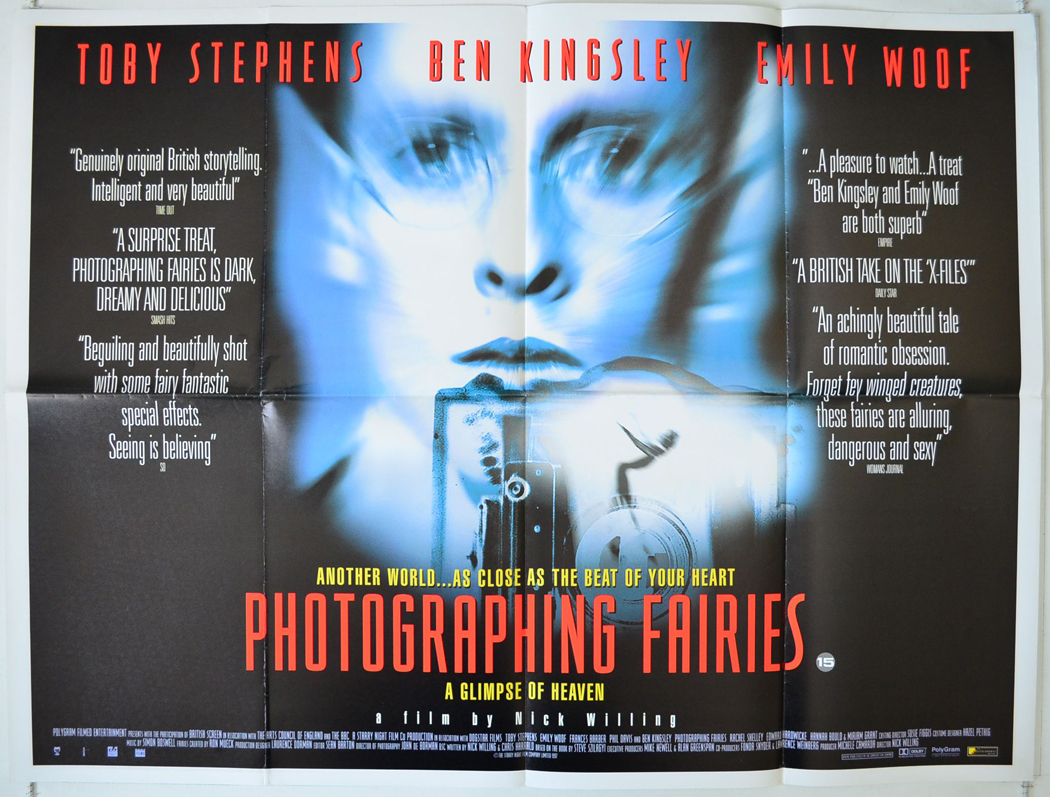
Photographing Fairies is a 1997 British film based on the 1992 novel by Steve Szilagyi.1 It was directed by Nick Willing, who also co-wrote the screenplay with Chris Harrald, and was Willing’s first outing as a film director, after previously directing music videos through the 1980s and 1990s. This background is apparent in the aura and mood of the film, which relies much on the musical backdrop to create its metaphysical atmosphere, from Simon Boswell’s original score to the frequent interjections of the Allegretto from Beethoven’s 7th Symphony.

The film also benefits from the acting acumen of Toby Stephens, Ben Kingsley, Emily Woof, Frances Barber, and Philip Davis, as well as the two child actors Hannah Bould and Miriam Grant, who seem preternaturally disposed to their roles. The exquisite cinematography of John de Borman adds much impressionistic ambience, and while the visual effects may seem somewhat primitive from the perspective of the 2020s, they retain an authenticity in line with the tenor of the film. The production company was PolyGram Filmed Entertainment (mooted as a European equivalent to Hollywood, but which folded in 1999), which joined forces with BBC Films and The Arts Council of England to fund, produce, and distribute the film. Its budget was c. $1.1 million and it made c. $4.7 million at the box office, despite receiving only limited release in cinemas.2

It is a film operating on many levels, rooted in the effects of the World War I yet managing to incorporate a myriad of cultural and supernatural tropes: the British class system, Theosophy, regional identity, religious faith, familial affiliations, the relatively new profession of photography, altered states of consciousness, and, of course, the fairies. While its love story is also a central theme, the main emphasis of the film is death. Death has long been an important province of fairy folklore, and a study of Photographing Fairies gives an opportunity to bring this into relief; to understand the relationship between the fairies, consciousness, and death.

Photographing Fairies

The standard spoiler alerts apply, but the film goes something like this (although such a brief summary cannot convey the existential magic that only watching it can transmit): Charles Castle (Toby Stephens) marries Anna-Marie (Rachel Shelley) in the Alps just prior to WWI. While taking an ill-advised walk along a high peak, the couple are trapped in a storm, sucking Anna-Marie into a crevice in the ice. She dies, leaving Castle with nothing more than a pocket-watch containing her image and a lamellophone that plays a Strauss-like musical tune. This segues into Castle in the trenches of the war, evidently not valuing his life as a bomb falls close to him while he carries out his photography of dead soldiers, heedless of the ticking explosive. Within a few minutes we have been introduced to death, both at a very personal level and also at the industrial level of WWI casualties.

In London after the war, Castle runs a photography business with his partner Roy (Philip Davis). One moving scene shows the parents of a dead soldier coming to the studio to have their photo taken with Roy, whose face is afterwards photomontaged with that of the son. As he carries out the procedure, Castle recites John 11:25: ‘I am the resurrection and the life.’ This portrays him as a somewhat hard and cynical character, magnified when he visits the headquarters of the Theosophical Society. There, Castle turns his nose up at glimpsed séances taking place in side rooms before castigating the gullibility of Gardner (Clive Merrison) as he delivers a lecture showing one of the infamous (and fake) Cottingley Fairy photos, which he proclaimed as evidence of inter-dimensional beings.

Things are about to change for Castle, however. An attendee at the lecture, Beatrice Templeton (Frances Barber), turns up at his studio with a photograph of her daughter, which seems to show an entity balancing on the palm of her hand. Castle dismisses it, but concedes to magnify the image for closer examination. When he does, he sees the image of the entity in the girl’s hand reflected laterally in her eye. It is the turning point in the film; the dissolving of his scepticism. Off he goes to the village of Birkenwell, where Beatrice lives, to find out some truths.

He meets Beatrice’s daughters (Hannah Bould and Miriam Grant) who evade his questioning, but then he agrees to meet Beatrice at what they have dubbed ‘The Great Tree’ in the local woods. She is there already, and we get our first glimpse of the unnamed white flower, which Beatrice eats to alter her state of consciousness. In her altered state, she climbs the tree and falls to her death—Castle arrives to find her body beneath the tree. This brings Anglican minister and Beatrice’s husband Reverend Templeton (Ben Kingsley) into the story, immediately rendered with Kingsley’s characteristic style: sinister, overlain with an air of compassion.

There follows an amazing five-minute scene, starting at the inn where Castle is staying. He procured one of the flowers from Beatrice’s dead hand, and after reading her description of its effects in her notebook, pops it into his mouth. The next few minutes are a portrayal of a psychedelic experience: tracers, time dilation, changes in colour, a skewed musical backdrop, and, after Castle runs to The Great Tree, a numinous episode where the fairies appear as luminous, small humanoids flying around the tree, able to penetrate matter. They are evidently only partly within physical reality.

Castle climbs the tree to get closer to them and falls, transporting him to a white-out bedroom with his deceased wife. The non-linear frames end with them making love, before she rolls over in the bed and whispers (albeit rendered with enhanced volume): “This is not a dream.” The power of this scene is difficult to convey (as is a real psychedelic experience), but changes the tenor of the film from ‘period drama’ to ‘supernatural magical realism’ in an instant.

From this moment forward, Castle knows the fairies are real. After regaining consciousness from his fall and attending Beatrice’s funeral (with a bloodied head and not all his wits), he directs Roy to bring a load of photographic equipment to Birkenwell in an attempt to capture them on film. The girls’ governess/nanny, Linda (Emily Woof) enters the story and is soon falling in love with Castle. Both she and Roy provide the grounded rational counterpoint to Castle’s new evangelical belief in the existence of the fairies… but, then again, they haven’t taken the flower.

The film quickens its pace from here: Linda falls deeper in love with Castle (unrequited, as he is still in love with his dead wife); the girls perform a very risqué pseudo-mass beneath the tree; the Reverend Templeton shows his true colours by threatening to kill Castle, whom he believes had designs on his wife; and Castle ends up taking another flower beneath the tree as Roy and Linda operate cameras to capture an image of the fairies—the results are ambiguous. Amidst this, the youngest girl, Clara, takes the flower, climbs the tree and enters ‘slow time’ (as announced by her sister Ana). She falls, but survives.

This finally leads to Templeton appearing at the tree in a disordered state, destroying the photographic equipment Castle had set up on timers to capture the fairies and cutting down and burning the tree itself. Castle arrives and once more enters an altered state of consciousness by swallowing another of flower. He sees some of the fairies on fire, attacks Templeton and accidentally pushes him onto a sharpened spike from the equipment. Templeton dies. Yet more death; but there is, of course, even more to come.

The film’s denouement comes with Castle’s trial for Templeton’s murder. He pleads guilty and delivers a speech in which he suggests that death is not what it seems: “There is another world, as close to this one as I am to you. I have seen it and I have felt its force… death is a small thing. Death is merely a change of state. The soul is a fresh expression of the self.”

Castle is convicted, and the final scene shows him being led to the prison gallows and hanged (where the minister repeats the line Castle uttered from John 11:25: “I am the resurrection and the life.”). It is a brutal end to the film (set to Beethoven’s Allegretto), but as he drops through the trap-door to his death there is one last hallucinogenic treat: a luminous fairy appears again and his consciousness is ushered back to the mountaintop with his wife. This time, he manages to save her from the fall into the crevice and they are together again in the last frame. Death is, after all, an illusion, and the fairies are arbiters between this world and the Otherworld.

Tropes, Themes and Sources

There is much to unpack from this film. The fairies themselves appear only fleetingly, and the main emphasis is on the concept of death and how it came to be perceived in the aftermath of the First World War. The counterpoints are primarily between secular rationalism, a traditional religious view (represented by Reverend Templeton), and a more animistic idea of consciousness, reliant on supernatural entities to ease the passage from life to death and back to a new transcendence. This is achieved in a number of ways. Perhaps the best starting point is to assess how the secular reductionism prevalent in the years after the war conflicted with the revived Theosophical movement, which sought to give hope of a supernatural reality to the millions of people who had lost loved ones in the carnage of the Great War.

The Theosophical Society was founded in 1875 in the United States by Russian immigrant Helena Petrovna Blavatsky along with Americans Henry Olcott and William Quan Judge.3 They described the Theosophy movement as an occult esoteric philosophy, which taught that a secretive order of adepts, or masters, existed throughout the world, with access to supernatural wisdom which they were able to disseminate via Blavatsky. In the decades following its founding the society underwent numerous schisms as differing belief systems diluted the original vision into factions, and as Theosophy spread to other countries, it became sometimes unrecognisable from its initial incarnation. Rudolf Steiner was one prominent adherent to Theosophy in the early 20th century who became disillusioned with the constant manoeuvring of precepts, and so founded his own (Theosophy-based) Anthroposophical Society in 1913.4 His ideas about how to interact with the fairies (‘elementals’ or ‘nature spirits’ as he termed them, following the 16th-century alchemist Paracelsus) were an important influence on later occult groups.5

But in Britain, after the First World War, the Theosophical Society had quickly integrated many aspects of Spiritualism, most especially mediumship (relying on psychics able to directly contact the dead) and the concept of supernatural entities existing alongside physical reality, who were sometimes able to interact with it. With so many grieving in the aftermath of the war, the movement gained popular traction as people sought to reassure themselves of a transcendent supernatural reality in the face of the mass death brought about by the conflict. For over a decade after the end of the war, Theosophically-tinged Spiritualism threatened to overtake traditional religion as the default belief system.

And so we find Charles Castle making his visit to the Theosophical Society headquarters in 1920 London. As with so much in the film, there is a subtlety of approach: the inscribed brass plaque outside the society’s HQ is only glimpsed in a few frames as he enters, and to the uninitiated, it would be missed or mean nothing. He passes a couple of rooms where séances are in progress, with the distinct insinuation they are fraudulent. He curls his lip and proceeds to the main event: a lecture where the audience is being assured that a final proof of the existence of fairies has been discovered.

Here is another subtlety. While the film is not about the Cottingley Fairies—although it does hold many similarities to the story, and the two young girls, Ana and Clara, are evidently based in part on the Cottingley children Elsie Wright and Frances Griffiths—the lecture shows Gardner presenting one of the Cottingley photographs as proof of inter-dimensional beings in our midst: “We humans are not alone. We share our planet with a quite different order of life. Fairies… the handmaidens of nature… messengers between the worlds” (Gardner is based on Edward Gardner, a member of the executive committee of the Theosophical Society).

Castle interrupts proceedings and demonstrates the fallacy of the image from a photographic perspective. His intervention breaks up the meeting and we are introduced to Sir Arthur Conan Doyle (Edward Hardwicke), a member of the society, who extends some words of solace to Gardner and his audience: “We’re travelling in the dark. We must expect to bark our shins now and again. We are pioneers exploring the borderland between this world and a better one.”

The trope of Theosophy/Spiritualism seems to have been discredited as a deluded belief system on par with Castle’s customers, the parents who were happy to have a photomontaged fake photo of their son from the earlier scene. But there is evidently an undercurrent to the phenomenon; the balance of rational scepticism against supernatural belief is about to be tipped. It’s easy to mock gullible people believing in ghosts and fairies, but one of the most important elements of the film is how it draws us into that reductionist mindset before pulling it apart to reveal something more dynamic. This is achieved, in part, through the trope of distillation through the photographic record. The theme of photography is core to the film’s narrative. The first scene shows Castle setting up a camera to capture his own wedding, he is evidently employed in WWI’s trenches to photograph the dead, he runs a photography studio after the war, and the Cottingley incident itself was based on the photos of Elsie Wright and Frances Griffiths with their fairies.6

These scenes all suggest that photography—still a relatively new technology in the first decades of the 20th century—provides an absolute, impartial record of reality, and that when events are faked (as per the Cottingley fairies) photographs offer confirmation, provided photographic expertise is deployed. The photographic record is unimpeachable. Therefore, when Castle blows up the image of Templeton’s daughter holding the blurred fairy on her palm and notices its presence in a reflection on her eye, we immediately realise that, due to its physicality captured on film, there may be something supernatural which is nonetheless real.

This is brought to fruition when Castle brings a full kit of photographic equipment to The Great Tree in order to photograph the fairies, which he has already seen. The technical details for the job are described by Castle to a suspicious and sceptical Roy. Something fast-moving needs to be captured: “Hence the special emulsions and lenses. We’ll be using fast shutter speeds and flashes throughout.” The scientific method is employed to record something beyond physical reality. Photography, already demonstrated as a means of capturing the mundane, is to be used as the ultimate method of proving the supernatural’s existence. By the time Castle gets Roy and Linda to take photographs of him communing with the fairies at The Great Tree (after taking the consciousness-altering flower), we are in no doubt that the absolutism of photography is the means through which the truth will be told. If a photographic image shows something, it must be true.

But, of course, the resulting images, while intriguing, are indecisive. Even Sir Arthur Conan Doyle, when shown the photographs of Castle surrounded by light-emitting fairies, is unconvinced. It turns out that photographs are not definitive arbiters of truth after all. By the time Reverend Templeton destroys Castle’s photographic equipment beside the tree, we are confronted by a complex dichotomy. Photography is scientific; it is a means to capture an absolute record. But here it is used to give testimony to something outside physical reality. This highlights another important trope in the film: faith.

In some ways Castle has put his faith in the photographic testimony. Throughout the film he uses photography to arbitrate reality. It is the means with which he understands the world and records it. By the time he comes up against Reverend Templeton, he has already shifted his faith, so that instead of using his photographic knowledge to debunk fraudulence—as in the Cottingley images—he utilises it in an attempt to prove the existence of supernatural entities. This brings him into direct conflict with Templeton’s absolute Christian faith. The friction between the two can be seen as that between a pagan animism and a faith-based Christianity. Templeton makes several pronouncements on the need for faith and has no time for any investigation of anything outside of doctrine.

A pivotal example of his attitude appears during an exchange between the two while sacking up flour, milled from the recent harvest in the village. Templeton throws down sacks of flour from the upper loading door of the storage barn to Castle, and they exchange a terse dialogue, ending with Castle being floored by a full flour sack:

TEMPLETON: Are you going to turn our woods into a laboratory? You can’t capture God with a camera.
CASTLE: It’s not God I’m looking for.
TEMPLETON: It’s not proof you need, it’s faith.
CASTE: Tell me about your faith reverend.
TEMPLETON: Faith? It’s what a man must live by.
CASTLE: Sometimes a man can hide behind it.

When Templeton destroys the photographic equipment, chops down the tree and is accidentally impaled after his fight with Castle, he still refuses to accept any belief-system not built on faith in God, even as he takes his last breath. Castle implores him to swallow the flower, but he does not want any type of gnosis. Templeton represents an ingrained Christian worldview built on faith, which cannot allow any intrusion from a metaphysics outside its system, even when offered the opportunity to embrace it directly. This theme of faith in the film finds a counterpoint in the gnosticism of explicit experience—experience presenting the fairies as its primary element.

The fairies (despite only making fleeting appearances in the film, totalling less than four minutes) are the primary movers in the plot-line. A bona-fide folklorist might criticise their representation as winged beings, and point out that folkloric fairies, while often able to fly, were never described as having wings in the traditional record. While there are instances of winged fairies from as early as the 17th century, their portrayal as aileron creatures dates mostly to 19th century artists such as John Atkinson Grimshaw and Richard Doyle (uncle of Sir Arthur Conan Doyle), further popularised by J.M. Barrie’s Tinkerbell in the early 20th century.7 This type of fairy has, of course, been mainstreamed by the Disney version of Peter Pan and the subsequent morphing of folkloric fairies into the winged entities of popular culture.

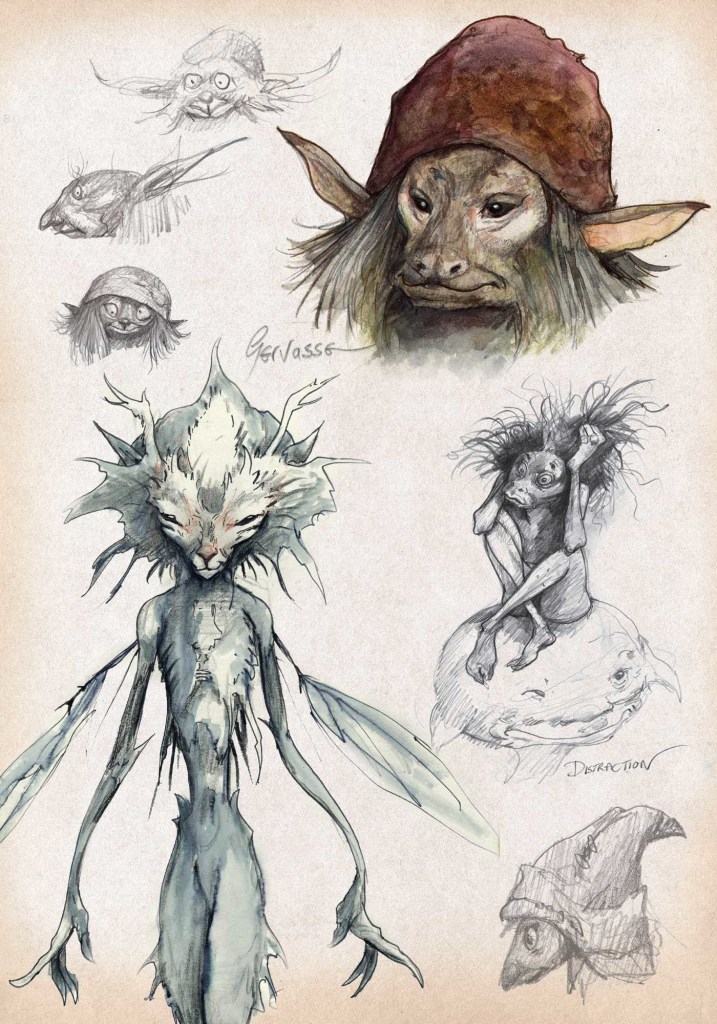
But while the film’s depiction of the fairies does show them buzzing through the air in the manner of dragonflies (the buzz itself is a clever and sensual auditory addition), they are evidently sourced from more legitimate folkloric roots. On the few occasions they are seen in close-up, the fairies appear more like Brian Froud-designed entities than Tinkerbell.8 They are mostly amorphous, naked females (although there is also a portly, bald male) with a sinister edge. They have no compunction about dealing Castle some blows as they penetrate his material body and even climb out of his mouth. Although they never speak, they seem suspicious of his motives and don’t mind harm coming to him. They predicate Beatrice’s death, and even allow her young daughter, Clara, to fall from the tree during her communion with them.

These are the fairies of folklore; interested in humanity but mad, bad, and dangerous to know. They are rendered as winged fairies, recognisable to a modern audience, but they are based upon the supernatural characters found in thousands of folkloric stories and testimonies of people who have interacted with the fairies over centuries. Most of these people were terrified of the fairies and did what they could to propitiate them. They were alluring, but best avoided. And as in many of those stories and testimonies, the fairies make their appearance when the protagonists, by whatever means, alter their states of consciousness.

Altered States of Consciousness and the Fairies

There are three episodes in the film where an altered state of consciousness is portrayed. All are seen from Castle’s perspective after he has consumed the white flower, which seems to grow in and around The Great Tree. We also see the youngest Templeton daughter, Clara, enter ‘slow time’ after taking the flower, but her experience is implicit and viewed only by her sister and Linda as she climbs the tree, carries out a communion with the unseen fairies, then falls from a high bough. This is quite a bold move by the filmmakers, particularly in 1997—showing a young girl taking a psychedelic compound and experiencing the results, for better and worse. And the flower is certainly a psychedelic. Its provenance and attributes are never explained, but it might be seen as a discursive way to render a known psychedelic such as psilocybin or Amanita muscaria mushrooms.

The first time Castle ingests the flower we are dipped into an altered state of consciousness with him, which, in many ways, mimics a psychedelic experience. Apart from the well-constructed visual and audio gymnastics, the main design of this episode is to introduce viewers to the fairies. It is made explicit that they can only be interacted with via altered states of consciousness. Castle sees them, is knocked around by them, and then climbs The Great Tree before falling to the ground and experiencing a numinous interlude with his dead wife. When she whispers in his ear, “This is not a dream,” Castle (and we) are convinced there is a supernatural reality, which appears accessible by altering consciousness with a prescribed compound. This taps into a deep vein of both folkloric and modern testimonies of people who have encountered fairylike entities while under the influence of either a mind-altering aggregate or through more spontaneous means.9

This can be taken back a very long way. Graham Hancock has called Palaeolithic cave art “the earliest folklore,” and recent anthropological studies convincingly suggest that many of these ancient depictions of entoptic geometric patterns and humanoid entities were created by people under the influence of mind-altering substances.10 As a greater anthropological understanding of indigenous shamanism developed, most especially through the work of Mircea Eliade and his 1951 publication Shamanism: Archaic Techniques of Ecstasy,11 a new awareness evolved that the rock art produced by Palaeolithic cultures might be the artistic result of shamanic processes, preeminently those brought about by inducing altered states of consciousness.

This was mainstreamed in the 1980s by anthropologists David Lewis-Williams and Thomas Dowson, when they advanced a neuropsychological model for analysing the motifs of parietal art of this period, proposing that the geometric images are in fact artistic representations of universal optical patterns, intrinsic to the human visual system, once perceived by our shamanic ancestors during altered states of consciousness.12 An important element of this model is the entoptic imagery displayed in the rock art and how it matches closely the geometric patterns seen by people in modern clinical conditions who have altered their state of consciousness. But the cave art also includes copious examples of therianthropes, humanoid/animal creatures often bearing a striking resemblance to the fairies of historic folklore, as well as entities encountered in the modern era by people who have undergone a transformation of consciousness.13

There is a growing body of evidence that suggests much historic folklore can be related intimately to the type of stories told in cave art by Palaeolithic shamans, with which the descriptions are often remarkably similar. Writers such as Carlo Ginzburg and Emma Wilby have argued a direct link exists between prehistoric shamanism and the folklore embodied in classical, medieval and later periods, often incorporating entities such as nymphs and fairies: supernatural beings who interact with humanity when the conditions are right.14

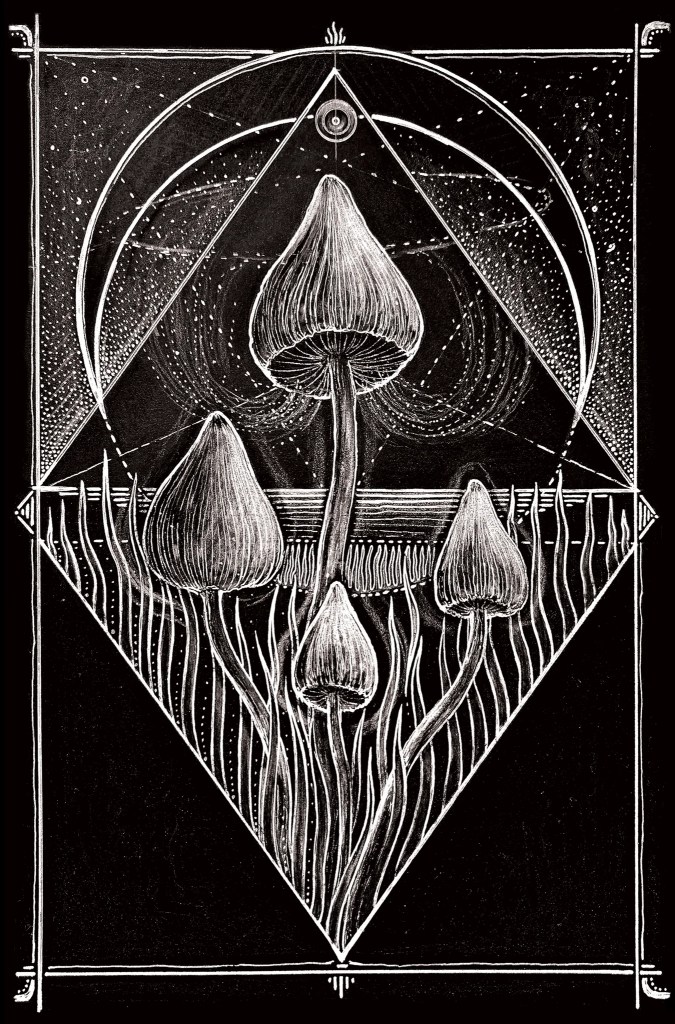
Those conditions may well be reliant on the human participants undergoing an altered state of consciousness as a result of the ingestion of psychedelic compounds. There is certainly a preponderance of mushroom imagery present in historic depictions of fairies, most especially the highly psychedelic red and white Amanita muscaria (fly agaric) mushroom and the psilocybin mushroom, both prevalent throughout Europe and Asia. If these historic folkloric manifestations of interactions with supernatural entities can be linked to the cave art of prehistory and preliterate societies, then we see a continuous relationship with an alternative reality over a very long period of time. Katherine Briggs pointed out in The Fairies in Tradition and Literature that many British fairy motifs repeated in stories and anecdotes through the centuries through the present day were already in place during the medieval period.15 When folklorists began collecting these stories in earnest from the 19th century onwards, they found a belief in fairies amongst the rural population that was probably very close to the medieval belief and understanding of what fairies were, and how they interacted with humanity.

Many of the stories include situations where the protagonist interacts with the fairies in what seems an altered state of consciousness: Fairyland doesn’t comply with Newtonian physics, it is consistently inhabited by strange humanoids and therianthropes (the fairies), and there are mountains of recurring story motifs that are highly suggestive of an autonomous reality being described. But this is not consensus reality; this is folklore recording stories from people operating outside consensus reality. They may have arrived there through a variety of means apart from the ingestion of psychotropic plants or mushrooms, many of which are part of the plot device in these stories: dancing in circles, sitting out on cold hillsides, crying emotional tears, becoming panicked whilst lost… there are many ways these stories drop clues as to what is really taking place. The folktales about fairies have been overlain with much allegorical storytelling, but at their root the realities they describe are of people entering altered states of consciousness, perhaps not too far from the realities experienced by the Palaeolithic cave painters.

One folkloric story, in particular, describes an interaction with diminutive fairies following an episode that sounds like Temporal Lobe Epilepsy. This is the 17th century story of Anne Jefferies, who apparently suffered from this neurological condition and ended up consorting with the fairies during her altered state.16 It is an unusually well-documented story perhaps lending weight to the hypothesis that altered states of consciousness were responsible for many of the testimonies and stories collected from more nebulous folklore.

However, alongside the folkloric record there is the archive of European witch trials, which exist from the 16th to 18th century.17 With caveats as to the genuine nature of confessions obtained during intimidation and torture, many of the accused witches described meeting with familiars, sometimes animals, but just as often fairies, who assumed humanoid shape. This was often achieved through the use of salves, unctions and potions. Although rarely described in detail during the trials, Early-Modern authors were able to define the ingredients consumed by witches in order to alter their state of consciousness: belladonna, henbane bell, jimson weed, black henbane, mandrake, hemlock, and wolfsbane, all of which contain atropine, hyoscyamine, and scopolamine, which can cause psychotropic effects when absorbed orally or transdermally. The accused witches seem to have taken these psychotropic substances and were then able to commune with supernatural entities, some of which were recognised as fairies. While historic records of these communions can be subjected to the usual critical analyses, modern testimonies—although always anecdotal—are more immediate. People continue to witness the fairies.

This can happen spontaneously, as demonstrated by the c. 500 testimonies from the 2017 ‘census’ conducted by The Fairy Investigation Society.18 But there is an ever-burgeoning amount of evidence indicating people who have altered their states of consciousness with a wide-range of psychedelic compounds are likely to encounter fairy-like entities during their trips.19 There appears to be a clear correlation between the fairy-like creatures turning up during psychedelic episodes (most especially those instigated by the compound N,N-dimethyltryptamine [DMT]) and the beings reported in folkloric and modern fairy encounters.

Some of the best clinical evidence for these correlations is the research study conducted between 1990 and 1995 in the General Clinical Research Center of the University of New Mexico Hospital by Dr Rick Strassman, which found that volunteers injected with varying amounts of DMT underwent profound alterations of consciousness.20 This involved immediate cessation of normal consciousness and perceived transportation to a different realm of reality with divergent physical properties, inhabited by a range of creatures described as elves, fairies, lizards, reptiles, insects, aliens, clowns (yes, clowns) and various therianthropic entities. One woman even described a pulsating entity she called ‘Tinkerbell-like.’ The experiences, especially at higher doses, represented to the participants a parallel reality that was ‘super real’, i.e. not a hallucination, not a dream, but a substantially-built reality with full sensory interaction and telepathy.

The experiences reported from the study are irrational, absurd, frightening, illogical and surreal. There is no question of any of the volunteers physically leaving the hospital bed during their experiences, but for all of them (without exception) the DMT-world was every bit as real as the one their minds left behind. After the injections participants frequently talked about ‘blasting through’ or ‘breaking through a barrier,’ after which they found themselves in a realm with its own laws of physical space, movement, and its own inhabitants. There are dozens of recorded experiences from the study, and the participants all engaged in a non-physical reality directly via their consciousness, seemingly separated from their physical selves. Some of the experiences agree in type to certain aspects of the fairy phenomenon, but what the research demonstrates is that—under the right conditions—human consciousness can operate within a distinct and separate universe inhabited by a range of apparently autonomous entities. These entities may be one-and-the-same: the metaphysical beings recorded in folklore and modern fairy encounters and the beings met during various types of altered states of consciousness, brought on either actively or passively.

Since c. 2010 there has been a quickly-growing literature devoted to the fairy-types appearing in the DMT-world, and however uncomfortable it may be for people who have not taken psychedelics to accept any authenticity in these accounts, the consistency of the experiences should make us take notice and accept them as a dataset worthy of analysis.21 While it may seem a stretch to equate ‘real world’ fairy encounters with the entities turning up in a chemically-induced reality, the data insinuates very strongly that there is a parallel equivalence demanding to be taken seriously.

The producers of Photographing Fairies would have likely been unaware of Strassman’s study, but they evidently tapped into the folklore that suggests the fairies can be encountered during altered states of consciousness. The unidentified white flower is clearly a surrogate for a psychedelic substance, and the scenes where Castle consumes it (and even when Clara takes it — snaking her fingers and staring at invisible entities) demonstrate his altered state is a psychedelic episode. The scenes in which he witnesses the fairies beneath The Great Tree are replete with motifs recognisable as psychedelic: tracers, slowed-time, enhanced colours, and, of course, the appearance of supernatural entities.

Director Nick Willing and his compatriots knew what they were doing. They understood the psychedelic state and they appreciated and appropriated the folklore, which included it. The fairies exist, but consciousness needs to be tweaked to see them and interact with them. The genius of the film is to incorporate all of this into a narrative that allows anyone (whether they have experienced psychedelics or not) to be subsumed into the intimacy of the numinosity. This is brought to denouement during the final scenes, where the theme of death—ever present in the film—is incorporated into the altered state of consciousness trope. Death is, after all, the ultimate altered state, and here we understand that the fairies are the arbiters between physical reality and what lays beyond.

The Fairies and Death

When Castle clicks open his pocket watch with its Straussian tune to attract Ana and Clara, they notice the portrait of his dead wife inside. “She’s alright you know,” says Ana. The girls have taken the flower (implicitly many times) and seem aware that their communions with the fairies overlap with the world of the dead. They even set up an altar beneath The Great Tree and hold their own mass for their dead mother — the flower is centrepiece to the altar.

Apart from the death of Castle’s wife in the opening scenes, the fairies have a role in all other fatalities in the film. This is made most explicit in Castle’s own death at the end. It is unequivocal: he is executed by hanging, he enters a tunnel of light (filmed from his perspective), and a fairy appears with an expression suggesting he should have known what to expect. The fairy disintegrates, and Castle returns to the Alpine mountain—evidently now a post-mortem Otherworld—to be reunited with his wife. The film sets up the fairies as psychopomps, facilitators between this world and the next, perhaps suggesting they are in league with the dead, or even the dead themselves, manifesting as luminous entities in physical reality when certain conditions are met, or when someone’s life ends. Just as with the altered state of consciousness motif, the fairies have a deep connection with the dead in folklore, which is repurposed by the film, creating another layer of authenticity.

The relationship in folklore between the fairies and death, and/or the land of the dead, is illustrated in a variety of ways. In fact, many of the folktales and anecdotes involving fairies invoke some kind of transcendence from consensual reality—one of the most typical motifs is the dilation or expansion of time in Fairyland, rendered in the film as ‘slow time’—even if death is not an explicit part of the story. It would seem as if the fairies are with us but not with us at the same time… much like the dead.

One rooted tradition is that the fairies are the Pagan dead (or perhaps post-Purgatory Christians not good enough for heaven but too good for hell, a concept explained by Conan Doyle to Castle in the film). They live in a world of limbo occasionally coinciding with our own. A story capturing this idea well was collected by the folklorist William Bottrell in Cornwall in the early 1870s.22 In The Fairy Dwelling on Selena Moor, we find Mr. Noy, a farmer in the district of Buryan, lost and bewildered on the moors at night, a common motif in fairy folklore and perhaps an embedded code or metaphor in the story for the protagonist entering an altered state of consciousness. Noy is missing for three days before a search-party on Selena Moor finds him with his horse and dogs tied up nearby. Incredulous at the passage of time—he was convinced he had spent no more than a few hours sleeping—Noy tells the story of what happened to him after becoming disorientated on the moor. This involved meeting an old-flame, Grace, who had died three years previously. Noy recounts what she told him about her existence with the fairies:

Their mode of life seemed somewhat unnatural to her, for all among them is mere illusion or acting and sham. They have no hearts, she believed, and but little sense or feeling; what serves them, in a way, as such, is merely the remembrance of whatever pleased them when they lived as mortals—maybe thousands of years ago… “For you must remember they are not of our religion, but star-worshippers. They don’t always live together like Christians; considering their long existence such constancy would be tiresome for them.”

When Noy returns to consensus reality he explains that many of the fairies he saw:

“… bore a sort of family-likeness to people he knew, and he had no doubt but some of them were changelings of recent date, and others their forefathers who died in days of yore, when they were not good enough to be admitted into heaven, nor so wicked as to be doomed to the worst of all places. Over a while, it is supposed they cease to exist as living beings, for which reason fewer of them are now beheld than were seen in old times.

This idea was encountered many times by W.Y. Evans-Wentz as he travelled throughout Britain, Ireland, and Brittany between 1907-1911, collecting the fairy traditions that he would ultimately publish as The Fairy-Faith in Celtic Countries.23 The belief that the fairies were intimately connected to the dead seemed to be especially prevalent in Ireland and Brittany, where Evans-Wentz repeatedly encountered the view that they were one-and-the-same, summed up by an unnamed Dublin engineer talking about the folk traditions in his home county: “The old people in County Armagh seriously believe that the fairies are the spirits of the dead; and they say that if you have many friends deceased you have many friendly fairies, or if you have many enemies deceased you have many fairies looking out to do you harm.”

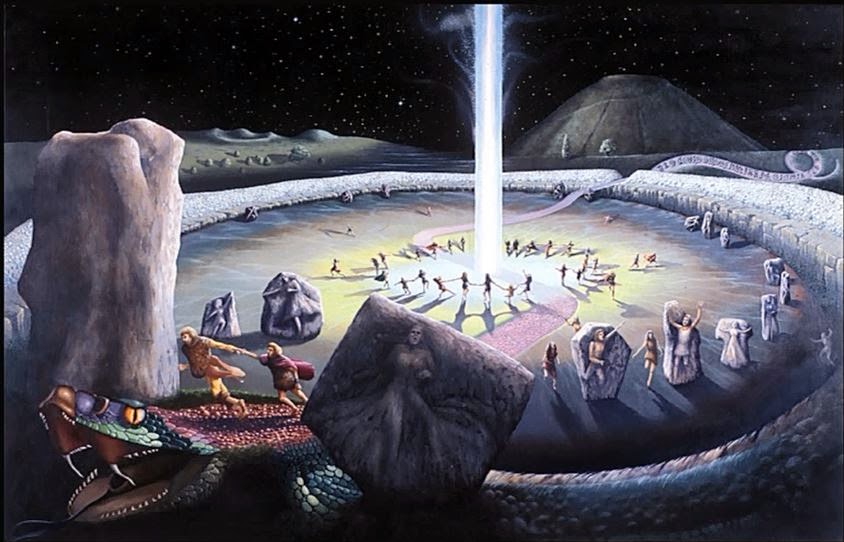
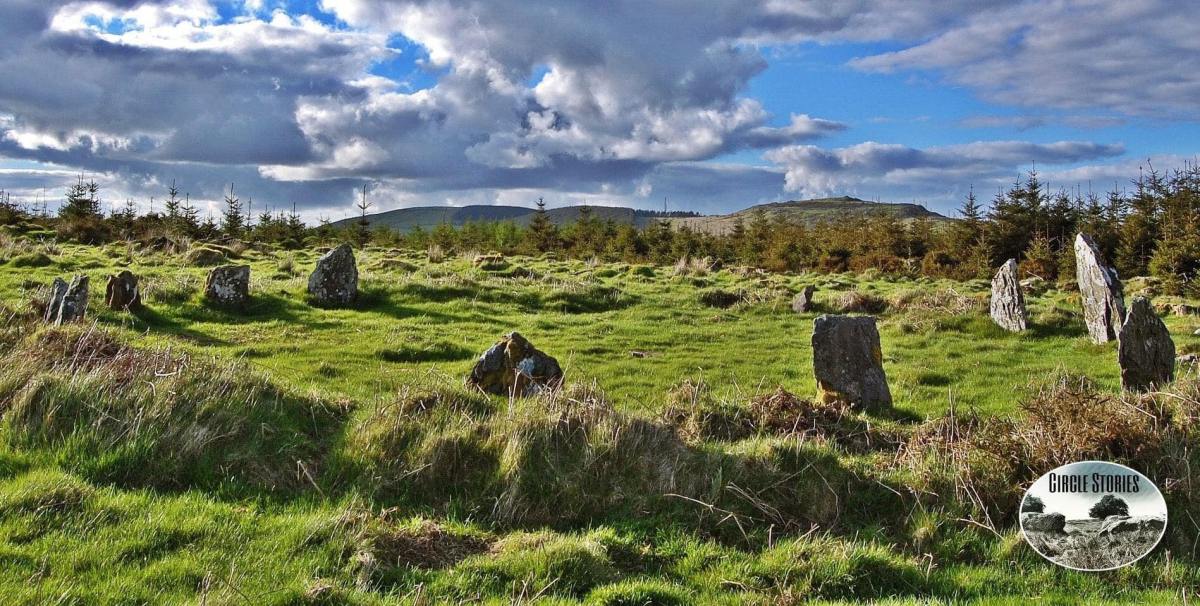
In Brittany, the fairies were known as fées or corrigans, and were usually understood as ancestral spirits, often appearing to warn of, or predict, death. Evans-Wentz found many folktales about the fées and the dead in and around the village of Carnac, where there are extensive remains of prehistoric megalithic stone rows and burial chambers. One M. Goulven Le Scour was a source of many traditions:

My grandmother, Marie Le Bras, had related to me that one evening an old fée arrived in my village, Kerouledic (Finistère), and asked for hospitality. It was about the year 1830. The fée was received; and before going to bed she predicted that the little daughter whom the mother was dressing in night-clothes would be found dead in the cradle the next day. This prediction was only laughed at; but in the morning the little one was dead in her cradle, her eyes raised toward Heaven. The fée, who had slept in the stable, was gone.24

There are many more testimonies along these lines in all the regions visited by Evans-Wentz. They are often confused and ambiguous, and some of his interviewees deny any connection between the fairies and the dead. But there is an underlying consistency in the belief, allowing Evans-Wentz to summarize: “The animistic character of the Celtic Legend of the Dead is apparent; and the striking likenesses constantly appearing in our evidence between the ordinary apparitional fairies and the ghosts of the dead show that there is often no essential and sometimes no distinguishable difference between these two orders of beings, nor between the world of the dead and fairyland.”25

This links the folklore to the psychogenesis that created it; the stories, anecdotes and testimonies are embedded with meaning. This meaning is our culture’s attempt to understand what death is and who might be around to help us, be with us, or warn us, when death is close or upon us. Folklore sends us messages which seem to infer that there are metaphysical entities more familiar with the land of the dead than we are, and that death is simply an alternative form of consciousness, available to everyone given the right circumstances, and perhaps not something to fear. Folklore portraying the fairies as inhabiting the land of the dead, and occasionally showing up in our living reality, shows them as representatives of the past and what is gone. In the same way as a memory of someone dead can be conjured up in consciousness before disappearing into the subconscious, so the fairies are able to make appearances in our collective stories that attempt to understand death and its connection with life. Their somewhat wacky behaviour perhaps exemplifies our fear of the unknown—they live in an undiscovered country, and have their own customs and rules. But it’s a place that can be accessed and brought into our comprehension of reality—physically and metaphysically—so as to come to terms with death, both our own and of others.

The folkloric relationship between the fairies and the dead are filtered throughout Photographing Fairies. Its filmic artistic licence transforms all this into a watchable piece of cinema, where the fairies become representatives of not only the supernatural but also purveyors of death. They become ‘the in-betweeners,’ partly based on the folklore but transformed into something new, which can be understood by a modern audience who may have no knowledge of fairy folklore.

But in many ways, the fairies are peripheral characters in the film. The main emphases in the story are upon death and grief, dealt with at a level that does not require supernatural entities. Castle’s attempt to come to terms with the death of his wife is the primary running theme, but the movie presents many other takes on death and grief: Castle’s ambivalence to the dead soldiers in the trenches, the parents’ stoic attempt at understanding their son’s death in the photographic studio, Templeton’s confused and wavering reaction to his wife’s death, the young girls’ apparent nonchalance to both their parents’ deaths, and Linda’s and Roy’s uncomprehending distress at Castle’s unnecessary death at the hands of the State executioner. It is only when we see the fairy usher Castle into an after life that we finally understand the necessity for supernatural arbiters between the physical and the metaphysical.

This is one of the accomplishments of Photographing Fairies—the presence of the fairies is fundamental and yet the emotional resonance of the storyline is achieved not through their appearances, but rather through a study on how various characters deal with death. The insinuation is that consciousness survives physical death and that the fairies are messengers of this fact. “We stand on the boundary,” Castle tells Doyle. “Touch them and that’s what you feel. The physical reality of the next world. A taste of heaven; a place where all wounds are healed and fractures mended. Where people are made complete.” He proposes that “the next world is as real as Clacton-on-Sea.”

This is always grounded in the everyday throughout the film, which, of course, makes the idea more persuasive. Linda sums it up as she visits Castle in his cell prior to his trial: “Out there’s the real world. With trams, and tea dances, and bills the pay, and children to raise. Where real live people fall in love with other real live people. It’s my world and I want you in it.” Linda is, indeed, the lightning rod in the film, giving a materialistic, yet sympathetic view on proceedings. She witnesses all the death (albeit second hand) and is always a conduit through which the viewer can associate, whether or not they want to believe in the fairies. Castle’s comeback to her speech in the cell is the parting of the ways between the everyday reality of Linda and the metaphysics of death: “But it isn’t the only world.”

Pulling Together the Threads — Can We Photograph Fairies?

But can the fairies be photographed? Castle’s attempts to do so are inconclusive, yet his early 20th century equipment is able to record something. This brings us to the most important question: what are these entities that have been a part of humanity for thousands of years, and where do they come from? They may be adapting to cultural codes, even evolving into new forms, but at what level of reality do they exist?

An answer may be to utilise the three-part interpretation for metaphysical entity contact proposed by David Luke, Senior Lecturer for Psychology at the University of Greenwich (based on Peter Meyer’s 2006 study).26 Luke used this rubric to assess a study into the otherworldly beings (many of which had fairy attributes) encountered by people who entered altered their states of consciousness with DMT. However, it is also a valid tool to evaluate what may be happening to anyone reporting a numinous experience that includes interaction with non-ordinary entities such as the fairies:

  1. They are subjective hallucinations without any objective reality. Such a position is favoured by those taking a purely materialist (i.e. physicalist), reductionist, neuropsychological approach to the phenomena.
  2. They are psychological/transpersonal manifestations. The communicating entities appear alien but are actually unfamiliar aspects of ourselves, be they our ‘reptilian brain’ or our cells, molecules or sub-atomic particles’.
  3. The entities objectively exist in Otherworlds and can interact with our physical reality. A numinous experience provides access to a true alternate dimension inhabited by independently existing intelligent entities in a stand-alone reality, which exists co-laterally with ours, perhaps interacting with our world when certain conditions are met. The identity of these entities remains speculative.

Of course, all three interpretations may be true at different times and under various circumstances. From a materialist-reductionist standpoint, all fairy experiences could be reduced to hallucinatory events. There is no physical residue as an after-effect of the interactions, and the reports are all limited to visual and aural experiences. While the specific adjuncts allowing for these hallucinations to take place cannot be properly analysed, seeing them all as sensory aberrations remains one legitimate interpretation. The film allows this interpretative model to any viewer unable to make the conceptual leap into accepting the existence of fairies. This explanatory model is reliant on the theory that consciousness is an epiphenomenon of the brain. The implication is that the brain, for whatever reason, is simply misconstruing sensory input from a physical world where things like fairies simply do not exist. This is the hard and fast materialist-reductionist standpoint, which is deeply embedded in Western culture.

It is also a standpoint that is now challenged at a fundamental level not only by religious and mystical traditions, but also by the recently reinvented philosophy of Kantian Idealism, panpsychism, and by a growing number of quantum physicists, who—using a wide range of methodologies—suggest that the brain is a reducer of consciousness, not a creator of it.27 This model sees consciousness, not matter, as primary; it is everywhere and it is everything, and individual human (and animal) brains are merely conveying it within the remit of what then becomes physical reality. For the most part, this physical reality has a closely defined rule-set, but under certain conditions the usual laws break down and metaphysical events can occur. These supernatural occurrences are thus as legitimate as any natural occurrence. The philosopher Jeffrey Kripal describes this in relation to traumatic episodes that cause apparently non-ordinary experiences, which include entity contact:

The body-brain crafts consciousness into a human form through a vast network of highly evolved biology, neurology, culture, language, family, and social interactions until a more or less stable ego or ‘I’ emerges, rather like the way the software and hardware of your laptop can pick up a Wi-Fi signal and translate the Internet into the specificities of your screen and social media. The analogy is a rough and imperfect one, but it gets the basic point across. Sometimes, however, the reducer is compromised or temporarily suppressed. The filtering or reduction of consciousness does not quite work, and other forms of mind or dimensions of consciousness, perhaps even other species or forms of life, that are normally shut out now ‘pop in.’ In extreme cases, it may seem that the cosmos itself has suddenly come alive and is all there. Perhaps it is.28

While most fairy encounters are not the result of trauma, this perspective helps us perhaps understand preternatural fairy experiences as something metaphysical being allowed to ‘pop in’ from either a greater, transcendent form of consciousness, or from an alternative reality to which humans do not typically have access. This would fit with either of David Luke’s second and third interpretations for supernatural entity contact. Simply put, a numinous zone has been entered and the participant is able to make contact with what usually resides external to their ordinary consciousness.

One of the achievements of Photographing Fairies is to tie much of this together and present us with a layered and nuanced view of what role metaphysical creatures like the fairies might play in our world. By using folkloric and Theosophical tropes as manifested in the immediate post-WWI period, we are opened up to the possibility of the fairies existing at some level. Photography is the means with which they may be brought into view in physical reality, but it is only through an altered state of consciousness that this actually occurs, thus plugging into the plausible concept that this is how non-physical entities have been experienced from prehistory through to the present day.

This is accomplished with much artistic licence, relying on a skilful screenplay and outstanding acting, but is always rooted in an understanding of the cultural role of the fairies. Perhaps most importantly, Photographing Fairies integrates the idea that the fairies are handmaidens of the eternal; they are arbiters between physical existence and what is usually thought of as death, with the ultimate cosmic message that there is no death… only a continuance of consciousness.

References

  1. Szilagyi, S. (1992). Photographing fairies, Ballantine Books. ↩︎
  2. IMBd. (n.d.). Photographing fairies. https://www.imdb.com/title/tt0119893/?ref_=ttfc_fc_tt ↩︎
  3. Lavole, J.D. (2012). The Theosophical Society: The history of a spiritualist movement. Brown Walker Press. ↩︎
  4. Lachman, G. (2007). Rudolf Steiner: An introduction to his life and work. Floris Books. ↩︎
  5. Rushton, N. (2019). ‘Paracelsus, nature spirits and faeries’ https://deadbutdreaming.wordpress.com/2019/11/17/paracelsus-nature-spirits-and-faeries/ ↩︎
  6. Simaneck, D. (n.d.). ‘The case of the Cottingley fairies’ https://www.lockhaven.edu/~dsimanek/cooper.htm ↩︎
  7. Beach Combing. (2017). ‘In search of the earliest fairy wings’ http://www.strangehistory.net/2016/12/17/search-earliest-fairy-wings/ ; Rushton, N. (2017). ‘The art of faerie’ https://deadbutdreaming.wordpress.com/2017/06/22/the-art-of-faerie/ ; Lancelyn Green, R. (1954) Fifty years of Peter Pan. Peter Davies Publishing. ↩︎
  8. Froud, B. and Lee, A. (1978) Faeries. Pan Books. ↩︎
  9. Rushton, N. (2017). ‘Altered states of consciousness and the faeries’ https://deadbutdreaming.wordpress.com/2017/02/03/altered-states-of-consciousness-and-the-faeries/ ↩︎
  10. Hancock, G. (2005). Supernatural: Meetings with the ancient teachers of mankind. Century. ↩︎
  11. Eliade, M. (2004, first published 1951). Shamanism: Archaic techniques of ecstasy. Princeton University Press. ↩︎
  12. Lewis-Williams, D and Dowson, T. (1988). ‘The signs of all times: Entoptic phenomena in upper Palaeolithic art’ Current Anthropology, 29, 201-45. http://psimg.jstor.org/fsi/img/pdf/t0/10.5555/al.ch.document.sip200035_final.pdf ↩︎
  13. Peake, A. (2019). The hidden universe: An investigation into non-human intelligences. Watkins. ↩︎
  14. Ginzburg, C. (2004). Ecstasies: Deciphering the witches’ sabbath. University of Chicago Press; Wilby, E. (2005). Cunning folk and familiar spirits: Shamanistic visionary traditions in Early Modern British witchcraft and magic. Sussex Academic Press. ↩︎
  15. Briggs, K. (1967). The fairies in tradition and literature. Routledge & Kegan Paul Ltd. ↩︎
  16. Rushton, N. (2017). ‘The faerie abduction of Anne Jefferies’ https://deadbutdreaming.wordpress.com/2017/09/23/the-faerie-abduction-of-anne-jefferies/ ↩︎
  17. Ginzburg; Wilby. Op. cit. ↩︎
  18. Young, S. The Fairy Investigation Society. (2017). ‘Fairy census 2014-2017’ http://www.fairyist.com/wp-content/uploads/2014/10/The-Fairy-Census-2014-2017-1.pdf ↩︎
  19. Hanna, J. (2012). ‘Aliens, insectoids, and elves! oh, my!’ https://www.erowid.org/chemicals/dmt/dmt_article3.shtml ↩︎
  20. Strassman, R. (2001). DMT: The spirit molecule. Park Street Press. ↩︎
  21. Luke, D. (2017). Otherworlds: Psychedelics and exceptional human experience. Muswell Hill Press. See also Rushton, N. (2023). ‘Faerie-Type Entities and the DMT Experience: An Ontological Survey,’ Psychedelic Press 40, 51-63. This article is republished here. ↩︎
  22. Bottrell, W. (1873). Traditions and hearthside stories of West Cornwall, Vol. 2. (pp. 94-102). Beare and Son. https://www.sacred-texts.com/neu/celt/swc2/swc216.htm ↩︎
  23. Evans-Wentz, W.Y. (2004, first published 1911). The fairy-faith in celtic countries. New Page Books. A version is also available online at: https://sacred-texts.com/neu/celt/ffcc/ ↩︎
  24. Evans-Wentz. Op. cit., pp. 197-98. ↩︎
  25. Evans-Wentz. Op. cit., pp. 277-78. ↩︎
  26. Luke, D. (2011). ‘Discarnate entities and dimethyltryptamine (DMT): Psychopharmacology, phenomenology and ontology’ Journal of the Society for Psychical Research, 75, 26-42. https://dmttimes.com/david-luke-papers-and-articles/2020/1/2/discarnate-entities-and-dimethyltryptamine-dmt-psychopharmacology-phenomenology-and-ontology ↩︎
  27. Kastrup, B., Stapp, H.P., & Kafatos, M.C. (2018). ‘Coming to grips with the implications of quantum mechanics’ https://blogs.scientificamerican.com/observations/coming-to-grips-with-the-implications-of-quantum-mechanics/ ↩︎
  28. Strieber, W., & Kripal, J.J. (2017). The super natural: Why the unexplained is real (p. 219). Tarcherperigee. ↩︎

***

Unfortunately, Photographing Fairies was never released officially on DVD (DVD copies are pirated but seemingly impossible to find second hand online). But it is available to stream at VUDU/JustWatch (available in the US, Canada, Australia and New Zealand) or for free at Internet Archive.

***

Featuring essays by Wren Collier, Joshua Cutchin, Susan Demeter, Patrick Dugan, David Floyd, Jack Hunter, Allison Jornlin, James P. Nettles, Neil Rushton, Mark Anthony Wyatt, and Simon Young.

***

Dead but Dreaming the novel is available now…
Disembodied Faerie Voices? Some Personal Experiences

I recently experienced a disembodied voice phenomenon, which correlated closely to a previous experience in 1994. Whether or not either of these incidents should be described within the remit of faerie encounters may be questionable, but I thought them interesting enough to recount here. There are a few similar occurrences in traditional folklore and modern encounters, which may be considered as faerie motifs, but I have been unable to find anything that fits as a close equivalent. This post is therefore as much a request for readers to respond with similar experiences (their own or from the literature) as it is a description of my own encounters.

Glastonbury Tor, October 2023

I recently attended the Faery Fayre at Glastonbury, which is organised by Karen Kay. Along with my colleagues, Kate Ray and Jo Hickey-Hall, I was giving a presentation on the Saturday about the famous Wollaton Gnomes incident. In the evening, they both attended the Faerie Ball at the Town Hall, and I decided to walk up Glastonbury Tor. It was a clear night at about 10 o’clock, and on my way up the path (from the town side), as well as when I reached the top, there were no other people. For those who know the Tor, this is very unusual, especially on a Saturday night. I have been on the Tor hundreds of times, day and night, and I have never been totally alone there. This was preying on my mind somewhat as I sat down by the SW-facing elevation of St Michael’s Tower, but I decided to relax into the luxury of having the place to myself. After about twenty minutes the solitude was broken by voices, which appeared to be on the other side of the tower. I thought there were three (adult) people, two male and a female, but my main thought was that my isolation was over and that I had best make my way around the other side of the tower, so as not to shock them when they found me lurking on the Tor. The voices continued. They were in no language I recognised and appeared to be talking quickly. I gave it about thirty seconds then got up and walked around the tower. The voices abruptly ceased completely and there was nobody on the Tor. I circumnavigated the whole of the top (c.50ft x 30ft) and investigated the two pathways – there was nobody on the Tor. I walked around on the Tor for another ten minutes, then made my way down the NE path, encountering no other people until I made it down to the edge of the town.

The incident was not frightening or creepy, as it could have been, but it left me in puzzlement as to what could have happened. I immediately went through all the most rational explanations, such as the voices travelling on the breeze from the bottom of the Tor, or some people hanging out below the top, on the terraces that form a labyrinth around the natural hill. Nothing seemed to explain the exact circumstances of the experience, which had definitely involved voices in an unknown language passing close by me but unseen, without any evidence of actual people being present. It was only hours later as I continued to ponder the incident that I remembered I had had a remarkably similar experience almost thirty years previous.

Langdon Hill, Dorset, April 1994

Langdon Hill is located just to the north of the Dorset coastal path, near to the famous landmark of Golden Cap, about five miles west of Bridport. It is a wooded hill, and for that reason I chose it to wild camp during a three-day backpacking trip through the hinterlands of Dorset in 1994. I chose an obscure spot in the woods well away from the path, set my tent up at dusk, cooked, ate and read, before settling down for the night. I’m a light sleeper when in a tent, and always wake up at regular intervals. After waking up several times I checked the time, which showed it was 3am. Shortly after I heard the voices of what I thought were two women. These voices continued as they came closer to the (unlit) tent and passed by it at close vicinity. They continued to chatter, did not seem to slow down as they passed, and continued away to the SW until I could no longer hear them. When the voices had completely disappeared, I extracted myself from my sleeping bag, got out of the tent and wandered about, but there was only silence. As with the Glastonbury experience I could not make out the language they were speaking, and neither was I particularly perturbed by the experience. I was definitely awake and did not fall back asleep before the dawn, when I packed up my tent and moved on.

This incident at Langdon Hill was a long time ago, but I was able to consult the journal I kept of all my backpacking trips at this time to confirm the details. And anyway, the experience is one of those that hardwires itself into memory in a visceral manner. What were the chances of two women being in the woods (well away from the path) at 3am, walking quickly past my tent without apparently noticing it, and speaking an obscure language? It was only years later that I read Louise Hodgson’s Secret Places of West Dorset, where she suggests a coven operates within the woods, and has done so for at least two centuries. She also mentions the folk tradition of the hill being a place to ‘whistle up the faeries’ – where a whistling sound will be repeated back. This does not explain my experience there, but it does give some folkloric layers to a place I had spent the night without any knowledge of the potential specialness of the location. While different from the recent incident on Glastonbury Tor (for which the specialness of the location is a given), the intrinsic components are the same – I was alone, it was night, disembodied voices passed close to me for a short time, they were talking in a language I did not recognise, and I could not account for them being there.

Faerie Voices?

Whatever phenomenon I experienced on these two occasions, it might be a stretch to suggest they were (audial) faerie encounters. Fortean audio experiences are most often associated with ghosts, sometimes recorded in the form of Electronic Voice Phenomena (EVPs), but as the boundaries between various parapsychological experiences blur, it may not be unreasonable to allow them to be classified as a faerie-type encounter. The folklore does not yield much in the way of audial-only experiences or testimonies related to faeries, apart from the hearing of faerie music/singing (Stith Thompson Motif Index F262), which is relatively common. There are several accounts of disembodied faerie voices in the new Fairy Investigation Society Census (2017-23), compiled by Simon Young, but they are of a different narrative quality to my own experiences described above. And Claire Casely has recorded several incidents of disembodied voices that may relate to faerie activity at Emsworthy Barn in Devon in her podcast series The Faery Whisperer. But I have not found direct correlates to my two encounters in traditional or modern folkloric records.

Of course, coming from a Fortean or esoteric perspective allows a variety of interpretations as to the possible cause and source of such a phenomenon. A materialist/reductionist overview, however, will simply label the experience as an audial hallucination, likely related to increased hippocampal activity in the brain. While such interpretations based on fMRI studies of brain activity are interesting, and may indeed explain some types of disembodied audio phenomena, they are locked within an Overton Window of materialism, where voices of unseen beings simply cannot exist, and must therefore be epiphenomena of the brain. The word hallucination has become a reductionist get-out clause to explain any visual or audial phenomenon that does not fit within the parameters of mainstream understanding of physical reality. But direct experience of this type of phenomenon will often bypass the rationalistic explanations, because there is simply a more elemental component to the encounter that is clearly not being generated by some malfunction in the brain. There is a gnosticism in these types of experiences that transcends normative, materialist explanations, even if the end interpretation remains indeterminate, subjective and unresolved. This does not mean my experiences were necessarily faerie encounters, but they were paranormal in the true sense of the word, and were, at the very least, intriguing and mysterious.

***

I would very much like to hear from anyone who has had a similar experience to those described in this article. Please leave a comment below, or if you would rather send me a private message, my email is on the landing page.

***

Dead but Dreaming the novel is available now…
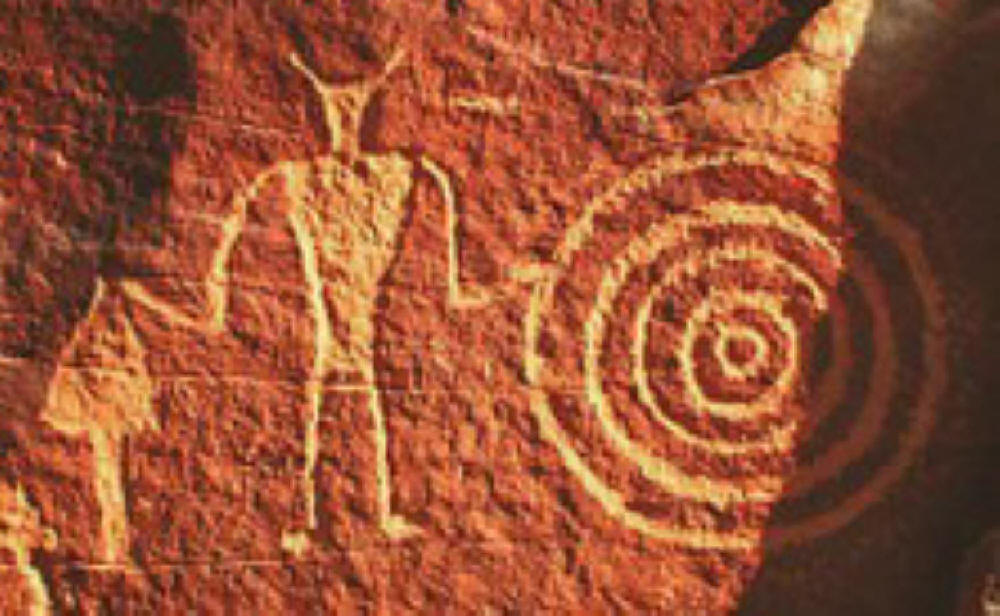
Faerie-type Entities and and the DMT Experience: An Ontological Survey

The following article appeared in the most recent special edition of the Psychedelic Press journal, entitled ‘Folklore and Psychedelics’, edited by Jack Hunter and Peter Sjöstedt Hughes. Thanks to the Psychedelic Press for allowing me to republish it here in full.

Faerie-type Entities and and the DMT Experience: An Ontological Survey

Neil Rushton

The recent study carried out by the Johns Hopkins School of Medicine surveyed 2561 people to record their experiences of contacting entities while using N,N-dimethyltryptamine (DMT).1 The study used a filtered dataset of people to categorise many aspects of the DMT experience. The published paper does not give details of the subjective reports, but classifies them into typologies based on a range of determinants, and provides statistical analyses. In the table for ‘descriptive labels for entity’ 14% of respondents described their entity as elves, 8% as faeries and 5% as gnomes. But there are many other categories that are more ambivalent and, without seeing the original data, may be considered faerie-type entities. These include ‘beings’ (60%), ‘plant spirits’ (10%), and ‘animal spirits’ (7%).

This study is part of a growing literature of testimonies from people who have apparently contacted supernatural entities after taking DMT. It would seem this molecule, in particular, has the ability to alter states of consciousness to the extent that the participant is able to interact with non-natural entities in a supra-normal time and space. Many of the entities, in this study and others, bear much ontological resemblance to the faeries of both folkloric and modern descriptions. The DMT experience may provide one possible pathway into understanding what the faeries might be and how human consciousness can connect to their metaphysical existence.

DMT-initiated Faerie Encounters from Clinical Trials and Surveys

In the late 1950s, the Hungarian Stephen Szára became the first person to catalogue the experiences of people who had been injected with DMT. As detailed by Andrew Gallimore and David Luke, once he’d worked out that DMT was non-active when ingested, but instead needed to be injected intravenously: ‘He recruited 30 volunteers, mainly doctors from the hospital where he worked, the National Institute for Mental and Nervous Diseases, Budapest. All received 0.7 mg/kg DMT intramuscularly and their experiences carefully recorded.’2 Unfortunately, the results were not published, but some reports do survive, and it is clear that many of the study participants encountered entities. One twenty eight-year old male described his experience thus: ‘The room is full of spirits…the images come in such profusion that I hardly know where I want to begin with them! I see an orgy of color, but in several layers one after the other… one sees curious objects, but nevertheless everything is quickly gone, as if on a roller-coaster.’ We do not have any further assessment of what the ‘spirits’ were, but several of the other surviving experience reports describe meeting ‘beings’ when under the influence of these high-dose events. Two years after the first study Szára extended his assessment to psychiatric patients in the hospital. Again, only a few reports of the patients’ experiences survive, but one, from a thirty-year old female, give a flavour of the types of entities encountered: ‘I saw such strange dreams, but at the beginning only… I saw strange creatures, dwarfs or something, they were black and moved about…’

When DMT became a scheduled substance in 1970, any possibility of further research ceased. It was not until 1990 that DMT re-emerged as a legitimate substance for experimentation within a clinical setting. Between 1990 and 1995 a clinical research study was carried out at the General Clinical Research Center of the University of New Mexico Hospital, by Dr Rick Strassman, after a lengthy application to obtain a federal licence was successful. The study found that volunteers injected with varying amounts of DMT underwent profound alterations of consciousness. Strassman published the results in 2001 as DMT: The Spirit Molecule.3

The research involved sixty volunteers, all of who had multiple sessions in a controlled environment, where they were injected with DMT within the range of 0.2, 0.3 and 0.4 mg/kg. They were monitored during the experiences, which usually lasted between twenty and forty minutes. They were then asked to recount a testimony of what had happened as soon as the effects of the drug had worn off. At all doses the experience usually involved immediate cessation of normal consciousness and transportation to a different realm of reality inhabited by a range of creatures described as elves, faeries, imps, reptiles, insects, aliens, robots, clowns, and various therianthropic entities. One woman even describes a pulsating entity that she encountered as ‘Tinkerbell-like’. The experiences represented to the participants a parallel reality that was ‘super real’, not an hallucination, not a dream, but a substantial built reality with full sensory interaction and often telepathy.

The testimony of one volunteer, Jeremiah, gives an idea of the experience, the entities encountered and how the participants’ descriptions were recorded verbatim. After hurtling through a void he found himself: ‘… in a nursery. A high-tech nursery with a single Gumby, three feet tall, attending me. I felt like an infant. Not a human infant, but an infant relative to the intelligence represented by the Gumby. It was aware of me but not particularly concerned… Then I heard two or three male voices talking. I heard one of them say “he’s arrived.” … I was in a big room… there was one big machine in the center, with round conduits, almost writhing… The machine felt as if it were rewiring me, reprogramming me… This is real. It’s totally unexpected, quite constant and objective… an independent, constant reality.’4

Karl described his interaction with some faerie-type entities during an ‘inter glacial’ only eight minutes into a high-dose session: ‘That was real strange. There were a lot of elves. They were prankish, ornery, maybe four of them appeared at the side of a stretch of interstate highway I travel regularly. They commanded the scene, it was their terrain! They were about my height. They held up placards, showing me these incredibly beautiful, complex, swirling geometric scenes in them… I heard a giggling sound— the elves laughing or talking at high-speed volume, chattering, twittering.’5

The language in the testimonials over time is interesting; are the ‘spirits’ and ‘dwarves’ in Szára’s studies, 1950’s versions of the ‘elves’ and ‘imps’ of the participants in Strassman’s research? It is certainly the case that many folkloric descriptions of the faeries described them as ‘spirits’. There are plenty of examples of this in WY Evans-Wentz’s 1911 collection of faerie beliefs, published as The Fairy-Faith in Celtic Countries,6 where (especially in Ireland and Brittany) there appeared to be a high level of interchangeability between the faeries and the spirits of the dead. The folklorist David Halpin has commented about this trait while describing one of Evans-Wentz’s encounter reports from Limerick, where a young doctor equates the faeries as spirits: ‘This may be, perhaps, an unconscious referral to the belief that in many cases the faeries were both the dead and another type of spirit, or it may be that there was more of an acceptance of this crossover than there sometimes is today.’7 This ambiguity of language to describe supernatural entities over time is important. But it is clear from Strassman’s research study that almost all the volunteer participants encountered various forms of entities during their DMT experiences, and that (whatever the terminology used) many of them can be coded within the broad ontological spectrum that may be described as faerie entities.

Strassman’s study could be seen, at least in part, as correlative to folkloric research. The primary take away is the anecdotal testimonies of people who attempt to describe the DMT-induced realities they found themselves in and the entities they found there. This is not so dissimilar to a folklorist collecting reports of supernatural faerie encounters. The means of arrival in a reality where faeries appear to exist is evidently different, but Strassman is in many ways simply recording extraordinary encounters with (apparently) non-physical entities, much in the same way as Evans-Wentz and every other folklorist who has attempted to record human interactions with faeries.

An important survey is from 2010, collated by the computational physicist Peter Meyer.8 ‘340 DMT Trip Reports’ documents what Meyer describes as, ‘reports which attest to contact with apparently independently existing intelligent entities within what seems to be an alternate reality.’ The 340 (anonymous) reports certainly contain many encounters with faerie-type entities, most often described as elves. Forty-six of the reports describe encountering faeries/elves. #49 states: ‘To start with I was travelling into what looked like a long curved tunnel. The walls of the tunnel were like bright multicolored tiles… After an indeterminate period of time I found myself in a garden, which seemed to be suspended in a sky-blue void, rather than part of any larger land mass. The garden had grass, flowers, trees, even a picket fence and seemed quite convincing and solid. I noticed two faeries sitting on a swing hanging from one of the trees. They seemed to be inviting me closer, and I floated in their direction… As I approached them I noticed that they were lewdly playing with themselves and each other, I watched them for some time before noticing that there were more inhabitants in the garden. There were more of the faeries and what I assume were their children.’ This account is quite typical of testimonies in the survey in that a transformed natural environment is encountered, and the morality of the faerie entities in ambivalent.

There are many folkloric traits and precedents in these descriptions, although there is also probably much cultural coding going on, where people in altered states of consciousness carry with them their own memories of what faeries and elves might represent. But there is certainly a general view in the testimonies that these entities are existing in an autonomous built reality not entirely dependent on our own consensus reality. The DMT world appears to be an independent hyper-reality, even if it is a reality built from entirely subjective accounts. Although only a minority of reports (c.18%) in Meyer’s study explicitly mention faeries or elves, almost all of them do record some type of contact with non-human intelligent entities, described as: spirits, insectoids, therianthropes, orbs, light beings, waves of light or sound, aliens, or distorted humanoids. There is a consistency in the reports of meeting with intelligent beings.

This theme continues in subsequent surveys, such as Jon Hanna’s 2012 study ‘Aliens, Insectoids, and Elves! Oh, My!’, which used experience reports posted on the drug-advisory website Erowid, as well as three new surveys of Erowid users.9 While the surveys included entity encounters brought on by a range of psychedelic substances, it is clear that DMT was always the molecule most likely to facilitate such encounters. The initial assessment of over 22,600 experience reports showed that 1,159 described entity encounters. 38% of these happened on DMT and 36% on Ayahuasca. In Hanna’s three new surveys it was also clear that DMT was the drug most likely to initiate an experience involving discarnate entities. Many of the respondents described the entities as alien, but there is a large sub-set of faerie-type beings within the testimonies.

David Luke’s 2020 paper ‘Anomalous Psychedelic Experiences: At the Neurochemical Juncture of the Humanistic and Parapsychological’ also surveys the altered state of consciousness effects of people using a range of psychedelics.10 When it comes to entity encounters Luke makes it clear that DMT is the substance most likely to induce the phenomenon. He notes that ‘encounters with elves, gnomes, pixies, dwarves, imps, goblins, and other “little people” (though clearly not human people), are extremely prevalent and have long been at the spearhead of the debate on the reality of DMT beings.’ And along with Pascal Michael and Oliver Robinson, Luke has also published the findings from a recent ‘naturalistic field study’ where thirty-six participants were observed during DMT trips in their homes and interviewed immediately afterwards.11 Thirty-four of them described encountering entities, and while there is a variety in the entity taxonomy, faerie types regularly appear. If the faerie typology is extended to therianthropes, cartoon humanoids, aliens and even ‘clowns’, then they are present in the majority of experiences in the study. And in the most recent survey (2022) in Nature Scientific Reports, an analysis of 3778 experiences from the r/DMT Reddit community over a 10-year period from 2009 to 2018, also demonstrated encounters with faerie-type entities.12 While only a minority of contributors specifically labeled the entities as faeries/elves, there are many phenotypes which would slot into a folkloric understanding of faerie phenomenology, such as shadow figures, masked characters and any of the more vague descriptions of ‘humanoids.’ If the descriptors for entities in this study are compared to the faerie phenotypes listed in the Aarne-Thompson Motif-Index of Folk-Literature,13 more than half of them could be classified as faerie encounters.

The DMT experience is evidently a real subjective phenomenon. Even filtering for misrepresentations through deceit and false memories, the large number of testimonies, from both clinical research and surveys, over a long time period, point to the conclusion that this particular molecule consistently produces entity encounters via an altered state of consciousness. And many of the entities correlate with folkloric (historic and modern) faerie typologies.

The DMT Experience Compared to Folkloric and Modern Faerie Encounters

While folkloric faerie encounters (and modern encounters) were evidently not caused by inhalation or injection of DMT, many of the stories and testimonies from the record do involve the immersion of the participants into an ulterior reality inhabited by non-human intelligent entities. One story from the folkloric record that does sound as if it were an historic version of a DMT experience is the well-documented description of Ann Jefferies, who, in the late 17th century experienced a vivid trip into an otherworld populated by faerie entities.14 After going into service with the wealthy Pitt family near St Teath, Cornwall she, one day while sitting in the arbour of the house, found herself accosted by ‘six little men, all clothed very handsome in green.’ The 19th-century folklorist Robert Hunt recounted the subsequent testimony in Popular Romances of the West of England.15 One of the little men ran his fingers over her eyes and she felt as if they’d been pricked with a pin: ‘Suddenly Ann became blind, and she felt herself whirled through the air at a great rate. By and by, one of her little companions said something which sounded like “Tear away,” and lo! Anne had her sight at once restored. She was in one of the most beautiful places — temples and palaces of gold and silver. Trees laden with fruits and flowers. Lakes full of gold and silver fish and the air full of birds of the sweetest song, and the more brilliant colours. Hundreds of ladies and gentlemen were walking about. Hundreds more were idling in the most luxurious bowers, the fragrance of the flowers oppressing them with sense of delicious repose. Hundreds were also dancing, engaged in sports of various kinds. Ann was, however, surprised to find that these happy people were no longer the small people she had previously seen.’

After coming round from her experience, Ann woke up in the arbour surrounded by concerned people and was taken to convalesce. It is conjectured that she suffered from temporal lobe epilepsy, a condition which manifests traits similar to DMT-induced experiences. Interestingly, like many of the people on Strassman’s study and respondents to the Johns Hopkins survey, Ann found she was a changed person after the experience, and became transformed into a natural healer, gaining much fame for this in her subsequent life. Anecdotal folklore about faerie encounters is rarely as detailed as Ann Jefferies’ story (Hunt’s narrative is backed up by contemporary letters, civil records and other accounts about her), but there are numerous testimonies about people who claim to have left consensus reality and entered another, where they meet faerie entities. This is perhaps best seen in the common motif of the faerie dance – where an individual enters into a circle of dancing faeries and remains in their otherworld for a short period of time, only to return to this world and find they have been absent for weeks, months or even years.16 This is perhaps the folklore turning a real numinous episode (perhaps via an altered state of consciousness, of whatever type) into a palatable story, with the allegorical slant that the trip into an otherworld gives an enhanced cubit of wisdom in a very short time – much like a DMT-induced episode.

While most people partaking of DMT will perhaps not be overly familiar with faerie folklore stories and motifs, they will probably be imbued with the faeries in popular culture. Put this alongside their likely knowledge of Terence McKenna and his various descriptions of machine-elves, and there may be a predisposition for the DMT experiencer to encounter faerie-type entities. The cultural code is locked into their subconscious and the molecule unlocks it, creating an apparently real encounter with a supernatural creature based on their hard-wired expectations. This is also the case for modern faerie sightings where the participant has not engaged with DMT or any other mind-altering substance. As the recent census by Simon Young for The Fairy Investigation Society shows, there continue to be many people reporting encounters with faerie entities.17 Indeed, the rate of modern testimonies of non-psychedelic induced experiences far outstrips the number of people detailing their DMT encounters. But both may be culturally coding their experiences. There are certainly many similarities between DMT and non-DMT testimonies of faerie encounters. This example is from The Fairy Investigation Society’s census (#114) and happened to a female in her twenties during the 1990s in Somerset, UK: ‘Friends had gone ahead and I straggled behind. As I turned a corner, it was misty. The mist had a weird glow. As I walked into the low mist there was a procession [of faeries] around three feet tall. With lanterns! But in the mist, I paused and they saw me. They came forward and I waited for them to pass. They passed. I have never taken drugs and was not on any alcohol. This was the weirdest experience. It lasted three to five minutes. By [the] time I got back to cottage my friends were concerned as I was away for around forty-five minutes! Very strange. They looked medieval in dress. But their clothes were covered by the mist at times.’

The time dilation and feeling of numinosity, and, of course, the meeting with (apparently intelligent) humanoid entities, could come from a DMT-trip report. But the main difference is that (despite the missing time) the respondent encountered the faerie entities within consensus reality. She was not in an alternate reality. This is the main contrast between most (but not all) modern faerie experiences, which have not been induced by a mind-altering substance, and DMT encounters, which always happen in a hyper-space. This could suggest that with DMT rushing through the brain the experience is taken further, and those people encountering entities without its benefit only get a partial view, constrained within their natural environment. The folkloric record is more divergent on this. The stories such as Ann Jefferies’, and the circle dancing experiences transport the participant into the otherworld of the faeries, but, the majority of faerie folklore happens in the everyday world, where the entities infringe upon our reality and make their appearances there.

The DMT experience of supernatural entities is only a part of this metaphysical intersect, but it is important, not least due to the consistency of the testimonies. Most people who take DMT experience intelligent entities, and many of their encounters are similar enough to folkloric and modern faerie testimonies to allow for the possibility the experiences are related. While there are evidently many differences between experiences of faerie entities in folklore/modern encounters and those from DMT use, there are also enough similarities for us to ask the question about the phenomenological correspondence. People in the past and the present appear to have experienced a range of faerie entities, through a variety of means; injecting or inhaling DMT can invoke analogous experiences. Faerie entities, however experienced, and while morphing through different taxonomies through time, do seem to be resistant to cultural changes – they retain their form and remain recognisable as a category of supernatural entity. Whether they exist in an autonomous reality, which interacts with ours occasionally, or whether they are aspects of human consciousness, accessible under certain conditions, they remain with us; liminal but exclusive, at a metaphysical intersect.

References

1. Davis, AK., Clifton, JM., Weaver EG., Hurwitz, ES., Johnson, MW., Griffiths, RR. (2020) ‘Survey of Entity Encounter Experiences Occasioned by Inhaled N,N-dimethyltryptamine: Phenomenology, Interpretation, and Enduring Effects’, Journal of Psychopharmacology, 34:9, pp. 1008-1020.
2. Gallimore, AR. and Luke, DP. ‘DMT Research from 1956 to the Edge of Time’, Reality Sandwich (15 Oct. 2015), https://realitysandwich.com/dmt-research-from-1956-to-the-edge-of-time/.
3. Strassman, R. (2001) DMT: The Spirit Molecule (Rochester, VT.: Park Street Press).
4. Strassman, DMT, pp. 193-95.
5. Strassman, DMT, p. 188.
6. Evans-Wentz, WY. (2004, 1st pub. 1911) The Fairy-Faith in Celtic Countries (Franklin Lakes, NJ.: Career Press).
7. Halpin, D. ‘A Strange Irish Fairy Encounter’, Circle Stories (18 June 2020), https://www.facebook.com/CircleStoriesDavidHalpin/posts/1202465446768796.
8. Meyer, P. ‘340 DMT Trip Reports’, Serendipity (20 Aug. 2010), https://www.serendipity.li/dmt/340_dmt_trip_reports.htm.
9. Hanna, J. ‘Aliens, Insectoids, and Elves! Oh, My!’, Erowid Extracts #23 (24 Nov. 2012), https://www.erowid.org/chemicals/dmt/dmt_article3.shtml.
10. Luke, D (2020) ’Anomalous Psychedelic Experiences: At the Neurochemical Juncture of the Humanistic and Parapsychological’, Journal of Humanistic Psychology, 62:2, pp. 257-97.
11. Michael, P., Luke, D., Robinson, O. ‘An Encounter With the Other: A Thematic and Content Analysis of DMT Experiences From a Naturalistic Field Study’ Frontiers in Psychology, 12:720717 (2021) https://doi.org/10.3389/fpsyg.2021.720717.
12. Lawrence, D.W., Carhart-Harris, R., Griffiths, R.. Timmermann, C., ‘Phenomenology and Content of the Inhaled N, N-dimethyltryptamine (N, N-DMT) Experience’, Scientific Reports 12:8562 (2022). https://doi.org/10.1038/s41598-022-11999-8.
13. Thompson, S. (1955-58) Motif-Index of Folk-Literature: A Classification of Narrative Elements in Folk-Tales, Ballads, Myths, Fables, Mediaeval Romances, Exempla, Fabliaux, Jest-Books, and Local Legends, 6 vols (Copenhagen: Rosenkilde and Bagger).
14. Young, S. (ed.) (2021) Ann Jefferies and the Faeries (London: Pwca Pamphlets); Rushton, N. ‘The Faerie Abduction of Ann Jefferies’, Dead but Dreaming (23 Sep. 2017), https://deadbutdreaming.wordpress.com/2017/09/23/the-faerie-abduction-of-anne-jefferies/.
15. Hunt, R. (1903) Popular Romances of the West of England (London: Chatto & Windus), pp. 127-29.
16. Hancock, G. (2005) Supernatural: Meetings with the Ancient Teachers of Mankind (London: Century), pp. 398-412; Rushton, N. ‘Going Round in Circles: The Faerie Dance’, Dead but Dreaming (28 May 2016), https://deadbutdreaming.wordpress.com/2016/05/28/going-round-in-circles-the-faerie-dance/; Rushton, N. ‘The Space-Time Continuum in Faerieland’, Dead but Dreaming (10 July 2016), https://deadbutdreaming.wordpress.com/2016/07/10/the-space-time-continuum-in-faerieland/.
17. Young, S. ‘Fairy Census 2014-2017’, The Fairy Investigation Society (8 Jan. 2018), https://www.fairyist.com/wp-content/uploads/2014/10/The-Fairy-Census-2014-2017-1.pdf.

Contents of the Psychedelic Press Journal XL:

  • Editorial: ‘Folklore and Psychedelics’ by Jack Hunter
  • Folklore and the British Magic Mushroom by Andy Letcher
  • Tattoo You?: The Blue Star Tattoo Legend in Britain by Andy Roberts
  • Atropa belladonna and the Raving Ones by the Seed Sistas
  • Datura Use and the Native American Death Trip by PD Newman
  • Faerie-type Entities and the DMT Experience: An Ontological Survey by Neil Rushton
  • Narratives of the Self: Psilocybin Experiences and Changes in Subjectivity by Joshua Falcon
  • Three Folk Poems by Mark Juhan

Journal cover by Roscoe Stark

The cover image for this article is by KingCandyFlip

***

Dead but Dreaming the novel is available now


The Connection between Faeries and Prehistoric Sites

The Faeries and Prehistoric Sites in Folklore and Modern Testimonies

There is a deep connection between the faeries and prehistoric sites throughout Britain, Ireland and Western Europe. This connection is recorded in the folkloric record and in modern testimonies, suggesting a metaphysical linkage that may provide a deeper understanding of the faerie phenomenon. The oldest recorded story of human interaction with the faeries at a prehistoric site comes from the 12th-century chronicler William of Newburgh. In his Historia rerum Anglicarum, William chronicles the historical timeline of events during the reigns of Stephen and Henry II, but included in the chronicle are numerous marvels; stories from local folkloric traditions, including the famous tale of The Green Children, and also discursive tangents in to subject matter such as revenants – revived corpses, sometimes described as medieval vampires. One story related by William appears to have been with him since his childhood, and involves a faerie encounter at the late-Neolithic/early-Bronze Age burial mound called Willy Howe in the East Riding of Yorkshire:

In the Yorkshire province, not too far from the place of my birth [Bridlington], a miraculous thing occurred, which I have been familiar with since my childhood. There is a village some miles away from the North Sea, near which famous waters, which are generally known as Gipsey, gush out of the ground in a number of springs… One day a rustic of the village just mentioned, went to visit one of his friends in a neighbouring village, the road to which lay near a tumulus, a road, therefore, which we may easily suppose people would not then willingly choose to pass at night. However, the love of beer, which was then even more powerful than at the present day, kept the rustic visitor until a late hour at night, and when at length he started on his way home he was all the happier for his entertainment. As he approached the tumulus he was astonished to hear merry sounds issuing from it, which betokened that it was occupied by a party who were feasting. Wondering who could have come to that lonely spot to enjoy themselves at such an hour, he approached nearer to the mound, and then, for the first time, he saw a door open in its side. Our rustic friend, who was well mounted, rode boldly up to this door, looked through it, and beheld, inside, a spacious building, brilliantly illuminated, and a large company of men and women seated at a magnificent entertainment. As he stood there staring at the door, one of the cup-bearers, seeing him, approached and offered him the cup to drink. Now it must be remarked that, according to the doctrines of faerie lore (for these were faeries), when a mere mortal approached their assemblies accidentally, the faerie-folk always offered some of the liquor they were drinking, and if it were taken, the consumer immediately lost all power of returning home, and was carried away into faerieland. But the rustic of East Yorkshire was too wise for that, for he poured the contents on the ground, and, grasping firmly the cup, started off at full gallop. The faerie feasters rushed from the tumulus, and gave chase; but the horse of the fugitive was a good and swift one, and almost by miracle he reached his village in safety, and secured his valuable prize. In the end this goblet of unknown material, unusual colour, and unfamiliar shape, was bestowed on King Henry I, and later delivered to David, King of Scotland. It was later returned to King Henry II and has remained in the royal treasury.

Willy Howe was evidently still attracting folkloric resonance in to the 20th century, when the reverend William Smith, in his 1923 publication The Ancient Springs and Streams of the East Riding of Yorkshire, recounted a tale from the indeterminate past where a man was befriended by a female faerie on the mound and promised a guinea each day if he would meet her there. He was sworn to secrecy about the contract, but eventually told some friends, after which there were no more guineas and he was punished (although Smith gives no details as to what the punishment was) by the faerie occupants (a common folklore motif).

While the Willy Howe story recorded by William of Newburgh may be the earliest correlation of the faeries to prehistoric burial mounds, there are many more examples, which while not collected until the 18th and 19th centuries, had evidently been collating through the oral tradition for many centuries. In his 1976 publication Folklore of Prehistoric Sites in Britain, the archaeologist Leslie Grinsell catalogues a considerable number of folkloric faerie encounters at prehistoric sites, most of them Bronze Age burial mounds (barrows). He even produces a distribution map, which demonstrates clusters of stories in Scotland, the Midlands and the North-West and South-West of England.

Much of the folklore recorded by Grinsell is associated with faerie music being heard at the burial mounds, usually including an allegorical lesson being learnt or a gift being given to the person who heard the tunes. For instance, a man who built his house on Mingulay Dun, in Barra, Outer Hebrides, had to move away after being persistently kept awake by the sound of faerie pipes and refrains, but stayed long enough to learn some of the tunes. Bincombe and Whitcombe in Dorset both have Music Barrows, where the sound of faerie fiddles and flutes may be heard at midday – fitting in to the common motif of experiencing the faeries being temporally constrained to a certain time of day. There are also many cautionary tales associated with faeries and barrows, such as the cup taken by a man who encountered a faerie feast on the barrow called Fairy Hill at Orrisdale on the Isle of Man: “A fairy offered the passer-by a drink from a silver cup, but he threw out the contents and the faeries disappeared, leaving the cup in his hand. He sought advice from his priest who persuaded him to present the cup to Kirk Malew Church for use at communion. It was later noticed that whenever the cup was used there, those who drank from it went mad afterwards, and so the use of the cup was abandoned.” But the faeries also have a benevolent role to play in stories surrounding their presence at prehistoric burial mounds. At Pixies’ Mound, Stogursey, Somerset, a ploughman on his way to work noticed a broken peel (a wooden shovel for baking cakes) on the barrow. He mended it and replaced it where he found it. When he returned from work the peel was gone, and in its place was a freshly baked cake, interpreted as a reward from the faeries for repairing their implement.

Grinsell records over sixty folkloric stories of this type in Britain, a number that could be multiplied several times if a modern assessment based on new research were to be carried out (Janet Bord’s 2004 book The Traveller’s Guide to Fairy Sites is the most up to date assessment, which takes the number of sites to about a hundred). The allegorical, motif-ridden overlays of all the folkloric examples should not distract from the very real correlation to an idea of the faeries and their relation to prehistoric sites – the historic tradition evidently made a connection between supernatural entities and ancient burial mounds. The deep association in many traditions of the faeries and the dead (the ancestors) may be one reason for this, and will be discussed below.

In Ireland the association is made explicit; the faeries (aes sídhe) are ‘the people of the mounds’, although many of the legends attached to these sites are more mythologically derived compared to British folklore. Prehistoric burial mounds such as Sidhe Finnachaidh, Sidh-ar-Femhin and Brí Léith are sites utilised within the Mythological Cycle of Irish stories and poetry, which link faerie royalty with prehistoric burial mounds. So, while the Irish stories contain more grand narratives than the British folklore, the point remains that there is an intimate link between the mounds and the faeries in folkloric/mythological narratives throughout Britain and Ireland.

However, Jeremy Harte makes the valid point that faerie hills are not always burial mounds and that perhaps the folkloric prerogative was to house the faeries under any prominent hill or mound for the purposes of a narrative rather than any close correlation between prehistoric burial locations and the faeries. Indeed, two of the most famous faerie hills are natural and not burial mounds. These are Doon Hill at Aberfoyle, where the Rev. Robert Kirk consorted with the faeries and met his death in the late 17th century, and the Faerie Hill of Sithean Moor on Iona, which has a long association with the faeries, and was also the location of the mysterious death of a young occultist by the name of Marie Fornario in 1929. But it remains true that most ‘mounds’ in the folkloric record are Neolithic or Bronze Age barrows, which suggests an intimate link between these sites and the faeries, and also a deep recognition of this among the people who were perpetuating the stories in the historic period.

While burial mounds seem to be the most popular faerie haunts in the folklore, there are also many records of faerie interactions at other prehistoric sites. Stone circles most commonly have the attached folkloric motif of being people petrified into stone for some misdemeanour (most often dancing on the Sabbath), but sometimes there are faerie correlations. Fingal’s Cauldron Seat is a small Neolithic stone circle on Machrie Moor, Isle of Arran, which, in the folklore, the Irish giant Finn set up to hold his cauldron. One of the stones has a perforated hole, of which the 19th-century historian John McArthur notes: “… was probably associated with some old superstition or religious ceremony, now forgotten. The hole is sufficiently large to admit the two fingers, and runs perpendicularly through the side of the column… The perforated column was believed to contain a fairy or brownie, who could only be propitiated by the pouring of milk through the hole bored in the side of the stone.” And at the Rollright stone circle in Oxfordshire there is a persistent folkloric story that the faeries emerge from a hole in a rock in the former quarry close to the King Stone to dance around the stones during full moons. It is interesting that in both these cases it is a hole in the stone that leads down to a faerie space, insinuating that (as with the burial mounds) the faeries are usually to be found underground.

Mitchell’s Fold stone circle in Shropshire is associated with an interesting piece of folklore that has the attributes of ancient oral tradition, even though it only first appears in the record during the 19th century. Leslie Grinsell summarises the legend in his booklet Mitchell’s Fold Stone Circle and its Folklore (1980): a local famine was alleviated by a faerie (in some versions faeries), who was able to generate a white cow that gave copious amounts of milk. One night a malicious witch named Mitchell milked the cow through a sieve and the displeased faeries turned her to stone and built the circle around her to prevent her from ever escaping. The folktale is even commemorated in a 19th-century pillar carving in the local church of Middleton-in-Chirbury. This particular legend certainly has the hallmarks of a magical tradition being filtered through later folklore, and may retain a folk-memory of the stone circle being used by its Neolithic builders as an interventional container for whatever negative energies they perceived in the landscape – more of which below.

There are other prehistoric stone circles, which have either been designated as faerie rings, such as Hjaltadans (Shetland), or which have specific stones known as the faerie stone, as at Hordron Edge (Derbyshire), although it is difficult to know how far these designations go back beyond the 19th century. Likewise, in Brittany there appears to be a deep connection between faerie folklore and megalithic sites, which are frequently designated as stones of the corrigans or fée (the usual Breton terms for faeries). Dee Dee Chainey discusses the collections of some of these tales by the 19th-century folklorist Paul Sébillot:

One story was collected by Sébillot in 1881 from a local gardener about a megalith sited between Saint-Didier and Marpiré (Ille-et-Vilaine), and it is shown to have strange origins: ‘The faeries took the biggest stones of the country and carried them in their aprons; then they piled them one on top of the others to build their houses.’ Another dolmen, near the wood of Rocher in Pleudihen, was similarly made by the faeries by carrying rocks in their aprons according to the local people.’ It’s interesting to note that, in contrast to the megaliths as homes for the faeries, a ‘white-haired farmer’ spoke of a menhir (peulvan) called la Pierre Fritte, saying that the fairies erected such things for those souls who had done good in their life, and whose ashes could remain ‘safe from the malice and destruction of time’ where ‘they came at night to talk with the dead.’

Three decades after Sébillot’s collection of stories the American anthropologist WY Evans Wentz also recorded the faerie beliefs of the Bretons in his 1911 publication The Fairy-Faith in Celtic Countries. Many of the stories he collected centred around the extensive landscape of Neolithic stone rows, dolmens and menhirs near the village of Carnac in southern Brittany. One description of the faeries’ activities was given to him by Marie Ezanno (then 60 years old) of Carnac village:

‘The corrigans are little dwarfs who formerly, by moonlight, used to dance in a circle on the prairies [the land containing the megalithic structures]. They sang a song the couplet of which was not understood, but only the refrain, translated in Breton: “Di Lun (Monday), Di Merh (Tuesday), Di Merhier (Wednesday).” ‘They whistled in order to assemble. Where they danced mushrooms grew; and it was necessary to maintain silence so as not to interrupt them in their dance. They were often very brutal towards a man who fell under their power, and if they had a grudge against him they would make him submit to the greatest tortures. The peasants believed strongly in the corrigans, because they thus saw them and heard them. The corrigans dressed in very coarse white linen cloth. They were mischievous spirits (espirits follets), who lived under dolmens.’

Evans-Wentz discovered that the Breton belief in faeries very much correlated them with the dead, much more so than in the other Celtic countries from which he collected testimonies. Carnac was the nexus of this, evidently due to the extensive range of prehistoric megaliths, which, while not properly understood in their archaeological context, were understood to be abodes of the ancestral dead. For the people of southern Brittany at the end of the 19th century and beginning of the 20th century, the faeries and the dead were one and the same thing.

These folkloric examples demonstrate an innate understanding in traditional communities that the faeries were often to be found inhabiting prehistoric ritual sites. Most frequently they were underneath the mounds and stones, suggesting they were part of an Otherworld marginally disconnected from consensus reality. But the stories are often overlain with allegorical storytelling and motifs, which has allowed them to become somewhat subsumed in to a whimsical past, with limited relevance to any understanding of the metaphysical reality of the connection. However, encounters with faeries at prehistoric sites are not limited to the folklore. Modern experiences are numerous, and usually take the form of straightforward testimonies, without any formulated diegesis. My own experience at West Kennet Long Barrow, Wiltshire in 1996 is described in a previous post: Some Personal Reflections on Interfacing with the Faeries. This is a somewhat similar experience to that described by Jo Hickey-Hall on her Modern Fairy Sightings podcast at the La Pouquelaye de Faldouet Neolithic passage tomb (dolmen) on Jersey. The fascinating aspect of this experience is that it was reprised by another woman at the same site. The faerie entity appeared as a small, gnome-like creature (described as playful and mischievous) that appeared briefly at the dolmen before flickering out of existence. Whilst there was no apparent message or deep interaction from the experience, both Jo and the woman suggest the encounter allowed a turning point in their lives, and that the interface was important in their understanding of the possibilities of the existence of incarnate entities. Unlike the folkloric stories, there is no storytelling overlay – it is simply an experience of a faerie-type entity at a prehistoric site.

There are also several experience reports at prehistoric sites in the Fairy Investigation Society’s census, compiled by Simon Young between 2014-17. The following is worth reproducing in full, as it captures the ethereal quality of many sightings, and the effect on the participants. It happened at the Boskednan Nine Maidens stone circle in Cornwall in the early 2000s, and is report #22 in the census:

My husband and I were having a hike in the area, near Morvah. We had parked the car and walked to the Men-an-Tol, then down to the Men Scryfa which is a standing stone dating from the early medieval period. We were going back to the track to head up to the Nine Maidens stone circle, when we saw a man running down the hill. When I say run, think of those dreams when the land flies beneath you with each step; he was moving like this over the heathy ground. He stopped and looked at us, and my husband waved. He grinned and waved back, then continued to run at this incredible pace in an easterly direction until he was out of sight. He was the same sort of height and build as a slim human, with shoulder-length hair which was the colour of haematite. It was a metallic dark grey. He wore olive green trousers and a long sleeved top, but the cut was very unusual, not like anything that would be commonly bought in a shop. It had a hand-made look to it, with an odd style. I felt a bit spooked by this appearance, and husband and I chatted about how strange he had looked whilst we reached the top of the hill and the Nine Maidens. As we reached the site, the weather began to change; from being a clear sunny day, a strong wind blew up from the west and brought with it a fair deal of cloud and fog. There was a purple/grey hue to this. We explored the circle for a few minutes, and joked about having gone through a portal. As soon as we stepped out of the circle, the wind died down, the clouds cleared, and it was a bright sunny day again. Whilst we walked back towards the car, we were talking about the strange events, and joked that we hoped the car was still there, and that seven years had not passed!

Prehistoric Faeries: Landscape, the Ancestors and Altered States of Consciousness

There is evidently a link between the faeries and prehistoric sites in Britain, Ireland and Europe. In many ways this is a direct correlation between the faeries and death in the form of the ancestors. Most (perhaps all) prehistoric sites were created as memorials for the dead. The burial mounds are the most obvious examples (even though they would have been used for other ritual purposes apart from burial), but megalithic stone circles and rows and individual standing stones were also, in part, memorials for the ancestors. The relationship between these sites and the faerie phenomenon is important, and is based on a blurring of the difference between the faeries and the dead. Evans-Wentz explicitly states that, in the Celtic countries where he collected his information, they were often understood to be one and the same thing: “The animistic character of the Celtic Legend of the Dead is apparent; and the striking likenesses constantly appearing in our evidence between the ordinary apparitional faeries and the ghosts of the dead show that there is often no essential and sometimes no distinguishable difference between these two orders of beings, nor between the world of the dead and faerieland.”

It is perhaps then not surprising that much faerie folklore and modern faerie encounters have gathered around these sites. The folklore that portrays the faeries as inhabiting the land of the dead shows them as representatives of the past and what is gone. In the same way as a memory of someone dead can be conjured up in consciousness before disappearing into the subconscious, so the faeries are able to make appearances in our collective stories (based on experiences) that attempt to understand death and its connection with life. Their somewhat wacky behaviour perhaps exemplifies our fear of the unknown — they live in an undiscovered country, and have their own customs and rules. But it’s a place that can be accessed and brought into our comprehension of reality — physically and metaphysically — so as to come to terms with death, both our own and of others.

Our prehistoric ancestors were evidently intent on marking certain parts of the landscape with megalithic and other structures for a variety of ritualistic reasons, but primarily to interface with the transcendent world of the dead. If the folklore of these sites is resonant with the faerie phenomenon, then perhaps it is a folk-memory of what the prehistoric builders of the sites were attempting to capture. It is possible that the faeries (in all their forms) are remnants of an indigenous belief-system, which have continued to manifest through time, appearing to us not only in folklore, but as a metaphysical component of reality. The prehistoric sites are like lightning rods – retaining a non-material energy of consciousness within their structures that may allow us to tap in to the same experiences as those who built them. This is not the same as the old anthropological model suggested by Evans-Wentz et al., that hypothesised the faeries are the memories of prehistoric ancestors. Rather, it is the idea that the faeries are part of a collective human consciousness, first realised thousands of years ago, and still prevalent, especially at nodal points such as burial mounds or megalithic structures.

This might be taken further by suggesting that faerie entities (whether representatives of the dead or not) exist in their own standalone non-physical reality, and are able to interact with our own physical reality when certain conditions are met. Much of the folkloric record about faerie encounters, as well as modern testimonies, infer that the participant(s) is engaged in the experience during an altered state of consciousness. This consciousness state can be induced by a variety of means, and can vary from slight tweaks in everyday perception through to dramatic changes brought about by psychedelic states. Faerie folklore often includes coded language to suggest that there is an alteration in the reality field, which allows the faeries to interface with human consciousness; likewise in modern testimonies. If this is true in historic folklore and modern encounters, then it is likely to be true for our prehistoric ancestors who were constructing the sites where so many faerie interactions have been recorded.

The shamanic cultures of the Neolithic and Bronze Age were certainly adopting various strategies to alter their state of consciousness for ritual purposes, and while there is no direct archaeological evidence for psychotropic plant/mushroom use in prehistoric Britain and Ireland, a recent study from Es Càrritx, in Menorca, using UHPLC-HRMS to examine hair strands from the Bronze Age detected the alkaloids ephedrine, atropine and scopolamine, confirming the use of psychotropic plants at this time. It is likely that British and Irish contemporaries of these Mediterranean peoples were also making use of various psychotropic plants and mushrooms, which were widely available at this time. But whatever technique was used by prehistoric people to alter their states of consciousness, the state itself is probably an important element of why they spent so much time and effort constructing megalithic structures and barrows in specific landscapes. Whilst these sites were built in reverence to the dead ancestors, it can be suggested that they were also located at nodal points – almost like landscape acupuncture – to induce encounters with representatives of the Otherworld, whether these were the dead, faeries or other forms of intelligent entities, which were not ordinarily part of physical reality. If this were the case, then perhaps the energy of these prehistoric sites resonates through time, and if we are in the appropriate state of consciousness, we too can tap into the same perceptive field, which may manifest as encounters with faerie-type entities. This in turn may alter and inform our understanding of reality and of death, much as it may have done for our prehistoric ancestors.

***

The cover image is from the television series Children of the Stones (first aired on ITV in 1977). Artist not identified.

The interaction between archaeology and folklore is only touched upon in this article, but Tina Paphitis has written a thoughtful essay titled ‘Folklore and Public Archaeology in the UK’, which investigates the interaction (and lack of interaction).

Dead but Dreaming the novel is available now.

I also have an essay in the new publication Fairy Films: Wee Folk on the Big Screen (ed. Joshua Cutchin), which is a deep-dive into the 1997 film Photographing Fairies.

***

‘The Otherworld Around Us’ by David Halpin

Deadbutdreaming is delighted to welcome back David Halpin as a guest author. David is an Irish folklorist and author, who writes extensively about the faerie phenomenon from a Fortean perspective, and has produced a large corpus of work, much of which can be found on his excellent Facebook blog Circle Stories. The following triumvirate of articles originally appeared there, and are an investigation in to ‘the Otherworld around us’, looking at how the faeries interact with humanity via the landscape, the air, and through consciousness. Thanks to David for giving permission to republish these insightful articles.

The Otherworld Around Us

Mounds and Ancient Places

Something I have written about previously is the observation that we might interpret the concept of fairy mounds in both archaic and contemporary ways. For example, we once thought fairies emerged from a hole in the earth. Then, as we became more technological we considered the possibility that they might come from a hole in the sky or another dimension. Today, there is a further school of thought which posits that fairies come from the depths of our collective consciousness. Of course, no matter which of these explanations, if any, we might prefer, we still have to account for the consequences of the interaction.

One immediate reason for this is the description of fairy mounds as being both places of the dead and also places of living contact. Claude Lecouteux reminds us that this is an overlooked aspect of the mounds: ancestors, spirits, and the beings we call fairies are affecting forces that impact upon us. From an ancestral healing perspective, by participating in this interaction we also impact upon our own future paths. Within Asian folk-magic, and even formal Tibetan Buddhism, rim-né are the effects of spiritual forces upon the living. This can often result in unexpected physical and psychological interference following a visit to an ancient place. Indigenous Oceanic peoples also take this consideration seriously when visiting ancestral sites and memory in a way that, perhaps, Irish people have to recover again. Obviously, when we interpret these sites through the discipline of archaeology and history we may not have an opportunity to acknowledge the reality of metaphysical considerations, never mind incorporating protection rites from a folk-magic perspective.

This is nothing revelatory: after all, the person we get to fix our cooker is not usually the person we ask to cook a meal with it, as Gordon White once observed! Returning to Lecouteux again, he reminds us that old Norwegian Christian laws (Kristenret) condemned pagans for “believing in land spirits, whether found in groves or mounds or waterfalls.” He goes on to say that this distinction is important because it shows that there was not one particular high pantheon being worshiped, but instead localised “numinous forces” which were more important to the ordinary person and their life. There were also two very interesting expressions used to describe this type of interaction; “to believe in the hills” and “to believe in the mounds”. Writing in Ireland’s Immortals: A History of the Gods of Irish Myth, author Mark Williams tells us that in the 8th century Hymn of Fíacc we are told that the Irish used to worship the síde; they did not believe in the godhead of the true trinity. Whether this means they worshipped the beings emerging from the mounds, or the sites themselves, Williams writes, “Thus the original author of the Hymn may have meant that the pagan Irish used to venerate the mounds.” This is interesting when compared to those previous Norwegian expressions.  

Writing about the mounds of The Boyne Valley, Williams also notes that, “Overall, it looks highly plausible, though at present unprovable, that there was a late-Iron Age cult focused on supernatural beings-whether gods, deified ancestors, or the spirits of the dead-associated with the mounds of the Boyne necropolis, and perhaps others as well.” Obviously, many of these sites are much older than Iron Age veneration and go back 5000 years in some cases. These places are still everywhere around Ireland even though so many have also been destroyed. With travel being so limited at the time, we can speculate that this probably means that we had countless local spirits and methods of veneration. Further testament to this might be how even today in societies where such beings and magic practices exist, this is the chaotic localised animism which seems to spontaneously and naturally occur.

An example of this is the Ulchi shamanistic tradition of passing down particular spells, prayers, and magical techniques through families, but there is also the room for new ways of interacting with the spirit-beings and forces, depending upon the practitioner. In this context, entering the supernatural realm from the same place does not mean that the traveller needs to follow the same direction or path once inside. I find it interesting that some see these places as having been communal and open to everyone, whereas throughout the world it seems more evidential that these were sites only open to the few. In this interpretation they are initiatory places, perhaps, and in order to meet with the ‘gods’ a neophyte or priest/priestess needed specific preparation: ceremony and secrets being important in this context. 

Our Irish traditions also warn us continually of how dangerous it is to interact with the beings of the mounds. Inside these places a type of sensory deprivation may have meant that the art that surrounded a person (and, perhaps, entheogenic consumption) aided the transition to the Otherworld. It’s interesting to note some of the similar symbols found in caves said to be used for shamanistic-type journeying and those found at ancient Irish sites. Understanding these sites in this context as entrances to the Otherworld as opposed to farming calendars or tombs surely seems to be a valid argument. 

The 5000 year old Orkney site, Maeshowe, for example, is now believed to have been a place where the Otherworld could be accessed aided by ritualised construction techniques. J van der Reijden of  the University of Highlands and Islands Archaeology Institute, describes the oppositional nature of the side-chambers within the mound as being where the membrane between the human world and spirit world is breached. Similar claims have been made regarding monuments having consciousness-changing purposes such as the Heb Sed festival of ancient Egypt. This was a way for the king  to renew his land and commune with the gods and goddesses dwelling in the spirit world. By entering the carefully built structures. the king was seen to have left the human world and travelled to the Otherworld. Again, when we consider that many of these places have alignments to equinoxes and solstices we might consider this further evidence for a non-farming purpose.

The stone circles of Gobekli Tepe predate farming by thousands of years and also had a ritual use involving stars, vibration and feasting. Giulio Magli, an archaeoastronomer at The Polytechnic University of Milan proposes that Gobekli Tepe was built to acknowledge Sirius, and possibly the moon. Vincenzo Orofino of the Universita del Salento has demonstrated that Gobekli Tepe also contains an alignment to the cross-quarter between the summer solstice and the autumn equinox. In other words, at the astronomical point we know in Ireland, at least today, as Lughnasadh. Again, a pre-farming alignment.

Sensory deprivation was also a hugely important aspect of the Eleusinian mysteries of ancient Greece, where initiates were brought into subterranean temples and caves where they would, following the drinking of a psychedelic brew, discover the meaning of life and death and know that consciousness could never die.  

Although we might want to believe that the effort it took to build these ancient sites and monuments was for communal purposes, let us remember that this wasn’t the case with the Great Pyramid or the temples of Central and South America. We now know through genetic evidence that this most likely wasn’t the case in Ireland, either. Newgrange contained the remains of a dynastic elite who practiced incest much like other hierarchical ruling systems of ancient cultures. The oldest names of Newgrange are Síd in Broga and Brug Mac Ind Óc. These names mean ‘Mansion  of the mound of the Otherworld’ and ‘Mansion of the Young Son’. Both seem to have more in common with a description of rebirth or elevated consciousness than farming.

The Air and Sky

Although many fairy encounters contain incidences of travelling through the air, and from fairy mound to fairy mound, the occasions where the fairies soar into outer space are few and far between. This is an often overlooked, and even misrepresented factor when trying to match fairy abductions to UFO encounters. However, the common links between soul-flight, shamanic journeying, fairy abductions, and, indeed, UFOs, are still tantalising. Writing in their paper, ‘Small Gods, Small Demons: Remnants of an Archaic Fairy Cult in Central and South-Eastern Europe’, Professor Éva Pócs, explains, “The typical fairy communication known from folklore accounts usually takes place in a characteristic space-time structure that is also a form typical of possession by the dead as it appears in this region.” This is an important consideration as a distortion of space-time is often reported by those who have such experiences. In fact, the trooping fairies sighted by many here in Ireland sounds quite similar, with a flow of airborne lights moving from ancient monument and site to another turning up frequently in our folklore

In this example from Co. Wicklow we have a very definite description of airborne fairy travel: “At this Rath in Krishuna it is said the fairies gather on certain nights. They ride on the wings of the wind and retreat at cockcrow to the rath of Mullaghmast in Kildare. The people of this neighbourhood are said to keep a black cock in order to defeat the more evil minded of the fairies and to preserve them from harm.”

This fairy wind seems to have the power to carry a person over the threshold between the fairy Otherworld and our own world. Sometimes people describe being transported in strange carriages and even upon brooms. These are lifted in the air and carried faster than seems possible. The destination, again, is dream-like, often, it seems, deliberately so, as if to mask another reality just below the surface, as in this example from Co. Longford: “Some time ago men were putting up hay in a field in Cam. A fairy wind came and took away the hay. A man threw his hat after it. He said it was lucky to do that – that the fairy wind wouldn’t do any harm, but when the wind settled there was a boy gone with it. One night when the boy’s father was going by Pat Cunningham’s fort, he heard fairy music, he went into the fort and found the boy.”

Robert Kirk, the 17th-century Scottish fairy folklorist, also wrote about such “secret paths” which a person might stumble onto and be then led to seeing the fair folk and maybe being captured for a while. Kirk interestingly describes the movement of fairies as “swimming in the air near the earth” which almost sounds like a travelling river of energetic consciousness, or a separate reality.

In his book, Spirit Paths: An exploration of Otherworldly Routes, Paul Devereaux tells us of an 18th-century witness to the fairy parade. They describe ‘the fairies’ as “…leaping and frisking in the air, making a path in the air.” John Keel, the American journalist and writer who studied strange phenomenon speculated that all otherworldly beings emanated from what he termed the ‘super-spectrum’.  This was the range of the electromagnetic spectrum not usually discernible through ordinary human senses. Keel noticed that many accounts of UFOs, fairies, and demonic beings emerging into our reality were often accompanied by reports of them changing colours before settling on their physical form. This would sometimes take the form of coloured lights in the sky or the beings seeming to fly out from the rainbow itself. As Keel writes in his fascinating work, The Eighth Tower: “When men of ancient Greece and Rome saw what we now term UFOs, they noted that the objects changed colours, conforming to the known colour spectrum. So the word specter was born.”

Asian shamanistic techniques also use a type of rainbow-path to ascend into the upper worlds in order to contact both ancestor spirits and other forms of consciousness. In this account from 1671, from ‘The Troll Labour’ in Thomas Keightley’s, The Fairy Mythology, Illustrative of the Romance and Superstition of Various Countries (1850), a woman describes how a fairy asks for her help in delivering a baby and transports the woman upon the wind: “When she returned, she told me, that when she went with the man out at the gate, it seemed to her as if she was carried for a time along in the wind, and so she came to a room, on one side of which was a little dark chamber, in which his wife lay in bed in great agony. My wife went up to her, and, after a little while, aided her till she brought forth the child after the same manner as other human beings. The man then offered her food, and when she refused it, he thanked her, and accompanied her out, and then she was carried along, in the same way in the wind, and after a while came again to the gate, just at ten o’clock.”

When taken to the Fairy or Spirit Otherworld a person may be chosen to become a healer or communicator between the human and spirit world. One particular way this is achieved is by having magic stones or objects placed inside the persons body. In terms of parallels between medicine men/ women and the Irish bean feasa, this was deemed to bestow an ability to heal the sick, see future events and deal with ancestral spirits. Near Dromkeel stone circle in 1992 a local farmer, John McManus, described how he was taken from his home by four small figures. He awoke in a circular ‘room’ where he was given an electric shock and something was put inside him. He then found himself back in his house where the floor was covered in mud and stones.

Three years later McManus had another experience where he felt compelled to walk to his window and watch lights appearing to drift across the nearby mountains. He felt as if he had been drawn to witness in order to participate. This is a well documented aspect of fairy lore. In many cases it takes the form of fairies playing a hurling match which they cannot begin until a human interacts with them in some way. Staying with McManus, this example of an object being placed inside a person is reported in all indigenous cultures when recounting experiences with fairy-type beings. Sometimes the experience takes the form of a person feeling as if they are being cut into pieces only to be put together again. In other examples the object placed in the body becomes the instigator of new healing knowledge or psychopomp abilities. There is no requirement to deny the physicality of what has taken place except in contemporary Western culture.

Writing in Aboriginal Men of High Degree, A.P. Elkin describes an Australian Aboriginal account of a medicine man taken by ‘spirits’ into the sky world where an operation is performed on him by having quartz crystals inserted into his side. He could henceforth visit the sky and establish communication with the sky spirits and even be summoned by them. The Aboriginal tribes of The Southern Murray region reflect the same beliefs as other Australian indigenous people which they say have been passed down in oral form for over 60,000 years – Aboriginal cave art depicting these encounters with the sky-serpent spirits have been dated to at least 40,000 BCE.

Returning to Ireland, this account recorded in 1926 is interesting, “I was learning to speak Irish at the time. A gang of us would be sent over beyond Lough Gara every week to be taught by the master there. Some of us would go on bicycles and would often cycle home in the dark. We were nervous when we’d cycle by the lake as we would often see three lights skimming across the water. Sometimes the lights would appear in the trees at the lake edge and other times they would submerge beneath the water. Our parents put the lights down to the work of God. ‘Don’t worry about them, they’re only lost souls trying to get into heaven. They’re no harm.’”

The only frame of reference at the time was religion and lost souls, which in most cases was short-hand for fairies. This account from Wentzs’s The Fairy Faith in Celtic Countries describes another airborne fairy encounter with multiple possible interpretations: “As they approached Listowel the doctor writes that he witnessed what he thought was the light of a house about a half mile ahead of him. On approach, though, the light began to behave in a very mysterious manner, “Moving up and down, to and fro, diminishing to a spark, then expanding into a yellow, luminous flame.” As they rode on, the doctor and his companion then saw two further lights behaving in a similarly bizarre fashion. The doctor tells us that the lights were six feet high and four feet wide and within each one was, “…a radiant being having human form.” The two lights then glided towards each other until they touched and the beings inside were able to walk between each light as if it was one individual orb.

Many Irish fairy encounters not only describe the fairies moving through the air but an entire fairy mound itself, which is seen to light up and spin, and at other times a parade of lights are seen to emanate from it and take off across the sky. This aspect has been documented at the rath situated near Keadeen, Co. Wicklow. In this example the lights also seem to foretell of a death: “One night about three years ago the Hartnetts who lived in Gardenfield were going to the fair in Drom and they saw a bright light shining over near Mrs. Dowling’s house. They said to themselves that it was very early Mrs. Dowling was up. Mrs. Dowling saw the same light that night moving up around Harnett’s house then it came down and it went into the fort and disappeared. That happened before Mr. Harnett’s death.”

Consciousness

The idea of a connected consciousness from which fairies emerge is but one possible explanation for their origin posited by some thinkers. Within this Otherworld lie infinite possibilities on the one hand, and, an already mapped out fate for all on the other. This factor often draws comparisons to some of the seeming contradictions which quantum mechanics displays. For example, a talent which demonstrates this type of prophecy was that of a seventh child being able to read the stars. In this case it is the foretelling of destiny which was likely consulted but perhaps there is a deeper purpose here in relation to more complex questions such as auspicious dates and conjunctions. These are tentative speculations but we do have folkloric evidence of this purpose in the Irish archives.

However, if fate is mapped out and there is nothing we can do about it, then why are fairies also associated with magic and interventions which might help someone avoid their fate? Also, not everyone can transmute these experiences and encounters into healing, art or writing, and there are many sad tales of people being driven mad or else considered deluded and who often ended up ostracised, shunned and even committed to mental asylums following an Otherworldly experience . Indeed, there are also many cases where the person begins to question their own sanity and they try to avoid the visions and communications. It can seem difficult to fathom why fairies might put a person in contact with such overwhelming consciousness overloads if these are the results. This leaves us with the enigma of fairy intervention (and purpose) to explain: why would the beings of the Otherworld pass on the wisdom in the first place if they know what it will do?

If, as some speculate, fairies are the emissaries of a higher consciousness that we are connected to, do we put their actions down to a deeper wisdom of our subconscious which seems to be triggering us to evolve at certain moments almost like the monolith appearing in the film 2001? However, it is the apparent agency and individuality of fairies which contradicts this way of thinking. Another consideration here is that within Irish fairy lore, for example, fairies often appear in the form of communal fears or concerns such as the association with the dangers of childbirth at a time when infant mortality and that of pregnant women was very high. There is an interesting reversal here, though, in that it is usually the human midwife who helps the supernatural being as opposed to the other way around. Another example of fairies being outside the limitations of human consciousness and time itself is how Irish tales of the Banshee often contain odd details such as the Banshee referring to generations of a family who have not been born yet, as if she is seeing events in the future. Again, does this mean that fate is always changeable or that there are fractal-like outcomes such as the many worlds hypothesis that fairies simply want to to shunt us between? If so, why?

Of course, as human beings, when not imprisoned within our tiny sliver of reception of the electromagnetic spectrum (From where all of our sensory input emerges) we are further restricted by the information our culture confers upon us even in the most subtle, yet restricting ways, such as tradition, rites and nativism. As Claude Lecouteux writes in his book, Demons and Spirits of the Land, “…the syncretic nature of these creatures has conferred upon them specificity so strong it conceals their origin.” So much for ever understanding fairy origins, or even purpose, in that case! The one constant in every explanation and interpretation is us, the experiencers.

So why are we so reluctant to venture inwards when contemplating fairies instead of creating vast and complicated supernatural spaces to accommodate their mysterious and contradictory nature? Or, are these non-physical and physical terrains the same? The ontological consequences of such questions are not detrimental to either human agency nor that of fairies, themselves. Instead we might consider this a symbiotic existence: the consciousness of whatever fairies are using the physicality of human beings to broach occasionally into our own existence and range of the electromagnetic spectrum. Huxley’s ‘Mind at large’ concept is a perfect example. This would also explain the odd encounters where fairies seem to need human beings to observe them before they can perform a specific task. Although many times this ‘task’ is a game or seemingly bizarre feat, perhaps this too is a matter of us simply being unable to process what is actually occurring and is instead broken down into base, recognisable actions.  

The manifestation of an independent consciousness through another also echoes the idea’s of Dr Jeffrey Kripal when he speculated that: “But if we live in a different world where everything is somehow embedded in consciousness, and we’re highly evolved transmitters or receivers of this broader cosmic life, then suddenly the universe is a marvellous place, and we live in a naturally ecstatic, evolving conscious cosmos that is waking up to itself.”  

This triumvirate has looked at some of the explanations and questions around fairies and the Otherworld. I just wanted to draw attention to the different ideas and opinions which emerge as we go deeper down the rabbit hole. In this way we can then approach more contemporary sightings and experiences with further insight. As I explained on a recent podcast, perhaps we should consider that we have arrived at a more sophisticated understanding now, in some ways. At one point we believed that fairies came from beneath the earth, then after the 1950s we began to contemplate the idea of them coming from a hole in space or another dimension. Today, we can at least entertain the idea that perhaps they emerge from a deeper part of consciousness itself, neither physical nor immaterial, and perhaps dare us to attempt to grasp such concepts in order to bring us forward into a higher understanding of ourselves.

Image and text © David Halpin.

Cover image is Boleycarrigeen stone circle, Co. Wicklow, Ireland.

***

Dead but Dreaming the novel is available now.

‘Were the Gnomes of Wollaton Park Intelligent Light Forms?’ by Mave Calvert

Deadbutdreaming is delighted to welcome guest author Mave Calvert. Mave is an experienced dowser and in this article she turns her attention to the perpetually mysterious case of the Wollaton gnomes. It is an incident that has been covered here in several previous posts, including Faeries, Children and Altered States of Consciousness and Revisiting the Wollaton Gnomes by Dan Green. And in 2022 Simon Young published The Wollaton Gnomes: A Nottingham Fairy Mystery, which includes all the known source material, as well as several articles from researchers. In the following essay Mave takes a dowsing perspective on the event, resulting in some intriguing interpretations as to what may have been happening. Thanks to Mave for giving her permission to publish on deadbutdreaming.

***

Simon Young’s recently published book The Wollaton Gnomes: A Nottingham Fairy Mystery contains source material and a number of essays from various researchers discussing the sighting of gnomes driving floating cars by children who were trespassing in the grounds of Wollaton Park in Nottingham around dusk on the Autumn Equinox of 1979. My own entanglement in the mystery started in Autumn 2021 when my friend Dan Green, who describes himself as a researcher of high strangeness, persuaded me to investigate the mystery from a dowsing perspective.

The encounter was described in the 2014 book Seeing Fairies by Marjorie Johnson (1911-2011), who lived in Nottingham all her life and collected accounts of faerie sightings, having had encountered the little people herself on many occasions. Although the publicity centred around this one particular encounter in 1979, it became clear from further research that the phenomena had been encountered at various locations around the park on several different occasions including faerie sightings around the lake by adults. There are also prolific accounts of paranormal phenomena associated with Wollaton Hall, the Elizabethan mansion that stands on a sandstone mound in the middle of the 500-acre deer park. Below this mound is underground water that dowsers would describe as a ‘Blind Spring’ where a dome of water rises from deep underground but does not break the surface, with numerous underground water veins seeping away from it through fissures in the rock strata.

Since the book containing essays by myself, Dan Green, Frank Earp, Neil Rushton, Kate Ray et al. was published in January 2022, further dowsing research has been undertaken that appears to link the phenomena to both the underlying piezoelectric sandstone geology of the park and the underground water which, when combined, produce ideal conditions for the production of the self-illuminated conscious plasma orbs that are often associated with so-called paranormal phenomena.

High Strangeness in Yorkshire
I am a member of the Ridings Dowsers and in November 2020 we had a Zoom talk by paranormal researcher Paul Sinclair from Bridlington. He described multiple strange phenomena that take place around the Bempton Cliffs and Flamborough Head areas and the surrounding Yorkshire Wolds. The geology of the area is predominantly chalk, similar to that of Wiltshire where Avebury Henge is located and where high strangeness is also reported. The area is also intersected by the huge geological anomaly known as The Bempton Fault, with faulting and magnetic anomalies extending under the North Sea. Moreover, there are many ancient burial mounds and other earthworks in the area as well as the tallest standing stone in Britain, the Rudston Monolith.

Having taken a great interest in Paul Sinclair’s Zoom talk and read all the books he has written on the subject, I was struck by the similarities in the children’s accounts of the Wollaton Gnomes encounter and what Paul Sinclair calls Intelligent Light Forms (ILFs), which he defines as “Unexplained lights in the sky that move with an awareness that implies intelligence.” Sinclair also tells us that “These things are often seen around ancient earthworks and standing stones, locations renowned for all aspects of the paranormal.”

As the well-known researcher Paul Deveraux commented in his latest book, The Powers of Ancient and Scared Places (2022): “These fractures in the Earth’s crust caused by seismic action not only can be sites of radiation and magnetic anomalies, but around these geological discontinuities are also various other phenomena, such as gaseous emissions, electrical effects associated with mineral enrichment around faulting, and the occasional occurrence of strange lights … The lights are presumably some exotic form of plasma. Plasmas can appear metallic in daylight – somewhat like air bubbles under water – and shine in the dark … Some light balls seem to react to onlookers … Plasmas may possess rudimentary intelligence, often displayed as animal-like curiosity … disappearing then reappearing instantaneously at another location or stopping seemingly without deceleration as if having no mass.” Again, this sounds very similar to the ILFs that Paul Sinclair describes in an area intersected by faulting and ancient sites.

Intelligent Light Forms meet Noddy and Big Ears
The Wollaton children’s comments that reminded me of the East Yorkshire ILFs included: “When we looked up there was a light in the trees”; “You could see them in the dark, they showed up”; “Some up in the trees and some on the ground”; “When we went to the trees, they went back in; when we went away from the trees, they come back out again”; “When they come out, we seen a light in the trees hanging and we could see the faces “; “They kept chasing us”, “Very fast”; “They don’t come out in the light.” Asked how the cars moved, the children said: “They could kind of jump over the logs.” Typical of witness accounts in Paul Sinclair’s books are statements such as: “It seemed to be following the contour of the cliff path and smoothly dipped rose with the land” and “it … moved so smoothly, as if it was on rails….” Some of the children felt threatened while others described the gnomes as friendly and joyful. Paul Sinclair echoes this stating that: “In some cases a wave of fear descends on some who witness the phenomenon, others are left awestruck.” He goes on to say: “I have noted that these light forms seem to be somehow able to tap into human emotions – since at times the observers can either feel extreme fear or extreme excitement. Even the visual experience seems to connect with a person’s beliefs or experience – whether it be religious or alien. These sightings seem to fit with the mind-set of the observer.”

When asked about the headlights on the floating cars the children made comments such as: “Kind of funnyish lights on the cars, triangularish.” In several of the accounts in Paul Sinclair’s books witnesses describe triangular shapes within the ILFs and one witness described an ILF as: “The size and shape of an old Mini car headlamp.”

Dowsing for Gnomes at Wollaton Park
At Dan Green’s request, I visited Wollaton Park in October 2021. I asked my dowsing rods to take me to somewhere where I could learn more about the phenomena. I was taken to the lake in the south of the park. Behind this was a tree-covered mound. When I walked up onto this mound, I felt straight away that I was in a liminal place and instantly experienced an altered state of consciousness. After standing still for a while I felt the presence of plasma orbs around me. They seemed translucent in the dappled sunlight, similar to the soap bubbles blown by children. After a few minutes some of these orbs seemed to me to morph into nature spirits, a phenomenon that I had recently been researching. I began referring to the area as the ‘Fairy mound’. I suspect that if someone else with an interest in extra-terrestrial lifeforms or ILFs had been there perhaps that is exactly what the plasma orbs would have shape-shifted into. It therefore follows that when witnessed by 8 to 10-year-old children brought up in the Noddy and Big Ears era who regularly saw fairground bumper cars set up in Wollaton Park, that these plasma orbs might appear to morph into something like gnomes driving floating cars.

On a subsequent visit I went to the area in the north of the park near the school and marshy area where Frank Earp suggests that the September 1979 encounter took place. My dowsing suggested he was correct. Although I couldn’t enter the marshy area without trespassing as it is fenced off, just as it was in 1979, I found that walking around its perimeter I once again felt I had suddenly entered a liminal space and was in the presence of translucent plasma orbs that morphed into nature spirits, similar to my experience on the ‘fairy mound’ on my previous visit.

After reading Frank Earp’s comments about the faulting in the Wollaton coalfield that extends under Wollaton Park, I decided to investigate the geology of the area using maps on the British Geological Society (BGS) website. The geological maps showed the marshy area to the north of the park area to be where the geology changes from piezoelectric quartz sandstone to coal measures. It also showed that what I was referring to as the ‘fairy mound’ was directly above a geological fault. So, both the areas I had felt to be liminal spaces exhibited ideal conditions for the manifestation of plasma orbs, both being over geological anomalies and one being near a lake and the other a marshy area.

Faeries, Ectoplasm and Plasma Orbs
In the chapter about the Wollaton Gnomes in Seeing Fairies Marjorie Johnson points out that in her experience nature spirits can create something by visualising it out of universal thought-substance. This may be what early mediums referred to as ‘Ectoplasm’ which appears to be a plasma-like substance. She also points out that faerie visions are often coloured by the observer’s personality. From personal experience, Marjorie found the materialised bodies of nature spirits to be self-illuminated, all of which fits in with what we are now coming to understand about plasma orbs and their relationship to the phenomena often termed paranormal.

Several well-known researchers, including Paul Deveraux, Gary Biltcliffe, Andrew Collins, Greg Little and Robert Temple, have recently been paying a lot of attention to self-illuminated intelligent plasma which appears to have its own consciousness that interacts with human consciousness, morphing into the orbs and other forms often associated with paranormal activity. As Greg Little points out: “When the plasma forms it creates an electromagnetic shell or bubble around itself. When one of these forms appears near a human, the electromagnetic bubble surrounds both the plasma and its percipient. The electromagnetic field creates an energy wall forming a consciousness interaction field, meaning that the beliefs and mental state of the human inside the bubble interact with the purposes of the plasma.” This is exactly how I felt in the areas of Wollaton Park where I experienced translucent plasma orbs that seemed to shape-shift into the elemental nature spirits that I had been hoping to encounter.

Conclusion
As ever, the debate will continue as to the nature of so-called paranormal phenomena, and the possible existence of trans-dimensional intelligences. However, it seems rather synchronistic that several well-established researchers in the field have in the last year or so published new books linking the phenomena to that of conscious or intelligent plasma, and that encounters from back in 1979 have suddenly resurfaced for further examination. Perhaps the collective unconscious or the luminous plasma beings themselves are at long last steering us towards a better understanding of these phenomena. We wait and see.

Further Reading:

Collins, Andrew – Lightquest: Your Guide to Seeing and Interacting with UFOs, Mystery Lights, and Plasma Intelligences (2012)

Deveraux, Paul & McCartney, Paul – Earth Lights: Towards and Understanding of the UFO Enigma (1982)

Deveraux, Paul – The Powers of Ancient and Sacred Places (2022)

Johnson, Marjorie – Seeing Fairies (2014)

Little, Greg & Collins Andrew – Origins of the Gods (2022)

Sinclair, Paul – Night People: The Truth that Leaves No Proof (2020)

Sinclair, Paul – Truthproof: The Truth that Leaves No Proof (2016)

Sinclair, Paul – Truthproof 2: Beyond the Thinking Mind (2018)

Sinclair, Paul – Truthproof 3: Bringing Down the Light (2019)

Sinclair, Paul – Truthproof 4: Beyond Reasonable Doubt (2022)

Temple, Robert – A New Science of Heaven: How the New Science of Plasma Physics is shedding light on Spiritual Experience (2022)

Young, Simon – The Wollaton Gnomes, A Nottingham Fairy Mystery (2022)

***

More details about Mave Calvert and her work can be found here on The Ridings Dowsers website.

The cover image is commissioned artwork by Tracy Vincent.

Kate Ray and Neil Rushton discuss the case of the Wollaton Gnomes on Hare in the Hawthorn

***

Dead but Dreaming the novel, is available now.

A Review of ‘Ecology of Souls: A New Mythology of Death and the Paranormal’ by Joshua Cutchin

Ecology of Souls: A New Mythology of Death and the Paranormal (2 vols) by Joshua Cutchin (Horse and Barrell Press, 2022). ISBN 978-1-7339808-5-2 & 978-1-7339808-6-9.

Ecology of Souls is a monumental work. Joshua Cutchin has pulled together many strands of traditional and modern folklore, UFOlogy and philosophy to produce a book that digs deep into the mythology of paranormal activity, while always linking it to the common thread of our most pressing concern: death. It is expansive, ranging over nearly 1500 pages in two volumes, with a separate volume of source references, which guide the reader towards a wealth of data on all the subject matters discussed. The first volume is primarily concerned with the faerie phenomenon, explaining why the concept of death is at the heart of so many of the traditional belief systems and how it might inform our modern conceptualisation of what faeries are. The second volume turns towards aliens, and how this particular paranormal subject is linked deeply with the faerie phenomenon, and ultimately with consciousness and death. The book draws heavily on the works of Terence McKenna (the title is taken from McKenna’s description of the entities experienced under the influence of DMT) and Carl Jung, and manages to clarify much of their, sometimes, ambiguous writings into a satisfying, holistic assessment of why death is at the heart of so much paranormal activity, producing a work that is truly a new mythology.

The first volume begins, somewhat surprisingly, with a chapter on the Near Death Experience (NDE). This consists of an overview of what this phenomenon tells us about the link between death and the paranormal, and sets out the stall for the rest of the two-volume book. Cutchin makes clear in this chapter that the NDE is an essential element for understanding the hard problem of consciousness, and that such a numinous experience (usually involving incorporeal entities) has much bearing on how human consciousness interacts with the paranormal subjects of faeries and aliens. For those unfamiliar with the NDE literature, this chapter acts as an excellent primer, with a wealth of references for further reading. Cutchin comes down hard on the reductionist interpretation of NDEs being nothing but an hallucinatory state caused by hypoxia: the ‘Dying Brain Hypotheses’. He quotes Christof Koch from the Scientific American, who, while determined to push the reductionist position is forced to conclude: “Why the mind should experience the struggle to sustain its operations in the face of loss of blood flow and oxygen as positive and blissful rather than as panic-inducing remains mysterious.” Cutchin also calls out reductionist scientists for their special pleading on the subject:

Scientists also appropriate research they otherwise criticize. Many suggest NDEs arise from a pre-mortem dump of endogenous, or internally-generated N,N-Dimethyltrytamine (DMT), a chemical with psychedelic properties. While both DMT and dissociative states can model NDEs, this is a poor scapegoat for their mysterious nature: reductionists assume these factors cause hallucinations, rather than alter perception. Scientists may be mistaking the metaphorical key for the room it unlocks.

The point about hallucinations vs. altered perception is important, especially when extended to paranormal experiences outside the NDE; an issue that is explored throughout the rest of the book. The following two chapters, ‘Psychopomps’ and ‘Soul Traditions’ outline the importance of both the dying process and the entities that may aid it in traditional folkloric belief systems, religious doctrines and shamanism. This leads us in to the meat of the first volume, explored over two chapters: the relation between the faeries and death.

In traditional folklore there was certainly a tight relationship between the faeries and the dead. Cutchin quotes the folklorist Simon Young: “Traditional fairy-believing communities in the nineteenth century tended, if they thought about the meaning of the fairies at all, to associate them with the dead; and it is even possible that fairies were originally born from an attempt to make sense of death.” In WY Evans-Wentz’s study of faerie belief in early 20th-century Celtic communities there is a strong resonance of the faeries being the ancestral dead. This was especially true in Ireland and Brittany, where there was a deep association. Evans-Wentz’s respondents did not usually view the faeries as ghosts, but rather as representatives of the ancestors, changed into a different form; non-corporeal and liable to carry messages, warnings and advice to those who interacted with them. Cutchin explores this relationship throughout the chapter, taking examples from around the world, which suggests a global traditional belief that not only do faeries often correspond with the dead, but that visitors to faerieland, are accessing the same ulterior dimension as those who have died. The descriptions of the NDE reality often transpose smoothly over the details found in folkloric accounts of visits to faerie realms.

Cutchin explores in some detail how folkloric faeries are often associated with places and rituals of the dead. This, of course, includes prehistoric burial sites: “They [The faeries] also favour Neolithic monuments. This distinction might clarify which beings hold nature spirit status and which more closely align with the dead… Many man-made faerie sites are sepulchral places like barrows, burial mounds, passage tombs, grave cairns, cemeteries and graveyards, all clearly connected with internment.” But the ritualised quality of the folklore also connects the faeries, intimately, with death. The association of the colour green with the faeries is especially important:

Green is not only a vegetal colour, but is associated in Celtic lore with the dead… The presence of green NDE meadows reflect the afterlife as a place of fertility and rebirth. In something so simple as the colour of their clothing, faeries reveal their dualistic roles as nature spirits and the dead.

The connection between the faeries taking, or abducting, humans and death is also made explicit. Whether it is the consciousness or the physical body that is, by whatever means, taken to a faerie realm, much folklore clearly signifies that the faeries and the ancestral dead are clearly aligned. Sometimes the folklore directly specifies that the faeries are inhabiting a realm separated from physical reality and reserved for the dead, such as in the Cornish tale of The Fairy Dwelling on Selena Moor (collected by William Bottrell in the 1870s) where a farmer (evidently in some form of altered state of consciousness) finds himself in a world populated by faeries who once lived as humans, as well as his former sweetheart, Grace, who had apparently died three years previously. Grace’s intriguing descriptions (somewhat unusual in folklore collected at this time) certainly confirm them to be inhabiting a land of the dead:

Their mode of life seemed somewhat unnatural to her, for all among them is mere illusion or acting and sham. They have no hearts, she believed, and but little sense or feeling; what serves them, in a way, as such, is merely the remembrance of whatever pleased them when they lived as mortals — maybe thousands of years ago… ‘For you must remember they are not of our religion, but star-worshippers. They don’t always live together like Christians and turtle-doves; considering their long existence such constancy would be tiresome for them.’

The suggestion here that the faeries may be ancestors from thousands of years ago, segues into Cutchin’s discussion of a theory generally dismissed by folklorists, but which may contain some esoteric truths, if the theory is stretched somewhat beyond its original, literal intent. This is The Extinct Race Hypothesis (ERH). This became a popular idea in the 19th century, and posits that the faeries are either survivors of displaced human races, or that they are memories of the same. The first of these ideas is based primarily on the association of faeries with ancient sites, and the connection of artefacts such as flint arrowheads with a living race in traditional folklore. Cutchin quotes Evans-Wentz’s interview with an Irish college professor: “The faeries of any one race are the people of the preceding race – the Fomors for the Fir Bolgs, the Fir Bolgs for the Tuatha Dé Dananns, and the Dannans for us… The old races died. Where did they go? They became spirits – and faeries.” This idea became enmeshed in some racial stereotyping to explain the ERH, an idea that is unacceptable to modern folklorists and anthropologists. But the hypothesis of the faeries as memory is explored in more depth by Cutchin, and he is able to set up subsequent chapters in the book by suggesting that faeries may well be the representation of a collective human memory, manifesting as both ancestral spirits and entities appearing in real time of their own volition.

What could cause this volition? In the chapter ‘Altered States of Consciousness’ Cutchin investigates how altering normal states of consciousness has been responsible for many interactions with faerie-type entities. These states may be induced by meditation, trauma, illness and through dreams. But the most reliable tools for bringing about an altered state of consciousness (ASC) are psychedelic compounds. The wisdom of Terence McKenna is utilised extensively to flesh out the utility of using psychedelics to come to terms with reality and death. McKenna was an enthusiastic user and proponent of the potent psychedelic compound N,N-Dimethyltryptamine (DMT), and famously described the entities he encountered while using it as self-transforming machine elves. Cutchin quotes the lines that inspired the title of his book: “So the testimony of DMT for me is that there is a nearby dimension teeming with intelligence that, from one perspective seems like an ecology of souls. It seems as though that what the shamans always said they were doing was, in fact, precisely what they were doing.” This appeared to McKenna, to be contacting the dead; the ancestors who had been translated through the lens of human consciousness in to aberrational entities, which are often interpreted as faeries.

Since McKenna wrote and spoke about the DMT experience, there has been a deluge of studies, surveys and clinical trials investigating the phenomenon (described in detail in a previous post: Faerie Entities and DMT). But perhaps the most parsimonious description of why DMT may be so important in getting under the skin of modern faerie encounters is by another enthusiastic proponent of the compound, ‘Zarkov’, quoted by Cutchin: “You give DMT to ten people. They’ve never had DMT before, and you tell them only that they might see something. If nine out of ten of them come back with descriptions of elves, and four of them use the word ‘elves’ unprompted, we think you should investigate the phenomenon of elves seen on DMT.”

Cutchin’s extensive discussion of how altered states of consciousness have a fundamental bearing on the faerie phenomenon is an important addition to our understanding of how and why these particular entities have endured in our cultural tradition for so long. The faeries of traditional and most modern folklore were/are not encountered via DMT (although an endogenous release of DMT may account for some of the episodes), but they do often appear to have been experienced by people in an altered state of consciousness, however induced. And there is an overwhelming connection to death, something that is perpetuated in the most recent iteration of contact with non-human intelligent entities: aliens.

It is difficult to do justice, in such a short review, to the wealth of research into the UFO phenomenon Cutchin has managed to pour into this book. While the last three chapters of volume one tease out some strains, in a discussion of shamanistic ideas of death and the paranormal, volume two is perhaps the most complete assessment of the alien/UFO phenomenon in literature to date. The connection between faerie and alien entities is highlighted throughout, but it is much more than a facile connection between folkloric faeries and modern aliens – the connection is always overlain with the assumption that death is at the heart of both phenomena, and that our understanding of any paranormal activity requires us to adjust our concept of what death is. Cutchin explains that volume one was simply a primer to understanding the fundamentally important role UFOs/aliens have in an explanatory model of humanity: “In short, all roads lead to the UFO. Having finally exhausted other avenues of research, we are at last able to address our primary question: What role do UFOs, and alien abduction in particular, play in what we call death.” He then quotes Whitley Streiber: “In fact, it has to [do] with the next state in the evolution of the species, which involves a leap ahead into a completely new relationship with ourselves, in which mysteries like death take on an entirely new meaning.”

Cutchin spends some time examining what has become known as The Extraterrestrial Hypothesis (ETH) – the idea that all UFO and ‘alien’ contact is the result of entities visiting Earth from elsewhere in the universe. This remains the pervasive explanation of the phenomenon. Suffice to say, Cutchin is not an adherent, and suggests that the reductionism of the ETH is holding us back from a true understanding of how UFOs can help us understand a deeper reality; in the same way as the faeries may. Both are immaterial entities that somehow interact with our physical reality, while at the same time being fundamentally different from it. He quotes Jenny Randles (a UFO researcher) from her 1994 book Star Children: “I have noticed that researchers in the USA run a mile from paranormal revelation. They seem terrified by the dissipation of their phenomenon through psychic experiences… For them aliens and extrasensory perception just don’t make good bedfellows. What this curiously ignores is the fact that every alien contact is steeped in psychic phenomenon.” This sets the scene for Cutchin to pin down UFOs within a more Jungian context, via luminaries such as John Keel and Jacques Vallée, and suggest that aliens, like faeries, are an intrinsic part of the collective human consciousness – they are within not without.

One of the closest comparisons to faerie experiences and UFO encounters is the alien abduction phenomenon. Cutchin has written about this previously in his 2018 book Thieves in the Night, where supernatural abductions through history are discussed. But the analyses in this second volume take the subject much further, always with the assumption of a link with death, and its precursors: Out of Body Experiences (OBEs) and NDEs. It is clear from the literature assessed by Cutchin that once again, altered states of consciousness predominate in alien abductions and that, while there are many physical aspects to the phenomenon, the main attribute is that of consciousness experiencing something removed from physical, material reality. The experiencers are having an OBE and leaving their bodies behind. This, of course, is a key breaking point in the reductionist paradigm. Here, OBEs are impossible, because consciousness is simply an epiphenomenon of the brain, and cannot operate outside it. If this materialist mindset is incorrect, and consciousness is primary, then OBEs become more credible, along with alien abductions, faerie encounters and a host of other paranormal activity. The evidence that Cutchin surveys over the nine chapters in volume two present a convincing argument for consciousness being non-dependent on physical bodies for its existence, which then makes death, as we call it, a transition rather than an oblivion. This brings us back to the numinous reality of the NDE experience, while linking all paranormal experiences to an inherent ability to escape the physical self. Cutchin, unashamedly, uses the term ‘soul’ to describe how previous societies recognised this ability, and how this may explain encounters with non-human, and non-material intelligent entities: “Our souls have always wandered in the company of such beings, joining witches’ sabbaths, riding among the Wild Hunt, weathering the trials of shamanic initiation, visiting faerieland, and, most importantly, penetrating the border between life and death.”

The intrinsic links between the alien abduction phenomenon and NDEs are explored further, and convincingly, making it clear why Cutchin opened up his book with a discussion of the NDE. The remainder of volume two is comparable to an old-school philosophical text, where thought-experiments are set up and then broken down to see how much credence can be placed in them. The chapters ‘The Soulcraft of UFOs’, ‘Aliens as the Other’ and ‘Aliens as Ourselves’ are deep explorations into how we understand ourselves, and how we comprehend something outside of ourselves, whether that be paranormal entities or the concept of death itself. And throughout the second volume, Cutchin consistently reminds us that while his main concern here is ‘aliens’, this noun can be easily transposed to ‘faeries.’ They appear to be coming from the same place, and that location is inevitably connected with the dead. Our ancestors are communicating with us through multifarious means, and in order to understand what they might be attempting to communicate, we need to expand our awareness and conceptualisation to include an ecology of souls. Joshua Cutchin’s magnum opus certainly helps us on our way to doing this.

***

Joshua was recently interviewed by Kate Ray and me on Kate’s Hare in the Hawthorn YouTube site, where we talk about the book and all things faerie…

***

Dead but Dreaming the novel is available now…
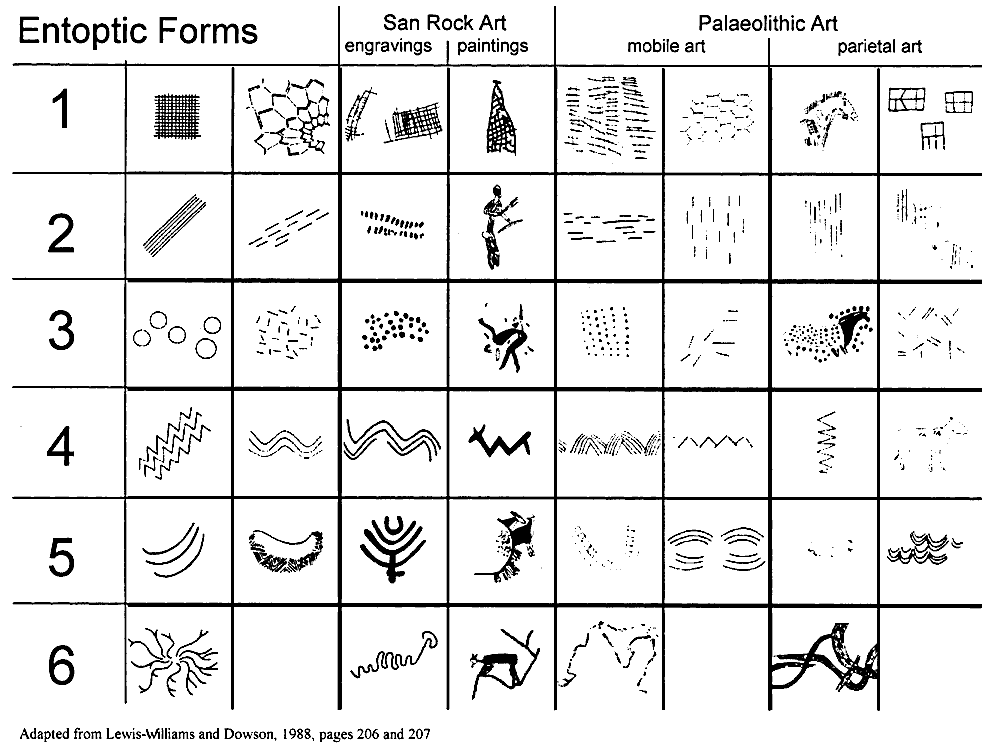
Meditation, Psychedelics and Charles Bonnet Syndrome: Some Personal Reflections on Interfacing with the Faeries

Deadbutdreaming usually attempts to interpret the faerie phenomenon from as much of an objective viewpoint as possible. The complexity of the subject matter demands an uninvolved assessment if any sense is to be made of it. But as pointed out in a previous post, the entire substance of both historic faerie folklore and modern faerie experiences is made up of subjective anecdotal testimonies; and the plural of anecdote is data. This data allows analyses. The following article is a personal testimony of my own experiences – a series of data points reliant on my own subjective memory and perception. As such, it does not provide evidence of the reality of the faerie phenomenon, but my own experiences do, I hope, add a small amount of data, which may help in the ongoing exposition of what the faeries are and why they might have been interfacing with humanity for such a long period of time. I have talked and written about some of these experiences before, but thought it might be time to round them up in one place. All my encounters with faerie-type entities have been induced by altered states of consciousness of different types, something which I believe is a strong common denominator in a majority of historic and modern testimonies. The journey begins in a Neolithic long barrow in 1996.

Meditation and the Faerie Code

In the summer of 1996 I had just completed the first year of my BA in Archaeology and History at the University of Southampton. I was using the summer break to travel around Britain and Ireland (sometimes with a good friend, sometimes alone) visiting various archaeological sites. Although I was already beginning to specialise in medieval archaeology/history, I had, for a long time, been interested in prehistory, especially the Neolithic and Bronze Age. The fossilised Neolithic landscape around Avebury, Wiltshire held a special fascination for me, and by 1996 I had already spent much time there. But my interest in such prehistoric places had shifted away from the straight materialistic study of them (as interesting as that was) and towards more esoteric interpretations of what they might represent. I had just read Michael Dames’ books The Silbury Treasure and The Avebury Cycle, and instinctively knew he was on to something, in terms of the deep, spiritual connection to the landscape the Avebury monuments and earthworks represented. So, one evening, about an hour before sunset, I found myself at West Kennet Long Barrow, enjoying the warmth of the fading day and the ambience of this amazing structure. I pitched my tent to one side of it (would I get away with this today? Probably not) and made my way into the chamber with a view to meditate, a practice that I had developed over the course of the previous year to deal with the stresses and strains of university life.

West Kennet Long Barrow is a structure built c.3,500 BCE, and, like all such barrows, was used for burials of human remains already stripped of all flesh and organs. It would also have been used for other, unknown, ritual purposes. It was excavated in the 1950s, and is one of the most complete examples of its type in Britain. It is faced with huge sarsen stones, which lead into a cave-like interior, consisting of small side chambers (where the human remains were excavated) and an end chamber about 3x3m. It’s atmosphere is very distinctive, and the scent of the damp interior stones is sometimes overbearing. I settled in the end chamber and dropped into a meditative state, hoping no other visitors would disturb me. It took me about 20 minutes to get into ‘the zone’ and relax. At this point, there was a low-level buzz, which I had experienced before when meditating. My eyes were open, and I was staring intently down the passage that lead from the entrance. And that is where the faerie appeared. A small character, about two feet tall, strode up the passage towards me, stopped about five feet away and stared at me. There was no sound apart from the continuing buzz. It stayed there for maybe ten seconds and then seemed to back away, disappearing into one of the side chambers, leaving me blinking at the light from the entrance. The whole incident lasted for no more than half a minute.

The faerie (as I thought of it then, and still do) resembled an entity illustrated by Brian Froud in his 1978 book with Alan Lee: Faeries. The image below is a close correlation. I had imbued Froud’s illustrations of faeries for several years before this incident, and had been interested in his somewhat ambiguous statements about how he viewed the entities he manifested in his artwork. So, whatever I actually experienced, was I predisposed to see this type of being while in a meditative altered state of consciousness, sitting in an ancient burial chamber? Was the experience coded to my expectations? These are questions I’ve never answered (more on this later), but the sense of presence in the chamber was overwhelming. There was no fear, perhaps due to the meditative state, only a feeling of joy, even amusement, at what I’d experienced. I felt as if the entity had sought me out and was examining me – it was as though it somehow belonged to the barrow, and was simply interested that I had turned up and tuned my consciousness into a place where it could interact with me, however briefly and with no apparent purpose. I sat there for another ten minutes, wondering if it would return, and also assuring myself that I hadn’t fallen asleep and dreamed it. But the special moment had passed. I got up, checked in the side chamber, which was empty (as I somehow knew it would be), left the barrow, got into my tent and fell asleep quickly.

An approximation of the entity I experienced in West Kennet Long Barrow, by Brian Froud

This was quite a pivotal moment in my life. Although I had been investigating Fortean and esoteric subject matter for a few years, I had never experienced anything that might be termed supernatural. But this encounter was definitive. It was a gnostic realisation, facilitated by coming face to face with a non-human intelligent entity. The intensity of the moment stayed with me for years afterwards, but I had no further similar experiences, despite spending much time at various prehistoric sites in the hope of a repeat encounter. It was only when I decided to experiment with various psychedelic compounds that I once again experienced faerie-type entities, albeit it in a very different context.

Psychedelic Faeries

Between 2000 and 2012 I took a range of psychedelics. I always did this alone, and my purpose was primarily to look within myself – it was a spiritual investigation. I was always very careful taking these substances; they should never be taken lightly, as without the proper research and understanding of what they can do to consciousness, they can be problematic. I did do my research, and over the course of that decade I took a range of psychedelic substances including LSD, psilocybin, ketamine, Salvia Divinorum, and various phenethylamines and tryptamines. The experiences, while profound, did not usually involve any type of entity encounter such as I’d experienced at West Kennet Long Barrow. Perhaps the closest I got to experiencing faerie-type entities was one night as I was sitting outside my tent while camping at Glastonbury (not the festival, but rather a small campsite just outside the town). I’d taken a rather large dose of 2,5-Dimethoxy-4-iodoamphetamine (DOI), which is one of the few psychedelic amphetamines. In a very short time, there were small humanoid creatures bustling around in the hedge next to my tent. Once again, my experience may have been coded by having recently watched the film Photographing Fairies, where the faeries are portrayed as diminutive amorphous light-beings, with insect-like buzzing wings. The entities I experienced matched this, and they were definitely diminutive humanoids buzzing around in the hedge. The experience lasted a long time, although DOI is well known for distorting time, so I cannot put a definitive time-frame on the encounter. But once again, as per the West Kennet experience, there seemed no purpose to me seeing these entities. There was no sound or communication, but there was a distinct feeling they were aware of me, and that they viewed me with amusement. At one point, a (seemingly) female faerie jumped up and down on a large leaf as if it were a springboard; apparently just for my edification. But most of the experience consisted of about half a dozen entities simply jumping, dancing, sitting and climbing in the hedge within a few feet of me. Although this experience affected me deeply, I put it aside as an unexplainable anomaly, induced by the psychedelic state. It was numinous and profound, but there seemed no meaning to it. Likewise, the brief episodes of wispy humanoid entities encountered during various other psychedelic trips were not anything I could claim to have been faerie experiences. But there is one psychedelic that is almost guaranteed to invoke an encounter with non-human intelligent entities: N, N-Dimethyltryptamine (DMT).

DMT has received much attention in recent years, and is currently being used in several clinical trials as a treatment for various mental health issues. The seminal published clinical trial using the compound is Rick Strassman’s study from the 1990s at the University of New Mexico, where sixty volunteers were given intravenous doses and their experiences recorded. The results were published in the book DMT – The Spirit Molecule in 2001. The participants in the study regularly encountered entities, ranging from giant insectoids to faeries, and often within the context of a sci-fi reality very different to our own. There have also been several surveys carried out, which record the experiences of people who have taken DMT. One of these is by the computational physicist Peter Meyer from 2006, where the anecdotal accounts are reported. Many of them include interactions with faerie-type entities, such as this one (#65), which articulates the experience beautifully:

‘This time I saw the ‘elves’ as multidimensional creatures formed by strands of visible language; they were more creaturely than I had ever seen them before. The message was changing from the initial ‘OK, OK, safe, safe… The elves were dancing in and out of the multidimensional visible language matrix, ‘waving’ their ‘arms’ and limbs/hands/fingers? and smiling or laughing, although I saw no faces as such. The elves were telling me (or I was understanding them to say) that I had seen them before, in early childhood. Memories were flooding back of seeing the elves: they looked just like they do now: evershifting, folding, multidimensional, multicolored (what colors!), always laughing, weaving/waving, showing me things, showing me the visible language they are created/creatures of, teaching me to speak and read.’

The most important aspect of the DMT experience is that the person taking it is transported into an alternative reality. This makes it different from most other psychedelics, where, despite the possibility of a radical change in consciousness, the experiencer remains rooted in consensual reality. With DMT consensual reality is simply replaced with another reality, and there are almost always non-human intelligent entities awaiting the participant.

This is what I experienced during the two times I took DMT. Within seconds of taking it, normal reality was closed down and my consciousness entered an entirely different reality, where the geometry of existence was altered. I was in a space similar to a dream, but with a hyper-reality that allowed no doubt as to its absolute substantial authenticity. The experiences were shocking – I was utterly astounded that my normality had been overhauled and replaced by it. The space was filled with metallic cubes and impossible avenues of light, all of which seemed alive with vibrancy. And, sure enough, there were inhabitants here. They were akin to the faeries I’d encountered before, but they matched the environment in being metallic and machine-like. They communicated with me somehow – not in words but in feelings, much as in a dream, overwhelming me with emotions. This communication was neither friendly nor hostile, but rather neutral – they were attempting to convey some information, but it was garbled and I felt as if I were in the presence of intelligences superior to me; who just knew more than me. I couldn’t understand what they were attempting to tell me, and I felt shame at my ineptitude. They knew this and seemed to find it amusing. The DMT experience lasts only about twenty minutes, and I felt as if I were sucked out of it back into my material reality before I’d had a chance to get used to it, or to attempt further communication with the entities I’d experienced within the DMT-space.

I’ve spent many years trying to come to terms with these experiences, and how they might relate to the faerie phenomenon. With the help of other people investigating the phenomenon from a Fortean or esoteric perspective I am starting to make sense of it, as discussed below, but beyond my meditative and psychedelic episodes with the faeries, I have also had a continuing relationship with non-human intelligent entities predicated on my loss of eyesight, which has brought me into regular contact with them.

Charles Bonnet Syndrome and the Faeries

Charle Bonnet Syndrome (CBS) is named after the Swiss naturalist, who first described the condition in 1760. The standard NHS description of CBS is that it is: ‘a condition experienced by people who are losing, or have lost, their sight. It involves seeing things which are not really there (having visual hallucinations). The hallucinations are most marked in low light or when relaxing and are often complicated scenes involving faces, children and wild animals.’ However, this is simply a description from a materialist, reductionist perspective, that assesses anything without material substance as ‘not real’. My own experiences do not feel like hallucinations, and this is a common thread of many people who have CBS visual encounters. They will frequently describe humanoid entities (sometimes cartoon-like) that appear, usually fleetingly, in what remains of their vision. But there is usually interaction with these entities, and a feeling of something real being present, much in the same way as if another person were in the space. The correspondence between these descriptions and folkloric descriptions of the faeries and modern anecdotal testimonies of a variety of supernatural beings (including, but not limited to faeries) is distinct and noticeable.

I lost most of my sight in my left eye through a central retinal occlusion in 2014. In late 2015, after knocking myself unconscious through a fall, my visual cortex was damaged and limited the vision in my right eye as well. Shortly after this the symptoms of CBS began to manifest. I had never heard of CBS, and it was only after a discussion with my then psychiatrist that I was made aware this syndrome might be causing the unusual visuals I was experiencing. I then discussed the issue with my ophthalmologist, who termed the condition Visual Release Hallucinations. An ophthalmologist will not diagnose a person with CBS/VRH as such, but mine did take the time to discuss the condition with me, explaining that it is an uncommon, but well-known symptom of people with my type of optical problems. I have regular annual ophthalmological assessments for my eyesight, and each report now contains a short section describing the continuing symptoms.

The visual entities I experience with CBS usually (though not exclusively) appear in low light, but never in total darkness, and I am always alone when they eventuate. This has happened several times a week since damaging my visual cortex in 2015. Sometimes the visuals are simple lights or smoke-like wisps, and occasionally geometric patterns, which are usually just glimpsed in my peripheral vision, last only a few seconds, and there is only a limited sense that there is something ‘present’. But often the visuals are more substantial, and will manifest as slightly cartoonish humanoid entities, frequently dressed in either archaic clothing or in garb that seems to emit a dull glow. The most fascinating aspect of these visuals is their apparent concrete reality, and even more compelling is the awareness that something is most definitely present. This usually includes a form of telepathic communication, often in the form of a series of phrases, which I never seem to be able to reply to. I can’t stress how real these communications are – as real as if someone were sitting next to me and talking.

These interactions usually last between a few seconds and several minutes. Any attempt to stare at the entities will halt the experience; they do seem to exist only in the periphery of vision. I’ve learnt to not attempt to look straight at the visuals if I want the encounter to continue. A recent example involved a small, mechanical gnome-like entity who materialised on the arm of my sofa and proceeded to communicate the repeated words: ‘Everything will be ok, let go of all anxiety… everything will be ok.’ I do realise that this sounds quite insane, and when these manifestations first began (although I was never frightened by them – they never seem to emit any hostility or malevolence, only empathy), I thought that the trauma of losing so much eyesight was taking me towards a mental breakdown. This is a common feeling of people with CBS. But after a while I just accepted the experiences as part of everyday life. I have to admit that I have come to enjoy the unusual nature of the experiences.

The voices are never present without the visuals, and it is always quite clear they are coming from the same source. Again, when this first started to happen I did a lot of research into the symptoms of schizophrenia, one of which can be hearing disembodied voices, but I quickly satisfied myself that I was not suffering from this disorder. Having spoken with several people with schizophrenia since, I have realised their experiences are very different than mine.

The CBS experiences happen probably twice a week on average, but sometimes they’ll be absent for as long as a fortnight, while other times I’ll experience them more than once a day. There is some type of link to how anxious I am feeling; they are more likely to appear during periods of anxiety. But this is not always the case – they seem to have their own timetable.

In essence, I think that perhaps CBS may be one among many ways of allowing access to non-material phenomenon. If we are willing to accept that consciousness is not an epiphenomenon of the brain (thereby allowing CBS visions to be relegated to brain-generated hallucinations), but rather that consciousness is primary, and the instigator of reality, then these visuals may be allowed to take on an autonomous reality of their own. One way of looking at it is by seeing the brain as a reducing valve of a greater consciousness (à la Aldous Huxley), and that if it becomes damaged or altered in any way, it may allow in aspects of consciousness that are usually filtered out, thereby altering the genuine perception of an ulterior or supernal reality experienced by the person with the damaged/altered brain. CBS seems to be a type of altered state of consciousness. For me, the entities experienced during CBS more often than not take a form that many people would describe as faeries. It seems to me as if a change to the brain can, under certain conditions, allow us to perceive what is usually suppressed in waking reality. Perhaps, as with my experiences with meditation and psychedelics, my long interest in faerie folklore has predisposed me to interpret the appearing entities as faeries (rather than, say, aliens or ghosts) but I cannot emphasise enough the vividness of the experiences and the apparent substantiality of the visions and the communications they impart.

Altered States of Consciousness and the Faeries

The three types of interface that have allowed me to encounter faerie-type entities – meditation, psychedelics and Charles Bonnet Syndrome – have resulted in differing phenomenological experiences. But they have all, in different ways, altered my usual state of consciousness. But why would such an altered state produce the visual and audial experience of interacting with faeries? The previously made point about my long-standing interest in faerie folklore perhaps predisposing me to interpret whatever I am experiencing as faeries is probably cardinal. This does not apply to the DMT experience, as many other users of that substance (who have not necessarily had any interest in, or knowledge of faeries) report contact with faerie-type entities. But the ontological consistency of my experiences does seem to suggest that I am encountering these beings through my own cultural and psychological lens, much as the testimonies of historic folklore were dependent on people believing in the faeries, and having an ingrained idea of what they were, how they acted and what they looked like. I am, however, experiencing something, which is, for want of a better term, supernatural. The faeries I have seen, sometimes heard, but never touched, are not part of consensus reality, and only seem to appear during an altered state of consciousness. This altered state seems to be the key to me accessing them, or for them to access me. But what are they?

In order to part-answer this question I have quoted the following assessment in several previous posts, but it remains the most succinct and viable way I have found of getting close to understanding the phenomenon. It is David Luke’s three-part interpretation (based on Peter Meyer’s original eight-points) for metaphysical entity contact. He used it to assess a study into the otherworldly beings (many of which had faerie-attributes) encountered by people who had altered their states of consciousness with DMT, but it is also a valid tool to evaluate what may be happening to anyone who reports a numinous experience that includes interaction with non-ordinary entities such as the faeries:

  1. They are hallucinations. The entities are subjective hallucinations. Such a position is favoured by those taking a purely (materialist-reductionist) neuropsychological approach to the phenomena.
  2. They are psychological/ transpersonal manifestations. The communicating entities appear alien but are actually unfamiliar aspects of ourselves, be they our reptilian brain or our cells, molecules or sub-atomic particles.
  3. The entities exist in otherworlds and can interact with our physical reality. A numinous experience provides access to a true alternate dimension inhabited by independently existing intelligent entities in a stand-alone reality, which exists co-laterally with ours, and may interact with our world when certain conditions are met. The identity of the entities remains speculative.

Of course, any one of these interpretations could be valid at different times and for various experiences. From my own experiential perspective, I find number 1 incompatible with my contacts and observations. Calling something an hallucination seems to be a reductionist get-out clause, which is the only explanation possible from a materialist perspective. Numbers 2 and 3 are, to my mind, better possible explanations for what may be happening when non-human intelligent entities are encountered, either within our physical reality or (as with DMT) within an apparent exterior reality. This does not, of course, explain what the faeries are (‘the identity of the entities remains speculative’), but it does go someway to giving an explanatory model for how we may be interfacing with forms that are not part of ordinary physical reality. Number 2 suggests the faeries are aspects of ourselves, which might explain why they appear as they do to anyone who has an interest in folklore, manifesting from within cultural and psychological belief systems. Number 3 suggests that our narrow view within the electro-magnetic spectrum is simply locking out unseen worlds and the entities that reside there, and that when our state of consciousness is altered (by whatever means) these otherworlds and entities are allowed temporary access into our physical reality, or that we are allowed access to the otherworlds.

This type of approach to understanding the faerie phenomenon seems promising, and it is something that has been gaining traction over the last decade or so. Previous to this there were very few commentators (I can only think of Patrick Harpur) who were approaching this particular subject matter from the perspective of consciousness and transpersonal studies. Perhaps this approach is the best way for us to attempt to unlock the faerie code in the future. Whatever the case, I feel blessed to have had these gnostic experiences, and I will continue to respect and appreciate the opportunities I have to interact with the faeries that have been a part of my life since that summer day at West Kennet Long Barrow in 1996.

***

The cover image shows the entrance to West Kennet Long Barrow, constructed c.3500 BCE.

Anthony Peake talks extensively about non-human intelligent entities and Charles Bonnet Syndrome in his 2019 book The Hidden Universe.

Deadbutdreaming makes it in at number 11 on the ‘Top 25 Best Folklore Blogs and Websites in 2022’ by Feedspot. There are some great resources in the list.

Dead but Dreaming the novel is available now…
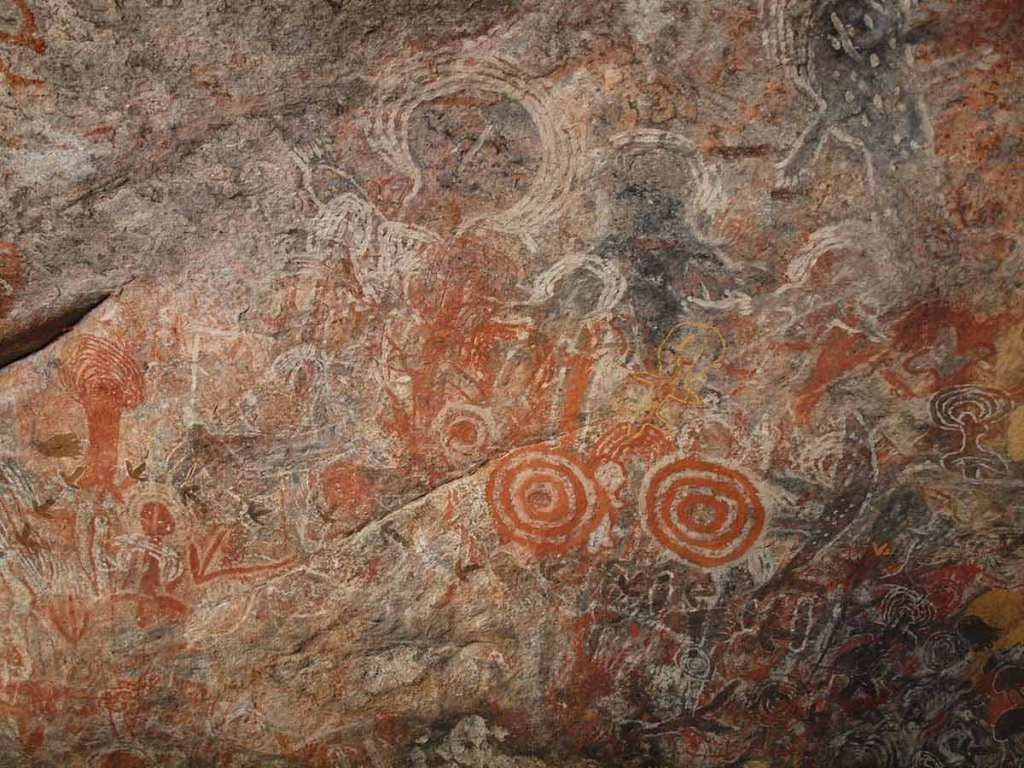
Anecdote, Perception and Data: Faerie Experiences from Multiple Observers

Any experience of, or encounter with, faerie-type entities will be anecdotal. This holds true for folkloric testimonies and modern reports. The faeries cannot be recorded via modern technology or quantitative methodology. They defy any reductionist, scientific analysis and remain a phenomenon that is wholly reliant on the perception of the observer. This creates a problem for any attempt to assess their metaphysical reality – the phenomenon is predicated entirely upon subjective experience. This should not, objectively, create a problem, as human existence is made up exclusively of subjective experiences, which may be questioned for a variety of reasons, but will most often be accepted as real. When it comes to apparently supernatural events, however, subjectivity has a bright light shone upon it, and the reductionist worldview will tend to create a series of objections to the validity of the experience. These experiences happen, almost exclusively, spontaneously, and the testimonies are then reliant upon the word of the experiencing client; the testimonies are heuristic and liable to a range of issues in memory, morality, honesty, and previous cultural worldviews. But with a large dataset stretching back over centuries (perhaps even millennia), and a continuing sample of experience reports, the anecdotes of interactions with non-human intelligent entities such as the faeries begin to take the form of a quantitative (rather than qualitative) collection. They may not be recordable, but they can be recorded, and their validation, through sheer quantity and the quality of testimony, may suggest the authenticity of the phenomenon. This phenomenon is open to a myriad of interpretations, but it is, in some metaphysical form, real, simply because it has found so many subjective attributes. There are perhaps millions of testimonies of people who have experienced faerie-type entities through history to the present day. Even though the data is entirely made up of subjective reports, it cannot be dismissed due to it not being able to be subjected to the standardised scientific method of proof by repeated experimentation. The faeries have a distinct place in many cultures around the world – they are an elusive but persistent phenomenon. This persistence suggests reality; at least a reality within human consciousness.

The frequently misquoted aphorism of the late political scientist Raymond Wolfinger is that the plural of anecdote is not data. Unfortunately, for those wanting to use the quote to dismiss anecdotal accounts simply because they are not testable quanta, the actual quote is the plural of anecdote ‘is’ data. Wolfinger’s principle becomes increasingly complex when anecdotal encounters are experienced at the same time by more than one person. Experiences of faerie encounters become much more difficult to explain away as hallucinations or as a vagary of perception or memory when there is a plurality of perception, and these examples make a small, but distinct, dataset to suggest the existence of a particular type of non-human intelligent entity, which seems to frequently interact with humanity in a variety of ways.

Multiple Perceptions of Non-Human Intelligent Entities from the Folkloric Record

Although they are in the minority, the folkloric record contains many examples of faerie-type entities experienced by multiple witnesses. As is always the case with folklore, the testimonies are often overlain with moral attributes and the need to tell a story over the top of any genuine experience. And it is also true that most folkloric faerie encounters are from the perspective of an individual. But there are enough multiple witness anecdotes to suggest the people recounting the testimonies accepted the idea that the faeries were real entities, interacting with humans, and which could be experienced contemporaneously by different people.

Perhaps the first account on record of multiple witnesses to a faerie encounter comes from the 12th century in the story of the Green Children of Woolpit (Suffolk), chronicled by Ralph de Coggeshall and William de Newburgh. This is an extremely odd encounter tale (unlike any other in medieval chronicles) and it could be argued it is not a faerie experience at all. But it remains an anomalous tale with the ring of authenticity. It certainly remains within the remit of folkloric faerie encounters. The two green-coloured children emerged from caves near the village, speaking no English, and proceeded to become a part of the community. There are diverse interpretations of the story, but both chroniclers placed the events firmly within the remit of faerie folklore. The folkorist EW Baughman suggests the story is the only example in English folklore of the motif: Inhabitants of lower world visit mortals, and continue to live with them.

In 1452, thirty-four French villagers were questioned by an ecclesiastical commission about a ‘faerie tree’ (arbor fatalism, gallide des fees) in Domrémy, as part of the process of overturning Joan of Arc’s conviction at the hands of the English/Burgundian Gestapo twenty years earlier. In the face of her inquisitors, Joan herself had offset her own belief in the faeries by apportioning it to her godmother, who had apparently seen the faeries gathering at the tree. And, even though the villagers were under no threat from the commission (quite the opposite in fact), none of the thirty-four interviewees would admit to a belief of the faeries, or that they had ever seen them at the tree. Instead, they informed the commissioners that “they had heard that in the old days faeries were said to have been seen there.” As the villagers would have been well aware of the Inquisition’s requirement for questioning of anyone who confessed to a belief in faeries, this was probably understandable. But the fact that there was a ‘faerie tree’ to begin with, suggests that there was an ingrained belief in the faeries and their penchant for gathering at a certain tree, amongst the rural 15th-century French peasantry in Domrémy. Later questioning of the villagers infers they often gathered at the tree in groups to interact with the fees, and that they were all experiencing the same phenomenon.

But it is not until the 18th and 19th centuries that we get more straight anecdotal accounts of multiple-witness faerie encounters. One fascinating encounter took place in 1757, recorded by the prominent Methodist Edward Williams (1750-1813), recalling an incident from childhood. Simon Young describes the rather frightening experience:

It was summer 1757, and about midday. At Lanelwyd House to the south of Bodfari (Wales) four children decided to play outside, as the adults prepared for lunch. The children came from two families. There was Barbara Jones (15) and her sister Ann Jones (11); Edward Williams (7) and his sister, Jane (10). The children climbed over a stile into a nearby field, Cae Caled, and set to their games when one of them noticed a group of small humans dancing about seventy yards away. At this point things began to get very strange, very quickly. The figures were ‘little bigger than we, but of a dwarfish appearance’. They wore red and had red head scarfs polka dotted with yellow. They carried handkerchiefs in their hands as they danced. This seems to have been some kind of frenetic pair dancing: our narrator compared it to Morris Dancing or May Dancing. The figures were dancing so quickly that the children had difficulty in working out how many dancers they were: there was ‘something uncommonly wild in their motions’. The children settled on about sixteen. There seems to have been no music. In fact, no noise of any kind is recorded. At this point one of the dancers broke away from the group and moved towards the children. ‘He came towards us in a slow-running pace, but with long steps for a little one.’ The children ran for the stile as quickly as they could. Edward Williams, as he sprinted off, ‘screamed exceedingly’. Tiny Edward, who recorded the episode, remembered, as an adult, the exact order in which the girls went over the stile: he arrived at the stile last as he was the slowest runner and had to wait. First went Barbara, then Ann, then Edward’s sister, then just as the ‘elf’ was arriving, Edward himself was hauled over by Jane. The dancer apparently said nothing – the silence in the account adds to the terror, at least for me – but he tried to grab Edward then leant over the stile towards the children. He had a ‘swarthy, and grim complexion’ and his skin was ‘copper-coloured’. He ‘looked old rather than young’. Williams described him as a ‘warlike Lilliputian’. The children ‘with palpitating hearts and loud cries’ ran towards Lanelwyd House. The men had already sat down to dinner and rushed out as they heard the tumult. But though the dancers had been just 150 yards from the front door they had all disappeared.

Other multiple-witness accounts from the 19th century range from incidents overlain with a folkloric tenor through to straight-up experience reports from apparently reliable witnesses. One example of the former was collected by the folklorist James Bowker and published in Goblin Tales of Lancashire in 1883. In the story Adam and Robin are walking past Langton church on a moonlit night when they hear the bells peal twenty-six times; the age of Robin. As they approach the avenue of trees leading to the church they see a small, dark figure step out of the churchyard “chanting some mysterious words in a low musical voice as he walked.” They ducked back into the trees and witnessed a faerie funeral procession singing a requiem:

… Adam and Robin saw a marvellous cavalcade pass through the gateway. A number of figures, closely resembling the one to which their attention had first been drawn, walked two by two, and behind them others with their caps in their hands, bore a little black coffin, the lid of which was drawn down so as to leave a portion of the contents uncovered. Behind these again others, walking in pairs, completed the procession. All were singing in inexpressibly mournful tones, pausing at regular intervals to allow the voice of the one in advance to be heard, as it chanted the refrain of the song, and when the last couple had passed into the avenue, the gates closed as noiselessly as they had opened. As the bearers of the burden marched past the two watchers, Adam bent down, and, by the help of a stray gleam of moonlight, saw that there was a little corpse in the coffin. ‘Robin, mi lad,’ said he, in a trembling voice and with a scared look, ‘it’s the picture o’ thee as they have in the coffin!’

Robin reaches out to touch the lead faerie. The procession immediately vanishes, and the two men run back home ashen-faced. Sure enough, one month later, Robin falls from a hay-rick and is fatally wounded. This sounds like a typical morality tale overlaying a potentially real faerie experience witnessed by two people. More prosaic, and more convincing as a straight anecdote, is the testimony (detailed by Janet Bord from an account recorded by Jonathan Ceredig Davies in Folklore of West and Mid-Wales (1911)) from 1862 of two friends, David Evans and Evan Lewis, who stopped on a hillside road in Cwmdwr (Carmarthenshire, Wales) and watched with amazement as about fifty ‘small people’ made their way up the hillside to its top 400 yards away:

The first of those who were climbing up along the winding footpath had reached a small level spot on the top of the hill. The others quickly followed him, and each one in coming to the top gave a jump to dance, and they formed a circle. After dancing for a short time, one of the dancers turned into the middle of the circle, followed by the others, one by one till they appeared like a gimblet screw. Then they disappeared into the ground. After a while one of them reappeared again, and looked about him in every direction as a rat, and the others followed him and did the same. Then they danced fo some time as before, and vanished into the ground as they had done the first time.

This mostly conforms to the common motif of faeries dancing in a circle (Aarne-Thompson Motif Index F. 261.1). Graham Hancock has utilised this folkloric example in his 2005 book Supernatural (republished this year as Visionary: The Mysterious Origins of Human Consciousness) to suggest the faeries can behave with a hive-mind, when forming these dancing circles, to achieve their purpose, even if we do not know what that purpose is. But perhaps a more important element of the anecdote is that both friends confirmed they witnessed the same event and appear to have been reliable testators.

About fifty years later, WY Evans-Wentz collected a story from County Donegal, Ireland, where one Neil Colton described an incident, which had happened during his childhood, also in the mid 19th century:

One day, just before sunset in midsummer, and I a boy then, my brother and cousin and myself were gathering bilberries (whortleberries) up by the rocks at the back of here, when all at once we heard music. We hurried round the rocks, and there we were within a few hundred feet of six or eight of the gentle folk, and they dancing. When they saw us, a little woman dressed all in red came running out from them towards us, and she struck my cousin across the face with what seemed to be a green rush. We ran for home as hard as we could, and when my cousin reached the house she fell dead. Father saddled a horse and went for Father Ryan. When Father Ryan arrived, he put a stole about his neck and began praying over my cousin and reading psalms and striking her with the stole; and in that way brought her back. He said if she had not caught hold of my brother, she would have been taken for ever.

While, once again, there is a tenor of Christian morality infused into the anecdote, the testator was deemed by Evans-Wentz (consistently a good judge of character) to have been relating an honest depiction of something that happened in the past. If the eye-witness account is given credit at face-value, the three children were all evidently experiencing the same entities at the same time. The frightening nature of the encounter, and its aftermath, may also have hardwired it into Colton’s memory in a way that a lesser, more amorphous encounter would not, thereby rendering it a relatively reliable folkloric testimony.

A final example, from the early 20th century, is perhaps the ultimate multiple-witness encounter, where tens of thousands of people observed the same phenomenon. It could be argued that this does not belong in the folkloric record, and is instead a modern Fortean phenomenon. But it does provide a segue between a traditional method of collecting anecdotal data and more modern journalistic forms of reporting potentially supernatural events. David Halpin describes the event at Fatima, Portugal in 1916/17:

In early spring 1916 three local shepherd children, Lúcia Santos and her cousins Jacinta and Francisco Marto reported that they were visited by an angel on several occasions. These visits later became known as and attributed to the Roman Catholic title – Our Lady of Fatima, or the Virgin Mary. As word of this spread, thousands of people flocked to the area to visit the children and the location of the event. It was said the visitor had promised a miracle for October 13 the following year. During the Miracle of the Sun event on October 13, 1917, over 80,000 people witnessed an event at Fatima where a bright disc-like object spun through the sky and swooped over the crowds below. The disc radiated coloured lights and is said to have emitted heat before returning to the clouds.

The encounter was appropriated by the Church as a manifestation of the Virgin Mary, but the children’s experiences with non-human intelligent entities leading up to the main event on 13 October suggests they were in contact with something that would fit well within a general framework of faerie encounters, however they were interpreted by the children and those reporting (and appropriating) the series of events. While it may be a stretch to include the encounters and events at Fatima as a multiple-observer faerie experience, it may be legitimate to suggest that the concept of what faeries are should be extended to include a range of anomalous phenomena. This comes into focus when we begin to investigate multiple-witness experiences from the 20th and 21st centuries.

Multiple Perceptions of Non-Human Intelligent Entities in the Modern Period

The well-known story of the Cottingley faeries involved sixteen-year-old Elsie Wright and her nine-year-old cousin Frances Griffiths, who, in July 1917 (a few months before the Fatima incident), claimed to have taken photographs of faeries near a brook in Elsie’s garden. The photographs were proven to have been faked by the girls, but later in life they both insisted they did encounter faeries together, and that the photographs were simply representative of their real experiences. Interestingly, when the Theosophist, and proclaimed clairvoyant, Geoffrey Hodson visited Elsie’s home in 1921, he reported that both he and the two girls observed a range of faerie-type entities in the garden, described by him as gnomes, fairies, elves, nymphs, and goblins. All three, he reported, encountered the beings together as a multiple-witness observation. Later, when the photographs were shown to be fakes, Hodson was criticised for encouraging the girls, but he insisted that what they saw during his stay was a true clairvoyant interaction with the faeries residing in the garden, and that he and the girls were observing the same phenomenon.

Another multiple-observer account, also involving children, took place in Liverpool in 1964. This was a very peculiar incident, which lasted several days and became known as The Liverpool Leprechaun Scare. It is particularly interesting as it involved a potential UFO sighting that became enmeshed in the anecdotal testimonies. Nigel Watson outlines the events in detail in an edition of Magonia Magazine in 1985. Dozens of children described seeing and chasing leprechauns in Jubilee Park to the east of the city. Watson records that: “According to the Liverpool Daily Post dated 2nd July 1964, the leprechauns were first seen on the night of Tuesday 30th June. Nobody knew how the rumour started, but one nine-year-old boy told the Post reporter, Don McKinley that ‘last night I saw little men in white hats throwing stones and mud at each other on the bowling green.'” Numerous testimonies accorded that there were ‘little green men in white hats throwing stones and tiny clods of earth at one another.’

Two weeks later the leprechauns appear to have moved north of the city to Kirkby, which is where UFOs enter the story, as described in the newspaper The Kirkby Reporter:

Flying saucers and leprechauns came to Kirkby last week – at least according to local children. What the connection was the children were not quite sure, but scores of excited youngsters invaded the Reporter offices on Friday, eager to tell they had seen both these things. A “strange object in the sky”, which changed the colour of its lights from red to silver, and was moving slowly at first, then very fast, was their description of the flying saucer. The ‘flying saucer’ faction vied with the ‘leprechaun’ group for colourful descriptions. About eight inches high, with red and green tunics, and knee-breeches, thus the ‘little people were described. And, of course, they spoke with a strong Irish brogue. The origin of the wee folk remains a mystery, but so convinced were the children that hundreds of them plagued the vicar of Kirkby (Rev. J. Lawton) by invading St Chad’s churchyard in search of the little people. At times the numbers were such that the police had to chase the children away.

There do not seem to be any adult testimonies of observing the leprechauns, but several people did report seeing strange, fast-moving lights in the sky at the time. This correlation between UFOs and faeries was first made explicit five years later by Jacques Vallée in his book Passport to Magonia, and so it is interesting that, whatever really happened in Liverpool in 1964, we have an instance of dual UFO/faerie phenomena, experienced by multiple observers several years before any considered connection was made between them.

More traditionally folkloric in tone, but just as strange is the incident of the Wollaton gnomes, which happened at Wollaton Park in Nottingham on 23 September 1979, and again involves children interacting with non-human intelligent entities. It includes various traditional folkloric faerie motifs, but is overlain with some strange and anomalous features, which give it an edge of authenticity, especially as it was reported by a group of seven children between 8-10 years, who stuck rigorously to their story even when separated and questioned by their headmaster. The consistency of their testimonies is particularly impressive, despite some of the aberrant qualities of the account. Their testimonies were recorded on tape by the headmaster a few days after the event, and the transcriptions can be found here, recorded for posterity by Simon Young.

The incident happened during the early evening, at twilight. The children were playing close to a fenced-off marshy area of the park with ponds. Without warning, there appeared about thirty small cars, each containing two gnome-like creatures, that is, with ‘bobbled nightcaps’, beards, wrinkly skin, and dressed in coloured jerkins. One of the older children described them as: ‘about half the size of me and they had long white beards with red at the bottom and they had little white and red cars and they were chasing us.’ The cars were silent and seemed able to defy the laws of physics by floating over logs on the ground. Although the gnomic cars chased the children they were consistently described as being friendly and the whole encounter seemed like a game with the gnomes laughing, although when the two youngest children fell over in the marsh they became frightened. One of the only discrepancies in the testimonies is that five of the children said the gnomes were, apart from laughing, consistently silent throughout, whereas two children described them as talking in some type of foreign language. The cars were described as having triangular lights and some sort of button instead of a steering wheel. After about fifteen minutes, soon after the two youngsters fell in the marsh, the children ran off and the gnomes disappeared back into the trees.

Both the Liverpool and Wollaton incidents might be construed as examples of mass formation psychosis among children. A kernel of an idea, involving varying types of faerie entities, may have generated a collective belief in their reality, shared by groups of children with impressionable minds. But even if there is some veracity in this concept, the testimonies (especially from Wollaton) contain phenomenological details that remain difficult to reconcile when witnessed by multiple observers, even if they were children. And (as with the Cottingley faeries) the trope of children simply having consciousnesses more open than adults to anomalous events and experiences may be an equally valid explanation. And the fact that both incidents were reported straight after the alleged encounters (as opposed to events remembered and recounted in adulthood) is an important component of the testimonies. However, there are also many examples in the modern period of multiple-witness faerie encounters among adults.

Some of these faerie encounters appear to have happened to people with avowed clairvoyant abilities. Many of the anecdotes reported by Marjorie Johnson in her book Seeing Fairies, for example, included those from her Theosophist correspondents, who may have been predisposed to believe in the existence of non-human intelligent entities. The reports were mostly from the mid 20th century. A report from Mrs Strick, for instance, recounted a walk in the Pentland Hills near Edinburgh, with her thirteen-year-old niece. She describes how they both saw faerie-type entities riding atop tiny horses in a waterfall. The small humanoids: “… waved their arms above their heads as though encouraging one another in the wild game they appeared to be playing. Then they were gone, and one had time to breathe, but only for a few moments. They appeared again and again at the top of the fall, repeated the same actions, and so it went on for, perhaps, half an hour.” She describes the profound emotional effect the experience had on them both. Johnson also recounts the extraordinary testimony of Mr F McGreal, who described an experience with his late father in County Mayo, Ireland the 1930s. They were travelling across marshy ground after leaving a cart track, but they both knew the area well and were confident of traversing the marsh to reach their home in about half an hour. But suddenly the boggy landscape became more solid:

It was very strange, and my father and I tried to get back to the cart track, but we couldn’t see any familiar landmarks… We carried on walking, but we hadn’t a clue where we were going. Father put his fingers to his mouth and gave a sharp blast like a whistle. Immediately, little brick and slate houses sprang up in all directions. Little people came out holding storm lamps and running around. I cannot recall the dress they wore, but they were approximately two feet six inches in height, and there seemed to be eight or twelve little people to each house… We would change our direction to one of the houses, but when we thought we were almost upon it, it would disappear and spring up elsewhere. This went on for some time, and I began to get afraid, but father said they were only having fun and they would not let any harm come to us.

Mr McGreal then includes the common folkloric tropes of his father turning his coat inside out and throwing it on the ground to disperse the faeries, and that the event had taken up hours of time, bringing them home late into the night. These tropes may have been layered over the experience, but the testator swore to the truth of the anecdote, which had been the same for both father and son.

As in Marjorie Johnson’s collection of faerie encounters, the more recent testimonies gathered in the Fairy Investigation Society’s survey between 2014-17 (mostly from experiences in the late 20th century through to the 2010s) by Simon Young only contain a minority of multiple-witness accounts, although there are forty out of just over 500 reports, which represents a significant dataset. Unlike in Seeing Fairies, the survey tends to include experiences from a wide range of people, who were simply responding (anonymously) to questions in the survey, and most did not suggest any clairvoyant or psychic abilities. Report #160 comes from the Isle of Man in the 1970s. The respondent is a male, then in his thirties who was travelling in a taxi across The Fairy Bridge over the Santon Burn, where it is a custom among the Manx people to greet the faeries with a wave as the bridge is crossed. The experience was shared with the taxi driver, and it is an interesting example of possible psychological suggestion, where the cogitation of faeries may have conjured up an actual encounter:

I was in a taxi driving from a farm back to my hotel in Castletown. The driver told me of the story of the Fairy Bridge and gave the greeting as we crossed it. A few minutes later I saw in the headlights and several feet ahead of the car three strange forms going across the road. They were not humanoid in shape but looked as though they were flat rather than 3D and had a jagged outline about eight inches or so high. Strangely they appeared in the headlights to be bright pink! The driver saw this too but couldn’t explain it. They were six to eight inches tall and maybe five inches broad but like a flat sheet of fluorescent pink card with jagged edges. However they moved in a procession of three from the left to the right of the country road. The comments made earlier by the driver suggested fairies but it could have been something else. This memory has lasted clearly for many years. By nature I am sceptical and I have always tried to examine things with a view to finding an explanation. I never have been able to find one for this.

Report #240, from the 2010s, describes the experience of a man in his forties with his girlfriend in a forest area in California. They had both taken a small dose of Psilocybin mushrooms, which, depending on your point of view, may either render the experience an hallucination, or mark it out as an experience facilitated by an altered state of consciousness (the fact they both saw the same being suggests the latter, as discussed below). He describes an interaction with a strange humanoid entity: “naked except for a pair of leather Celtic or pagan shorts (or maybe more like a loincloth?), like you’d see at the Renaissance Faire, and a leather vest (of similar style) that was fully open.” He had pointed ears and exuded a “glamour and repulsiveness” that marked him out as otherworldly to the respondents. Both the man and his girlfriend communicated with the entity before he “skipped away” in an unusual and prehensile way.

Report #57 describes the experience of a man in his fifties, who was walking with a friend and his dog through a woodland clearing near Chilworth in Hampshire, England in 2007. They both saw a tree: “rushing across the fields towards us, and as it crossed the path before us into the next field, I could see there was a friendly, smiling face in the bark. We both had the same experience and described it to each other in the same way. It was about ten feet tall. The dog stopped to look up at it too.” Interestingly, he also described a profound silence before the experience, a loss of a sense of time and a prickling sensation during the experience, which he felt was a display put on especially for him and his friend (and perhaps the dog).

There is also a multiple-witness report from Wollaton Park (#104C), which happened during midsummer, in the same year (1979) as the gnome incident described above. A 50-year-old male (so at the time, a few years older than the children who encountered the gnomes) recounts being with a friend in the park by a dried-out canal, at about nine in the evening:

I looked across the other side of the canal and directly opposite us was a small shiny white humanoid creature about eighteen inches high. You couldn’t see its face because it was too bright and shiny, glowing white like a light bulb but shaped like a small person. I just felt it was looking at us and standing still. my friend was really scared. He had really short hair but I can remember what bit of hair he had was sticking up on his head. I wasn’t so scared and climbed into the dried up canal with the intention of climbing up the other side to get a better look, and my friend followed. The creature then bolted into a small wooded area then out onto the big field. We chased it but it bolted too fast so we just stood there and watched it get further across the field until it disappeared out of sight. It never bothered me but it really affected my friend. He was scared of dolls and ventriloquist dummies, action man toys, anything like that afterwards. He often discussed it with me for years after and told me he could never watch a Chucky movie because dolls terrify him.

Finally, there are several modern multiple-witness accounts of faerie-type entities contained in the excellent series The Modern Fairy Sightings Podcast produced by the folklorist Jo Hickey-Hall. In episode six an Eastern European female psychologist describes how she and her sister encountered a small (c.50cm tall), white, humanoid in her house during one afternoon in 2020. She describes it as having no face, with a lean shape. It quickly passed through a corridor and past a half-open door. Intriguingly, although the encounter lasted only seconds, she felt as if it had lasted longer the entity would have manifested into something more solid. The two sisters corroborated each other’s story. In episode four a male (from an undisclosed UK location) describes seeing lights in the woods during a winter walk with a friend. When they drew closer they saw a person-sized Ent-like, spindly creature (perhaps a similar entity to the encounter in the Fairy Investigation Society’s survey described above) carrying a light and running through the woods. The friend took fright, but the testator continued to watch, and has drawn an image of the entity, which is reproduced in the show notes for the episode. And in episode eleven two females, on the way to a midsummer Wiccan ritual in a parkland near London, encountered what sounds like a classic small gnome-like entity (although the testator described it as a pixie) with pointed hat and beard. They both agreed on what they’d witnessed, but, interestingly, they took the experience in a very matter-of-fact way and simply carried on to their destination. All of these multiple-witness accounts were visual only, with no audial or tactile elements.

The Importance of Multiple-Witness Faerie Encounters

Evidently, there is a difference between folkloric multiple-witness encounters and modern experiences. The former have usually been overlain with the need to tell a story, and often with moral attributes. This does not mean they can be discounted as anecdotal data, but they are, by their nature, more dense and hidden beneath their motifs. Even the modern encounters rest beneath the vagaries of memory recall and are reliant upon the honesty of the testators. But once a large number of experiences are compiled over a long time period the plural of anecdote does become data. This also holds true for encounters from individual testators, but when more than one person observes the same phenomenon there is an increased veracity to the experience, as explanations reliant on individual hallucinations are mostly taken out of the equation. While multiple-witness encounters are in the minority of faerie experiences, they still represent a large dataset, of which, only a small number have been referenced here.

If two or more people have witnessed faerie-type entities at the same moment, then, providing the testimonies are honest, it would suggest that something real is interacting with the consciousnesses of the observers. This might be a good time to reintroduce David Luke’s three-part interpretation (based on Peter Meyer’s original eight-points) for metaphysical entity contact. He used it to assess a study into the otherworldly beings (many of which had faerie-attributes) encountered by people who had altered their states of consciousness with DMT, but it is also a valid tool to evaluate what may be happening to anyone who reports a numinous experience that includes interaction with non-ordinary entities such as the faeries:

  1. They are hallucinations. The entities are subjective hallucinations. Such a position is favoured by those taking a purely (materialist-reductionist) neuropsychological approach to the phenomena.
  2. They are psychological/ transpersonal manifestations. The communicating entities appear alien but are actually unfamiliar aspects of ourselves, be they our reptilian brain or our cells, molecules or sub-atomic particles.
  3. The entities exist in otherworlds and can interact with our physical reality. A numinous experience provides access to a true alternate dimension inhabited by independently existing intelligent entities in a stand-alone reality, which exists co-laterally with ours, and may interact with our world when certain conditions are met. The identity of the entities remains speculative.

With multiple-witness encounters, number one can be discarded. The theory of ‘mass/multiple hallucinations’ of the same phenomenon is derelict. There is no scientific basis for the idea that multiple people could individually generate the same visual imagery and auditory information. Number two is more tenable, especially if we accept that two or more people could plug into a collective unconscious at the same moment. A collective un/consciousness might allow multiple observations of the same phenomenon mediated through a transpersonal experience, where a cloud of consciousness is able to manifest any phenomenon to multiple observers. But number three would appear to answer many of the questions raised by multiple-witness encounters. If faerie entities are able to present themselves to two or more people at the same moment, it suggests they are indeed existing in a stand-alone reality, and are able to interact with humans (and perhaps animals) in our physical reality whenever certain conditions are met. These conditions may involve an altered state of consciousness, as many of the examples above suggest, but, as Luke points out, the identity of the entities remains speculative.

Multiple-witness encounters with faeries are an important part of the dataset of non-human intelligent entity experiences. While, as with all such esoteric subject matter, they need to be subjected to scrutiny and analysis, they also provide us with deep insights into what the faerie phenomenon might mean and how we may be able to get under the skin of the complexities of something that has been integrated with humanity for a very long time. The plural of anecdote is indeed data, especially when the anecdotes and data involve more than one observer.

***

* Thanks to Jo Hickey-Hall and David Halpin for advice and their expertise in the production of this article.

***

The cover image is Dancing Faeries By Johan August Malmstrom (1866).

***

Dead but Dreaming the novel is available now

.