I write about my subversive thoughts... a lot of them are about those most ungraspable of metaphysical creatures; faeries. I published my first novel in 2016, "Set the Controls for the Heart of the Sun", and my second novel was published in 2020 - 'Dead but Dreaming', where some very cosmic faeries are awaiting the protagonist at an English psychiatric hospital in 1970...
Kate Ray and I have just begun a new season of interviews on Hare in the Hawthorn, where we discuss the faerie phenomenon from a range of perspectives. I’ll add a link to each video here as we progress. So far we’ve done a few with just us introducing some themes and ideas, and our first guest this season is Dr Jack Hunter. We have a lot of excellent guests lined up for 2022, so please do go along and subscribe to the YouTube channel and click the bell for notifications whenever a new video is posted. Here are the clickable video links…
The cover image is by Brian Froud, whose artwork seems to find its way into all of our discussions. Kate and I are big fans, and his depictions of the faerie world has had an important impact on both of us.
A new publication by Simon Young, The Wollaton Gnomes: A Nottingham Fairy Mystery maps out the peculiar incident from 1979 when a group of children experienced gnome-like entities in a park in Nottingham. The book includes all the known sources, with a discussion of the data. It also has ten new essays that expound upon the incident and introduce a range of perspectives upon what may have happened. My own essay (adapted to include an introduction for anyone unfamiliar with the incident) is republished below. The discussion is curtailed somewhat, due to the word count for the publication, but there will be more lengthy articles here concerning the faeries and altered states of consciousness in the near future. Thanks to Simon for permission to share the text here at deadbutdreaming.
The Wollaton Park Incident
One of the more bizarre modern faerie encounters happened at Wollaton Park in Nottingham on 23 September 1979. It includes various traditional folkloric faerie motifs, but is overlain with some strange and anomalous features, which give it an edge of authenticity, especially as it was reported by a group of seven children between 8-10 years, who stuck rigorously to their story even when separated and questioned by their headmaster. The consistency of their testimonies is particularly impressive, despite some of the aberrant qualities of the account. Their testimonies were recorded on tape by the headmaster a few days after the event, and the transcriptions can be found here, recorded for posterity by Simon Young.
The incident happened during the early evening, at twilight. The children were playing close to a fenced-off marshy area of the park with ponds. Without warning, there appeared about thirty small cars, each containing two gnome-like creatures, that is, with ‘bobbled nightcaps’, beards, wrinkly skin, and dressed in coloured jerkins. One of the older children described them as: ‘about half the size of me and they had long white beards with red at the bottom and they had little white and red cars and they were chasing us.’ The cars were silent and seemed able to defy the laws of physics by floating over logs on the ground. Although the gnomic cars chased the children they were consistently described as being friendly and the whole encounter seemed like a game with the gnomes laughing, although when the two youngest children fell over in the marsh they became frightened. One of the only discrepancies in the testimonies is that five of the children said the gnomes were, apart from laughing, consistently silent throughout, whereas two children described them as talking in some type of foreign language. The cars were described as having triangular lights and some sort of button instead of a steering wheel. After about fifteen minutes, soon after the two youngsters fell in the marsh, the children ran off and the gnomes disappeared back into the trees.
The Wollaton Park incident is certainly one of the most intriguing modern encounter reports of faerie-type entities. If we consider the gnomes the children reported as part of a taxonomy of faeries, then the testimony joins the ranks of thousands from both folklore and modern experiences. Many experience reports are from childhood, usually (unlike with the Wollaton children) recalled in adulthood. When this is the case, we need to take into account the vagaries of memory, and how any incident is recalled. The plasticity of memory appertaining to any eye-witness event is a well-studied psychological trait. The psychologist Elizabeth Loftus conducted an in-depth study of how people remembered automobile accidents at various times after the event, concluding that: “findings seem to indicate that memory for an event that has been witnessed is highly flexible. If someone is exposed to new information during the interval between witnessing the event and recalling it, this new information may have marked effects on what they recall. The original memory can be modified, changed or supplemented.” This is, of course, unavoidable in any testimony of a past incident. In some ways, a non-ordinary supernatural event may be less prone to plasticity as it is likely to be a special event, detached from the everyday. Its unconventionality may burn it into memory in a more exacting way and its recall be more reliable than for that of a more commonplace occurrence. But potentially numinous incidents, such as encounters with supernatural entities, may also be subject to increased amounts of reconstitution, where the experiencer attempts to make subsequent rationalisations of the event and even suppress aspects of what has happened in order to codify it to accepted social and cultural belief systems.
So, with these caveats in mind, It is worth exploring how such non-human entity encounters may occur, and why there seems to be a relative prevalence of childhood experiences involving faeries. The gnomes in the Wollaton encounter seem to adhere to a fairly traditional folkloric appearance, but, of course, their levitating cars give them some modern cultural coding. If the incident is taken at face-value it could be seen as an updated version of many folklore anecdotes and stories that involve wizened gnomic faeries, behaving in a slightly irrational manner. Their manifestation in woodland and at dusk also locks in with the usual habitat and aphotic preferences of folkloric gnomes. Their materialisation to children is also important. The transcripts clearly demonstrate that the children, whilst startled by the encounter, were able to accept it without the rationalisation that might be expected of an adult. They viewed it as weird, but not unnatural. Perhaps this was simply a case of the children tuning into to the gloaming, woodland atmosphere and experiencing a non-material reality, acculturated for them by their watching (the very hallucinogenic) Big Ears and Noddy on the television. This state of mind of the children, coupled with their relative lack of (adult) cultural coding, is important. It may be contended that children are more easily able to enter an altered state of consciousness and participate in a non-local reality, which may possibly include supranatural entities such as the Wollaton gnomes.
Children and Faeries
Tales about children interacting with faeries in the historic folklore are relatively rare. The 19th- and early 20th-century collectors, such as Hunt, Campbell, Carmichael and Evans-Wentz did not record testimonies or stories from children, and only occasionally recounted remembered anecdotes from adults. But artwork depicting faeries from the same period often showed children interacting with the entities, and JM Barrie’s stage plays and novels in the first decades of the 20th century suggest an intrinsic understanding that there was an immutable link between children and faeries. This was demonstrated most famously in the story of the Cottingley faeries. In 1917, sixteen-year-old Elsie Wright and her nine-year-old cousin Frances Griffiths took photographs of what they claimed to be faeries, located in the grounds of Elsie’s family home in Cottingley, Yorkshire. Four of the five photographs were subsequently shown to be faked by the girls, who used cut-outs from illustrations from Princess Mary’s Gift Book, although the fifth photograph is more ambiguous, and Elsie always claimed it was not manufactured. Perhaps the most interesting part of the Cottingley story is that the girls, while later admitting to faking the images, claimed that they were only attempting to represent what they really saw in the gardens. When the theosophist and proclaimed clairvoyant, Geoffrey Hodson, visited the girls in 1921 he claimed that ‘both he and the girls regularly observed gnomes, fairies, elves, nymphs, and goblins.’ To the end of their lives in the 1980s, both Elsie and Frances insisted they had interacted with faerie entities at Cottingley over the course of five years.
By the mid 20th century, anecdotal experience reports similar to the Cottingley testimony (although without the photographs) were beginning to be collected by organisations such as the Fairy Investigation Society, which had been founded in 1927 (disbanded in 1932 but re-founded after the Second World War). These differed from the folkloric testimonies of earlier periods in that they were rarely overlain with any type of narrative story, but instead consisted of simple encounter reports. One of the most complete collections is that of Marjorie Johnson (secretary of the Fairy Investigation Society from 1950), which was finally published as Seeing Fairies. This included accounts of several hundred faerie encounters, mostly from Britain, and many of them were from children, albeit recalled at a later date. Johnson was a believer in the faerie phenomenon and had many personal experiences, but in Seeing Fairies she mostly recounted the testimonies of people who had written to her with minimal editorial input or interpretation. It is noticeable that many of the childhood recollections referenced gnome-like entities, such as the testimony recounted (in the third-person by Johnson) from Kent, England by Felicity Royds recalling an experience from when she was nine years old:
“Felicity found she had left some object – her coat or a toy – in the rose garden, and was sent back alone to fetch it. The rose garden was surrounded by thickyew hedges, and at the end of it was a cast-iron gate leading into a thicket of rhododendrons. The object, which she had gone to fetch, was on the grass near this gate, and she had just retrieved it and was turning away, fearful of what may come out of the bushes, when she saw coming through the gate a small man leading a light brown horse. The man was shorter than Felicity and appeared to be wearing a blue tunic with something white at the neck. His skin was very brown, browner than his hair. The pony was about the size of a Shetland but very slender. Although she did not feel frightened, Felicity did not look at the man directly, only out of the corner of her eye. He put his hand on her wrist, and his touch was cool, not cool like a fish or a lizard, but much cooler than a human touch. He led her out of the rose garden and onwards until they were within sight of the house, and then stood still while she went in. She said that she was not musical, but while he held her hand she seemed to be aware of a strain of music that was sweet and high but sounded rather unfinished.”
The tactility of this encounter is rare; most experiences are visual and audial only (as per the Wollaton gnomes). But (as elaborated on in the next section) some of Johnson’s correspondents suggest their encounters involved extra-sensory numinous perception, such as Clara Clayton, who recounted experiences throughout her life in Nottinghamshire, including as a child, when one day:
“I found myselfin the presence of a little green gnome on a hill. His face was serious, and he looked anxiously from side to side. Then he beckoned to me, and as he went suddenly through the ground like a fish swimming through water, he changed to the colour of earth and he moved easily through soil, rock etc. I followed him with my inner vision until he ceased his downward journey and showed to me his particular place of work.”
The faerie gnome showed her how he fashioned earth and minerals before the experience ended in a sudden blackout.
In the 2014-17 survey by Simon Young of the Fairy Investigation Society there were thirty-four testimonies from adults recounting faerie experiences from when they were under ten, and seventeen from teenage recollections (all anonymised). There is a great divergence of faerie entity types, although several described the entities as gnomes, such as this experience (#18) from a thirteen year-old girl in Cornwall:
“We’d been on holiday in Cornwall before, and had joked about the ‘Little People’ who lived in the tin mines etc… The first proper day of our holiday we went for a walk on a clear sunny day. It was very rural; I remember we were walking down a grassy track with large banks of wild hedges running alongside. It could’ve been somewhere near Polperro. I was walking a few steps ahead of my mum and sisters, excited about having a whole week off, when I saw a gnome sitting by the side of the path. It was so unexpected; I think I remember feeling scared – or wondering if I was seeing things or going mad? I took another couple of steps and I saw his nut brown wizened face in detail. He was cheekily grinning at me. He had a mossy brown beard and dark brown shining eyes; he was wearing a peaked hat (brown) and a shiny jacket and trousers in shades of brown and ochre. I’d say he was about twelve- to fourteen-inchestall. I could not believe my eyes. I was even too amazed to turn around and tell my family to ‘look at the gnome’ by the path. Then the gnome cocked his head (again, cheekily), turned his back on me and kind of changed/melted (transmogrified?) into an old tree stump. This must’ve all happened in a second, just as I found the breath to say ‘Mum! Look…!’ But, of course, there was nothing to see but a tree stump. I felt really stupid then, so I muttered something non-consequential as we walked past. I was almost panicking, trying to make sense of what I had just witnessed. I was quite shaken. It was a breathtaking experience.”
And this testimony (#10) from an undisclosed location in England:
“[I was] walking home in woodland after building den with friends. [I] was nine at the time. I came around a tree and saw two small creatures two-feet high sitting on a stump. [They] appeared to be carrying small canes and dressed in brown cloaks. Watched them for short time, they saw me then vanished. [They were] thin, two-foot tall, longish arms and legs [with] pale faces.”
While the previous caveats of distorted memories must be taken into account, it is important to note that the correspondents not only took the time to reply to the survey, but that many of them described the events as cardinal points in their lives. The survey also asked respondents to report their state of mind at the time of the encounter. In a majority of cases (both adult encounters and adults recalling childhood memory) the experiencers appears to have been in some form of changed mood from their usual, everyday disposition. They seem, in effect, to have been in an altered state of consciousness.
Altered States of Consciousness and Experiencing Faeries
Faerie encounters reported by adults in adulthood, may seem to be potentially more authentic than something recalled from childhood. While the same issues of memory refraction apply, the time depth is not as great, and the anecdotal episodes will perhaps be given more credence. It is also noticeable that many faerie experiences, both in the historic folklore and in modern testimony, suggest the participants have, in some way, altered their states of consciousness and thereby allowed in the entity encounter. The extreme end of consciousness alteration might be seen as using psychedelics. There are thousands of experience reports across a range of platforms and publications, as well a several clinical studies, which describe radically altered states of consciousness brought on by a variety of psychedelic compounds, many of which involve encounters with non-human intelligent entities, which fall within a faerie taxonomy. These reports are fascinating testimony and suggest that whatever the encountered entities are, a fundamental change in consciousness may increase our chances of interacting with them. One of the most dramatic psychedelic experiences can be induced by injecting or smoking N,N-Dimethyltryptamine (DMT). Probably the most famous promulgator of the DMT experience was the late Terence McKenna, who coined the term self-transforming machine elves for the entities he often encountered during his many DMT trips: “Trying to describe them isn’t easy. On one level I call them self-transforming machine elves; half machine, half elf. They are also like self-dribbling jewelled basketballs, about half that volume, and they move very quickly and change. And they are, somehow, awaiting. When you burst into this space, there’s a cheer!” Since McKenna was experimenting with DMT there have been several experience surveys, which suggest that faerie-type entities (whether hallucinations, part of a transpersonal reality, or from a standalone reality outside our own), are regular characters within a DMT trip.
One of the most comprehensive surveys is from 2006, collated by the computational physicist Peter Meyer. ‘340 DMT Trip Reports’ documents what Meyer describes as, “reports which attest to contact with apparently independently existing intelligent entities within what seems to be an alternate reality.” The 340 (anonymous) reports certainly contain many encounters with faerie-type entities, most often described as elves. Forty-six of the reports describe encountering faeries/elves. One of the most interesting brings us to an important link between an adult altered state of consciousness and a child’s perspective. Respondent no. 65 had taken an unknown dose of DMT:
“This timeI saw the ‘elves’ as multidimensional creatures formed by strands of visible language; they were more creaturely than I had ever seen them before. The message was changing from the initial ‘OK, OK, safe, safe… The elves were dancing in and out of the multidimensional visible language matrix, ‘waving’ their ‘arms’ and limbs/hands/fingers? and smiling or laughing, although I saw no faces as such. The elves were telling me (or I was understanding them to say) that I had seen them before, in early childhood. Memories were flooding back of seeing the elves: they looked just like they do now: evershifting, folding, multidimensional, multicolored (what colors!), always laughing, weaving/waving, showing me things, showing me the visible language they are created/creatures of, teaching me to speak and read.”
The statement that the elves were reminding the experiencer of childhood is interesting. The idea that children are less indoctrinated with a materialistic value system, and are therefore more able to experience a supernal reality is a commonplace motif. In this testimony the encounter may be integrating the memory of a suppressed childhood reality, and bringing it into the present via DMT.
But altered states of consciousness come in many forms, most less dramatic than DMT episodes. In the Fairy Investigation Society’s survey respondents were asked about their mood before and during the experience. In those who answered a majority reported a particular consciousness state, such as: content, anxious, carefree, pensive etc. This suggests they deemed their consciousness state during the experience as in some sense different from their usual everyday state. These mild altered states can be akin to daydream states or even hypnagogic episodes, when consciousness begins to let in what is usually filtered out, sometimes involving non-human intelligent entities. Whether these modes of consciousness may be in a hallucinatory state, conducting transpersonal information, or letting in ulterior entities from their own standalone reality, there seems to be a consistency in the experiences of faerie-type entities being witnessed by people in non-ordinary states of consciousness, however that state has been achieved, and however it is defined.
Were the children at Wollaton Park in an altered state of consciousness? It seems possible; the experience took place at dusk in a place that was fenced and off-limits. The twilight effect on consciousness and the sense of subversiveness in their actions might have skewed their usual take on the electro-magnetic spectrum. The cartoon ambience of the episode may have been the children’s cultural overlay on the true nature of the phenomenon. Perhaps children are more prone to slipping into altered states of consciousness and witnessing entities while there, but it is quite clear that most modern reports of faerie encounters are by adults. This might be due to most children’s testimonies being dismissed and unrecorded, and childhood recollections from later in life being written off as false memories. This makes the testimonies from the children who experienced the gnomes in Wollaton Park so important, as they were transcribed shortly after the incident, and seem to be honest reports. This modern folklore from the mouths of children is quite a rarity. Whether the children of Wollaton had their experience because their consciousness had been altered, cannot be conjectured. But many modern testimonies of faerie encounters stress a changed state of mind during the experience important enough to remember and to mention in a survey. An altered state of consciousness may not be the primary cause for all modern faerie encounters, but it may be the reason for the majority of experiences.
***
The cover image is by Brian Froud from his classic 1978 illustrated collection with Alan Lee, Faeries.
Simon Young’s The Wollaton Gnomes: A Nottingham Fairy Mystery is available now. It is the most comprehensive source for the incident and contains many references to follow up. The ten new essays are written by folklorists, Forteans and fairyists, and provide new insights into how such experiences may help us to understand the faerie phenomenon.
Recently, I came across a post on the excellent Facebook page Ridgeways and Ancient Tracks of Britain by an acquaintance of mine, Steve Halton (Steve has agreed for his real name being used here). It is a fascinating experience, which might be construed as a faerie encounter, although, as you will see, there are other interpretations for what may have happened. Steve’s experience joins a growing number of reports of possible interactions with faerie-type entities in recent years, exemplified in The Fairy Investigation Society’s recent survey, as well as in many other sources. Testimonies of faerie encounters may have been common in folkloric motifs, but since the late 20th century they have been among the most taboo of paranormal experiences, garnering ridicule and derision, in a way that, for example, encounters with UFOs or ghosts do not. In the last decade or so this has begun to change, as more people become aligned with the possibility that the faeries (in whatever guise) may represent a coded manifestation of human consciousness made available in certain states of consciousness, or that they are even incorporeal non-human intelligent entities, interacting with our own physical reality when certain conditions are met. However, there is still a strong reductionist instinct to write off such experiences, and many people coming forward with their testimonies wish to remain anonymous (all the respondents to the Fairy Investigation Society’s survey were guaranteed anonymity) for fear of negative reaction. It still takes an amount of fortitude to admit to a belief that a genuine faerie encounter has happened. So, while the following description may or may not be a faerie experience, Steve’s testimony is brave. There were many comments on his Facebook post, most positive and apparently freeing the commentators to recount their own similar stories. But in a small minority there were the inevitable detractors, mocking in tone and sanctimonious in their perceived superiority of knowledge about how our consensus reality works. It made me think that perhaps there is an exponentially larger number of faerie-type encounters than reported in the literature and online, but that many people will simply not want to put their head above the parapet for fear of socio-cultural castigation. Again, I think this attitude is modifying, and if the plural of anecdote is data, then the collation of these experiences may lead to a greater understanding of what the faeries are, and are not. Below is Steve’s testimony, with a commentary afterword.
I am going to talk about an experience I had about twenty years ago (when I was thirty), on the Icknield Way, which is as clear today as it was then. I have only told a couple of close friends and I am genuinely convinced that what I saw was real. I have spent most of my life on the Bedfordshire chalk downlands. I am an ecologist, wildlife artist and writer on wildlife and landscapes. I am also very sensitive and intuitive to nature and landscapes, and I believe that there is still a lot more around us than can be explained by science.
One evening I was walking my dog among a stretch of the Icknield Way between Hitchin (Pirton) and along the crest of Deacon and Pegsdon Hills, following the Bedfordshire/Hertfordshire boundary. I know the area very well and was a volunteer warden on Pegsdon Hills Nature Reserve. It was mid May, warm, still and sunny. Part of the stretch forms a ‘green lane’ about 20ft wide with with thick hedges each side and, one on side was a ditch about 10-12ft feet wide and about 4-5ft deep, overhung with tangled hawthorn, blackthorn, wild clematis and with mature ash trees overhead.
There were no other people around but as I climbed up the hill I could smell andsee smoke. I came across several people who were camping in the ditch. I then realised with absolute astonishment that they looked really ‘odd’. They were small in height and size and most appeared very old and wrinkled – as if they had lived outside all their lives. They were weathered looking with dark or grey hair, tied back. There were about ten or twelve of them in total; men and women. At least two of the women were nursing babies, well wrapped up. I did not notice any children. The tents were very small, brown, very old looking and appeared to be of leather. Most of the tents had small fires outside with cooking utensils hanging over the fires.
They all looked really ancient; looks, clothes, apparel, utensils etc. Like someone out of a Robert Holdstock novel such as ‘Myathgo Wood’ or ‘Lavondyss’, if you know his incredible writings. No-one talked but I do remember smiling at a couple of the women and they smiled back to me with gappy grins. I couldn’t believe what I had seen. They were obviously planning to spend the night and, first thing next morning, I went straight back to have a look and there was not a sign; no fires, no signs whatsoever, although the soil under the trees and scrub had been kind of ‘swept’ clear. They were obviously very used to living close to nature.
Who were they? I thought that they were maybe some kind of ‘underground movement’ of people walking and living the old trackways in more modern times but have found no indication that this happens. Did I go through some kind of ‘time slip’ into another time period? Did my sensitive mind ‘pick up’ on some lingering memories of ancient times? I have carried this incredible experience all my life; I now live in north Pembrokeshire and still work both in science and the arts (with degrees in both subjects) but can never, ever forget that astonishing dusk when I saw people from another age right in front of me (and my dog) using a major ancient trackway in a way that it has probably always been used. I know it was real – of that I have no doubt. I swear that I saw and experienced this incident and wanted to genuinely share this because I have no one satisfactory explanation for what I saw that evening. Maybe I should just leave it as a very special experience meant for me alone…?
This encounter is fascinating at many levels. Steve does not relate it as a distinctive faerie encounter, and makes the conjecture of it perhaps being a time-slip. This is a possibility, but even then, the characters have a somewhat non-human element to them, bringing up the mind-bending idea that they were faeries from the past, being witnessed in the present. There is also the issue of memory, and how a recollection of a past event can become malleable. Even the most scrupulously honest recall of an event is still subject to the vagaries of memory. The plasticity of memory appertaining to any eye-witness event is a well-studied psychological trait. The psychologist Elizabeth Loftus conducted an in-depth study of how people remembered automobile accidents at various times after the event, concluding that: “findings seem to indicate that memory for an event that has been witnessed is highly flexible. If someone is exposed to new information during the interval between witnessing the event and recalling it, this new information may have marked effects on what they recall. The original memory can be modified, changed or supplemented.” This is, of course, unavoidable in any testimony of a past incident. In some ways, a non-ordinary supernatural event may be less prone to plasticity as it is likely to be a special event, detached from the everyday. Its unconventionality may burn it into memory in a more exacting way and its recall be more reliable than for that of a more commonplace occurrence. But potentially numinous incidents, such as encounters with supernatural entities, may also be subject to increased amounts of reconstitution, where the experiencer attempts to make subsequent rationalisations of the event and even suppress aspects of what has happened in order to codify it to accepted social and cultural belief systems. This is (and always has been) an unavoidable component of folklore. It does not, however, discredit the experience.
Knowing the author of this encounter, I am convinced he is accurately recalling a numinous experience, made more convincing by his return the next day to check out the site. The ‘swept’ nature of the camp appears to have been manufactured just for him. But how did the experience happen and what was Steve really witnessing? While not deliberately altering his state of consciousness, it seems reasonable that walking a dog at evening time in a relatively isolated part of the countryside may have been enough to produce a meditative, even trance-like state of mind, which can induce an alteration to everyday waking consciousness. Many folkloric and modern faerie encounters are preempted by the participant entering a focussed state of mind different from their usual disposition. Once this is achieved, the ability to tune in to non-normal levels of reality may be allowed. It is noticeable in the Fairy Investigation Society’s survey that in the majority of reports, the respondents described emotional perturbance prior to an experience. This was sometimes negative, as in grief, sadness, depression etc. and at other times more positive feelings of contentment, calmness or relaxation. It might also be noted that many descriptions of alien abductions occur when the witness is either in a sleepy, hypnagogic state or driving along a monotonous highway, possibly inducing a hypnotic state. Steve’s state of mind may not have been altered in such an extreme way, but it may have been tweaked just enough to allow him to witness something beyond the bounds of consensus reality.
What he actually witnessed must remain a mystery. As is usually the case in modern faerie encounters, the experience was visual. There was no tactility and, in this case, no audial interaction. This suggests a fragile communication that is only operating within a limited frame. For instance, while all senses may operate within a dream, it is clear that the dreaming mind is predominantly based on vision and audio (always infused with intangible feeling). This is not to suggest that Steve’s experience was a dream, but rather that it was akin to a dream state, whereby entities not usually allowed into consensus reality can manifest, and make themselves apparent within an individual’s consciousness. His consciousness was altered, however slightly, and it experienced entities that were either removed in time or dimensional locality, or maybe both. Whatever the interpretation, the experience is important and helps lead us down the road to a deeper understanding of consciousness and the potential ways it can interact with ulterior forms of being.
***
The cover image is The Gnomes’ Soup by Heinrich Schlitt (1849-1923).
Deadbutdreaming has discussed the case of the 1979 Wollaton gnomes incident previously, but I have only recently come to know Dan Green, who has been carrying out further investigations for some time now. Lately, Dan has been involved with a dowsing project at Wollaton, which is discussed in this article. The 1979 episode is a fascinating incident, and clearly there is something numinous happening at this location, which involves manifestations and encounters with faerie entities, from at least the beginning of the 20th century through to the present day. The original article can be found here, and thanks to Dan for allowing it to be republished at deadbutdreaming.
Wollaton Park is a 500-acre park in Nottingham, England, centred on Wollaton Hall, a classic Elizabethan prodigy house. It is additionally famous for the filming there of key scenes in the final movie of the Batman trilogy The Dark Knight Rises in 2011, the Hall being featured as Wayne Manor. Wollaton Park is also known, although not so widely, for one other thing; people keep seeing faeries there, gnomes to be exact…..
Wollaton Hall and Park
On 23rd September 1979, at about 20:15 on the evening of the Autumnal equinox, several young children witnessed a number of gnome-like figures leaping over fallen logs in small cars (with no sound of engines), coming from out of the bushes in a swampy part area south of the lake there. This is the sort of account you would expect children to have made up, but the story eventually made it onto national news in the UK, owing to the fact that when interviewed separately all the children managed to remain consistent in their account in a situation whereby you would expect young fabricators to fall apart under the psychology of intense adult scrutiny.
A gnome and his car drawn by one of the children
Casually and without worthy of a mention, the children had glimpsed the gnomes in the same place six weeks earlier. In the summer of 2021 I tried to locate these children, now adults, to see if they would still stick with their story, or come clean about a hoax. An appeal in the local newspaper in Nottingham and local BBC Radio brought no result. Were they hiding away, or had they moved county? Another Wollaton Park account, chronicled in the excellent 2017 Fairy Census – an attempt to gather, scientifically, details of faerie sightings from the last century through to today – detailed how another young witness had also seen a number of laughing gnomes driving around in little cars that seemed to hover above the ground jumping over logs and fallen trees, the cars making a buzzing humming noise. He had been so scared that he hid up a tree. Yet another account from a contributor witness mentions seeing a ‘small, shiny white humanoid creature about 18 inches tall about half a mile away from the Wollaton Park main gates at a dried out canal.’
The 1979 location
Interestingly enough, two years prior to the 1979 encounter, upon Studham Common in Berkshire, another group of children witnessed, during a school lunch break, what they described as a ‘little blue man about 3 foot tall’ in the low valley of Dell, a place surrounded with bushes and trees. Like the Wollaton affair, the children were taken seriously by their sympathetic school teacher.
Wollaton Park, however, has a history of fairy sightings, as collected in the book Seeing Fairies by Marjorie Johnson, who herself thought that there were an ancient tribe of gnomes in the park. In 1900 a woman, whilst passing by the gates at the park, saw ‘little men, dressed like policemen standing just inside the lodge entrance, height between 2-3’. She also recalled fairies having been seen dancing around the lake.
As rationally-thinking beings, what are we to make of all of this? Are so many individuals years apart and of different ages all simply lying, deluded or somehow being mistaken? In both the Wollaton and Studham accounts involving children there were multiple witnesses, which rules out an individual having a hallucination. Is it, perhaps, a case of where gnomes-like figures play on repeat, similar to what is called ‘Stone Tape Theory’, a recording of an event playing out what the earth has recorded? Are the Wollaton gnomes showing us an event? It is well chronicled that children see faeries and that faerie activity is tied to a spot, or what might be considered their territory.
My investigation inspired a lady member of an assembly of credible dowsers familiar with the area and also sympathetic to faerie attunement, therefore with a degree of psychic ability, to visit the area south of the lake where the 1979 encounter is thought to have taken place, and information arrived at by her methods had this to say: ‘The gnomes are only allowed to play after dark as the Fae regard them as troublesome elementals and have confined them to inside a mound to the south of the lake during the day. They come out of hollows in the base of the trees and whizz down the slope in their little cars into the open area at the edge of the lake.’
Assisted by other members of the group upon a later visit, the consensus is that the whole area may have been a sacred landscape in ancient times. I wondered, imaginatively, if the place name ‘Wollaton’ as it is currently pronounced and enunciated, may have been an age old corruption for HOLLOW-ton, bearing in mind the association with faeries appearing from hollows in trees, or even, perhaps, ‘HOLE-aton’, a crude reference to a ‘hole’ or portal through which the faeries manifest. The hall itself is built on a mound with a huge amount of pure water beneath suggesting it may once have been a holy well. Even earlier, dowsers have reported finding the energy signature of an old church under the eastern corner of the hall with the suspicion that several megaliths may be buried underneath.
The Fairy Mound, and a tree hollow
Does the belief system of a dowser combine with what is lurking in their subconscious and so largely dictate what they dowse? To dowse something you have to first visualise it in your mind, so if you are trying to find water you visualise an underground stream and walk along asking to be shown that until the rods react.
Ghost or UFO encounters are usually given more credibility but when we speak of faeries it is usually treated with absolute scepticism, disregard and laughter, and yet researchers for some time now have shown that whatever phenomenon is at play here, it has slowly, over centuries evolved from angels to faeries and now, Ufonauts and extraterrestrials, in that order. On many occasions the encounters blur between faerie and UFO representation, and are hard to distinguish although small entities are a common denominator. However, and it was to my surprise, faerie sightings now seems to be on the ascension again, or at least more people are daring to report them. It is beginning to look like whatever unknown and beyond the normal senses phenomenon we are dealing with will present itself to an onlooker in the best way they might like to comprehend, expect, resonate or be able to understand in appearance. Historically, faerie folklore was the originator of the ‘shape-shifter’ capability of such otherworldly beings. Interestingly, and perhaps significantly here on a much deeper level than simply gnomes in cars, the Egyptian word ‘Ka’ means ‘soul’ or ‘spirit’.
Enid Blyton’s Noddy – totally fictional or an unconscious representation of the Faeries?
I was intrigued by what is clearly an outrageous account of suddenly appearing gnomes driving what might be their own version of our cars. I know of no known record of faerie folk associated with such a means of transport. Were they mimicking what they had seen from our own society and presenting them for our benefit? One of the child witnesses from 1979 said that the gnomes reminded him of Noddy, reminding me of the work of the inspirational world’s best-selling authoress Enid Blyton who back in 1949 gave us this fictional character and whose best friend, Big Ears, is a gnome. Blyton often wrote about children being transported into magical worlds in which they met with faeries, and in 1923 published a collection of 33 poems entitles ‘Real Fairies’.
One wonders, did the Wollaton children have Noddy and Big Ears and his adventures lodged in their mind prior to their sighting? It is quite feasible that they will have come across his books as even younger children. Noddy drives a car, not unlike the ones described at Wollaton. As I am aware of how often the unconscious mind surfaces in the world of art, literature and even in all of us all of the time, I wondered if perhaps this had happened to Blyton and the source material for her fictional Noddy had been borrowed from an actual realm of faerie without her knowledge. Noddy even has a policeman friend, reminding me of the sighting of ‘small policemen’ near the Park gates (as recorded by Marjorie Johnson from the 1950s). All this then had me then musing about when a Victorian, and often gnome-like Santa and his sleigh also motorised.
19th-century Santa and his cars
As I accept that all things are connected I often like to have fun trying to work out my own involvement in things, and so with Wollaton I came up with the following. David Bowie recorded a novelty song in 1967 called ‘The Laughing Gnome’. I met with Bowie in 1978. His record label up until 1983 happened to be RCA records, RCA easily being rearranged to read ‘Car’. One of David’s closest friends was the musician and singer Marc Bolan (with whom I’ve also had dealings) whose Faerie influence was pervasive; in fact he liked being known as ‘The Boppin’ Elf’. Marc even died in a tragic car crash. He is best remembered for his band’s dinosaur titled T-Rex. When I visited Wollaton Park this summer it was their opening week of displaying an extraordinary exhibition showcasing the first Tyrannosaurus Rex to be displayed in England for over a century! Keeping within the music industry, one of the founder members of the British soul ban Hot Chocolate was bass player Patrick Olive – the same name as one of the Wollaton children – and their record label was another simple anagram of ‘Car’ this time RAK.
A Mithraic Temple under the Hall?
Perhaps this had been my entanglement? I also thought about what deeper circumstance than imagined had drawn the gothic Batman movie to be filmed at Wollaton Hall, and that it had been pointed out to me there is an underground reservoir or well hewn out of sandstone under the Hall. There is no doubt that it at least resembles a Mithraeum, a sanctuary or temple of the god Mithras and the Mithraic mysteries. Although it is always hard to distinguish fact from hearsay, it has been whispered that the infamous 18th-century ‘Hell Fire Club’, exclusive for high society rakes, met at Wollaton Hall.
The Dowser group told me that there are 10-12 ley lines that radiate out from a sundial behind the Hall, one of them going along an avenue of trees to reach the slope where the gnomes came down, its energy flowing fast from the Hall and up onto the faerie mound. Perpendicular to this, is another, running along the bottom of the mound. Where these two energies collide seems to announce where the ‘gnome’ encounter occurred.
Research shows that on 23 September 1979 the Autumn Equinox was at 04:19, sunset at 19:02, dusk at 19:36, and a setting moon at 20:04 (two days after the New Moon) therefore it would have been very dark. My dowser friends surmise as a possibility that combined effects of the Equinox sunset, moonset, marsh gases and fluctuating earth energies may have caused an ‘energetic phenomena’ rationalised by the children with Blyton memories of Noddy, his car and gnome accomplice.The dowsers have also informed me that there is a huge amount of paranormal activity and detrimental energy associated with the Hall, purposely disrupted or manipulated. The Hall apparently, and if so, curiously, has 365 windows and 52 doors. Perhaps it was more than a routine accident that whilst preparing for the filming of the Dark Knight Rising (once operating under the working title of Magnus Rex) a large tractor-trailer crashed into the main entrance of the Hall.
Had some of those troublesome elementals been playing out after all….?
***
Dan discusses the Wollaton gnome incident with Kate Ray and myself on Kate’s YouTube channel Hare in the Hawthorn.
Simon Young’s transcript of the 1979 incident can be found here.
Thanks to Kate HareGirl Ray for inviting me on to her You Tube channel to discuss my interaction with, and writing about, the faeries. We chatted for over an hour but only scratched the surface of the phenomenon. The discussion covers my own background and how I came to form an interest in faerie folklore, our personal experiences, the connection of faeries with certain landscapes and environments, the role of altered states of consciousness in faerie interaction, and how I’ve deepened my understanding of the phenomenon through Charles Bonnet Syndrome. We finish off talking about my novel Dead but Dreaming. Kate’s a very easy-going interviewer and it was a pleasure to chew the cud. Please do subscribe to her channel, as she has accumulated a large number of excellent interviews on the subject, from a wide variety of perspectives. Here is the link to the interview:
I recently came across an excellent post on the blog site Strange Company, which is compiled by investigator of literary and historical esoterica Undine. It’s entitled The Case of the Levitating Butler and recounts a strange tale recorded by the 17th-century Latitudinarian Joseph Glanvill in his Saducismus Triumphatus (1681). As you will see, it includes several folkloric faerie motifs, even though the faeries are never mentioned by name. My assessment of the testimony follows Undine’s text…
———-
The Case of the Levitating Butler
A typical morning for a member of the gentry in the 17th century: get out of bed, yawn, stretch, ask the missus how many of the servants died of plague during the night, notice that the butler’s levitating in the parlor again…
… No, really.
The following tale was published by Joseph Glanvill in his influential 1681 book on demonology, Saducismus Triumphatus: one afternoon, an Irish gentleman “near to the Earl of Orrery’s seat,” sent his butler to buy cards. As the servant passed a field, he was puzzled to see a company of people in the middle of the grassland sitting at a table loaded with “a deal of good chear.” As he approached the group, they rose and invited him to join them. However, one of the party whispered to the butler, “Do nothing this company invites you to.”
Sensing this was good advice, the butler declined to sit at the table. Then, the table suddenly disappeared, and the group began dancing and playing musical instruments. Again, they asked the butler to join their revelry. When he repeated his refusal, “they fall all to work.” When working proved no better lure than feasting or dancing, the thwarted company vanished before the butler’s eyes. The servant hurried home, in “a great consternation of mind.” As soon as he entered his master’s door, he fainted. When he came to, he related his unsettling experience to the household.
The following night, one of the company appeared at the butler’s bedside. The visitor warned that if the butler left the house the next day, he would be carried away. He obeyed this warning, but towards evening, a call of nature compelled him to venture just outside the threshold, with several members of the household standing guard over him. The moment he stepped outside, a rope suddenly appeared around his middle and he was dragged off “with great swiftness.” The others followed after him as quickly as they could, but they were unable to overtake him. When they saw a horseman coming their way, they “made signs to him to stop the man, whom he saw coming near him, and both the ends of the rope, but nobody drawing.” When the horseman grabbed one end of the rope, the other end gave him a “smart blow” across his arm. Despite this, he was able to halt the butler’s spectral abduction and return him home.
When the Earl of Orrery heard of these peculiar events, he had the beleaguered butler sent to him. The servant mournfully told him that “his spectre” had visited him again. He was to be kidnapped again that very day, and there was nothing anyone could do to prevent it. The butler was kept in a large room, with many people around to protect him, including two bishops and a neighbor, “the famous stroker, Mr. Greatrix.” [Note: Valentine Greatrakes was a renowned Irish faith healer, known as “The Stroker.”]
All was quiet for most of the day, but that afternoon, the butler was seen to rise in the air. Although several of the men grabbed his shoulders and tried weighing him down, all their strength was unable to anchor him. The poor butler was carried over everyone’s heads for a considerable period of time. When he eventually fell to the ground, his companions were able to cushion the descent enough to prevent any injury.
The rest of the day passed without further incident. The Earl ordered two of his servants to spend the night with the butler, in case there was any new trouble. The next morning, the butler informed the Earl that “his spectre” had visited him during the night. He tried to awake his bedfellows, but was unable to stir them.
The “spectre” told the butler that he had no cause to fear him. He explained that he was the man in the field who warned him against the rest of the company. If the butler had not listened to him, he said, the servant would now be entirely under the company’s power. The ghost assured the butler that there would be no more attempts to abduct him. As he had heard the butler was “troubled with two sorts of sad fits,” he presented a wooden dish containing a “grey liquor,” and told the servant to drink it.
When the butler refused, the wraith grew angry. But as he had “a kindness” for the butler, he advised him to take plantain juice. It would cure one of his “fits,” but he was doomed to carry the other to his grave.
“That of the leaves or roots?” the butler asked. “Roots” replied this spectral dietitian.
The ghost asked whether the butler did not know him? When the servant replied in the negative, his visitor explained, “I have been dead seven years, and you know that I lived a loose life. And ever since have I been hurried up and down in a restless condition with the company you saw, and shall be to the day of judgment.” He added that if he had acknowledged God, he would not have “suffered such severe things.” The apparition concluded, “You never prayed to God that day before you met with this company in the field, and also was then going about an unlawful business.”
On that chiding note, the spirit vanished.
Perhaps the strangest part of our little tale is that it is so well-attested. “Mr. Greatrix,” Lord Orrery, and the numerous other eyewitnesses to all this splendid nuttiness repeatedly affirmed every detail, flying butlers and all.
I really do not know what to say about the whole matter. Except that if you should ever happen to come across a bunch of strangers having a dinner party in the middle of a field, it would be best to run in the other direction. They might turn out to be very Strange Company indeed.
————
Folkloric Coding
As with any historical narrative detailing anecdotal events, allowance needs to be made for the folkloric skew, which requires a good story to be told. Glanvill’s primary motive in the Saducismus triumphatus was to recount tales of witchcraft and ghostly apparitions, with a remit to prove they were true, and that there was a malign supernatural force operating in the world. There are many stories in the tract, most of which he appears to have collected from secondary sources and taken at face value, before applying his own belief-system on them; a belief-system that always came to the conclusion that the stories were evidence of supernatural activity, most often instigated by witches. But, as with any folklore, this does not discredit the core of the story. While Glanvill was collating anecdotes recounted by other people, he does describe his sources, and in this particular example, he appeared to have received the tale from a primary witness.
The levitation description is interesting, and not a common trope in historical or folkloric recounts. Probably the most famous historical levitator is the Franciscan St Joseph of Copertino. Michael Grosso has described how this 17th-century friar frequently levitated in front of numerous, reliable eye-witnesses. But it is not a common motif in the folkloric record. However, the motif of meeting strangers in a field, who attempt to draw the protagonist into the fold is a mainstay of folklore (encompassed in the Aarne-Thompson motif index as F.263 and F.361.15). The faeries will often bring a wanderer into their midst with varying techniques and results. Perhaps the most common motif is the dancing circle, where the protagonist of a story is drawn into the circle of faeries and then held in a different space-time continuum until released. But almost as frequent is the folklore describing people finding themselves amidst a faerie feast. When this happens, the primary objective is to not taste any food or drink, which will invariably lead to the human becoming trapped in the faerie dimension.
In Glanvill’s testimony the butler is invited to join the ‘company of people in the middle of the grassland.’ He is saved from making a mistake, which may entrap him, by what later turns out to be the spectre, who warns him to ‘Do nothing this company invites you to.’ It is interesting that Glanvill never describes these entities as faeries. In fact, he does not refer to the faeries at all during his entire treatise. This is unusual for a commentator of his time, especially as ‘the company’ were evidently displaying classic faerie-type behaviour. Glanvill was well-versed in the traditions of witches, as understood in the 17th century, and must have been aware of their tight relationship with the faeries. His reluctance to mention the possibility of the company in the field being faeries can perhaps be explained by his need to keep his tract focussed on witches and ghosts as the main arbiters of supernatural mischief.
Also interesting in the narrative is that the butler was subject to ‘two sorts of sad fits,’ as revealed by his spectral interlocutor. This might suggest an insertion into the story (by design or osmosis) of a code to explain the events. The ‘fits’ could be anything, but comparing this type of language to another 17th-century story of interaction with faerie entities, that of Anne Jefferies, it might be possible to suggest the butler was subject to some form of epilepsy, perhaps Temporal Lobe Epilepsy, which may explain his supernal experiences, brought on by an altered state of consciousness.
If his experience in the field with the company of entities may have been induced by an altered state of consciousness, this does not explain the witnessing of his levitation by several people. But again, this may be more folkloric coding, whereby the witnesses are introduced into the story to give credence to an event that actually happened in the consciousness of the protagonist. It is impossible to get under the skin of the progression of the anecdote and, as with most folklore, especially from this period, there are unspoken layers that have become buried and difficult to unearth. As Undine points out, Glanvill was careful to insist on his verification of the events from primary witnesses, but the need for the author to prove supernatural interference for his thesis must be taken into account, and codes his text.
Finally, there is the ‘plantain juice’ or ‘grey liquor’, which the spectre insists the butler should consume for his ‘fits’. Within the story, this comes at the wrong point to suggest it had any effect on the butler’s state of consciousness in regards the strange events. In fact, there seems little relevance to its introduction. But this may, again, be due to the skewing of the folkloric elements of the tale, and may also be using the common medicinal herb Plantago major as code for something more potent and mind-altering. Contemporary witch-trial reports often obfuscated the types of plants and mushrooms the witches were using in order to alter their states of consciousness and connect with faeries and familiars, and travel to Sabbaths in what may have been akin to out-of-body experiences. They were often described simply as ‘unctions’, ‘potions’ or ‘salves’, which may have been a catch-all for entheogens such as henbane and psilocybin. If the butler had actually consumed such an entheogen before his experiences, there would, perhaps, be a more co-ordinated explanation for what happened to him.
Despite Glanvill not once mentioning the faeries as characters within the story, this anecdote is clearly deeply embedded with faerie motifs. It might even be suggested that the ‘spectre’ is a faerie character, which may tie in to the belief that the faeries are in fact The Dead. The relationship between levitation and the faeries requires more investigation. While there are many instances in folklore (and modern reports) of the faeries defying gravity, there is little to suggest they may invoke levitation in humans. That is why this story from Glanvill’s Saducismus Triumphatus is so interesting and unusual.
Thanks to Undine for allowing the republication of their article.
I was recently invited on to three podcasts to discuss the faerie phenomenon. As always, it is more difficult to articulate thoughts about such a complex subject when under the pressure of immediate response, compared to having time to formulate ideas in a blog post. But the format of a podcast does have an immediacy about it, which creates a level of authenticity. The phenomenon runs at different levels, and sometimes it is healthy to meet with different responses to it in real time.
The first podcast is from Anthony Peake’s Consciousness Hour – In Conversation. Anthony is a prolific and astute writer about a range of subject matter, centring around consciousness and how we perceive reality. His most recent book is Hidden Universe: An Investigation into Non-Human Intelligences. He has been conducting podcasts for many years, and has recently introduced the in-conversation format, which allows for a more informal, long-form discussion about the subject at hand. These are produced with Sarah Janes, who adds an extra dimension to the discussions. This podcast (first broadcast on 1 March 2021) covers much ground, but centres around how the faeries are experienced during altered states of consciousness. This ranges from the faeries in folkloric records through to my own experiences of them, most especially due to Charles Bonnet Syndrome. But we also stop off for an interesting chat about solipsism and the nature of a DMT experience. The podcast can be found here:
The second podcast is from Cliff Dunning’s Earth Ancients site, broadcast on 13 March 2021. We were restricted to an hour, but a lot was packed in, including a tangent off into the murky territory of the alien abduction phenomenon, and how it might relate to faerie folklore. The interview (audio only on Spreaker) starts at about 37.20.
The third podcast is with the folklore researcher Jo Hickey-Hall, who has been producing an excellent series of interviews on her Modern Fairy Sightings Podcast. We talk about some of her interviewees’ experiences, as well as my own, and take a deep dive into what they might be saying about consciousness and the faerie phenomenon.
The fourth link is something quite different. A few years ago I wrote an article about the strange and compelling story of Anne Jefferies from the 17th century. Her well-documented case describes her journey into a faerie-inhabited otherworld on the back of what seems to have been an epileptic episode. I have only recently discovered that Madame Raven has turned this into a video. She has done a fabulous job with it, bringing it to life with beautiful diction and her own take on the story. Here it is…
I have a few more podcasts in the diary over the next couple of months, but there has been a dearth of articles posted here since the Autumn of 2020, which I hope to put right during the Spring months. The faeries will continue to be investigated, whatever the cost.
The cover image is by Brian Froud (who is discussed in all three podcasts) from his seminal book with Alan Lee from 1978: Faeries.
Deadbutdreaming is delighted to welcome the author Mike Jay as a guest contributor. Mike has written extensively on scientific and medical history. His books on the history of drugs include High Society: Mind-Altering Drugs in History and Culture and his most recent Mescaline: a Global History of the First Psychedelic. In this article he investigates early reports of mushroom-induced trips and how one species in particular became established as a stock motif of Victorian fairyland. It’s an insightful dive into the topic and thanks to both Mike and Adam Green (Editor-in-Chief/Co-Founder of The Public Domain Review) for permission to republish.
The first recorded mushroom trip in Britain took place in London’s Green Park on October 3, 1799. Like many such experiences before and since, it was accidental. A man identified in the subsequent medical report as “J. S.” was in the habit of gathering small field mushrooms from the park on autumn mornings and cooking them up into a breakfast broth for his wife and young family. But this particular morning, an hour after they had finished it, everything began to turn very strange. J. S. noticed black spots and odd flashes of colour interrupting his vision; he became disorientated and had difficulty in standing and moving around. His family were complaining of stomach cramps and cold, numb extremities. The notion of poisonous toadstools leapt to his mind, and he staggered out into the streets to seek help, but within a hundred yards he had forgotten where he was going, or why, and was found wandering in a confused staBy chance a physician named Everard Brande was passing through this part of town, and he was summoned to treat J. S. and his family. The scene he witnessed was so unusual that he wrote it up at length and published it in The Medical and Physical Journal a few months later.1 The family’s symptoms were rising and falling in giddy waves, their pupils dilated, their pulses fluttering, and their breathing laboured, periodically returning to normal before accelerating into another crisis. All were fixated on the fear that they were dying except for the youngest, the eight-year-old son named as “Edward S.”, whose symptoms were the strangest of all. He had eaten a large portion of the mushrooms and was “attacked with fits of immoderate laughter” which his parents’ threats could not subdue. He seemed to have been transported into another world, from which he would only return under duress to speak nonsense: “when roused and interrogated as to it, he answered indifferently, yes or no, as he did to every other question, evidently without any relation to what was asked
The first recorded mushroom trip in Britain took place in London’s Green Park on October 3, 1799. Like many such experiences before and since, it was accidental. A man identified in the subsequent medical report as “J. S.” was in the habit of gathering small field mushrooms from the park on autumn mornings and cooking them up into a breakfast broth for his wife and young family. But this particular morning, an hour after they had finished it, everything began to turn very strange. J. S. noticed black spots and odd flashes of colour interrupting his vision; he became disorientated and had difficulty in standing and moving around. His family were complaining of stomach cramps and cold, numb extremities. The notion of poisonous toadstools leapt to his mind, and he staggered out into the streets to seek help, but within a hundred yards he had forgotten where he was going, or why, and was found wandering in a confused state.
By chance, a physician named Everard Brande was passing through this part of town, and he was summoned to treat J. S. and his family. The scene he witnessed was so unusual that he wrote it up at length and published it in The Medical and Physical Journal a few months later.1 The family’s symptoms were rising and falling in giddy waves, their pupils dilated, their pulses fluttering, and their breathing laboured, periodically returning to normal before accelerating into another crisis. All were fixated on the fear that they were dying except for the youngest, the eight-year-old son named as “Edward S.”, whose symptoms were the strangest of all. He had eaten a large portion of the mushrooms and was “attacked with fits of immoderate laughter” which his parents’ threats could not subdue. He seemed to have been transported into another world, from which he would only return under duress to speak nonsense: “when roused and interrogated as to it, he answered indifferently, yes or no, as he did to every other question, evidently without any relation to what was asked”.
Dr Brande diagnosed the family’s condition as the “deleterious effects of a very common species of agaric [mushroom], not hitherto suspected to be poisonous”. Today, we can be more specific: this was intoxication by liberty caps (Psilocybe semilanceata), the “magic mushrooms” that grow plentifully across the hills, moors, commons, golf courses, and playing fields of Britain every autumn. The botanical illustrator James Sowerby, who was working on the third volume of his landmark Coloured Figures of English Fungi or Mushrooms (1803), interrupted his schedule to visit J. S. and identify the species in question. Sowerby’s illustration includes a cluster of unmistakable liberty caps, together with a similar-looking species (now recognised as a roundhead of the Stropharia genus). In his accompanying note, Sowerby emphasises that it was the pointy-headed variety (“with the pileus acuminated”) that “nearly proved fatal to a poor family in Piccadilly, London, who were so indiscreet as to stew a quantity” for breakfast.
Tab 248 from James Sowerby’s Coloured Figures of English Fungi or Mushrooms (1803). The mushrooms numbered 1, 2, and 3, are all liberty caps — Source.
Brande’s account of the J. S. family’s episode continued to be cited in Victorian drug literature for decades, yet the nineteenth century would come and go without any clear identification of the liberty cap as hallucinogenic. The psychedelic compound that had caused the mysterious derangement remained unknown until the 1950s when Albert Hoffman, the Swiss chemist who discovered LSD, turned his attention to the hallucinogenic mushrooms of Mexico. Psilocybin, LSD’s chemical cousin, was finally isolated from mushrooms in 1958, synthesised in a Swiss laboratory in 1959, and identified in the liberty cap in 1963.2
During the nineteenth century, the liberty cap took on a different set of associations, derived not from its visionary properties but its distinctive appearance. Samuel Taylor Coleridge seems to have been the first to suggest its common name in a short piece published in 1812 in Omniana, a miscellany co-written with Robert Southey. Coleridge was struck by that “common fungus, which so exactly represents the pole and cap of Liberty that it seems offered by Nature herself as the appropriate emblem of Gallic republicanism”.3 The cap of Liberty, or Phrygian cap, a peaked felt bonnet associated with the similar-looking pileus worn by freed slaves in the Roman empire, had become an icon of political freedom through the revolutionary movements of the seventeenth and eighteenth centuries. William of Orange included it as a symbol on a coin struck to celebrate his Glorious Revolution in 1688; the anti-monarchist MP John Wilkes holds it, mounted on its pole, in William Hogarth’s devilish caricature of 1763. It appears on a medal designed by Benjamin Franklin to commemorate July 4, 1776, under the banner LIBERTAS AMERICANA, and it was adopted during the French Revolution by the sans-culottes as their signature bonnet rouge. It was these associations — rather than its psychoactive properties, of which he shows no knowledge — that led Coleridge to celebrate it as the “mushroom Cap of Liberty”, a name that percolated through the many reprints of Omniana into nineteenth-century British culture, folklore, and botany.
Left: Benjamin Franklin’s commemorative medal “Libertas Americana”, 1782 — Source; Right: William Hogarth’s 1763 caricature of John Wilkes with pole and cap of liberty — Source.
While the liberty cap’s “magic” properties seemed to go largely unacknowledged, the idea that fungi could provoke hallucinations did begin to percolate more widely in Europe during the nineteenth century — though it became attached to a quite different species of mushroom. In parallel to a growing scientific interest in toxic and hallucinogenic fungi, a vast body of Victorian fairy lore connected mushrooms and toadstools with elves, pixies, hollow hills, and the unwitting transport of subjects to fairyland, a world of shifting perspectives seething with elemental spirits. The similarity of this otherworld to those engendered by plant psychedelics in New World cultures, where psilocybin-containing mushrooms have been used for millennia, is suggestive. Is it possible that the Victorian fairy tradition, beneath its innocent exterior, operated as a conduit for a hidden tradition of psychedelic knowledge? Were the authors of these fantastical narratives — Alice in Wonderland, for example — aware of the powers of certain mushrooms to lead unsuspecting visitors to enchanted lands? Were they, perhaps, even writing from personal experience?
The J. S. family’s trip in 1799 is a useful starting point for such enquiries. It shows liberty caps were growing in Britain at the time, and commonplace even in London’s parks. But also, the trip evidences that the mushroom’s hallucinogenic effects were unfamiliar, perhaps even unheard of: certainly unusual enough for a London physician to draw them to the attention of his learned colleagues. At the same time, however, scholars and naturalists were becoming more aware of the widespread use of plant intoxicants in non-western cultures. In 1762 Carl Linnaeus, the great taxonomist and father of modern botany, compiled the first-ever list of intoxicating plants: a monograph entitled Inebriantia, which assembled a global pharmacopoeia that extended from Europe (opium, henbane) to the Middle East (hashish, datura), South America (coca leaf), Asia (betel nut), and the Pacific (kava). The study of such plants was emerging from the margins of classical studies, ethnography, folklore, and medicine to become a subject in its own right.
The interest in traditional cultures extended to European folklore. A new generation of folklore collectors, such as the Brothers Grimm, realised that the migration of peasant populations to the city was dismantling centuries of folk stories, songs, and oral histories with alarming rapidity. In Britain, Robert Southey was a prominent collector of vanishing folk traditions, soliciting and publishing examples offered by his readers. The Victorian fairy tradition, as it emerged, was imbued with a Romantic sensibility in which rustic traditions were no longer coarse and backward but picturesque and semi-sacred, an escape from industrial modernity into an ancient, often pagan land of enchantment. The subject lent itself to writers and artists who, under the guise of innocence, were able to explore sensual and erotic themes with a boldness off limits in more realistic genres and to reimagine the muddy and impoverished countryside through the prism of classical and Shakespearian scenes of playful nature spirits. The lore of plants and flowers was carefully curated and woven into supernatural tapestries of flower-fairies and enchanted woods, and mushrooms and toadstools popped up everywhere. Fairy rings and toadstool-dwelling elves were recycled through a pictorial culture of motif and decoration until they became emblematic of fairyland itself.
Illustration by Richard Doyle from his In Fairyland: A Series of Pictures from the Elf-World (1870) — Source.
This magical allure marked a shift from previous depictions of Britain’s fungi. In herbals and medical texts from the Renaissance onwards, they had typically been associated with rot, dung-heaps, and poison. The new generation of folklorists, however, followed Coleridge in appreciating them. Thomas Keightley, whose survey The Fairy Mythology (1850) exerted much influence on the fictional fairy tradition, gives Welsh and Gaelic examples of traditional names for fungi which invoke elves and Puck. In Ireland, the Gaelic slang for mushrooms is “pookies”, which Keightley associated with the elemental nature spirit Pooka (hence Puck); it’s a term that persists in Irish drug culture today, although evidence for pre-modern Gaelic magic mushroom use remains elusive. At one point Keightley refers to “those pretty small delicate fungi, with their conical heads, which are named Fairy-mushrooms in Ireland, where they grow so plentifully”.4 This seems to describe the liberty cap, though Keightley, like Coleridge, focuses on the physical appearance of the mushroom and appears unaware of its psychedelic properties.
Despite its ubiquity, and occasional and tentative association with nature spirits, the mushroom that became the distinctive motif of fairyland was not the liberty cap but rather the spectacular red-and-white fly agaric (Amanita muscaria). The fly agaric is psychoactive but unlike the liberty cap, which delivers psilocybin in reliable doses, it contains a mix of alkaloids — muscarine, muscimol, ibotenic acid — which generate an unpredictable and toxic cocktail of effects. These can include wooziness and disorientation, drooling, sweats, numbness in the lips and extremities, nausea, muscle twitches, sleep, and a vague, often retrospective sense of liminal consciousness and waking dreams. At lower doses, none of these may manifest; at higher doses they may lead to coma and, on rare occasions, death.
Watercolour depiction of the fly agaric, 1892. Likely painted at an art class near Bristol, England, the writing says “Agaricus muscarius” and “Leigh woods Sept/92” — Source.
Unlike the liberty cap, the fly agaric is hard to ignore or misidentify, and its toxicity has been well established for centuries (its name derives from its ability to kill flies). One could argue then that this aura of livid beauty and danger would alone be enough to explain its association with the otherworldly realm of fairies. Yet at the same time its mind-altering effects were becoming more widely known, not from any rustic tradition in Britain but from the discovery that it was used as an intoxicant among the remote peoples of Siberia. Sporadically through the eighteenth century, Swedish and Russian explorers had returned from Siberia with travellers’ tales of shamans, spirit possession, and self-poisoning with brightly-coloured toadstools; but it was a Polish traveller named Joseph Kopék who was the first to write an account of his own first-hand experience with the fly agaric, which appeared in an 1837 publication of his travel diary.
In around 1797, after he had been living in Kamchatka for two years, Kopék was taken ill with a fever and was told by a local of a “miraculous” mushroom that would cure him. He ate half a fly agaric and fell into a vivid fever dream. “As though magnetised”, he was drawn through “the most attractive gardens where only pleasure and beauty seemed to rule”; beautiful women dressed in white fed him with fruits, berries, and flowers. He woke after a long and healing sleep and took a second, stronger dose, which precipitated him back into slumber and the sense of an epic voyage into another world. He relived swathes of his childhood, re-encountered friends from throughout his life, and even predicted the future at length with such confidence that a priest was summoned to witness. He concluded with a challenge to science: “If someone can prove that both the effect and the influence of the mushroom are non-existent, then I shall stop being defender of the miraculous mushroom of Kamchatka”.5
Illustration of a Siberian Evenki shaman from Nicolaas Witsen’s Noord en Oost Tartarye (1705) — Source.
Illustrations by Ivan Bilibin for an 1899 edition of the Russian fairytale Vasilisa the Beautiful. On the left we see the supernatural being Baba Yaga, the ground strewn with fly agarics, and on the right the heroine Vasilisa outside Baba Yaga’s hut, the border decorated prominently with liberty caps and what look to be fly agarics — Source.
Kopék’s toadstool epiphany was one of several descriptions of fly agaric use by Siberian peoples that were widely reported in various learned journals and popular works throughout Europe in the late eighteenth and nineteenth centuries.6 Such accounts began a fashion for re-examining elements of European folklore and culture and interpolating fly agaric intoxication into odd corners of myth and tradition. This is the source of the notion that the Berserkers, the Viking shock troops of the eighth to tenth centuries, drank a fly agaric potion before going into battle and fighting like men possessed, regularly asserted not only among mushroom and Viking aficionados but also in text-books and encyclopaedias. There is, however, no reference to fly agaric, or indeed to any exotic plant stimulants, in the sagas or Eddas: the theory of mushroom-intoxicated Berserker warriors was first suggested by the Swedish professor Samuel Ödman in his Attempt to Explain the Berserk-Raging of Ancient Nordic Warriors through Natural History (1784), a speculation based on the eighteenth-century reports from Siberia.
By the mid-nineteenth century, then, the fly agaric had become synonymous with fairyland. The mushroom had also, in the guise of the Siberian sources, been claimed as a portal to the land of dreams and written into European folklore. Exactly to what extent and in what manner these two cultural journeys of the fly agaric are intertwined is hard to pin down. Long before the Siberian accounts, in both art and literature, mushrooms of all sorts are depicted as part of fairyland. In Margaret Cavendish’s mid-seventeenth-century poem “The Pastime of the Queen of Fairies”, a mushroom acts as Queen Mab’s dining table, and in late eighteenth-century paintings by Henry Fuseli and Joshua Reynolds, the mushroom acts as a surface upon which fairies, sprites, and similar assemble. Such a presence of mushrooms in supernatural worlds might suggest a concealed or half-forgotten knowledge of hallucinogenic mushrooms in British culture. However, these fungi do not resemble fly agaric (or any other hallucinogenic mushroom) and, of course, for small woodland creatures the large splay of a mushroom would seem like natural furniture. It is only in the Victorian era, post-Siberian tales, that an hallucinogenic mushroom establishes itself so firmly in Britain as the stock mushroom of fairyland.
Titania’s Awakening (ca. 1785) by Henry Fuseli — Source.
Gnome transporting a fly agaric mushroom, from a German New Year’s card, ca. 1900 — Source.
Let us turn now to the most famous and frequently-debated conjunction of fungi, psychedelia, and fairy-lore: the array of mushrooms and hallucinatory potions, mind-bending and shapeshifting motifs in Alice’s Adventures in Wonderland (1865). Do Alice’s adventures represent first-hand knowledge of hallucinogenic mushrooms?
The scenes in question could hardly be better known. Alice, down the rabbit hole, meets a caterpillar sitting on a mushroom, who tells her in a “languid, sleepy voice” that the mushroom is the key to navigating through her strange journey: “one side will make you grow taller, the other side will make you grow shorter”. Alice takes a chunk from each side of the mushroom and begins a series of vertiginous transformations of size, shooting up into the clouds before learning to maintain her normal size by eating alternate bites. Throughout the rest of the book she continues to take the mushroom: entering the house of the Duchess, approaching the domain of the March Hare, and, climactically, before entering the hidden garden with the golden key.
Lewis Carroll’s illustration of the caterpillar scene from his original manuscript of the story. There’s nothing here to suggest it is meant to be a fly agaric — Source.
Since the 1960s this has often been read as an initiatic work of drug literature, an esoteric guide to the other worlds opened up by psychedelics — most memorably, perhaps, in Jefferson Airplane’s psychedelic anthem “White Rabbit” (1967), which conjures Alice’s journey as a path of self-discovery where the stale advice of parents is transcended by the guidance received from within by “feeding your head”. This reading is often dismissed by Lewis Carroll scholars,7 but medication and unusual states of consciousness certainly exercised a profound fascination for Carroll, and he read about them voraciously. His interest was spurred by his own delicate health — insomnia and frequent migraines — which he treated with homoeopathic remedies, including many derived from psychoactive plants such as aconite and belladonna. His library included books on homoeopathy as well as texts that discussed mind-altering drugs, including F. E. Anstie’s thorough compendium, Stimulants and Narcotics (1864). He was greatly intrigued by the epileptic seizure of an Oxford student at which he was present, and in 1857 visited St Bartholomew’s Hospital in London in order to witness chloroform anaesthesia, a novel procedure that had come to public attention four years previously when it was administered to Queen Victoria during childbirth.
Nevertheless, it seems unlikely that Alice’s mind-expanding journeys owed anything to the actual drug experiences of their author. Although Carroll — in daily life the Reverend Charles Dodgson — was a moderate drinker and, to judge by his library, opposed to alcohol prohibition, he had a strong dislike of tobacco smoking and wrote sceptically in his letters about the pervasive presence in syrups and soothing tonics of powerful narcotics like opium — the “medicine so dexterously, but ineffectually, concealed in the jam of our early childhood”.8 Yet Alice’s adventures may have their roots in a psychedelic mushroom experience. The scholar Michael Carmichael has demonstrated that, a few days before he began writing the story, Carroll made his only ever visit to Oxford’s Bodleian library, where a copy of Mordecai Cooke’s recently-published drug survey The Seven Sisters of Sleep (1860) had been deposited.9 The Bodleian copy of this book still has most of its pages uncut, with the exception of the contents page and the chapter on the fly agaric, entitled “The Exile of Siberia”. Carroll was particularly interested in Russia: it was the only country he ever visited outside Britain. And, as Carmichael puts it, Carroll “would have been immediately attracted to Cooke’s Seven Sisters of Sleep for two more obvious reasons: he had seven sisters and he was a lifelong insomniac”.
Gnomes transporting a fly agaric mushroom, from a German New Year’s card, ca. 1900 — Source.
Cooke’s chapter on fly agaric is, like the rest of his book, a valuable source of the drug lore that was familiar to his generation of Victorians. It refers to Everard Brande’s account of the J. S. family and rounds up various Siberian descriptions of fly agaric experiences, including details that appear in Alice’s adventures. “Erroneous impressions of size and distance are common occurrences”, Cooke records of the fly agaric. “A straw lying in the road becomes a formidable object, to overcome which, a leap is taken sufficient to clear a barrel of ale, or the prostrate trunk of a British oak.”10
The hypothesis is suggestive, though at this distance of time, it’s impossible to know for certain whether or not Carroll read this Bodleian copy, or indeed any other copy of Cooke’s book. It may be that Carroll encountered the Siberian fly agaric reportage elsewhere — we know, for example, that he owned a copy of James F. Johnston’s The Chemistry of Common Life (1854) which includes mention of fly agaric and size delusions11 — or it may be that he simply drew on the fertile resources of his imagination. But some contact with the widely reported Siberian cases does seem much more likely than the idea that Carroll drew on any hidden British tradition of magic mushroom use, let alone the author’s own. If so, he was neither a secret drug initiate nor a Victorian gentleman entirely innocent of the arcane knowledge of drugs. In this sense, Alice’s otherworld experiences seem to hover, like much of Victorian fairy literature and fantasy, in a borderland between naïve innocence of such drugs and knowing references to them. We read them today from a very different vantage point, one in which magic mushrooms are consumed far more widely than in the Victorian or indeed any previous era. In our thriving psychedelic culture, fly agaric is only to be encountered at the distant margins; by contrast, psilocybin mushrooms are a global phenomenon, grown and consumed in virtually every country on earth and even making inroads into clinical psychotherapy. Today the liberty cap is an emblem of a new political struggle: the right to “cognitive liberty”, the free and legal alteration of one’s own consciousness.
Notes
1. Everard Brande, “Mr E. Brande, on a poisonous Species of Agaric”, in Medical and Physical Journal 3 (January–June, 1800): 41–44. 2. Albert Hofmann, Roger Heim, and Hans Tscherter, Présence de la psilocybine dans une espèce Européenne d’agaric, le Psilocybe semilanceata (Paris: Gauthier-Villars, 1963). 3. Robert Southey and Samuel Taylor Coleridge, Omniana, or Horæ Otiosiores (London: Longman, Hurst, Rees, Orme, and Brown, 1812), 1:218. 4. Thomas Keightley, The Fairy Mythology (London: H.G. Bohn, 1850), 412. 5. Gordon R. Wasson, Soma, Divine Mushroom of Immortality, Ethno-mycological Studies 1 (New York: Harcourt, Brace & World, 1968), 243–6. 6. For example, see “Psychological Studies on Hachisch and on Mental Derangement, by J. Moreau” in The British and Foreign Medical Review 23, no. 45 (January 1847): 216–236; James F. Johnston, The Chemistry of Common Life (Edinburgh and London: William Blackwood, 1854); and Mordecai Cooke, TheSeven Sisters of Sleep (London: James Blackwood, Paternoster Row, 1860). 7. Heather Worthington, interview by Sophie Robehmed, “Is Alice in Wonderland Really about Drugs?”, BBC News, August 20, 2012, https://www.bbc.com/news/magazine-19254839. 8. Lewis Carroll, “A Tangled Tale” (London: MacMillan and Co., 1885; Project Gutenberg, 2009), https://www.gutenberg.org/files/29042/29042-h/29042-h.htm. 9. Michael Carmichael, “Wonderland Revisited”, in Psychedelia Britannica: Hallucinogenic Drugs in Britain, ed. Antonio Melechi (London: Turnaround, 1997), 5–20. 10. Mordecai Cooke, The Seven Sisters of Sleep (London: J. Blackwood, 1860), 342. 11. James F. Johnston, The Chemistry of Common Life, Vol. 2 (Edinburgh and London: William Blackwood, 1855), 170.
My second novel Dead but Dreaming has just been published. It’s the story of a young folklorist, who travels into the English countryside in 1970 to collect testimonies about the faeries from people in the rurality. The setting is the Tertiary Research Unit of a psychiatric hospital, where the protagonist soon finds there is much more going on than they had bargained for. It’s a tale about the faeries as metaphysical entities, but also includes many tropes and motifs: the concept of solipsism, Dissociative Identity Disorder (termed Hysterical Neurosis, Dissociative Type in 1970), the grief and guilt over the loss of a sister, the simulated reality of dreams, altered states of consciousness, and a musical ambience of period Prog Rock and Psychedelia. The poetry of Byron is embedded throughout; with suggestions of his chimerical reincarnation. And there is, of course, a love story, albeit an unusual affair.
The book can be ordered in paperback or as an e-book:
My little sister; I lost her when she was just a child. One moment we were together, the next she was gone. Her physical memory has become blurred into an arbitrary collection of blue-eyed glances, soft tones, touches and laughter. But underneath the dulled remembrance rests the overwhelming loss; at least a loss that has overwhelmed me. She usually comes to me in dreams, but not always.
***
There was a place at the end of an overgrown garden, down a bank and through some alders to a narrow, dirty brook. I presume it’s still there. We used to spend endless summer days in that gloomy refuge. We read, talked, ruminated, napped. Our secret chatter should have made its mark there. But everything else rests only with me, in my memory. Her memory is gone. It has become something other than memory.
She always saw faeries there. When she was a little girl she’d play games with them, but when she was a bigger girl she just talked with them. I was only allowed peripheral glimpses of them amidst the leaves, and their voices were never more than the drone of the brook made fleetingly real during drifts into and out of sleep. But I believed in her belief. She’d always start with the invocation: We must not look at faerie men; we must not eat their fruits. Who knows upon what soil they fed their hungry, thirsty roots. And then she would laugh and skip down to her special places within the overhanging trees where she would begin her communions.
She was twelve the last time we went there. It was damp and the brook had a musty smell. She came back from one of her spots amid the trees, pale and tearful. The faeries had sung her a requiem. They promised her she would be able to come back to me as a blackbird for a short while, but only for a short while. After her annihilation she would have to disappear from the world. She cried as we made our way through the garden. There were no words, just tears. I cannot think further about what happened after this. It is not something I have learned to contemplate without despair.
It was a month or so after her death that I finally allowed myself to visit her grave in the churchyard. The thought of her lifeless, decomposing corpse only a few feet away from me became too much, and I retreated to a bench by the church porch. I sobbed and clutched the seat beneath me. Through the tear-mist I saw a female blackbird skip from the branch of a yew tree above me to within a pace of my foot, chirping with vigour. She cocked her head and looked at me with one dark eye.
‘I love you,’ I whispered.
She preened her wing, cocked her head once more and then darted away to a low branch.
‘I love you,’ I said again.
I bowed my head and closed my wet eyes. A gust of wind made itself known. It carried within its airy tone the residue of a voice, modulated through the yew tree: I am dead but dreaming. I am dreaming of you.
The cover image of the book is by the supernally talented Ylenia Viola.
‘Our normal waking consciousness, rational consciousness as we call it, is but one special type of consciousness, whilst all about it, parted from it by the flimsiest of screens, there lie potential forms of consciousness that are entirely different.’ William James.
‘Respondents reported the primary senses involved in the encounter were visual and extrasensory (e.g. telepathic). The most common descriptive labels for the entity [encounter] were: being, guide, spirit, alien, and helper. Although 41% of respondents reported fear during the encounter, the most prominent emotions both in the respondent and attributed to the entity were love, kindness, and joy. Most respondents endorsed that the entity had the attributes of being conscious, intelligent, and benevolent, existed in some real but different dimension of reality, and continued to exist after the encounter.’
This study is the most recent in a growing literature of testimonies by people who have apparently contacted supernatural entities after partaking of DMT. It would seem this molecule, in particular, has the ability to alter states of consciousness to the extent that the participant is able to interact with non-natural entities in a supra-normal time and space. Many of the entities, in this study and others, bear much resemblance to the faeries of both folklore and modern descriptions. It seems the DMT experience may provide one possible pathway into understanding what the faeries might be and how human consciousness can connect to their metaphysical existence.
What is N,N-dimethyltryptamine?
DMT occurs naturally in many plants and animals, although the genesis of its production is not currently fully understood. In humans it is conjectured that it is generated through either the pineal gland in the brain or through the lungs. However, the reasons for this endogenous production remain unknown. The structure of DMT occurs within some important biomolecules like serotonin and melatonin, and may be responsible for sleep patterns and dream states, but it retains its ambiguity as a naturally occurring compound. It was first synthesised 1931 by the German chemist Richard Manske, but it was only in 1956 that the Hungarian chemist and psychiatrist Stephen Szára carried out the first trials of the molecule in human subjects (including himself), resulting in the realisation of its potential for producing intense altered states of consciousness. These states had been experienced by the shamanic indigenous peoples of the Amazon for hundreds of years, where the Psychotria viridis and Diplopterys cabrerana plants, containing DMT, are used in conjunction with the Banisteriopsis caapi vine to produce a brew usually known as Ayahuasca, which acts as a potent psychedelic when ingested. The history and current usage of Ayahuasca has been charted by Professor Benny Shanon in his 2002 book The Antipodes of the Mind: Charting the Phenomena of the Ayahuasca Experience. Shanon discusses many aspects of entity encounters while under the influence of the brew, and while some of the entities may fit broadly into faerie ontologies, there seems to be a specific range of metaphysical creatures experienced in the Amazonian context. These have been further elucidated by Graham Hancock in his influential 2005 book Supernatural: Meetings with the Ancient Teachers of Mankind.
But, usually as a synthetic compound either injected intravenously or inhaled as smoke, DMT has disseminated from the Amazon to become a mainstay in underground Western culture over the past few decades. The Johns Hopkins study is the most recent in a series of clinical research studies and surveys to assess the experiences brought on by DMT; many of which include entity encounters that correlate with faerie phenomenology, both from folkloric records and modern testimonies. The following sections describe the findings of these studies with an attempt to interpret what the DMT experience might contribute to our understanding of faerie ontology.
DMT-initiated Faerie Encounters in Clinical Research
Probably the most famous promulgator of the DMT experience was the late Terence McKenna, who coined the term self-transforming machine elves for the entities he often encountered during his many DMT trips:
‘Trying to describe them isn’t easy. On one level I call them self-transforming machine elves; half machine, half elf. They are also like self-dribbling jewelled basketballs, about half that volume, and they move very quickly and change. And they are, somehow, awaiting. When you burst into this space, there’s a cheer!’
Stephen Szára’s Clinical Research
But long before McKenna was writing about the denizens of the DMT world, the Hungarian Stephen Szára (as mentioned above) was cataloguing the experiences in the late 1950s. As detailed by Andrew Gallimore and David Luke, once he’d worked out that DMT was non-active when ingested, but instead needed to be injected intravenously (through testing this out on himself): ‘He recruited 30 volunteers, mainly doctors from the hospital where he worked, the National Institute for Mental and Nervous Diseases, Budapest. All received 0.7 mg/kg (about 50mg for an average person) DMT intramuscularly and their experiences carefully recorded.’ Unfortunately, the results were not published, but some reports do survive, and it is clear that many of the study participants encountered entities that McKenna may have recognised. One 28-year old male physician described his experience thus:
‘The room is full of spirits…the images come in such profusion that I hardly know where I want to begin with them! I see an orgy of color, but in several layers one after the other… Everything is so comical…one sees curious objects, but nevertheless everything is quickly gone, as if on a roller-coaster.’
It is a shame we do not have any further assessment of what the ‘spirits’ were, but several of the other surviving experience reports describe meeting ‘beings’ when under the influence of these high-dose events. Two years after the first study Szára extended his assessment to psychiatric patients in the hospital. Again, only a few reports of the patients’ experiences survive, but one, from a thirty-year old female, give a flavour of the types of entities encountered after a 50mg injection: ‘I saw such strange dreams, but at the beginning only… I saw strange creatures, dwarfs or something, they were black and moved about…’
Although there are DMT experience reports from the decade after Szára’s studies, there was only one further clinical research study by William Turner and Sidney Merlis (affiliated to Central Islip Psychiatric Center, New York), where nine schizophrenic patients were given high doses of DMT. Only one of the patients’ testimonies made it into the published report, where she described a distressing episode after being hurled through a tunnel of light: ‘It is as if I were away from here for such a long time… and I was in a big place and they were hurting me. They were not human. They were horrible… I was living in a world of orange people…’
When DMT became a scheduled substance in 1970, any possibility of further research ceased. It was not until 1990 that DMT re-emerged as a legitimate substance for experimentation within a clinical setting, in what remains the most important controlled study of its effects to date.
Rick Strassman’s Spirit Molecule Study
Between 1990 and 1995 a clinical research study was carried out in the General Clinical Research Center of the University of New Mexico Hospital, by Dr Rick Strassman, after a lengthy application to obtain a federal licence was successful. The study found that volunteers injected with varying amounts of DMT underwent profound alterations of consciousness. Strassman published the results in 2001 as DMT: The Spirit Molecule, which has also been adapted into a documentary.
The research involved sixty volunteers, all of who had multiple sessions in a controlled environment, where they were injected with DMT within the range of 0.2, 0.3 and 0.4 mg/kg. They were monitored during the experiences, which usually lasted between twenty and forty minutes. They were then asked to recount a testimony of what had happened as soon as the effects of the drug had worn off. Sometimes, the participants were able to talk about their experiences during short ‘inter-glacials’ during their sessions. At all doses the experience usually involved immediate cessation of normal consciousness and transportation to a different realm of reality inhabited by a range of creatures described as elves, faeries, lizards, reptiles, insects, aliens, robots, clowns, and various therianthropic entities. One woman even describes a pulsating entity that she encountered as ‘Tinkerbell-like’. The experiences, especially at higher doses, represented to the participants a parallel reality that was ‘super real’, not an hallucination, not a dream, but a substantial built reality with full sensory interaction and often telepathy.
Immediately after the injection of DMT, participants frequently talked about ‘blasting through’ or ‘breaking through a barrier’ after which they found themselves in a realm with its own laws of physical space and movement, and its own inhabitants. Here is an abbreviated version of one of the volunteer’s description of his experience; 50 year old Jeremiah. After hurtling through a void he found himself:
‘… in a nursery. A high-tech nursery with a single Gumby, three feet tall, attending me. I felt like an infant. Not a human infant, but an infant relative to the intelligence represented by the Gumby. It was aware of me but not particularly concerned… Then I heard two or three male voices talking. I heard one of them say “he’s arrived.” … I was in a big room… there was one big machine in the center, with round conduits, almost writhing – not like a snake, more in a technical manner. The machine felt as if it were rewiring me, reprogramming me… This is real. It’s totally unexpected, quite constant and objective… an independent, constant reality… I’m lucid and sober.’
45-year old Karl described his interaction with some faerie entities during an ‘inter glacial’ only eight minutes into a high-dose session:
‘That was real strange. There were a lot of elves. They were prankish, ornery, maybe four of them appeared at the side of a stretch of interstate highway I travel regularly. They commanded the scene, it was their terrain! They were about my height. They held up placards, showing me these incredibly beautiful, complex, swirling geometric scenes in them. One of them made it impossible for me to move. There was no issue of control; they were totally in control. They wanted me to look! I heard a giggling sound— the elves laughing or talking at high-speed volume, chattering, twittering.’
35-year old Chris described his DMT sessions as ‘the most reassuring experience of my life… if death is like this, there’s nothing to worry about.’ His fourth high-dose session involved him communicating with a range of entities, who he felt were attempting to heal him:
‘They were trying to show me as much as possible. They were communicating in words. They were like clowns or jokers or jesters or imps. There were just so many of them doing their funny little thing. I settled into it. I was incredibly still and I felt like I was in an incredibly peaceful place. Then there was a message telling me that I had been given a gift, that this space was mine and I could go there anytime. I should feel blessed to have form, to live.’
40-year old Rex, like about half of the participants, had taken psychedelics previously, but was not prepared for the power of his DMT experience. His fourth session (at a medium dose of 0.2 mg/kg) is particularly interesting due to his interaction with a powerful (but benevolent) female, who bears resemblance to folkloric accounts of encounters with faerie queens. He describes the moments after breakthrough to another reality:
‘I realise the intense pulsating-buzzing sound and vibration are an attempt by the DMT entities to communicate with me. The beings were there and they were doing something to me, experimenting on me. I saw a sinister face, but then one of them tried to begin reassuring me. There were creatures and machinery. It looked like it was a field of black space. There were brilliant psychedelic colours outlining the creatures and the machinery. The field went on forever. They were sharing this with me, letting me see all this. There was a female. I felt like I was dying, then she appeared and reassured me. She accompanied me during the viewing of the machinery and creatures. When I was with her I had a deep feeling of relaxation and tranquility… She had an elongated head.’
The language in the testimonials over time is interesting; are the ‘spirits’ and ‘dwarves’ in Szára’s studies 1950’s versions of the ‘elves’ and ‘imps’ of the participants in Strassman’s research? It is certainly the case that many folkloric descriptions of the faeries described them as ‘spirits’. There are plenty of examples of this in WY Evans-Wentz’s 1911 collection of faerie belief, published as The Fairy-Faith in Celtic Countries, where (especially in Ireland and Brittany) there appeared to be a high level of interchangeability between the faeries and the spirits of the dead. The folklorist and writer David Halpin has commented about this trait while describing one of Evans-Wentz’s encounter reports from Limerick, where a young doctor equates the faeries as spirits: ‘This may be, perhaps, an unconscious referral to the belief that in many cases the faeries were both the dead and another type of spirit, or it may be that there was more of an acceptance of this crossover than there sometimes is today.’ This ambiguity of language to describe supernatural entities over time is important and will be discussed further below. But it is clear from Strassman’s research study that almost all the volunteer participants encountered various forms of entities during their DMT experiences, and that (whatever the terminology used) many of them can be coded within the broad ontological spectrum that may be described as faerie entities.
Strassman’s study could be seen, at least in part, as correlative to folkloric research. While the volunteers’ physiological processes, and the chemical analyses of these processes, were an important part of the study, the primary take away is the anecdotal testimonies of people who attempted to describe the DMT-induced metaphysical realities they found themselves in and the entities they found there. This is not so dissimilar to a folklorist collecting reports of supernatural faerie encounters. The means of arrival in a reality where faeries appear to exist is evidently different (although, as discussed below, perhaps not that different), but Strassman is in many ways simply recording extraordinary encounters with (apparently) non-physical entities, much in the same way as Evans-Wentz and every other folklorist who has attempted to record human interactions with faeries.
Strassman’s study remains the benchmark for investigating entity encounters via DMT. While much research has continued into the biosynthesis and metabolism of DMT in the brain and peripheral tissues of both humans and animals, there have been no further clinical assessment studies of the subjective experiences of people under the influence of DMT. Fortunately, there is a growing number of non-clinical surveys, which have compiled relatively large datasets of experience reports to allow a meaningful assessment of DMT-induced encounters with entities — many of which are phenomenologically related to what might be considered faeries.
DMT-initiated Faerie Encounters from Surveys
As with any anecdotal, subjective testimony, whether collected from a folkloric context or from a numinous experience brought about by the absorption of a molecule, the first question must be to assess the honesty of the account (this applies to both clinical research studies and surveyed reports). People make things up, and not always for clearly-defined gains or reasons. It is difficult to ascertain whether the person giving the testimony is fabricating the whole or part of the account, or if they are exaggerating for effect. This is a perennial issue in folklore collection – the hermeneutical compounds of the testimonies are difficult to unravel.
And even the most scrupulously honest recall of an event is still subject to the vagaries of memory. This is more of an issue in surveyed testimonies, where the event may have happened weeks, months or even years ago, than in the clinical research studies discussed above, where the experiences were recalled immediately after they happened. The plasticity of memory appertaining to any eye-witness event is a well-studied psychological trait. The psychologist Elizabeth Loftus conducted an in-depth study of how people remembered automobile accidents at various times after the event, concluding that: ‘findings seem to indicate that memory for an event that has been witnessed is highly flexible. If someone is exposed to new information during the interval between witnessing the event and recalling it, this new information may have marked effects on what they recall. The original memory can be modified, changed or supplemented.’ This is, of course, unavoidable in any testimony of a past incident. In some ways, a non-ordinary supernatural event (whether induced by a psychedelic compound or not) may be less prone to plasticity as it is likely to be a special event, detached from the everyday. Its unconventionality may burn it into memory in a more exacting way and its recall be more reliable than for that of a more commonplace occurrence. But potentially numinous incidents, such as encounters with supernatural entities, may also be subject to increased amounts of reconstitution, where the experiencer attempts to make subsequent rationalisations of the event and even suppress aspects of what has happened in order to codify it to accepted social and cultural belief systems. This is (and always has been) an unavoidable component of folklore collection, and extends to any surveys of subjective, remembered events. It does not, however, discredit the experience; the data is fragile, but with a large enough dataset it becomes tenable to draw out some assessments, especially when there is a level of consistency over disparate testimonies. So with these caveats in mind, what might the results of surveys about entity encounters via DMT tell us about the faeries and how they may be able to interface with human consciousness?
340 DMT Trip Reports (2006)
One of the most comprehensive surveys is from 2010, collated by the computational physicist Peter Meyer. 340 DMT Trip Reports documents what Meyer describes as, ‘reports which attest to contact with apparently independently existing intelligent entities within what seems to be an alternate reality.’ This survey built on his work from 1992: Apparent Communication with Discarnate Entities Induced by Dimethyltryptamine (DMT), which we will return to later. The 340 (anonymous) reports certainly contain many encounters with faerie-type entities, most often described as elves. Forty-six of the reports describe encountering faeries/elves. Here are some examples:
#49 ‘To start with I was travelling into what looked like a long curved tunnel. The walls of the tunnel were like bright multicolored tiles — pinks, greens and blues especially. After an indeterminate period of time I found myself in a garden, which seemed to be suspended in a sky-blue void, rather than part of any larger land mass. The garden had grass, flowers, trees, even a picket fence and seemed quite convincing and solid. I noticed two ‘faeries’ sitting on a swing hanging from one of the trees. They seemed to be inviting me closer, and I floated in their direction (didn’t feel like I had my body with me). As I approached them I noticed that they were lewdly playing with themselves and each other, I watched them for some time before noticing that there were more inhabitants in the garden. There were more of the faeries and what I assume were their children (there were no males). The children were walking about with watering cans watering the flowers that grew on the borders of the garden. Suddenly several of the children started spraying me with something which stung my face with tiny pinpricks of pain. As my mind objected I received the thought that they were spraying insecticide on me to kill the bugs (dunno where this thought came from but I feel it was relayed telepathically to me from the faeries). After being sprayed, the faeries all formed a group near to me. They seemed to all be adding to some liquid which they were creating inside one of the flowers. They wanted me to pay attention to this, so I watched them all working on their flower thing.’
This account is quite typical of testimonies in the survey in that a transformed natural environment is encountered, and the morality of the faerie entities in ambivalent. This, of course, has much folkloric precedent. The telepathic communication is another common theme in the survey reports. The following testimony brings up memory:
#65 ‘This time I saw the ‘elves’ as multidimensional creatures formed by strands of visible language; they were more creaturely than I had ever seen them before. The message was changing from the initial ‘OK, OK, safe, safe… The elves were dancing in and out of the multidimensional visible language matrix, ‘waving’ their ‘arms’ and limbs/hands/fingers? and smiling or laughing, although I saw no faces as such. The elves were telling me (or I was understanding them to say) that I had seen them before, in early childhood. Memories were flooding back of seeing the elves: they looked just like they do now: evershifting, folding, multidimensional, multicolored (what colors!), always laughing, weaving/waving, showing me things, showing me the visible language they are created/creatures of, teaching me to speak and read.’
The statement that the elves were reminding the experiencer of childhood is interesting. The idea that children are less indoctrinated with a materialistic value system, and are therefore more able to experience a supernal reality is a commonplace motif. In this testimony the encounter may be integrating the memory of a suppressed childhood reality, and bringing it into the present. The next report talks about death:
#139 ‘I know it might sound funny but at this point I came into contact with the classic elves that Terence always talked about. They are real. They came tumbling across my vision, morphing into themselves. Some of them came towards me, and entered my being. Their voices were high pitched and their song sounded very alien like and very old. At this point I would say no more than two minutes has passed since blastoff. The elves’ presence continuing to build to an unbearable frenzy is the last thing I remember before I died. I didn’t think but I knew that I had in fact died. I entered into what I would call a eternal loop. It never ended. I feel a piece of me is still there.’
As mentioned, there is a deeply embedded tradition, which links the faeries with death. The folklore that portrays the faeries as inhabiting the land of the dead often shows them as representatives of the past and what is gone. In the same way as a memory of someone dead can be conjured up in consciousness before disappearing into the subconscious, so the faeries are able to make appearances in our collective stories that attempt to understand death and its connection with life. The DMT experience can evidently invoke an equivalence of death, and also, perhaps, the entities that reside at its periphery. The following testimony invokes the trickery of the faeries:
#151 ‘The intensity grew until I saw myself looking down a hallway type of structure. It tapered down to a point kinda like I was looking down through a cone towards the point. Now from this other end I saw the elves coming up towards me. As if they where coming through a worm hole from another dimension! One looked just like a leprechaun, with the top hat and pointy red shoes. One of them was carrying a big red Santa Claus bag full of tricks. They told me get ready cuz they where coming. Behind them came a circus full of activity… This is what you have been waiting for! So they marched up towards me and as they reached me what was behind them oozed up and all over me. It felt like I was being dipped into this paint like substance made of colors and patterns. Pure psychedelia. I love it! Then one of them proceeded to show me the most incredible scenes and landscapes. Everything had a yellow green hue to it. I thought, what was the purpose of all this, what was I to learn from this? Then they told me stop trying so hard to make sense of anything. That the purpose was just to accept it for what it was, to stop trying so hard. One of the elves had this device in his hand that looked like a remote, and he was controlling everything that I was seeing! He was definitely in control of everything. They where very eager and ready when they came but calm and focused. I realized that I had seen them before but did not realize it until now… They had a lot for me to see, and this one in particular had great enjoyment in showing me all these extraordinary visions and things. Everything folded out for me to see right in front of me.’
The entities were clearly in control of proceedings, another element of some folkloric encounters. There is also a recognition of subsumed memories — the experience invoked something existing only in the consciousness of the individual, manifested in a hyper-real slideshow. And the final example from the survey uses a third-person narrative to describe the common faerie folklore motif of time distortion during encounters:
#307 ‘[He] Smoked synthetic DMT and soon found himself in “bejeweled ‘gardens’ filled with dancing fairies and elves.” Although it seemed like an hour had passed, he writes that only about ten minutes had elapsed. “It did not seem imaginary or hallucinatory at all.”’
There are many folkloric traits in these descriptions, although there is also probably much cultural coding going on, where people in altered states of consciousness carry with them their own memories of what faeries and elves might represent. But there is certainly a general view in the testimonies that these entities are existing in an autonomous built reality not entirely dependent on our own consensus reality. The DMT world appears to be an independent hyper-reality, even if it is a reality built from entirely subjective accounts.
Although only a minority of reports (c.18%) in Meyer’s study explicitly mention faeries or elves, almost all of them do record some type of contact with non-human intelligent entities, described as: spirits, insectoids, therianthropes, orbs, light beings, waves of light or sound, aliens, or distorted humanoids. There is a consistency in the reports of meeting with intelligent beings. This theme continues in subsequent surveys.
Jon Hanna’s 2012 study, entitled ‘Aliens, Insectoids, and Elves! Oh, My!’ used experience reports posted on the drug-advisory website Erowid, as well as three new surveys of Erowid users. While the surveys included entity encounters brought on by a range of psychedelic substances, it is clear that DMT was always the molecule most likely to facilitate such encounters. The initial assessment of over 22,600 experience reports showed that 1,159 described entity encounters. 38% of these happened on DMT and 36% on Ayahuasca. In Hanna’s three new surveys it was also clear that DMT was the drug most likely to initiate an experience involving discarnate entities. Many of the respondents described the entities as alien, but there is a large sub-set of faerie-type beings within the testimonies, such as that described in 2009 by ‘Ohayoco’ after smoking 50mg of DMT:
‘After a few draws the world began transforming. I first noticed my hands multiplying and overlapping in washes of colour… Patterns began forming, but I expelled them by opening my eyes a few times and regulating my breathing to check that I wasn’t dying (the thought crossed my mind!). I then felt confident enough to let the experience take me where it wanted me to go… colourful diamond shaped patterns whirled around me then formed the walls and heavy romanesque columns of what seemed to be a palace kitchen. These diamonds pulsed and changed colour and shape in a friendly and playful manner, to the sounds of the music that I could still hear coming from the real world.
Elusive entities reminding me of Anime beings were flitting around the room busily. They had large heads and dumpy bodies, each body part a different colour as if wearing strange leotards, with barely perceptible beady little eyes in their big flat heads. One of the little guys was jovially stirring a large cauldron in the middle of the room. If Pokemon bred with alien dwarves and moved to a psychedelic medieval land then it would have looked a bit like this place. Suddenly the little guys became aware of my viewing them from above (I must have been floating in the air to them) and, perhaps sensing my first-time anxiety, the diamond shapes pulsed into heart shapes, and one of the little guys flew right up to my face and turned heart-red to put me at ease. A kindly voice in my head then told me: ‘You should get out more, do the things you’ve got to do, don’t shut yourself away!’, which I guess was their friendly advice to me.’
David Luke’s 2020 paper Anomalous Psychedelic Experiences: At the Neurochemical Juncture of the Humanistic and Parapsychological also surveys the altered state of consciousness effects of people using a range of psychedelics. Luke has written extensively on the subject, and is one of the leading researchers into the DMT experience. This latest study uses a range of sources to review ‘the nature of 10 transpersonal or parapsychological experiences that commonly occur spontaneously and in relation to the use of psychedelic substances, namely synesthesia, extradimensional percepts, out-of-body experiences, near-death experiences, entity encounters, alien abduction, sleep paralysis, interspecies communication, possession, and psi (telepathy, precognition, and clairvoyance and psychokinesis).’ When it comes to entity encounters Luke makes it clear that DMT is the substance most likely to induce the phenomenon. He notes that ‘encounters with elves, gnomes, pixies, dwarves, imps, goblins, and other “little people” (though clearly not human people), are extremely prevalent and have long been at the spearhead of the debate on the reality of DMT beings.’
The most recent survey (as mentioned above) is the Johns Hopkins study, which used a filtered dataset of people to categorise many aspects of the DMT experience. The published paper does not give details of the subjective reports, but classifies them into typologies based on a range of determinants, and provides statistical analyses. In the table for ‘descriptive labels for entity’ 14% of respondents described their entity as elves, 8% as faeries and 5% as gnomes. But there are many other categories that are more ambivalent and, without seeing the original data, may be considered faerie-type entities. These include ‘beings’ (60%), ‘plant spirits’ (10%), and ‘animal spirits’ (7%). Perhaps the biggest take-away from the survey is the effect such entity encounters have had on the experiencers:
‘Such experiences often result in changes in world view including the belief in the reality of such entities. The current survey provides strong evidence of such changes. More specifically, even after the experience, 65% of respondents rated the experience as more real than everyday waking consciousness. 96% believed the entity was conscious and intelligent, 75% thought that from their current perspective the entity existed, at least in part, in a different dimension or realty, 72% endorsed that they believed the entity continued to exist after the experience, and 80% indicated that the experience altered their fundamental conception of reality.’
The DMT experience is evidently a real subjective phenomenon. Even filtering for misrepresentations through deceit and false memories, the large number of testimonies, from both clinical research and surveys, over a long time period, point to the conclusion that this particular molecule consistently produces entity encounters via an altered state of consciousness. And many of the entities correlate with folkloric and modern faerie typologies.
The DMT Experience Compared to Folkloric and Modern Faerie Encounters
While folkloric faerie encounters (and modern encounters) were obviously not caused by inhalation or injection of DMT, many of the stories and testimonies from the record do involve the immersion of the participants into an ulterior reality inhabited by non-human intelligent entities. Little is known about how endogenous increases in DMT levels in the human brain can affect perception and alter states of consciousness, but this might be a mitigating factor in parapsychological experiences, in all time periods. Insufflating DMT is just one way of altering consciousness, which then results in an encounter with supernatural entities, but its potency may be endogenously available at all times, allowing altered states of consciousness whenever natural DMT aggregates are escalated.
One story from the folkloric record that does sound as if it were an historic version of a DMT experience is the well-documented description of Anne Jefferies, who, in the late 17th century experienced a vivid trip into an otherworld populated by faerie entities. After going into service with the wealthy Pitt family near St Teath, Cornwall she, one day while sitting in the arbour of the house, found herself accosted by ‘six little men, all clothed very handsome in green.’ The folklorist Robert Hunt recounted the subsequent testimony in his 1865 publication Popular Romances of the West of England. One of the little men ran his fingers over her eyes and she felt as if they’d been pricked with a pin…
… Suddenly Anne became blind, and she felt herself whirled through the air at a great rate. By and by, one of her little companions said something which sounded like “Tear away,” and lo! Anne had her sight at once restored. She was in one of the most beautiful places — temples and palaces of gold and silver. Trees laden with fruits and flowers. Lakes full of gold and silver fish and the air full of birds of the sweetest song, and the more brilliant colours. Hundreds of ladies and gentlemen were walking about. Hundreds more were idling in the most luxurious bowers, the fragrance of the flowers oppressing them with sense of delicious repose. Hundreds were also dancing, engaged in sports of various kinds. Anne was, however, surprised to find that these happy people were no longer the small people she had previously seen. There was now no more than the difference usually seen in a crowd, between their height and her own. Anne found herself arrayed in the most highly-decorated clothes. So grand, indeed, did she appear, that she doubted her identity. Anne was constantly attended by her six friends; but the finest gentleman, who was the first to address her, continued her favourite, at which the others appeared to be very jealous. Eventually Anne and her favourite contrived to separate themselves, and they retired into some most lovely gardens, where they were hidden by the luxuriance of the flowers. Lovingly did they pass the time, and Anne desired that this should continue for ever. However, when they were at the happiest, there was heard a great noise, and presently the five other fairies at the head of a great crowd came after them in a violent rage. Her lover drew his sword to defend her, but this was soon beaten down, and he lay wounded at her feet. Then the faerie who had blinded her again placed his hands upon her eyes, and all was dark. She heard strange noises, and felt herself whirled about and about, and as if a thousand flies were buzzing around her.
Image produced for Robert Hunt’s 1865 publication Popular Romances of the West of England
Anne woke up in the arbour surrounded by concerned people and was taken to convalesce. It is conjectured that she suffered from temporal lobe epilepsy, a condition which manifests traits similar to DMT-induced experiences. Interestingly, like many of the people on Strassman’s study and respondents to the Johns Hopkins survey, Anne found she was a changed person after the experience, and became transformed into a natural healer, gaining much fame for this in her subsequent life.
Anecdotal folklore about faerie encounters is rarely as detailed as Anne Jefferies’ story (Hunt’s narrative is backed up by contemporary letters, civil records and other accounts about her), but there are numerous testimonies about people who claim to have left consensus reality and entered another, where they meet faerie entities. This is perhaps best seen in the common motif of the faerie dance – where an individual enters into a circle of dancing faeries and remains in their otherworld for a short period of time, only to return to this world and find they have been absent for weeks, months or even years. This is perhaps the folklore turning a real numinous episode via an altered state of consciousness into a palatable story, with the allegorical slant that the trip into an otherworld gives an enhanced cubit of wisdom (even though that wisdom often leads to depression, a longing to be back in the faerie world, and even death) in a very short time – much like a DMT-induced episode.
While most people partaking of DMT will perhaps not be overly familiar with faerie folklore stories and motifs, they will probably be imbued with the faeries in popular culture. Put this alongside their likely knowledge of Terence McKenna and his various descriptions of machine-elves, and there may be a predisposition for the DMT experiencer to encounter faerie-type entities. The cultural code is locked into their subconscious and the molecule unlocks it, creating an apparently real encounter with a supernatural creature based on their hard-wired expectations.
This is also the case for modern faerie sightings where the participant has not engaged with DMT or any other mind-altering substance. As the recent census by The Fairy Investigation Society shows, there continue to be many people reporting encounters with faerie entities. Indeed, the rate of modern testimonies of non-psychedelic induced experiences far outstrips the number of people detailing their DMT encounters. But both may be culturally coding their experiences (or maybe not, as explored below). There are certainly many similarities between DMT and non-DMT testimonies of faerie encounters. This example is from The Fairy Investigation Society’s census (#114) and happened to a female in her twenties during the 1990s in Somerset, UK:
‘Friends had gone ahead and I straggled behind. As I turned a corner, it was misty. The mist had a weird glow. As I walked into the low mist there was a procession [of faeries] around three feet tall. With lanterns! But in the mist, I paused and they saw me. They came forward and I waited for them to pass. They passed. I have never taken drugs and was not on any alcohol. This was the weirdest experience. It lasted three to five minutes. By [the] time I got back to cottage my friends were concerned as I was away for around forty-five minutes! Very strange. They looked medieval in dress. But their clothes were covered by the mist at times.’
The time dilation and feeling of numinosity, and, of course, the meeting with (apparently intelligent) humanoid entities, could come from a DMT-trip report (she also reported a prickling of the skin during the event). The woman also explained how the event changed her life and made her more open-minded. But the main difference is that (despite the missing time) the respondent encountered the faerie entities within consensus reality. She was not in an alternate reality. This is the main contrast between most (but not all) modern faerie experiences, which have not been induced by a mind-altering substance and DMT encounters, which always happen in a hyper-space. This could suggest that with DMT rushing through the brain the experience is taken further, and those people encountering entities without its benefit only get a partial view, constrained within their natural environment. The folkloric record is more divergent on this. The stories such as Anne Jefferies’, and the circle dancing experiences transport the participant into the otherworld of the faeries, but, the majority of faerie folklore happens in the everyday world, where the entities infringe upon our reality and make their appearances there.
The intersect to this may be found among people who claim clairvoyance, usually deemed second-sight in the folkloric record. This is prevalent from the observations of the Reverend Robert Kirk in the late 17th century through to the testimonies gathered by WY Evans-Wentz at the beginning of the 20th century. Certain people appear to be able to alter their state of consciousness to the extent where they experience faerie entities. While the experience usually happens within their own reality, they also seem to enter otherworlds for short periods, much in the way a DMT psychonaut might. The Theosophist Rudolf Steiner attempted to explain the mechanics of clairvoyance, when a person must transform their usually passive thought forms into something more dynamic in order to enter what he termed the elemental world. In normal consciousness thoughts:
‘… allow themselves to be connected and separated, to be formed and then dismissed. This life of thought must develop in the elemental world a step further. There a person is not in a position to deal with thoughts that are passive. If someone really succeeds in entering the world with his clairvoyant soul, it seems as though his thoughts were not things over which he has any command; they are living beings… You thrust your consciousness into a place, it seems, where you do not find thoughts that are like those in the physical world, but where they are living beings.’ Rudolf Steiner, ‘Perception of the Elemental World’ (1913).
This ability is still to be found in the modern world. Marko Pogačnik is a contemporary clairvoyant, and he writes lucidly about the states of consciousness he is able to manifest, and the faerie-type entities he experiences when this is achieved. For Pogačnik the location of the encounters with entities is malleable and sits more comfortably within a space of consciousness – a liminal place that is neither of this world nor out of it. It might be termed the metaphysical intersect.
The Metaphysical Intersect
If we can accept that people do have subjective encounters with faerie-entities (however induced), the main questions to ask would seem to be: How can it happen? Where does it happen? And where do the entities come from? For the DMT experience, the first question appears relatively easy to answer; a person takes a potent psychedelic substance and it alters their state of consciousness to the degree where they are present in an otherworld, where the entities are frequently encountered. The encounter thus takes place in an entirely non-physical location. This does not mean the location is not real – our entire perception of reality is mediated through (non-physical) consciousness, and if it is altered by a substance such as DMT, the experiences can be seen to be as real as our everyday existence. This fits within the recently reinvigorated theory of idealism. A number of philosophers and theoretical physicists, among them Bernardo Kastrup and Amit Goswami, have applied interdisciplinary methodologies to theorise that the tenets of idealism are the best explanation for how reality works, as opposed to any materialist explanation, which supposes that consciousness is an epiphenomenon of the brain. The basic tenet is that Mind (not the material brain) is the ontological primitive, making material reality a product of consciousness, not the other way round. There is a single universal consciousness and we are sub-sets of it. Without it or us, there is no physical reality.
This outlook allows for anything experienced within consciousness to be real. If consciousness is altered in any way, or even if the electro-magnetic physical environment is shifted, there is room to allow in things that are not usually within our consciousness horizon. If consciousness is primary we can perhaps explain all entity encounters (faerie and otherwise) as attributes of our fundamental, principal non-physical experience. This reasoning could also be applied to folkloric and (substance-free) modern entity encounters. It’s all culturally coded, but can be allowed within our perceptive frames of reference.
However, this does not really answer the question of where faerie entities come from. Neither does it explain how there can sometimes be a physical residue from the encounters, a common motif in folklore, and even more common in entity experiences related to what are usually termed alien abductions. The late Harvard psychiatrist John Mack was especially articulate on this point. Here he is talking about the alien abduction phenomenon, but it is pertinent to any encounter with non-human intelligent entities:
‘The idea that we live in a multidimensional universe populated by beings or life-forms that are less densely embodied than we are, or perhaps not embodied at all, is not new to Eastern religious traditions or to most of the indigenous peoples of the world. But it is not a cosmos that is familiar or accepted as existing by the scientific culture of Western society, which has, perhaps once necessarily, constructed a universe in which the material or psychological, the seen and unseen realms, have been kept largely separate so that the physical world might be understood and mastered in its own right.’
This has been further explored by Jeffrey Kripal, Professor in Philosophy and Religious Thought at Rice University in Houston, Texas. In his most recent book, The Flip: Epiphanies of Mind and the Future of Knowledge, and in conjunction with Whitley Streiber in the 2017 book The Super Natural: A New Vision of the Unexplained, he has attempted to get under the skin of the metaphysical intersect, which apparently allows humans to experience supernatural entities. While allowing for the possibility that all such encounters may be reduced to an equivalence of a dream, Kripal attempts to suggest something more is happening:
‘The body-brain crafts consciousness into a human form through a vast network of highly evolved biology, neurology, culture, language, family, and social interactions until a more or less stable ego or ‘I’ emerges, rather like the way the software and hardware of your laptop can pick up a Wi-Fi signal and translate the Internet into the specificities of your screen and social media. The analogy is a rough and imperfect one, but it gets the basic point across. Sometimes, however, the reducer is compromised or temporarily suppressed. The filtering or reduction of consciousness does not quite work, and other forms of mind or dimensions of consciousness, perhaps even other species or forms of life, that are normally shut out now ‘pop in.’ In extreme cases, it may seem that the cosmos itself has suddenly come alive and is all there. Perhaps it is.’
The DMT experience of supernatural entities is only a part of this metaphysical intersect, but it is important, not least due to the consistency of the testimonies. Most people who take DMT experience intelligent entities, and many of their encounters are similar enough to folkloric and modern faerie testimonies to allow for the possibility the experiences are related. David Luke has spent much time attempting to codify the ontology of DMT encounters, and his most recent paper Anomalous Psychedelic Experiences (discussed above) has a full bibliography of his work. Part of his investigation into the ontology of the entities is based on Peter Meyer’s 1992 (revised 1997) study Apparent Communication with Discarnate Entities Induced by Dimethyltryptamine (DMT), and so it might be appropriate to return to Meyer’s eight-point interpretative framework, which still holds good as a code of assessment for explaining the DMT experience and, most especially, where the entities might be coming from:
It’s all merely subjective hallucination; there are no entities. The DMT state may be interesting, even extremely so, but there are no independently-existing entities to be found there.
DMT provides access to a parallel or higher dimension, a truly alternate reality which is, in fact, inhabited by independently-existing intelligent entities forming (in the words of Terence McKenna) “an ecology of souls”.
DMT allows awareness of processes at a cellular or even sub-atomic level. DMT users are tapping into the network of cells in the brain or even into communication among molecules themselves. It might even be an awareness of quantum mechanical processes at the atomic or sub-atomic level.
DMT is, perhaps, a neurotransmitter in reptilian brains and in the older, reptilian parts of mammalian brains. Flooding the human brain with DMT causes the older reptilian parts of the brain to dominate consciousness, resulting in a state of awareness which appears totally alien (and sometimes very frightening) to the everyday monkey mind.
A non-human intelligent species created humans by genetic modification of existing primate stock then retreated. So that we would have a way to call them if we needed to they left behind biochemical methods for contacting them. The psychedelic tryptamines are chemical keys that activate certain programs in the human wetware that were placed there intentionally by these entities as a way to contact them.
The realm to which DMT provides access is the world of the dead. The entities experienced are the souls, or personalities, of the departed, which retain some kind of life and ability to communicate. The realm of dead souls, commonly believed in by cultures and societies other than that of the modern West, is now accessible to Westerners by using DMT.
The entities experienced are beings from another time who have succeeded in mastering the art of time travel (or the art of moving from one time stream to another), not in a way which allows materialisation but in a way which allows them to communicate with conscious beings such as ourselves when in an altered state.
The entities are probes from an extraterrestrial or even an extradimensional species, sent out to make contact with organisms such as ourselves who are able to manipulate their nervous systems in a way which allows communication to take place.
Points 3 and 4 could be expanded to incorporate Carl Jung’s theory of the Collective Unconscious where archetypes of human consciousness manifest as specific entities (sub-groups of archetypes) when certain conditions are met. Folkloric faerie entities do often adhere to known sub-archetypal typologies and seem dependent on time-specific cultural codes. The DMT experience appears to have updated these codes to include some sci-fi characters, while also retaining many of the folkloric elements.
There are evidently many differences between experiences of faerie entities in folklore/modern encounters and those from DMT use. But there are also enough similarities for us to ask the question about the phenomenological correspondence. People in the past and the present appear to have experienced a range of faerie entities, through a variety of means; injecting or inhaling DMT can invoke analogous experiences. Faerie entities, however experienced, and while morphing through different taxonomies through time, do seem to be resistant to cultural changes – they retain their form and remain recognisable as a category of supernatural entity. Whether they exist in an autonomous reality, which interacts with ours occasionally, or whether they are aspects of human consciousness, accessible under certain conditions, they remain with us; liminal but exclusive, at a metaphysical intersect.
And another first for deadbutdreaming – this article has been translated into Hebrew by Gur Ziv of q-Israel. Hebrew readers can find it here. Gur also has a Facebook page, which is worth checking out.
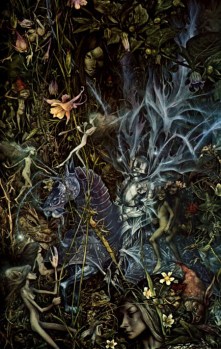
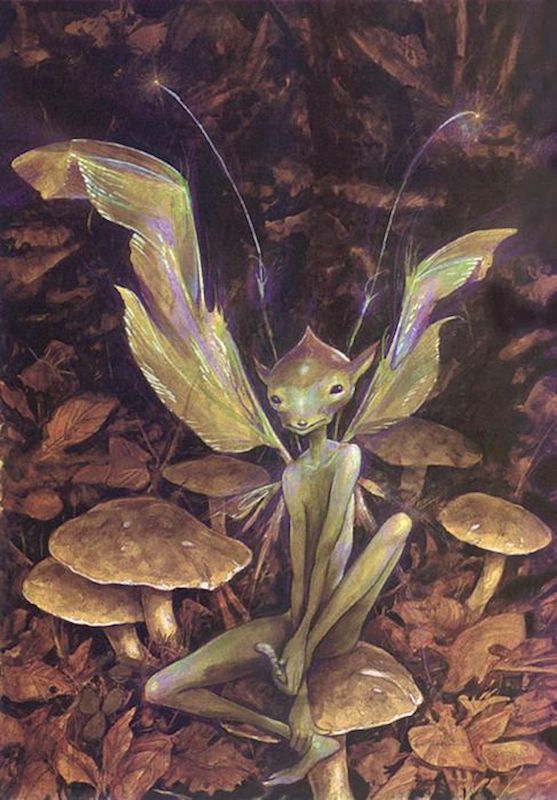
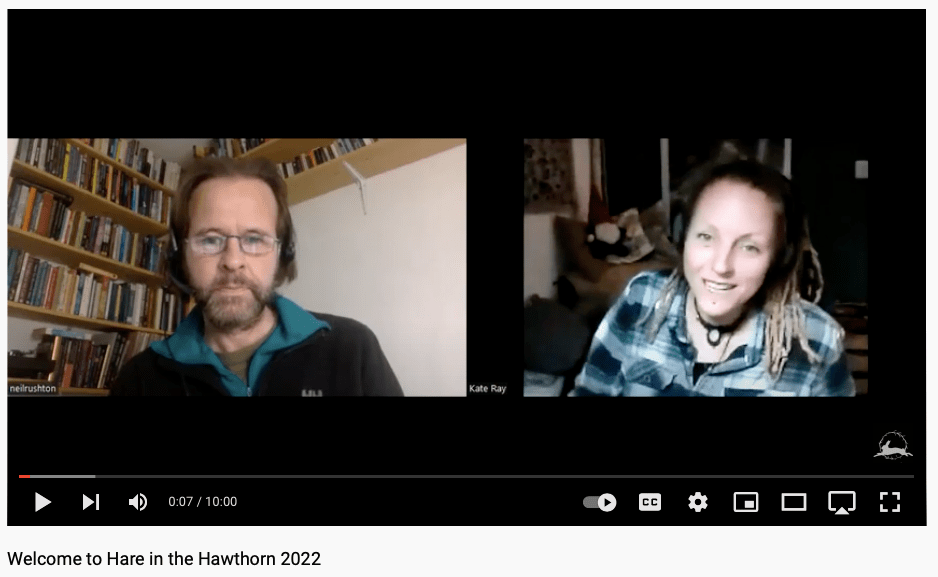
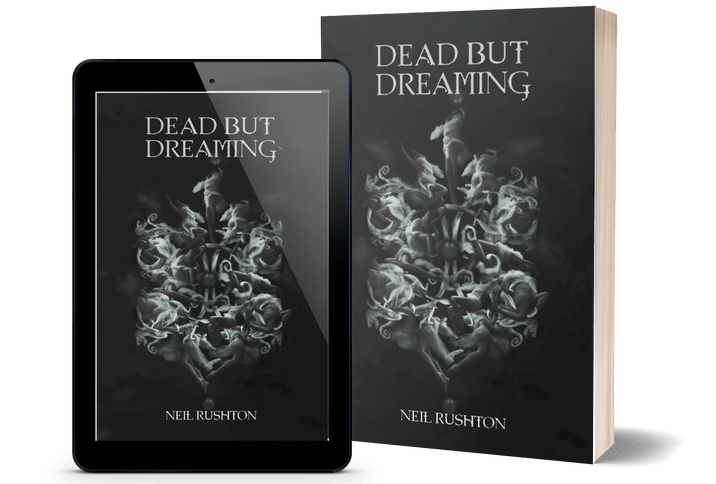
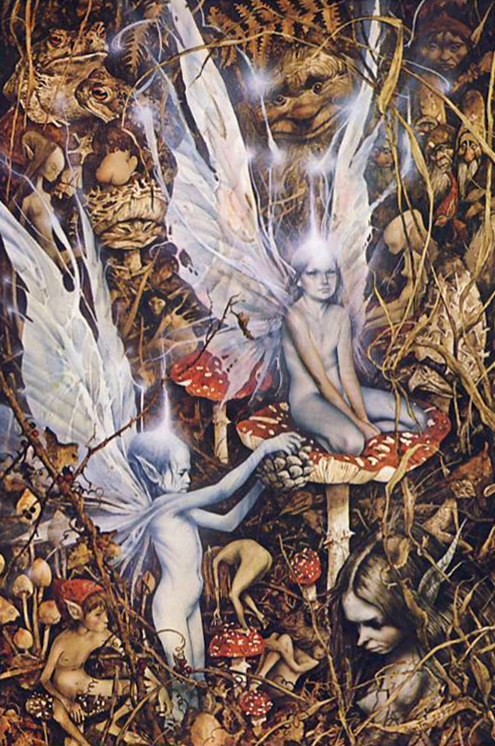
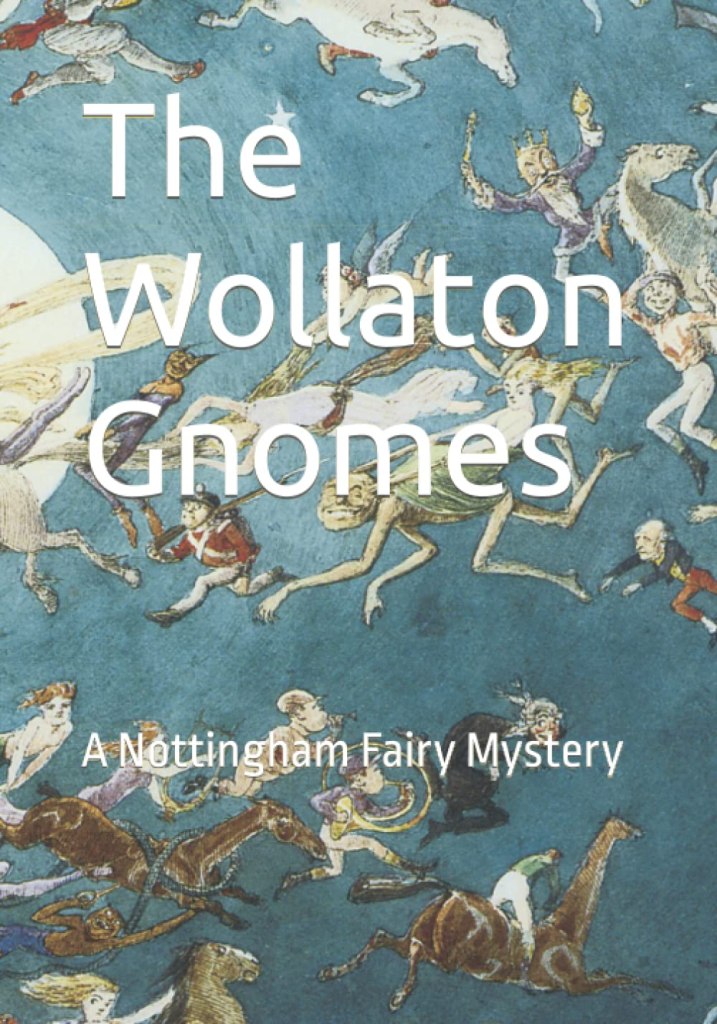
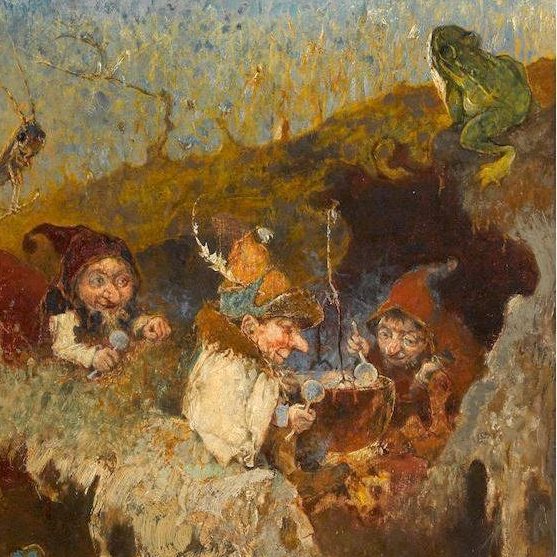
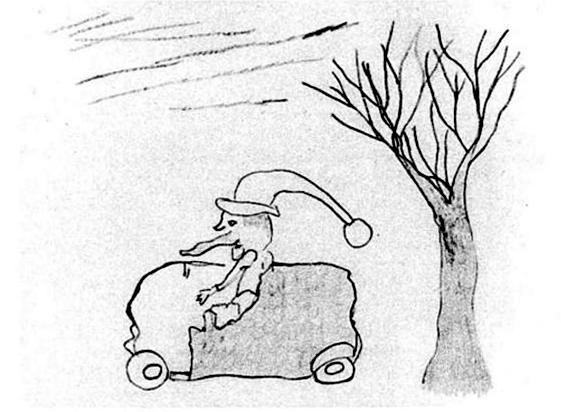
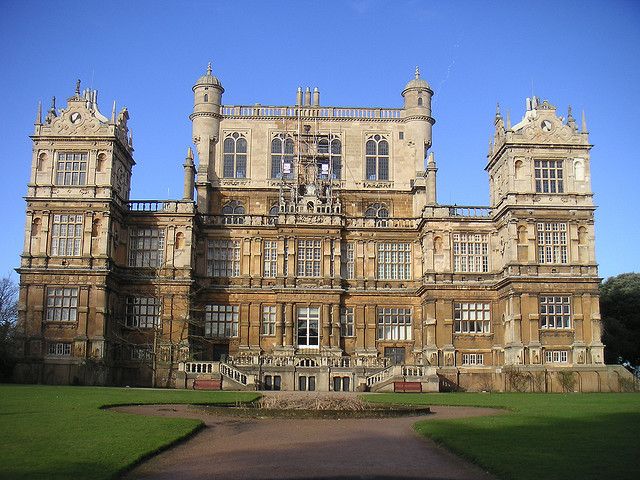
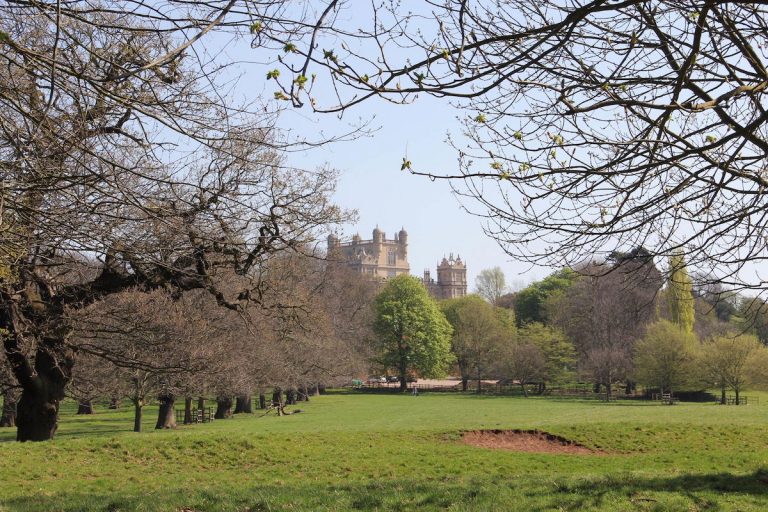 Wollaton Hall and Park
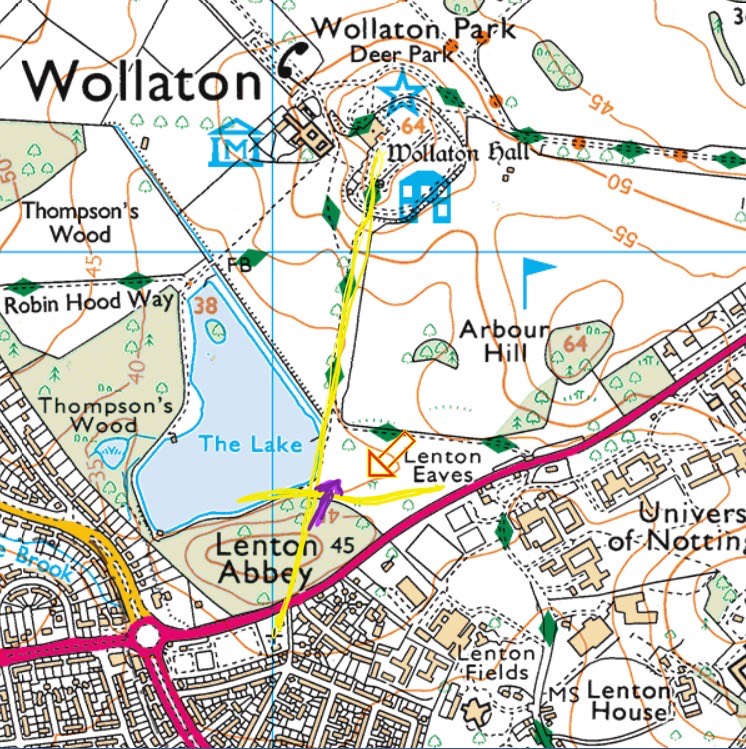
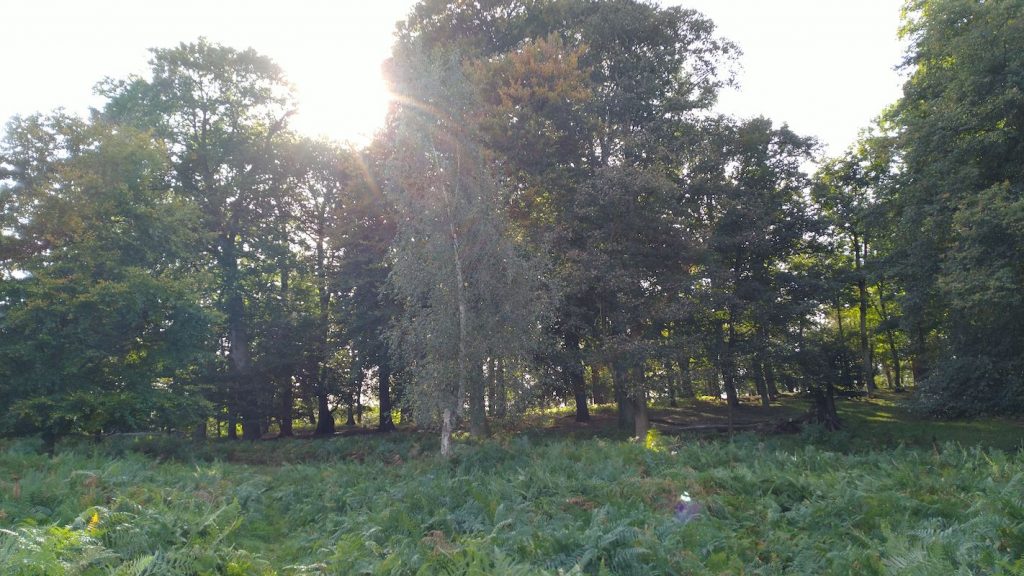
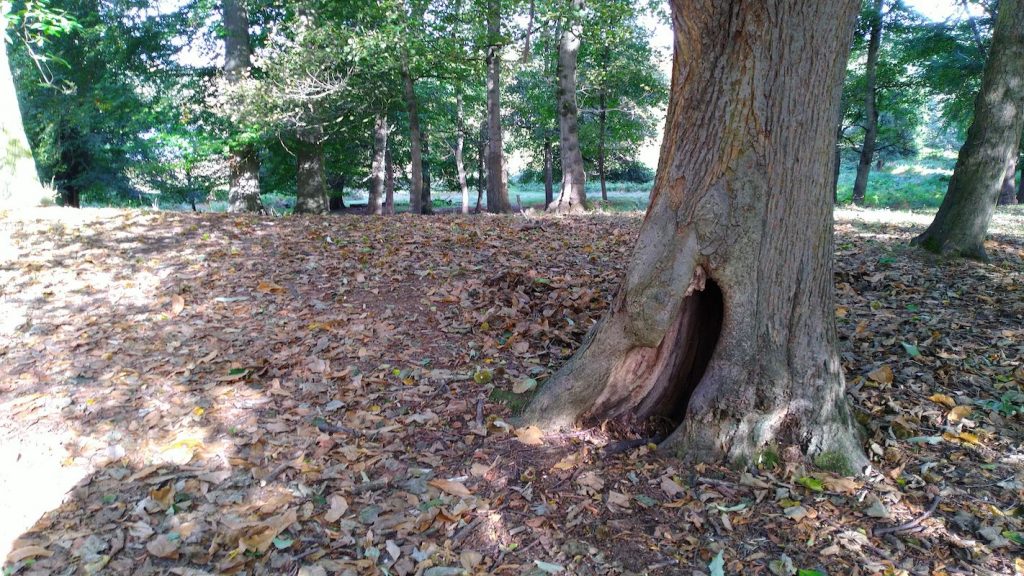
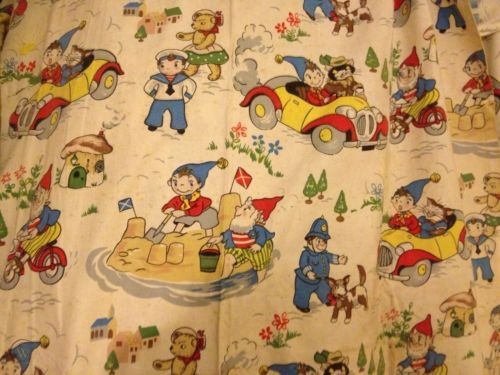
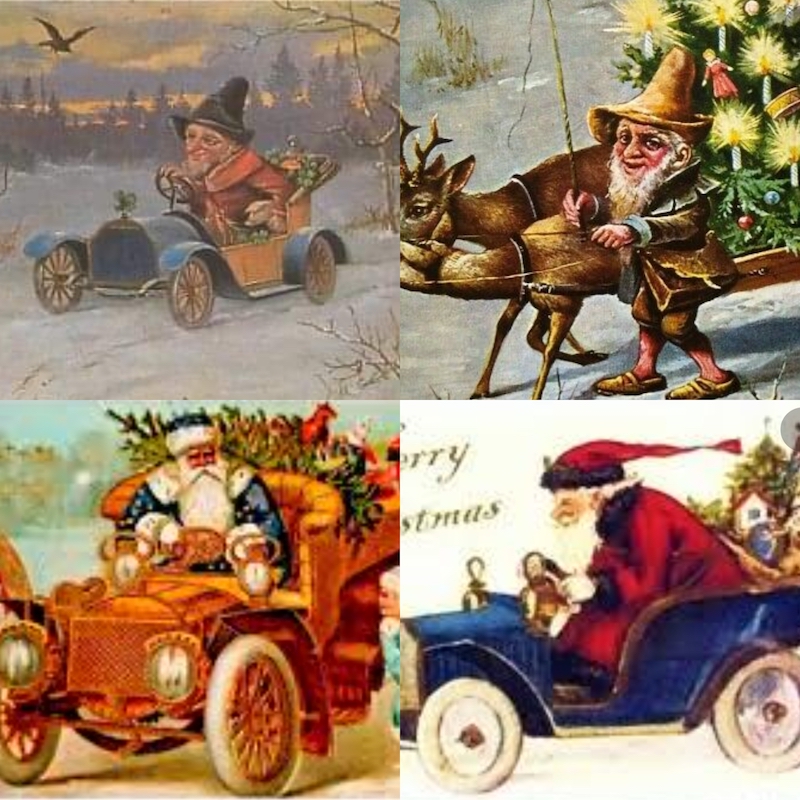
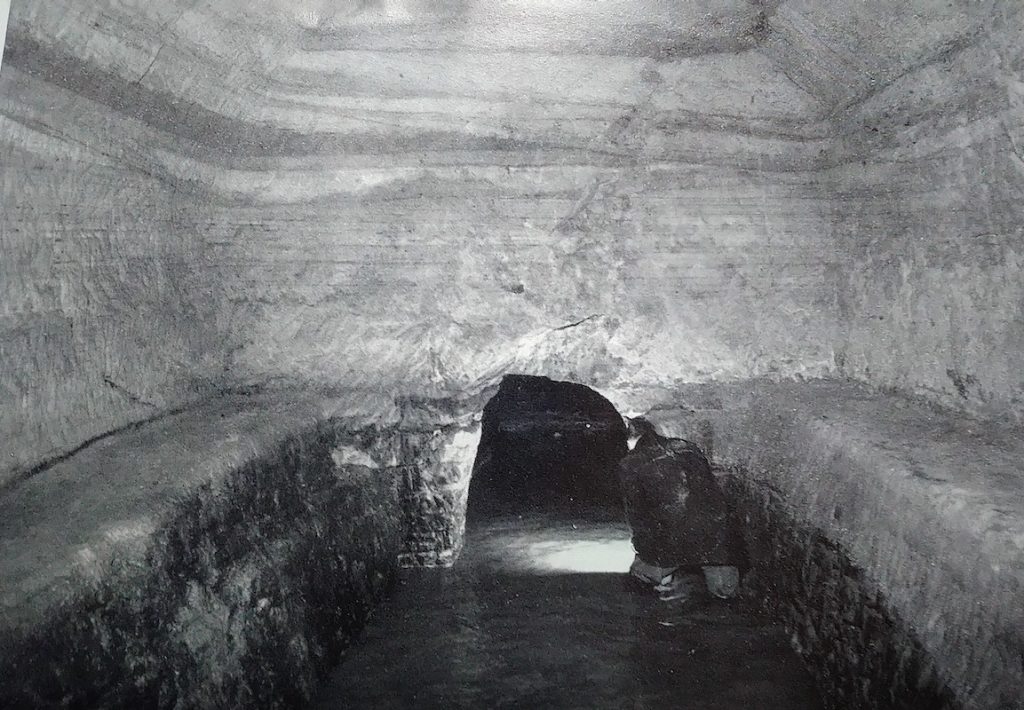
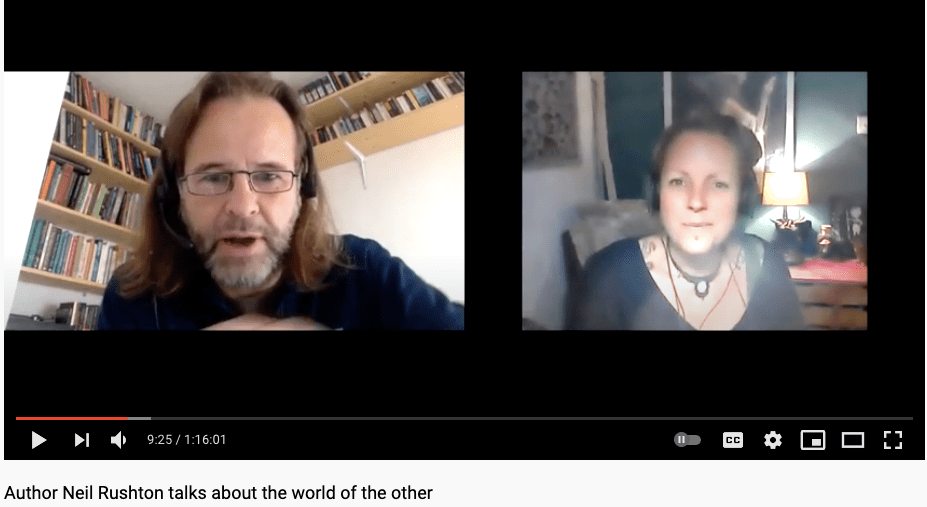
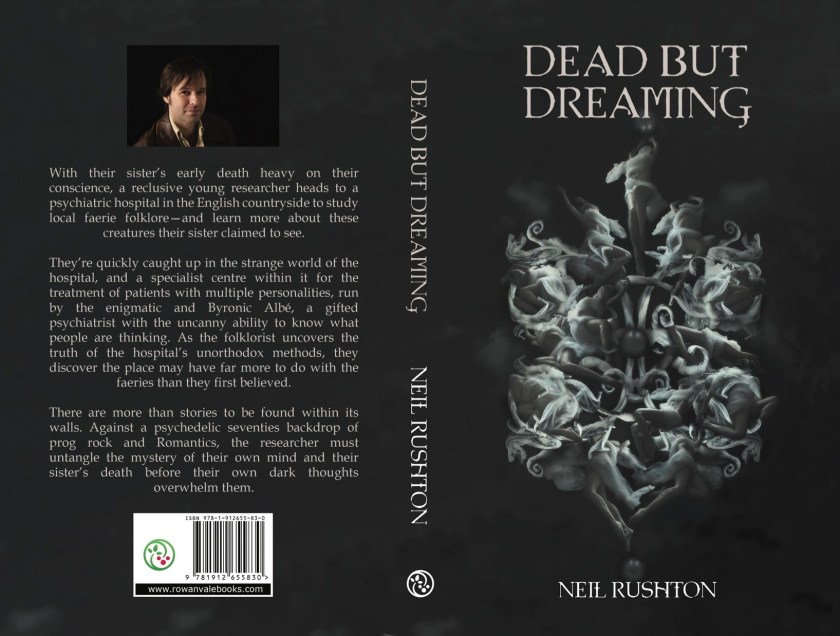
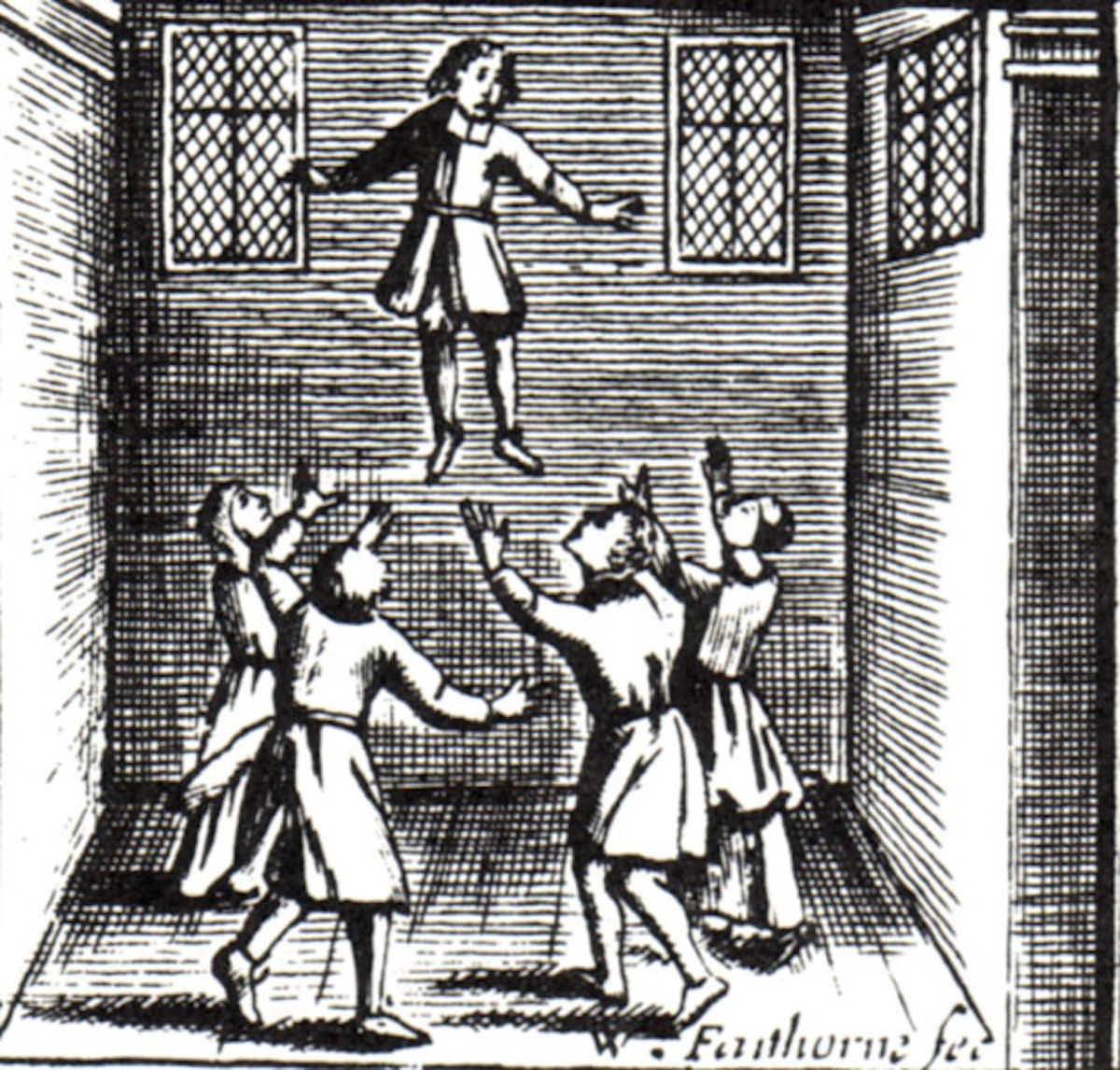
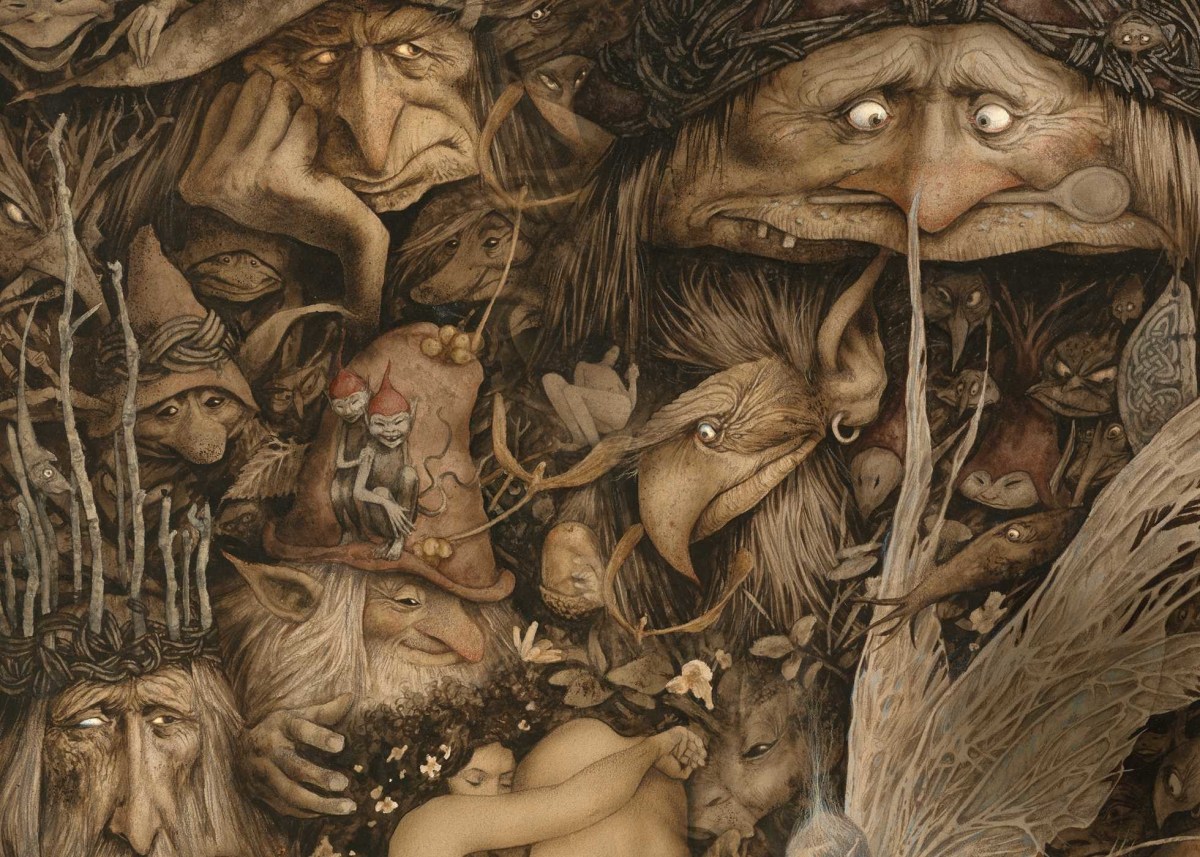
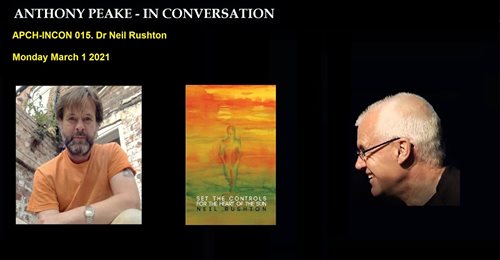
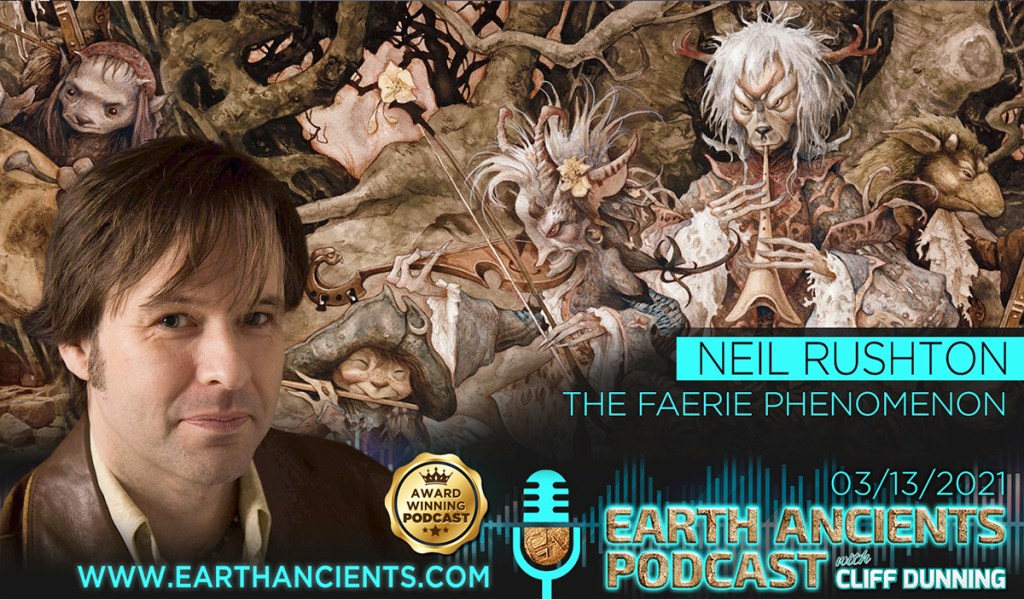
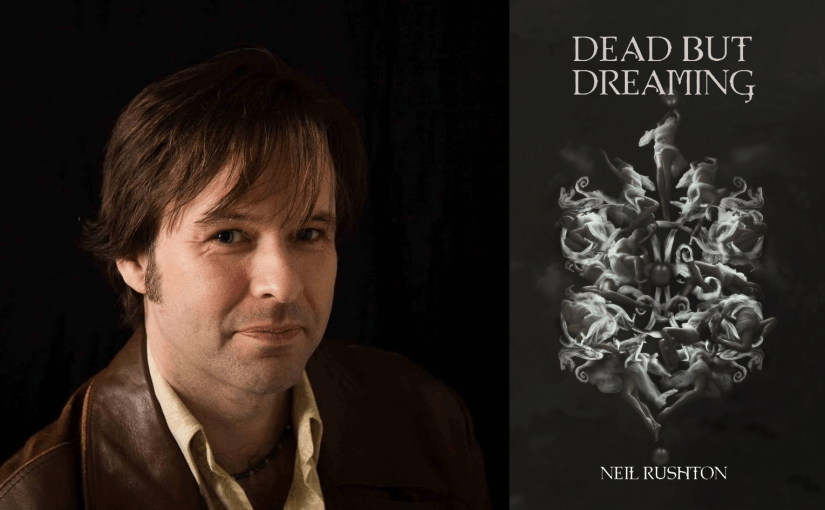
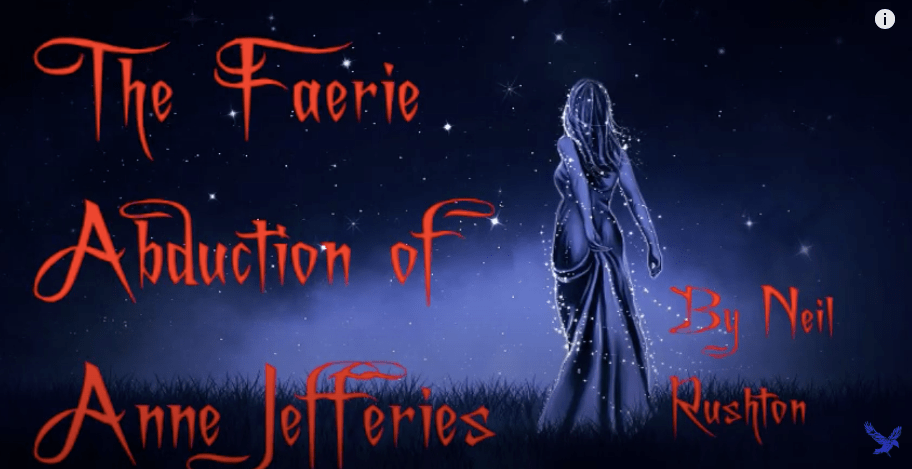
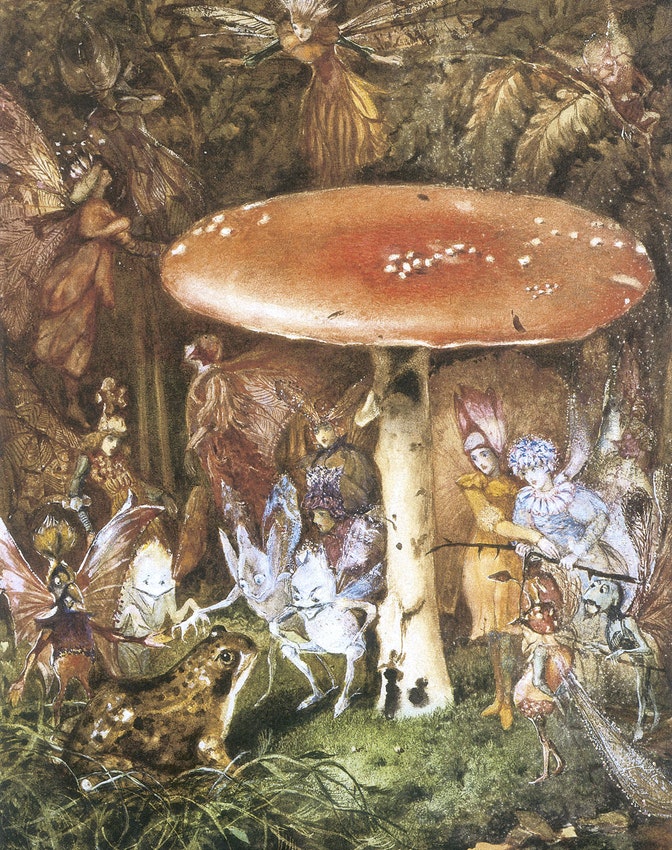
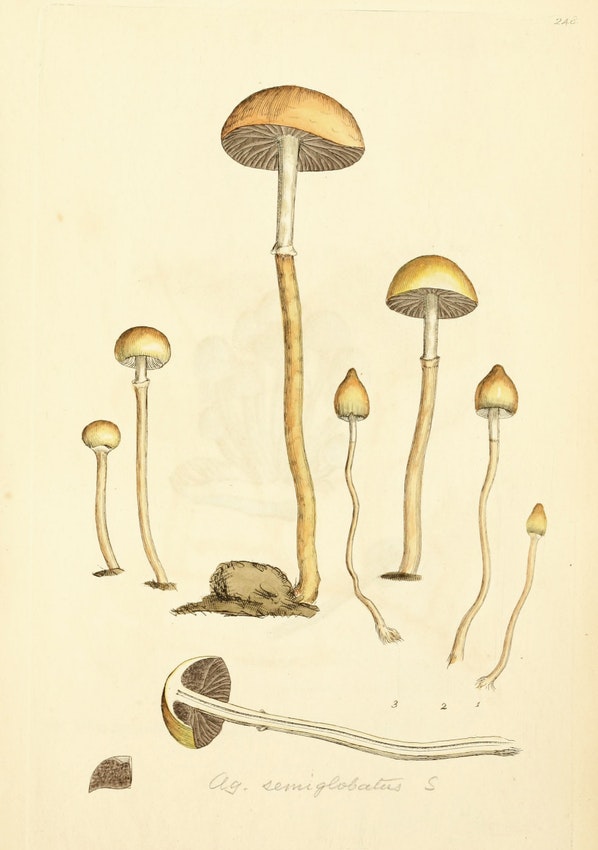
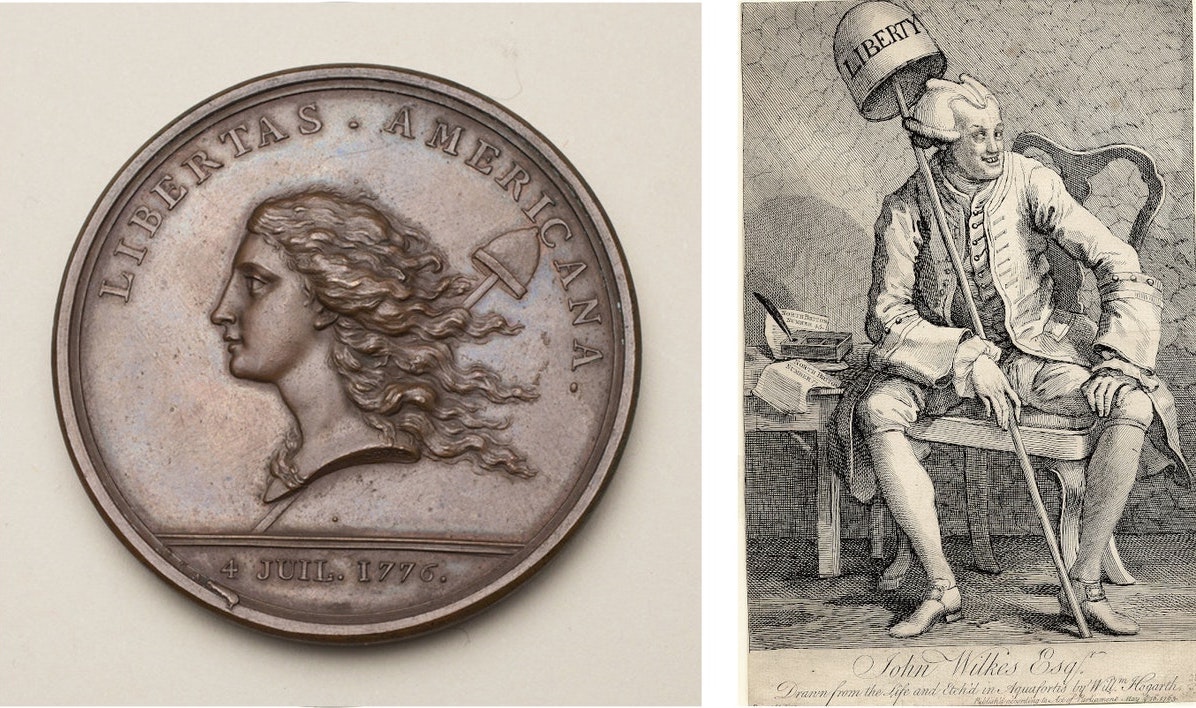
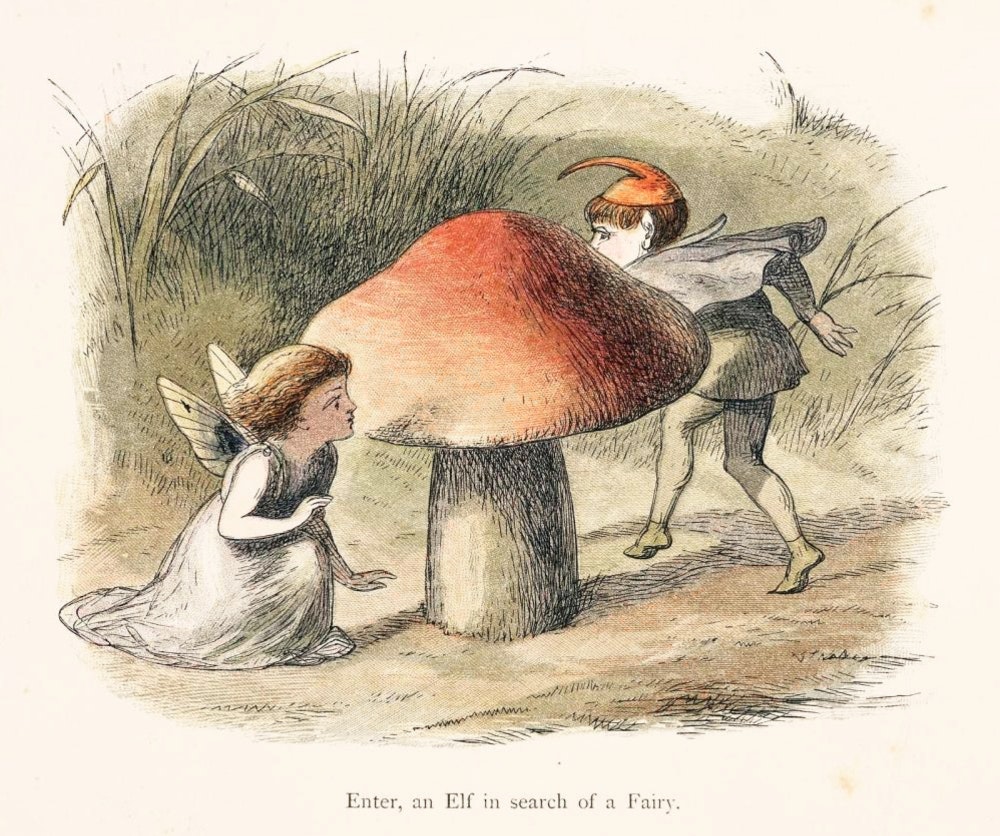

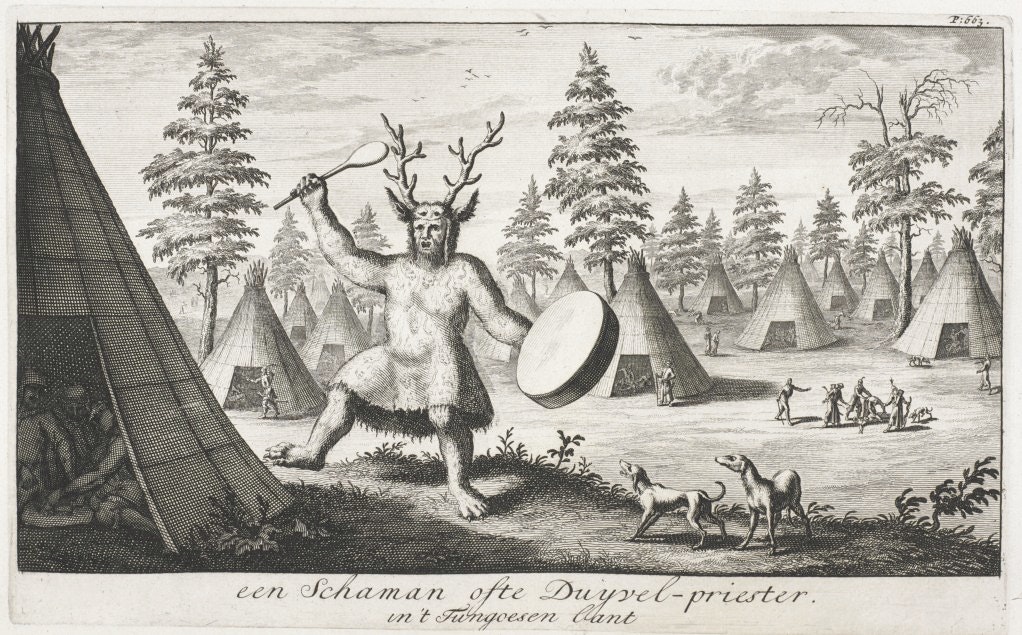
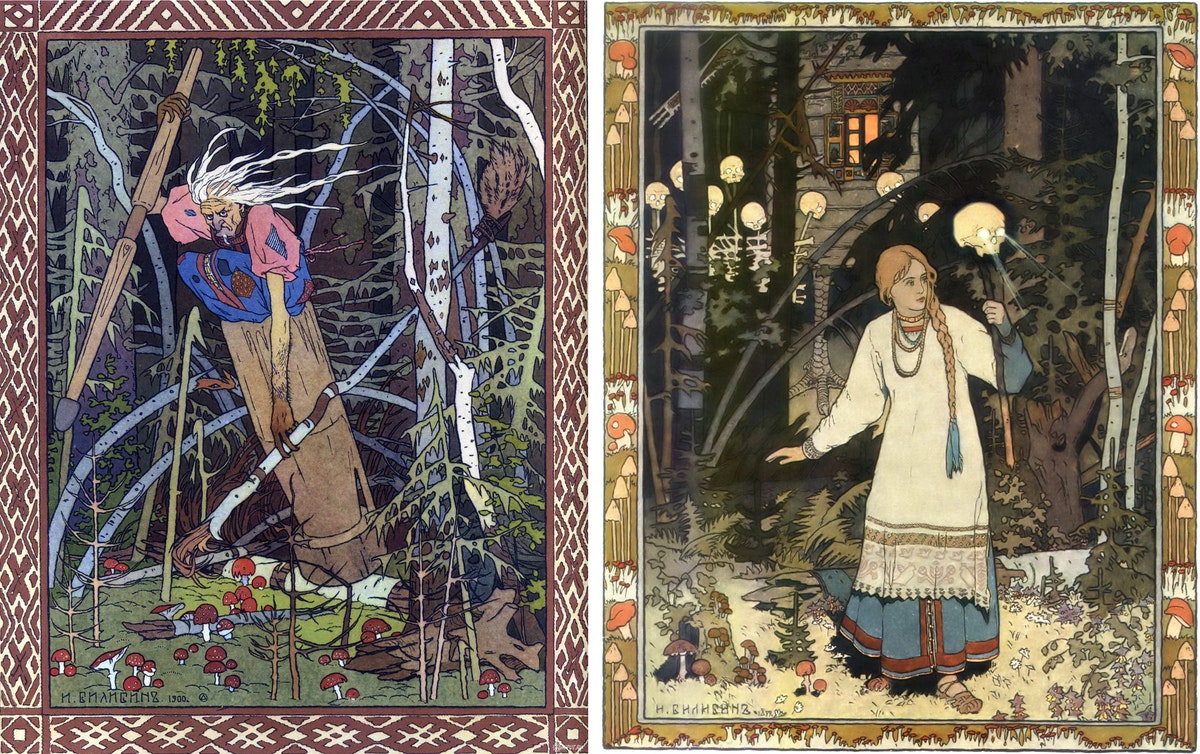
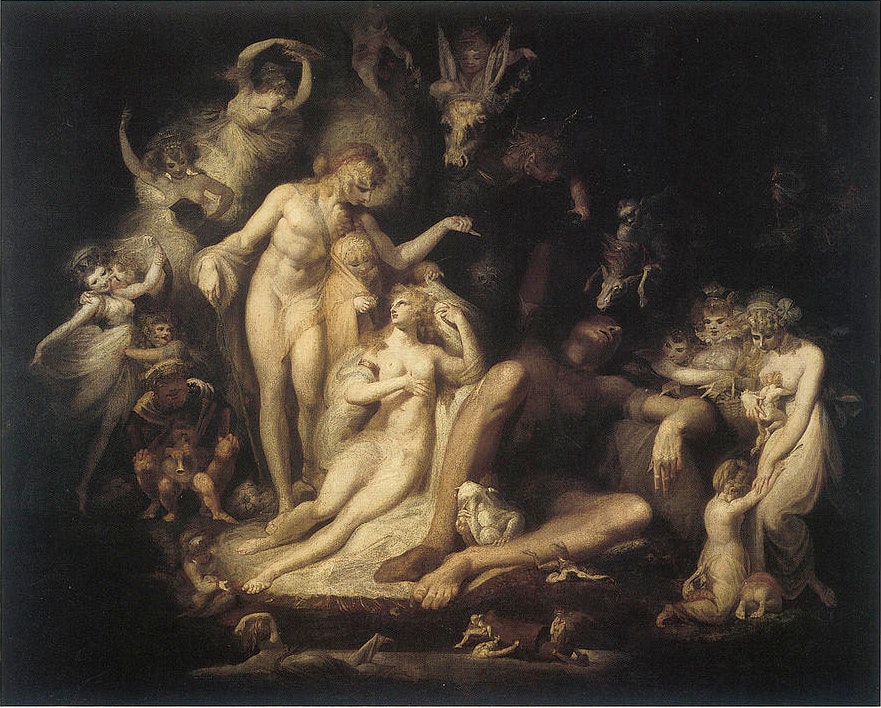
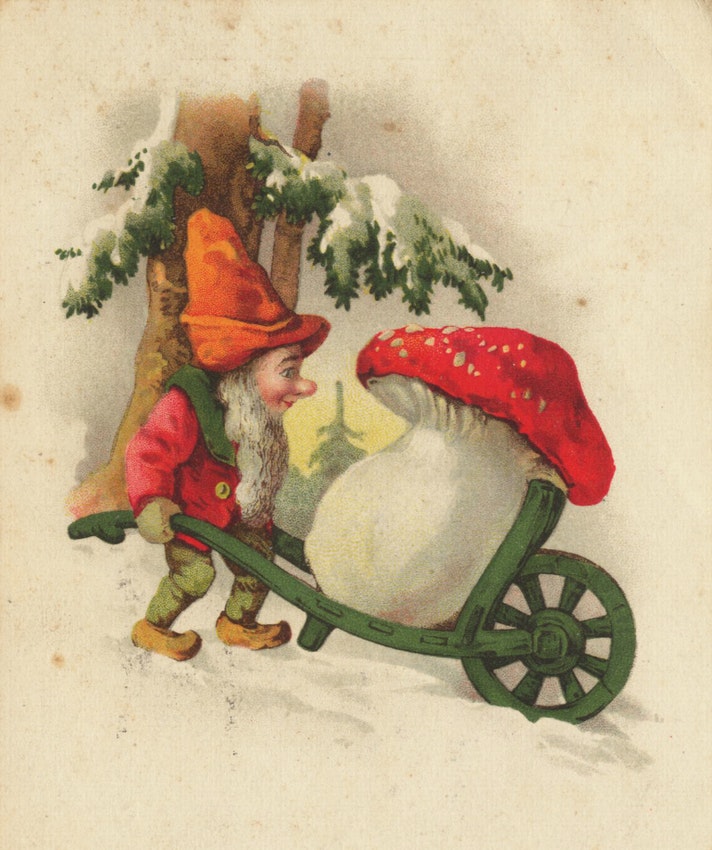
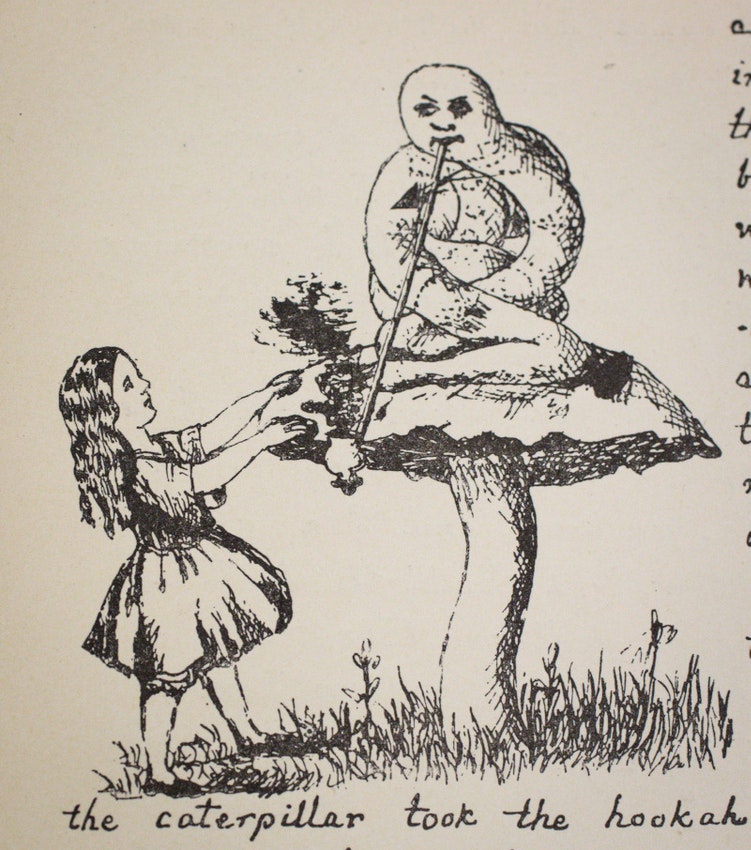
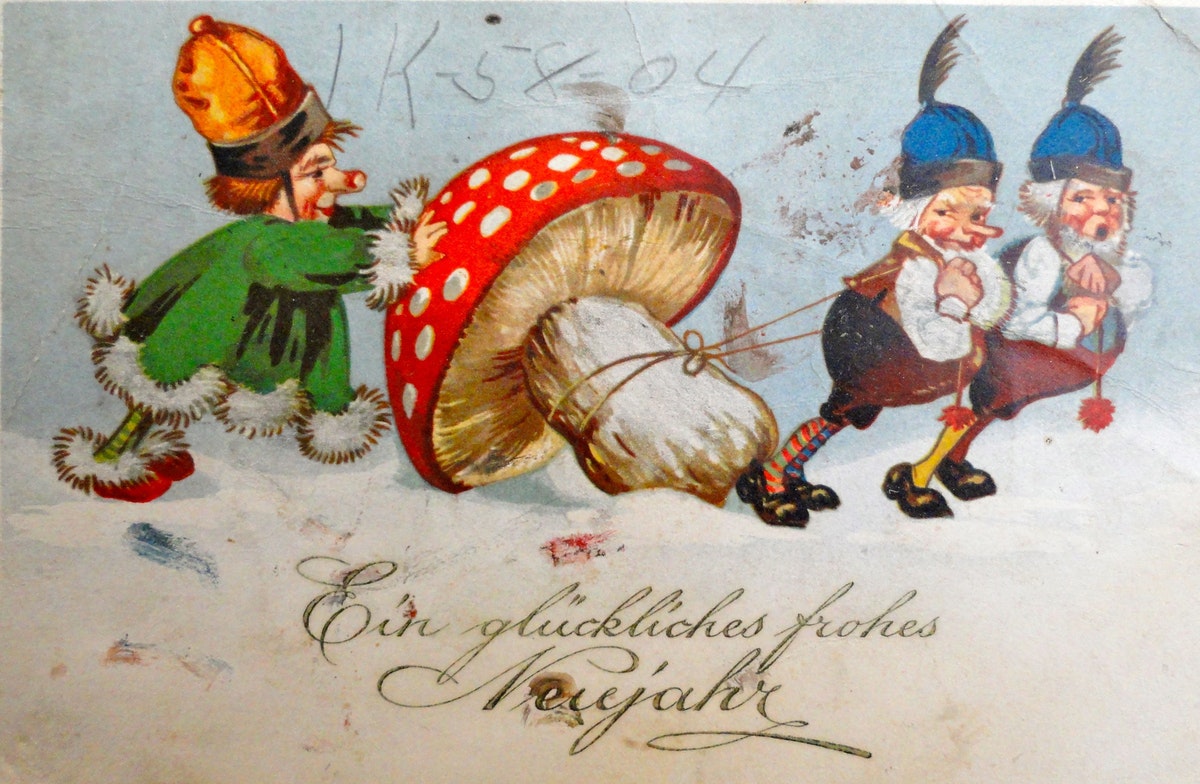
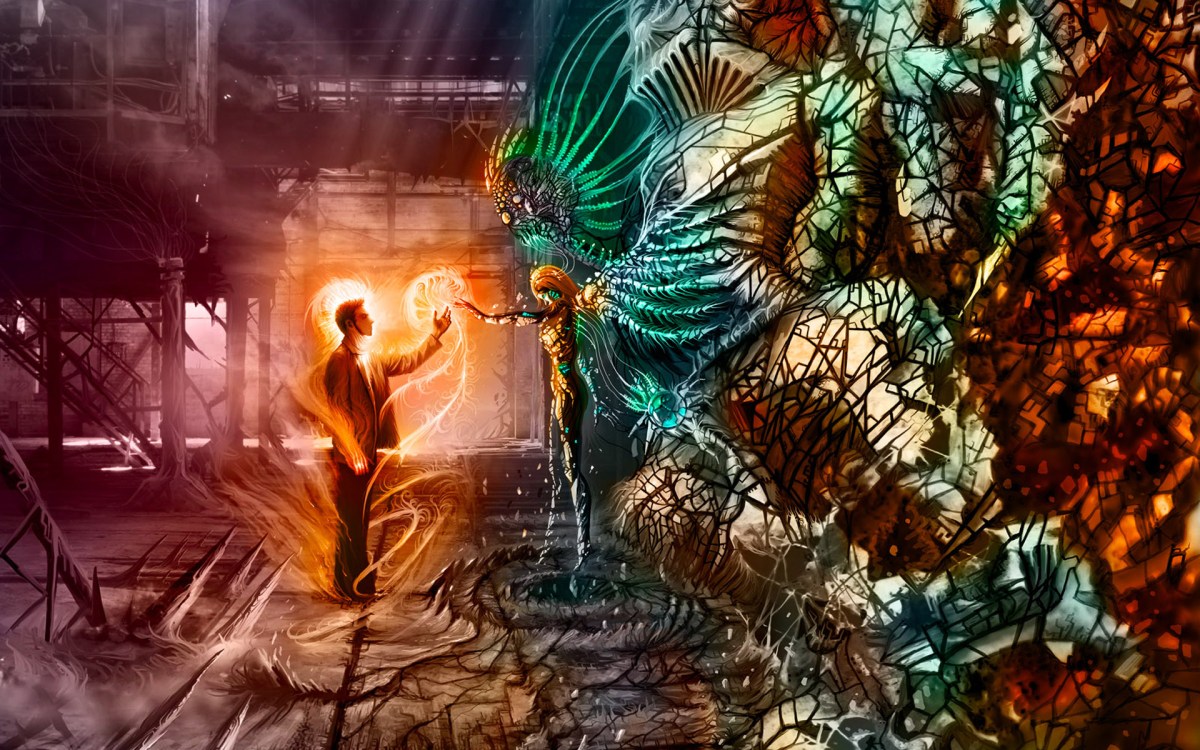
 realisation of its potential for producing intense altered states of consciousness. These states had been experienced by the shamanic indigenous peoples of the Amazon for hundreds of years, where the Psychotria viridis and Diplopterys cabrerana plants, containing DMT, are used in conjunction with the Banisteriopsis caapi vine to produce a brew usually known as Ayahuasca, which acts as a potent psychedelic when ingested. The history and current usage of Ayahuasca has been charted by Professor Benny Shanon in his 2002 book
  The research involved sixty volunteers, all of who had multiple sessions in a controlled environment, where they were injected with DMT within the range of 0.2, 0.3 and 0.4 mg/kg. They were monitored during the experiences, which usually lasted between twenty and forty minutes. They were then asked to recount a testimony of what had happened as soon as the effects of the drug had worn off. Sometimes, the participants were able to talk about their experiences during short ‘inter-glacials’ during their sessions. At all doses the experience usually involved immediate cessation of normal consciousness and transportation to a different realm of reality inhabited by a range of creatures described as elves, faeries, lizards, reptiles, insects, aliens, robots, clowns, and various therianthropic entities. One woman even describes a pulsating entity that she encountered as ‘Tinkerbell-like’. The experiences, especially at higher doses, represented to the participants a parallel reality that was ‘super real’, not an hallucination, not a dream, but a substantial built reality with full sensory interaction and often telepathy.
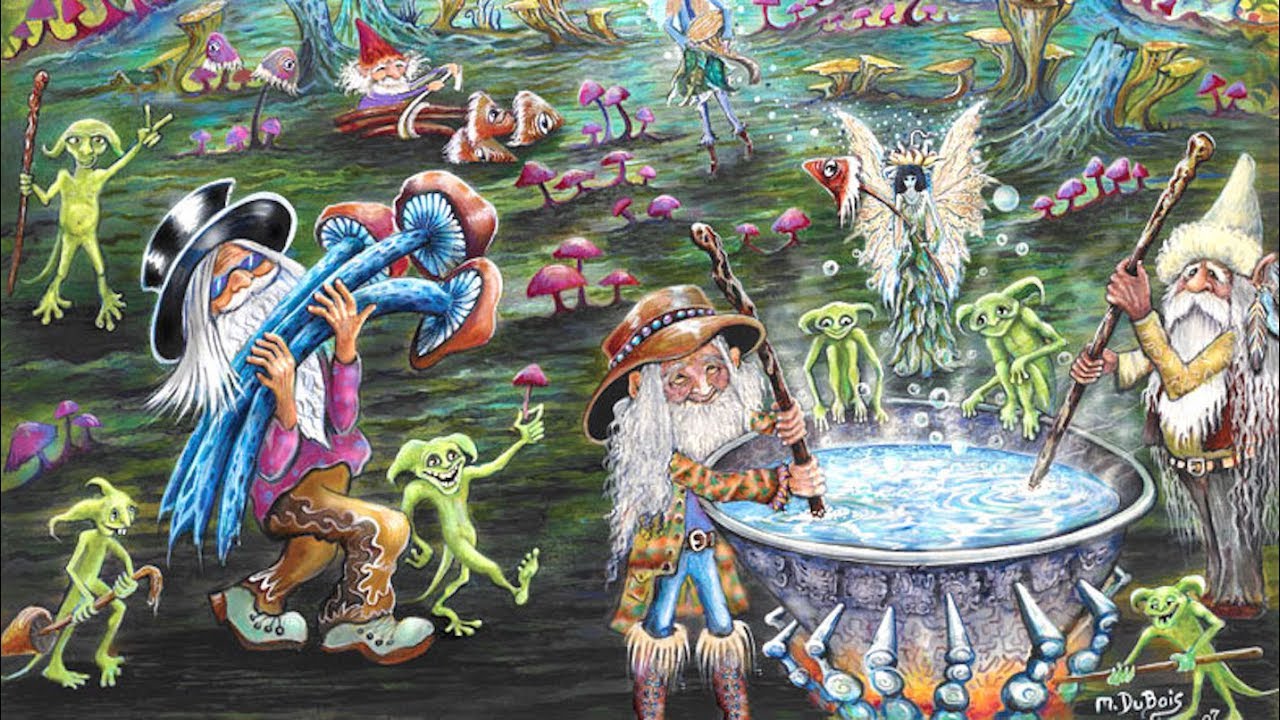
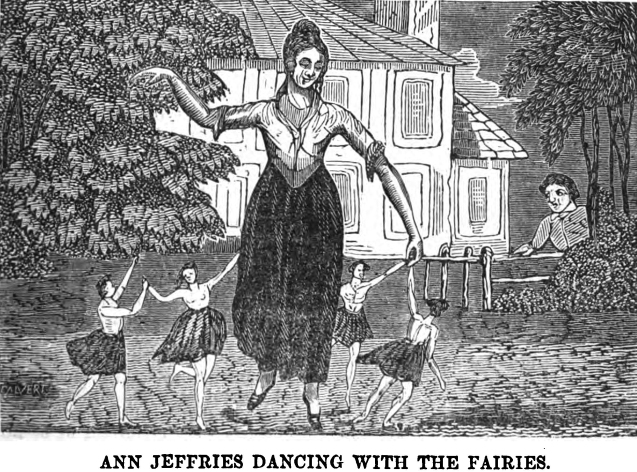
 The intersect to this may be found among people who claim clairvoyance, usually deemed second-sight in the folkloric record. This is prevalent from the observations of the
  This has been further explored by
  Further Reading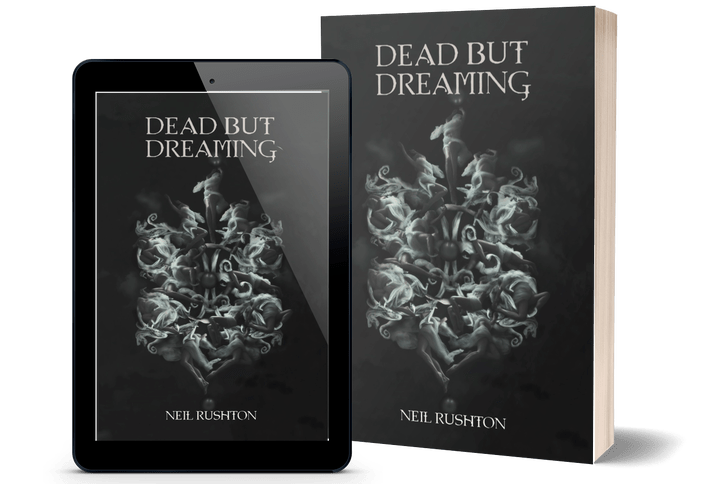
 deadbutdreaming


