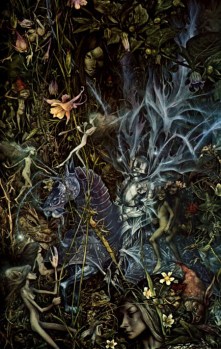
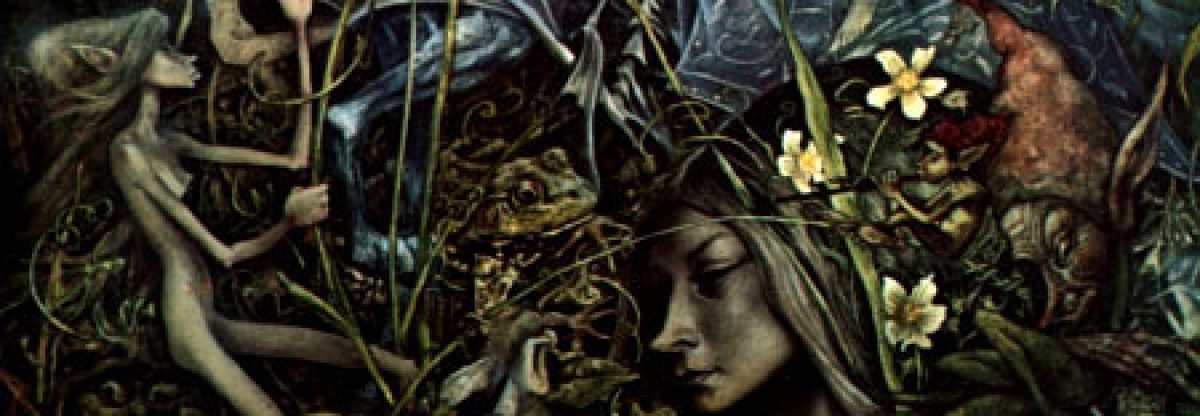
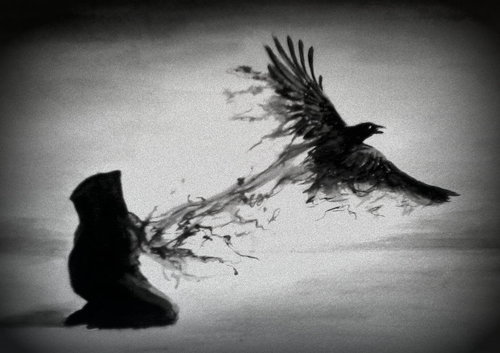
Here’s a short excerpt from the tale I’m writing. It is set in a psychiatric hospital in the west of England, 1970, and the ‘I’ is a folklorist.
The lack of light in this place is starting to cause me problems. They are the same problems that have attached themselves to me since she died, exacerbated now by the gloaming austerity of the buildings here; they lock out the daylight and cast everything in a pall of grey and brown. It’s been five days since my arrival and I haven’t seen the sun once. It has rained every day. At least that’s what my memory tells me. I might be wrong, I often am. But the view from my window confirms the grimness; the high Victorian facades soaked with rain from the outside and seeping the dampness of insanity from within. I’ve made a mistake coming here, I know it. The place has deprived me of the ability to hide my own desperation and grief. I’m surrounded by lunatics and those looking after them, all engaged in stripping away the illusion of normality and replacing it with the unfettered reality of human madness. There’s nowhere to hide, nowhere to retreat to. I’m immersed in it and my carefully constructed coping mechanisms are being dismantled. When there is a knock at the door my head swims for an instant and my hands start trembling as usual. But as Moore enters, the sudden horror of human contact subsides back inside, and, quickly, I’m able to put on my mask of acceptable social behaviour. I can also slip into a past tense…
‘Ahoy there,’ said Moore, inviting himself in, smiling as usual, ciggy in hand. ‘Ready for action?’
‘I guess. Is she still ok for this?’
‘Yep, she’s out in the vegetable garden talking with her faeries. But she knows you’re coming.’
I picked up my notepad and book, controlling my breathing and forcing the tension out of my body.
‘What’s that?’ asked Moore, nodding at the book in my hand.
‘It’s a motif index… Aarne and Thompson. Bit of a bible for folklorists – it codes and numbers all the different motif types from traditional stories. I had to… err, nick this volume from the reference library before I came.’
‘Ha, excellent. Well come on then, let’s see how many motif numbers you can jot down for Fernanda. I think you might be busy.’
We walked past the laundry building and oil tanks, then under the grey neo-gothic elevations of the chapel, dripping rainwater from their eaves high above.
‘Yeah, you’ll find Fernanda interesting,’ said Moore, chuckling as he always did. ‘She’s the only South American in the hospital… actually, she’s probably the only non-English person in the hospital.’
‘So why is she here?’
‘Chile. Something kicking off there – about to elect a Marxist called Allende apparently, and her family have cleared out and come over here.’ Moore affected a conspirational gesture. ‘But she’s already been here for a few years at school for some reason. The father found out she’d been having some problems, extracted her from said school and used his influence to get her admitted here. He’s some sort of diplomat or suchlike.’
‘So what are her problems?’
‘Delusional psychosis according to Dr Dawkins at mission control in there,’ he gestured back at the hospital, ‘but I think you might find that label a bit wide of the mark. I get the impression that she just genuinely sees things the rest of us don’t. But you’ll have to make up your own mind on that.’
We walked past the west end of the chapel, with the vegetable gardens in front of us. Moore stopped to light up a spindley-looking joint, took a drag and handed it to me.
‘This is your first field interview isn’t it?’ he said. ‘For your research I mean.’
‘It is, yeah.’ I could feel myself blushing. ‘My folklore has all been from books and lectures till now… bit embarrassing really.’
‘Well, this is where theory can become practice. Good place to start… in at the deep end with a psychiatric patient. If you can deal with her unusual behaviour patterns, you’ll find out a lot about the faeries, I’m pretty sure of that. Anyway, there she is over there in the red top, doing some weeding, or whatever it is you do in a vegetable patch.’
A couple of tokes on the joint calmed me a bit. I gave it back to Moore and went to find out just how mad my first ever interviewee might be.
***
The sun came out. A cloudbreaking ray fell over the gardens, picking out colours that hadn’t seemed to have been there a moment before. Fernanda’s hooded red top pulled her out of the background, made her seem physically separated from it. I walked over to her, hiding anxiety with a smile. She was crouching to place some nuts onto a tree-stump next to the vegetable patch, but saw me, stood up and stretched out her hands as though she expected me to take them in my own.
‘Hola.’
‘Hello. Fernanda?’
‘You’re just in time for the ravens. They are being called now.’
Her accent was slight but distinct. She looked through me somehow. But her eyes were smiling. She’d already taken some control.
‘They only trust me, but I think they’ll trust you too.’
She walked to the end of one of the garden paths and I followed. Closing her eyes she swayed whilst another ray of sun found her face, and I was able to take in her features unobtrusively. When she opened her eyes, they seemed black, iris and pupil, and I couldn’t tell what she was looking at.
‘Dos cuervos,’ she announced, ‘coming to us now.’
Sure enough, from the tree-line to the north, two ravens appeared and silently flew down onto a fence at the far end of the gardens. They tarried there, conspiring and ensuring their coast was clear before gliding down together to the tree-stump, where they put their beaks to work on the nuts. They hopped about taking some more nuts before retreating back to the fence.
‘Now observe,’ she whispered. ‘They will silently call their comrades.’
We stood in silence for about a minute, Fernanda staring into the middle distance, whilst I shuffled around hoping this wasn’t going to go on too long. Then I saw six more ravens appear above the tree-line, making their way towards us. They flew down in ragged tandem, alighted on the fence with the other two, then, two by two, drifted down to the ground and hopped over to the nuts on the tree-stump. We were only twenty feet from them, but they carried on as if we weren’t there. When they’d finished and were moving back to the fence, Fernanda crouched down. One of the ravens broke ranks and landed closer to us. It bobbed its head a few times in our direction, then flew off, taking the others with it back into the sky.
Fernanda stood up and said ‘I know you want to know about the faeries. Las hadas… they are the nature spirits, the elementals. They are everywhere.’
‘Do you see them now?’
She laughed, then smiled. I blushed.
‘The ravens see them. All animals do. The faeries fix themselves onto the minds of the ravens and then give them instant communication with others of their kind. The faeries summoned the ravens by riding on their minds… their thoughts. Hey my friends! come get the nuts at the tree-stump.‘
I chuckled. ‘But do you see them?’
She stared at me for the first time but said nothing. Instead she took my hand and led me round the vegetable patch to some spinach leaves. She got me to crouch down next to her, and pointed at the biggest leaf in the patch.
‘Stare at this green leaf’, she said. ‘Just stare at it for some moments.’
I complied. The leaf was crumpled a little at its top making a ball-like shape, and the longer I looked at it the more I started to see patterns in the natural chaos of its shape: first a green rose flower, then a scrunched up piece of green paper, which seemed to momentarily expand and contract before forming into a small childlike face. I started, looked again, and it was gone. There was just a snail-nibbled spinach leaf.
‘You see,’ she said. ‘They are here, but you just don’t want to see them. The faeries are part of the minds of the plants… the earth, the rocks, everything.’
I turned to her, she was close. I could see she meant it. But the usual rational stream of thought pulsed through my mind, first explaining the optical illusion of the crumpled spinach leaf, then aligning itself with the reasonable view that she must be delusional and making this up from within a damaged and beguiled mind. But even as the stream of rationality assured me this must be so, I knew it wasn’t.
‘You are a modern Western person my friend,’ she said, quietly. ‘You have grown up in a world of science and material things. It’s quite simple really. You’ve disconnected from Spirit. Once you disconnect you stop seeing what’s really there. If you were a child I would be able to show you. But you have grown up and disconnected. There is Spirit everywhere, but you can no longer recognise it.’
I fiddled with the motif-index volume in my hands, coming to terms with my abrupt perception of inferiority to someone everyone else here thought insane. And, as she looked through me, I was pretty sure she knew this.
‘I need to be alone now,’ she announced, standing up and running her hands through her black hair. ‘But if you can come again tomorrow, without your books, I will teach you about the faeries. I think you might be one who can be taught.’
Without another word, she packed her trowel into her little gardening bag, smiled and started off back to the hospital. She turned at the edge of the vegetable gardens and waved.
‘Mañana,’ she called.
I watched her disappear behind the chapel. It started to rain again.
‘Mañana indeed,’ I whispered, looking first at my unopened book and notepad, and then back at that plain old spinach leaf, now quivering under the raindrops. A raven passed overhead, cawing as if laughing at me. Mañana indeed.
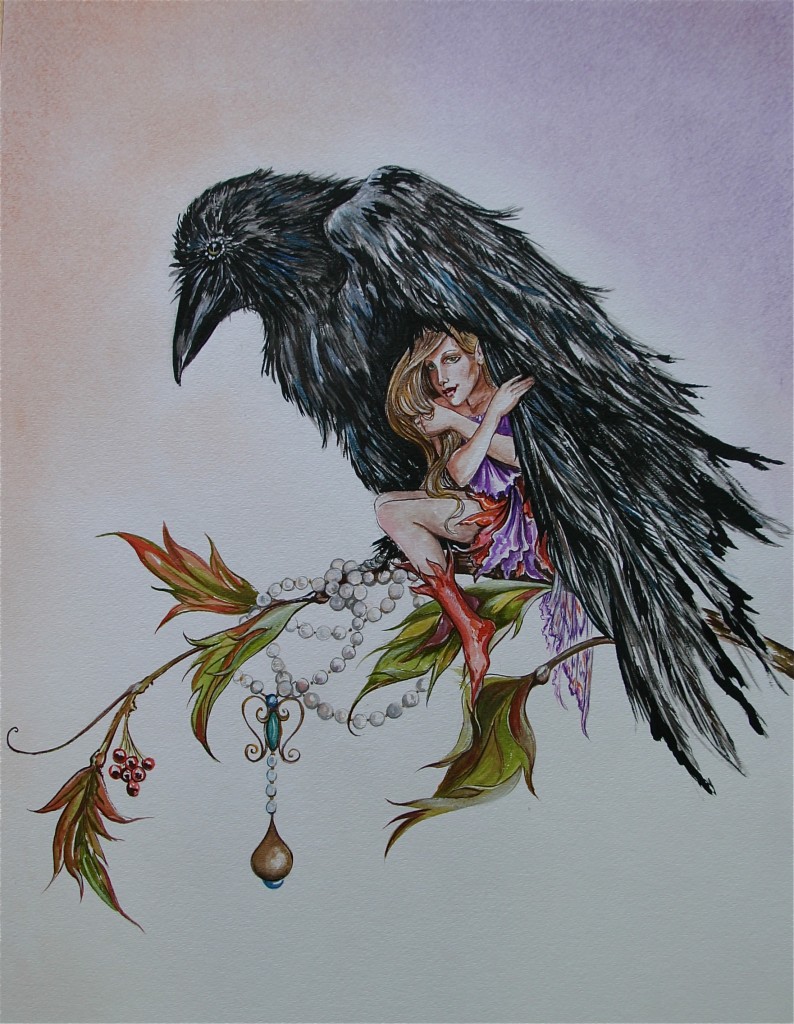
Music video of Steven Wilson’s The Raven that Refused to Sing
 At the end of the excellent documentary
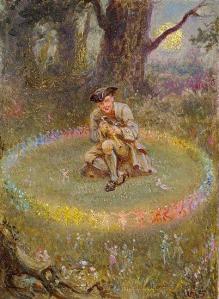 Another Welsh story tells of a shepherd playing his flute on a hillside:
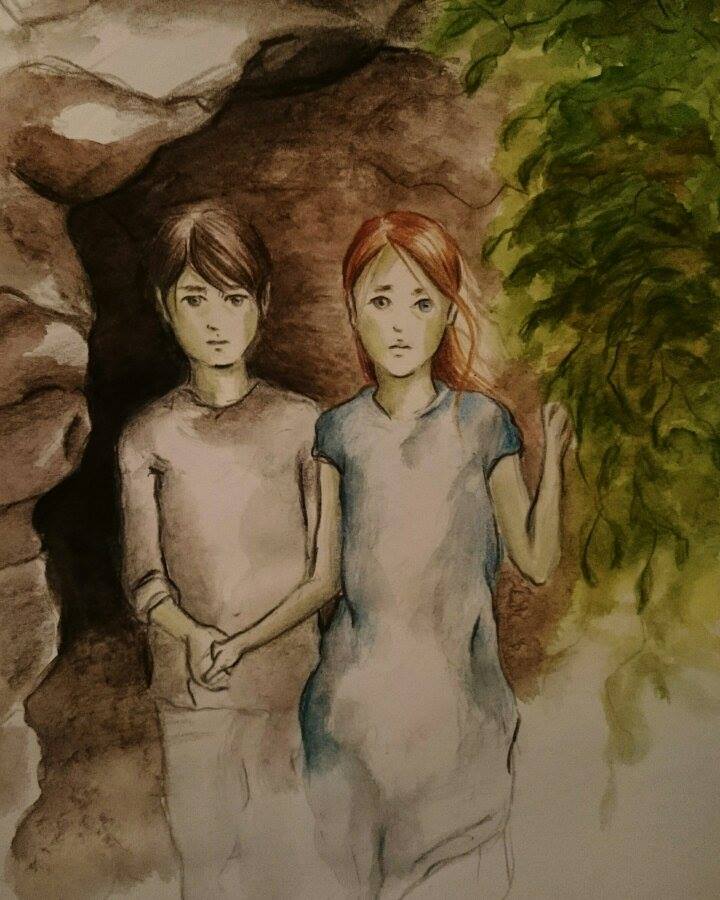
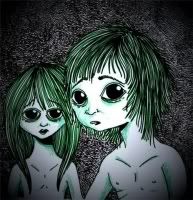
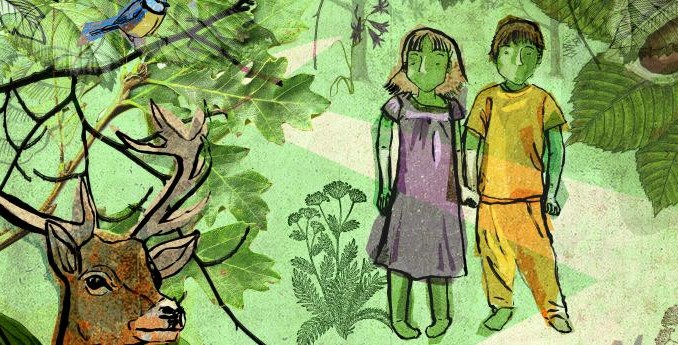
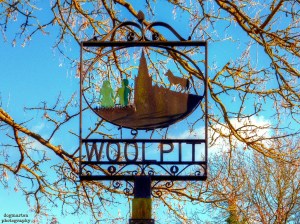 Prosaic Explanations In a concerted effort to dispel any supernatural elements from the story, Paul Harris (in a 1998 article for Fortean Times) put forward the theory that the children were Flemish orphans, displaced from their community after Henry II’s co-ordinated persecution of the Flemish population in Eastern England, culminating in a military offensive in 1173. Left to their own devices, they lived in the woods before wandering into caves (Harris suggests the Neolithic Grimes Graves in Norfolk), following tunnels and emerging near Woolpit, green through malnutrition and speaking a foreign language that the locals couldn’t understand. But as with many materialistic-reductionist explanations of strange stories, it is soon found to be baloney. Grimes Graves is 40km from Woolpit, there are no known tunnels extending beyond the locality and even if there were, they do not extend to the clay geology of northern Suffolk. Flemish immigration to Suffolk had been happening since the 11th century and so the linguistic argument also breaks down – the villagers would have been well-acquainted with the Flemish language, even if it were a dialect or (even more so) an Anglicised version of Flemish. And an educated aristocrat like Sir Richard de Calne would definitely have recognised their speech. Despite being cited as the most likely interpretation in several retellings of the story, it’s actually a non-starter.
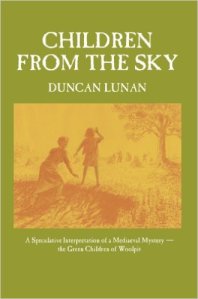 Out-there Explanations In his 2012 book Children from the Sky, Duncan Lunan presents a highly unorthodox theory of alien intervention in 12th-century England. Lunan goes into considerably more historical detail than any other writer on the subject, and his close reading of the historical sources teases out the context of the story and the characters involved. Of particular importance is his interpretation of the original texts, pointing out the usages of language by the two medieval chroniclers, and how the original Latin has been skewed by later translators and story summaries. But the historical detective work soon gives way to a ‘speculative interpretation’ that suggests the Knights Templar (he identifies Sir Richard de Calne as a Templar) were in contact with an alien civilization, who were abducting humans to populate a colony world – a world where it was always twilight due to a synchronous orbit, and where genetically modified algae turned the inhabitants green. The green children were part of this colony and were accidentally transported to Earth due to a matter transmitter malfunction. Sound wackadoo? You bet. But the sci-fi angle taken by Lunan is a lot of fun and allows for some free-thinking speculation on the oddities of a story that refuses to fit in with a reductionist interpretation. A mind-bogglingly melodramatic National Geographic documentary has Lunan dashing around the Suffolk countryside in a Morris Minor in pursuit of the alien connection. You might want to take a look here: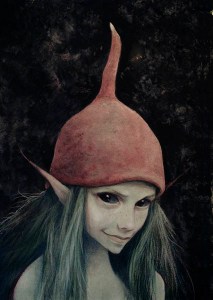
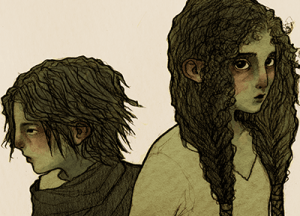 But instead of using real foreigners, such as Flemish immigrants, the story is made timeless and archetypal by turning the children into faeries. Their otherworldy status makes the tale bigger and more fundamental – it becomes a tool for teaching us about ourselves. The story embeds certain faerie motifs, such as their green colour. The most common colour of the faeries was green (usually their clothing, but also sometimes their food and their skin), and people hearing the tale in the Middle Ages (and beyond) would have automatically understood and accepted that they were associated with an otherworld, most usually represented as faerieland.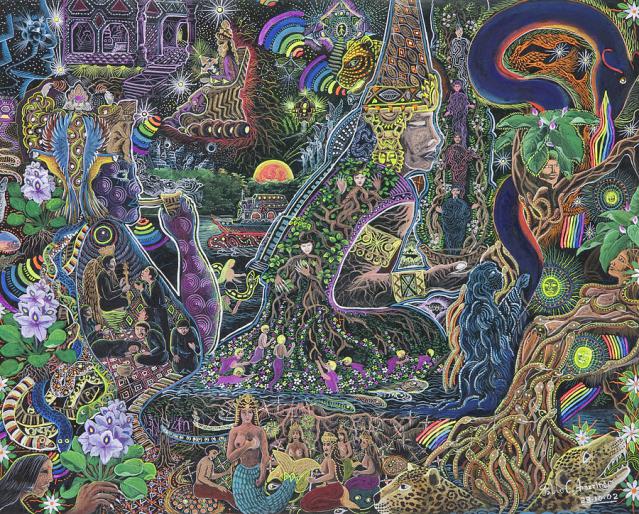
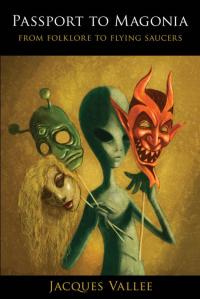 His hypothesis is that there is a commonality to the experiences reported in alien abduction scenarios, and the reports of interactions with faeries in folklore. He suggests the aliens and the faeries are essentially the same phenomenon, tuned through the cultural receptors of the time and then interpreted accordingly. He makes special reference to the regular motifs in faerie-tales of the abduction, by various means, of humans by faeries. There’s a lot of data here – it’s the commonest motif in faerie folklore. For a variety of reasons humans are taken to faerieland in the stories, either as midwives or nurses for faerie children, as servants to the faeries, for sex, as punishment or reward, or just because the faeries feel like it. They were also keen on abducting babies, and replacing them with changelings; wizened old faerie creatures who would usually die before the end of the story if a ruse to return the human baby wasn’t discovered. These motifs, of course, coincide with many aspects of the monumentally strange phenomenon of alien abductions, reports of which have grown at an exponential rate since the early 1950s. Vallee uses a range of evidence to tie-up faerie abductions from folklore and alien abductions from modern reports, and goes as far to state: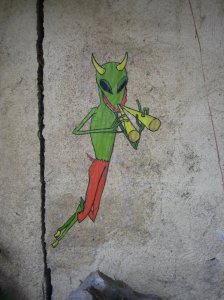

 deadbutdreaming