As a sideways break from my ruminations on the faeries and their abodes, here are some contemplations on the magico-folkloric tale of the Lambton Wyrm, from the North-East of England. A version of the article was originally published on the Ancient Originswebsite.
“Whisht! lads, haad ya gobs, Aa’ll tell ye aall an awful story. Whisht! lads, haad ya gobs, An aa’ll tell ye ‘boot the wyrm.”
(C.M. Leumane, 1867)
There are more than twenty folktales from north-east England and Scotland that include the motif of a ‘wyrm’, a huge dragon-like, wingless serpent that terrorises neighbourhoods – sometimes for many years – before being eventually slain (motifs classified in the Aarne-Thompson folktale index as B11.1.3.1, B11.2.1, and B11.11). These wyrm folktales are not exclusive to this geographical area – one appears in Somerset as the Gurt Wyrm of Shervage Wood, and there are several German, Scandinavian and Irish examples. Indeed, Dale Drinnon demonstrates that this folkloric motif can be found worldwide, in both stories and in cryptozoological anecdotes. But there does seem to be a cluster of the story type in Northumberland, North Yorkshire, County Durham and the Scottish Borders. Two of the best known examples are the Linton Wyrm and the Sockburn Wyrm, beasts that hide by day but then emerge at night to scorch the land, eat livestock and occasionally people. In all cases a hero appears on the scene, and due to various ruses, is able to dispatch the wyrm, thus saving the people from further predation. These folktales are always set during the medieval period, but only transfer from oral tradition to literary sources from the 16th century onwards. One of the fullest renditions of this folktale type is that of the Lambton Wyrm, from County Durham, first recorded in 1785, but evidently drawing on a much earlier oral tradition, with the action set in the late 12th century.
16th-century chap-book cover showing a knight slaying a wyrm
Apart from the wyrm itself, the main protagonist is a young squire, John Lambton, heir to the Lambton estate. One Sabbath he decides to abscond himself from the church service at Brugeford Chapel in order to do some fishing on the River Wear instead. He catches no fish but he does land a small, black eel-like creature with razor-sharp teeth and nine holes along each side of its head. Heading home with his unwelcome catch (in some versions John calls it ‘a devil’), he meets a stranger who warns him that the creature will cause trouble unless the young squire deals with it. Unfortunately, he doesn’t explain what dealing with it meant and so John decides on a policy of disposal by lobbing it into a well.
Time passes and John goes off to the Crusades, where he stays for seven years. But whilst he is away his tiddler grows into a monstrous wyrm, leaves the well and proceeds to terrorise the locality, ravaging crops, animals and humans. It’s a black, venomous serpent without wings or legs, and is large enough to coil itself round the local Worm Hill three times. The locals manage to placate the wyrm by giving it regular tributes of milk and livestock, but after seven years this has impoverished the village and estate.
Illustration of Lambton versus the wyrm, from Edwin Sidney Hartland’s 1890 book English Fairy and Other Folk Tales
This is when John returns from the Middle East, where he has evidently been knighted. With a monster abroad and the lands of his father laid waste, he takes the interesting decision to visit the local ‘wise woman’, who, after berating him for causing the disaster in the first place, instructs him to commission a suit of armour covered in spikes, and repair to the river where he caught the wyrm, to do battle. Curiously, she also insists that once the wyrm is dispatched, John then needs to kill the first living thing he sees or else his descendants will suffer the curse of violent deaths for the next nine generations. The spiked-up knight does as he is told and when the wyrm attacks him, it is sliced to pieces by the armour, before John decapitates it with his sword. Unfortunately, John’s father (still the Lord of Lambton) is first on the scene after the battle. John refrains from carrying out the wise-woman’s harsh directions, dooming the next nine lords of Lambton to grisly deaths.
This medieval folktale only gained a literary foothold in 1785 when the antiquarian William Hutchinson picked up what was evidently an oral tradition:
“Near this place is an eminence called the Worm Hill, which tradition says was once possessed by an enormous serpent, that wound its horrid body round the base; that it destroyed much provision, and used to infest the Lambton estate, till some hero in that family engaged it, cased in armour set with razors…the whole miraculous tale has no other evidence than the memories of old women.”
During the 19th century the story gained much traction as a popular folktale, finding its way into local histories, ballads, poems, plays and even a pantomime (from which come the lyrics at the top of this article). It’s popularity has continued to this day (there are several Lambton Worm pubs in the locality) and it has become the most celebrated of British ‘dragon’ stories. But from where does the story originate, and what does it mean?
The Genesis of the Wyrm
The etymology of the word ‘wyrm’ derives from either Old Norse or Old English. This might allow an interpretation of the Lambton Wyrm story as being a memory of Viking raids along the north-east coast of England in the 8th and 9th centuries. There were certainly several such chronicled raids that used the River Wear as an access route inland. The dragon prows of the Viking longboats may have become transformed over time into the monstrous beast that ravaged the countryside. The number of wyrm stories in this much-raided area of the country might also support this hypothesis. Although this interpretation would require a long gestation period in the folk memory, it is not inconceivable, and might be supported by the similarly long period of story survivals from other British myths such as the Arthurian legends, where historic fragments from the 5th and 6th centuries were mutated through time, until the characters and narratives became overlain with the customs and mores of the later Middle Ages.
However, this assessment doesn’t quite tally with the relatively close historic dating of the story, which could have included elements of its Anglo-Saxon roots if the events (however radically modified) had been generated from this time. Instead we are given a definite protagonist in the heir to the lordship, John Lambton, and all versions of the story place the time period as during the Crusades. This would put the genesis of the story in the 12th or 13th centuries, and local historian Audrey Fletcher has traced the earliest recorded mention of a John Lambton to a land charter dated between 1183 and 1200, where John de Lamtun is a witness. This would coincide with the Third Crusade, joint-led by King Richard I between 1187-92, where there was a large contingent of English noblemen travelling to the Holy Land.
But even if this is the historic John Lambton, made into the hero of the story, the narrative still requires explanation. The 19th-century antiquarian Robert Surtees suggested the story might be literally true, and wrote to Sir Walter Scott in 1810 with the idea:
”I have lately often been near the supposed haunts of the Lambton Worm, and I really feel much inclined to adopt your idea, that animals of this description may have been formally nourished to a much larger size in our woods and waters. Of four of these prodigies which our bishopric is said to have produced, it is observable that all of them had their haunts on large rivers. The country round Lambton seems particularly favourable for the production of such a creature.”
The possibility of a very large reptile or amphibian roaming the Durham countryside, and terrorising the populace to a state of destitution in the late 12th century seems remote. And there is no surviving mention of the event in any of the medieval chronicles, where these ‘marvels’ can often be found. Dale Drinnon has suggested that stories of this type may have had their genesis in sightings of giant eels (the original creature caught by John Lambton is described as ‘eel-like’) in waterways and rivers, although even if this is a possibility it does not explain the subsequent laying waste of the hinterland that is a vital component of this particular folktale motif. But the belief in dragon-like creatures during the Middle Ages was widespread and persistent. Perhaps if the genesis of the story is placed at some time several generations after the historic John Lambton, we may begin to see an allegorical story overlaying what people would have accepted as a real story, discreetly removed from the actual events by several decades or even centuries.
The Meaning of the Wyrm
Dragon-slaying heroes such as St Michael and St George were common medieval motifs, and are usually seen as allegories for the defeat of paganism by Christianity. At a deeper level the folktale may even encapsulate the suppression of perceived prehistoric earth energies, embodied by the wyrm, through a representative of Christianity. If the geopathic inclinations of pre-Christian belief systems were stored in the folk-memory, the story may be conveying an implicate Christian message of religious victory over a serpentine paganism that viewed reality in a more animistic manner.
Giorgio Vasari, Altarpiece with the Calling of Saints Peter and Andrew; detail showing the back of the central panel with Saint George Slaying the Dragon, 1551
There are Classical precedents for this story of good (the hero) overcoming evil (the serpent) in Phorbas of Rhodes, who rid the island of a nest of giant serpents, and Hercules slaying a dragon on the banks of the River Sagaris. This is codified in the star constellation of Hercules poised next to the Celestial River (the Milky Way) and the constellation of Draco, the Dragon. These eternal stories of good overcoming evil may well be what the story of the Lambton Wyrm is designed to convey. This would require the provenance of the story to have originated from a literate and educated source, but there are also enough elements of morality and vernacular detail to give the story a lasting quality; a tale that could be popularised and told through the centuries in the locality, without the purveyors or the listeners necessarily understanding the more cosmic meaning of the folktale.
The morality comes in the form of the wyrm being allowed to exist through the recklessness of John Lambton and his inattentiveness to the church service. His penance, in this case going on Crusade, permits his cleansing and ability to slay the serpent. The vernacular detail is contained in the specific landscape, including features that would have been well-known to anyone telling or listening to the story, such as the River Wear, Brugeford Chapel, and Worm Hill with the well near its base. We can also glimpse an ingrained vernacular characterisation of the medieval ‘wise woman’, who plays an important role in the story, and is the person John goes to (ahead of a churchman or peer) to find out what to do about the wyrm. There is even the implied doomy kismet foretold for future generations of Lambtons for not following her instructions, suggesting that these women were significant characters in the medieval mind.
As with all folktales of this complex type, there are probably many overlays of meaning that have accumulated over the centuries. The fact that there are so many of these wyrm folktales congregating within the north-east region of Britain, does suggest that they are describing some real set of events (perhaps the Viking raids) however remodelled they have become over time. This local vernacular meaning probably ensured the stories survived from the oral tradition to the literary tradition. We could even entertain the the more prosaic explanation that the wyrm in the well represented a warning against polluting water sources. In the medieval period, fresh water sources were of paramount importance to the health of local communities, and their contamination would be likely to bring pestilence and disease to all who relied on them. The wyrm may simply be a symbolic representative of this, coded into folklore, as an admonishment to look after water sources. Blaming a poisonous wyrm might even provide an excuse for a recalcitrant landlord who had not ensured the cleanliness of a water-head on his land (thanks to Mark Lidster for this pragmatic interpretation).
But the stories are certainly also passing on archetypal symbols, using allegorical language to convey timeless human values. In the Lambton Wyrm story there are several important concepts being transmitted through the idiom of folklore, not only the triumph of good over evil, but also the need for the hero (the good Christian) to be cleansed of sin before being able to achieve victory. The wyrm seems to represent the ultimate evil, conquered only by Christian virtue. It’s another example of ancient folklore containing deeper meaning, layered beneath the telling of a good yarn.
There are several folk songs about the Lambton Wyrm, most of them utilising the dialect-rich words of C.M. Leumane. Here’s one by Tony Wilson. More surprisingly, there is also a version by Bryan Ferry, which can be listened to here. Thanks again to Mark Lidster for bringing these to my attention.
The cover image is by the talented artist Martin Cash, whose esoteric artwork can be explored here.
Cover illustration for C.E Leumane’s lyrical rendition of The Lambton Wyrm (1867)
As a demonstration of a recent renewed interest in the faeries and their abodes, late 2017 saw two new publications, which investigate the deeply ingrained beliefs and modern understanding about these amorphous entities. They approach the subject from very different angles, but both succeed in teasing out the nuances of what make the faeries special, in a historical context and within a contemporary paradigm. These reviews are an attempt to give a flavour of what each book is about, but, of course, they need to be read from cover to cover to fully appreciate the scale of the scholarship and insights contained within their pages.
Magical Folk: British and Irish Fairies 500AD to the Present is a collaborative effort between folklorists and historians, marshalled into place by Simon Young and Ceri Houlbrook. Fairies: A Guide to the Celtic Fair Folk is by a seasoned and accomplished interpreter of the faeries, Morgan Daimler. Between them, they have produced two indispensable volumes for anyone who wants to dig a little deeper into the often misunderstood, but always alluring world of faerie.
As the prologue warns us, ‘we need to talk about fairies.’ The stall is set out, and we can dispense immediately with any notions of Tinkerbelldom. Magical Folk is very much a book about traditional folkloric faeries as they have appeared through the centuries in stories and anecdotes from the British Isles, Ireland and North America. The time-sweep is impressive, and has been brought up to the 21st century thanks to the recent survey/census of faerie sightings carried out by The Fairy Investigation Society. But the format is wisely organised by region, demonstrating clearly that the long-standing belief in the faeries is deeply embedded in England as well as the Celtic countries, and that the faeries appear to have travelled quite efficiently to the New World, where, indeed, there were apparently several types of indigenous faeries already ensconced, and awaiting discovery by folklorists. A chapter itinerary is the best way to show what you’ll find in the book:
Prologues; Biographies; 1 ‘Fairy Queens and Pharisees: Sussex’, Jacqueline Simpson; 2 ‘Pucks and Lights: Worcestershire’ Pollyanna Jones; 3 ‘Pixies and Pixy Rocks: Devon’, Mark Norman and Jo Hickey-Hall; 4 ‘Fairy Magic and the Cottingley Photographs: Yorkshire’, Richard Sugg; 5 ‘Fairy Barrows and Cunning Folk: Dorset’, Jeremy Harte; 6 ‘Fairy Holes and Fairy Butter: Cumbria’, Simon Young; 7 ‘The Sídhe and Fairy Forts: Ireland’, Jenny Butler; 8 ‘The Seelie and Unseelie Courts: Scotland’, Ceri Houlbrook; 9 ‘Trows and Trowie Wives: Orkney and Shetland’, Laura Coulson; 10 ‘The Fair Folk and Enchanters: Wales’, Richard Suggett; 11 ‘Pouques and the Faiteaux: Channel Islands’, Francesca Bihet; 12 ‘George Waldron and the Good People: Isle of Man’, Stephen Miller; 13 ‘Piskies and Knockers: Cornwall’, Ronald M. James; 14 ‘Puritans and Pukwudgies: New England’, Peter Muise; 15 ‘Fairy Bread and Fairy Squalls: Atlantic Canada’, Simon Young; 16 ‘Banshees and Changelings: Irish America’, Chris Woodyard.
As is always the case in a collaborative book of this type, there are a variety of approaches and techniques taken by the writers, but the editorial team of Young and Houlbrook have evidently kept a tight rein on the methodology for explicating the ontology of the faeries, and the result is a cohesive assessment of regional themes and types, often overlapping but with each chapter exhibiting the distinct local variations that can be found in the behaviour, character and persuasions of the faeries. This is nicely summarised in the second part of the prologue ‘Fairy Tribes’, which gives bight-sized descriptions of each region’s faerie typology. An example is Ceri Houlbrook’s sketch of the, often malevolent, Scottish faeries:
“Fairies in Scotland are known as: hill folk, siths, fanes, the seelie and unseelie courts and the klippe. They live under aristocratic rulers and the wild landscapes in which they dwell seem to make them fiercer than their English kin. The Scots, sensibly, seek magical charms to keep the fairies away including anything iron, four leafed clovers, and burnt bindweed. Most at risk are human babies, which the Scottish fairies sometimes kidnap, leaving a decrepit fairy in their place.”
And Mark Norman and Jo Hickey-Hall’s chapter on Devon is encapsulated by highlighting the more playful and mischievous nature of the pixies:
“The pixies of Devon, as the fairies are known there, are typically found in the wilds where they dwell in rocks and caves like the Pixies’ House. They are most famous for their tricks in pixy-leading. They disorient men or women and then take them on a merry dance through moors or woods until their human victims are ready to collapse from exhaustion. The only effective way to break this pixy-spell is to turn your pockets inside out and hope that the pixies will vanish.”
Once into the main chapters, it’s soon clear that the faeries of folklore really do seem to congregate in geographical tribes, with distinct localised character traits. Each author ably teases out the main elements of these regional faeries, utilising a range of historical sources, and when comparing, say, the Scandinavian-influenced trows of Orkney and Shetland with the pixies of Devon and Cornwall, it’s as if they are of a totally different order of supernatural beings. But there also remains an implicate stream of sameness running through the phenomenon. And this is the crux of the dilemma when attempting to talk about the faeries; they may adhere to radically divergent regional types, and seem to change their nature through time, but they are all supernatural, metaphysical, incarnate. They may interact with our physical environment when the conditions are right but they are not of it. Whilst it’s not the remit of this book to analyse what the faeries are, the persistent undercurrent of discussion makes it clear that (despite the regional typologies) the faeries have been viewed throughout history as a perspicuously autonomous group of supernatural beings existing alongside (and frequently interfacing with) consensus reality. And despite the current cultural disposition towards a reductionist materialism, they have survived into the current century, still making appearances to people as they have done since (at least) 500AD.
One consistent theme through the book is how the evidence of place-names demonstrates how deeply ingrained into the socio-cultural consciousness were the faeries. Particularly interesting is the large number of Pūca place-names recorded throughout England and Wales, and discussed here in some detail from Worcestershire, Sussex and Dorset. Puck became the trickster in Shakespeare’s A Midsummer’s Night Dream, but his ontological history goes much further back than the 16th century, and he might be seen as a representative type of faerie, prone to leading people astray, particularly in marshy areas, where he might appear as a light, sometimes interpreted as an ignis fatuus or will-o’-the-wisp. Francesca Bihet discusses the French version of the name used in the Channel Islands: pouques, and their intimate connection to prehistoric megalithic structures pouquelayes, where faerie activity was often reported. ‘Hob’ was another faerie name fossilised into the landscape. Richard Sugg describes the Yorkshire faerie place-names: “This was a world in which the numerous fairy place names (from Hobcross Hill and Hob Holes, through various Hob Lanes, to Sheffield’s Grymelands and Kexborough’s Scrat Hough Wood) were much more than pretty folklore. The fairies really were there beneath your feet.” And Simon Young identifies 32 verifiable faerie place-names in Cumbria: “These 32 are precious because they give us some sense of how Cumbrian fairies were imagined, not by the folklore professionals, but by local people. There is nothing as democratic as a place-name.”
Equally important in any understanding of how embedded faerie belief was to our ancestors is the incorporation of faerie motifs into the stories. Every chapter includes stories about the faeries, which invariably include these motifs, comprehensively catalogued in theAarne-Thompson Motif-Index of Folk Literature. The wide geographical spread of codified motifs suggests a deeper meaning to the tales that were being told, where local colour could be applied to a fundamentally entrenched understanding of how the faeries behaved and what their purpose was in their interactions with humans. Amongst the motifs ingrained within stories multiple times through the book are those of: Faerie ointment being used to gain visual access to the faeries (F235.4.1), faerie changelings (F321.1); the theft of faerie objects by humans (F350); the faeries’ aversion to iron (F384.3); faerie abductions of humans (F322 – F329); and the faeries’ distaste for the sound of church bells (F451.5.9.3), the latter exemplified by Pollyanna Jones in a folktale from her Worcestershire chapter:
“In days of yore, when the church at Inkberrow was taken down and rebuilt on a new site, the fairies, whose haunt was near the latter place, took offence at the change, and endeavoured to obstruct the building by carrying back the materials in the night to the old locality. At length, however, the church was triumphant, but for many days afterwards the following lament is said to have been occasionally heard: ‘Neither sleep, neither lie, for Inkbro’s ting tangs [bells] hang so nigh.'”
The chapter by Stephen Miller on the faeries of the Isle of Man takes a slightly different tack than the rest of the book by using almost exclusively the folklore collected by George Waldron (1687-1728) on the island. This clearly demonstrates how all of the collected stories relied on sets of motifs to provide the foundations for localised tales. All of the motifs from the Isle of Man can be found elsewhere, once again establishing the rooted undercurrents of a belief system that stretched throughout Britain and Ireland, and subsequently to North America.
But throughout each chapter, there is an awareness of the difference between this motif-laden folklore and what is more personal anecdotal evidence. After relaying some traditional faerie stories from Cumbria, Simon Jones points out the subtle but important difference, using a 19th-century example:
“There are also a series of fairy stories that are best described as personal experiences. They are rawer, as a result, and more intriguing than the cookie-cutter yarns listed above. Take this experience told to Joseph Ritson: ‘His informant related that an acquaintance, in Westmoreland, having a great desire, and praying earnestly to see a fairy, was told, by a friend, if not a fairy in disguise, that on the side of such a hill, at such a time of day, he should have sight of one; and, accordingly, at the time and place appointed, the hob goblin, in his own words, “stood before him in the likeness of a green-coat lad”, but, in the same instant, the spectator’s eye glancing, vanished into the hill.”
These types of anecdotes are more prevalent in the modern faerie encounters enumerated throughout the book. This has been enabled partly by the aforementioned survey/census recently undertaken by The Fairy Investigation Society, which the authors have utilised to ensure the reader recognises that, whilst new faerie stories in the traditional mould are rare, sightings of, and interactions with the faeries continue to happen to the present day. In part, this builds on the collection of 20th-century encounters by Marjorie Johnson and published posthumously in Seeing Fairies (2014). And the faeries are evidently thriving in the Americas, as documented in the final three chapters, subtitled ‘Travelling Fairies’. New England, especially, seems to have high numbers of modern sightings, including both traditional British and Irish types and indigenous breeds such as the Mekumwasuck, found in the folklore of the Passamaquoddy, and the Pukwudgie. Peter Muise gives an example encounter with a Pukwudgie from the 1990s. A woman called Joan was walking her dog in the Freetown State Forest in Massachusetts. The dog became agitated and she saw a creature perched on a boulder:
“She described him as looking like a troll: two feet high with pale grey skin and hair on his arms and the top of his head. The monster seemed to have no clothes… His eyes were a deep green, and he had large lips and a long, almost canine nose.”
This type of short anecdotal encounter is quite representative of descriptions of how contemporary faeries are experienced. They are, evidently, reliant on the honesty of the witness and also their ability to discern real phenomena from the distortions of vision and memory. But any large dataset, such as Johnson’s collection and the survey/census by The Fairy Investigation Society, gives credence to some type of participatory ontological reality. It is a tangible reality that, whether coded in folklore or through contemporary anecdotes, is sensitively and methodically handled throughout the book. There is clearly some type of phenomenological continuation at work; from the beliefs, stories and experiences of our ancestors through to contemporary interactions with the faeries.
Certainly, the modern ‘faerie-faith’ seems to be thriving in Ireland, and Jenny Butler describes the continuation of interaction with the sídhe in this most faerie-rich country:
“Some aspects of traditional Irish fairylore have continued and, for some people, form part of their worldview. There are also various adaptations of the beliefs and customs, whether these are intentional modifications or part of subtle cultural and social changes. In contemporary Paganism, an umbrella term for a wide range of spiritual beliefs and practices, practitioners often deliberately try to encounter fairies and to call upon them for guidance in magical rituals; these are new traditions in the Irish context, combining folklore sources with esoteric ones. The New Age Movement, a catch-all term for a multitude of spiritual expressions that are sometimes described as ‘alternative spirituality’, has also had an impact on the level of interest in, as well as understanding of, fairylore.”
Summary
Magical Folk covers a lot of ground. It could, of course, have been extended into several volumes to take in the regions not covered (such as the Eastern English counties), but what it does is to give a comprehensive overview of the folkloric components of the faeries over a wide geographical area and through a long period of time, up to the present. Each author has brought fresh research to the book, so that even sections on well-known faerie folklore such as the Cottingley faeries, involve new insights and a wealth of referenced sources that the interested reader can follow up. There is a renewed interest in the faeries at many levels, burgeoning mostly on the internet, and this book is very timely; it anchors down a lot of the historical folklore that forms the cultural understanding of the faeries in our collective consciousness. Simon Young, Ceri Houlbrook, and all the contributing authors have provided an incisive and valuable book, that helps us to understand where faerie folklore has come from and why the faeries are such an important part of our cultural legacy.
Morgan Daimler takes a very different approach to the faeries. She is the author of numerous books on faerie and pagan traditions, and in Fairies she has distilled a vast array of knowledge and learning into an meticulously researched volume. The chapter itinerary runs thus:
Introduction; 1. Fairyland; 2. Basic Facts about Fairies; 3. The Courts and Divisions in Fairy; 4. The Kings and Queens; 5. Denizens of Fairy; 6. Fairies in Tradition; 7. Mortal Interactions; 8. Fairies in the Modern World; 9. Dealing with Fairies; Conclusion; Resources; Appendices; Bibliography.
Daimler’s style is always concise and to the point, frequently challenging preconceptions about the faeries but consistently relaying the complexities of the phenomenon in erudite and engaging prose. The author cuts straight to the quick in the introduction:
“What this book is meant to be is a text for pagans focusing on the older understanding of the fairies while still seeing them as a part of our very modern world. It focuses largely on the Celtic fairies and to some degree closely related cultures with similar fairy beliefs, but fairies can be found around the world and in every culture as far as I know. It would be impossible, though, to discuss every fairy from every culture in any depth in a single book, so instead this book will aim at offering a deeper view with a specific focus.”
Although the book may be targeted at pagans, the readership is likely to be wider, extending to anyone looking for an augmented understanding of what the faeries are and where they have come from. The unresolved (and perhaps unresolvable) question of what the faeries are is tackled up-front in chapter 2. Are they purely metaphysical and incarnate entities that interact only with the non-physical consciousness of humans? Or do they have a material substance that is able to interface directly with with our consensus reality? This is a difficult conceptual point, which finds masses of contradictory evidence in both traditional folklore and within the modern framework of faerie encounters and interactions. Daimler recognises this and leaves open the question of the faeries’ true substance:
“Ultimately folklore shows us stories of fairies that are shadowy and can pass through the physical substance of our world as well as stories where they are solid and able to affect our world as we are. In some cases the choice between forms seems to be theirs, in others… there appears to be a more formal set of rules in play. In the end it would seem that it is true that fairies are both insubstantial and tangible, and that we should not assume they are limited to either.”
The way this issue is dealt with throughout the book is skilfully rendered, without an insistence on either interpretation – the reader is allowed to integrate the marshalled evidence and make up their own mind. Daimler points out that even Robert Kirk, the 17th-century pastor whose later life was dominated by his own investigations into the faeries of Aberfoyle in Scotland, was undecided on the true nature of the faeries. While he usually describes them as having ‘astral forms’, he also characterises them as being able to manipulate solid objects and being able to carry off the physical bodies of humans for various requirements.
There is equal ambiguity when it comes to the faeries relationship with the dead, but (as Daimler consistently reminds us) nothing is ever straightforward in the world of faerie: “The relationship and connection between the fairies and the dead is a complex one, and likely always has been. The human dead aren’t fairies, except when they are. Fairies aren’t the human dead, except when they might be.” Once again the layers of reality and meaning inhabiting everything to do with the faeries are multifaceted – there is much evidence that a prevalent historical view of the faeries was that they were intimately connected with death and transcendence, as exemplified in the collection of faerie data by WY Evans-Wentz in the early 20th century. But as the later chapters in this book demonstrate, there is (and always has been) a symbiotic relationship between faeries and humans that has little to do with death, and everything to do with living consciousness; both ours and theirs.
The inhabitants of the faerie otherworld are certainly brought to full life in chapters 4 and 5, where Daimler takes us through both the royal hierarchy of traditional folkloric faeries and also what she calls ‘The Denizens of Fairy.’ These are intricately researched chapters, and, as Daimler states, they take a cue from Katherine Briggs’ An Encyclopedia of Fairies by breaking down the faeries into a typology “of which beings exist within Fairy and generally who and what they are, and what can be expected from them.” We are given a good sense of the ontological variety of the faeries of tradition, but the use of the present tense throughout the descriptions gives them the quality of modern currency – these may be folkloric attributes but the beings described are very much a contemporary presence, residing with us now as much as they did for our ancestors. There are especially good descriptions of the Aos Sí (‘people of the fairy hills’), the Leannán Sí (‘fairy lovers’), and the Slua Sí (the fairy host), the latter being capricious bordering on malicious faeries, prone to travelling as whirlwinds and scooping up mortals for their own (usually) nefarious purposes:
“When the whirlwind appeared people would react by averting their eyes, turning their backs, and praying, or else saying: Good luck to them the ladies and gentlemen. This of course reflects the common practice of appeasing the more dangerous fairies both by speaking of them in polite, positive terms and also of wishing them well, giving a blessing in hopes they respond in kind.”
These faerie types are contextualised in the following two chapters, which discuss the intertwining of the faerie world into our own, ranging from their place in seasonal festivals to mortals’ sexual relationships with the faeries. The well-known folklore motifs of faerie changelings and faerie rings are given fresh insights, and there are astute parleys into the themes of faerie possession and faerie familiars. Particularly satisfying is the on-the-button assessment of the ‘Goblin Market’, most famously rendered in the 1859 poem by Christina Rossetti. Daimler prefaces her discussion of the story and motifs behind the poem:
“Literary critics, especially those discussing the poem in the latter part of the 20th century, tend to ignore the piece’s folklore and fairylore themes and discuss it purely as a work of Victorian literature with cultural, sexual, and feminist undertones. However, the work has strong and clear ties to traditional fairy beliefs and deserves considerations on those merits as well.”
‘Goblin Market’ clearly contains many folkloric themes, including the violation of faerie privacy, breaking the taboo of eating faerie food, and the rescue of a mortal from the faerie otherworld. It also mirrors many other tales of faerie markets taking place in liminal spaces and times; at the edge of woodland or townships, and at dawn or dusk – important spatial and temporal locations through faerie folklore, representative of the faeries as being always just on the allegorical perimeter of consciousness:
“Goblin Market is a complex story and often overlooked in fairylore, yet it deserves a place alongside other older traditional tales. The market itself with its liminal location and constant movement, and its summer fruit at all times of the year, as well as the deeper themes of buying death – or perhaps freedom from it – from the Goblins with pieces of mortality (literally pieces of the person themselves) fit in well with other traditional tales.”
The final two chapters shift gear somewhat as the faeries are extracted from folklore and placed into the modern world. This includes personal testimonies from the author about her interactions with the faeries (supplemented by a personal ‘author’s note’ following the appendices) and how people today can use an understanding of faerie folklore to help them connect with the deeper realities, wherein reside the faeries. Whether this interface rests in subjective consciousness or as an objective reality, is left to the reader’s discretion. But the presentation of ‘seven basic guidelines for dealing with fairies’ along with counsel on ‘offerings’ and ‘protections’ builds on a more profound understanding of the folkloric components of the faerie tradition to inform a modern-day practice that will maximise the possibility of contact, communication and synergy with what must still be considered supernatural and metaphysical entities. Some excellent advice is slipped in near the end of the final chapter:
“I think the first step to dealing with fairies is to read as much folklore about them as possible. Not the watered-down fairytales, but the real folklore, the gathered stories collected from people who actually believed and still believe in these beings. Suspend your own disbelief if you haven’t quite gotten to a point yet yourself to see them as real and take what you read at face value – don’t try to rationalize it away or explain what might have caused it. Just take it for what it is. Believe that the person telling the experience believed it.”
Summary
Morgan Daimler has produced an exceptional book, that will appeal to anyone in search of a dynamic take on the faeries, at both a folkloric level and within a more esoteric remit. Fairies provides a solid backdrop of Celtic tradition and then extends it in scope to demonstrate the place of the faeries in the modern world. Daimler’s skilfully directed use of language gives the reader confidence in the depth of research, and allows a clear view into the often recondite world of the faeries. The book represents a substantial addition to the canon of literature on the faeries, always respectful of previous works in the oeuvre, but also bringing new ideas and interpretations to the table. The last word is given to the author: “People seeking to deal with the fairies in the modern world have just as many opportunities as people a hundred or a thousand years ago did. The question is whether you will choose to do so or not. Ideally now you have the knowledge and tools to begin.”
***
David Halpin’s YouTube review of Morgan Daimler’s Fairies for The Occult Book Review is carried out at the atmospherically misty location of Boleycarrigeen stone circle, Co. Wicklow. You can view it here.
My own trawl through some previous influential faerie publications can be found at:Interpreting the Faeries.
Fiona McVie has been good enough to interview me for her blog-site, where she is accumulating a large dataset of authors spilling the beans about themselves. If you’d like to know a little more about me, the interview can be found here:
“If we are prepared to set aside the automatic scepticism and reductionism of our age, and if we spell out the problem in plain language, then we find that we are contemplating the existence of highly intelligent discarnate entities belonging to an order of creation fundamentally different than our own… By whatever name we know them – spirits, faeries, aliens – it really is almost as though the beings we are dealing with have been changing and developing alongside us for thousands of years, and that they therefore cannot simply be mass delusions, but must have a definite, independent reality outside the human brain.”
As Graham Hancock suggests, the faeries seem to have acculturated themselves alongside humans for a long period of time, adapting their phenomenology to our cultural creeds, but all the while maintaining their own specific metaphysical identity. They appear in folklore through cultural lenses that are distinguished by the worldview of the particular time. This might manifest through prehistoric cave paintings of hallucinogenic supernatural entities, Classical reliefs of human-like nymphs, Christianised medieval tales of marvels, the shapeshifting familiars of Early-Modern witches, or the array of liminal characters only slightly removed from consensus reality into a magical world recorded by 19th- and early 20th-century folklorists. But their presence is persistent. Despite concerted efforts to downgrade the folklore into tales for children during the late 19th and 20th centuries, belief in the ontological reality of faerie entities continues into the 21st century, albeit coded to modern sensibilities. And just as in the faerie folklore of the past, the modern phenomenology of these otherworldly beings is both diverse and elusive – frightening and enlightening.
Modern Faeries
Modern faerie sightings and experiences tend to pass under the mainstream cultural radar. The idea that there may be a parallel species of discarnate beings inhabiting our world and occasionally interacting with us is anathema to the dominant materialistic worldview. And as with anything outside the conventional reality-box, such phenomena are usually dealt with through disparagement – think of the final item on a TV news bulletin with the presenters smiling knowingly at the absurdity of a story. Faeries are particularly susceptible to such treatment due to their debasement into entities that simply do not exist except in the minds of children. However, in recent years – partly due to the internet enabling an exponential growth of alternative information – a new understanding of what the faeries are has begun to emerge, suggesting that their presence through history is not just the product of over-imaginative storytelling, but that rather they are deeply embedded within our collective consciousness, and are able to surface into consensus reality when certain conditions are met.
Part of the problem in tracing modern faeries is that the conditions of their appearances are not usually controllable, and so accounts of interactions with them tend to be anecdotal and unverifiable. Such is the case in what is probably the largest collection of faerie encounters in the 20th century: Marjorie Johnson’s Seeing Fairies, first published in English in 2014. Johnson (acting on behalf of the Fairy Investigation Society) collected over 500 anecdotal descriptions from people who claimed to have seen or interacted with faeries, and compiled them together with her own experiences. Some of her correspondents were Theosophists, with an avowed history of clairvoyance. But the majority were not, and their honest appraisals of seeing faeries are usually singular events in their otherwise non-clairvoyant lives. Their subjective anecdotes remain contentious as scientific evidence, but they are a fascinating collection of experience reports. The faeries described range from traditional folkloric types to metaphysical nature spirits, occasionally morphing into the delicate, genteel winged faeries of Victorian invention. Two examples give a flavour of the reports, both from the 1950s; the first (transposed into the third-person by Johnson) from Kent, England by Felicity Royds recounting an experience from when she was nine years old:
“Felicity found she had left some object – her coat or a toy – in the rose garden, and was sent back alone to fetch it. The rose garden was surrounded by thick yew hedges, and at the end of it was a cast-iron gate leading into a thicket of rhododendrons. The object, which she had gone to fetch, was on the grass near this gate, and she had just retrieved it and was turning away, fearful of what may come out of the bushes, when she saw coming through the gate a small man leading a light brown horse. The man was shorter than Felicity and appeared to be wearing a blue tunic with something white at the neck. His skin was very brown, browner than his hair. The pony was about the size of a Shetland but very slender. Although she did not feel frightened, Felicity did not look at the man directly, only out of the corner of her eye. He put his hand on her wrist, and his touch was cool, not cool like a fish or a lizard, but much cooler than a human touch. He led her out of the rose garden and onwards until they were within sight of the house, and then stood still while she went in. She said that she was not musical, but while he held her hand she seemed to be aware of a strain of music that was sweet and high but sounded rather unfinished.”
The second example (slightly abbreviated) is from a Mr Hugh Sheridan, whose encounter was in Ballyboughal, Co. Dublin, Ireland, in 1953. He was walking across fields between his workplace and home at dusk:
“… and when nearing the corner of one of the fields I heard a tittering noise. At first I thought it was some of the other men who had gone on before me and who might be intending to play some prank. However, I noticed immediately afterwards what looked like a large, greenish tarpaulin on the ground, with thousands of faeries on it. I then found there were a lot more around me. They were of two sizes, some about four feet high, and others about eighteen or twenty inches high. Except for size, both kinds were exactly alike. They wore dark, bluish-grey coats, tight at the waist and flared at the hips, with a sort of shoulder cape… the covering of their legs was tight, rather like puttees, and they appeared to be wearing shoes. I started on the path towards home, and the faeries went with me in front and all around. The largest faeries kept nearest to me. The ones in front kept skipping backwards as they went, and their feet appeared to be touching the ground. There were males and females, all seemingly in their early twenties. They had very pleasant faces, with plumper cheeks than those of humans, and the men’s faces were devoid of hair or whiskers… None of the faeries had wings. They tried to get me off the path towards a gateway leading from the field, but just before I reached it I realised they were trying to take me away, so I resisted and turned towards the path again. [After slipping into, and getting out of a dry a ditch, still surrounded by the faeries] I moved towards home with the faeries round me, and they kept the tittering noise all the time. In the end I got to a plank leading across a ditch from one field to another, and suddenly all the faeries went away. They seemed to go back with the noise gradually fading. At one time I had reached out my arms to try to catch them, but I cannot be sure whether they skipped back just out of reach, or whether my hands passed through them without feeling anything. They were smiling and pleasant all the time, and I could see their eyes watching me. When I got home, I found I was about three-quarters of an hour late, but I thought I had been delayed only a few minutes [my emphasis]. While the faeries were with me, I had the rather exciting feeling like being on a great height, but I was in no way afraid. I would very much like to meet them again.”
Most of Johnson’s accounts are from the mid 20th century, but the new incarnation of the Fairy Investigation Society (from 2013) has recently carried out a new survey into faerie sightings, using a standardised recording form. Whilst still reliant on anecdotal reports, and the honesty of participants, this census has currently compiled nearly 500 accounts of faerie encounters and the results will elucidate contemporary patterns of sightings in a searchable online format.
The Wollaton Park Gnomes
One of the more bizarre modern faerie encounters happened at Wollaton Park in Nottingham on 23 September 1979. It includes various traditional folkloric faerie motifs, but is overlain with some strange and anomalous features, which give it an edge of authenticity, especially as it was reported by a group of seven children between 8-10 years, who stuck rigorously to their story even when separated and questioned by their headmaster. The consistency of their testimonies is particularly impressive, despite some of the aberrant qualities of the account. Their testimonies were recorded on tape by the headmaster a few days after the event, and the transcriptions can be found here, recorded for posterity by Simon Young.
The incident happened during the early evening, just as it was getting dark. The children were playing close to a fenced-off marshy area of the park with ponds (how many children of this age would be allowed to wander around on their own in such a location at dusk today? But this was the 1970s). Without warning, there appeared about thirty small cars, each containing two gnome-like creatures, that is, with ‘bobbled nightcaps’, beards, wrinkly skin, and dressed in coloured jerkins. One of the older children described them as: ‘about half the size of me and they had long white beards with red at the bottom and they had little white and red cars and they were chasing us.’ The cars were silent and seemed able to defy the laws of physics by floating over logs on the ground. Although the gnomic cars chased the children they were consistently described as being friendly and the whole encounter seemed like a game with the gnomes laughing, although when the two youngest children fell over in the marsh they became frightened. One of the only discrepancies in the testimonies is that five of the children said the gnomes were, apart from laughing, consistently silent throughout, whereas two children described them as talking in some type of foreign language. The cars were described as having triangular lights and some sort of button instead of a steering wheel. After about fifteen minutes, soon after the two youngsters fell in the marsh, the children ran off and the gnomes disappeared back into the trees.
One of the children’s renditions of the Wollaton Park gnomes
The gnomes in this encounter seem to adhere to a fairly traditional folkloric appearance, but, of course, their levitating cars give them some modern cultural coding. If the incident is taken at face-value it could be seen as an updated version of many folklore anecdotes and stories that involve wizened gnomic faeries, behaving in a slightly irrational manner. Their manifestation in woodland and at dusk also locks in with the usual habitat and aphotic preferences of folkloric gnomes. Their materialisation to children is also important. The transcripts clearly demonstrate that the children, whilst startled by the encounter, were able to accept it without the rationalisation that might be expected of an adult. They viewed it as weird, but not unnatural. Perhaps this was simply a case of the children tuning into to the gloaming, woodland atmosphere and experiencing a non-material reality, acculturated for them by their watching (the very hallucinogenic) Big Ears and Noddy on the television.
Interestingly, Marjorie Johnson includes two more anecdotes of gnomic faeries (sans cars) in Wollaton Park in Seeing Fairies. The first detailed account is by Jean Dixon from the 1950s, where she explains how a group of gnomes led her around the park, showing her the natural features that they helped to maintain. This episode relates like an altered state of consciousness (see below) with the protagonist described as being ‘in a pensive mood’ prior to the experience, and perhaps liable to drift into a daydream state conducive to metaphysical visualisation. The second encounter happened in 1900 when a Mrs George “was passing Wollaton Park gates when she saw some little men dressed like policemen… They were smiling and looking very happy. They hadn’t any wings, and as far as I can remember they were between two and three feet in height.” It would seem that this particular park may be a significant place, where human consciousness interacts with something incorporeal if freed from the learned cultural constraints of reductionism.
Such constraints can also be purposefully lifted by direct intervention into human states of consciousness – usually with the aid of a chemical agent. Most especially the psychedelic compounds tryptamines, phenethylamines and ergotamines reliably alter human consciousness and can enable it to interact with discarnate beings. There is a growing literature on this phenomenon, and it is clear that many of the psychedelically encountered entities can be classed ontologically as faeries. Terence McKenna was an enthusiastic advocate of these substances and wrote extensively about the landscapes and inhabitants of the otherworld invoked by mind-altering substances. He coined the term ‘self-transforming machine-elves’, to describe the entities that seemed to reside consistently in this chemically-induced world:
“Yes, first come the dancing mice, the little candies, the colored grids, and so-forth and so-on. But what eventually happens, quickly, like ten minutes later, is there is an entity in the trance, in the vision. There is a mind there, waiting, that speaks good English, and invites you up into its room… I come into a place. It’s hard to describe. It’s a feeling. And the content of the feeling is, ‘now the elves are near.’ But they won’t appear unless I invoke them… Trying to describe them isn’t easy. On one level I call them self-transforming machine elves; half machine, half elf. They are also like self-dribbling jeweled basketballs, about half that volume, and they move very quickly and change. And they are, somehow, awaiting. When you burst into this space, there’s a cheer! Pink Floyd has a song, The Gnomes Have Learned a New Way to Say Hooray. Then they come forward and tell you, ‘Do not give way to amazement. Do not abandon yourself.’ You’re amazingly astonished. The most conservative explanation for these elves, since these things are speaking English and are intelligent, is that they’re some kind of human beings. They’re obviously not like you and me, so they’re either the prenatal or postmortal phase of human existence, or maybe both.”
This quote is included in Jon Hanna‘s extensive 2012 survey of people who have contacted metaphysical entities while under the influence of a variety of psychedelics, most especially Lysergic acid diethylamide (LSD) and N,N-Dimethyltryptamine (DMT).
‘Invaders’ by Naoto Hattori
Hanna’s survey, using experience reports from the website Erowid, found that 1,159 of 22,640 reports included mention of contact with entities or beings. A large proportion of these entities are what might be termed, ontologically, as faeries. Some of the reports chime with McKenna’s description of machine-elves, creatures that, while matching some of the qualities of folkloric faeries, often appeared mechanical and artificial. This might be another example of the faeries updating themselves to our cultural expectations; transforming themselves into a new technologically revised version of their former selves.
This certainly seems to have been the case in what remains the most rigorous study of entity contact by research participants injected with the potent psychoactive compound DMT. The research study was conducted between 1990 and 1995 in the General Clinical Research Center of the University of New Mexico Hospital, by Dr Rick Strassman. It found that volunteers on the study injected with varying amounts of DMT underwent profound alterations of consciousness. This involved immediate cessation of normal consciousness and transportation to a different realm of reality with divergent physical properties, and inhabited by a range of creatures described as elves, faeries, lizards, reptiles, insects, aliens, clowns (yes, clowns) and various therianthropic entities. One woman even describes a pulsating entity that she described as ‘Tinkerbell-like’. The experiences, especially at higher doses, represented to the participants a parallel reality that was ‘super real’, not an hallucination, not a dream, but a substantial built reality with full sensory interaction + telepathy. Strassman published the results as DMT: The Spirit Molecule, and there is a 2010 documentary of the study, presented by Joe Rogan.
The experience reports from the study are irrational, absurd, frightening, illogical and surreal. It’s worth reading the book or watching the documentary to get the full range of what are incredible records of accessing very different realities. There is no question of any of the volunteers physically leaving the hospital bed during their experiences, but for all of them (without exception) the DMT-world was every bit as real as the one their minds left behind. After the injections participants frequently talked about ‘blasting through’ or ‘breaking through a barrier’ after which they found themselves in a realm with its own laws of physical space and movement, and its own inhabitants. Here is an abbreviated version of one of the volunteer’s description of his experience; 50 year old Jeremiah. After hurtling through a void he found himself:
“… in a nursery. A high-tech nursery with a single Gumby, three feet tall, attending me. I felt like an infant. Not a human infant, but an infant relative to the intelligence represented by the Gumby. It was aware of me but not particularly concerned… Then I heard two or three male voices talking. I heard one of them say “he’s arrived.” … I was in a big room… there was one big machine in the center, with round conduits, almost writhing – not like a snake, more in a technical manner. The machine felt as if it were rewiring me, reprogramming me… This is real. It’s totally unexpected, quite constant and objective… an independent, constant reality… I’m lucid and sober.”
In his 2011 review of the phenomenology and ontology of entities experienced on DMT, David Luke uses Strassman’s findings, but also expands the remit to include a wealth of other literature on the subject. Luke makes it clear that there seems to be an ubiquity of faerie-type creatures in the DMT-world: “Encounters with elves, gnomes, pixies, dwarfs, imps, goblins and other ‘little people’ (though clearly not human people), are extremely prevalent. Indeed on my first experience with DMT, unaware of virtually all lore associated with it, I found myself, eyes closed, being stuffed full of light by what I can only describe as little elves.”
But is it real? Building on a study carried out by Peter Meyer in 1994, Luke gets to the crux of the issue of psychedelically-induced faeries (and by extension all faerie encounters) and suggests there are three interpretations for what is happening:
They are hallucinations. The entities are subjective hallucinations. Such a position is favoured by those taking a purely (materialist reductionist) neuropsychological approach to the phenomena.
They are psychological/ transpersonal manifestations. The communicating entities appear alien but are actually unfamiliar aspects of ourselves, be they our reptilian brain or our cells, molecules or sub-atomic particles.
The entities exist in otherworlds. DMT provides access to a true alternate dimension inhabited by independently existing intelligent entities in a stand-alone reality, which exists co-laterally with ours. The identity of the entities remains speculative.
Of course, all three interpretations may be true at different times, but whatever conclusions are drawn, there does appear to be a pantheon of faerie-types accessible to people who retune their consciousness with psychedelic compounds.
These three explanations may apply equally to the most extreme examples of potential faerie acculturation – the consistently bizarre phenomenon of alien abductions. Whilst abductees are seldom reported as having taken any psychoactive substance, one hypothesis is that their experiences are generated by an endogenous increase of DMT in their brains. David Luke explains that the production of DMT in the body is speculated to occur through the conversion of the simpler molecule tryptophan into tryptamine and then into DMT, the tryptophan being available from the diet as an essential amino acid. Such bio-synthesis has been observed in plants and is speculated to occur in humans, but it remains unknown where, for certain, this bio-synthesis occurs. One hypothesis holds that DMT manufacture occurs at the pineal gland, but this remains unproven. Wherever it comes from, if released in larger amounts than usual, it may be the natural psychedelic that allows the abduction scenarios, which often show marked similarities to folkloric faerie encounters (usually labelled under the Aarne-Thompson motifs F.324 and F.329). The alien greys may be simply high-tech faeries, updated for our modern sci-fi tastes, and accessed via an altered state of consciousness.
Indeed, in his 1969 book Passport to Magonia, the astronomer and computer scientist Jacques Vallée – whilst holding back on any definitive conclusions about the objective/subjective nature of alien abductions – put forward the theory that the alien beings who had been purportedly abducting people around the world for a couple of decades by that date were one and the same as the faeries of European folklore. Vallée uses a range of evidence to tie-up faerie abductions from folklore and alien abductions from modern reports, and goes as far to state:
“… the modern, global belief in flying saucers and their occupants is identical to an earlier belief in the fairy-faith. The entities described as the pilots of the craft are indistinguishable from the elves, sylphs and lutins of the Middle Ages. Through the observations of unidentified flying objects, we are concerned with an agency our ancestors knew well and regarded with terror: we are prying into the affairs of the Secret Commonwealth.”
The Secret Commonwealth was the term coined for the faeries by the Reverend Robert Kirk in a manuscript of 1691. Vallée points out that Kirk’s descriptions of the faeries and their modus operandi bear more than a passing resemblance to the alien visitors of the 20th and 21st centuries. Amongst Kirk’s faerie attributes were an ability to float through the air with insubstantial and fluid bodies, that they could make appear and disappear at will. This allowed them to ‘swim’ through the air and carry off mortals, usually to large circular abodes, that Kirk presumed were underground, and which were lit by a dim, unknown illumination. They even had ‘ætheriall vehicles’ to carry them around the sky. Kirk also asserted that the faeries had a nature intermediate between humans and angels.
Their habit of abducting humans was usually for the purpose of wet-nursing faerie children or as midwives; a theme that fits in with the deluge of recent alien abduction reports (mostly unknown to Vallée in 1969) that would suggest one of the main reasons for abduction is to obtain wet-nurses for hybrid human-alien offspring. In 2005, Graham Hancock followed Vallée’s lead and took the comparison of faerie and alien abduction much further in his book Supernatural. He compiled a range of faerie folklore from various time periods and geographical locations and set them against modern-day alien abduction events. He pays special attention to the faerie abduction of young women, such as Mrs Sheridan, an Irish woman, who seems to have spent much of the last decade of the 19th century being whisked off by the fairies for wet-nursing duties:
“Where they brought me I don’t know, or how I got there, but I’d be in a very big house, and it was round, the walls far away that you’d hardly see them, and a great many faeries all about… but they wouldn’t speak to me nor I to them.”
These ‘long-faced’ faeries had a definite purpose for kidnapping her and weren’t too concerned with her tearful appeals to release her – she had a job to do, and that was feeding their faerie babies. The correlation between these types of folkloric encounters and the modern alien abductions of women is striking. Hancock surveys the work of the late Harvard psychiatrist John Mack and the cultural historian David Jacobs, who have made extensive studies of people who claim to have been abducted by aliens, often using hypnotic techniques to extract memories from amnesic events. It’s a minefield subject, but John Mack in particular is a convincing advocate of the notion that whatever the experiences represent, they are genuinely real to the participant. One common motif involves the abductee, after being floated or beamed aboard the UFO, being taken to a part of the ship where there seem to be drawers or tanks of hybrid alien-human babies, which they are expected to nurse. There is a consistency to these experiences (there are thousands of them) that provides a dataset of testimony that Mack and Jacobs insist must be taken seriously as a phenomenon. For the abductees, the experience is often highly traumatic (Mack states that the best psychiatric diagnosis for many abductees is post-traumatic stress disorder), and no wonder, when they are confronted with alien hybrids often described as more like foetuses than babies. One abductee described to Mack their appearance, which is fairly typical: “Their bodies were short for their heads. Their heads seemed oversized. They had very blue eyes. They had very thin, wispy hair… I would say they were probably three and a half feet tall, but they all looked the same age. ‘You’re our mother and we need you,’ they said.”
The evidence presented by Vallée and Hancock makes a convincing argument for the tight relation between faerie abductions in folklore and alien abductions in the 20th and 21st centuries. Once again, the encounters are culturally coded to time and place, but the correlations and similarities are intriguing, and suggest the possibility of a common source for the phenomena, however the participants arrive at their experience.
Alien abductions are most often terrifying experiences for the participants, and do correlate with some of the more malicious episodes in faerie folklore. But modern faerie contact can take an altogether more benign and constructive form when the faeries are engaged as nature spirits. There is a long tradition of the faeries representing non-material forces of nature, essential to the propagation of nature. The 15th-century alchemist Paracelsus developed an epistemology of these beings, but it was not until the incorporation of these ideas through the Theosophist movement in the late 19th century that the concept of a metaphysical realm responsible for the wellbeing of the natural world gained a wider understanding. One of the prime-disseminators of the nature spirit hypothesis was the Austrian Rudolf Steiner. In a series of lectures between 1908 and 1924 he outlined his hypothesis of how a range of supernatural entities (usually termed elementals) acted within nature and how a human observer might interact with them. Once again, this was dependent on altering consciousness. In this case the metaphysical technology was clairvoyance; an ability to perceive a non-material reality existing alongside, but in constant synergy with, the material world. Steiner attempted to explain the mechanics of clairvoyance, when a person must transform their usually passive thought forms into something more dynamic. In normal consciousness thoughts:
“… allow themselves to be connected and separated, to be formed and then dismissed. This life of thought must develop in the elemental world a step further. There a person is not in a position to deal with thoughts that are passive. If someone really succeeds in entering the world with his clairvoyant soul, it seems as though his thoughts were not things over which he has any command; they are living beings… You thrust your consciousness into a place, it seems, where you do not find thoughts that are like those in the physical world, but where they are living beings.” Rudolf Steiner, Perception of the Elemental World (1913).
Steiner goes on to describe the specific elemental animating forces at work in the natural world when perceived clairvoyantly in what he calls the Supersensible World. The elementals in the Supersensible World exist as a range of beings, from devas, which are responsible for entire autonomous landscapes, through to the smaller nature spirits charged with the growth of vegetation. Steiner (basing his epistemology on that of Paracelsus) divides these into four main types corresponding to earth (Gnomic), water (Undines), air (Sylphs) and heat/light (Salamanders). This is the faerie realm, existing as a non-material autonomous reality that crosses over with ours, and which can be accessed via a clairvoyant altered state of consciousness. Steiner thought everyone has this innate ability, but they had to be taught how to use it… it had somehow become almost forgotten amongst humanity.
But Steiner’s vision of the faeries as nature spirits has found many adherents in modern times, and a brief perusal of recent literature and websites devoted to the faeries seems to confirm that a majority of people interacting with these entities do so using some form of clairvoyant ability, and that when they do, the faeries are nature spirits. A good example is Marko Pogačnik, a Slovenian artist and ‘earth healer’, who travels the world to connect with the nature spirits, in order to communicate with them and heal damaged landscapes. His overview of how he works with the intelligence in nature is best found in his 1996 publication Nature Spirits and Elemental Beings, where he describes tuning into the morphogenetic fields surrounding landscapes and individual components within them. One of the ways he heals these landscapes is through what he calls lithopuncture, art installations of standing stones, meant to act upon the earth in the same way as acupuncture works on the human (or animal) body. This links us clearly to prehistoric morphological designs, such as stone circles and rows. Marko suggests that our prehistoric ancestors were full-time collaborators with the nature spirits, and were using their own lithopuncture partly to induce harmony and regulation to their surrounding environments. Post-industrial ignorance of the invisible intelligence in nature has created a disconnection with natural landscapes, much to the detriment of all life and the earth’s biosphere itself:
“The rational scientific paradigm has, during the last two centuries, imposed upon humanity a pattern of ignorance towards those beings and dimensions of life that do not know physical appearance and yet are inevitable for life processes to run and to evolve. My effort as an artist and a human being is to get intimate experience of those invisible dimensions and beings, and share the experience and knowledge about the invisible worlds of Earth and Universe with my fellow human beings to change that extremely dangerous pattern that ignores the sources of life itself.”
Pogačnik’s meditative clairvoyance penetrates the materiality of nature and sees what is happening at a metaphysical level; a level where the elementals appear in a vast variety of forms, but usually adhering to the general forms outlined by Steiner. Pogačnik’s incisive, easy and honest style of description allows for a deep insight into the cosmic reality of the mechanisms of interaction with these faerie nature spirits. He describes how seemingly innocuous changes to the natural environment can cause a potentially negative impact on the elementals who constitute the metaphysical aspect of that environment. His natural clairvoyant abilities enable him to contact the faeries and to resolve issues with them – even something as simple as moving a compost heap in a garden might force the elemental inhabiters of the compost to an unfamiliar environment, where they might cause mischief as a reaction to their perceived persecution. He suggests that these beings of a different order are unable to follow our rationalised thinking: “Their consciousness works on the emotional level. They think the way we feel, and the opposite is also true: our mental level is like a foreign language to them.”
Marko Pogačnik’s rendering of some unhappy fire spirit faeries (salamanders) displaced to the top of an apple tree from their compost heap
Like Steiner, Pogačnik suggests that all humans have the congenital ability to enter a state of consciousness that will allow interaction with the nature spirits, but that this requires a lowering of the mental threshold. If we want faerie interaction our ingrained reductionist belief system needs to be dissolved or suppressed, and we must enter a meditative state, free from the usual intrusions of normal rational thinking. Perhaps one reason why it is children who so often see and interact with faeries is that this rationality is as yet not fully formed and ingrained; their consciousness is simply more able and prone to slip into a daydream state, where there is less separation between the physical and the metaphysical.
Locating Modern Faeries
It would seem that modern faeries are potentially as diverse as their historic folkloric counterparts. They have survived the downgrading into harmless children’s fables and re-emerged in a variety of forms that continue to defy straightforward explanations or interpretations. Indeed, there is the possibility that there is a straight evolutionary line from the supernatural entities decorating prehistoric caves to the abstruse creatures that make up the modern folklore of alien abductions. This apparent acculturation of the faeries over time might be put down to the development of our own psychogenetic outlook, or it may be predicated on them adapting to us, if they constitute part of a stand-alone metaphysical reality.
This brings us back to Meyer and Luke’s three-part interpretation of what these discarnate entities might represent: subjective hallucinations, transpersonal psychological manifestations, or otherworldly beings interacting with our own material reality on their own terms. It would seem we are unlikely to come to a definitive conclusion about what they really are any time soon; the faeries continue to elude us, remaining, as they have always done, on the liminal bounds of human consciousness, sometimes frightening, sometimes enlightening, but never leaving us alone.
***
For discussion and dialogue on the phenomenology of modern faeries, readers might be interested in visiting the Facebook page Modern Fairy Sightings.
Here’s something new for Deadbutdreaming. The Finnish scholar Mika Loponen has written this piece exploring the variety of medieval faerie folklore from British and Irish sources. Although described as an ‘introduction’, it is an excellent overview and assessment of how deeply embedded the faeries are in medieval folklore. I hope readers will appreciate a perspective slightly different from my own rather more esoteric take on medieval faeries, which can be found on the Ancient Origins Premium website here: Fantasies from Evil Spirits? Faeries in the Medieval Imagination.
Mika is a doctoral post-graduate student at the Department of Modern Languages in the University of Helsinki. His main field of interests are in the translation of culture specific metaphors and in the development of fantasy and science fiction literature. He is currently writing his doctoral thesis on the semiotic issues of translating and domesticating cultural concepts, artifacts and irrealia in fantasy and science fiction literature. Thanks to Mika for permission to republish his work here at Deadbutdreaming.
The original pdf. version of the article can be found here.
FAERIE FOLKLORE IN MEDIEVAL TALES – AN INTRODUCTION
Introduction
Although every country has – at least at some point of time – had its share of beliefs in mythological creatures that have been thought to affect the everyday lives of people, few cultures can boast as widely spread, well detailed and rich tapestry of tales as composes the fairy folklore of the British Isles. In this paper I am going to introduce the faeries of medieval legends, tales and folklore of the British Isles. I will place emphasis on the inspection of the natures and characteristics of the individual faery types in the tales. I will also explore some of the common denominators that bind these different types together, point out a few common concepts that are universal in the faerie legends of the British Isles and mention some of the more curious details, exceptions and variations of the superstitions.
It is not my intention to analyze any of these legends and myths deeply; I will place more importance in introducing a variety of different ideas than in exploring any one of them thoroughly. Although many faerie legends clearly share obvious common roots, the legends and superstitions concerning them can vary immensely between regions. Thus trying to create stereotypes or generalizations is not desirable or even possible. Instead of this I will try to introduce as many aspects of the faerie folklore as possible within the context of this paper, and provide notes on some regional variances as they are found.
Technicalities
Most of the names of the faerie types have several different forms of writing. For instance, the brownie is also known as bwca, hob, hobman, bwbachod, hobgoblin, dobie and bog (and many other names), while the sluagh have been known as slaugh and sluag (Lindeman), and the phooka as pooka, pouka and puck (Briggs 1976: 229). The spelling problem is made even more frustrating by the fact that the different types of spelling might as easily as not point to sub-categories of the same faerie types. One example of this is the sluagh: Briggs (1967: 19) agrees that sluagh (“the host of unforgiven dead”) is the Scottish version of the faerie type, while Lindeman argues that sluagh would be the Irish version and that the Scottish form of the faerie is sluag (the Scottish wild hunt), which in Garvin’s text appears as slaugh. Likewise, the word ‘faerie’ could also be spelled as ‘fairy’, ‘fairie’ or ‘faery’.
I will be using the most commonly known spelling form, or in absence of that, whatever form happens to please me; for example, I have generally chosen to use the term ‘faerie’, but I also use ‘faery’ in certain compound words, such as ‘Faeryland’. When describing all different kinds of faeries, I may at times use the term ‘fae’. For the sake of being more easily comprehensible, I have sacrificed readability by using italics in the names of the faerie types, like pooka or Tuatha de Danann, and in all faerie-specific terminology, such as glamour or Unseelie Court.
Although it is not a major point, I think that it is worth mentioning that many of the names of the different types of faeries lack plural endings. For example Tuatha de Danann, sidhe, sluagh and pooka are both the singular and plural forms of the words. Lastly, the categorization made in the tiles of this paper (e.g. as Lords and Ladies or commoners) are my attempt to enhance the readability of this introductory paper and should not be considered as categories per se among the folklore.
Faeries, Fay, Fey
Defining the term ‘faerie’ is not easy; some definitions include only specific, pre-Christian types of mythological creatures while other definitions include all of the spirits, angels and supernatural animals as well as the souls of the dead. I will take a middle road and include the spirits and the souls of the dead, since the dead and the faeries have an intimate connection in the folklore of the British Isles. I will not include supernatural animals except for the kelpies and selkies, who are portrayed as intelligent and self-aware. I will similarly exclude the angels except in two instances, to which I will return later in the paper.
Although the faeries vary quite much from tale to tale, there are some common faerie types in both legends and folklore. An amusing notion is that the restrictiveness of these types depends on the ‘social status’ of the faerie type; the noble and beautiful sidhe and Tuatha de Danann are well-defined faerie ‘races’, and most of the individual faeries of these types share the same qualities and characteristics, while the goblins, pooka and other common folk have much looser definitions and more variation within their ranks.
The Roles of the Faeries
In every culture there is – and has been – a need to explain the unexplainable; to catalogue the world into understandable concepts related to each other (Lévi-Strauss 1974: 8-10). This catalogization has been performed through the means available to each culture at each specific point of time – through mythological concepts, religion or modern science among other methods. As with all mythology (Lévi-Strauss 1974: 9-13), the faerie folklore of the British Isles is created through this process of catalogization and contextualization – through people’s need to explain the way the world functions and their own place in the world, and through their trying to create boundaries and basis for cultural concepts as well as through trying to explain different phenomena in nature.
It has been speculated that some of the faerie folklore – as well as many other mythological concepts – would be created as metaphoric images used to convey warnings; for example, the kelpies – as explained below – might have been used as metaphoric imagery to warn people from trying to ride unfamiliar horses (which might behave aggressively) or from reaching and falling into lakes and drowning. However, as Siikala (1992: 157-158) argues, abstract conceptualization is foreign to cultures that categorize their world through mythological concepts, and therefore for example a “thunder bird” – a bird seen to represent thunder – is not viewed or understood in such a culture as a metaphor for thunder, but as the concrete personification of thunder; thus, the metaphoric image of a faerie causing somebody’s drowning would not be seen as a metaphor inside the culture, but the faerie would be seen as the real and concrete cause of death.
Although the roles the different faerie types filled within the culture are partially explored in this paper, the paper concentrates on introducing and examining the different types as they are presented in the tales; the scope of this paper does not allow a deeper inspection of the educational and explanatory functions for which faerie folklore was used in the medieval British Isles.
The Commoners
Belief in tutelary spirits is found in nearly every culture. In some cultures there are ancestral spirits who protect the household while in others there are faeries and spirits that are attached to the house or the family. In either case it is seen as extremely bad to lose the protection, help and luck provided by them, and there are many tales to exemplify what happens when the family loses (usually through greed, misery or blunder in etiquette) the help of the supernatural element.
In the British Isles there was belief in both ancestral protectors and faerie helpers, and since the border between the dead and the faeries were quite shallow, it is sometimes hard to draw any lines between them. I will start the introduction of these ‘commoners’ with some of the so-called household faeries, and continue to ancestral faeries.
Household Helpers
The English brownies and its Welsh counterparts, the bwbach and bwca are perfect examples of tutelary faeries. These faeries were usually seen as household helpers (quite like the Finnish tonttu): they cleaned up untidy rooms, finished unfinished tasks, made bread, harvested grain and mended broken items (especially tools). Even more importantly, they were seen to bring luck to the households they lived in. Curiously most of the tales in which brownies appear tell about households that manage to drive them away by angering them, which is usually very easy, for the brownies seem to have a very strict code of etiquette. Although this etiquette varies greatly from tale to tale, there are some common concepts that appear in most of the legends: brownies demand a nightly bowl of milk or cream, and sometimes a honey cake. The milk and cream have to be of good quality, and the cakes have to be made out of good ingredients, or the brownie will be angry; one feature that is common to nearly all English faerie legend is the faeries’ hate of misers and greedy people. The food is to be left out for the brownie to take as he wishes, and not given directly. In fact, the brownies should never be given gifts, for they become extremely offended when offered reward for their services.
Other usual ways of angering the brownies included giving them a nickname (I will give an example of this in the section when discussing the boggarts), performing some of their duties, thanking them, cursing them, forgetting to give them food and giving them clothing. Forgetting to give the brownies food and giving them clothing seems to be the most popular ways of angering them in the tales; many of the tales are center around someone doing either of these. However, these methods seem to contradict each other very often: in the majority of the tales the brownie of a house is angered because the family gives him clothing, yet in some tales he is angered because the family did not give him clothing (Briggs 1976: 32). Sometimes, when a brownie got angry, he was either replaced by or transformed into a boggart, a malicious and unhelpful version of the brownie. The boggarts were dark, hairy and dressed in tattered clothes. They were quite ugly and deformed, and they had oversized hands and clumsy feet. The boggarts were used to explain small accidents and nasty things, as well as the strange noises and creaking in the night. They were also thought to blow out candles, hide small tools and equipment and make babies cry.
The bogies can been seen as a hybrid of boggarts and brownies. They were mischievous but harmless faeries, who amused themselves by doing stupid and uncreative pranks, like pulling blankets from beds on cold nights and hiding small items. The bogies were quite interested in gossip; they liked to spy on people and listen to their conversation.
Although the brownies, bogies and boggarts could be annoying and sometimes even dangerous, in most of the tales the occupants of the boggart-infested houses found ways to make them leave. One of the most common methods was to give the faerie a name (or, in later versions, to baptise him). Briggs tells us a typical version of these tales:
“A Brownie on the Celtic fringe, on the edge of the Gaelic-speaking country in Pertshire, haunted Altmor Burn, not far from Pitlochry. He used to be heared paddling and splashing in the burn, then he would go up with wet feet to the farm near, and if everything had been left untidy he would tidy it, but if it was left neat he would throw everything about. It was counted unlucky to meet him, and the road was avoided at night. He was laid, not by a gift of clothes, but by a nickname. A man returning very merry from the market one dark night heard him splashing about in the burn, and cried out jovially, ‘Well, Puddlefoot, how is it with you this night?’ The Brownie was horrified. ‘Oh! Oh!’ he cried, ‘I ́ve gotten a name! ́Tis Puddlefoot they call me!’ And he vanished, never to haunt the place again.” (Briggs 1976: 29).
The Grieving Dead
The best example of ancestral faeries is the Irish banshee (Briggs 1976: 25) (also known as the bean sidhe), who was seen as a long-dead virgin belonging to the family. At first the banshee was seen as a good, grieving spirit who appeared to warn a family member of a certain death, but after a time the legend evolved to the point where the banshee lost its grief and sympathy and became just an evil harbinger of death. As the tale evolved even further, the banshee’s song transformed from a message to the reason of somebody’s death.
The Scottish version of this faerie is the bean-nighe, who, unlike the Irish version, is anything but beautiful: she has one nostril, one large tooth and webbed feet. She is usually spotted at the riverside washing the clothes of one who is destined to die (Briggs 1976: 25).
The Nasty Ones
Although the boggarts and bogies were seen as annoying and sometimes even dangerous, they were not even nearly as nasty as some of the really bad faeries. Although they caused harm and mischief, and sometimes even caused (directly or indirectly) someone’s death, their actions were usually at least somehow justifiable. In most of the legends they stopped their mischief before any serious harm was done.
Not surprisingly – the line between the less harmful faeries and truly dangerous faeries was between home and wilderness: the helpful faeries lived and worked in the house, courtyard or fields, while the nasty ones lived in forests, rivers, marshes and moors. Prime examples of the evil spirits are the kelpies, will-o-the-wisps and the redcaps.
The Scottish kelpies were spirits of water, who left their watery homes to find victims whom they might drown (quite like the east-Slavic rusalka or the Finnish näkki). In order to accomplish this, the kelpie changed his form into a magnificent horse, handsome, seaweed-haired young lord or hairy man, and lured people into lakes and rivers. Briggs tells a typical kelpie tale:
“One story commonly told was of seven little girls who were out walking on a Sunday, and saw a pretty little horse walking near the lochside. One after another they got on its back, which gradually lengthened itself so that there was room for them all. A little boy who was with them noticed this and refused to join them. The horse turned its head and suddenly yelled ‘Come on, little scabby-head, get up too!’ The boy ran for his life and hid among the boulders where the thing could not get at him. When it saw this it turned and dashed into the loch with the seven girls on its back. And nothing of them except their entrails ever came to land.” (Briggs 1976: 57).
The kelpies had also other ways to lure their victims into the water. For example, dracae (another Scottish version of the kelpie; the singular form is in some tales draca and in some tales drac) lured their victims into their underwater domains by leaving gold or jewels floating on the surface of the water and abducting the people who reached for them, taking them into subterranean caves where the victims were used as slaves. According to some of these tales blessing the floating treasures made them safe for taking (Lindeman, Garvin). Although some of the tales about kelpies tell of resourceful lords who were able to enslave a kelpie with a magic bridle, most tales are quite like Briggs’ story. As mentioned earlier, these tales were used to make children cautious of rivers and lakes, so that they would not drown in them accidentally.
Tales about will-o-the-wisps were used similarly to warn children (and adults) from going to the forests alone. Will-o-the-wisps (also known as ignus fatuus [lit. ‘foolish fire’], Ellylldans, fairy lights, corpse-candles, peg-a-lanterns, will-o’the-wykes, Joan-in-the-wads, Hinky-Punks as well as many other names; Briggs 1967: 52 among others) were thought to be imps, pixies or souls of mischievous, unbaptized children, who appeared as faint lights on marshes and bogs on still nights after sunset. In many tales will-o-the-wisps try to lure people from the road deeper and deeper into the forests, until the victims either drown in a swamp or lose their way and starve to death.
While the kelpies and will-o-the-wisps of the legends were evil and malicious, even they can not be compared with redcaps, the short, bloodthirsty and gruesome goblins of the Lowland (Briggs 1976: 57). The redcaps got their name from the caps they wore: they used to dye them in the blood of their victims. The redcaps were thought to live in abandoned towers and castles where evil deeds had been done (by this aspect they could be seen as even more degenerated boggarts). The redcaps were described as short, old men with red eyes, arms that ended in sharp talons and a large mouth full of sharp teeth. Unlike most of the other faeries, the redcaps were not vulnerable to iron; they even bragged about this by using iron boots. In most of the folklore, travellers who strayed to the dwellings of redcaps were killed and eaten. The only way to defend against a redcap was to recite the scriptures. If this was done, the redcap would vanish with a scream, leaving one large tooth to the spot where it had stood. This form of defence is naturally a Christian addition to the old legend.
In addition to the man-eating redcaps, there were faeries with vampiric characteristics. One example of this would be the Scottish baobhan sith, of whom Garvin gives a good example:
“Four men were hunting in the wilds of Ross-shire, and took refuge for the night in a deserted shieling. To keep themselves warm they began to dance. Three of them danced, and one supplied the mouth music. As they danced one of them wished that their sweethearts were with them. At once four beautiful girls came into the building, in green clothes, with long golden hair. Three of them danced, and one sat by the singer. Presently the singer noticed drops of blood falling from his friends. He started up, and his partner flew at him. He escaped from her, and took refuge among the horses, where he was safe until daybreak. In the morning he went back to the shieling, and found the bloodless bodies of his companions, sucked to death by the dreadful baobhan sith” (Garvin).
The Wild Ones
Not all of the faeries who lived in wilderness were seen as evil or bloodthirsty. Some of the wild faeries of the legends dwelled in forests because they wanted to live with animals, while others wanted to stay as far from humans as possible. The pooka and the selkies are good examples of these kinds of faeries.
The pooka (also known as phooka, pouka and puck) are described by the legends as a truly wild race of faeries, who live in forests and are able to change form from one animal to another. Although the pooka are not evil, they are mischievous: in some tales a pooka appears as a tame pony, offering a ride to careless people. When the traveller mounts the pony, it starts to run faster and faster through marshes, thorn-bushes and forests, until it suddenly throws the rider into a ditch or mudpool (Lindeman). Although this resembles the behaviour of a kelpie, there is one major difference: the pooka’s victims tend to remain alive, with no serious injuries. It seems that the pooka do these trick just to amuse itself, with no malicious intents.
The selkies, or seal people, appear in tales as gentle, humble and loving folk who can change their forms from a human to a seal. In most of the tales the selkies appear in, they are described as dying people, whose death is being caused by ignorant men who hunt and eat them. In spite of this, the selkies are nearly never portrayed as angry, bitter or vengeful. An exception of this is made by some tales where selkies sink ships and cause storms to avenge the hunting of seals (Lindeman). In most of the selkie tales a good-natured seal hunter catches a selkie, realises what he has catched, releases the selkie, promises to change his career and is handsomely rewarded. The other major brand of selkie tales is quite different: in these tales a man sees a female selkie who comes ashore and sheds her skin (the selkies must do this to become human), and sneaks to the beach, stealing the skin. With the skin, the man forces the selkie to remain on dry land and to become his wife; the man usually tells her that he will burn the sealskin if she will not marry him. The tale usually ends in the selkie finding her sealskin and escaping to the sea, although in some versions the selkie dies of her sorrow.
Changelings
Changelings (Briggs 1976: 7) were perhaps the most well known faeries during the medieval times. It was widely believed that if a newborn baby was left alone or unwatched before he is baptised, the faeries might steal him and leave a changeling in his place (the use of male pronoun is intentional; in most of the legends and tales, the faeries steal male babies). In some of the folklore this changeling was said to be made out of wood and earth, with a spell cast on it so that it would look and act as a real baby. More often the faeries would leave an unhealthy, ugly faerie child who would die in a few years or an old faerie, who would remain in the cradle, eating much but never growing.
In the tales, the only way to retrieve the real child was to expose the changeling for what it was. The tales tell of many ways to reveal the true nature of the changeling. Unfortunately, most of these were quite lethal for the baby. Even more unfortunately they were quite often practiced in real life; it was much easier for the parents of a sick or malformed child to think of him as a changeling. Certain ways to expose a changeling’s true nature (according to Briggs, these methods were practiced even at the beginning of this century; Briggs 1976: 117) included placing him on a hot stove, leaving him on the manure pile for a night and mistreating him. It was thought that these things would force the faerie’s real parents to arrive to stop their child from being mistreated or killed. It depended on the legend whether the human parents’ real child was returned or not. In some legends the real child returns from Faeryland years after the changeling has died, and sometimes he has aged many years in a few months or a few days in many years. The amount of wandering orphans might have given birth to these tales; when an orphan appears to the doors of the parents who have killed their ‘changeling’, they would quite likely want to see him as their long-lost son that has been brought home by destiny.
Not all of the ways of exposing changelings were lethal, or even dangerous. One of the most popular methods in the tales is to brew with eggshells. When enough brewing would be done, the changeling would no longer be able to contain himself and would sit up and exclaim something like: “I have seen three forests grow and wither, but I have never seen ale brewed in an eggshell before!” The faeries’ reasons for stealing babies vary greatly between different legends. One of the most common reasons seems to be that the stolen babies were married (naturally after growing up) to members of the faerie nobility. Another, quite curious reason is introduced in some post-Christian legends; once every decade (or seven years) the faeries needed to pay a tithe of one child to Hell, and the faeries try to evade this by stealing human children whom they send as the tithe.
The Lords and Ladies Tuatha de Danann
“These Tuatha were great necromancers, skilled in all magic, and excellent in all the arts as builders, poets and musicians. At first the Milesians were going to destroy them utterly, but gradually were so fascinated and captivated by the gifts and powers of the Tuatha that they allowed them to remain and build forts, where they held high festival with music and singing and the chant of the bards” (Wilde 1992, 21).
The ‘nobility’ of the faeries differed from the ‘commoners’ even more than the human nobles differed from the commoners of the medieval times. While the bogies, boggarts and brownies were seen as ugly, simple and often quite stupid household helpers with little magical abilities, these ‘noble’ faeries were seen the picture of everything high, and respected, envied and even feared; at least in Ireland people used nicknames like ‘the fair folk’, ‘the gentle folk’, ‘the gentry’ or ‘the noble ones’ when talking about the faeries, so that the faeries would not notice them and cause them bad luck (e.g. Briggs: 1967: 218).
The first mentions of ‘noble’ faeries are thought to be in the Irish-Celtic mythology, where the Tuatha de Danann (the children of Dana, mother goddess of Eire) were mentioned in the Book of Invasions as gods who came from the west and defeated the Firbolg (the early gods of Ireland, who invaded Ireland successfully, defeating the Fomorians, the original inhabitants of the islands; the name Firbolg can be translated as ‘Men of the Bags’). Some time after this the Milesians (who represent the first Gaels) conquested the land and drove the Tuatha de Danann into the hills and under the seas. After settling under hills and seas, the Tuatha de Danann became melancholic and bitter, and tried. In time the Tuatha de Danann diminished in size and power into the daoine sidhe (Lindeman), who later evolved into sidhe (the term ‘sidhe’ seems to have originally been a synonym of ‘faerie’, it evolved to mean only the so-called human-like, ‘noble’ faeries), the most beautiful, noble and humanlike kind of faeries.
The Sidhe
“The Sidhe dwell in the Sifra, or fairy palace of gold and crystal, in the heart of the hill and they have been given youth, beauty, joy, and the power over music, yet they are often sad; for they remember that they were once angels in heaven though now cast down to earth, and though they have power over all the mysteries of Nature, yet they must die without hope of regaining heaven, while mortals are certain of immortality. Therefore this one sorrow darkens their life, a mournful envy of humanity; because, while man is created immortal, the beautiful fairy race is doomed to annihilation” (Wilde 1886: 132).
The (daoine) sidhe were seen as heroic faeries who enjoyed the pleasures of the medieval chivalric life. They were seen as nobles, knights and royalty, and were the first faeries associated with glamour (I will return to this subject later). The sidhe were human-sized, unbelievably beautiful beings, who, depending on the tale, could become invisible whenever necessary, or could only become visible when in the presence of humans. It is thought that the concept of these chivalric faeries arrived from France, where they played large parts in medieval romances.
In addition to the generic sidhe, there were some specific sub-categories, like the Leanan-sidhe (originally the Lhiannan-Shee of the Isle of Man) and the bean sidhe (also known as banshee). The Leanan-sidhe were, according to the legends, either spirits of life who inspired poets and singers (Wilde 1886: 134) or spirits who inspire poets and singers and live on their thoughts and imagination, burning the poor artists up. The Scottish version of the Leanan-sidhe is the leanan sith, a fairy lover of either sex. Garvin mentions that translators, who translated the Bible into Scots Gaelic, used this term and some of the common people took this as Biblical proof of the existence of the fairies.
These noble faeries were quite commonly used in medieval legends and tales. Sometimes they even replaced original characters; Briggs mentions Lanzelet, a twelfth-century German version of Lancelot’s tale, where the Lady of the Lake is presented as a faerie, who brings Lancelot to the Faeryland (Briggs 1976: 5). Likewise in the wonderful Lay of Sir Orfeo, the fifteenth-century English version of the legend of Orpheus, Hades was replaced by the King of the faeries and the original land of the dead was replaced by Faeryland. The legend remains otherwise mostly untouched, except for a few changes that nicely reflect the beliefs concerning Faeries. For example, Orfeo’s wife did not die naturally, as Orpheus’ wife did. Instead, the King of Faeries found her in a traditional wild hunt (I will return to this subject later), while sleeping in the garden.
One of the best known legends that tell of the ‘noble’ faeries is the thirteenth-century romance of True Thomas (or Thomas the Rhymer). In several versions of the romance, Thomas is wandering around in the countryside when he meets a beautiful lady with golden hair and jewels sparkled all over her spring green cloak. The lady introduces herself as the Queen of Faeryland, and Thomas, who is mesmerised by her beauty, asks for a kiss, which the Queen grants him. Depending on the version of the tale, Thomas either accompanies Queen willingly to the Faeryland or is forced to go along as a payment for the kiss. In one version of the tale the Queen’s glamour fades and she is revealed to be an old hag. In most versions, Thomas accompanies the queen to Faeryland for three days, which turn out to be seven years in the real world; upon returning, Thomas can only speak truths and prophesies, and returns to Faeryland in a few years (Jarvin 1992: 60-64; Briggs 1976: 9, 89).
The Wild Hunt or Host of Unforgiven Dead
When Christianity came to the British Isles, the legends and tales of faeries began to change. One of the first changes was the nature of the faeries. While in some legends the faeries became associated with demons or angels (yet another subject to which I will return later), it was even more common to associate them with the spirits of the dead.
One of the most notable changes happened with the tales of the sluagh, who were in the original folklore the Scottish version of wild hunt. The original versions of the tales saw sluagh as flying around the land on midnight (Garvin), swooping down to earth and kidnapping people or forcing men to shoot down women milking cows or other men working in the field. After Christianity arrived, the sluagh were transformed into the host of the unforgiven dead: a pack of souls of sinners, who would arrive to a deathbed to grab away the soul of a dying person. In the Irish version of this legend, the sluagh arrived from west and could be kept away from the dying person by keeping the windows and doors on the western side of the house closed. In one Irish version, the sluagh moved in procession from hill to hill, and it was extremely unlucky to build any obstacles on their travel routes (Briggs 1976: 19) – i.e. directly between hills.
One of the tales in which the faeries are associated with demons is the legend of St. Collen (Briggs 1976: 13). In the tale, St. Collen was a Celtic saint, who lived as a hermit in a small cell in Glastonbury Tor. After interrupting two men who were talking about the King of Faeries (Collen announced that they spoke of demons), a stranger arrived and asked St. Collen to join the King of Faeries for a dinner. Three times Collins refused, until deciding to go. When St. Collen and the stranger arrived to the top of the hill, Collen saw a beautiful palace that he had not seen there before. When St. Collen entered the castle, he found the King waiting for him. When the King asked St. Collen to eat some food, Collen announced that he would not eat dry leaves. When the King asked St. Collen what he thought of the King’s beautiful blue and scarlet liveries, Collen told the King that blue was the colour of eternal cold and red was the colour of the flames of Hell, from which the King had come. After saying this, the saint took a bottle of holy water he had brought with him and threw it at the King. When the water hit the King, he disappeared as did the food and the castle. This is one of the only tales where no harm falls on a visitor who breaks the etiquette in Faeryland.
Not-so-Fallen Angels
“One day a great fairy chief asked [saint] Columb-Kille if there were any hope left to the Sidhe that one day they would regain heaven and be restored to their ancient place among the angels. But the saint answered that hope there was none; their doom was fixed, and at Judgement day they would pass through death into annihilation; for so had it been decreed by the justice of God” (Wilde 1886: 132).
One of the most interesting changes in folklore that arrived with Christianity was that the Faeries were associated with a Christian concept – angels. While the tales of faeries as demons (like the tale of St. Collen) see the faeries as fallen angels, there are some interesting and original variations of this tradition. According to a common medieval Irish belief (Garvin), the faeries were angels that sided with the devil in the rebellion in Heaven, and for this they were sentenced to Hell. When God ordered the gates of Heaven and Hell closed, some of the angels had not reached Hell yet and they fell on earth and in sea, where they hid (Wilde 1886: 89). These not-so-fallen angels were not thoroughly evil like those who had fallen into Hell, but they were not above sin. They would obey orders from the devil and do evil deeds, but they preferred being left alone.
A more interesting version of the same legend has these faeries remain unaligned in the rebellion in Heaven, taking arms neither for God nor for devil, and for this, being exiled on earth. This version has these faeries living in hills and under seas, which links this version of the legend closely to the tales of Tuatha de Danann, who were also exiled under the hills, where they mourned for their exile from the lands they had conquested. There are other, quite evident similarities in this version and the legend of Tuatha de Danann; while Tuatha de Danann filled their eternal lives with song and dance so that they could forget the loss of sunlight and their lands, the partially fallen angels did the same things to forget the joys of Heaven, which were now eternally forbidden from them.
One rather nice example of linking the faeries with angels is in the legend of True Thomas. When Thomas accompanies the Queen, they soon reach a crossroads, where they can choose from three paths. The path on the left is wide, flat and straight, and according to the Queen, leads to Hell. The path on the right is narrow, thorny and hard to travel. The Queen tells Thomas that this path leads to Heaven. The path between them is surrounded by wild plants and mostly lost in the forest. This path, as the Queen tells Thomas, leads to the Faeryland.
The Gifts and Woes of the Fae The Gifts of the Fae
Although the characteristics and abilities of the faeries vary greatly between different tales, legends and folklore, there are some common attributes and flaws shared by most of them. One of the most obvious (and most easily explainable) powers of the faeries was the ability to become invisible. So far I have not been able to find a single type of faerie that does not possess this gift; even the selkies are able to vanish from the sight of humans. Another gift that seems to be quite usual is the household faeries’ ability to affect things without touching them: many tales tell of boggarts and angered brownies that cause plates, mugs, chairs and tables to shatter or fly around.
One of the other traits that seem to be quite common to at least the ‘noble’ faeries is immortality (Squire 2000: 25). In many tales the great age of the faeries is pointed out, most often as a comparison to the briefness of human life. The gift of immortality is most often encountered in the legends of the noble faeries, particularly the daoine sidhe, and it is supposed to originate from the tales of the Tuatha de Danann, who achieved immortality through magical ale. Although immortality seems to be a common trait given to the faeries in legends, not all of them seem to possess the gift; some stories of faerie funerals exist as well. Still, whether the tales tell that they are immortal or not, the passage of time is never the same for faeries as it is for humans.
Another curious notion on the same subject is the passing of time in the lands, hills and cities of the faeries. Time spent in these locations does not ever seem to correlate with time in the outside world. There are many legends that tell of men who entered a faerie residence and stayed for one night or several days, while a few years, decades or even centuries have passed outside. Similarly, some tales of stolen babies mention that the children grow up inside the Faeryland, while only a few days pass outside.
The Curses of the Fae
One of the most common flaws of the faeries is a vulnerability to cold iron. Although cold iron is especially useful in the form of a knife or a cross, it can also harm, kill or banish faeries nearly as well in other forms. In the folklore of the British Isles scissors that are hung over the cradle are commonly seen as a sufficient protection against fairies from kidnapping the child and leaving a changeling behind. An interesting notion is that in the original game of tag, the one chasing was called a witch or fairy, and those being chased could declare themselves “safe” if they could reach and touch iron. (Garvin). Another quite common curse of the faeries is that they do not have souls. This attribute seems oddly widespread; although it is a natural notion in legends that describe faeries as fallen angels, it is mentioned in many other legends as well. For example, there are tales of faerie mothers who travel around seeking human mothers, so that they could ask the human to give the faerie child a sip of her milk; this is supposed to give the child a soul (Briggs 1976: 120). Other tales tell of faerie mothers who try to do the same by stealing human babies and leaving their own children in the human babies’ cradles.
Faerie Morality
“The Queen [of the sidhe] is more beautiful than any woman of earth, yet Finvarra [the King] loves the mortal woman best, and wiles them down to his fairy palace by the subtle charm of the fairy music, for no one who has yet heard it can resist its power, and they are fated to belong to the fairies ever after. Their friends mourn for them as dead with much lamentation, but in reality they are leading a joyous life down in the heart of the hill, in the fairy palace with the silver columns and the crystal walls” (Wilde 1886: 133).
As Briggs mentions (1976: 108), faeries tend have a complicated, not easily understandable set of morals in the folklore. Although in many legends the faeries have a strict sense of right and wrong, they do not usually match the human opinions on the same subject: “The morality of even the most ordinary, decent, well-wishing fairy is of a brand of its own” (Briggs 1976: 111).
Although most of the wicked faeries could be seen as plainly evil, some of the ‘good’ faeries do not seem much better. In many tales the good faeries seem to be able to help and hurt people with as great ease, and some of them seem to be just waiting for the humans to blunder so that they could do them some harm. As Briggs mentions, the faeries seem to be much more interested in etiquette and social order than in morals.
The changelings are a good example of this faerie morality; obviously the faeries do not see anything wrong in stealing a human child from his parents, or even enslaving this stolen child. In addition, in many tales the faeries who leave their own child to the humans are portrayed as sympathetic, caring and kind. Another example of this same theme is the stealing of Orfeo’s wife in the Lay of Sir Orfeo: the King of the Faeries is not described as an evil character, just as someone with a very odd morality. Although in the British Isles the division between ‘good’ and ‘evil’ faeries never reached the level of the faerie legends of France, there was some division between these; in Scottish legends the faeries are often divided into the Seelie Court and the Unseelie Court. The Seelie Court is comprised of the good, kind fairies, while the outright evil faeries tend to belong to the Unseelie Court (Briggs 1976: 222). These courts were not seen as very confining: the faeries of the Seelie Court could be violent when angered, while the not members of the Unseelie Court could sometimes just have fun in non-lethal ways.
The morality of the faeries seems to be even more lax when sexual matters are in concern. In many tales faeries have casual sexual relationships with mortals or other faeries, or they are searching for a mortal lover (Briggs 1976: 127).
Glamour
Glamour can make a lady seem a knight,
A nut shell seem a gilded barge,
A sheeling seem a palace large,
And youth seem age and age seem youth,
All was illusion, nought was truth.
-Reginald Scot, The Lay of the Last Minstrel
The magic of the faeries, sometimes called ‘glamour’, is seen to be the art of illusions, movement, shape changing and enchantments. While it mostly used in the legends that told of the ‘noble’ faeries, some of the household faeries and wild faeries were said to possess it and to be able to perform some minor tricks with it. A good example of this is a tale in which a mischievous pooka makes a woman lose her way in a forest by making a path disappear from her sight. According to different tales, the use of glamour is not restricted to simple illusions or tricks: in many tales whole castles are built and with glamour. More commonly faeries use glamour to create their magnificent clothes and jewels or to make themselves more beautiful.
These kinds of use of glamour are found most often in medieval faerie romances (see the example of Thomas the Rhymer above), in which a young man or woman (usually a virgin) falls in love with a faerie. In these tales the affair usually ends with the faerie lover leaving the human and the poor man or woman realising that his or her partner pretended to be much more than it actually was. Quite obviously these kinds of tales are used mainly to point out that strangers, no matter how beautiful or charming they are, should not be too easily trusted.
The tales about faerie gold serve similar purpose. There are quite many variations of this basic concept. One of the most common versions tell of a greedy man, quite often an old innkeeper or merchant, who is visited by an enigmatic noble. Since the noble seems very rich, the greedy man proceeds to sell him whatever the noble wants (a room for a night, food, wine, horse etc.), naming outrageous prices for everything. The noble seems happy to pay the horrible costs, giving the man all the gold he had asked. When the mysterious noble leaves, the man is quite pleased with himself, for he has made a fortune in one night. Still, things do not end happily for him: when the man wakes up next morning, he finds out that the gold given by the noble has turned into grass or dried leaves.
Conclusion
The faeries of the British Isles are a fascinating topic: the Isles have a great amount of tales and legends concerning them, and they can be found on any level of the medieval folklore, from romances favoured by the nobility to superstitions of the commoners. Yet, although the amount of material is huge and the folklore and legends are products of many different times, cultures and social conditions, there are many interesting traits that bind the faeries of the different tales together.
As the variation of different versions of faeries is wide, this essay has not been able to discuss some very interesting faerie types, such as the leprachaun, knockers, barghest and the pixies, and many interesting legends, such as the faeries’ common use of human wives and midwives. One of the most interesting things shown in the legends is the effect time and cultural changes have had on them. This change is best shown in the way Tuatha de Danann changed slowly from ancient gods of pre-Christian times into post-Christian partially fallen angels, and the sluagh evolved from the wild hunt to the host of unforgiven dead.
Also interesting is the frequent use of faeries as pedagogic means, as in the stories of kelpies. These tales were used to teach children (and to remind adults) of certain dangers; stories about kelpies were used to warn the children of the dangers of rivers and lakes, while stories about the pooka and will-o-the-wisps were used to prevent the children from wandering into forests alone.
In the British Isles the faerie legends have been used to entertain and teach people. They have been used to explain things that have puzzled people and to give reasons to difficult questions, such as deformed children. The faeries have been used to permit infanticide and to explain miscarriages, diseases and accidents. Whether a family or a farm has had good or bad luck, Faeries have been held responsible for it.
The faeries have been used in legends to bring justice to those with no morals and to personify total lack of morals. In the medieval British Isles, faeries were present from a child’s birth to his or her deathbed. They were present from the minute the proud father tied a pair of scissors over the cradle to prevent the faeries from swapping the baby for a changeling, to the time the grieving wife shut the western windows so that the sluagh could not steal her dying husband’s soul.
References
Briggs, Katherine (1967) The Fairies in English Tradition and Literature. London: Bellew
Briggs, Katherine (1976) A Book of Fairies. London:Penguin
Garvin, Allen (accessed 11.10.2000) Faeries. http://faeryland.tamu-commerce.edu/~earendil/faerie/
Jarvin, Gordon [ed.] (1992) Scottish Folk and Fairy Tales. London: Penguin
Lévi-Strauss, Claude (1974) The Savage Mind, London: Weidenfeld and Nicolson
Lindeman, M.F. Encyclopedia Mythica. http://www.pantheon.org/mythica/
Siikala, Anna-Leena (1992) Myyttiset metaforat ja šamanistinen tieto, in Harvilahti, Lauri et al., ed.: Metafora: ikkuna mieleen, kieleen ja kulttuuriin, Tampere: Suomalaisen kirjallisuuden seura
Squire, Charles (2000) The Mythology of the British Islands. London: Wordsworth Wilde, F.S. (1887) Ancient Legends, Mystic Charms and Superstitions of Ireland. London Wilde, F.S. (1992) Ancient Legends of Ireland. London. New York: Sterling
The cover image shows a demon performing a baby changeling swap from The Legend of St Stephen by Martino di Bartolomeo (15th century).
“Faerie fair and faerie bright;
Come and be my chosen sprite.
Moon shines bright, waters run clear,
I am here, but where’s my faerie dear?”
Attributed to Anne Jefferies in Robert Hunt, Popular Romances of the West of England (1903)
Outside the dramatic inventions of Shakespeare, Drayton, Herrick et al., most accounts of human interaction with the faeries from the Early Modern period are derived from the disparate records of witch trials. These records often chronicle the accused witches’ testimony (usually under torture) of consorting with faerie familiars, for the purposes of divination, healing and sometimes flying to Sabbaths. Historians such as Carlo Ginzberg and Emma Wilby have teased out the detail from the trial records to create a convincing argument that they encode genuine evidence of shamanic practice amongst the witches, who were frequently able to interact with the faeries in a disassociated altered state of consciousness. The records supply us with the largest body of documentary evidence for the ontology of the faeries between the 16th and 18th centuries. But there is one unusual case that comes down to us from different sources, and yet contains many of the motifs usually contained in the witch trials. This is the story of Anne Jefferies from St Teath, close to the north coast of Cornwall.
An amalgamation of the faerielands of John Anster Fitzgerald (1823-1906)
Anne Jefferies’ Story
Anne Jefferies was nineteen, when she went into service in 1645 with the wealthy Pitt family on their country estate near St Teath. A description of what happened to her is contained in a letter, dated 1696, from Moses Pitt to the Right Reverend Dr. Edward Fowler, Bishop of Gloucester. Moses was a young boy when Anne was in service with his parents, and the letter seems to be in part a memoir but also a request for some Christian explanatory guidance from the bishop (although there is no record of any reply). The letter found its way into the hands of the 19th-century folklorist (and scientist) Robert Hunt, who was able to supplement the details with his own collection of local oral testimony, where the story had evidently been doing the rounds for over 150 years. Hunt’s literary rendering of the story appeared in his (posthumous) 1903 publication Popular Romances of the West of England, along with extracts from Moses Pitt’s letter. Hunt’s folkloric version is worth quoting in full, although, as we’ll see, it’s not the end of the strangeness surrounding Anne.
Illustration from Robert Hunt’s Popular Romances of the West of England (1865)
ANNE JEFFERIES was the daughter of a poor labouring man, who lived in the parish of St Teath. She was born in 1626, and is supposed to have died in 1698. When she was nineteen years old, Anne, who was a remarkably sharp and clever girl, went to live as a servant in the family of Mr Moses Pitt. Anne was an unusually bold girl, and would do things which even boys feared to attempt. Of course, in those days every one believed in faeries, and everybody feared those little airy beings. They were constantly the talk of the people, and this set Anne longing anxiously to have an interview with some of them. So Anne was often abroad after sundown, turning up the fern leaves, and looking into the bells of the foxglove to find a fairy, singing all the time–
“Faerie fair and faerie bright;
Come and be my chosen sprite.”
She never allowed a moonlight night to pass without going down into the valley, and walking against the stream, singing–
“Moon shines bright, waters run clear,
I am here, but where’s my faerie dear?”
The faeries were a long time trying this poor girl; for, as they told her afterwards, they never lost sight of her; but there they would be, looking on when she was seeking them, and they would run from frond to frond of the ferns, when she was turning them up its her anxious search.
One day Anne, having finished her morning’s work, was sitting in the arbour in her master’s garden, when she fancied she heard some one moving aside the branches, as though endeavouring to look in upon her; and she thought it must be her sweetheart, so she resolved to take no notice. Anne went on steadily with her work, no sound was heard but the regular beat of the knitting-needles one upon the other. Presently she heard a suppressed laugh, and then again a rustle amidst the branches. The back of the arbour was towards the lane, and to enter the garden it was necessary to walk down the lane to the gate, which was, however, not many yards off.
Click, click went the needles, click, click, click. At last Anne began to feel vexed that the intruder did not show himself, and she pettishly said, half aloud —
“You may stay there till the kueney [moss or mildew] grows on the gate, ere I ‘ll come to ‘ee.”
There was immediately a peculiar ringing and very music laugh. Anne knew this was not her lover’s laugh, and she felt afraid. But it was bright day, and she assured herself that no one would do her any mischief, as she knew herself to be a general favourite in the parish. Presently Anne felt assured that the garden gate had been carefully opened and again closed, so she wait anxiously the result. In a few moments she perceived at the entrance of the arbour six little men, all clothed very handsome in green. They were beautiful little figures, and had very charming faces, and such bright eyes. The grandest of these little visitors, who wore a red feather in his cap, advanced in front the others, and, making a most polite bow to Anne, addressed her familiarly in the kindest words.
This gentleman looked so sweetly on Anne that she was charmed beyond measure, and she put down her hand as if shake hands with her little friend, when he jumped into her palm and she lifted him into her lap. He then, without any more ad clambered upon her bosom and neck, and began kissing her. Anne never felt so charmed in her life as while this one little gentleman was playing with her; but presently he called his companion and they all clambered up by her dress as best they could, and kissed her neck, her lips, and her eyes. One of them ran his fingers over her eyes, and she felt as if they had been pricked with a pin. Suddenly Anne became blind, and she felt herself whirled through the air at a great rate. By and by, one of her little companions said something which sounded like “Tear away,” and lo! Anne had her sight at once restored. She was in one of the most beautiful places — temples and palaces of gold and silver. Trees laden with fruits and flowers. Lakes full of gold and silver fish and the air full of birds of the sweetest song, and the more brilliant colours. Hundreds of ladies and gentlemen were walking about. Hundreds more were idling in the most luxurious bowers, the fragrance of the flowers oppressing them with sense of delicious repose. Hundreds were also dancing, engaged in sports of various kinds. Anne was, however, surprised to find that these happy people were no longer the small people she had previously seen. There was now no more than the difference usually seen in a crowd, between their height and her own. Anne found herself arrayed in the most highly-decorated clothes. So grand, indeed, did she appear, that she doubted her identity. Anne was constantly attended by her six friends; but the finest gentleman, who was the first to address her, continued her favourite, at which the others appeared to be very jealous. Eventually Anne and her favourite contrived to separate themselves, and they retired into some most lovely gardens, where they were hidden by the luxuriance of the flowers. Lovingly did they pass the time, and Anne desired that this should continue for ever. However, when they were at the happiest, there was heard a great noise, and presently the five other fairies at the head of a great crowd came after them in a violent rage. Her lover drew his sword to defend her, but this was soon beaten down, and he lay wounded at her feet. Then the faerie who had blinded her again placed his hands upon her eyes, and all was dark. She heard strange noises, and felt herself whirled about and about, and as if a thousand flies were buzzing around her.
At length her eyes were opened, and Anne found herself on the ground in the arbour where she had been sitting in the morning, and many anxious faces were around her, all conceiving that she was recovering from a convulsion fit.
According to Moses Pitt, Anne only related her experience at a later date, after she seems to have acquired healing abilities. This was after her mistress slipped and broke her leg.
Brian Froud – Girl amongst the Faeries
Anne convinced her to allow her to ‘lay her hands on’ the leg over the course of the next few days, thereby healing the fracture without the need to call a surgeon. Under further interrogation, Anne told her that she had been told about the accident by the faeries, and that she would be able to heal her mistress’s leg through some type of osmotic faerie power. Once this was admitted, Anne spilled the beans about what had happened to her when she had fallen into convulsion in the arbour. She also confessed that the faeries were now frequently visible to her, but to no-one else, and that it was through them and their otherworldly influence that she found herself with clairvoyant attributes and the ability to go long periods without eating any food, claiming that she did not need to as the faeries supplied her with a special bread that sustained her. Pitt also chronicles her apparent ability to make herself invisible, something which she explained as another gift of the faeries to be used sparingly and without malice.
Word of Anne’s healing and clairvoyant faculties soon spread throughout the county and beyond, bringing a steady stream of visitors to partake of her services, for which she never charged. Unfortunately, this brought her to the attention of the notorious Cornish magistrate Jan Tregeagle, who issued a warrant for her arrest on the basis that she was consorting with the Devil, and she was duly imprisoned at a residence of the mayor of Bodmin. She avoided being tried as a witch. Although there were no more than fifteen witch trials in Cornwall through the main period of the ‘witch craze’ in 17th and 18th centuries (a small number compared to some other counties such as Essex and Somerset), only a decade later in the 1650s there was a mass trial of twenty-five alleged witches at the courts of assize in Launceston, six of whom were found guilty and hanged. Anne was lucky to escape such a fate. She was, however, deprived of food whilst imprisoned, but her faerie allies once again came to her aid and kept her fed with their thaumaturgic bread. Interestingly, a 1647 document containing correspondence from the mayor (now held in the Clarendon manuscripts archive) confirms Anne’s presence in the gaol and that she was deprived of food for several months without any apparent detriment to her health. This is another piece of tantalising evidence to suggest the strangeness surrounding Anne’s life.
‘An Even Smaller World’ – Josephine Wall http://www.josephinewall.co.uk
Anne was released without trial and went to live with a widowed aunt of Moses Pitt near Padstow, later marrying a labourer named William Warren. She continued to cure people throughout her life by the laying-on of hands and became a strict Episcopalian. But whether she continued to consort with the faeries is unknown. In 1693, in the hope of gleaning some more details about her supernatural visitors, Moses Pitt (living in London) sent a friend, Humphrey Martyn, to interview her, but in a letter from Martyn to Pitt he made it clear that she was not willing to divulge any details of her experience or of her later life:
“As for Anne Jefferies, I have been with her the greater part of one day, and did read to her all that you wrote to me; but she would not own anything of it, as concerning the faeries, neither of any of the cures that she did… I asked her the reason why she would not do it; she replied, that if she should discover it to you, that you would make books and ballads of it; and she said that she would not have her name spread about the country in books and ballads of such things, if she might have five hundred pounds for it.”
The memory of her time incarcerated at the Mayor of Bodmin’s pleasure, and the fear of repeating the experience, would almost certainly have been another reason for her to hold her tongue. Anne Jefferies died in 1698.
Some Interpretations
Anne’s experience of abduction by the faeries bears many similarities with the recorded confessions of witches on trial in the 17th century. There is much evidence to suggest that these witches were recalling metaphysical rather than physical events and that they were achieving flight, contact with faerie familiars, and journeying to faerieland (or/and Sabbaths) via an altered state of consciousness, brought about by a variety of methods. This correlates with shamanic practice, and several authors have suggested that this was what underlay the witches’ experiences:
“Many of the core attributes of shamanism described by Mircea Eliade (and by many anthropologists since) find resonance in the practices of pre-modern witches. Through a variety of methods – including ingestion of psychotropic plants and mushrooms, fasting, dance, illness, sensory deprivation – the shaman falls into an ecstatic trance. His/her body is left in a cataleptic state, whilst their consciousness is removed elsewhere, always with the aid of a totem animal. The shaman’s consciousness either becomes the animal or is guided by an animal during their out of body experience, enabling them to travel to a variety of metaphysical realms and bring back the required, or sought information. During these ecstasies, the shaman is able to encounter other shamans (both friendly and hostile), who similarly disassociate their consciousness from their physical selves. These are the basic components of the witches’ ecstasies described through the medium of their Christian persecutors. Whether these visionary episodes were remnants of pre-Christian Eurasian shamanism, or whether they were diffused from marginal societies in parts of Scandinavia, Eastern Europe and Siberia, where shamanism survived (in various forms) throughout the period, remains equivocal. But the ontological correlations strongly suggest that there was a medieval and Early Modern heretical witch cult in many parts of Europe, existing beneath the prevailing Christian orthodoxy, which utilised aspects of shamanism as its modus operandi.”
Anne’s newfound healing abilities after her visit to faerieland certainly have shamanic undertones. But she was never accused of being a witch and her experiences do not suggest that she was ever involved with any other practicing witches. Her original adventure was unexpected, and whilst many of the story’s motifs find commonality with the confessions of tried witches, Anne’s narrative retains a unique, personal quality that sets it apart from trial records.
However, the details of the story including flight, immersion in a faerie realm, and the ability to continue communion with supernatural beings, do suggest that Anne was accessing a metaphysical reality through an altered state of consciousness. The clues built into the surviving documents suggest this might have been caused by a neurological condition. It is clear from both Hunt’s version of the story and Moses Pitt’s letter that she was prone to ‘distemper’ and ‘convulsion-fits’, and Pitt reports her as saying that ‘You know that this my Sickness and Fits come very suddenly upon me.’ These seizures sound like epilepsy, more specifically Temporal Lobe Epilepsy. This condition has been linked to a variety of transcendent and mystical experiences, with many modern testimonies of those with the condition matching several of the components of Anne’s description of her abduction. Clifford Pickover has summarised some of these experiences, where “people with frequent bursts of electrical activity in their temporal lobes report sensations of flying, floating, or leaving the body, as well as other mystical experiences.” The onset of an epileptic episode often includes a tingling or pricking of the eyes prior to loss of vision, just as reported by Anne after the faeries crawl onto her in the arbour.
One of the most detailed explorations of this condition and how it relates to transcendent experiences is Eve LaPlante’s 1993 book Seized. She uses historic and contemporary examples to demonstrate that Temporal Lobe Epilepsy can provide access to an altered state of consciousness where the human mind participates in a reality several steps removed from the consensus material world. This often includes full immersion in alternative landscapes and contact with non-human intelligence. Interestingly, LaPlante also links the condition to personality change and creative energy; again providing parallels with Anne’s story:
“Hidden or diagnosed, admitted or unknown, the mental states that occur in Temporal Lobe Epileptic seizures are more than simply neurological symptoms… People with Temporal Lobe Epilepsy, whether or not they know the physiological cause of their seizures, often incorporate their symptoms into poems, stories and myths. And the disorder does more than provide the stuff of religious experience and creative work. Temporal Lobe Epilepsy is associated with personality change even when seizures are not occurring; it amplifies the very traits that draw people to religion, healing and art.”
She also suggests that the condition might be responsible for the reliably bizarre phenomenon of alien abduction. She notes that one of the most famous alien abductees, Whitley Streiber, submitted to a Magnetic Resonance Imaging scan that revealed “occasional punctate foci of high signal intensity” in his left temporoparietal region, which is suggestive of scarring that could lead to Temporal Lobe Epilepsy. As detailed in a previous post, Shamans, Faeries, Aliens and DMT, researchers such as Jacques Vallée and Graham Hancock make convincing arguments for the tight relation between faerie abductions in folklore and alien abductions in the 20th and 21st centuries. The experiences are culturally coded to time and place, but the correlations and similarities are intriguing, and might suggest a common source for the phenomena. UFO researchers Chris Aubeck and Jenny Randles have even insinuated the Anne Jefferies story has all the attributes of a modern day alien abduction scenario. Obviously, it cannot be definitively proven that Anne Jefferies suffered from Temporal Lobe Epilepsy, and the relationship between folkloric faerie abductions and modern alien abductions remains tentative, but Anne’s unusually well-documented case does allow us to speculate that she did experience life-changing supernatural contact whilst in some form of altered consciousness.
The question remains: who were the faeries and where was the faerieland in Anne’s story? If she were genuinely describing her flight to an alternative reality, and the retention of contact with metaphysical beings, was it real? The answer may reside with Anne’s belief in the faeries – the story and Moses Pitt’s correspondence make it clear that she did believe in the objective reality of supernatural faerie entities even before she met them. It simply took the circumstances of an altered state of consciousness (perhaps in the form of an epileptic seizure) for her to realise this reality. As usual with both folkloric faerie encounters and modern experiences, we need to allow for the possibility that consciousness is not constrained to what is usually considered consensus physical reality. Just as for shamans or witches, the potential for consciousness to access non-physical realities by bypassing the usual neurological confinements may explain interaction with non-human intelligence and the matrix in which they usually live. The ex-NASA scientist and Out-of-Body phenomenon adherent Tom Campbell, has coined the phrase ‘entering a different data stream’ to explain the ontological reality of what the mind experiences when it is freed from its incarceration in the brain. It is simply a different reality with different rules. If, like Anne Jefferies, you believe in faeries, however culturally-coded, that is what your consciousness will bring to the table if it is allowed to do so.
***
The cover image is one of Brian Froud‘s hallucinogenic faerie illustrations from the classic 1978 book Faeries.
“Many poets, and all mystic and occult writers, in all ages and countries, have declared that behind the visible are chains on chains of conscious beings, who are not of heaven but of the earth, who have no inherent form, but change according to their whim, or the mind that sees them. You cannot lift your hand without influencing and being influenced by hordes. The visible world is merely their skin. In dreams we go amongst them, and play with them, and combat with them. They are, perhaps, human souls in the crucible — these creatures of whim.” WB Yeats, Irish Fairy and Folk Tales (1918)
In the 1997 film Photographing Fairies, the faeries were portrayed as small, amorphous humanoids, only rendered visible after the consumption of a white-petalled flower, which brings about the altered state of consciousness necessary to interact with them. The whole film is concerned with death, at many levels, and the faeries’ role is clearly as arbiters between the material world and transcendence. In the words of Arthur Conan Doyle (who makes an appearance in the film), they are ‘the handmaidens of the eternal.’ The relationship between faeries and death in folklore and history is rather more nebulous, but the film was drawing on an authentic tradition that connects the faeries with death and/or the land of the dead in a variety of ways. In fact, many of the folktales and anecdotes involving faeries invoke some kind of transcendence from consensual reality (such as the dilation or expansion of the concept of time in faerieland), even if death is not an explicit part of the story. It would seem as if the faeries are with us but not with us at the same time; much like the dead.
The Folklore Roots of the Faeries and Death
One rooted tradition is that the faeries are the Pagan dead (or perhaps post-Purgatory Christians not good enough for heaven but too good for hell), living in a world of limbo, which occasionally coincides with ours. A story that captures this idea well, was collected by the folklorist William Bottrell in Cornwall in the early 1870s. In The Fairy Dwelling on Selena Moor, we find Mr Noy, a farmer in the district of Buryan, becoming lost and bewildered on the moors at night, a common motif in faerie folklore, and which may be an embedded code in the story for the protagonist entering the altered state of consciousness necessary for interacting with a supernatural reality. Noy is missing for three days, before being found by a search-party, sleeping in a ruined ‘bowjie’ (a Cornish term for cow-shed) on Selena Moor with his horse and dogs tied up nearby. Incredulous at the passage of time — he was convinced he had spent no more than a few hours sleeping — he tells the story of what happened to him after becoming disorientated on the moor. After finding himself in an unknown stretch of woodland he heard music and saw lights some way ahead in a clearing…
“His dogs slunk back, and the horse wasn’t willing to go on, so he tied him to a tree, took his course through an orchard towards the lights, and came to a meadow where he saw hundreds of people, some seated at tables eating and drinking with great enjoyment apparently, and others dancing reels to the music of a tambourine, played by a damsel dressed in white, who stood on a heaping-stock just beside the house door, which was only a few paces from him. The revelers, farther off, were all very smartly decked out, but they seemed to him, at least most of them, to be a set of undersized mortals; yet the forms and tables, with the drinking-vessels on them, were all in proportion to the little people. The dancers moved so fast that he couldn’t count the number of those that footed jigs and reels together, it almost made his head giddy only to look at their quick and intricate whirling movements.”
The ‘damsel’ turns out to be Grace Hutchens, an old-flame, who had died three years before, after getting lost herself on the moor. Removing Noy from the faerie revels, Grace warns him: “Embrace me not, nor touch flower nor fruit; for eating a tempting plum in this enchanted orchard was my undoing… People believed, and so it seemed, that I was found on the moor dead; it was also supposed that I must have dropped there in a trance, as I was subject to it. What was buried for me, however, was only a changeling, or sham body, never mine I should think, for it seems to me that I feel much the same still as when I lived to be your sweetheart.”
John Anster FitzGerald – ‘A Faerie Banquet’ (1859)
She continues to tell Noy about her existence with the faeries (sometimes termed sprites in the story), who had trapped her in their reality after she’d eaten a plum (another common motif for capturing mortals in faerieland). Grace’s intriguing descriptions certainly confirm them to be inhabiting a land of the dead: “Their mode of life seemed somewhat unnatural to her, for all among them is mere illusion or acting and sham. They have no hearts, she believed, and but little sense or feeling; what serves them, in a way, as such, is merely the remembrance of whatever pleased them when they lived as mortals — maybe thousands of years ago… ‘For you must remember they are not of our religion, but star-worshippers. They don’t always live together like Christians and turtle-doves; considering their long existence such constancy would be tiresome for them.'”
As the faeries call Grace back to supply them with more cider, she informs Noy that when he dies he will be able to join her again. But he decides to try the old trick of turning his coat inside out and throwing it towards the assembled faeries, which indeed, disperses them into the ether, along with Grace, before the farmer feels a blow to his head and falls asleep. The story adds further testimony from Noy that many of the faeries he saw, “bore a sort of family-likeness to people he knew, and he had no doubt but some of them were changelings of recent date, and others their forefathers who died in days of yore, when they were not good enough to be admitted into heaven, nor so wicked as to be doomed to the worst of all places. Over a while, it is supposed they cease to exist as living beings, for which reason fewer of them are now beheld than were seen in old times.”
Ylenia Viola – ‘The Ruin’
The Fairy Dwelling on Selena Moor is one of those folktales with lots of oddly specific delineated features, which suggests that the story Bottrell collected was an amalgamation of a real incident (with Mr Noy operating in a non-usual state of consciousness), and current folk beliefs into the ontology of the faeries in the later 19th century. This ontology was that the faeries were dead people, perhaps sometimes dating back to a pre-Christian epoch, and that faerieland was a transcendent land of the dead, which, under special circumstances, could be penetrated by the living.
The Celtic Legend of the Dead and the Faeries
This idea was encountered many times by WY Evans-Wentz as he travelled through the Celtic countries of Britain, Ireland and Brittany between 1907-11, collecting the faerie traditions that he would publish as The Fairy-Faith in Celtic Countries. The belief that the faeries were intimately connected to the dead seemed to be especially prevalent in Ireland and Brittany, where time and again Evans-Wentz was given the view that they were one and the same, summed up by an unnamed Dublin engineer talking about the folk traditions in his home county: “The old people in County Armagh seriously believe that the faeries are the spirits of the dead; and they say that if you have many friends deceased you have many friendly faeries, or if you have many enemies deceased you have many faeries looking out to do you harm.”
Bridget O’Conner from Cloontipruckilish, Co. Clare, used the old tactic of placing her testimony in the past in the face of the folklorist outsider, but again associates the faeries with the dead:
“Old Peggy Gillin, dead these thirty years, who lived a mile beyond Grange, used to cure people with a secret herb shown to her by her brother, dead of a faerie-stroke. He was drowned and taken by the faeries, in the big drowning here during the herring season. She would pull the herb herself and prepare it by mixing spring water with it. Peggy could always talk with her dead relatives and friends, and continually with her brother, and she would tell everybody that they were with the faeries.”
Ylenia Viola – ‘A.I.R. I’
In Brittany, the faeries were known as fées or corrigans, and usually seem to have been understood as ancestral spirits, often appearing to warn of, or to predict, death. Evans-Wentz found many folktales about the fées and the dead in and around the village of Carnac, where there are extensive remains of prehistoric megalithic stone rows and burial chambers. M. Goulven Le Scour was a source of many traditions, although once again, her testimonies were usually drawn from the past:
“My grandmother, Marie Le Bras, had related to me that one evening an old fée arrived in my village, Kerouledic (Finistère), and asked for hospitality. It was about the year 1830. The fée was received; and before going to bed she predicted that the little daughter whom the mother was dressing in night-clothes would be found dead in the cradle the next day. This prediction was only laughed at; but in the morning the little one was dead in her cradle, her eyes raised toward Heaven, The fée, who had slept in the stable, was gone.”
There are many more testimonies along these lines in all the regions visited by Evans-Wentz. They are often confused and ambiguous, and some of his interviewees deny any connection between the faeries and the dead. But there is an underlying consistency in the belief, allowing Evans-Wentz to sum up: “The animistic character of the Celtic Legend of the Dead is apparent; and the striking likenesses constantly appearing in our evidence between the ordinary apparitional fairies and the ghosts of the dead show that there is often no essential and sometimes no distinguishable difference between these two orders of beings, nor between the world of the dead and faerieland.”
Burial Mounds and Faerie Hills
The contiguous relationship between the faeries and death also find form in the physical environment. Burial mounds, most often dating from the Bronze Age, exist in great numbers throughout Western Europe, and in Britain and Ireland they can be prominent features in the landscape. They have also become bound up with faerie folklore, often being seen as the underground dwelling abodes of the faeries. In Ireland the association is made explicit; the faeries (aes sídhe) are ‘the people of the mounds’. Jeremy Harte makes the valid point that faerie hills are not always burial mounds and that perhaps the folkloric prerogative was to house the faeries under any prominent hill or mound for the purposes of a narrative rather than any close correlation between prehistoric burial locations and the faeries. Indeed, two of the most famous faerie hills are natural and not burial mounds. These are Doon Hill at Aberfoyle, where the Rev. Robert Kirk consorted with the faeries and met his death in the late 17th century, and the Faerie Hill of Sithean Moor on Iona, which has a long association with the faeries, and was also the location of the mysterious death of a young occultist by the name of Marie Fornario in 1929.
A 16th-century faerie mound – Olaus Magnus
But throughout Britain, and especially in Ireland there is a direct correlation between prehistoric burial mounds and faerie folklore, usually with the mounds having an appropriate name appended. Leslie Grinsell even produced a distribution map of these sites in his 1976 book Folklore of Prehistoric Sites in Britain, with the largest concentration in Scotland. There is no such map yet produced for Ireland, but the number is likely to be in the hundreds. The folklore frequently consists of the burial mounds becoming open to mortals at certain times, whereupon the faeries can be seen and interacted with, usually feasting and making music. A common motif includes people who steal faerie objects from within the mound, the earliest example being recorded by William of Newburgh in the late 12th century, where the mortal finding himself in the midst of a banquet in a faerie mound known as Willy Howe (Humberside), steals a silver cup, then makes off with it after throwing the contents out to disperse the faeries. According to Newburgh the cup ended up being presented to Henry II. Other stories present the mound-dwelling faeries as helpful to humanity. Grinsell recounts several examples of this motif, including one from The Pixies’ Mound at Stogursey, Somerset, where a ploughman on his way to the fields noticed a small broken peel (wooden shovel for baking cakes) on the mound. He mended it, put it back on the mound, and then when he returned home in the evening found a freshly baked cake in its place.
17th-century English woodcut with dancing faeries outside burial mound with door
This apparent close connection between faerie folklore and burial mounds may represent further evidence that the faeries are indeed the dead, and that the stories told about them are to all intents a filtered down form of ancestor worship, with offerings and rituals denuded of their original meaning and rendered into a symbolic folkloric language. This is almost certainly only part of the story when it comes to faerie beliefs, but the folklore does present a consistent theme of the faeries and the dead being intimates, tied together in the collective memory as inseparable concepts, however far distilled, for the purposes of narrative storytelling.
Faerie Funerals
But faeries die too. Those living in the faerieland on Selena Moor were not immortal according to Grace Hutchens’ testimony, and there is a relatively common folklore motif of faerie funerals/burials (Aarne Thompson Index F268.1), which might muddy the waters of the theory that the faeries are the dead. William Blake, a firm believer in the world of faerie, famously claimed to have observed a faerie funeral where he saw “a procession of creatures the size and colour of green and grey grasshoppers, bearing a body laid out on a rose-leaf, which they buried with songs and then disappeared.”
John Anster Fitzgerald – ‘A Faerie Funeral’ (1864)
A particularly interesting example was collected in Cornwall by Robert Hunt in 1865, and published in Popular Romances of the West of England. It tells the story of Richard, a fisherman returning home with his catch past Lelant Church, when he heard the bells tolling with a ‘muffled sound’. He peered into a window and saw the dimly illuminated scene of a faerie funeral:
“Richard beheld the bier borne between six — whether men or women he could not tell — but he saw that the face of the corpse was that of a beautiful female, smaller than the smallest child’s doll. It was, Richard said, ‘as if it were a dead seraph,’ — so very lovely did it appear to him. The body was covered with white flowers, and its hair, like gold threads, was tangled amongst the blossoms. The body was placed within the altar; and then a large team of faeries, with picks and spades, began to dig a little hole close by the sacramental table.”
Often the faerie funerals turn out to be predictors of the death of those observing them. A typical example was collected by the folklorist James Bowker and published in Goblin Tales of Lancashire in 1883. In the story Adam and Robin are walking past Langton church on a moonlit night when they hear the bells peal twenty-six times; the age of Robin. As they approach the avenue of trees leading to the church they see a small, dark figure step out of the churchyard “chanting some mysterious words in a low musical voice as he walked.” They ducked back into the trees…
” … and standing together against the trunk of a large tree, they gazed at the miniature being stepping so lightly over the road, mottled by the stray moonbeams. It was a dainty little object; but although neither Adam nor Robin could comprehend the burden of the song it sang, the unmistakable croon of grief with which each stave ended told the listeners that the faerie was singing a requiem. The men kept perfectly silent, and in a little while the figure paused and turned round, as though in expectation, continuing, however, its mournful notes. By-and-by the voices of other singers were distinguished, and as they grew louder the faerie standing in the roadway ceased to render the verse, and sang only the refrain, and a few minutes afterwards Adam and Robin saw a marvellous cavalcade pass through the gateway. A number of figures, closely resembling the one to which their attention had first been drawn, walked two by two, and behind them others with their caps in their hands, bore a little black coffin, the lid of which was drawn down so as to leave a portion of the contents uncovered. Behind these again others, walking in pairs, completed the procession. All were singing in inexpressibly mournful tones, pausing at regular intervals to allow the voice of the one in advance to be heard, as it chanted the refrain of the song, and when the last couple had passed into the avenue, the gates closed as noiselessly as they had opened. As the bearers of the burden marched past the two watchers, Adam bent down, and, by the help of a stray gleam of moonlight, saw that there was a little corpse in the coffin. ‘Robin, mi lad,’ said he, in a trembling voice and with a scared look, ‘it’s the picture o’ thee as they have in the coffin!'”
Robin is, quite reasonably, freaked out by this turn of events and reaches out to touch the lead faerie. The procession immediately vanishes, and the two men run back home ashen-faced. Sure enough, one month later, Robin falls from a hay-rick and is fatally wounded.
Ylenia Viola – ‘A.I.R. II’
This strange projection of a mortal human into the faerie world as a portent of death once again links the folklore to the psychogenesis that created it. These are not simply fireside stories; they are embedded with meaning. In all of the cases discussed, this meaning is our culture’s attempt to understand what death is and who might be around to help us, be with us, or warn us, when death is close or upon us. The folklore is sending us messages that seem to infer that there are metaphysical entities who are more familiar with the land of the dead than we are and that death is simply an alternative form of consciousness, available to everyone given the right circumstances, and perhaps not something to be afraid of.
Breaching the Consciousness Gap — The Faeries as Arbiters of Death
The folklore that portrays the faeries as inhabiting the land of the dead shows them as representatives of the past and what is gone. In the same way as a memory of someone dead can be conjured up in consciousness before disappearing into the subconscious, so the faeries are able to make appearances in our collective stories that attempt to understand death and its connection with life. Their somewhat wacky behaviour perhaps exemplifies our fear of the unknown — they live in an undiscovered country, and have their own customs and rules. But it’s a place that can be accessed and brought into our comprehension of reality — physically and metaphysically — so as to come to terms with death, both our own and of others.
Accessing the transcendent world of the dead, without dying, and making contact with the faeries, seems dependent on an altered state of consciousness. Many of the previous posts on this site have investigated this in some detail as an essential key to comprehending the faerie phenomenon (here‘s an example). And the folklore we’ve been investigating in this article is usually dependent on the protagonist(s) going through an endogenous transformation of their conscious state through a variety of means, which are coded and embedded in the stories to signpost the listener/reader that something supra-natural is about to happen, such as Mr Noy’s exhausted confusion, or Adam and Robin’s fear. Modern renditions of the faeries as arbiters of death, such as Photographing Fairies, are more at liberty to constitute precise causes of the altered state, in this case, the ingestion of a psychoactive flower. But the consistent feature is that the faeries exist in some liminal zone that bridges the gap between material reality and consciousness and that ultimately once the gap has been fully breached we find ourselves in a transcendent form of consciousness beyond time and space; usually known as Death.
Ylenia Viola – ‘Between Dream and Reality’
Thanks to Ylenia Viola for permission to use her transcendent artwork in this article. The cover image is A.I.R. from her ‘Enchanted Metamorphosis’ gallery. Ylenia’s artwork can be found at her website: Fairytalesneverdie
There are some very subversive faeries knocking around in the pages of my novel Set the Controls for the Heart of the Sun. They inhabit the peripheral of the story but can’t resist commenting on the action and sticking their oars in whenever they get the chance. They’re not good, they’re not bad, they just are.
I hope some readers of this blog site might enjoy Set the Controls…
“Faerie is a world of dark enchantments, of captivating beauty, of enormous ugliness, of callous superficiality, of humour, mischief, joy and inspiration, of terror, laughter, love and tragedy. It is far richer than fiction would generally lead one to believe and, beyond that, it is a world to enter with extreme caution, for of all things that faeries resent the most it is curious humans blundering about their private domains like so many ill-mannered tourists. So go softly – where the rewards are enchanting, the dangers real.” Betty Ballantine from the foreword to Faeries by Brian Froud and Alan Lee.
This is a chronological trawl through the multifarious artwork that has attempted to visually display the faeries. This art is so diverse and wide-ranging that I can only hope to incorporate a small fraction of the whole, but it will hopefully give a flavour of the changing nature of the artistic representations of these ultra-dimensional entities, that appear to have been flitting around our collective peripheral vision for millennia. Much of it has been produced by people who have, in one way or another, managed to alter their states of consciousness to see beyond the material world, dispatch their rational mindset, and experience the surrogate realities that occasionally coincide with the sensory world we usually presume to be the real one. From prehistoric cave art to modern depictions of amorphous nature spirits… it’s quite a trip…
Prehistoric Cave and Rock Art
Our earliest known artistic portrayals of the world, and how human consciousness interacted with it, come in the form of cave paintings from all parts of the globe, starting c.35,000 BCE (see Shamanic Explorations of Supernatural Realms: Cave Art – The Earliest Folklore for a detailed look at cave paintings as folklore). Many of these cave paintings include humanoids and therianthropes, otherworldly entities that have been recorded alongside geometric imagery, stylised animals and landscapes. But what state of mind were our Palaeolithic ancestors in when they were painting these strange entities in often difficult to access caves and shelters?
‘The Mimi’ from prehistoric rock shelters in Kimberley, Australia
The anthropologist David Lewis-Williams has made the convincing argument that these cave and rock-shelter paintings were produced by shamanic cultures to represent reality as perceived in an altered state of consciousness. Twenty years ago this idea was anathema to anthropologists, but since the work of Lewis-Williams, and many others, the theory has tipped over to become an accepted orthodoxy. There are hundreds of motifs (such as entoptic swirls, dot patterns and spirals) in the cave paintings that correlate with the visionary states of people in an altered state of consciousness, brought about most especially by the ingestion of a psychotropic substance. The basic premise is that the shamans of these Palaeolithic cultures transported themselves into altered states of consciousness and then painted the results of their experiences on the walls of caves and rock shelters — experiences that frequently included therianthropic beings and supernatural humanoids that correlate in many ways with later faerie types.
Petroglyph, Vernal, Utah (Fremont Culture)
In his 2005 book Supernatural, Graham Hancock makes extensive use of Lewis-Williams work, as well as his own ethnographic studies, to investigate further into the concept of cave art as shamanic recording of different realities through altered states of consciousness. Hancock suggests it was no accident that these cave paintings began to
Therianthropes in a ‘sky boat’, Harrismith, South Africa
appear when they did, that is between 30-35,000 years ago, just as anatomically and neurologically modern humans asserted their predominance across the Palaeolithic world. He goes as far as to propose that the cultures these peoples instigated were fundamentally predicated on an understanding of the world and reality brought about by mind-altering psychedelic plants and mushrooms. A reductionists’ view would assert that whilst shamanic cultures may be accessing a subjective hallucinogenic reality, this reality is simply delusional, the result of neurophysiological changes brought about by chemical changes in the brain, as a result of the ingestion of psychotropic compounds. The ‘entities’ portrayed in the cave paintings are all simply conjured up by compromised human minds. But recent research (with Graham Hancock at the forefront) disputes this view. There is a growing body of evidence to suggest that much historic folklore can be related intimately to the type of stories being told in cave art by Palaeolithic shamans, with which the descriptions are often remarkably similar.
Cave painting from Altamira, Spain, c. 20,000 BCE
This preliterate artwork could be seen as the earliest folklore, encapsulating stories and experiences now lost to us. The entities represented in caves and rock shelters throughout the world certainly meant something to the artists creating them, and would have been recognised by all who viewed them as part of the reality they inhabited, in whatever state of consciousness that might have been. We can perhaps imagine the caves and rock shelters as places where folk-stories were conveyed, using the imagery as a medium to enhance the tales, made especially effective in some of the caves, where the only light would have been from the flames of torches. The difficulty of access to many of these spaces suggests that whatever these images represent, they must also have had a highly significant ritualised purpose to the people viewing them. Whilst we cannot retrieve the stories they told, we can recognise that the artwork must have been fully integrated into the cultures of which they were a part, especially as we are probably seeing only the surviving fraction of what originally existed.
Classical and Medieval Faeries
Dancing nymphs sculpture from Bulgaria, 2nd century BCEVotive relief with dancing nymphs, Greece, 3rd century BCE
In Ancient Greek culture there was a well-classified pantheon of nature spirits, sometimes termed Dryads (Δρυάδες) and Hamadryads (Ἁμαδρυάδες), but often given the general term of Nymphs (νύμφη). They were female tree spirits, that were usually recognised as being one with the tree, protecting it with their vitality and receiving symbiotic protection and life in return. Pausanias, in his 2nd-century Description of Greece, although distancing himself from the belief, says: “Those Dryads who in days of old, according to the story of the poets, grew out of trees and especially out of oaks.” Some Hamadryads life spans were directly related to the trees, and although usually temperate and kind in nature, they would deal retribution on any person destroying or damaging their trees and habitats, often with the help of the gods.
Most surviving depictions of nymphs are from stone reliefs and statues (and occasionally in mosaics), often shown as dancing or in relation to gods and goddesses, most frequently the nature god Pan, whose pan-pipes were even part-fashioned from the shapeshifted nymph Syrinx, who had been turned into a reed by her sisters to avoid his amorous advances.
The three sisters of the nymph Syrinx dance to Pan’s pipes, Greece, 330 BCE
It is clear the ancient Greeks (followed by the pre-Christian Romans) regarded these named and categorised nature-entities as metaphysical representatives of an otherworld, who would only interact with humanity during certain conditions. In this they are faeries in all but name – seen through the cultural lens of classical Greek and Roman civilisations.
Such statuary and reliefs are important to the radical but intriguing theory put forward by the philosopher Julian Jaynes in his 1976 book The Origin of Consciousness in the Breakdown of the Bicameral Mind. Jaynes asserts that consciousness did not arise far back in human evolution but is a learned process based on metaphorical language. Prior to the development of consciousness, Jaynes argues humans operated under a previous mentality he called the bicameral (‘two-chambered’) mind. In the place of an internal dialogue, bicameral people experienced auditory hallucinations directing their actions, similar to the command hallucinations experienced by many people, such as schizophrenics, who hear voices today. These hallucinations were interpreted as the voices of the gods or other metaphysical entities, such as the nymphs. In Jaynes’ theory the visual images of otherworldly beings were fundamental as conduits for providing instructions and oracular advice to bicameral people:
“… early civilisations had a profoundly different mentality from our own, that in fact men and women were not conscious as we are, were not responsible for their actions, and therefore cannot be given the credit or blame for anything that was done over this vast millennia of time; that instead each person had a part of his nervous system that was divine, by which he was ordered about like any slave, a voice or voices which indeed were who we call volition and empowered what they commanded and were related to the hallucinated voices of others in a carefully established hierarchy.”
With the Christianisation of Europe in the Middle Ages the faeries became co-opted by the Church as representations of demonic entities on Earth. In order to counter an evident vernacular belief in faeries, the Church’s official line was that the faeries were the result of delusions orchestrated by the Devil and his evil minions for various nefarious purposes. This was (from 1184) reinforced by The Inquisition, which could include questions in its commissions about any interactions with the faeries, aimed at weeding out heretical beliefs and punishing the perpetrators. Hardline preachers were very clear on what people needed to believe when it came to the faeries:
“There are also others who say that they see women and girls dancing by night whom they call elvish folk, or faeries, and they believe that these can transform both men and women or, by leaving others in their place, carry them to elf-land; all of these are mere fantasies bequeathed to them by an evil spirit.” Wycliffite sermon c. 1390.
15th-century illustration showing a demon conducting a changeling baby swap
Richard Firth Green, in his 2016 book Elf Queens and Holy Friars , digs deep into the medieval vernacular belief in faeries, mostly by utilizing the surviving texts of mystery plays, to demonstrate that there was a widespread acceptance of the faeries as a supernatural race of beings who interacted with humans on a regular basis. He makes the convincing argument that this was a popular cultural reaction to the ecclesiastical conception of faeries as minor-demons. Many of the mystery plays (which were performed in villages and towns throughout medieval Europe) incorporated faeries as plot devices, with the assumption that the audience would know exactly who they were, and that they were not demons, but rather arbiters of a supernatural realm that was neither heaven nor hell. However, the faeries rarely made it into medieval artwork without being mutated into demons. It took the Renaissance to reestablish them as an integral species of otherworldly characters within works of art.
Early Modern Faeries and Witches
17th-century English woodcut with faeries dancing in a ring, burial mound (hollow hill with door), fly agaric mushroom and the face of a ‘spirit’ in the tree
Between the 16th and 18th centuries both ecclesiastical and secular authorities throughout Europe conducted a concerted effort to prosecute those people deemed to be practicing witchcraft (see Faerie Familiars and Zoomorphic Witches). This persecution generated much artwork devoted to portraying events such as the witches’ sabbath and the various zoomorphic attributes of both the witches and their faerie familiars. Whilst much of this activity appears to have been metaphysical in nature, artists were not shy of outing the underground cult, often delighting in the more macabre details for the purposes of tabloidesque outrage amongst good Christians.
Frontispiece to Richard Bovet’s Pandaemonium, or the Devil’s Cloyster (1664)‘A Witches’ Sabbath’ – Tableau de l’inconstance des mauvais anges et demons by Jan Ziarnko, c. 1600
However, despite usually (but not always) being portrayed alongside witches and/or the Devil, the faeries begin to reassert their own artistic space during this period. Alongside the more benign reimagining of faeries in plays such as Shakespeare’s A Midsummer Night’s Dream, the faeries of literature – and the artistic visuals that accompanied this literature – begin to appear as autonomous entities, partially removed from demonic connotations. This is nicely illustrated by the 1639 cover to Robin Goodfellow His Mad Prankes and Merry Jests, which matches the japery of the text by portraying a distinctly mellow-looking Devil (complete with comedy codpiece) conducting a faerie circle dance.
This rehabilitation of the faeries began to bring them back into line with their folkloric roots, as supernatural entities with ambiguous morals but a more playful relationship with humanity and consensus reality. However, when we reach the 19th century, the art of faerie becomes transformed, and they become something else altogether.
The 19th-Century Reinvention of the faeries
In fact, the faerie artistic renaissance was underway by the later 18th century, inspired in part by the esoteric artwork of William Blake, who turned Shakespeare’s faeries into “the rulers of the vegetable world.” Blake’s style represented an innovative new representation of the faeries, and is perhaps the earliest (post-Antiquity) artistic rendering of them as sexual beings with an explicit connection to the fertility of the earth.
William Blake’s portrayal of Oberon, Titania, Puck and dancing faeries from A Midsummer Night’s Dream (1785)
However, it took another generation of British Victorian artists to bring about the full-blown faerie revival. In her 1999 book Strange and Secret Peoples, Carole Silver details the socio-cultural reasons for this burgeoned interest in extracting the faeries from their shadowy past and putting them in the artistic spotlight:
“That the Victorians were utterly fascinated by the fairies is demonstrated by the art, drama, and literature they created and admired. Their abiding interest shows in the numerous, uniquely British fairy paintings that flourished between the 1830s and the 1870s – pictures in part inspired by nationalism and Shakespeare, in part as protest against the strictly useful and material, but in either case, as attempts to reconnect the actual and the occult.”
The revivalists were firmly rooted in the Romantic tradition, and whilst continuing Blake’s naturalistic visions of the faeries, they began to introduce new elements into their portrayals, not necessarily based on any folk traditions. For the first time the faeries attained wings, associating them with insects (especially butterflies and dragonflies), and many appeared as children, perhaps to accentuate their role as innocents amidst nature. There is a long list of Victorian British artists who jumped on the faerie bandwagon: John Anster Fitzgerald, Thomas Heatherley, Richard Dadd, John Duncan, Sir Joseph Noel Paton, John Atkinson Grimshaw, Richard Doyle (uncle of Sir Arthur Conan Doyle) to name just a few. All added their unique slant on things, but there was a consistency in their enchanted imagination, and they were responsible for cementing the idea of what faeries really were in the popular cultural imagination.
John Anster Fitzgerald, ‘Faeries in a Bird’s Nest’ (1860)Richard Dadd, ‘Puck’ (1841)Sir Joseph Noel Paton, ‘The Reconciliation of Oberon and Titania’ (1847)Richard Doyle, ‘Dancing Faeries in the Moonlight’ (1869)John Atkinson Grimshaw, ‘Spirit of the Night’ (1879)Gustave Doré, ‘The Fairy Circle’ (1867)
In the second half of the 19th century, just as the main phase of the revival was waning, there was a shift to a new style of faerie art. Artists such as Gustave Doré and Aubrey Beardsley began to plug into the Arthurian mythos revival, being made popular in literature at this time by Alfred Tennyson, Matthew Arnold, Algernon Charles Swinburne et al. There were plenty of faeries to capture from the legends, and Doré and Beardsley both created their own highly stylised imagery that added a new dimension to faerie art, which locked them into a mythic past, distinctly removed from the Victorian present.
Entering the mythic past was also the remit of the pre-Raphaelite school of painters, although in his concise article ‘Pre-Raphaelite Fairy Painting‘, Richard Schindler suggests they had a consistently more ambiguous relationship with faerie subjects than their more conventional artistic contemporaries. The folkloric qualities were almost entirely removed from this school of painting, making way for darkly sexualised imagery and the celebration of minute detail. In some ways the pre-Raphaelites almost took the faerie out of faerie art.
‘Hylas and the Nymphs’ (detail) by John William Waterhouse (1896)Arthur Rackham, A Faerie Ring from illustrations for A Midsummer Night’s Dream (1908)
But at the end of the 19th century and into the early 20th century one artist in particular recaptured the folkloric realism in faerie art and produced a large and much-loved corpus of art that took the faeries back to their roots. Arthur Rackham was born in 1867 and began illustrating for books such as The Ingoldsby Legends and Fairy Tales of the Brothers Grimm in the 1890s. He continued to produce illustrations, mostly in ink and watercolour, for the rest of his life (he died in 1939), many of which portray the faeries from a vast range of folklore sources. His style is immediately recognisable and his copyright-free images can be found illustrating much modern online faerie content, suggesting his authoritative knowledge of traditional faerie-lore, and his ability to render it visually, has continued to strike a chord in the popular imagination. Of particular note are his illustrations for a 1933 edition of Christina Rossetti’s poem Goblin Market, where he fully realised the hallucinogenic earthy goblin faeries conjured up in this dark and sexually charged piece of literature. They look like emergent nature spirits, who don’t necessarily have the best interests of humans in mind, matching perfectly the ‘slightly dangerous’ faeries of folklore.
Arthur Rackham from a second edition of illustrations for Grimm’s Faerie Tales (1909)Arthur Rackham from his illustrations for Goblin Market by Christina Rossetti (1933)
20th-Century Flower Faeries
During the early 20th century, however, there was another artistic movement afoot, which managed to derail any Rackhamesque faerie realism by transforming the faeries into characters for children. Taking the lead from some of the more gentle Victorian faerie artwork, artists such as Helen Jacobs and Margaret Rice Oxley turned the faeries into benign entities, fit for children’s faerie-tale book illustrations. The most influential artist of this time was Cicely Mary Barker, whose 1923 publication Flower Fairies, cast the faeries as innocent diminutive children, with each faerie allocated to a type of flower with an associated poem. Ironically, Barker’s illustrations were partly informed by the recent popularity of the Theosophical Society, and its ideas about the faeries as elemental beings essential for the wellbeing of nature and who were contactable through the altered state of consciousness most often known as clairvoyance. But any such metaphysical components were extracted from Barker’s illustrations, and we are left with the charming whimsy of the flower faeries.
An example from Cicely Mary Barker’s Flower Fairies (1923)
It was Barker’s reimagining of the faeries that eventually morphed into the cinematographic faeries unleashed by Disney, and which continue to inform popular ideas about what they are: harmless, benevolent creatures, which exist to teach children morals and to delight us with their twinkly cuteness. Fortunately, on the back of the artistic counter-cultural renaissance of the 1960s, the faeries were rescued from expulsion into children’s books and films by the dynamic imagination of two artists who had rediscovered the folklore connection, and were willing and able to remind us what the faeries were really all about.
Froud and Lee Faeries
In 1978 Brian Froud and Alan Lee published the illustrated book Faeries, basing their descriptions and artwork on the folklorist Katherine Briggs’ An Encyclopaedia of Fairies, which had been published two years earlier. It has since been republished many times, and is without a doubt, the bestselling book about faeries. In the preface to the 2002 edition Brian Froud describes some of his thinking whilst putting together the original version:
“Faeries is a reminder of a world in which we all once lived, where we were connected to the earth itself and could acknowledge its spiritual manifestations. There we recognised the souls of trees and rocks and rivers and had a direct relationship with the faeries – and to do otherwise was to court disaster. Faeries needed to be properly propitiated or else loss would be experienced – loss of objects, loss of time, loss of health, and even loss of life…
There is an intimacy of emotion expressed in the colour washes and a directness of meaning in the pencil and pen lines that delineate the faery forms.”
A Brian Froud Green Man with faerie friendsBrian Froud, ‘Faerie Goblins’
Faeries does indeed take us back to a naturalistic conception of what these entities are, but it’s also strongly rooted in the centuries old traditions of named and recognised faerie types, giving an encyclopaedic run through the varieties of these metaphysical creatures who have existed beside humanity, but always at the periphery of reality. Their faerie renderings are sometimes beautiful, sometimes frightening, and often amusing. But they plug into a deep understanding of a supernatural species that is intimately connected with human consciousness and the way it interacts with the natural environment, perhaps helping us to see that consciousness and external reality are one and the same thing. Froud and Lee’s illustrations have certainly had a far-reaching influence on subsequent artists of faeries as well as filmmakers – Froud has collaborated with Jim Henson, and Lee was drafted in by Peter Jackson to help recreate the creatures, atmosphere, artefacts and architecture of the Lord of the Rings trilogy. And modern imaginers of faerie worlds seem to intuitively incorporate many of their stylisms into their art. Perhaps this is because Froud and Lee have gotten closer than any other artists to the reality of the faerie world – they’ve pinned it down for what it really is… or at least as close as we can get to it.
Caught in a faerie ring by Alan LeeSome faeries with mushrooms by Brian FroudAlan Lee’s Orcish Redcap
The New Faeries
Froud and Lee’s faeries were primarily taken from British and Irish sources. In the 1992 book The Complete Encyclopaedia of Elves, Goblins and Other Little Creatures by Pierre Dubois, the artists Claudine and Roland Sabatier, evidently inspired by the artwork in Faeries, produced a compendious selection of global faeries. It’s a beautifully playful book that covers faerie traditions from every part of the world, once again claiming back the more sinister and uncomfortable aspects of the faeries. Before the advent of the internet this was the go-to book if you wanted a visual introduction to the faeries outside of Britain and Ireland, and it remains (alongside Faeries) a benchmark for contemporary artists who want to attempt bringing these entities into visual range.
But it is the internet that has facilitated an exponential growth in new faerie art. Type ‘faeries’ into any image search engine and you will be deluged by a massive range of artwork, of every imaginable style, that depicts them as a distinct species of entity. A lot of it will be specifically for children, and often follows in the Flower Fairies tradition, but there is an enormous amount of innovative and charismatic faerie art being produced that looks at the phenomenon from a very wide spectrum. Artists such as Amelia Royce Leonards, Mia Araujo, Josephine Wall,Virginia Lee and Iris Compiet are helping us to see into the luminous, yet shadowy faerie-world in new ways; always respecting the artwork of the past but also bringing their unique visions to the table. It is a form of disclosure; the faeries being made manifest from the consciousness of talented artists who are able to tap into the metaphysical realm where they exist.
Finally, this post wouldn’t be complete without some visionary art by someone who has definitely met otherworldy beings in an altered state of consciousness with the aid of a psychedelic compound, in this case the Amazonian brew Ayahuasca. Pablo Amaringo was a Peruvian shaman (d. 2009) whose talent for illustrating his Ayahuasca experiences is unsurpassed. As Graham Hancock has eloquently described, Ayahuasca takes the human mind to radically different alternate realities, where reside many entities that correspond with faerie types. They exist – we just need to be able to tweak our everyday consciousness in order to interact with them. Fortunately, there have been many artists throughout prehistory and history who have been able to show us who they are and what they are.
“You give DMT to ten people. They’ve never had DMT before, and you tell them only that they might see something. If nine out of ten of them come back with descriptions of elves, and four of them use the word elves unprompted, we think you should investigate the phenomenon of elves seen on DMT.”
Zarkov “Coming Out of Left Field with Gracie and Zarkov”, High Frontiers 3 (1987)
Here’s something a bit different. I found this article on the exemplary Erowid website when I was writing my recent blogpost Altered States of Consciousness and the Faeries. It’s an assessment of ‘entity contact experiences’ taken from people who have tweaked their consciousness with a variety of psychedelic substances, most especially N,N-Dimethyltryptamine, or DMT. It includes an analysis of encounters culled from the Erowid ‘Experience Vaults’, which demonstrates that many of the entities invoked by these psychonauts match closely the faeries of folklore. It’s a long and detailed piece, but helps, I think, in an understanding of the components of what these metaphysical creatures are, and where they might reside.
It’s written by all-round good bloke Jon Hanna, best known as the producer of Mind States – a conference series that explores various methods for altering consciousness. He has spoken internationally on the topic of visionary art and entheogens, showcasing collections of psychedelic art and hallucinatory animation at events in Brazil, Canada, Costa Rica, Germany, Jamaica, Mexico, Portugal, and Switzerland.
Author of the Psychedelic Resource List, Jon is considered somewhat of a ‘psychedelic consumer advocate’, highlighting reputable vendors as well as exposing companies, events, and individuals that have less than scrupulous records. He has written articles, columns, and reviews for Entheogene Blätter, The Entheogen Review, Erowid, Heads, High Times, the MAPS Bulletin, Morbid Curiosity, The Resonance Project, and Skunk.
More details about Jon and his work can be found at his website mindstates.org Thanks to Jon for his permission to republish the article here at deadbutdreaming…
When writing about spiritual matters, it is important to be upfront about one’s biases from the start. I was raised without religion. My father was an atheist; my mother is agnostic. I can count on one hand the number of times that I went to church as a child. In my teens and early twenties, I became fascinated with studying world religions, looking for clues that might help me better understand my psychedelic experiences. Although I never adopted any specific religion, I resonate most with ideas from Hinduism. There was a time in my life when I probably believed in God, in the idea that humans have souls, and in the concept of karma. These days, I’m a die-hard agnostic and devil’s advocate.
In this chapter, I’ll largely avoid proposing personal theories regarding the origin or meaning of entity contact experiences. I have no idea what the truth of the matter is in these situations. Such experiences are powerful enough that they’ve influenced paradigm shifts in some people who have had them. Speculation and debate about entity encounters have occurred over the years, and I’ve compiled a few interesting articles on the topic in the chapters that follow. Inclusion herein should not be interpreted to imply that I am promoting any particular ideas; I am not.
Throughout history, humanity has described contact with “others”: angels, demons, spirits, elves, aliens, etc. A girl raised on tales of the Brothers Grimm may believe in faeries; a boy brought up on Edgar Allen Poe stories may believe in ghosts. Children of Hindu households may worship a pantheon of deities, while Muslim kids may bow to a single God. Staid atheists may be “born again” into Christianity. And so on. Individuals’ ideas regarding the truth or “reality” of the existence of non-material beings, including gods or God, may change multiple times over the courses of their lives. Such beliefs can fade, disappear entirely, or be replaced by beliefs in the existence of other non-material beings.
Psychedelic plants have been employed for thousands of years as spiritual tools, due to the perception that they can provide an experience of non-material realms–be they heavenly, hellish, or anything in between. Traditional ethnographic use of these plants for such purposes inspired the coining of “entheogen”, a word that means to “generate God within”. It is not uncommon to hear stories of agnostics or atheists “finding God” during their psychedelic trips and subsequently changing their views on the reality of spiritual realms and beings. Direct experience can be mighty persuasive. Even if that experience takes place solely within a mental landscape. Even if one were on drugs at the time. Under the influence of psychoactive plants or drugs, users have reported experiences of watching, receiving messages from, communicating with, and/or interacting with “non-human intelligent beings”, hereafter described as “discarnate entities”.
For some, the word “discarnate” may solely evoke ghostly specters of indistinct form. Here, the word is used to describe perceived beings that do not have a physical body within consensus reality, yet often do have a form that gives an appearance of physicality. Those who perceive them may be able to describe what they look like and/or sound like, sometimes what they feel like, and on rare occasions even how they smell and/or taste. However, a video camera wouldn’t be able to record images or audio of them. “Entities” conveys that for those who perceive them, they seem to be independent beings.
“Discarnate entities” should be considered to encompass angels and aliens, demons and dragons, faeries and felines, elves and insectoids, ghosts and goblins, harlequins and humanoids, plant teachers and other creatures–even morphing machine minds and fractalline Fabergé footballs, as long as they’re non-physical and seem sentient.
In his 2001 book DMT: The Spirit Molecule, author Rick Strassman presents first-person accounts from subjects who participated in his DMT studies between 1990 and 1995. Over the course of his work during these years, Strassman was surprised to discover that “at least half” of his subjects experienced some manner of contact with: “entities,” “beings,” “aliens,” “guides,” and “helpers” […]. The “life-forms” looked like clowns, reptiles, mantises, bees, spiders, cacti, and stick figures.”
Although Strassman located brief mentions of entities in a couple of DMT reports from the scientific literature of the 1950s, he related that he had: “…been unable to locate any similar reports in research subjects taking other psychedelics. Only with DMT do people meet up with “them,” with other beings in a nonmaterial world.”
Invaders by Naoto Hattori
Strassman’s remarks seem odd, since visions of discarnate entities generated via numerous other psychedelics certainly aren’t absent from writings in the field. In a chapter titled “The World of the Non-Human” from their 1966 book The Varieties of Psychedelic Experience, authors Robert Masters and Jean Houston describe such visions: “These images are usually seen with eyes closed. They are almost always vividly colored and the colors typically are described as rich, brilliant, glowing, luminous, or “preternatural”–colors exceeding in their beauty anything the subject has ever seen before.”
The images are most often of persons, animals, architecture, and landscapes. Strange creatures from legend, folklore, myth, and fairy tale appear in wonderful surroundings. Masters and Houston go on to provide several examples of specific visions; one was from a male subject who had consumed the peyote cactus (Lophophora williamsii): “A platinum snail about twelve feet high and studded with rubies was pulled along on its wheels by a much smaller and brightly painted dwarf carved from wood. The curious couple was closely followed by a host of metallic, gem-covered insects–grasshoppers and beetles, bumblebees, and mosquitoes, all of fabulous size and brilliantly gleaming, gliding or walking or hopping with the precision of wound-up toys. These then were followed by strange creatures from some wildly imaginative bestiary–all converging upon a lush oasis in the golden desert where the foliage seemed to have been created by Rousseau.”
Another example is presented from a four-year-old boy, “S”, who had unwittingly consumed an LSD-dosed sugar cube from his mother’s refrigerator: “Among the first hallucinations to appear were a number of crustaceans, especially (as it could be gathered) crabs and lobsters. […] S also hallucinated a whole array of “monsters”–apparently creatures such as elves, dwarfs, and other small, deformed human-like beings. Fearful at first, he gained confidence when his mother encouraged him to “make friends with the monsters” […]. After some of his anxieties were disposed of, several of the “monsters” came and sat on S’s knees and in the palm of his hand and he talked with them. Others danced around him and made faces. From time to time, S’s fears would return; then, with his mother’s help, he would overcome his fears again and enjoy playing and talking with the hallucinated beings.”
Masters and Houston compare this child’s experience to that of philosopher Jean-Paul Sartre, who took mescaline under the supervision of a psychiatrist. At one point Sartre described that he was: “…fighting a losing battle with a devil fish and [he] mentioned a number of other disturbing experiences. He reported umbrellas changing into vultures and shoes changing into skeletons, faces became hideous, and crabs, polyps, and “grimacing things” that he saw from the corner of his eye.”
Even after the drug had worn off, some weeks later Sartre complained of being “on the edge of a chronic hallucinatory psychosis” and said that he was “being followed by lobsters and crabs” and “assorted other monsters”.
Jerry Richardson, an insurance underwriter from San Francisco who participated in Bernard Aaronson’s LSD research in the 1960s, wrote: “I saw goblins in green and yellow and blue; red devils with sinister, twisted faces; and then bodies, faces, ghostlike creatures in white, coming out of nowhere, rushing toward me, tumbling over each other, and disappearing into the back of my mind in a seemingly endless procession of ludicrously grotesque imagery. […] Opening my eyes stopped the mental imagery. Around the room, everything was now bathed in a curious yellowish-warm, glowing radiance. An ordinarily rather nondescript, somewhat messy, and ugly room had been transformed into something out of a fairy tale.”
In his May 12, 1955, lecture “Mescaline and the ‘Other World'”, presented at the annual meeting of the American Psychiatric Association, Aldous Huxley commented on the discarnate entities that may populate humanity’s mental geography:
“Through these landscapes and among these living architectures wander strange figures, sometimes of human beings (or even of what seem to be superhuman beings), sometimes of animals or fabulous monsters. Giving a straightforward prose description of what he used to see in his spontaneous visions, William Blake reports that he frequently saw beings, to whom he gave the name of Cherubim. These beings were a hundred and twenty feet high and were engaged (this is characteristic of the personages seen in vision) in doing nothing that could be thought of as being symbolic or dramatic. In this respect the inhabitants of the mind’s Antipodes differ from the figures inhabiting Jung’s archetypal world; for they have nothing to do either with the personal history of the visionary, or even with the age-old problems of the human race. Quite literally, they are the inhabitants of “the Other World”.
This brings me to a very interesting and, I believe, significant point. The visionary experience, whether spontaneous or induced by drugs, hypnosis or any other means, bears a striking resemblance to “the Other World,” as we find it described in the various traditions of religion and folklore. In every culture the abode of the gods and souls in bliss is a country of surpassing beauty, glowing with color, bathed in intense light. In this country are seen buildings of indescribable magnificence, and its inhabitants are fabulous creatures, like the six-winged seraphs of Hebrew tradition, or like the winged bulls, the hawk-headed men, the human-headed lions, the many-armed, or elephant-headed personages of Egyptian, Babylonian and Indian mythology. Among these fabulous creatures move superhuman angels and spirits, who never do anything, but merely enjoy the beatific vision.”
John Lilly, the famous dolphin researcher and inventor of the isolation tank, recounts his first LSD experience: “I saw God on a tall throne as a giant, wise, ancient Man. He was surrounded by angel choruses, cherubim, and seraphim, the saints were moving by his throne in a stately procession. I was there in Heaven, worshiping God, worshiping the angels, worshiping the saints in full and complete transport of religious ecstasy.”
D.MentiTies by Vibrata Chromodoris
In later experiences, both aided and unaided by drug consumption, Lilly contacted a pair of discarnate entities who told him that they were his guardians and who appeared to give him some instruction on the nature of the universe. In contemplating these experiences, Lilly remarked: “In my own far-out experiences in the isolation tank with LSD and in my close brushes with death I have come upon the two guides. These two guides may be two aspects of my own functioning at the supraself level. They may be entities in other spaces, other universes than our consensus reality. They may be helpful constructs, helpful concepts that I use for my own future evolution. They may be representatives of an esoteric hidden school. They may be concepts functioning in my own human biocomputer at the supraspecies level. They may be members of a civilization a hundred thousand years or so ahead of ours. They may be a tuning in on two networks of communication of a civilization way beyond ours, which is radiating information throughout the galaxy.”
During some of Lilly’s later experiences, under the influence of the drug ketamine, he believed himself to be communicating with discarnate entities who shared with him knowledge about humanity’s future–a time when the planet would be taken over by a malevolent “solid-state entity”. In an interview on May 14, 1998, ketamine researcher Karl Jansen asked the 83-year-old Lilly about his contacts with entities:
Jansen: Many persons do not encounter Beings when they take ketamine, or coincidence control officers. How do you explain this in terms of your theories?
Lilly: You don’t have to have any concept of Beings. When you take the drug you enter into their consciousness. You don’t have to see them or know them as Beings. They engage your mind. Before matter, energy, there was consciousness without an object. Out of that came Beings.
Over his lifetime as an author and lecturer, Terence McKenna often discussed the topic of entity contact in conjunction with the mental effects of high doses (five grams) of psilocybin-containing mushrooms: “Yes, first come the dancing mice, the little candies, the colored grids, and so-forth and so-on. But what eventually happens, quickly, like ten minutes later, is there is an entity in the trance, in the vision. There is a mind there, waiting, that speaks good English, and invites you up into its room. […] And what it is, is it’s a voice in the head […]. I come into a place. It’s hard to describe. It’s a feeling. And the content of the feeling is, “now the elves are near.” But they won’t appear unless I invoke them.”
How often do psychonauts see or interact with entities? Within the framework of documenting the kind and frequency of “religious” images that occurred among their 206 subjects, Masters and Houston reported that 58% saw figures such as Christ, the Buddha, saints, godly figures, and William Blake-type figures, while 49% saw devils and demons, and 7% saw angels.
My Own Entity Encounters
The topic of psychedelic-induced “contact” has interested me since 1987, when I had my own initial discarnate entity encounter while on a couple hits of LSD. I was attending college in Stratford-upon-Avon via a program run through San Francisco City College, where I’d been studying art. As strange chance would have it, I happened to run into a friend from SF who was passing through England on his way to Germany. He slipped me two gel-tabs. One night I dropped both tabs and went out walking with a few new friends from school. Lacking any foreknowledge of how my companions felt about illicit drug use, I kept the fact that I was tripping to myself. The acid came on, and I was enjoying our walk and discussions, during which it came out that one of the women with us was a practicing Wiccan. After we turned down an old deserted Roman road, our group fell quiet for a moment. It was late in the evening, and the only sound was the crunching autumn leaves beneath our feet. As we walked, a wind blew down the road, releasing more leaves from the trees and whirling them into a sort of tunnel above our heads. The Wiccan woman began to sing in Gaelic–a language that I’d never heard before. Despite the fact that I couldn’t understand the words, the minor tones of her song were hauntingly beautiful. At the first note she sang, some of the airborne leaves transformed into about a dozen faeries–exactly the sort of traditional winged pixie-like creatures painted by the artist Brian Froud. I had never seen anything like this before on acid. While luminous and sparkly, they appeared quite solid and each seemed to have an independent existence, as they playfully darted amongst the swirling leaves. It was truly magical. I was transfixed. As the final note of my friend’s song sounded, I watched all the faeries morph back into wind-blown leaves. Being the only one of us on acid at the time (to the best of my knowledge), I presumed that no one else had experienced the profoundly moving vision that I had seen. Our group remained respectfully quiet for a moment. Then someone asked our vocalist the name of the song that she’d just sung, and she replied, “Oh, that one is known as ‘The Song to Call in the Faeries’.”
About a decade later, I was camping with three friends at Island Lake near Nevada City, California. A couple of us decided to take heroic doses of Psilocybe mushrooms one evening. I chewed down four grams, retired to my tent, closed my eyes, and got horizontal on my air mattress. As the effects of the ‘shrooms came on, my inner vision revealed what looked like a dank moss-green hospital emergency waiting room. I seemed to be sitting on a bench in this room, and it occurred to me that it was odd that there were no patients being wheeled in or out. Kinda quiet for an ER. After some time, I noticed a few off-white football-sized larvae floating three or four feet off the ground in various spots. Following one of these with my eyes, I then saw an insectoid entity about the size of a small dog, whose back was facing me. It had a long mosquito-like proboscis that I could only partially see. Suddenly, it turned, and–realizing that I saw it–it made a high-pitched buzzing/shrieking sound. (I got the impression that it was sending out a warning alarm.) The entity then initiated telepathic communication with me, explaining that it was quite surprised that I could see it, as this usually didn’t occur. It said that it lived by extracting human thought/emotion. Human thoughts were both the currency of its species, as well as their sustenance/energy source. (The needle-like proboscis was looking less friendly by the minute.) I was given the impression that–as the coin of its kind–different types of thought/emotion were valued differently; those with a more intense energy charge, such as fear or love, were worth more. The entity explained that it existed in another dimension so that it could feed off of human thought unhindered. (I got a feeling that the relationship wasn’t symbiotic; perhaps these “thought drainers” somehow suck life energy from humans, along with the mental energy.) It claimed that it was the psychic equivalent of an actual insect that feeds on blood, skin, etc., with regard to the extent of any damage it might do to those on whom it fed. Yet I had a nagging feeling that it might not be telling me the whole truth. Maybe these creatures had some influence on inciting wars or disasters in the human realm? The experience left me feeling unsettled for some time afterwards. Indeed, the diversity of “beings” encountered in DMT space leads one to think that everyone can’t really be describing the same “creatures”…
Moving even further into unpleasant entity contact realms, there was my one (and only) trip on 3 mg of DOB (2,5- dimethoxy-4-bromoamphetamine). I was attending Burning Man, where my wife and I had pitched our tent near a camp called Disturbia. In retrospect, the camp’s name should have been a sign that this might not be the right place to first try a potent phenethylamine that can last up to 24 hours. The Disturbia folks had kindly set up a loudly amplified theremin for public use. The theremin is an electronic musical instrument that is played by bringing one’s hands into varying proximity to its metal antennas without actually touching them. Manipulated by a novice (and, well, everyone on the playa appeared to be new to the instrument), it sounds like a beehive in a slinky. It was approximately right after the DOB had fully kicked in that I became aware of the theremin, when someone started “playing” it, thereby attracting more folks who wanted to “play” it–for hours on end. It was bumming me out. At one point, when my wife could tell that I was not doing so well, she tried to comfort me by saying, “I’m here, honey. Just focus on me, and you’ll be okay.” As I looked into the eyes of the person I love most in the world, I watched cockroaches crawl out from under her eyelids and swarm over her face. Buoyed by the buzzing theremin, the “bug” theme continued. I was confronted by several human-sized chitinous Gigeresque entities that spent the rest of the evening probing me and performing invasive “physical” experiments on my immobile, unhappy body. It was pretty much the classic alien abduction scenario, sans space ship. After a long night, there was at least a beautiful (and quiet!) sunrise the next morning.
Actual Contact by JWA Tucker
Most of my psychedelic experiences over the past three decades have not featured any manner of discarnate entity contact. In New Orleans, I got a weird ghostly dwarf thing once on the combination of psilocybin-containing mushrooms and Peganum harmala. Nitrous oxide revealed dimensional doppelgangers and WALL-E-style robots. Ketamine has ponied up a pygmy shaman, proto-human ape-like creatures, and some tentacled cephalopods. DPT (dipropyltryptamine) has provided tiny cartoon-like insectoid creatures. Once on the combination of ketamine and DPT, I witnessed two distinctly different discarnate entities seemingly thrust into each others’ realms for the first time. Both of these aliens were infused with a bad-ass attitude reminiscent of denizens of the Mos Eisley Cantina in Star Wars. They brokered a deal–one of them passing a small unidentifiable item into the other’s hand while mentally shooting me a warning that I had fuck-all idea of what I was dealing with–and I was left with the strong impression that I should consider myself lucky that they let me off the hook, since it was my chemical cocktail that had drawn the three of us together in the first place. On 2C-B, I’ve also sometimes encountered small insectoids. On ayahuasca, I’ve gotten large insectoids. And yes, on smoked DMT, I’ve entered the trans-linguistic alien dimension populated by McKenna’s mercurial and mischievous mutating machine elves. (A realm well-captured by the artists Naoto Hattori, JWA Tucker and Vibrata Chromodoris.) According to McKenna: “It is true, that when you smoke DMT, for example, in a sufficiently high and prepared dose, you get elves–everybody does. All you need do, is inhale deeply three times, and you know… You want contact? You want elves? You want alien intelligence? You’ll have that up the kazoo.”
For some who’ve seen DMT elves, the beings looked similar to traditional faerieland creatures. But many users describe them differently. Indeed, the diversity of “beings” encountered in DMT space leads one to think that everyone can’t really be describing the same “creatures”, and that the space must be populated with a multitude of discarnate entities: typical sci-fi extraterrestrials, humanoids, jellyfish, insectoids, clowns/Pierrots, reptilians, robots, octopods, and other sorts of beings have been mentioned. Author D.M. Turner had apparently catalogued at least nine distinct types of entities that he’d encountered. In discussing these with a fellow DMT psychonaut, Turner found that his friend had experienced four of the exact same entities, plus two others that Turner had never seen. With rigorous review, one might create a Bestiarum Vocabulum, charting which entities appear, and with what frequency, in response to the consumption of various psychedelics.
McKenna was gifted at painting a picture of the DMT entities and proposing theories about what they might mean:
“Trying to describe them isn’t easy. On one level I call them self-transforming machine elves; half machine, half elf. They are also like self-dribbling jeweled basketballs, about half that volume, and they move very quickly and change. And they are, somehow, awaiting. When you burst into this space, there’s a cheer! Pink Floyd has a song, “The Gnomes Have Learned a New Way to Say Hooray.” Then they come forward and tell you, “Do not give way to amazement. Do not abandon yourself.” You’re amazingly astonished. The most conservative explanation for these elves, since these things are speaking English and are intelligent, is that they’re some kind of human beings. They’re obviously not like you and me, so they’re either the prenatal or postmortal phase of human existence, or maybe both […].
They are teaching something. Theirs is a higher dimensional language that condenses as a visible syntax. For us, syntax is the structure of meaning; meaning is something heard or felt. In this world, syntax is something you see. There, the boundless meanings of language cause it to overflow the normal audio channels and enter the visual channels. They come bouncing, hopping toward you, and then it’s like–all this is metaphor, they don’t have arms–it’s as though they reach into their intestines and offer you something. They offer you an object so beautiful, so intricately wrought, so something else that cannot be said in English, that just gazing on this thing, you realize such an object is impossible. The best comparison is Faberge eggs. […]
The archetype of DMT is the three-ring circus. The circus is all bright lights, ladies in spangled costumes, and wild animals. But right underneath, it’s some fairly dark expression of Eros and freaks and unrootedness and mystery. DMT is the quintessence of that archetype. The drug is trying to tell us the true nature of the game. Reality is a theatrical illusion.”
In his pioneering article ‘Apparent Communication with Discarnate Entities Induced by Dimethytryptamine (DMT)’, author Peter Meyer presents a number of possible theories regarding the true nature of these experiences. In November 1989, a year before Strassman obtained final government approval to start his DMT studies, Meyer sent a draft of his article to Strassman, sparking a discussion of the topic of communication with the alien DMT entities that some people have reported from their visions. In his response, Strassman agreed that assessing the significance of “alien communication” was important, noting: “I’ve interviewed about 15 people who have smoked DMT, and have found several who describe “alien contact.” I’m not quite sure what to make of such reports.”
While Strassman felt that the phenomenon needed much closer investigation, in a follow-up letter, he remarked: “With respect to the alien contact phenomenon, I do wonder about the power of suggestion. McKenna’s ideas have been so widely promulgated that it’s hard to find someone who hasn’t heard of him or his ideas before smoking DMT. On the other hand, there are many who know McKenna and his ideas well, have smoked a lot of DMT many times, and have had no alien contact experiences.”
On the surface, it is easy to agree with Strassman’s sentiment. McKenna’s comment, “you get elves–everybody does”, is clearly not a universal truth, as evidenced by the following dialogue about the DMT experience between comedian/actor Joe Rogan and author Daniel Pinchbeck:
Rogan: Describing it in words always feels so fake. It’s like, there’s no words that have been invented that are going to describe that experience, you know?
Pinchbeck: You didn’t like “hyper-transforming machine elves”?
Rogan: It wasn’t like that to me, you know…
Pinchbeck: It wasn’t like that to me, either.
Rogan: I heard [them say] some things that McKenna said, like, “look at this”. They say, “look at this” a lot. And I heard them say, “Don’t give in to astonishment”. But I was wondering, is that because I knew that McKenna [had] said that, and…
Pinchbeck: Right, right, right. He set the template. […]
Rogan: But it didn’t seem to me to be like hyper… what did he call them, uhm… self-transforming machine elves. […] They didn’t seem like elves to me. It seemed like… what I always describe them as is these complex geometric patterns that are made out of love. That’s how I describe them, you know. And that means nothing. Those are just a bunch of words. You know what I mean? It’s just like, I try to say it in a way that’s interesting and funny. But you know, [in] reality, what is it? There’s just some incredible patterns that you can’t even really look at. It’s like they’re too beautiful to take in, and they’re changing all the time.
I’ve known numerous people who have never experienced any sort of contact with discarnate entities from smoking DMT. While I don’t know how familiar these people were with McKenna’s descriptions of the experience, by the late 1980s, I had certainly come across mentions of “DMT entities”. It is indeed hard to imagine that many of the “required-to-have-been-experienced-with-psychedelics” subjects volunteering to take DMT in Strassman’s studies wouldn’t have already been aware of the “elf phenomenon” that had been–as Strassman characterized it–“so widely promulgated” by that time. And these days, with ubiquitous Internet access, it seems increasingly unlikely that a DMT user would never have heard sound bites of McKenna on the topic. The belief that McKenna’s ideas have either directly or indirectly affected the kinds of visions that people have, in any case, seems fairly common.
However, after Strassman actually began administering DMT in late 1990, he changed his mind about the scope of awareness of Terence McKenna’s ideas and the power of suggestion as factors influencing reports of discarnate entities among his research subjects: “[…] volunteers were uniformly shy and uncomfortable discussing their strange being encounters. Neither were Terence McKenna’s lectures and writings especially popular when we first started hearing these unusual reports from our research subjects. I often asked volunteers about being familiar with popular accounts of DMT-mediated encounters with elves or insectoid aliens. Few if any were. Thus, I don’t think these reports were a type of mass hysteria or a self-fulfilling prophecy.”
In DMT: The Spirit Molecule, Strassman presents a number of intriguing speculations regarding the origin and meaning of discarnate entities. In discussing entity contact, Masters and Houston remarked that: “The hallucinated monsters are the monsters of childhood, the forms fear takes when one regresses to feelings of childlike helplessness.” Within that context, consider the following DMT trip report:
“[…] I arrive in a place filled with intense white light where hideous, bodiless, pointed-eared, purple and green entities bound toward me and they laugh, jeer and ridicule me; where these grotesque elf, joker or clown-like caricatures rush at me one at a time and in clusters; where they curl their hideous, clown-like mouths and wag their tongues in my face; where I relive every real and imagined humiliation I suffered in childhood; where a great sorrow and disappointment fills me as they come at me faster and faster; where I start to crumble under their onslaught, so I open my eyes but still they come; where I realize I have to face them, so I close my eyes and focus on my breathing, and the demonic forces back off […].”
Psychedelic researchers Bernard Aaronson and Humphry Osmond have stated that these drugs “make available exotic and forbidden landscapes. In these landscapes, the images of nightmare from which we have fled since childhood, move and take shape.” If true, this could go some way toward explaining the current preponderance of visions featuring extraterrestrial beings and advanced technology. Since the 1980s, the scare stories from fairylands have been solidly supplemented with alien abductions and tales of Transformers. Science fiction is widely accepted as a more plausible genre than fantasy. Contemporary society’s fears have been captured in movies such as the Alien series (1979-2012), They Live (1988), The Lawnmower Man (1992), eXistenZ (1999), The Matrix series (1999-2003), and TV shows such as Doctor Who (1963-2013) and The X-Files (1993-2002).
Several times, Strassman mentions a “nursery/playroom theme” brought up by his research subjects, and spring-loaded wind-up toys such as the perennially popular Jack-in-the-box may contribute to the common childhood fear of clowns. Fear of arthropods (arachnids, crustaceans, and insects) is widespread, and understandable on a variety of levels. From the warm-blooded perspective of fuzzy mammals, arthropods seem hard, cold, unfeeling, parasitic, robotic, and alien. A universal symbol for death is the human skull–all that’s left when the tissue reflecting each of our unique lives has been stripped away. With their fleshless exoskeletons, arthropods inherently carry an intimation of death so fear-inducing to some humans that their gut reaction on seeing a spider, an ant, or some other small arthropod, is to smash and kill it. Beyond their symbolic “otherness”, we have a long history of fighting them off of the crops we’ve cultivated for food, clothing, and shelter. Our species’ battle against arthropods is so prevalent that we’ve come to refer to any small, potentially damaging microorganism (such as a virus or bacteria) as a “bug”–our common name for tiny arthropods. Cold-blooded reptilians and cephalopods are also very “other” to us, so the appearance of discarnate entities resembling such life forms wouldn’t be surprising as additional “forms fear takes”.
Yet fears aren’t the only visionary inspiration to shockingly explode in our mind fields; mental geography is a complex, fractal, holographic space where unconscious “memory” continually serves up amazing realities on the fly. We commonly believe that we see the world as it exists, but–in reality–many of our perceptions of “the world out there” are just approximations filled in from our mind’s unconscious memory. The “double take”, a shift in perception based on the flip from a “fill in” to a more accurate perception of external reality (or vice versa), can happen with any of our five senses.
Consider the viewpoint expressed in “Virtuality” by Teafaerie, wherein she proposes a possibility for her DMT visions that is “simultaneously the most boring and the most exciting explanation” that she could come up with:
“The mind is absolutely dripping with untold processing power, and it can instantly generate a full-scale masterwork alien spaceship from scratch, complete with all the trimmings. It can furthermore simultaneously create and animate a number of fully interactive non-player characters, who are often described as possessing an uncannily intense sense of “presence” (whatever that means). In this model, my amazing brain can do all this while very powerful drugs are scrambling the bejesus out of it, and it can do it without any awareness or deliberation on the part of the hopelessly unsophisticated frontman program that plays the role of the astonished psychonaut. On the surface this one sounds like the most parsimonious hypothesis, and I tend to return to this view in the long intervals between big trips. It’s not all that different from dreaming, I reason, and I don’t have too much trouble believing that my unconscious mind designs most of my dreams. I always end up denouncing this viewpoint from on high, though; somewhere I think that I actually have a recording of myself saying something like, “I’m looking at this stuff right now and I’m TELLING you that there is no…possible…way…that the person who I think of as myself could ever in a million years be generating all of this content this fast. That would be like saying that I could produce all of the most amazing art in the entire world in every single millisecond without even thinking about it…”
What is mind? No matter… What is matter? Never mind
By definition, discarnate entities have no physical bodies. Could this mean that they are only able to exist within minds? Is it possible for several discrete intelligences to inhabit a single brain? Can mind(s) exist without matter? Does curiosity collapse probability into actuality, materializing the meat of the matter, seeding a substrate, creating consciousness, promulgating the paradoxical process, forever and ever, amen? Bootstrapping at its best? Chicken and egg? I have no answers to such questions. Yet my agnosticism doesn’t negatively impact my wonder, amazement, and fascination with the experience of discarnate entities–whether they are only mental or whether they have some external, other-dimensional, or spiritual basis.
Terence McKenna seemed inclined to believe that DMT space is an independent reality populated with intelligent discarnate entities. Peter Meyer appears to have also come to this conclusion. He feels that his collection of 340 DMT Trip Reports provides objective evidence of the existence of entities “within what seems to be an alternate reality.”
Early in the DMT dialogue, Meyer proposed that DMT may provide access to a post-death realm. Of the 340 reports that he’s collected, he has marked 226 of them (66.5%) with an “entities” tag, due to their mentions of “experience of one or more apparently independently-existing beings which interact in an apparently intelligent and intentional way with the observer.” Meyer suggests that folks should read ten reports each day, think about them, and at the end of 34 days reflect on what his collection of first-person accounts implies about the nature of reality. This excellent exercise may result in raised eyebrows from at least a few skeptics.
Yourself, his ET… The elf is yours!
While some of those who “are experienced” lean toward the “external existence”
Filigree by Vibrata Chromodoris
viewpoint, others find such a perspective illogical and frustrating. Consider Martin Ball’s screed, ‘Terence on DMT: An Entheological Analysis of McKenna’s Experiences in the Tryptamine Mirror of the Self’, published by Reality Sandwich. Ball’s rant against McKenna–as a flawed individual and as the promoter of flawed ideas–is largely a conglomeration of insults, straw-man arguments, and ironic egotism. (Ball’s dogmatic refrain focuses on projections of McKenna’s ego, painfully oblivious to those of his own.) Despite dismal dialectic, Ball brings up a couple of points worth thinking about. The first is that “all contents of entheogenic experiences are projections of the self” (Ball’s remark might win over more supporters if it were expressed as “all contents of entheogenic experiences could be projections of the self”. I’ll refer Ball to the Bill Maher quote above, “Doubt is humble.”). The second point worth contemplating, brought up by Ball only in passing, is his total dismissal of the concept of a “soul”. In a world where some entheogen evangelists would like nothing better than to set their iPhone alarms for the final 8:12 p.m. sunset and fly off through DMT-induced double rainbows on their winged unicorns, Ball’s monism is, at least, a refreshing alternative perspective.
In “The Case Against DMT Elves”, James Kent presents a neurologically based theory regarding the origin of discarnate entities. Kent proposes that these experiences are a product of individual human minds, rather than an interaction with independent external intelligences. However, Kent backpedals a bit, claiming that, “The ‘Gaia consciousness’ that infuses the experience is undeniable,” and entertaining the possibility “that this ancient plant consciousness actually exists and is attempting to make itself known through the DMT-enlightened mammal brain.” He later states, “I also believe in samsara [reincarnation] and the transmigration of souls, which makes the notion that these entities could be ‘disembodied souls’ floating around in hyperspace very tempting to latch onto.” I’m not sure why a theoretical external “plant consciousness” rates as being any more plausible than a theoretical external “elf consciousness”, and within my own discarnate entity encounters I have never experienced anything remotely describable as a: “Gaia consciousness” (although I recognize that some other people have reported this). But I wholeheartedly agree with Kent’s later remark that “none of [what any entities have said to me] points definitively to any deeper truth about what they are or where they come from.”
Setting aside speculations regarding “what they are or where they come from”, a more accessible question may be: How often are entity contact experiences the result of any particular psychedelic?
More Entities on DMT?
Clearly, Strassman’s statement that this phenomenon only occurs with DMT is not accurate. In addition to the few examples provided above, contemporary trip reports published in print, and in numerous places online, bear testament to the fact that this is not solely a phenomenon that occurs with DMT consumption. But is DMT more likely to generate such experiences than other psychedelics?
Strassman stated that at least 30 out of his 60 subjects reported having such experiences. Meyer says that 266 of the 340 DMT trip reports he collected mention some manner of discarnate entities. Together, these two sources suggest that perhaps 50-66.5% of those who consume DMT may experience discarnate entity contact. This falls roughly in line with the 49-58% that Masters and Houston reported8 as having had visions of devils, demons, Christ, the Buddha, saints, godly figures, and William Blake-type figures. However, the Masters and Houston percentage range can’t be compared directly to Strassman’s or Meyer’s percentages for two reasons. First, with a narrower focus on specifically religious entities, the Masters and Houston figure may be slightly lower than it would have been if they had also included other categories of beings. Second, Masters and Houston lump all 206 users of psychedelics together in one group, with no distinction made based on what specific chemical each of them consumed. Presumably at least some of their subjects had their entity experiences as a result of DMT consumption. (Indeed, in one such report included in their book, the DMT user describes encountering “the face of God” as that “of a very wise monkey!”8) Without access to more details from Masters and Houston’s data, it is not possible to know how many of their 206 respondents experienced entities while under the effects of DMT and how many of them experienced entities after taking other psychedelics.
Actual Contact by JWA Tucker
In order to solicit input from “seasoned heads” for this chapter, a handful of people were directed to an online survey. Participation was anonymous, and about half of the people who were contacted responded. Potential participants were believed to either (1) have a solid amount of personal experience with DMT, and/or (2) have “sat” for others experiencing DMT trips. Eight people completed the survey. All of them answered “yes” to the question of whether or not they had ever experienced anything that seemed like contact with a discarnate entity. However, one potential participant, who declined to fill out the survey, did offer:
“I saw all sorts of things in my trips: dancing skeletons, jaguar priestesses, bee aliens, dancing rats, cartoon characters, and so on, for many years. I never thought of them as “discarnate entities”; they were just hallucinations. Then I heard Terence McKenna and began looking for “discarnate entities” in my trips. And suddenly, I began seeing “discarnate entities” instead of hallucinations. My point is, humans are so suggestible, they will believe of their hallucinations whatever you tell them to expect. If I am expecting cartoons, I see cartoon characters. If I am expecting “discarnate entities”, then suddenly those cartoon characters have more “meaning” or “value” because I call them “entities” instead of “cartoons”. In other words, Terence was a master of semantic bullshit.”
To preserve anonymity, questions about gender and age were not included on this survey. Respondents expressed a variety of spiritual beliefs, including atheism. Responses to a question about approximately how many times they had experienced entity contact ranged from 2 to more than 100. Year of first contact experience ranged 46 years, from 1961 to 2007. Four people’s first contact resulted from DMT, one from LSD, one from psilocybin-containing mushrooms, another from mushrooms in combination with Peganum harmala, and the final person’s occurred at age four closely following a head trauma.
When asked to name any substances that had resulted in entity contact experiences, the following drugs were mentioned (number of mentions indicated in brackets): DMT [7], ayahuasca [6], psilocybin-containing mushrooms [5], mescaline [2], and Salvia divinorum [2]; 5-MeO-DMT, Brugmansia, Cannabis, ketamine, LSD, nitrous oxide, psilocybin-containing mushrooms with Peganum harmala, S. divinorum, and P. harmala were all mentioned a single time.
The number of times each respondent had smoked/vaporized/injected DMT ranged from “maybe 6” to “probably less than a thousand”. Respondents were also asked how many times they had introduced others to smoked/vaporized/injected DMT; three of the eight answered in the 3-5 range, two answers were in the hundreds, and the rest fell in the middle. When asked how many of the people who they had turned on to DMT had mentioned some manner of “discarnate entities”, the answers were: 1%, somewhere less than 10%, 15%, 30-40%, 50%, 75%, 75%, and there was one non-response. Several questions were asked regarding the possible external reality of discarnate entities. Expressing an opinion shared by a few people, one respondent answered: “It’s made me question my rational, scientific worldview; I had to admit that there’s much we don’t know about these questions; an open mind is needed without abandoning critical thinking.”
Echoing the remark of the person who declined to complete the survey, another respondent asked: “What is meant by “entity” and how is that defined? I’ve met people for whom all voices in their head belong to someone or something else and for whom almost anything they see after using DMT is a McKennaesque entity. Mainly because they read McKenna telling them that this is what [one sees] when [one smokes] DMT. […] For me to think of something as an “entity” there has to be a clear sense of “other”and a clear sense of it being something fully conscious and interactive.”
It is inarguably true that different people will have differing standards for what constitutes contact with discarnate entities. Among the responses to this tiny survey, DMT and ayahuasca were most often associated with entity contact experiences, followed closely by psilocybin-containing mushrooms, with mescaline and Salvia divinorum trailing.
A Larger Data Set
In the Erowid Experience Vaults, entity contact is associated with nearly a hundred different substances, although over half of those substances have only one or two entity-related reports.
The total number of reports for any given substance may, to an extent, represent that substance’s popularity (and availability). However, it is reasonable to presume that people are more likely to be inspired to write experience reports following a powerful experience than they are following a mundane one. For example, there are a large number of daily tobacco smokers, but only a small number of tobacco reports on Erowid. No one would suggest that LSD is consumed by ten times the number of people who use tobacco, despite the fact that the Experience Vaults contain ten times more LSD reports than tobacco reports. At the time this chapter was written, the five drugs with the largest number of experience reports written about them were psilocybin-containing mushrooms, Cannabis, Salvia divinorum, MDMA, and LSD.
As of mid-October 2012, there were 22,640 published experience reports on Erowid. Of these, 1,159 were categorized by Erowid as mentioning Entities/Beings (representing about 5% of all reports).
Correlating the use of any individual psychoactive drug to entity experiences within the Vaults immediately runs into a challenge: psychonauts often consume more than one drug at a time. Common “add on” drugs–such as Cannabis, alcohol, tobacco, and caffeine–may not be terribly contributive to many entity experiences. But what about an entity experience that occurred while under the influence of psilocybin-containing mushrooms, methoxetamine, and 4-hydroxy-N,N-ethyl-methyltryptamine? Or one induced by nitrous oxide, Salvia divinorum, and 5-MeO-DMT? Or MDMA, dextromethorphan, GHB, cocaine, and mushrooms (plus, of course, Cannabis and alcohol)?
When examining experience reports for mentions of entity contact, those categorized as involving more than a single substance were excluded. Because of their similar chemistry, reports for Brugmansia and Datura species were combined. The number of single-substance reports for each of the ten substances that were analyzed ranged from approximately 150 to approximately 1,300. These substances, sorted by the number of reports mentioning entities [noted in brackets], are: Salvia divinorum [314], DMT [76], Brugmansia/Datura [74], psilocybin-containing mushrooms [68], ayahuasca [66], LSD [25], mescaline-containing cacti [16], diphenhydramine [15], ketamine [14], and dimenhydrinate [11].
Dividing the number of entity contact reports for a given substance by the total number of reports for that substance provides a rough estimate of the frequency of entity contact by substance: DMT [38%], ayahuasca [36%], Brugmansia/Datura [29%], Salvia divinorum [25%], mescaline-containing cacti [10%], diphenhydramine [9%], ketamine [9%], dimenhydrinate [7%], psilocybin-containing mushrooms [5%], and LSD [3%].
There are limitations to any interpretation of this data. People may be more inclined to write about their DMT experiences, because the effects are both powerful and short. After a grueling voyage on DOB, for example, one may be less inspired to sit down and write a novel about what one went through. Also, entity contact may play a smaller part in a longer psychedelic trip, and it could be that–for the psychonaut–other aspects from their experience seemed more important to record. There are also certainly publication biases; reports with particular keywords or for particular substances may be published sooner than others, or Erowid reviewers may be more likely to focus on topics that they personally find interesting.
Surveying Erowid Visitors
To gain another perspective on the subject of entity contact, I ran three short surveys on
Existengine by Vibrata Chromodoris
Erowid.org. All three surveys asked for gender and age. After removing invalid responses, there was a variation of 3% or less between surveys: 84% of respondents were male and 15% were female, with 1% transgender. The age ranges were: 18-22 [47%], 23-29 [23%], 15-17 [14%], 30-39 [9%], and 40-79 [7%]. As gender and age were fairly consistent from survey to survey, one might envision the average respondent as a male 18-29 years old, who has computer access and an interest in psychoactive drugs. Right off the bat, this provides an identifiable bias regarding the data generated: Respondents are from a specific niche that does not represent the general population, though the demographics are consistent with the demographics seen in several previous surveys on Erowid.org.
The idea with Survey #1 was to see how often entity contact is reported for a few well-known psychoactive drugs. The first question was, “Have you ever (sober, high, or in any state) experienced contact with a non-human, intelligent, discarnate entity (angel, faerie, alien, spirit)?” This allowed respondents to indicate how often any such contact might have occurred. The second question offered the choice of eight specific drugs that the respondent might have been on when the entity contact happened; respondents could also select “other drug”, “multiple substances”, “multiple occasions with different substances”, “no drug/sober”, “don’t know/not sure”, or “prefer not to answer”. A final question asked about the respondent’s religious inclination.
Among 4,910 valid responses, nearly 37% reported having had contact with discarnate entities, while slightly over 8% said that they didn’t know or weren’t sure whether they had experiences that would qualify. Atheists and agnostics were more likely to report “never” having had an entity contact, whereas the highest percentage of entity contact was reported among people who gave their religious inclination as “other mystical/spiritual”.
Of those who reported having had an entity encounter (either sober or after having taken a drug), and given the option of eight drugs to select from as the drug they may have been on when entity contact occurred, respondents reported: DMT [11.7%], psilocybin-containing mushrooms [9.8%], LSD [9.0%], Salvia divinorum [7.4%], Cannabis [5.7%], ayahuasca [1.5%], ketamine [1.1%], mescaline [0.6%], other drug [9.5%]. Additionally, 15.4% reported they were sober during the experience, 20% said that their experiences happened on multiple occasions with different substances, and 8.4% reported an experience while on multiple substances.
One immediate challenge to this survey is that the results don’t take into consideration how common use of any given substance is among the group being surveyed. Ayahuasca, for example, is widely reported to occasion entity contact. A recent study of 131 North American ayahuasca users, who had a combined total of over 2,267 sessions, found that 74% believed that they had a personal relationship with “the spirit of ayahuasca”, which was “most often described as a wise teacher, grandmother or healer from a higher spiritual dimension and intelligence”; some ayahuasca users also reported a “belief in the sentience in plants and in spirit entities from other realities.”30 Yet because of its relative rarity, only 1.5% of those reporting an entity contact experience in Survey #1 mentioned ayahuasca as an inspiration for that contact. At the same time, the propensity for Cannabis to induce contact with discarnate entities is undoubtedly fairly low, while it certainly has to be the single most-used drug of those that the survey mentioned. Therefore, the 5.7% figure for Cannabis is at least partially the result of a vastly larger number of users and drug exposures than for ayahuasca.
Survey #2 sought more information about which of the above-mentioned drugs are more popular among Erowid users. Of 11,464 valid responses, 96% had used Cannabis, 70% mushrooms, 60% LSD, 28% DMT, 26% ketamine, 17% mescaline, and 6% had used ayahuasca. This survey also asked the approximate numbers of use instances for each of these substances. For example, Cannabis users, who represented around 96% of respondents, were most likely to report (48.6%) that they had used it “1,000 or more” times; whereas only 6% of respondents reported having ever tried ayahuasca and, of those, half said that they had used it a single time, and about a third “2-5 times”. With DMT, there were 1,067 people [9.3%] who said that they had used it “once”, 1,203 people [10.5%] who said they had used it “2-5 times”, and 370 people [3.2%] who said they had used it “6-10 times”. That’s a total of 4,767 DMT trips split between 2,640 people–not even two trips per person on average. Just a handful of people could easily match that number in pot highs.
As noted earlier, 15.4% of respondents were not high at the time of their entity contact experience–a larger percentage than reported for any individual drug. To get a better sense of the sorts of sober situations that result in contact with discarnate entities, Survey #3 entirely avoided mentioning psychoactive drugs. It included an open comments field, to solicit users’ own descriptions of their contacts with discarnate entities.
The question was posed: “Have you ever experienced contact with a non-human, intelligent, discarnate entity (angel, faerie, alien, spirit)?” Among the 5,717 valid responses, 26.9% said they had experienced at least one entity contact, while another 11.7% said that they didn’t know or weren’t sure whether they had experiences that would qualify. Compared to Survey #1, this is a 10% lower reporting of entity encounters along with a 4% rise in uncertainty. The bracketed number following categories of entity or activity below shows how many people mentioned it, based on manual evaluation of the open field comments.
Within Survey #3, discarnate entities in the forms of aliens [105] and UFOs [32] were mentioned most often, and the idea that interaction with these provided access to novel information came up repeatedly: “On high doses of psilocybin, I achieve contact and communication with an entity that appears alien. It possesses knowledge beyond my imagination and uses concepts that are vast in scope.”
Contact with God/gods/goddesses [104] was mentioned at a level similar to aliens: “My most intense and directly revelatory conversation with God was my first, and was of the LSD-inspired variety. I asked God why it created the universe. The answer, “The one became many, that I may know myself.” Six years later, this is still the cornerstone of my faith.”
Ghosts (deceased loved ones/haunted houses) [93] were reported slightly less frequently than gods; such experiences often occurred when the individual was a young child, or the experiences were related to contact made via dreaming. Contact sometimes happened immediately before, during, or just after sleep [79], with sleep paralysis, night terrors, out-of-body experiences, nightmares, and lucid dreaming all described as contributing factors. About a dozen reports mentioned astral projection. Sometimes more than one of these sleep-related conditions was presented as being causative: “In my dreams, when I have OBE or when I am lucid during sleep paralysis.”
Many people mentioned seeing a figure standing somewhere near the bed. Such sleep-related accounts sometimes described ghosts, aliens, demons, and angels, though faerie folk were rarely mentioned.
Prayer 007 by Naoto Hattori
A small number of respondents expressed their opinions that the survey’s focus was either entirely hogwash (i.e.,”none of these things exist”), or at least partially so: “The terms angel and faerie make this question less credible. Aliens objectively exist, however; just ask the government. “Spirit” or “entity” would suffice for the other terms.”
Despite this vocal minority of naysayers, faeries (elves, gnomes, etc.) [59], angels [52], and demons [41] all got a number of mentions: “I saw an angel with a 64-mile-long OG Mudbone erect cock” was less typical than “When I was five an angel took me in my sleep out of my body and showed me the world. Then it dropped me back into bed and said goodbye.”
Several people [26] expressed the feeling that the entities were guardians or guides that allowed them access to a bigger picture: “It was a being made of light, which I’d describe as a spirit guide. I was floating through the fabric of existence, and it brought me to a viewpoint from which I could observe all of time/space. It was rad. I watched my favorite pornstars take showers.”
Though less common, people also mentioned reptiles/reptilians [25] and orbs/balls of light [25], with even fewer describing insects/insectoids [15], cephalopods [11], and shadow people [11]. The remaining categorizable discarnate entities were: tree or plant spirits [10], fractal beings [9], clowns, jesters, harlequins [9], felines/cats [9], Satan/Lucifer [8], Jesus [7], white light experiences [7], Buddha [6], dragons [6], Gaia [5], ancestor spirits [4], entities wearing all-in-one wet- or motorcycle suits [4], faceless beings [3], and machine elves [3]. Many of the entities described did not easily fit into any categories.
Meditation [35] played a part in some people’s experiences, and a few folks [8] said that a Ouija board facilitated their contact experience. Several people felt it was important they expressed that they were currently atheists: “I don’t think any of them really happened, but I’ve seen and spoken to God, aliens, demons, sexy demons, 300-foot Frankenstein, and once I saw my dead friend’s rotting corpse behind me in the mirror at a friend’s house. Despite all of that, I’m still not a believer in aliens or UFOs or God or anything supernatural. I love hallucinogens, but I also know it’s a chemical show in your mind, nothing more. I humor myself and interact with my made-up world under the influence, but I understand it’s unreal and of no consequence. Knowing all this lets me stay safe; no matter how much acid I drop, flapping my arms and flying is impossible. Is any of this weird?”
Although the agnostic viewpoint wasn’t entirely missing: “I had a vision of the God of Doubt, who said that I had too much faith in Him. His message was, “Doubt Me.”
While in numerous cases the experiences were described as having happened while the respondent was sober, descriptions specific to certain drugs were more common: With various ayahuasca preparations, entities seem to be either (1) doorway guardians who decide whether one is ready to proceed further, (2) random benign or mischievous entities who happen to drop in to have a look and seem curious about one’s presence in the “space” beyond the doorway, (3) teacher or guiding entities within the ayahuasca space. Ayahuasca entities can be anything from harlequin clown-scary, to laughing goblins attempting to relax [the observer], to angelic ethereal beings, to snakes/spiders who just seem to be there in the background, to alien and indescribably complex insect-like forms. Using chewed Salvia divinorum leaves, the entities can seem to be from childhood; there’s a sense of “having always known them”, and they can be elf-like or take on bizarre qualities for which there are no words/concepts. With psilocybin, there are occasional entities with elf-like essences but a futuristic metallic-like form who tend to be of a guide or teacher type. While there are many forms, it is the subjective feeling of their existence outside of just being a creation of the mind, which is the common feature of all entity encounters.
Drugs mentioned in the comments field of Survey #3, without prompting, included DMT [233], LSD [87], Salvia divinorum [87], psilocybin-containing mushrooms [81], dextromethorphan [35], ayahuasca [29], ketamine [22], Cannabis [17], methoxetamine [15], and mescaline/cacti [13].
While we might get a general sense of the sort of drugs that are likely to produce such effects by counting which drugs are named most often, as discussed above, such an approach doesn’t control for the fact that some drugs may simply be more popular, more frequently consumed, or more available than others.
Survey #3 also asked the question, “Do you know who Terence McKenna is?” While the notion that McKenna’s ideas have influenced the type or interpretation of visions that other people have probably has some truth to it, almost half of the respondents to the survey would have been 6-10 years old at the time of McKenna’s death in 2000. The audio samples of his lectures in popular electronic music and his strong influence on contemporary authors make it difficult to assess how much influence his views have among current psychedelic users. Strassman’s DMT book, which has sold over 102,000 copies and been made into a documentary, might now have more of an influence on generations coming of age after McKenna’s death.
Including a question about McKenna inspired some comments from individuals less than enamored with his ideas, as well as some comments from his fans. A few people remarked that their own entity experiences “pre-dated [their] knowledge of McKenna and his entities”.
In fact, 54% of survey respondents indicated that they had some knowledge of Terence McKenna. Of the people who had never heard of McKenna, 73% also said that they had never had contact with a discarnate entity. Of the 27% of the survey respondents who indicated that they had experienced contact with a discarnate entity, nearly 69% of those had heard of McKenna. In the end, it’s not clear that this tells us too much.
It feels appropriate to close out this chapter with some text from one respondent’s description of his sole “entity” encounter:
“I was in the woods with two friends, passing along a tale that I’d just heard about Terence McKenna. It was a story about a tree in his back yard with a vine growing on it. He had noticed that the vine wouldn’t grow on one of the dead branches of the tree. As he was observing this, the dead branch fell. It was almost as though the vine knew that this was bound to happen, so it stayed away from that branch. But just as I was telling the exact part of the story about how the branch had fallen from the tree while Terence had been thinking about it, a branch in the tree right next to us simultaneously fell off. I believe it was Terence’s spirit that made this branch fall, as a way of telling me he appreciated that I was sharing his story.”
McKenna was fond of paraquoting the British geneticist J.B.S. Haldane, who wrote in his 1927 book, Possible Worlds (imagine here, Terence’s nasal twang repeating the following): “Now, my own suspicion is that the universe is not only queerer than we suppose, but queerer than we can suppose.”
I wholeheartedly concur.
References
Aardvark D. The Entheogen Review. 1998-2008.
Aiken JW. “The Church of the Awakening”. In: Aaronson B, Osmond H (Eds). Psychedelics: The Uses and Implications of Hallucinogenic Drugs. Anchor Books. 1970. 165-182.
Anonymous. “DMT Entities”. The Entheogen Review. 1995;4(2):6-7.
Aaronson B, Osmond H (Eds). Psychedelics: The Uses and Implications of Hallucinogenic Drugs. Anchor Books. 1970.Beifuss W. Personal communication. 1995.
Ball MW. “Terence on DMT: An Entheological Analysis of McKenna’s Experiences in the Tryptamine Mirror of the Self”. Reality Sandwich. Realitysandwich.com/terence_dmt. 2010.
Care Control. “A One-Time Atheist Found God: Experience with 2C-I”. Erowid.org. Erowid.org/exp/25486. 2003.
DeKorne J. The Entheogen Review. 1992-1997.
Dev N (Meyer P). “Apparent Communication with Discarnate Entities Induced by Dimethyltryptamine (DMT)”. No publisher listed. 1991. Republished in: Lyttle T (Ed). Psychedelic Monographs and Essays 6. 1993. 29-69.
Grey A. Sacred Mirrors: The Visionary Art of Alex Grey. Inner Traditions. 1990.
Grof S. LSD Psychotherapy. Hunter House. 1980.
Haldane JBS. Possible Worlds and Other Essays. Chatto & Windus. 1927.
Harris R, Gurel L. “A Study of Ayahuasca Use in North America”. Journal of Psychoactive Drugs. 2012;44(3):209-215.
Huxley A. “Mescaline and the ‘Other World'”. In: Cholden L (Ed), Lysergic Acid Diethylamide and Mescaline in Experimental Psychiatry. Grune & Stratton. 1956. 46-50.
Jansen K. Ketamine: Dreams and Realities. Multidisciplinary Association for Psychedelic Studies. 2001.
Kent J, Pickover C. “The Case Against DMT Elves”. Tripzine. Tripzine.com/listing.php?id=dmt_pickover. 2004.
Lilly JC. The Center of the Cyclone: An Autobiography of Inner Space. Julian Press, Inc. 1972.
May 2012. Erowid.org. Erowid.org/columns/teafaerie/2012/05/31/virtuality.
McKenna TK. “Terence McKenna the Entity and the Elves of Psilocybin”. Audio excerpt from unspecified lecture; posted Jul 15, 2009 to YouTube by “planetunion”. http://Youtube.com/watch?v=KfgRWZx7Q00″. No Date.
McKenna TK, Leary TF. “You Get Elves, Everybody Does”. Audio montage sampling unspecified lecture(s); originally aired on The Trip Receptacles radio show, KPFA Berkeley. Web.archive.org/web/20020817175817/www.nvo.com/cd/nss-folder/tripreceptaclemp3s/SH1PT7.MP3. No Date.
Masters REL, Houston J. The Varieties of Psychedelic Experience. Holt, Rinehart and Winston. 1966.
Meyer, P. 340 DMT Trip Reports. Serendipity.li/dmt/340_dmt_trip_reports.htm. 2010.
Miller S. “Interview: Terence McKenna”. Omni. 1993;15(7):69-70, 74, 90-92.
Oroc J. Tryptamine Palace: 5-MeO-DMT and the Sonoran Desert Toad. Park Street Press. 2009.
Pinchbeck D. “2012: Time for Change Presents: Joe Rogan”. Reality Sandwich. Posted Apr 6, 2010, Realitysandwich.com/video/2012_tfc_presents. No Date.
Richardson J. “Who Am I, and So What if I Am?”. In: Aaronson B, Osmond H (Eds). Psychedelics: The Uses and Implications of Hallucinogenic Drugs. Anchor Books. 1970. 50-58.
Ruck CAP, Bigwood J, Staples D, Ott J, Wasson RG. “Entheogens”. Journal of Psychedelic Drugs. 1979;11(1-2):145-146.
Strassman R. “MSP 93, Rick Strassman Papers”. Archives and Special Collections, Purdue University Libraries. 1989-1991.
Strassman R. DMT: The Spirit Molecule. Park Street Press. 2001.
Teafaerie. “Virtuality”. Teatime: Psychedelic Musings from the Center of the Universe.
Turner DM. The Essential Psychedelic Guide. Panther Press. 1994.
The original article can be found here on the Erowid website.
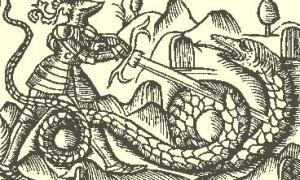
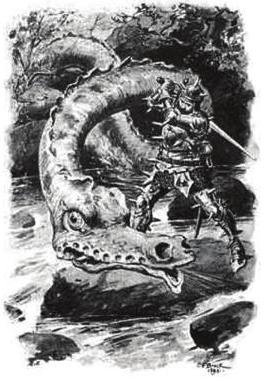
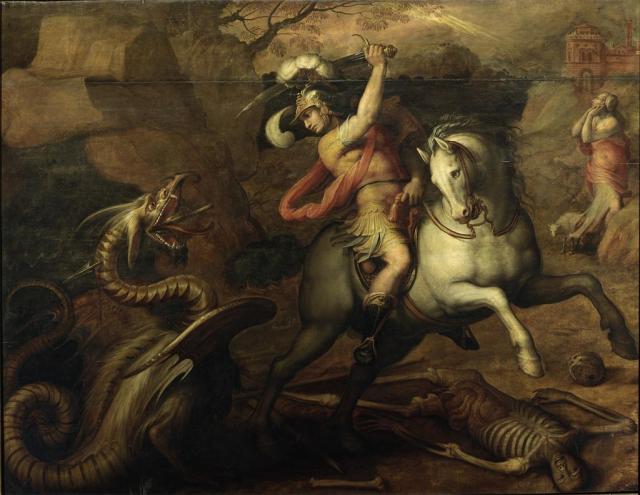
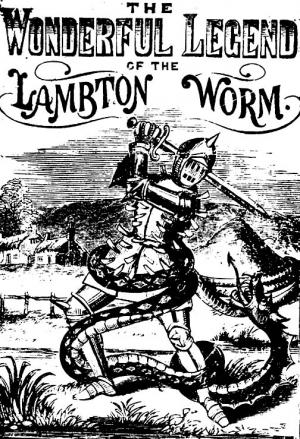
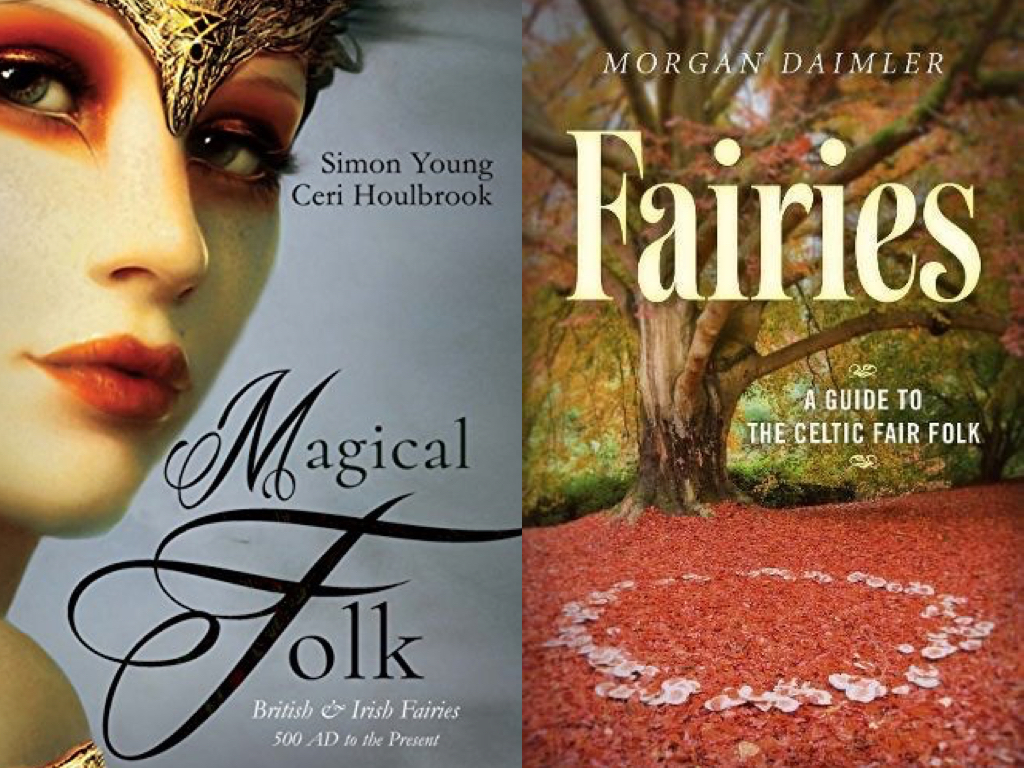
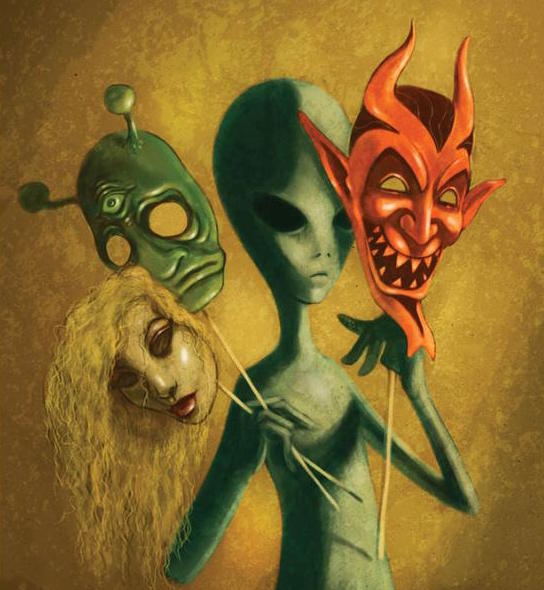
 faerie encounters in the 20th century: Marjorie Johnson’s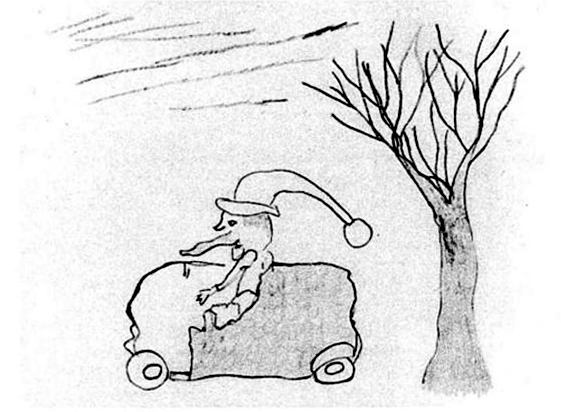
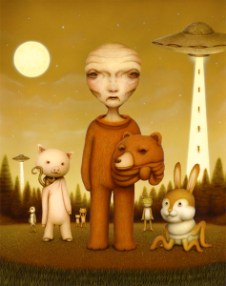
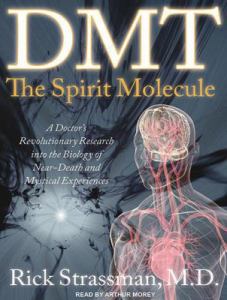 Research Center of the University of New Mexico Hospital, by Dr Rick Strassman. It found that volunteers on the study injected with varying amounts of DMT underwent profound alterations of consciousness. This involved immediate cessation of normal consciousness and transportation to a different realm of reality with divergent physical properties, and inhabited by a range of creatures described as elves, faeries, lizards, reptiles, insects, aliens, clowns (yes, clowns) and various therianthropic entities. One woman even describes a pulsating entity that she described as ‘Tinkerbell-like’. The experiences, especially at higher doses, represented to the participants a parallel reality that was ‘super real’, not an hallucination, not a dream, but a substantial built reality with full sensory interaction + telepathy. Strassman published the results as
 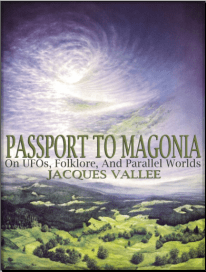 Indeed, in his 1969 book
 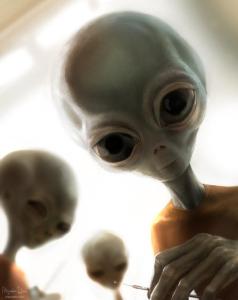 hypnotic techniques to extract memories from amnesic events. It’s a minefield subject, but John Mack in particular is a convincing advocate of the notion that whatever the experiences represent, they are genuinely real to the participant. One common motif involves the abductee, after being floated or beamed aboard the UFO, being taken to a part of the ship where there seem to be drawers or tanks of hybrid alien-human babies, which they are expected to nurse. There is a consistency to these experiences (there are thousands of them) that provides a dataset of testimony that Mack and Jacobs insist must be taken seriously as a phenomenon. For the abductees, the experience is often highly traumatic (Mack states that the best psychiatric diagnosis for many abductees is post-traumatic stress disorder), and no wonder, when they are confronted with alien hybrids often described as more like foetuses than babies. One abductee described to Mack their appearance, which is fairly typical: “Their bodies were short for their heads. Their heads seemed oversized. They had very blue eyes. They had very thin, wispy hair… I would say they were probably three and a half feet tall, but they all looked the same age. ‘You’re our mother and we need you,’ they said.”
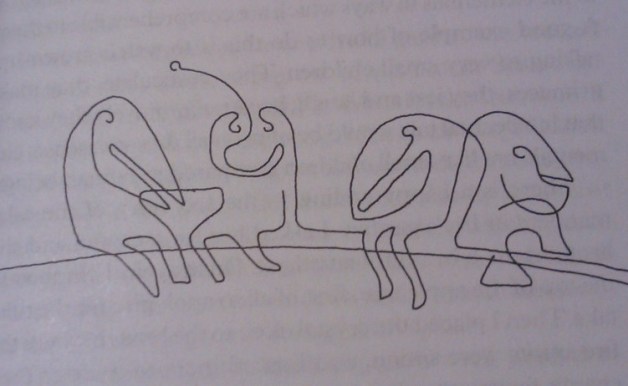
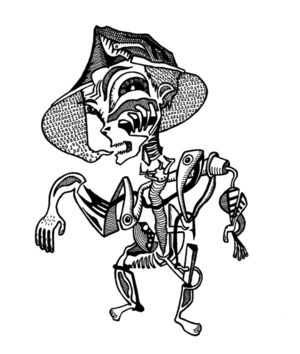
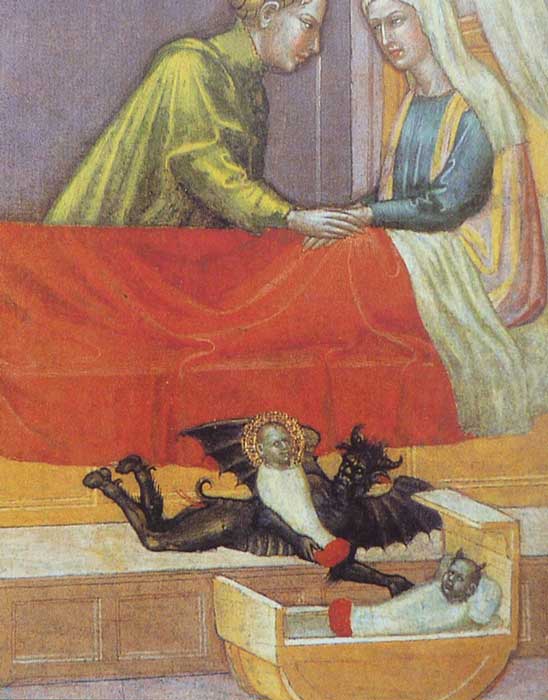
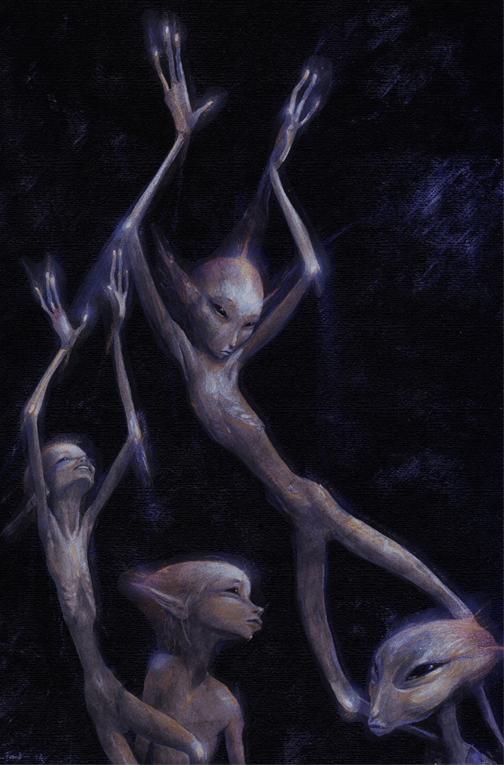
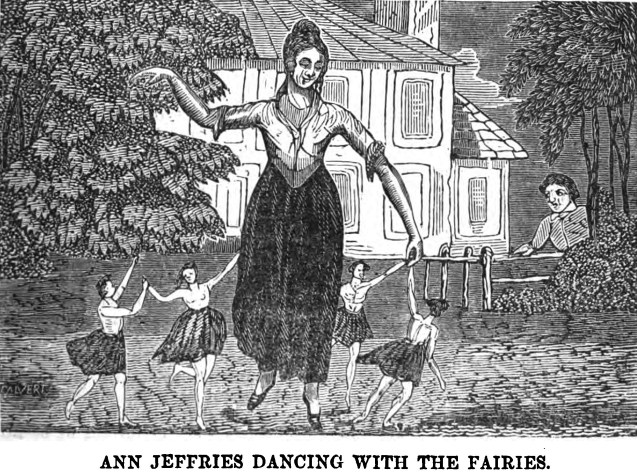
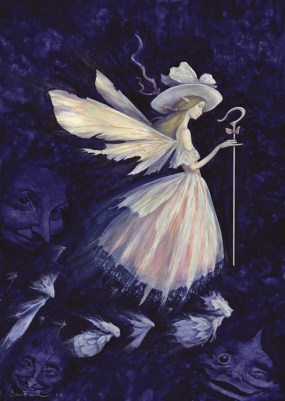
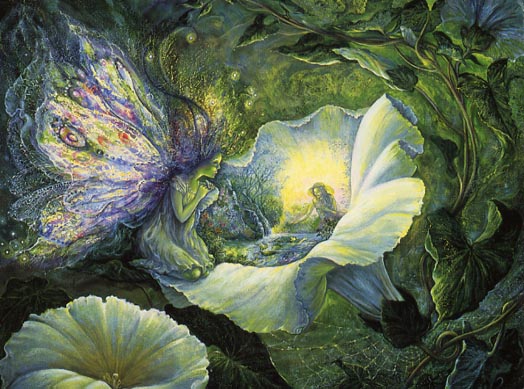
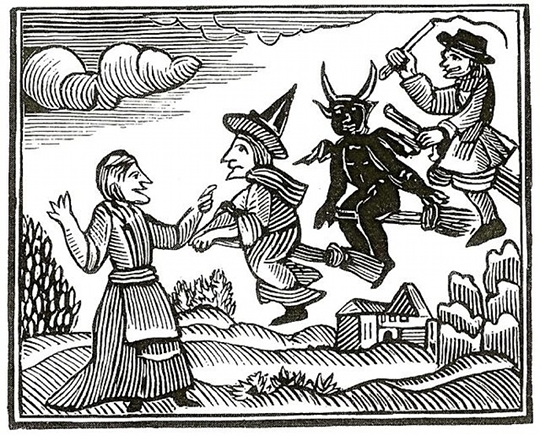
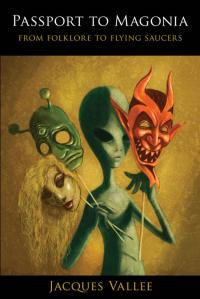 She also suggests that the condition might be responsible for the reliably bizarre phenomenon of alien abduction. She notes that one of the most famous alien abductees,
 In the 1997 film
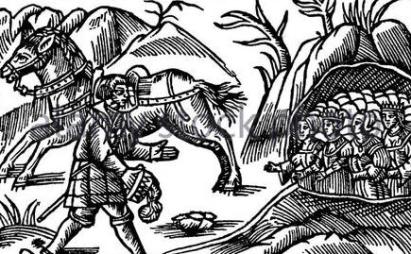
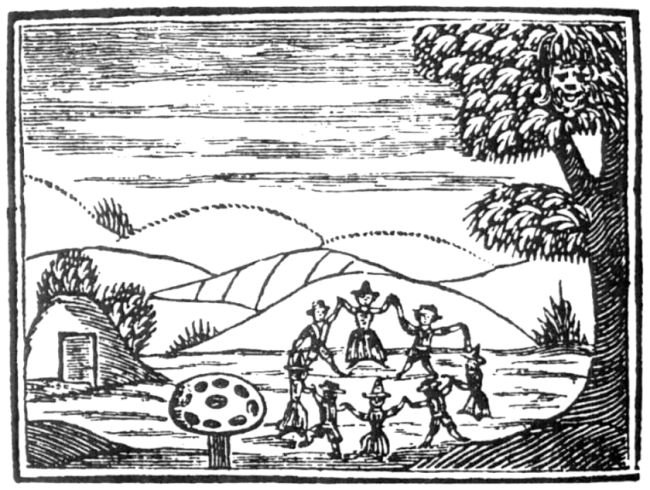
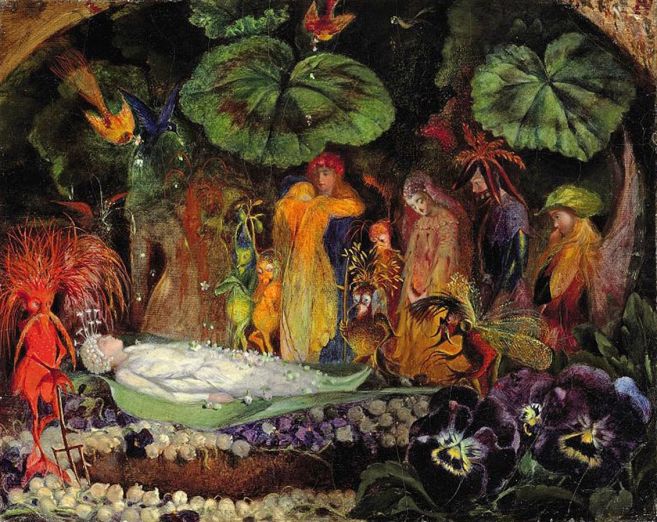
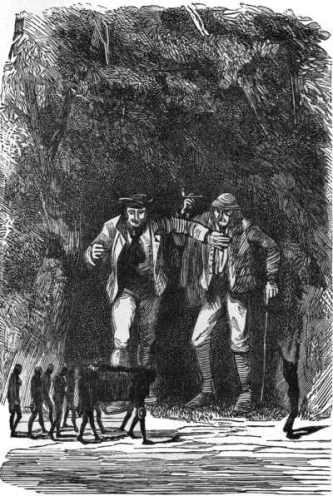 It was a dainty little object; but although neither Adam nor Robin could comprehend the burden of the song it sang, the unmistakable croon of grief with which each stave ended told the listeners that the faerie was singing a requiem. The men kept perfectly silent, and in a little while the figure paused and turned round, as though in expectation, continuing, however, its mournful notes. By-and-by the voices of other singers were distinguished, and as they grew louder the faerie standing in the roadway ceased to render the verse, and sang only the refrain, and a few minutes afterwards Adam and Robin saw a marvellous cavalcade pass through the gateway. A number of figures, closely resembling the one to which their attention had first been drawn, walked two by two, and behind them others with their caps in their hands, bore a little black coffin, the lid of which was drawn down so as to leave a portion of the contents uncovered. Behind these again others, walking in pairs, completed the procession. All were singing in inexpressibly mournful tones, pausing at regular intervals to allow the voice of the one in advance to be heard, as it chanted the refrain of the song, and when the last couple had passed into the avenue, the gates closed as noiselessly as they had opened. As the bearers of the burden marched past the two watchers, Adam bent down, and, by the help of a stray gleam of moonlight, saw that there was a little corpse in the coffin. ‘Robin, mi lad,’ said he, in a trembling voice and with a scared look, ‘it’s the picture o’ thee as they have in the coffin!'”
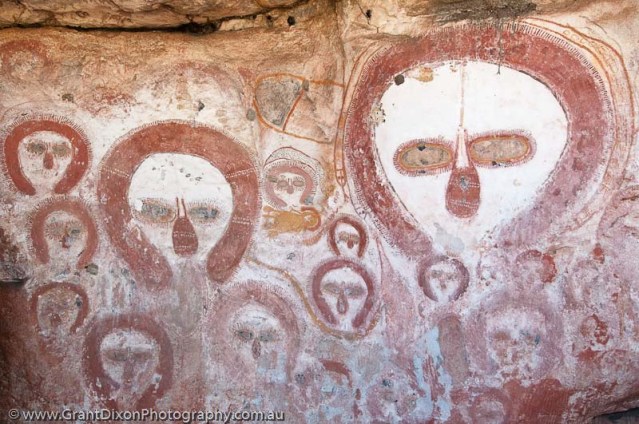
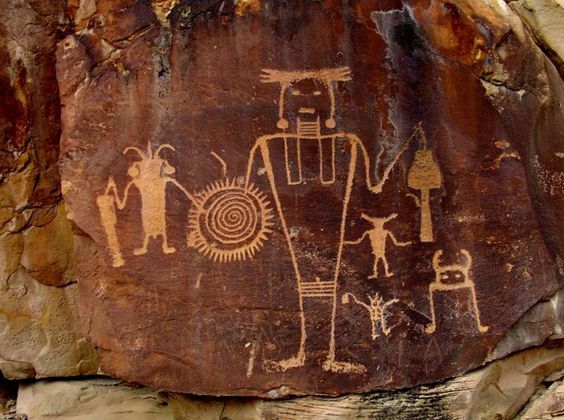
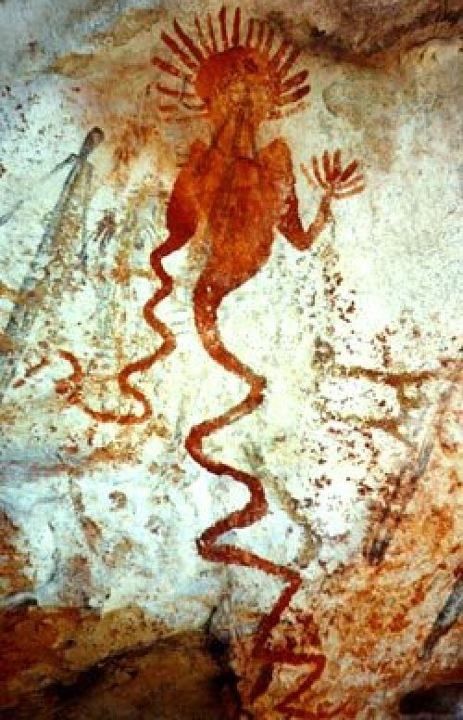
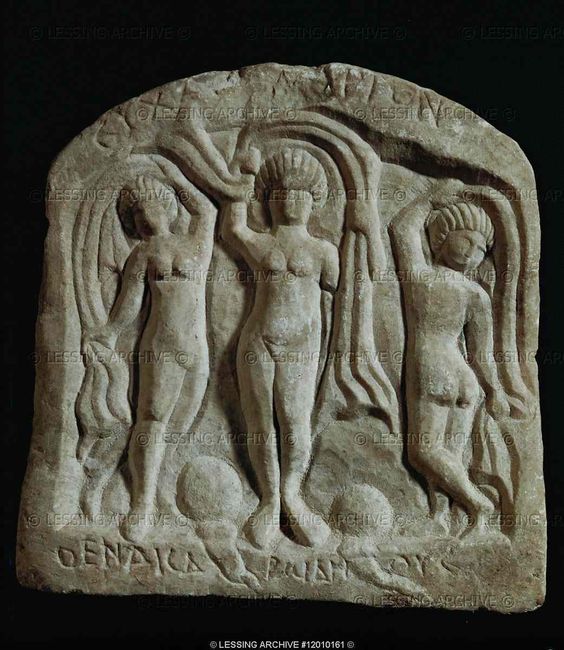
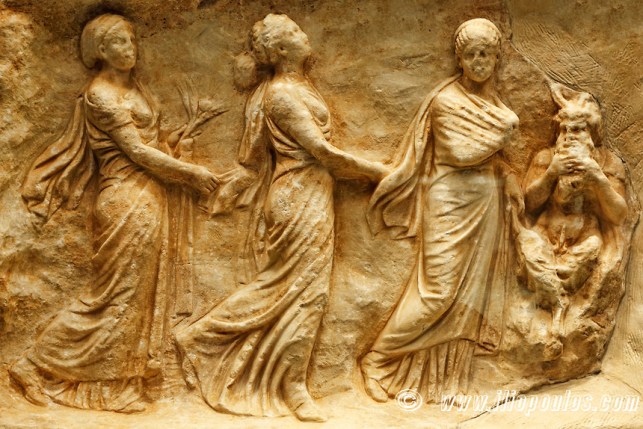
 Such statuary and reliefs are important to the radical but intriguing theory put forward by the philosopher
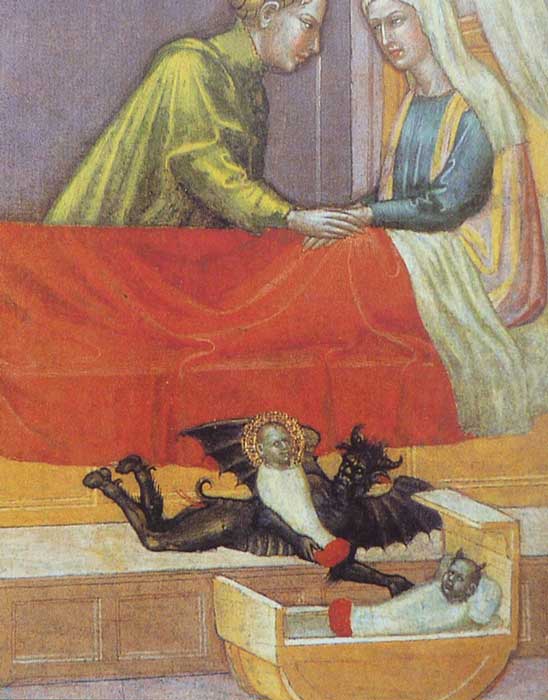
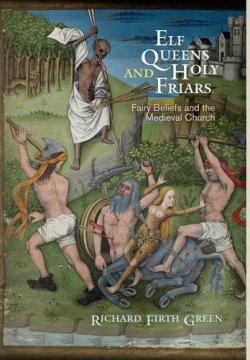 medieval vernacular belief in faeries, mostly by utilizing the surviving texts of mystery plays, to demonstrate that there was a widespread acceptance of the faeries as a supernatural race of beings who interacted with humans on a regular basis. He makes the convincing argument that this was a popular cultural reaction to the ecclesiastical conception of faeries as minor-demons. Many of the mystery plays (which were performed in villages and towns throughout medieval Europe) incorporated faeries as plot devices, with the assumption that the audience would know exactly who they were, and that they were not demons, but rather arbiters of a supernatural realm that was neither heaven nor hell. However, the faeries rarely made it into medieval artwork without being mutated into demons. It took the Renaissance to reestablish them as an integral species of otherworldly characters within works of art.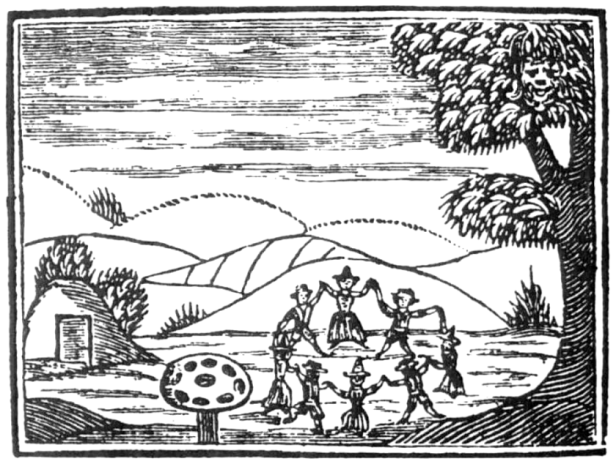
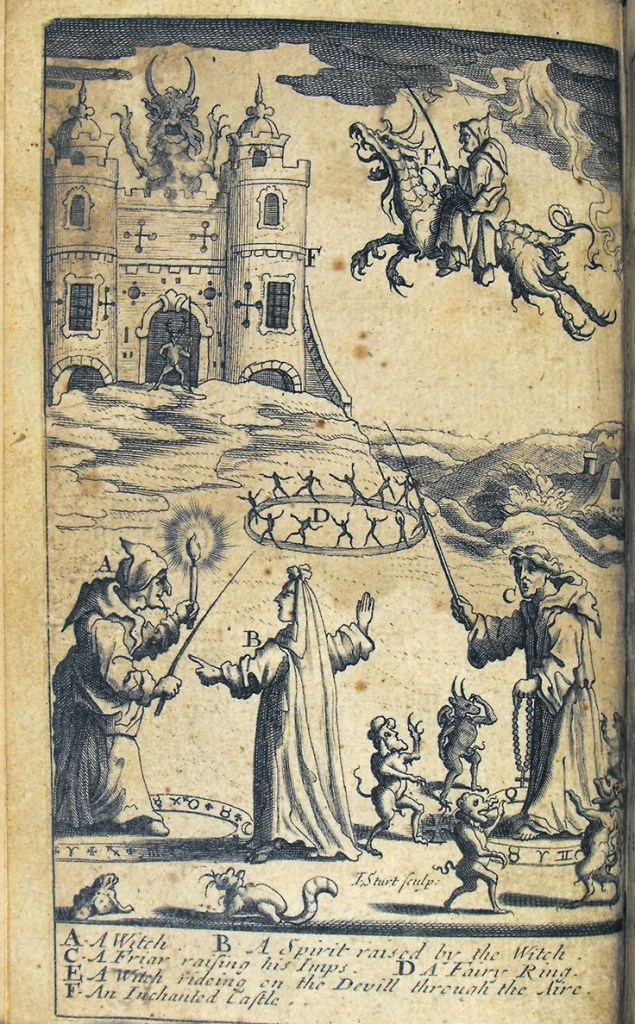
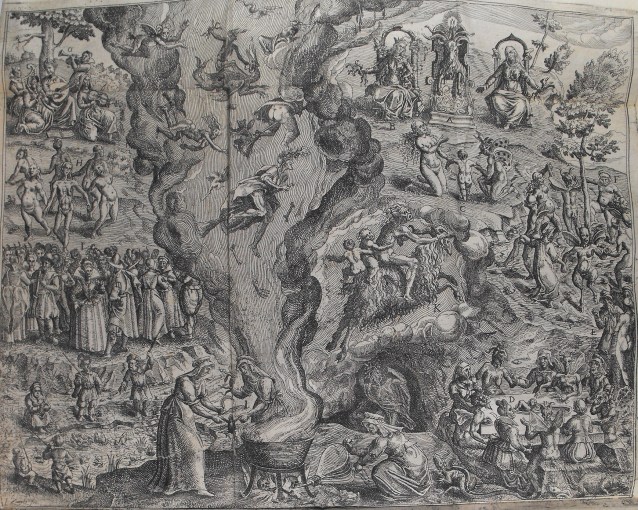
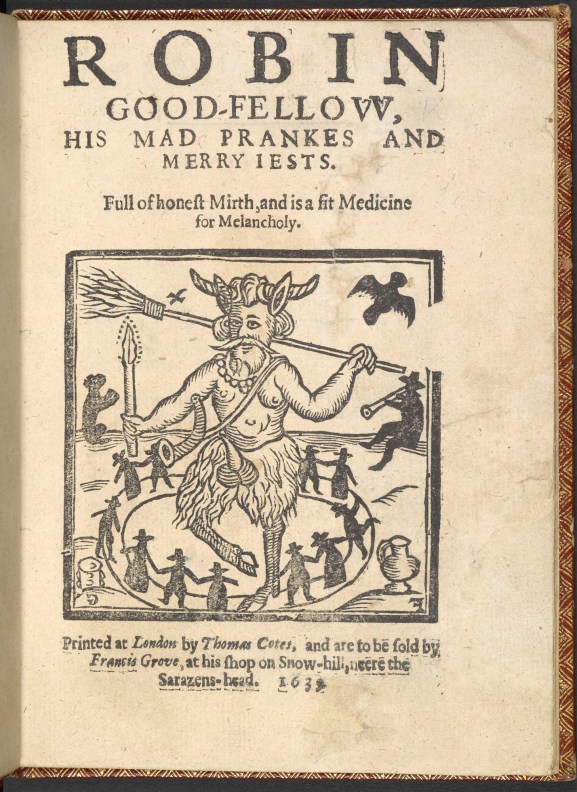
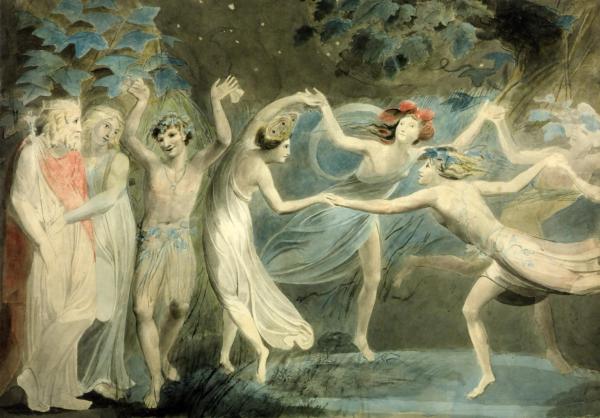
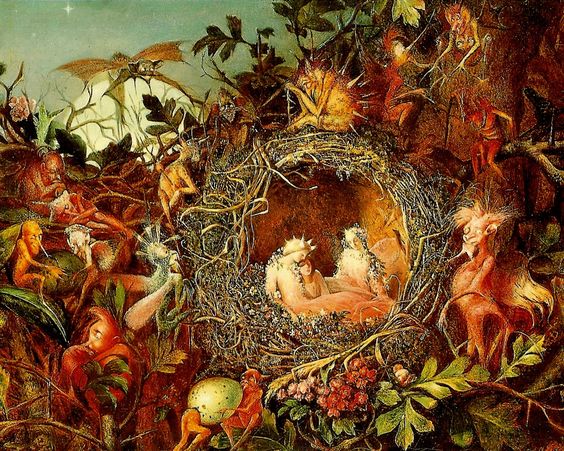
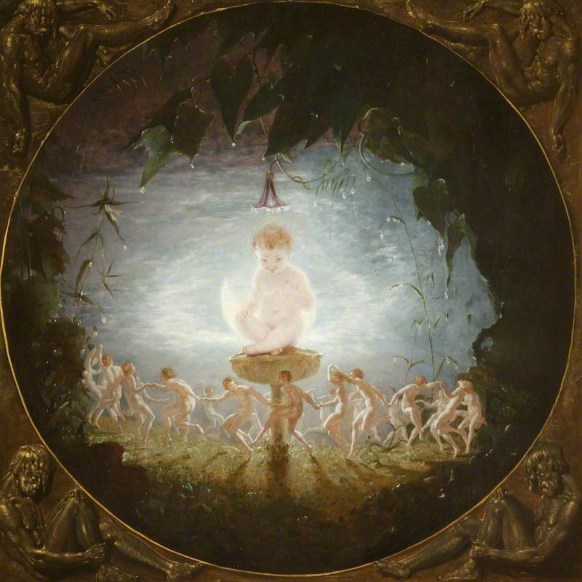
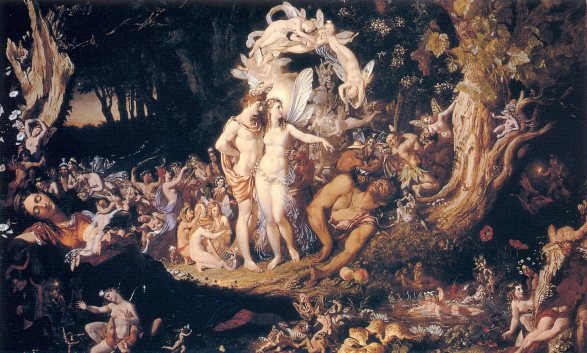
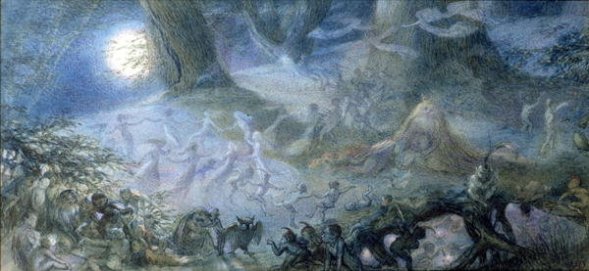
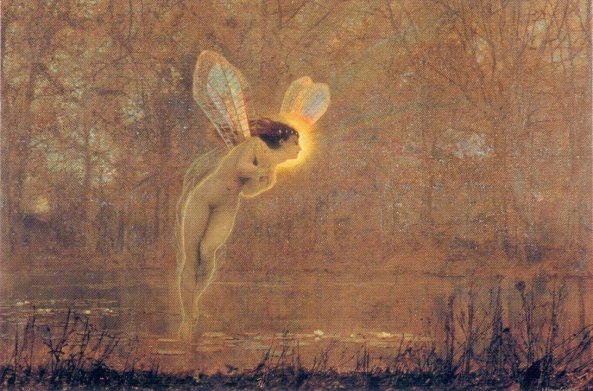
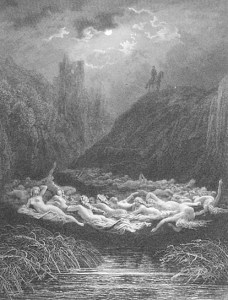
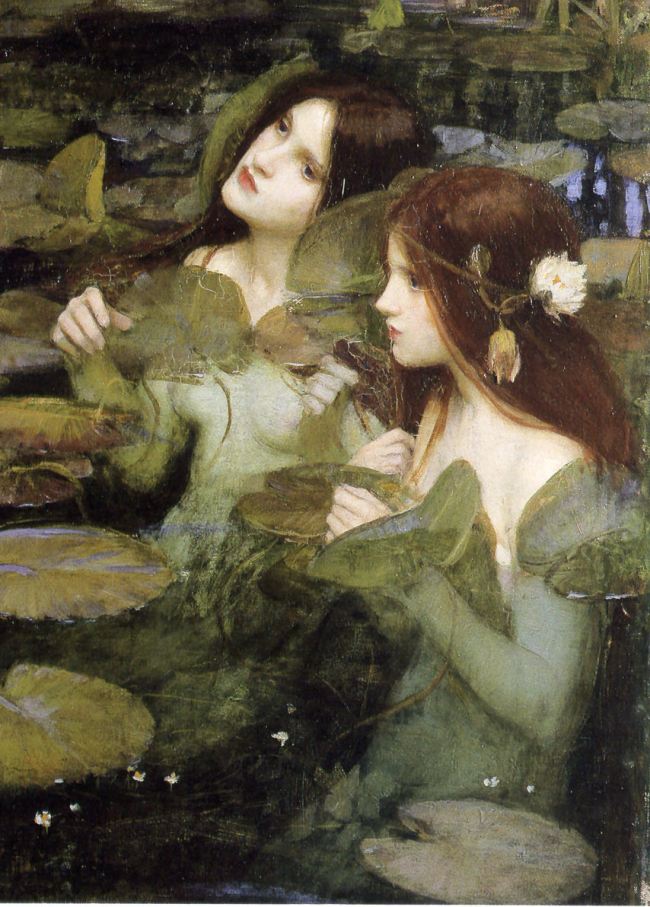
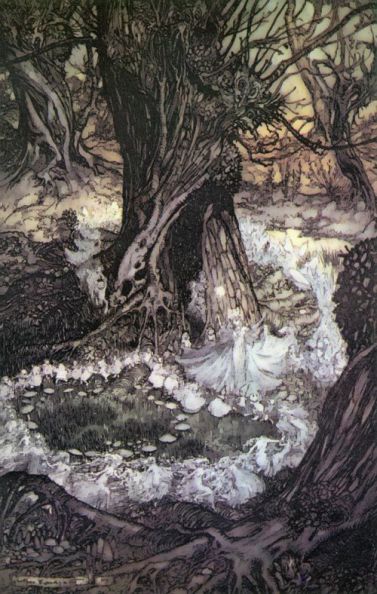
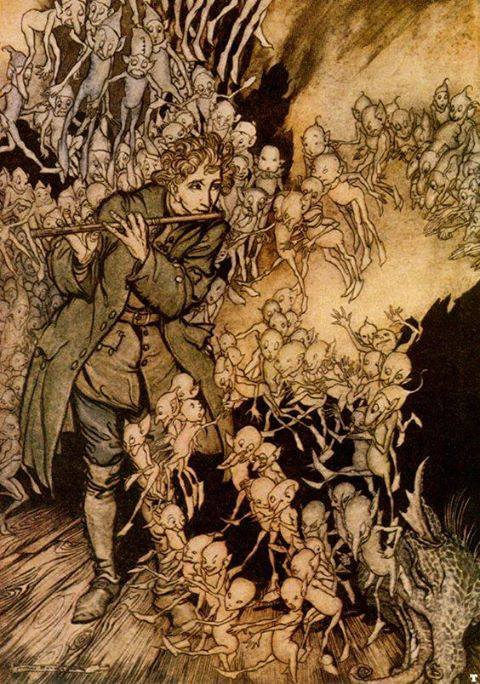
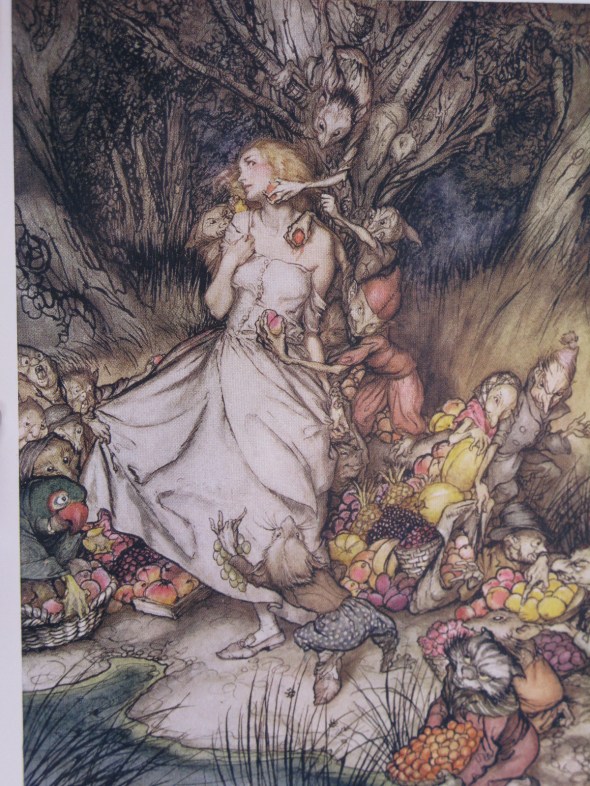
 In 1978
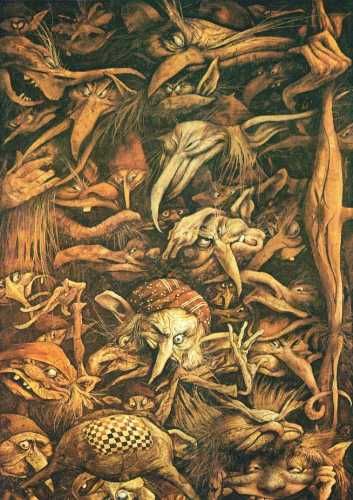
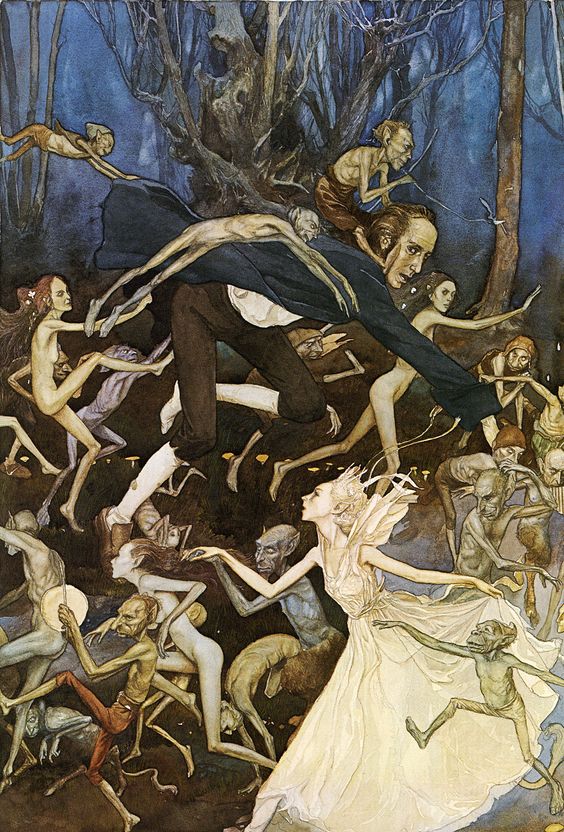
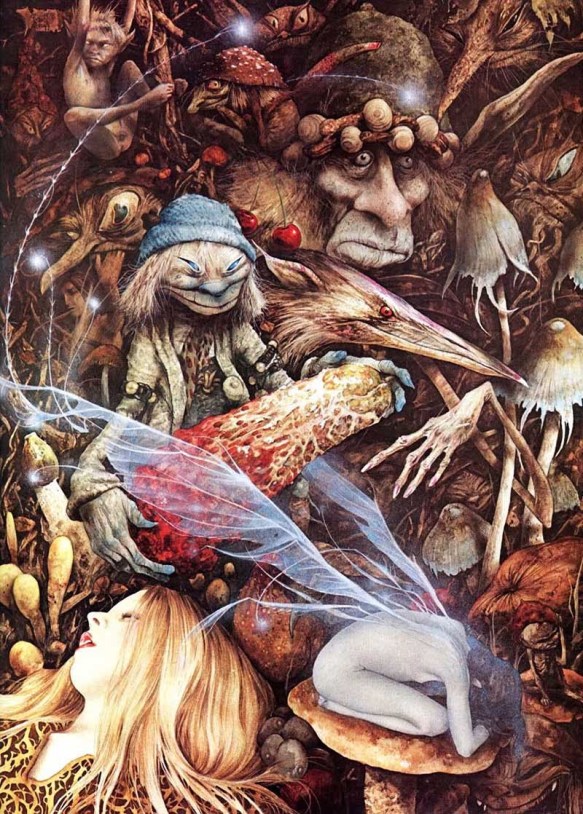
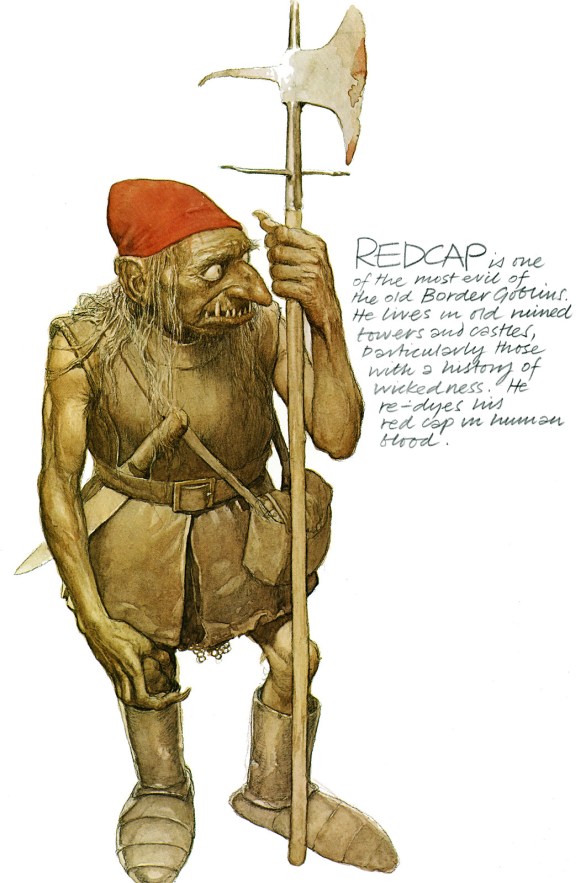
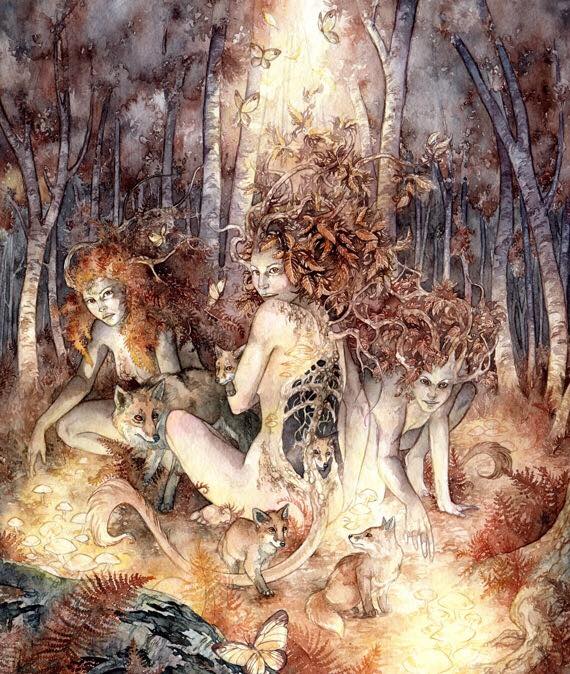
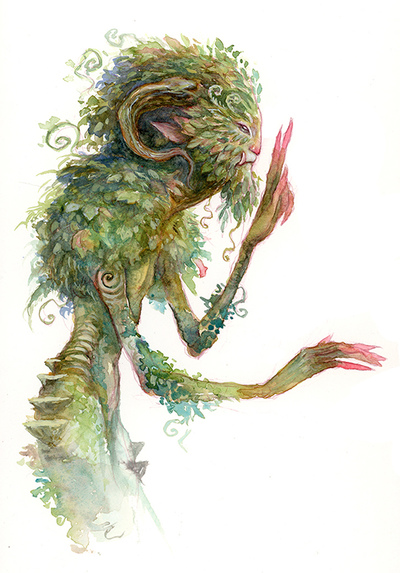
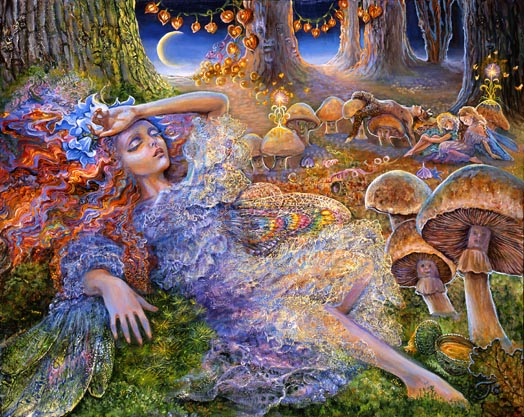
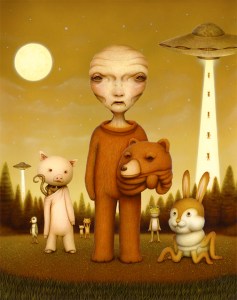
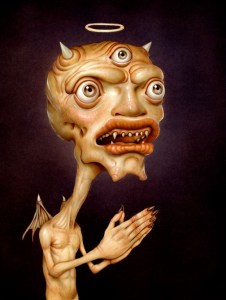
 deadbutdreaming